


Erhalten Sie Zugang zu diesem und mehr als 300000 Büchern ab EUR 5,99 monatlich.
- Herausgeber: Batsford
- Kategorie: Geisteswissenschaft
- Sprache: Englisch
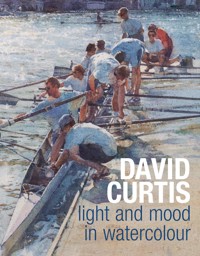
Stunning watercolour title new in paperback. Leading watercolourist reveals the secrets behind his atmospheric, light-filled paintings. Watercolour is ideal for capturing the transient effects of light and, with compact and lightweight materials, is the perfect medium for plein-air painting. Leading watercolour painter David Curtis is a strong advocate of working on site, observing and capturing changing conditions and effects. In this beautifully illustrated book, he explains in detail his two main methods for working on location – for quick, loose studies and for more controlled and detailed paintings. He also shows how to collect reference material on the spot and develop this into resolved paintings back at the studio. He provides helpful instruction on interpreting light effects, with strong guidance on choosing materials, exploring techniques, composition, tone and colour and associated topics. This invaluable advice is complemented by a wealth of sketches, finished works and step-by-step demonstration paintings to illustrate different points and inspire further ideas. Reference Light and Mood in Watercolour hardback (9780713489552) - Leading watercolourist reveals the secrets behind his light-filled paintings - How to work en plein air to capture the transient effects of light - How to collect reference material on location but paint in the studio - Bestselling title new in paperback
Sie lesen das E-Book in den Legimi-Apps auf:
Seitenzahl: 151
Veröffentlichungsjahr: 2015
Das E-Book (TTS) können Sie hören im Abo „Legimi Premium” in Legimi-Apps auf:
Ähnliche


















David CurtisLight and Mood in Watercolour
Corfu Old Town
57 × 39cm (22½ × 15¼in)
David CurtisLight and Mood in Watercolour
David Curtis
with Robin Capon
To my family, friends and painting companions
Acknowledgements
I would like to thank Robin Capon for all his patient hard work on the text. It has been a pleasure to collaborate with him. My thanks also to Steve Bennington for his skill and understanding of the painter’s needs in terms of good colour photography; Dr Sally Bulgin for the foreword; and Richard Hagen for the loan of transparencies.
www.djcurtis.co.uk
Contents
Foreword
Introduction
1 The Watercolour Medium
Scope and Characteristics
History and Context
Freedom and Expression
Materials and Equipment
Paper
Paints
Brushes
Other Equipment
Exploring Techniques
Wash Techniques
Wet-into-Wet
Lost-and-Found Edges
Blending
Line and Wash
Lifting Out
Dry-Brush
Masking Out
Body Colour
2 Developing Ideas
Drawing and Design
Drawing and Observation
Sketching Techniques
Composition
Tone and Pattern
Understanding Tone
Tone and Colour
Colour Harmony
Observing and Interpreting Colour
Working with a Limited Palette
Colour Mixing
3 Inspired by Light
Light and Mood
The Drama of Light
Capturing a Sense of Place
Light as a Subject
Morning Light
Contre-jour
Flat Light
Other Light Effects
Highlights and Shadows
Working Light to Dark
Hard and Soft Edges
Shadows and Composition
The Colour of Shadows
Painting in All Weathers
Practical Considerations
Seasonal Variations
4 Subjects and Interpretation
Evaluating Ideas
Boats and Boatyards
Sound Drawing
Interesting Details
Harbours and Estuaries
Water
Reflections
Skies
Painting Skies
Landscapes
A Sense of Scale
Foreground Interest
Trees and Foliage
Buildings and Interiors
Simplification
Perspective
Textures
Figures
Essential Features
Groups and Crowds
Portrait Studies
5 Working Methods
Plein-Air Painting
The Middle Way
The Considered Approach
Capturing the Moment
Index
Foreword
I was delighted and honoured to be asked to contribute a foreword to David Curtis’s new book on Light and Mood in Watercolour, because I have been an admirer of the man and his painting since first meeting and interviewing him for the chapter on his work in my Oils Masterclass (HarperCollins) in 1995. Since then he has contributed articles to the magazines Leisure Painter and The Artist, illuminating his approach to painting and generously sharing his thoughts and providing advice and inspiration to many thousands of painters throughout the world. He is an inspiration not only because of his ability to capture the spirit of a place with its transient light effects and different weather conditions, but also for his enthusiasm and his willingness to share his experiences in the straightforward, down-to-earth way that is characteristic of his Yorkshire upbringing.
David has the eye and the skill to extract the magic from a subject by plucking out the essentials he needs in the few hours he has in front of a scene. As a committed plein-air painter he edits detail, simplifies the complex and vital elements of a composition, and demonstrates that what matters in painting is as much about what you leave out as what you include.
He has accomplished a great deal and is now recognized as one of Britain’s leading figurative painters in oil and watercolour. The reproductions of his watercolours throughout this book will be an inspiration, and the no-nonsense text will inform and explain in illuminating detail the thinking processes and working methods behind these stunning paintings.
Sally Bulgin
Publishing Editor of The Artist and Publisher of Leisure Painter
Introduction
Seldom does a day go by when I do not have the desire to paint. My love of painting began when I was about twelve, and from then on I have never doubted that the greatest satisfaction I could achieve in life would be from using it to express the delight and inspiration I find in many different kinds of subject matter, especially landscape and marine scenes.
I did not go to art school – in fact, I trained in engineering and design. But this taught me the value of drawing skills, which is something I probably would not have experienced at art school at that time. So, in effect, I am a self-taught painter, although naturally I have been inspired and influenced by the work of other artists. In my case the influences have come principally from the British Impressionist painters of the late 19th and early 20th centuries – notably those of the Staithes School, such as Laura Knight, Mark Senior and Fred Jackson, and the Newlyn School, especially Stanhope Forbes and S J ‘Lamorna’ Birch. Incidentally, I also much admire the music of the British composers of that period, because their work was very descriptive and for me it evokes a similar atmosphere and response.
Painters need lots of self-belief and perseverance. If there is one piece of advice that I would offer inexperienced painters, it is that they must be prepared to work hard to learn their craft. In my view, there is no substitute for developing observation skills and the ability to draw, nor for appreciating the value of sound composition and the need to understand and respect the chosen painting medium. In learning to paint you will glean information, advice and ideas from a variety of sources, gradually discovering and developing your own style. It is important to be true to yourself as well as the medium, rather than simply cloning someone else’s method of painting. But be patient; it does take time!
David Curtis in his studio
David Curtis painting outdoors
A Shortcut to the Beach, Cala San Vincenti, Mallorca
57 × 39cm (22½ × 15¼in)
I was particularly attracted to the way that the palms created a contrasting, umbrella effect above the focus of light in the centre of this subject, which I found away from the main tourist area.
Many artists enjoy sharing their knowledge with others, and one of the best ways to learn about painting is to work alongside an experienced artist. When I was young I often painted with an accomplished local artist, Andy Espin-Hempsall, who worked in the traditional manner known as plein air (‘open air’ – that is, outdoors, in front of the subject being painted). Later, I was fortunate enough to paint with Edward Wesson, Jack Merriott and other well-known artists of the time. In this book, as well as discussing in some detail my working methods and observations on watercolour painting, I have tried to create a sense of the process for the reader by including several step-by-step examples. I hope these will help demonstrate more clearly the way that I work when tackling different subjects, and in different situations.
I paint in both oils and watercolour. Essentially I am a plein-air painter and for me there is nothing more exhilarating than the challenge of capturing the special mood of a scene before its character is radically altered by the changing light or weather. Watercolour is a wonderful medium to use. It is perfect for exploiting the transitory and subtle atmospheric effects found in outdoor scenes; moreover, it encourages the necessary spontaneous, sensitive approach. Yet, if required, it also suits a more considered, controlled method of working in the studio, while for certain subjects a combination of both plein air and studio techniques will often work best.
A knowledge and experience of a variety of watercolour techniques is always an advantage. Painting is never simply a matter of following a set procedure. Each painting requires something different to fully express the particular quality of light and mood that initially inspired you. The way to gain experience is to experiment with every aspect – materials, techniques, colour and composition, subject matter, and so on. This is how I developed my skills, and why I have included such a wide range of topics in this book. I hope the information and illustrations that accompany these topics will prove helpful and encouraging in your adventures with watercolour. It is an endless, fascinating process!
The Old Harbour, St Ives, Cornwall
28.5 × 39cm (11¼ × 15¼in)
An interesting, sound composition is an essential quality to look for in a subject, I think, and this view included various directional lines that enhanced the basic design.
1 The Watercolour Medium
Many artists feel a natural attraction to and affinity for watercolour and I think this especially applies to landscape painters. With its immediacy, fluidity and, in many respects, versatility, watercolour is the ideal medium for capturing the transient effects of light and mood in the landscape as well as all that this implies in terms of subtle colouring and sensitive handling. Yet, while landscape remains the most popular genre for watercolour, there is also much potential for exciting work with other subject matter. For example, in addition to my marine and landscape subjects, I enjoy painting people, interiors and buildings in watercolour.
Perhaps the most intriguing aspect of watercolour is the fact that although everyone accepts that it is intensely difficult to use, it is nevertheless an extremely popular medium. I know from my own experience, which covers more than forty years, that watercolour can be one of the most frustrating ways of being creative known to mankind. But the challenge is part of the attraction, and as we gain in confidence and techniques, and are able to steel ourselves to be positive and expressive, then the results can be truly rewarding. The challenge I most relish is the contre-jour effect that can be found during the early morning and later afternoon on a bright, sunny day when there are strong contrasts of light and shadows. Success in capturing that fleeting effect never fails to create a real buzz!
The Ice-cream Seller, New York
39 × 28.5cm (15¼ × 11¼in)
Scope and characteristics
The most obvious characteristic of watercolour is that it is a very fluid medium, and consequently the principal painting technique relies on applying a succession of washes. Used with restraint, and especially when applied to white paper, these washes of colour will create immensely sensitive luminous and translucent effects which, for most artists, are further qualities that are synonymous with the medium. A limited use of colour and technique usually works best, so that the result is not overstated or overworked. Invariably paintings lose their vitality and impact if the colour is laboured to such an extent that it becomes ‘muddy’ and opaque.
This is not to say that there is only one method of painting with watercolour, this being the traditional wash-over-wash approach in which the highlights are left as white paper. Especially during the past fifty years, there are also artists who have decided that working exclusively with very fluid washes, as well as being extraordinarily difficult and inevitably involving an element of chance, places too much of a constraint on technique and effects. They argue that by adding body colour (watercolour mixed with gouache or acrylic) they can gain more control over the work and broaden the scope of the medium. Additionally, of course, watercolour can be combined with many other painting media, such as pastel, water-soluble pencils or pen and ink, in a mixed-media approach.
Hall Cross, Doncaster, Yorkshire
28 × 33cm (11 × 13in)
In this painting of a street in my home town, the real subject is the light. I liked the blue-and-gold feel of this autumnal afternoon and the way that little accents of light enlivened a scene that was mostly in shadow.
A Side Street in Alcudia, Mallorca
39 × 28.5cm (15¼ × 11¼in)
Don’t be afraid to make use of the natural surface colour of the paper for the whites and highlights in a subject. For example, in this painting there is only the slightest hint of colour on the building in the centre – much of the paper has been left white.
Morning, Sun Rising, Staithes, Yorkshire
39 × 57cm (15¼ × 22½in)
Light is a quality that always interests me. As here, with the contrast between the warm light in the upper parts of the subject and the cooler, reflected light in the beck, watercolour can be a wonderfully sensitive medium for capturing a fleeting mood or an atmospheric effect.
The use of body colour in watercolour painting has always been controversial. Purists believe that watercolour should be fluid, spontaneous and transparent, while the not-so-purists will argue that essentially there is too much dependence on the ‘happy accident’, so why not add body colour to give greater reliability and creativity. Obviously this has to be a matter for each artist to decide.
For my own part, with the advantage of many years’ experience, I hope that I can handle the medium well enough to express my ideas in a first ‘hit’. I value those special qualities of fluidity and translucency that only watercolour can offer. My use of body colour (I actually use white acrylic paint with perhaps a touch of lemon yellow) is confined to adding just a small amount to soften the edges of those areas where I have applied masking fluid. It helps enhance the sense of light and the glowing effect, I think. But that’s as far as I take it.
Some artists dislike the constraints of having to consider and reserve the whites and highlights right at the beginning of a painting and so they use body colour as a means of adding the most intense light passages at a much later stage. This creates opaque, dense areas of light rather than translucent light and in my view seldom looks entirely successful or compatible in relation to the rest of the painting. In fact, watercolour is extremely versatile in its own right and I have never felt it necessary to introduce other media to create the effects that I wanted.
Bend in the River Fowey, Cornwall
28.5 × 39cm (11¼ × 15¼in)
This was an instance when I came across an exciting subject but, without any materials with me, I could not work on a painting straight away. However, I was so impressed with the scene that I decided to return at the same time the next evening with my painting gear.
A watercolour can be a simple line and wash painting or, contrastingly, can be developed with a variety of methods into an immensely detailed result. My range of techniques is discussed and illustrated later in this section, here. Morning, Sun Rising, Staithes and Light on the River, Henley are good examples of the qualities that I like to develop in my paintings.
Note how the medium perfectly suits the depiction of particular qualities of light and how a restrained palette (choice of colours) often works best. The approach that I use for a certain painting depends on the subject matter and the circumstances. For example, outside, with a contre-jour subject and consequently a limited amount of time, I normally paint ‘fast and loose’. On other occasions I choose what I call ‘the middle way’, in which I can work on areas separately but then maybe unify the painting with an overall wash. Or, alternatively, for a complex subject when long-term concentration is possible, I adopt a much more considered approach. For every painting I usually start with a big, wet-into-wet general wash to create a ghost effect for the overall image. These methods are discussed in detail in Working Methods.
Light on the River, Henley
39 × 28.5cm (15¼ × 11¼in)
Careful observation, sketches and photographs are the essential forms of reference for the paintings of Henley Regatta, held on the Thames, that I regularly exhibit each year.
Cobles on the Beck
39 × 57cm (15¼ × 22½in)
With the tide and light gradually changing, this type of subject demands a fast-and-loose approach using bold washes combined with sound drawing.
Pantile Rooftops, West Cliff, Whitby, Yorkshire
39 × 48cm (15¼ × 19in)
While I normally work on a standard-size sheet of paper stretched on a board, there are occasions when the subject demands a slightly different shape, as here.
History and Context
Another attraction of watercolour is its sense of history; the fact that there are numerous fine artists and watercolour paintings that we can study and be excited and inspired by. Particularly in Britain, there is a long tradition of watercolour painting and artists continue to respect and build on this. My own motivation and inspiration has come from the great painters of the late 19th and early 20th centuries, notably those of the Staithes Group and the Newlyn School.
There can be immense value in looking at paintings by other artists and I suppose there are very few watercolourists who have not been influenced by something they have admired in another painter’s work. However, I do think it is important to be true to yourself – to try to develop your own way of expressing ideas. It is fine to pluck the odd idea from here and there but, if you rely on more than this, you run the risk of simply becoming a clone of someone else. My advice is to concentrate on those aspects that you believe are individual about your work. Try to improve and develop those. The other point to bear in mind is that it does take quite a while to evolve an individual style, perhaps as long as ten years. It is a very gradual process.
The golden age for watercolour was in the mid-19th century when, in a period dominated by a fervent interest in landscape and nature, artists realized that the qualities of the medium were eminently suitable for capturing atmosphere, ephemeral effects and the picturesque. However, the origins of the medium date from many centuries earlier, arguably back to the ancient civilizations of China and Egypt. The Egyptians painted on papyrus rolls with a transparent coloured medium that was similar to present-day watercolour. It was actually made from earth and mineral pigments blended with gum arabic and egg-white. Later, a type of watercolour was used for illuminating manuscripts and painting miniatures.




