


16,99 €
Mehr erfahren.
- Herausgeber: John Wiley & Sons
- Kategorie: Geisteswissenschaft
- Serie: Black Lives
- Sprache: Englisch
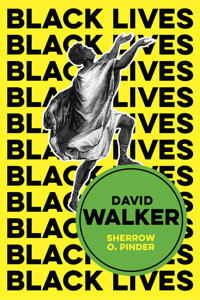
David Walker, a free (with a small f) black man, was one of the most significant African-American abolitionists of the nineteenth century. Born in a slave society before moving to Boston where, after the American Revolutionary War, slavery was abolished, Walker devoted his life to fighting slavery and antiblack racism.
In this book, Sherrow O. Pinder brings to light Walker’s lived experience, activism, and the synchronizing of his Christian principles and reformist radicalism to demonstrate why and how slavery must be eliminated. Walker’s call for blacks to regain their natural rights culminated in his Appeal to the Coloured Citizens of the World, an enormously influential work that is now considered a founding text of black studies.
Today, given the escalation of antiblack racism manifested in the upholding of institutionalized violence by the state and the continued marginality of African-Americans, we cannot afford to forget Walker’s push for racial egalitarianism: it is more urgent than ever.
Sie lesen das E-Book in den Legimi-Apps auf:
Seitenzahl: 445
Veröffentlichungsjahr: 2024
Ähnliche


















CONTENTS
Cover
Table of Contents
Series Page
Title Page
Copyright
Introduction
The Scope and Organization of the Book
Notes
1 Envisioning David Walker’s Life in the South
David Walker’s Early Years in Wilmington, North Carolina
David Walker Moves to Charleston, South Carolina
Notes
2 David Walker Moves from the South to the North
Employment
David Walker’s Living Arrangements and Family Life Reimagined
David Walker’s Political Activism and Addresses
Notes
3 David Walker’s Reproof of Blacks’ Unequal Treatment and How to Promote Racial Equality
David Walker’s Denunciation of Slavery
David Walker’s Arguments for Racial Equality
Notes
4 David Walker’s Fearless Speech in the Appeal and Its Aftermath
David Walker’s “Appeal” to Blacks in the Appeal
The Aftermath of the Appeal
Notes
Conclusion: The Usefulness of David Walker’s Thought for an Analysis of Antiblack Racism Today
Notes
References
Index
End User License Agreement
Guide
Cover
Table of Contents
Series Page
Title Page
Copyright
Introduction
Begin Reading
Conclusion
References
Index
End User License Agreement
Pages
ii
iii
iv
1
2
3
4
5
6
7
8
9
10
11
12
13
14
15
16
17
18
19
20
21
22
23
24
25
26
27
28
29
30
31
32
33
34
35
36
37
38
39
40
41
42
43
44
45
46
47
48
49
50
51
52
53
54
55
56
57
58
59
60
61
62
63
64
65
66
67
68
69
70
71
72
73
74
75
76
77
78
79
80
81
82
83
84
85
86
87
88
89
90
91
92
93
94
95
96
97
98
99
100
101
102
103
104
105
106
107
108
109
110
111
112
113
114
115
116
117
118
119
120
121
122
123
124
125
126
127
128
129
130
131
132
133
134
135
136
137
138
139
140
141
142
143
144
145
146
147
148
149
150
151
152
153
154
155
156
157
158
159
160
161
162
163
164
165
166
167
168
169
170
171
172
173
174
175
176
177
178
179
180
181
182
183
184
185
186
187
188
189
190
191
192
193
194
195
250
251
252
253
254
255
256
257
258
259
260
261
262
263
264
265
266
267
268
269
270
271
272
273
274
275
Black Lives series
Elvira Basevich, W. E. B. Du BoisNigel C. Gibson, Frantz FanonDenise Lynn, Claudia JonesUtz McKnight, Frances E. W. HarperJoshua Myers, Cedric RobinsonSherrow O. Pinder, David Walker
David Walker
The Politics of Racial Egalitarianism
Sherrow O. Pinder
polity
Copyright © Sherrow O. Pinder 2024
The right of Sherrow O. Pinder to be identified as Author of this Work has been asserted in accordance with the UK Copyright, Designs and Patents Act 1988.
First published in 2024 by Polity Press
Polity Press65 Bridge StreetCambridge CB2 1UR, UK
Polity Press111 River StreetHoboken, NJ 07030, USA
All rights reserved. Except for the quotation of short passages for the purpose of criticism and review, no part of this publication may be reproduced, stored in a retrieval system or transmitted, in any form or by any means, electronic, mechanical, photocopying, recording or otherwise, without the prior permission of the publisher.
ISBN-13: 978-1-5095-4828-6
A catalogue record for this book is available from the British Library.
Library of Congress Control Number: 2023948031
The publisher has used its best endeavours to ensure that the URLs for external websites referred to in this book are correct and active at the time of going to press. However, the publisher has no responsibility for the websites and can make no guarantee that a site will remain live or that the content is or will remain appropriate.
Every effort has been made to trace all copyright holders, but if any have been overlooked the publisher will be pleased to include any necessary credits in any subsequent reprint or edition.
For further information on Polity, visit our website:politybooks.com
Introduction
If any are anxious to ascertain who I am, know the world, that I am one of the oppressed, degraded and wretched sons of Africa rendered so by the avaricious and unmerciful among the whites.
—David Walker, 1829
The certitude that arises from David Walker’s lived experience as a “free black”1 man growing up in Wilmington and then settling for a while in Charleston, South Carolina, is influenced by the savage ways in which whites brutally rule blacks and deprive all blacks, free as well as the enslaved, from an education, religion, civil liberties and rights, and any position of social responsibility and self-improvement. In other words, blacks’ wretchedness rendered so by the United States laws, cultural mores, and the institution of slavery adds to their second-class citizenry. That is not to say that slavery is invented, that it has no origins,2 but that it allows us to draw, as Walker does, on the ill-gotten gains of slavery in its racialized expression, which makes it easy to disavow blacks’ humanity.
Indeed, the aforementioned formulation finds its equivalence in Henry Highland Garnet’s exegesis that slavery “commits the highest crime against God and man.”3 It is also described by Walker as “ten thousand time more injurious to this country than all of the evils put together.”4 And, in Frederick Douglass’s terms, slavery is “the great sin and shame of America.”5 However, for Walker, slavery is not the starting point for the wretchedness of blacks, but “the source of which most of [blacks’] miseries proceed.”6 Thus, Walker’s book, David Walker’s Appeal, In Four Articles; Together with a Preamble to the Coloured Citizens of the World, but in Particular, and Very Expressly, to those of the United States of America (henceforth Appeal), in many important ways have impacted my thinking. The “howness” and “whyness” in his “appeal” to blacks to resist slavery and fight for their freedom “out from” slavery (to move, to earn, to study and learn, and “to be”) is of great significance. It departs from the fearful and submissive speeches and actions of both free (with a small f) and enslaved people. It is not surprising that resistance to slavery, after all, would take many forms: the destruction of the masters’ properties, riots, political organization revolving around direct action,7 where blacks, free as well as slaves, act together in concert to resist slavery and racialized epistemologies notwithstanding the dire consequences. When I use slaves instead of the enslaved is to emphasize how and why blacks’ identity as people were literally reduced to the position of slaves, the master’s property, “devisable like any other chattel, … a tract of land, a horse, or an ox”8 and, in Walker’s words, “held us up as descending originally from the tribe of monkeys or Orang-outangs.”9 There is no return. “I am held, and held”10 by the exactitude of slavery’s monstrosity, which is one reason why W. E. B. Du Bois, writing in his book Black Reconstruction in America, sadly confessed that “slavery plagued a nation which asserted the equality of all men.”11
In fact, the binary logics of whites as superior and blacks as inferior has been baked into American racialized modernity. The abuse of the Enlightenment, with its promise of liberty and equality for all, carries the day as the institution of slavery reduces blacks to property and deprives them of their humanity – even though they look like human, all too human, with their capacity to feel the cruel branding, beating, and mutilation, for example. Furthermore, blacks, free or slaves, are excluded from the axiomatic truths of equal humanity as the “whoness” (existence) of blacks is immediately reconfigured into the “whatness” (essence) of blacks. Frederick Douglass is thus right to ask, in “What to the Slave is the Fourth of July?”, “Must I undertake to prove that the slave[s] are [humans].”12 For sure, Douglass’s question is rhetorical.13 Indeed, following Walker’s thinking, the institution of the laws of slavery,14 cultural practice, and the violation and distortion of Christian morals and principles to keep slaves in bondage prove that the slaves are indeed people, made intrinsically inferior “both in the endowment of body and mind,” to borrow from Thomas Jefferson,15 by antiblack racism, reinforcing the ontological and epistemological grounding of unequal humanity. We can see why Walker appropriates Jefferson as “a representative (both as a type and as a political voice) of white supremacy.”16 White supremacy signifies what the hallmark of American civilization is.
It is true, as Walker, a free black man, who is “not slave,” born in Wilmington, North Carolina, a slave state, lets us know in the Appeal, that to be a slave is to be under the unconcealed and cruel power of the master.17 The spectacle of blacks’ terror and suffering is normalized and the master preys upon their flesh, heart, and soul18 and bears witness to their “beating, torture, and execution […].”19 In The Origins of Totalitarianism, Hannah Arendt draws parallels between the crimes of totalitarianism and “slavery’s crime against humanity.”20 However, slaves are not reduced to what Giorgio Agamben, drawing from Arendt, calls “bare life,”21 in so far as slaves are indeed the master’s property. Rather, following Walker, I would speak of “the beast of burden,”22 or the burdened life, which par excellence forces blacks into objecthood. It is woven within the fabric of slavery to inject blacks with terror, inferiority complexes, anxiety, hopelessness, and abasement. Furthermore, the burdened life works to program blacks with self-doubt, propelling them to accept their servile conditions as is visible in, taking from the Appeal, what I call the servile slave woman and the enslaved “freed” man as concept-metaphors. Thus, for them, the question “can I be anything but a slave to whites?” invades the lived experience of blacks. This is precisely what Walker denounces in the Appeal. The Appeal is used to refer to the book and “appeal” as an action (the “call” and the “response”) – I use quotation marks when I am talking of “appeal” as imbedded in the Appeal.
Since the very flourishing of blacks’ courage “to be” is compromised by self-doubt, blacks, according to Walker, “are willing to stand still and be murdered by the cruel whites,”23 forfeiting their natural rights as human.24 And even though there is a demarcation of those rights under the perverted slave regime, they still hold what Walker conceptualizes as Christian morals. That is to say, as Walker does, your obligations to be kind and just to everyone (“keeping truth” on your side)25 validate both the intellectual and moral conscience of a person that highlights one’s virtuousness.26 Indeed, Walker is convinced that the masters are devoid of Christian morals because slaves are kept in bondage. As I will show, Walker felt that it was imperative that slaves fight for and exercise their freedom to laugh, sing, and dance, not for their masters’ entertainment,27 but for themselves and the benefits of their health. In this sense, for blacks, there are two forms of existence, one that is subterranean and one that is on the surface, which finds expression in what W. E. B. Du Bois would later term “the double consciousness,” that is, the double “self,” which a black person, according to Du Bois, “longs to merge … into a better and truer self.”28 Indeed, under slavery, it is impossible for blacks to be independent selves and completely to themselves or in relations to the communal others, because violence is the basis of their existence. In other words, “being slaves, they [have] no will of their own.”29 Assuredly, nothing could be worse. Being dead, maybe?
The concern that a black person cannot be a self for oneself (or, in other words, a “master” of oneself), is what to a large extent occupies Walker’s thought, a thought to which I will return later. For now, I just want to say that this account, for what it is, prompts me to turn to French postcolonial scholar Frantz Fanon’s admission in Black Skin, White Masks that “what is often called the black [self] is a white man’s artifact.”30 It is something that ambushes and lures blacks away from their sense of self. That is to say, blacks’ existence as less than is, of course, a fabricated conception of the white-centric world in an effort to shore up the presumptive hegemony of whiteness, which refuses to be sidestepped. That said, unlike Friedrich Nietzsche, in Ecce Homo, the transvaluator of “all values” who can say, “I need to be unprepared to be master of myself,”31 is not true for blacks. Thus, Walker understands that a revaluation of the values that denote blacks as inferior is obligatory; and it is the task of blacks to prove that they are not less than whites and reveal what, inspired by Walker, I will call a “subterranean self” that remains unnoticed in their speech (the art of persuading with words) and action (deeds).
It is no secret that blacks were amongst the first groups of people to land on American soil.32 And in spite of the presence of free blacks (with a small f) and slaves, the United States wittingly sees itself as a homogeneous nation.33 In this spirit, if “free” blacks would just “disappear,” it would be in the interests of whites to rule over slaves with ease. Not only is it believed by those in power that “free” blacks’ influences on slaves are disruptive for the maintenance of docile slaves, that is, to take from Walker, “to rest in ignorance and wretchedness,”34 but “race mixing” adds to their anxiety.35 Thus, the idea of the migration of “free” blacks to Africa as a real option is shamelessly adopted by the American Colonization Society.36 Walker, for good reasons, refutes this pronouncement. In fact, for him, “Black Removal”37 from the United States is, what he calls, “the colonizing trick.”38 In this spirit, Walker, with axiomatic rigor, asks a legitimate and persistent question: “Will any of us leave our homes and go to Africa?”39 And in his process of moral reasoning, his axiom, “I hope not”40 is reasonable even though this “I,” the first-person singular pronoun, is indeed isolated from practical reason because blacks are always viewed as incapable of reason. That is to say, when and where blackness enters the arena of reason, reason, the self-determining ruler or producer of modernity and the Enlightenment, is emptied of all reason. Thus, the “I” is intimately connected to the “them” devoid of practical reason. The universal measures of all things human is indeed scandalous.
Walker is weary of the ways in which blacks are unfairly treated in a society that privileges whites. It is no wonder that during Walker’s lifetime, he advocated for the equality of the races, the liberties and “the rights of all” as citizens of the United States, a democratic polity. That blacks continue to be treated unequally, as evidenced in their civil, political, economic, and social marginality, is not without signification. It is documented in Walker’s nineteenth-century political thinking, as he traces back the intransigence of antiblack racism and the antagonism and abjection of the black body to the slave society and, by extension, to the United States as a whole. Indeed, generations born and not yet born are born into blacks’ second-class citizenry.
There is little or no archival material about David Walker’s life in the South and North. This, certainly presents some challenges for us to extract historical evidence about much of his life. Nonetheless, in this book, I take into consideration David Walker’s life, activism, and writings, which, in the language of Peter P. Hinks, offer “one of the nineteenth century’s most incisive and vivid indictments of American racism.”41 To be more precise, his main concern is with slavery as an indication of antiblack racism, the categorical structure in the United States that reinforces and upholds the unequal positioning of blacks, which, no doubt, is an enemy of “racial egalitarianism” that occupies his thinking. In this study, I explain and describe racial egalitarianism as a moral standard in which all people in the United States should not only enjoy equally the rights and liberties spelled out in the Declaration of Independence drafted in 1776, but share properly in the “common good,” the very substratum for enabling the “good life,” notwithstanding the ethical disagreement of what enhances the “good life.” The good life for blacks denotes “something other than a contemplative, theoretical existence,”42 but a virtue that augments ontological freedom and personal growth. Indeed, antiblack racism positions blacks as unequal to whites and prevents them, in Walker’s thinking, from being “a united and happy people”43 with whites in a respectful equality that is guaranteed under God’s law and the United States Declaration of Independence rooted in the self-evident truth of equal humanity. Today, given the escalation of antiblack racism, manifested, for example, in the continued upholding of institutionalized violence by the state, i.e. the killing of blacks by the police without little or no accountability; blacks’ economic and social marginality, which I equate to an ontological death, a death-in-life; and the escalation of failing infrastructures in black ghettoes and superghettoes, which is invisible in public discourse, Walker’s push for racial egalitarianism is more urgent than ever.
Judging from the Appeal, he seems unwilling to accept the harsh consequences of being black in a society that privileges whites. With all this said, in fine, can Walker’s thoughts on blacks’ inequality be separated from his personal life? Can his push for the rights and liberties for all people be isolated from his lived experience? What is the true epicenter of Walker’s thought? And while the answers to these questions are complex and multifaceted, readers of the striking Appeal and David Walker’s 1828 address to the Massachusetts General Colored Association (MGCA) know that Walker’s life, activism, and writings in all of its intricacies are influenced by his lived experience in a blackophobic society. From his writings, which mirror the world he sees around him, we can derive an immediate sense of Walker “the man,” unconventional and overly determined to sacrifice, at all costs, for the upliftment of blacks in the Continent and the African diaspora, but especially the United States. This, of course, goes against the philosopher Friedrich Nietzsche, in Ecce Homo, who, when presenting himself, cries Ecce Homo (Behold the Man),44 “I am one thing, my writings are another.”45 Outbursts from Nietzsche, such as, “In the view of the fact, I will shortly have to confront humanity with the heaviest demand ever made of it, it seems essential for me to say who I am”46 tells us that Nietzsche, (the man) without being misunderstood, can fearlessly embrace what “he is.” The opposite holds true for Walker who is all too aware that, in his case, “who I am” is transfigured into “what I am.”47 How the “whatness” of Walker’s lived experience is manifest in his activism and writings will be discussed in the chapters that follow.
The Scope and Organization of the Book
In exploring these matters, my aim in chapter 1, is, in a reconstructive mode, to present the life of David Walker in the South. Walker was born on September 28, 1796 to a free black woman and a slave father who died before he was born.48 The little we know of his early life as a free black man growing up in Wilmington, North Carolina, is paramount. I will show how Walker’s lived experience as a free black man in a slave society shapes his political activism, writings, and antislavery fervor. As he carefully studies and reinterprets God’s words and teachings, his religious dedication grows as he, along with slaves, attend the Methodist church, which at that time was greatly frowned upon by white Methodist missionaries because of the antislavery position of its members. On his own account, as a young man, his travels throughout the South allow him to observe the myriad injustices of slavery.
It is in Charleston, South Carolina, where he lived for a while, that his devotion to evangelical Christianity deepened. There, he becomes convinced that an independent black church is important for blacks to interpret the Bible and use God’s words to challenge white hegemony. An event such as the planning of a slave insurrection by Denmark Vesey,49 Jack Pritchard,50 and other members of the “African Church” under the leadership of Bishop Morris Brown, who was under investigation after the event was discovered, also helps to enhance his belief that Christianity would prove decisive in helping blacks to appreciate their worth as individuals and as a people, and equip them with enough courage “to affirm [their] own reasonable nature over against what is accidental in [them],”51 and to resist slavery and fight for their freedom.52 In other words, to be empowered and know what they are capable of accomplishing. And while Walker, living in the South, is persuaded that blacks in the United States, in his words, “are the most wretched, degraded, and abject set of beings that ever lived since the world began,”53 his thinking on race relations in the South are inevitably shaped and impacted by his lived experience. This connection between Walker’s lived experience in the South and the development of his thoughts on blacks’ inequality going against Christian morals and how to correct it by treating blacks as equal to whites will be an important concern in chapter 1.
The ill-treatment of blacks in the South motivates Walker to move to Boston, Massachusetts, where, after the American Revolutionary War, slavery was abolished. In fact, the Massachusetts 1780 constitution announced that “all men are born free and equal, and have certain natural, essential, and unalienable rights.” And in 1783, legal slavery came to an end. What followed for several years were discussions in the general assembly about the future of slavery and free blacks in the state.54 Eventually, in March 1788, the assembly passed its first straightforward antislavery legislation which was to stop residents from “participating in the slave trade and kidnapping.”55 Soon after, it adopted a new residency law conceived to address problems aligned with “rogues, vagabonds, and common beggars.”56 And given that the law stated: “no person being an African or Negro, other than a subject of the Emperor of Morocco57 or a citizen of some one of the United States,” could stay in the state for two months, Kate Masur is right to note, “the residency law singled out Black people [in the United States] for special regulation.”58 However, “newcomers could establish their status as a ‘citizen’ of another state by showing an ‘official’ certificate”59 that ensured legal residency. And in 1821, the Massachusetts legislature’s attempt to bar the in-migration of free blacks into the state was unsuccessful. A few years after David Walker moves to Boston, in the 1830s, a new code of law put an end to the 1788 statute.60
Chapter 2 looks at Walker’s life, his political activism, and the growth of his political thought in the North. My intention in this chapter is to draw specifically on how and why Walker is convinced that the North, in spite of its seemingly progressive stand on racial equality, relegates blacks to a subaltern position and views and treats them as inferior to whites. In fact, Walker’s courage to tell the truth about the supposedly antiblack racism in “free” states, including Massachusetts, where, many a misdeed, large and small, is committed against blacks, is captured in Walker’s phrase “let no man of us budge one step.”61 This recalls what Alexis de Tocqueville, in his 1835 masterpiece Democracy in America, describes as “the prejudice of race” in America, which, according to de Tocqueville, seems to be stronger in the states that have ended slavery than in those where it still occurs.62 That might be right because in Boston, for example, the schools were segregated based on race and eventually led to the famous 1850 case Roberts v. City of Boston, in which Charles Sumner, the abolitionist and future senator of Massachusetts, argued that segregation of school based on race “is a violation of equality.”63
The ill-treatment of blacks, then, is not a means for their second-class status, but, in Walker’s understanding, the very basis of American civilization. One can say in the inciteful words of Dr. Martin Luther King, “the end is preexistent in the mean.”64 From the outset, Walker is convinced that “what a happy country [the United States] will be”65 if whites “would throw away [their] fears and prejudices,”66 eliminate the gulf between the “us” and “them,” live up to the democratic ideals of natural rights and liberties for all citizens of the United States, and treat blacks as equal to whites.67 In fact, the laws in several of the slaveholding states, including Georgia and Virginia, having their footing in a plantocracy premised on blacks’ inferiority, prohibited “all free or slave persons of colour, from learning to read and write.”68
Even if we agree with Frederick Douglass and can say with him “that the slave is a moral, intellectual, and responsible being,”69 with the capacity to make sensible life possible, slavery is the foremost bastion that chains blacks to “the most wretched condition upon earth,”70 which Walker experiences firsthand. Hence, Jefferson’s conclusion that blacks’ “condition is not so hard as the slaves were under the Romans”71 unsettles Walker because, as he points out, “among the Romans, their slaves were often their rarest artists. They excelled too, in science, insomuch as to be usually employed as tutors to their master’s children.”72 Furthermore, in Walker’s thinking, slavery obscures the fundamental Christian principles and morals that God, “an entity than which no greater can be thought,”73 in his understanding, made “man to serve Him alone”74 and not the white slave masters whom, for Walker, “are the enemies of God.”75 Walker’s examination of blacks’ inequality allows him to take an antislavery stand.
On this account, for Walker, slavery must be violently overthrown if blacks in the United States are to gain standing, not as Americans, Walker warns, but as fully-fledged human beings endowed with the same rights and privileges as whites.76 And instead of encouraging blacks to succumb to rancor against those in power, Walker reveals through his faith that the infinitude of God will see blacks through their wretchedness. In other words, the Christian principle, “Blessed are the pure in heart”77 helps to concretize Walker’s thinking. While all these thoughts begin to form, Walker holds on to his Christian principles and morals and argues for the restoration of nature, that is, the “natural rights” for blacks bestowed to them by God.78 This is perhaps a good example of “the genius of the heart.” Even though broken and battered down by a burdened life and “hope unborn,”79 Walker still remains hopeful.
The need for an end to slavery finds its clearest expression in Garnet’s remarks, “The voice of freedom cried, ‘emancipate your slaves.’”80 Walker follows this view: if “whites […] listen”81 to the word of God and their conscience and put an end to the ill-treatment of blacks and slavery, racial egalitarianism will be possible. Chapter 3 examines Walker’s denunciation of the ill-treatment of blacks in the United States and offers ways to correct it. As stated previously, for Walker, slavery in the United States embodies one of the greatest moral and religious abominations in the history of the world. Walker is, for good reasons, further distressed by the fact that blacks, free as well as slaves, are “out from” American civil and social society and set separately from the liberties and privileges, which Du Bois later aptly described as “the public and psychological wages” that whites enjoy,82 manifested in the long-established status of a white identity that is normalized contra the racialized black identity.
However, taking into consideration an understanding of Walker’s idea that a black identity is, in the words of Chris Apap, “where we plant our feet,”83 Walker has diasporic aspirations and envisions a global pan-African identity (that is, all blacks have common interests and should be unified in the fight against racism and imperialism). The concept of marronage, which is an idea based on Houston Baker’s notion of banding black people together “to create independent communities of their own,” is important here.84Chapter 4 focuses specifically on why and how Walker directs his “appeal” to blacks in the African continent and the African diaspora, but especially to the diasporic blacks in the United States to fight for their natural rights and freedom “out from” slavery and to try every scheme they think will lead to their freedom and equality. The ultimate outcome is left to God. Walker’s motto is, “Nothing is impossible with God.”85 And while the “im” of impossible denotes some sort of possibility, however, his warning to blacks is not to wait on God to drag them out of “abject slavery and wretchedness.”86 Blacks, in Walker’s vision sealed in Garnet’s words, “must themselves strike the blow.”87 In that respect, let us recall Walker’s encouragement to blacks “to arise, arise! Strike for your lives and liberties.”88 In other words, for blacks to have the courage “to be,”89 a term that is not descriptive but reconstructive of Walker’s thought, and finds its dithyrambic expression in his address to the MGCA in December 1828, foreshadowing his confrontational Appeal.
In fact, the Appeal, because of its fearless speech on the side of rebellion and resistance to blacks’ inequality, in a word, displeases, worries, and disturbs those who govern and are staunchly devoted to upholding and reinforcing blacks’ unequal positioning. Accordingly, the results of the Appeal90 leads to the passing of harsh laws in the South stipulating that any black person found circulating militant documents “shall be punished with death” and severe penalties for teaching free blacks as well as slaves “to read or write either written or printed character.” It is not surprising that a warrant is issued for Walker’s arrest,91 which Walker very well knows would not be enforceable in the North. Taking into consideration the swift reaction to the Appeal, notwithstanding its multilayered thoughts on race relations contributing to making its author appear to some as a dangerous black radical, is certainly illustrative of a racist system protecting the interests of whites over blacks. Such a society must be defended by those for whom it benefits. Furthermore, those who govern must exorcise whatever and whoever threaten to challenge it.
Indeed, Walker’s “appeal” to blacks to resist slavery and fight for their rights and liberties must be considered within the period in which it is espoused. Apparent here is that slavery adds to antiblack racism and its multidimensional forms of inequality, positioning slaves as well as “free” blacks as second-class citizens outside of what Judith Butler designates as “a livable life”92 – a precarious state of existence equated to a social death, a situation that persists today. This is what Saidiya Hartman calls “the afterlife of slavery – skewed life chances, limited access to health and education, premature death, incarceration, and impoverishment.”93 Building on the substratum of slavery and its continuing effects on Walker’s take on the human condition, I will make some concluding remarks about the genealogical and epistemological results of the discriminatory practice against blacks that the Appeal discusses. This discussion will open new space for us to reconsider how and why antiblack racism, steeped in the racist history of the United States, rears its ugly face today, despite the election of a black president and a false assumption about the possibility of a colorblind and postracial society. At the same time, infrastructures in black communities are failing and reduce blacks to absolute vulnerability and expose them to all kinds of state violence – social, economic, environmental, and physical. State violence is manifested, for example, when blacks are shot and killed by the police with little or no accountability, the impetus for the Black Lives Matter movement. This, principally, is one reason why Jean-Michel Basquiat’s 1981 painting Irony of Negro Policeman, which depicts how blacks are continuously subject to the overwhelming power of the police state, is inescapable.94
Indeed, today’s state violence returns us to the hauntological configuring of Walker’s epistemological and genealogical account of antiblack racism in the United States. This is why antiblack racism is both historical and recurring. Certainly, the lived experience of blacks then and now is not “sunk into oblivion,”95 to borrow from Walker. In a word, Walker’s thought on blacks’ second-class citizenry continues to impact the politics of racial egalitarianism in the United States. In fact, politics (that is, the collaborative form of racist practices, epistemologies, discourses, and systems) perpetuates and upholds antiblack racism. Politics is fundamentally impacted by “the personal,” which is indeed political as is expressed in Walker’s activism and writings.96 However, Walker’s thought, as I will show later, remains on the “outside” of normative thinking and thus unsettles thoughts from the “inside,” providing an epistemological shift of turning thinking into praxis, a different way of being and knowing, which cannot be easy for those who are propelled by a mindfulness that places more emphasis on the sensus communis, often translated as “commonsense,” in contrast to thinking “other”-wise.
The question, in its seemingly straightforward form, “what do blacks want?” concerns Walker. In short, for him, the main challenge is for blacks to be treated as equal to whites97 as “respectable men.” The groundwork for the enhancement of racial egalitarianism would be for blacks and whites to become “a united and happy people … under God.”98 Without this, whites will continue to bind themselves to their own subjective experience in which only their wants and desires have reality. Thus, the thought of the “other” (thinking for oneself) is not encouraged, and when it presents itself (as it always does for the subalterns), it is dismissed as unessential. Although Walker’s project remains unfinished, much like his life’s work, as we know from the writings of his friend Maria Stewart, she also is devoted to end racial injustice. Stewart was part of David Walker’s abolitionist group and gave four public lectures between 1831 and 1833, which, for example, focused on “emancipation [and] the expansion of rights for blacks.”99 Accordingly, when Walker died prematurely in 1830, Stewart, the continuator of Walker’s thrust to emancipate the oppressed black people, worked for an end to slavery and the enhancement of equality of the races.
This is both perfectly illustrated in Michelle Alexander’s The New Jim Crow, and captured by Paul Gilroy’s metaphor the “changing same.” That is to say, blacks “are more or less what we used to be,”100 unequal to whites. Blacks’ second-class positioning, operating in different temporalities (past, present, and future) where the past, so absolutely steadfast in the present, is never past. That is, it refuses to “pass” and is stuck in the present, signaling the futurity of race relations in the United States. This, I think, is one reason why David Walker’s push for racial egalitarianism remains before us, always present, and not behind us.
Notes
1.
I put “free black” in quotes because, as Calvin L. Warren points out, “the term free black is a misnomer for describing a historical condition, or particularity, of blackness, since the ontological relation is severed” (2018, 16). “Thus,” as Warren continues to say, “it made little difference whether one was born free, received the ‘gift’ of freedom from a master, purchased freedom, resided in the North or South, the ontological question, the Negro Question, remained” (2018, 17). And for Du Bois, at the least, “How does it feel to be a problem” (2003, 3–4) figures into the “Negro Question.”
2.
For a more comprehensive reading on the origins of slavery, see Ira Berlin,
Generations of Captivity: A History of African-American Slaves
, 2003; Carl N. Degler, “Slavery and the Genesis of American Race Prejudice,” 1959.
3.
Garnet 2020, 35. There are moments in this book, when “Man” is used to denote all human beings and when man denotes the gender. In some cases, there is unavoidable confusion between the two different usages of man or “man.” Further, Melvin Rogers writes: “the meaning of ‘man’ (the subject) as God’s creation is constituted by the normative content (the Predicate) without which one could not properly understand us or recognize us as humans. The subject and predicate are interfaced – it is an ‘unconquerable disposition,’ … – reflecting our construction by God and in his image” (2021, 67).
4.
Walker 1965, 39.
5.
Douglass 2020, 42.
6.
Walker 1965, 3.
7.
Action, in this sense, belongs to the body, which is unlike Hannah Arendt’s notion that the body is personal and not political. In terms of slave riots, the body is highly political.
8.
Du Bois 1998, 10.
9.
Walker 1965, 10.
10.
Sharpe 2016, 68.
11.
Du Bois 1998 [1935], 3.
12.
Douglass 2020, 42.
13.
In fact, when cases were brought against slaves in court, slaves were treated as people. In the 1794 case
State v. Cynthia Simmons and Lawrence Kitchen
, for example, Judge Waites stated “Negroes are under the protection of the laws, and have personal rights, and cannot be considered on a footing only with domestic animals.” Cases against crimes committed by slaves were tried, which confronted and challenged the idea of slaves as chattels. A Georgia court in 1854, in
Baker v
.
State
, stated, “It is not true that slaves are only chattels, … and therefore, it is not true that it is possible for them to be prisoners … the Penal Code has them in contemplation … in the first division … as persons capable of committing crimes; and as a … consequence … as capable of being prisoners.” For if a slave was indicted and was killed or thrown in prison, the master was compensated for the loss of his property. For a more comprehensive discussion of the ambivalence pertaining to slaves as chattels and as persons and the many cases of the trials of slaves, see Arnold A. Sio, “Interpretations of Slavery: The Slave Status in the Americas” (1965, 301–2). For example, in Virginia, the May 1723 Act is titled “An Act directing the trials of Slaves, committing capital crimes; and for the more effectual punishing conspiracies and insurrections of them; and for the better government of Negros, Mulattoes, and Indians, bond or free” (Pinder 2010, 180).
14.
It is not surprising that a certain anxiety about “the law’s recognition of slave humanity has been dismissed as ineffectual and as a volte-face of an imperial institution. Or, worse yet, it has been lauded as evidence of the hegemony of paternalism and the integral relations between masters and slaves” (Hartman 1997, 5). At any rate, this anxiety cannot be defused here. However, it makes sense that the slave laws, including the terms of punishment for slaves such as idleness, stealing, planning and carrying out slave revolts, learning to read and write, and harming whites, recognized the slaves’ humanity. At the same time, however, the myriad deliberate and unprovoked deployment of punishment as a form of disciplinary power was administered on the slaves that reduced them to the master’s property.
15.
Jefferson 1999a, 6. Also, see the
Appeal
, 1965, 10 and 26.
16.
Spires 2023, 71.
17.
Walker 1965.
18.
Hartman 1997, 5.
19.
Ibid., 8.
20.
Arendt 1968, 297.
21.
That is to say, humans are reduced to their bodies and thus are made superfluous. Their lives can be extinguished without a moment’s notice because the laws governing lives are suspended and those in power act outside of or above the law and thus betray the necessary legitimacy of state power. In fact, a state that can protect its citizens from, for example, the violence perpetrated towards them is a legitimate state. For more on “bare life,” see Giorgio Agamben,
Homo Sacer: Sovereign and Bare Life
(1998).
Also, a further understanding of “bare life,” is what Alexander G. Weheliye, in Habeas Viscus, expresses. Bare life, Weheliye writes, “not only misconstrues how profoundly race and racism shape the modern idea of the human, it also overlooks or perfunctorily writes off theorizations of race, subjection, and humanity found in black and ethnic studies” (2014, 4).
22.
Walker 1965, 2.
23.
Ibid., 63.
24.
These natural rights are now called human rights, which are attached to norms such as equality and liberty that the most reasonable of us endorse.
25.
Walker 1965, 3.
26.
Tillich 2000, xxx.
27.
Slaves, Saidiya V. Hartman in
Scenes of Subjection
notes, “who could dance and sing well [were] taken to the big house to entertain the master’s guests” (1997, 46).
28.
Du Bois 2003, 6.
29.
Genovese 1979, 29.
30.
Fanon 1967, 14.
31.
Nietzsche 2007, 11.
32.
When blacks arrived in the colony of Virginia, in 1619, First Nations were already there.
33.
Benjamin Franklin, one of the founding fathers of America, in no uncertain terms, had revealed his desire for America to be a homogeneous nation. That is, Franklin’s desire for more whites to occupy America is unmistakable. The proof lies in his essay, “Observations Concerning the Increase of Mankind and the Peopling of Countries.” He bemoans the limited number of what he calls “purely white people” in America which led him to ask significantly, “Why should [America] in the Sight of Superior Beings, darken its People? Why increase the sons of Africa by planting them in America where we have so fair an opportunity by excluding of the Blacks and Tawneys and increasing the lovely Whites…. I could wish their numbers were increased” (Franklin 1961, 234).
34.
Walker 1965, 52.
35.
“Race mixing,” that is, the integration of blacks and whites, is frowned on. Since 1691 and 1692, in Virginia and Maryland, for example, a law banning interracial marriage was introduced. And while there were several anti-miscegenation laws banning interracial marriages, it was in 1863 that miscegenation became a neologism.
36.
The Society for the Colonization of Free People of America, which was abbreviated as ACS (American Colonization Society) founded the colony of Liberia in West Africa for “the express purpose of the mass emigration of the free black population of the United States” (Apap 2011, 324).
37.
I am thinking of The Indian Removal Act of 1830, passed by President Andrew Jackson, that allowed First Nations (Native Americans) to move west of the Mississippi River.
38.
Walker 1965, 67.
39.
Ibid., 64.
40.
Ibid., 64.
41.
Hinks 2000, xiv. The word “racism” was not in use during the colonial period. According to George M. Fredrickson, the word racism first appeared in the 1930s to describe the Nazi’s persecution of the Jews (2002, 4). However, the historical evidence points to the ill-treatment of blacks, at the time, that clearly establishes an unnamed practice that is today, as we understand it, is called racism. The laws and customs that were in place were indicative of the broader system of racism as a multifaceted interdiscursive activity where the nature of “difference” fascinated and appealed to an unconcealed racist description of blacks. See Thomas Jefferson, “Notes on the State of Virginia” (1999a).
42.
See Henri-Paul Fruchaud and Daniele Lorenzini (eds.)
Michel Foucault: Discourse and Truth and Parr
ē
sia
(2019, xviii).
43.
Walker 1965, 70.
44.
Ecce Homo
, “Behold the Man,” are the words Pilate deploys when he presents Jesus to the soldiers. See John 19:2–6. Nietzsche would later on say in
Ecce Homo
, “I am not a man. I am dynamite” (Nietzsche 2007, 88).
45.
Ibid., 36. In
Nietzsche: Life as Literature
, Alexander Nehamas notes, “Nietzsche himself is a creature of his own text” (1985, 8). “And so I tell myself my life” (2007, 6), Nietzsche modestly admits, “that perhaps distinguishes me” (ibid., 7). “I have never understood the art of talking against me” (ibid., 11).
46.
Ibid., 1.
47.
Even though, according to Hannah Arendt, in
The Human Condition
, it is Augustine who “distinguishes between the question, ‘Who am I?’ and ‘What am I?’ … The answer to the question, ‘Who am I?’ is simply: You are a man – whatever that may be; And the answer to the question ‘What am I?’ can only be given by God who made man” (1998 [1958], footnote # 2, pp. 10–11).
48.
Some historians note that David Walker was born in 1785. Peter P. Hinks explains, in great detail, why it is true that Walker was born in 1796/1797. See Peter P. Hinks,
To Awaken My Afflicted Brethren: David Walker and the Problem of Antebellum Slave Resistance
(1997, 10–12). Hinks recorded David Walker as being born in 1796.
49.
For more on Denmark Vesey, see John Oliver Killens, “Introduction,” 1970, vii–xxi.
50.
Jack Pritchard, known as Gullah Jack, was born in Angola, Africa, and was a physician and a conjurer. For further reading on Jack Pritchard, see Killens, “Introduction,” 1970, xiii.
51.
Tillich 2000, 13.
52.
Freedom for David Walker is about blacks reclaiming their “natural rights” bestowed on Man by God (1965, 11). In a slavocracy, blacks’ natural rights were suppressed. And even though abolitionists expressed their opposition to slavery during the revolutionary war, for instance, it was militant blacks, both free and slaves, that damaged slaveholders’ properties, refused to work, and planned, attempted, and carried out several slave revolts.
53.
Walker 1965, 7.
54.
Masur 2021, 10.
55.
Ibid., 10–11.
56.
Ibid.
57.
Morocco, in 1786, was “the first Muslim state to recognize American independence” (ibid., 11).
58.
Ibid., 10–11.
59.
Ibid.
60.
Ibid., 58.
61.
Walker 1965, 65.
62.
See Alexis de Tocqueville,
Democracy in America
, 1999.
63.
See the case
Roberts v. City of Boston
.
64.
King 2015, 41.
65.
Walker 1965, 70.
66.
Ibid.
67.
Ibid.
68.
Ibid., 53.
69.
Douglass 2020, 42.
70.
Walker 1965, 61.
71.
Ibid., 16.
72.
Ibid., 15.
73.
Scruton 1995, 19.
74.
Walker 1965, 4.
75.
Ibid., 27.
76.
Ibid., 67.
77.
See Matthew 5:8 in the
King James Bible
.
78.
Walker 1965, 11.
79.
Tillich 2000, xvii.
80.
Garnet 2020, 34.
81.
Walker 1965, 70.
82.
Du Bois 1998 [1935], 701. David Roediger, in
The Wages of Whiteness
, would later on expound on W. E. B. Du Bois’s conceptualization of the “public and psychological wages” to discuss “the wages of whiteness,” which, as Du Bois points out, is more than economics; it includes a “public and psychological wage” that all whites receive in spite of their class status. Whites, Du Bois writes, “were given public deference and titles of courtesy because they were white. They were admitted freely with all classes of white people to public functions, public parks, and the best schools. The police were drawn from their ranks, and the courts, dependent upon their votes, treated them with such leniency as to encourage lawlessness. Their votes selected public officials, and while this had small effects upon the economic situation, it had great effects on their personal treatment and the deference shown them. White schoolhouses were the best in the community, and conspicuously placed, and they cost anything from twice to ten times as much per capita as the colored schools. The newspaper specialized on news that flattered the poor whites and almost utterly exclude the Negroes except in crimes and ridicule” (1998 [1935], 700–1). For more on “the wages of whiteness” see David Roediger,
The Wages of Whiteness: Race and the Making of the American Working Class
(1991).
83.
Walzer 1985, 108. Also, quoted in Apap 2011, 320.
84.
See Houston A. Baker,
Modernism and the Harlem Renaissance
(1989, 76).
85.
Walker 1965, 70.
86.
Ibid., 38.
87.
Garnet 2020, 36.
88.
Ibid., 38.
89.
In Shakespeare’s play
Hamlet
, the soliloquy, “To be, or not to be, that is the question” is an old question that concerned Plato about being (to be) and non-being (not to be). Paul Tillich reminds us, “Plato used the concept of nonbeing because without it the contrast of existence with pure essences is beyond understanding” (Tillich 2000, 32–3).
90.
It is good to note here that Walker’s juvenilia the
Appeal
, which for a very long time has been neglected by the literati, is now having a renaissance and is anthologized, in the sense that many of us are now reading and teaching the reprinted
Appeal
in these tumultuous times of a rising antiblack racism. Indeed, “some are born posthumously” (see Nietzsche 2007, 36). For sure, Walker’s thinking on slavery and antiblack racism is forceful and unfaltering. In other words, in Walker’s writings, there is an incessant use of the diabolic presentation that slavery displays. In fact, can one deny that blacks are the downtrodden,
the wretched of the earth
forced into second-class citizenry by the very system of racial oppression.
91.
Walker foreshadows this event. He writes: “I expect some will try to put me to death” (1965, 22).
92.
Butler 2009, 4.
93.
Hartman 2008, 6.
94.
In a critical exegesis of
Irony
, one cannot depart from what
Irony
allows us to contemplate, which is the “whyness” of a black person wanting to be a police officer and be a part of the very structure that oppresses them.
95.
Walker 1965, 70.
96.
This led us to take into consideration the Arendtian consideration that the “personal is not political,” in that the body is not political because it belongs to the private sphere. In fact, for Hannah Arendt, under totalitarianism, power’s hierarchy takes over the personal lives of people, i.e., love and friendship, and the political is a threat, in that individuals’ need for privacy is devoured by politics, which itself is unstable (the collapse of communism and the Soviet Union), is definitely impacted by the political. Thus, for Arendt, the need for the separation of the political and the personal is important to restore this privacy, that is a space in the world which one can indeed be protected from the encouragement of the political. In Walker’s account, for blacks, there is no separation of the personal from the political.
97.
Walker 1965, 70.
98.
Ibid.
99.
Stevenson 2020, 21–2.
100.
Gilroy 1994, 30. Indeed, when reading scholarship on Black Nationalism, one recognizes that the “changing same” is instrumental in blacks claiming a diaspora identity constituted out of their experience.




