


17,99 €
Mehr erfahren.
- Herausgeber: John Wiley & Sons
- Kategorie: Fachliteratur
- Sprache: Englisch
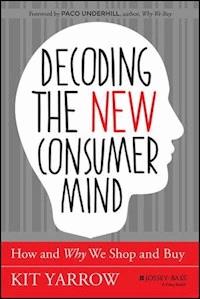
Take a glimpse into the mind of the modern consumer A decade of swift and stunning change has profoundly affected the psychology of how, when, and why we shop and buy. In Decoding the New Consumer Mind, award-winning consumer psychologist Kit Yarrow shares surprising insights about the new motivations and behaviors of shoppers, taking marketers where they need to be today: into the deeply psychological and often unconscious relationships that people have with products, retailers, marketing communications, and brands. Drawing on hundreds of consumer interviews and shop-alongs, Yarrow reveals the trends that define our transformed behavior. For example, when we shop we show greater emotionality, hunting for more intense experiences and seeking relief and distraction online. A profound sense of isolation and individualism shapes the way we express ourselves and connect with brands and retailers. Neurological research even suggests that our brains are rewired, altering what we crave, how we think, and where our attention goes. Decoding the New Consumer Mind provides marketers with practical ways to tap into this new consumer psychology, and Yarrow shows how to combine technology and innovation to enhance brand image; win love and loyalty through authenticity and integrity; put the consumer's needs and preferences front and center; and deliver the most emotionally intense, yet uncomplicated, experience possible. Armed with Yarrow's strategies, marketers will be able to connect more effectively with consumers--driving profit and success across the organization.
Sie lesen das E-Book in den Legimi-Apps auf:
Seitenzahl: 309
Veröffentlichungsjahr: 2014
Ähnliche


















Contents
Foreword
Introduction
Part One: The New Consumer Mind
Chapter 1: Rewired Brains
Technology and Consumer Behavior
Five Psychological Shifts
Chapter 2: Isolation and Individualism
Technology
Emotional Isolation
Self-Protection
Marketing to the Individualist Consumer
Chapter 3: Intensified Emotions
Narcissism
The Marketer’s Mini Primer on the Psychology of Stress, Anxiety, and Anger
Why Consumers Are More Emotional
What the Emotional Consumer Wants
Part Two: Strategies to Connect with Today’s New Consumer
Chapter 4: Technovation
The Path to Purchase is Paved with Technology
The Technovation Advantage
Big Data and Technovation
Integrated Shopping: Tear Down those Walls
The Future of Beauty
Chapter 5: The Real Deal
Using Psychology to Build Consumer Trust
A Brand that Does it All
Chapter 6: Involvement
New-School Marketing
The four C’s of Involvement
Chapter 7: Intensity
Breakthrough Messaging
Easy Does it
Conclusion
Acknowledgments and Gratitude
About the Author
Index
More from Wiley
End User License Agreement
Pages
i
ii
iii
iv
v
vi
ix
x
1
2
3
4
5
6
7
8
9
10
11
12
13
14
15
16
17
18
19
20
21
22
23
24
25
26
27
28
29
30
31
32
33
34
35
36
37
38
39
40
41
42
43
44
45
46
47
48
49
50
51
52
53
54
55
56
57
58
59
60
61
62
63
64
65
66
67
68
69
70
71
72
73
74
75
76
77
78
79
80
81
82
83
84
85
86
87
88
89
90
91
92
93
94
95
96
97
98
99
100
101
102
103
104
105
106
107
108
109
110
111
112
113
114
115
116
117
118
119
120
121
122
123
124
125
126
127
128
129
130
131
132
133
134
135
136
137
138
139
140
141
142
143
144
145
146
147
148
149
150
151
152
153
154
155
156
157
158
159
160
161
162
163
164
165
166
167
168
169
170
171
172
173
174
175
176
177
178
199
200
201
202
203
204
205
206
207
208
209
210
211
212
213
214
Guide
Cover
Table of Contents
Begin Reading
Decoding the New Consumer Mind
How and Why We Shop and Buy
Kit Yarrow
Foreword by Paco Underhill
Cover design by Adrian Morgan
Cover image © Shutterstock
Copyright © 2014 by Kit Yarrow. All rights reserved.
Published by Jossey-Bass
A Wiley Brand
One Montgomery Street, Suite 1200, San Francisco, CA 94104-4594 www.josseybass.com
No part of this publication may be reproduced, stored in a retrieval system, or transmitted in any form or by any means, electronic, mechanical, photocopying, recording, scanning, or otherwise, except as permitted under Section 107 or 108 of the 1976 United States Copyright Act, without either the prior written permission of the publisher, or authorization through payment of the appropriate per-copy fee to the Copyright Clearance Center, Inc., 222 Rosewood Drive, Danvers, MA 01923, 978-750-8400, fax 978-646-8600, or on the Web at www.copyright.com. Requests to the publisher for permission should be addressed to the Permissions Department, John Wiley & Sons, Inc., 111 River Street, Hoboken, NJ 07030, 201-748-6011, fax 201-748-6008, or online at www.wiley.com/go/permissions.
Limit of Liability/Disclaimer of Warranty: While the publisher and author have used their best efforts in preparing this book, they make no representations or warranties with respect to the accuracy or completeness of the contents of this book and specifically disclaim any implied warranties of merchantability or fitness for a particular purpose. No warranty may be created or extended by sales representatives or written sales materials. The advice and strategies contained herein may not be suitable for your situation. You should consult with a professional where appropriate. Neither the publisher nor author shall be liable for any loss of profit or any other commercial damages, including but not limited to special, incidental, consequential, or other damages. Readers should be aware that Internet Web sites offered as citations and/or sources for further information may have changed or disappeared between the time this was written and when it is read.
Jossey-Bass books and products are available through most bookstores. To contact Jossey-Bass directly call our Customer Care Department within the U.S. at 800-956-7739, outside the U.S. at 317-572-3986, or fax 317-572-4002.
Wiley publishes in a variety of print and electronic formats and by print-on-demand. Some material included with standard print versions of this book may not be included in e-books or in print-on-demand. If this book refers to media such as a CD or DVD that is not included in the version you purchased, you may download this material at http://booksupport.wiley.com. For more information about Wiley products, visit www.wiley.com.
Cataloging-in-Publication data on file with the Library of Congress.
ISBN 978-1-118-64768-4 (cloth); 978-1-118-85958-2 (ebk); 978-1-118-85931-5 (ebk)
To my heartthrob and my hero, Russ
Foreword
Within the first few minutes of meeting Kit, you would never guess who she is and what she does. You would just feel comfortable, and that’s part of how she uncovers shocking realities. Whether at a White House dinner or hanging out at her local hair salon, she has a passion for trying to make sense of the world, the people in it, and the mysteries of psychology and buying behavior. Mostly, Kit just knows.
Kit is a psychologist and professor who lectures to students and professional audiences all over the world. Her work combines academic knowledge and practical wisdom, and what makes her a good researcher is her compassion. Social science is based on emotion, and social scientists understand that truth can be transitory, unlike other fields such as physics, where reality is based on math. Kit’s quest for order is about both the knowledge and the person, and she is good listener.
In the world of shopping, Decoding the New Consumer Mind will make waves. This important book explains it all, uncovering where we are going and showing how individuals and companies can advance their offerings as well as their bottom lines. On the heels of her first book, Gen BuY, Kit takes us deeper into the world of contemporary consumption—why it matters and who can benefit. The retail landscape is going to change more in the next five years than it has in the previous fifty. The nature of competition has changed drastically, and this book explains how merchants and marketers, who are struggling to keep up with the new world order, can leap forward if they have the correct tools.
The digital revolution, combined with the threat of downward mobility across the First World, is accelerating this evolution. While some of us are doing just fine, a frighteningly high percentage of Americans have been marginalized as wages have stagnated, costs are increasing, and we are forced to save where we can. We can divide our society by those who have climbed the house wall and those who are struggling. At age sixty-one, I could not afford to buy the home I now live in if I had to buy it today.
In 2014, we also have intruders in our wallets, and being connected via the web, smartphones, and other technological platforms has joined Maslow’s Hierarchy of Needs. We’ll feed our kids generic pasta and abandon our cars before we stop paying our mobile phone bills. Moreover, so many of our identities and emotional structures are in transition. According to census data, fewer than a quarter of American households have a mother, father, and dependent child, and the number of households where the female is the dominant breadwinner is rising.
We know that collecting data in the twenty-first century is easy. Figuring out what it means is the tough part. Decoding the New Consumer Mind draws on an enormous amount of thought and analysis. I am flabbergasted at the range of studies, books, and white papers that Kit cites, not to mention her own research. In an old-fashioned world, I can see her at the dining room table sorting index cards like a graduate student writing her thesis, but I am sure she has a better way. This volume is evidence of it.
Paco Underhill
CEO, Envirosell, and author, Why We Buy
Introduction
Janine is a thirty-five-year-old high school teacher from Atlanta, and she just purchased a pair of jeans that she’s unlikely to wear. If Janine’s pattern holds true, they’ll sit on her “jeans shelf” for a few months until they assume their final resting place: a box under her bed along with another pair of jeans, black dress slacks, a floral bustier, and a stretchy black blazer—all unworn and all still too small for Janine. A year from now they’ll be resurrected and, along with the other unworn goodies, sold on eBay for a fraction of what Janine paid.
Janine isn’t the first woman to buy something for a future weight—that’s been a constant throughout the history of modern shopping. What’s different is nearly everything about why Janine chose that particular pair of jeans; how and when she bought them; her relationship with the retailer that sold them to her; and what she’ll do with those jeans in a year.
Lesen Sie weiter in der vollständigen Ausgabe!
Lesen Sie weiter in der vollständigen Ausgabe!
Lesen Sie weiter in der vollständigen Ausgabe!
Lesen Sie weiter in der vollständigen Ausgabe!
Lesen Sie weiter in der vollständigen Ausgabe!
Lesen Sie weiter in der vollständigen Ausgabe!
Lesen Sie weiter in der vollständigen Ausgabe!
Lesen Sie weiter in der vollständigen Ausgabe!
Lesen Sie weiter in der vollständigen Ausgabe!
Lesen Sie weiter in der vollständigen Ausgabe!
Lesen Sie weiter in der vollständigen Ausgabe!
Lesen Sie weiter in der vollständigen Ausgabe!
Lesen Sie weiter in der vollständigen Ausgabe!
Lesen Sie weiter in der vollständigen Ausgabe!
Lesen Sie weiter in der vollständigen Ausgabe!




