


Erhalten Sie Zugang zu diesem und mehr als 300000 Büchern ab EUR 5,99 monatlich.
- Herausgeber: Nick Hern Books
- Kategorie: Geisteswissenschaft
- Sprache: Englisch
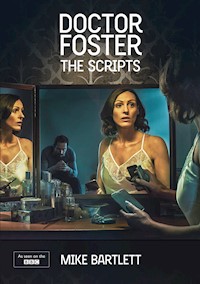
Mike Bartlett's complete scripts for the award-winning first series of his superlative television drama, winner of Best New Drama at the 2016 National Television Awards and Best TV Drama at the South Bank Sky Arts Awards. Doctor Gemma Foster is a woman seemingly in control: a trusted GP, the heart of her town, a woman people can trust. But her life is about to explode. Suspecting her husband of having an affair, Gemma throws herself into an investigation that will propel her, her family, and even her patients into chaos. Bit by bit, Doctor Foster uncovers secrets that shock her to the core. Now she has to choose how to react. One thing is certain - she is going to behave in ways she could never have imagined. Doctor Foster: The Scripts contains the complete scripts to all five episodes of the first series, plus exclusive bonus material. Doctor Foster premiered on BBC One in September 2015, starring Suranne Jones and Bertie Carvel. The series drew a weekly audience of over 8.2 million viewers, peaking at over 10 million for the finale, and was the BBC's highest-rating new drama of the year. It won two prizes at the National Television Awards 2016, including Best New Drama.
Sie lesen das E-Book in den Legimi-Apps auf:
Seitenzahl: 263
Veröffentlichungsjahr: 2017
Das E-Book (TTS) können Sie hören im Abo „Legimi Premium” in Legimi-Apps auf:
Ähnliche









Mike Bartlett
DOCTORFOSTER
THE SCRIPTS
NICK HERN BOOKS
London
www.nickhernbooks.co.uk
Contents
Foreword by Suranne Jones
Introduction by Mike Bartlett
Doctor Foster: The Road to the Small Screen
Thanks
Episode One
Episode Two
Episode Three
Episode Four
Episode Five
Cast and Crew
About the Author
Copyright Information
Dear Reader
You are in the position I was a few years ago when I was first sent these scripts.
You hold in your hands a story that will take you on a real journey; that tests your moral compass, and challenges your ideas of a marriage, a professional woman, a community, love and betrayal…
It took me a long time to read the scripts as I wanted to really put myself in Gemma’s head at every turn, even on the first reading (and trust me, that doesn’t always happen with scripts and screenplays – but this one is special).
Enjoy! And once again, thank you, Mike.
Suranne Jones
Introduction
Mike Bartlett
Why publish a screenplay, when these days the finished film or TV series is so readily available? If one only thinks of them as working documents then perhaps there is little point, beyond the academic. But reading screenplays has always been as interesting to me as reading plays; an activity in its own right. Now I think about it, I may even have read a screenplay before I properly read a play. It was the script for Pulp Fiction. I was technically too young to have seen it, only fourteen when it came out, but I think I must have watched it at a friend’s house on video. What I remember is loving the sound of the dialogue and being fascinated by the structure itself. I wanted to know how it was made, and I wanted to be part of it, so when I saw the screenplay in the bookshop I bought it, and read it again and again – hearing the rhythm of the dialogue in my head, imagining the scenes, and how I might shoot them. I saw that dialogue looks completely different on the page to transcribed speech – especially Tarantino dialogue. A world away from naturalism, it’s got artistry, form, music and structure. Reading that screenplay inspired me to write my first real scene – about two people meeting on a bench, thinking they might fall in love with each other, and then realising they hated each other. It was very Tarantino-esque, but it was, at least, dialogue.
In the years that followed I read many screenplays: William Goldman, The Godfather, American Beauty, TV shows like The West Wing and The Sopranos, recently the screenplay to Lincoln by Tony Kushner. All films and TV I’d already seen, but wanted to re-experience myself, from the script upwards. I was learning, but also enjoying and imagining. If there’s a theatrical version of film, and maybe later a director’s cut, then the version in your head as you read a screenplay is your cut. You choose the shots, and the cast. You imagine the world yourself.
What I had no idea about, until I started working in television myself, is that the script you read at the end of the process is not a pure literary document, crafted by a writer in isolation. Some plays are this, but, I would bet, hardly any screenplays. They’ve had notes upon notes given and acted on, both artistic and logistical. They’ve been revised as shooting has progressed, and they may reflect what has happened in the edit. In my experience, plays are revised and rewritten but tend to settle down around halfway through rehearsals. Screenplays, however, are in flux all the way through, for one reason or another. But despite this, I always try to make sure that the script is the document we return to – the centre point around which everything revolves. Even in the edit, when some people (quite legitimately) say that one should throw away the script and start again, I’m drawn back to it, believing that the best way to stay true to the project that everyone wanted to make in the first place is to look for the intentions in that script – even if you end up achieving them in a very different way.
So for Doctor Foster we’re never that far away from a script, in pre-production, through shooting, and afterwards. And just as there’s a creative tension between the part as it was written before it was cast, and the actor that finally plays it, I also think there’s a similar tension between the yet-unshot, utopian, platonic screenplay, full of potential, and the inevitably flawed, pragmatic, money-bound production that ends up on screen. The unrealistic utopia of the original pushes the project further than it might otherwise go, and equally the pragmatism of having to make it real and tangible can help it discover greater truth.
So in that sense the process of writing continues for me long after shooting has finished, right up until we lock the episodes in the edit, with new lines being added in ADR (additional dialogue recording), reordering of the scenes, and occasionally even creating new scenes. These scripts therefore reflect as best I think they can, what a final script would look like. The end of a writing process. It’s been fascinating for me to see some of the original descriptions of sequences and locations, and how the dialogue looks on the page. Although mostly it reflects the words you’ll find in the finished episodes, one can see the decisions that have been made by actors, designers and directors as they make it real. Reading the scripts, you’re aware that there are always other routes one could have taken. Performing a line in a different way, shooting a scene in a different style. As we’ve established, that’s part of the fun of reading the script. But of course it also makes very clear how much everyone brings to the production. What Suranne Jones adds to the Gemma Foster on the page, and how she interprets the role. How much of the tone is established through music, direction, or cinematography. The screenplay, like a play, is an invitation to collaborate, and this production had amazing artists come to work on it throughout, who were simultaneously very faithful to the scripts you’re about to read, but knew it was a jumping-off point for something potentially greater.
Doctor Foster: The Road to the Small Screen
Roanna Benn and Jude Liknaitzky (Executive Producers)
Contrary to what one might imagine, as producers in television drama, it is not ideas that we struggle to come up with. Finding brilliant writers, and persuading them to work with us, is the real challenge.
We had long been devoted fans of Mike Bartlett’s writing – having seen or read all of his plays. What we loved most of all is the way Mike collides characters: people who shouldn’t come together, who shouldn’t say those things to one another, do come together and do say those things, and the result is electric. His writing is fearless, he take things to the extreme in the most thrilling, unpredictable and dramatic ways. However, it only works if there is an underlying truth in the writing – otherwise who cares? But with Mike there is always truth at the heart: a couple at war fighting over their child (such as in his play My Child); a couple arguing over the ambiguous sexuality of one of them (Cock); a family in disarray over the legacy left by one generation to another (Love, Love, Love); the struggle in the workplace to survive when others are determined to destroy you (Bull), etc. To sum up: we wanted to be involved in capturing what Mike does best and make it work on television for millions of people to enjoy – and we didn’t want to screw it up!
We were thrilled when we eventually got the opportunity to meet Mike, although it took a long while. We had to persuade his agent, Nick Quinn, and this was no easy feat. Everyone wanted to meet Mike, and he was very busy. When we finally succeeded in squeezing an hour out of him before his rehearsals at the Royal Court for Love, Love, Love, we talked about our shared passions and, to our delight, our connection felt very natural.
Sometimes TV developments feel like wading through treacle: trying to attach the right writer to the right idea and then to match both to the right channel and the right commissioner, and everyone trying to work out what the audience might like. Far too much second-guessing and not enough coming from the heart. And therein misery lies. But on this rare occasion the elements came together surprisingly easily.
Once we hit on the notion of betrayal and revenge, and making this a very intimate story about marriage, we got very excited. Of course, affairs are ten-a-penny in television drama, not least in the soaps. But we talked about how infidelity can destroy lives and push people to the very edge. Isn’t the loss of a person’s love and devotion, their gross betrayal, akin to a death? We really believed in those high stakes and they were core to the idea. This may be a rare drama with no dead body, but in our eyes the marriage was ‘the body’ and there was a murderer to pursue.
The next step was to convince a commissioner at one of the channels that this was a good idea. Our commissioner was Matthew Read at the BBC who, fortunately for us, is one of those brilliant commissioners who trusts the writer to be their best selves. The idea we pitched was a simple and dynamic one: what happens when a woman finds out her husband is having an affair? Matthew liked it. What’s more, he confirmed that there was nothing else on the BBC slate that was dealing with this most universal of subject matters.
Mike wrote a fantastic first episode. Of course, there were a number of drafts, as there always are in development, but the process was particularly creative and streamlined. Mike seemed to relish notes and collaboration, whilst at the same time being very clear about what he wanted to write and the pitfalls he wanted to avoid. He discovered that whilst he wanted there to be lots of story, the script never worked if plot took precedence over the emotional journey of the character.
Matthew Read contributed his notes, which Mike took on board, and then the script went on its journey upwards to the Head of Drama – then Ben Stephenson – into the hands of the Head of BBC One, Charlotte Moore, and after one full of year in development the show was green-lit. This is an extremely quick result in television!
We cast Suranne Jones as Doctor Gemma Foster before we had any other crew or cast on board. We knew it was crucial to have the best and most particular lead actor, someone the audience would love and follow on this roller-coaster journey. We knew Suranne was a remarkable actor, but we had no idea how her fearlessness would match Mike’s – an incredible pairing.
The BBC gave us a year for Mike to write all five episodes before we started filming. This was a wonderful luxury as it meant Mike was able to write the whole series and then go back and rewrite with hindsight so that it felt like a complete and wholly authored piece of work. The way we – as producers – worked seemed really to suit Mike: he would relish the story-lining process traditionally used in television where we all sit in a room for days and bash ideas around. We spent a lot of time in a grotty pub in North London covering the walls with sticky white paper. We each felt we could say whatever we wanted, and it was a ‘free’ space to talk about the stories and characters. Even if Mike would occasionally tell us an idea was ‘neither original nor interesting’!
Once Mike felt he had enough to go off and form an episode, he would write up an informal story outline for himself, and for us producers and Matthew Read to get on board. This was a working document written in prose, rather than a piece of work in itself, but it was a crucial stage in the process that worked so well for Doctor Foster. It meant there wouldn’t be any huge surprises when the script arrived, therefore Mike could completely throw himself into writing a script knowing it was unlikely he would later get a note that would pull the episode apart. It has to be said that, whilst Mike stuck broadly to the story he outlined in each of these working documents, the scripts would always surprise and delight us with things he did not describe in the prose version, things we could never imagine.
Once we got into production, every detail was pored over. In such a detailed and intimate relationship drama we knew that the setting, design, costume, make-up would all be utterly crucial in building the right ‘world’ for the characters. So every decision was scrutinised and carefully thought through by every department. Mike is not only an extraordinary writer, but a true show-runner, an executive producer who genuinely earns that credit, broad-shouldered and interested enough to take on all these considerations: the logistics of scheduling, casting, costumes, title sequence, grade, and so on. The best of writers find the practical challenges creative rather than restrictive. After all, what mug a character drinks from, or what dress a character wears is just as relevant to their character as what they say and, of course, no one knows this character as well as the writer. It is such a joy – and relief – to work with a writer in this way.
We had no idea how audiences would respond to the show. And every week was nail-biting waiting for the overnight ratings to come in. Would people stick with Gemma’s story? Would they continue to care? We were blown away by the response, and particularly that audiences felt compelled to watch on the night. When we asked people why they liked the show, the overwhelming response was that they loved not having a clue what Gemma was going to do next…
Thanks
Mike Bartlett
The writing and preparation of these scripts has involved a large group of people, to whom I’m hugely grateful:
Matt Applewhite
Roanna Benn
Miranda Boscawen
Greg Brenman
Bertie Carvel
Lauren Cushman
Nick Hern
Polly Hill
Suranne Jones
Jude Liknaitsky
Clare Lizzimore
Charlotte Moore
Phil Mulryne
Nicola Sangster
Ben Stephenson
Matthew Read
Sarah Liisa Wilkinson
And the cast and crew of Doctor Foster.
EPISODE ONE
INT. FOSTER HOUSE. GEMMA’S BEDROOM. DAY
Early morning. We see details around a room, as sex goes on in the background. A discarded suit on the floor, a suitcase, the curtains letting in the morning light. We can hear the sex is good – the sex noises are slightly hushed, but clearly enjoyable.
On to a pillow on a bed. In profile.
Suddenly Gemma falls back into shot, beaming. She’s thirty-seven, very bright. She smiles –
SIMON
You miss me?
GEMMA
Yeah, I did.
Simon leans down. He’s forty, young looking, sincere. They kiss passionately, then roll over so she’s on top –
CUT TO –
TWENTY MINUTES LATER.
It was great sex but now they’re late. Gemma’s getting dressed but looking for her jacket. Simon emerges from the en suite bathroom in his shirt and underwear.
GEMMA
There’s only a few days to go and there’s a lot to arrange.
SIMON
You didn’t need to, it’s just a few friends. And we’ve got Neil and Anna tonight?
GEMMA
It’s all under control.
Gemma moves Simon’s still-packed suitcase, picks up his trousers from the floor. As she does, some coins fall out, along with a red lip salve. She picks it up, and looks at it.
GEMMA (CONT’D)(holds up the lip salve)
Is this yours?
SIMON
Yes, actually. Dry lips.
GEMMA(teasing)
Bit girly.
SIMON
Red? Nothing wrong with that, and it was the only one they had.
GEMMA(not listening)
Remember you’re taking Tom to school.
SIMON
I’m late.
GEMMA(finds her jacket)
Me too.
(smiles)
Worth it though.
He smiles as she leaves. Loves her.
INT. FOSTER HOUSE. HALLWAY/KITCHEN. DAY
A radio plays Bon Jovi – ‘Living on a Prayer’. We pan across the front of a fridge, where various things are pinned up with magnets. A photo of Simon, Gemma, Tom, and an older woman in a wheelchair (this is Helen). A list of names with the heading ‘Simon Birthday’, and a calendar.
As we come off the fridge, Gemma rushes in, to find Tom, her son, already eating cereal. We see the kitchen – it’s the working hub of the home. Piles of paperwork on the table, and the side. Unwashed mugs in the sink. It all works, but only just.
Gemma’s not happy with her hair.
GEMMA(to herself)
No one’s going to notice, it looks fine.
TOM
What does?
GEMMA
Nothing.
TOM
Morning, Mum.
GEMMA
Morning, darling.
TOM
You know we’re late.
GEMMA
The form for the trip is in your bag.
TOM
Thanks.
GEMMA
No problem. Don’t forget your coat.
TOM
Yeah, okay.
She picks up her car keys, puts on her coat just as Simon enters in his suit, holding some papers and blueprints.
SIMON
All ready mate?
TOM
Nearly.
Tom gets down from the table and goes into the hall to get his stuff ready.
GEMMA
Where’s my scarf?
SIMON
Have mine.
GEMMA(picking it up from the chair)
It’s black. I’m wearing blue.
SIMON
I think you’ll manage.
She wraps it round her neck. Kisses Tom as he comes back in, in his coat.
GEMMA
Bye.
SIMON
Bye.
Then she turns to Simon. Kisses him too. Then leaves.
TOM
Dad, did you drive back last night?
SIMON
Yeah. Got meetings this morning.
INT. FOSTER HOUSE. HALLWAY. DAY
As she goes Tom and Simon are still talking.
TOM (O.S.)
What happens in a meeting?
SIMON (O.S.)
What do you mean?
TOM (O.S.)
What do you do?
SIMON (O.S.)
You sit and drink coffee and discuss things.
Gemma opens the front door and goes out.
GEMMA
See you later!
SIMON (O.S.)
Bye!
TOM (O.S.)
Bye, Mum!
The front door shuts.
EXT. PARMINSTER. DAY
Parminster in morning sun. It’s a medium-sized town, a few miles away from the nearest city. Old buildings, mixed in with new-build and sixties housing estates.
Aerial shot as Gemma’s blue car makes its way up a street. On speakerphone in the car, she’s talking to Anna.
GEMMA (V.O.)
Right, we’re on the food, the cake... like, you’re doing the decorations.
ANNA (V.O.)
Not a problem. What would you like?
INT. GEMMA’S CAR. DAY
Gemma drives and talks on the phone.
GEMMA
Balloons, bunting...
ANNA (V.O.)
Absolutely.
As she stops at some lights, on the pavement, a mum with two toddlers points her out. The toddlers wave. Gemma waves back –
GEMMA
Oh, we talked about putting something behind the bar?
ANNA (V.O.)
Very generous.
GEMMA
Enough so that they’ll have a good time...
A woman crosses the road in front of the car, and spots her.
Gemma mouths ‘You okay?’. The woman holds up her bandaged hand, and mouths ‘Better’. Gemma thumbs-up back. Winks.
GEMMA (CONT’D)
Not so much that I’ll need a stomach pump.
ANNA (V.O.)
You know what Neil’s like. I’ll speak to the landlord.
GEMMA (V.O.)
You’re a life-saver.
ANNA (V.O.)
We’ll catch up tonight.
GEMMA
Lovely. Speak then Anna. Bye.
Gemma hangs up. The lights change and she drives on. As she does, it reveals an old school building. In front a hoarding for a redevelopment of the site. ‘Academy Green – 14 Luxury Flats.’ Pictures of what it will look like – and the name of the company: ‘Simon Foster Property Developments Ltd.’
CUT TO –
EXT. THE SURGERY CAR PARK. DAY
Gemma walks from her car to the surgery. She’s joined by Gordon Ward, fifty-three, glasses, hypochondriac, also just parked.
GEMMA
Gordon. How are you?
GORDON
Not good at all – that’s why I’m here. Back pain.
GEMMA
Okay, well we’ll deal with that inside, I was just saying hello really.
GORDON
Oh, right. Well. How are you?
GEMMA
Good. Bit of a disaster with the hair this morning but...
GORDON
Yes I can see that.
They enter.
INT. THE SURGERY. RECEPTION. DAY
Pan across a board of photos of the practice GPs. Gemma (Senior Partner) at the top. We see Jack Reynolds (Partner), Ros Mahendra (Partner), Luke Barton (Salaried GP), Nick Stanford (Practice Manager) and a couple of others.
INT. THE SURGERY. RECEPTION. DAY
Gemma heads into the reception. Behind the desk are Ros – forty, bright, big hair, her colleague and best friend, Luke Barton – twenty-nine, dark, handsome, and Nick – forty, efficient, precise. Also there is Julie – the receptionist (thirty-nine, blonde, no sense of humour).
GEMMA
Good morning, Julie.
JULIE
Not really.
GEMMA
What’s happened?
JULIE
Jack’s ill. Not coming in.
ROS
Oh why?
NICK
That’s his final warning –
ROS
What did he say?
JULIE
Gastroenteritis.
A sceptical reaction from Nick and Ros.
LUKE
I saw him in the pub last night.
They go through into the office.
GEMMA
Alright, how many on his list this morning?
JULIE
Twelve.
GEMMA
Julie see what you can do.
(to the doctors)
Take the appointments down to eight minutes.
JULIE
Okay.
LUKE
Eight minutes is impossible.
GEMMA
Talk faster.
He leaves.
ROS(flirty)
See you later, Luke.
Ros watches him go.
ROS (CONT’D)
Not a flicker.
GEMMA
He’s too young for you.
ROS
Maybe but I accidentally on purpose brushed up against his shirt the other day and he is toned like a bastard.You would if you could.
GEMMA
Shall we make a start.
INT. THE SURGERY. WAITING AREA. DAY
Gemma emerges into the full waiting room, smiles at the patients. They smile back. She’s popular. We follow her out, down the corridor, to a door which she opens.
INT. THE SURGERY. OFFICE
Gemma enters. Her office is as functional and as everyday as her home. It works but there’s paper everywhere, a few medical textbooks on shelves. Along with her desk, which has a computer on it. There’s two chairs for the patients, and a couch ready – for examinations. She puts her bag by the chair, takes off her coat, hangs it up with Simon’s scarf.
She’s about to carry on when she notices something. On the scarf is a hair. It doesn’t look like hers. It’s blonde – against the black. She stares at it. Worried.
CUT TO –
TITLE SEQUENCE
INT. THE SURGERY. GEMMA’S CONSULTING ROOM. DAY
Close-up of a picture of Gemma, Simon and Tom on Gemma’s desk.
Gordon’s opposite Gemma. He’s been going a while. As he talks we see Gemma – listening, really trying to be kind and not interrupt. Willing him to get to the point – but the clock is ticking.
GORDON
As you know, I live on my own and once a week my sister comes over... bit of a drive for her, but she brings the shopping. Meals – soup, tomatoes, meat, onions...
GEMMA
Yes –
GORDON
She was there on a Thursday, I had a headache that day, which isn’t the primary reason I’m here but now I mention it – I’ve had them for years, it’s on your notes...
GEMMA
Hmmm...
Gemma looks at her watch.
GORDON
Last weekend I saw a documentary, they said headaches havehistor...
GEMMA(interrupts)
Gordon can we get back to the specific symptoms that brought you in?
We hear the voice of another patient...
CARLY (V.O.)
I lay there with my eyes open...
We now CUT TO later. Close-up on Carly, twenty-eight, black hair, high street but nothing overstated. She’s intelligent, but not had much support in her life. Dropped out of school after A levels. Learned to look after herself.
CARLY (CONT’D)
...all night. I only get a couple of hours, and then I’m falling asleep in the day.
GEMMA
Have you had any recent big changes? Moving house? New job?
CARLY
No.
GEMMA
Do you have a partner?
CARLY(getting impatient)
Aren’t there pills?
GEMMA
Sleeping pills yes but I wouldn’t prescribe them in your case.
CARLY
You wouldn’t prescribe sleeping pills for someone who can’t sleep?
GEMMA
Only if we’d tried everything else or if there was a medical condition, and that’s rare.
CARLY
You think I’m lying?
GEMMA
No –
CARLY
Yes, because you’re not giving me the pills, even though they do exist and would help my problem.
GEMMA(firmly)
I think we should try some other things first.
We hear the voice of a new patient...
SUSIE (V.O.)
We’re opening a new restaurant tomorrow...
We now CUT TO later. Gemma finishes examining Susie Parks, forty-six, blonde, glamorous. She’s middle class and eloquent, six months on from treatment for breast cancer. She’s putting her clothes back on her top half, after an examination – and in comparison to the other two patients, slightly takes over the room. She’s full of energy, life – almost too many thoughts...
SUSIE (CONT’D)
I would love it if you could come so I can say thank you.
GEMMA(smiles)
Oh, it’s fine.
SUSIE
No, no please! Look, I’ll send through the details.
Gemma hands Susie a prescription.
GEMMA
Okay.
SUSIE
So I don’t need to do anything?
GEMMA
Keep taking these, but other than that, no.
SUSIE
Good.
They get up and walk to the door. At the door, Susie pauses.
SUSIE (CONT’D)
Gemma, thank you, so much.
GEMMA
No problem.
Gemma opens the door.
She goes. Gemma closes the door and notices the scarf hanging up. The hair is still there. She looks at it again. Against the black of the scarf. Blonde.
She picks it up. It’s long.
We hold on it a moment. Stillness as Gemma wonders where it came from...
POPPY (V.O.)
Doctor Foster went to Gloucester in the pouring rain!
CUT TO –
INT. HIGHBROOK SCHOOL. DAY
Close-up on Poppy. She’s an eight-year-old with her arm in a plastic sling. She is with her mother and Gemma.
POPPY (CONT’D)(V.O.)
She stepped in a puddle right up to her middle and never was seen again!
GEMMA(smiling, slightly weary)
Well... I hope not! It’s good to see you Poppy. You’re very brave!
POPPY
Thanks!
Gemma smiles as Poppy skips back to her mum.
We realise Gemma is one of a number of parents, waiting to collect their children at the end of homework club.
Tom’s one of the first to come out, with a few friends. He walks towards Gemma.
TOM
I did my science and Harry checked it so I know I got it right.
GEMMA
Is Harry good?
TOM
He’s a genius. He did his IQ and got a hundred and forty which is loads.
BECKY
Gemma?
Gemma turns. It’s Becky, thirty-four, happy, open, with Isobel, her daughter. She’s high energy. Maybe a little too high energy.
BECKY (CONT’D)
Hi! How are you?
GEMMA
Sorry, I... don’t –
BECKY
Becky. Simon’s assistant?
GEMMA(noting Becky’s blonde hair)
Oh... yes.
BECKY
You didn’t recognise me. It’s fine, been a while! Hi Tom! Haven’t seen you in ages!
TOM
Hi.
GEMMA
So your daughter goes to Highbrook?
BECKY
Isobel! Yes, just started. Me and her dad broke up middle of last year –
GEMMA
Oh sorry.
BECKY
Yeah. We just thought Isobel might like a new start. The homework club is a blessing! I can do the whole day, finish off, lock up and be here at five-thirty to pick her up myself!
An awkward pause. Then...
GEMMA
I’m so sorry I didn’t recognise you.
BECKY(reassuring)
Oh no! No one does any more. After the split I wanted a new start too. So I went blonde. Mum wasn’t happy, said I looked like Tess Daly, as if that’s a bad thing. But I like it. And Mum’s mad so – anyway, see you soon!
GEMMA
Bye.
Gemma and Tom get in the car. As they do, Gemma watches Becky, she hadn’t remembered her being so attractive...
INT. FOSTER HOUSE. HALLWAY. DAY
Gemma comes down the stairs, changed into more comfortable clothes for the evening.
She catches herself in the mirror. Looks at her face. Is she attractive? Tired maybe...
TOM(from the kitchen)
Mum?
Thinking of Becky, she roughs up her hair a little, then feels stupid, puts it back as it was –
TOM (CONT’D)(from the kitchen)
Mum!
She snaps out of it, and carries on to the kitchen.
GEMMA
Yes?
INT. FOSTER HOUSE. KITCHEN. DAY
Gemma enters and goes straight to the oven to check the food – a little anxious. Tom’s at the table eating pasta, reading a biology textbook.
TOM
You know how many bones there are in the human foot?
GEMMA
Twenty-six. And thirty-three joints. And more than a hundred muscles, tendons and ligaments.
Off – the front door opens.
TOM
Mum, you’re a geek.
GEMMA(proud)
I know.
Gemma smiles at him as Simon comes in with his work bag, and a carrier bag with some bottles.
SIMON
I was stuck in traffic for twenty minutes but bearing in mind I started late today, I think I’ve done pretty well. What’s more, I have wine.
GEMMA
Perfect.
SIMON(taking his stuff off)
Can I do anything?
GEMMA
You can pour me a glass. Oh, before I forget –
She picks up his scarf from the chair and gives it to him.
SIMON
Did you cope with the colour?
GEMMA(glances at him)
The colour was fine.
SIMON(turning to get a beer from the fridge)
Mate, you gonna come and say hello tonight?
TOM
No.
SIMON(pouring Gemma a glass)
Why not?
TOM
Mum said I don’t have to.
SIMON
You’re not a kid any more.
TOM
Yeah, but you never let me leave and you tell these stories.
Simon gives the wine to Gemma.
SIMON
Up to you mate.
TOM
Right.
GEMMA(still preparing the food)
So tell me about your weekend.
SIMON(stirring the food)
Well it’s a conference. A load of men gather in a cheap hotel, talk about planning legislation.
GEMMA
What about the evenings? Did you go out?
SIMON
Occasionally.
GEMMA
Every night in the casino?
Roulette, cocktails, beautiful women...
SIMON
It’s Hemel Hempstead.
TOM
What’s so fun about casinos? In the end you always lose.
SIMON
Ah well, now let me explain.
GEMMA
No I don’t think you will.
There’s a ring at the front door.
SIMON
Aha!
Simon goes to open the door. Tom immediately gets down from the table.
TOM
Okay, see you later Mum.
GEMMA
Do you want a juice to take up?
TOM(going)
No, thanks.
He leaves. Gemma stands with her wine, looking through the doors out into the hall. Tom just gets up the stairs as Simon opens the front door to Neil, forty-four, an attractive, well-dressed accountant, and his wife Anna, forty-three, blonde, an occasional Pilates teacher. No coats, as they live across the road from the Fosters and visit quite often.
NEIL(to Simon)
Good timing. Just got in?
ANNA
We saw you pull up.
SIMON
I had to stop for booze.
NEIL(holding up two bottles of wine)
No need!
INT. FOSTER HOUSE. DINING ROOM. NIGHT
The four of them are around a table having dinner. The conversation’s in full flow.
NEIL
It was a resort, but it really wasn’t bad. You open the door and you were right there on the beach.
ANNA
Yeah and they have activities for children –
SIMON
I’m sure Tom would love it –
ANNA
There’s kids everywhere.
NEIL
Screaming...
ANNA(to Neil)
They were just having fun! He told them to shut up.
NEIL
I did not –
ANNA
‘Pipe down.’ Like an old man!
NEIL
It’s an expression.
ANNA
You can imagine how popular that made us...
SIMON




