


28,49 €
Mehr erfahren.
- Herausgeber: Nick Hern Books
- Kategorie: Poesie und Drama
- Sprache: Englisch
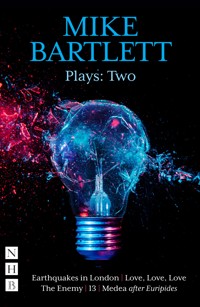
Five ambitious and exciting plays by the multi-award-winning playwright, hailed as 'one of the prime movers in a new golden generation of British playwrights' (Independent), and introduced by the author. Earthquakes in London (National Theatre & Headlong, 2010) is an epic drama about climate change, population explosion, social breakdown and worldwide paranoia, travelling from 1968 to 2525 and back again. 'The theatrical equivalent of a thrilling roller-coaster ride' (Daily Telegraph) Love, Love, Love (Paines Plough & Drum Theatre Plymouth, UK tour, 2010; Royal Court & Paines Plough, 2012) examines the baby boomer generation, from coming-of-age in the 1960s to retirement-age more than forty years later, in a play that 'does the clash of generational world views with a devastating precision' (Guardian). The Enemy is a short play in which a journalist seizes an opportunity to interview the man who shot Osama bin Laden. It was staged by Headlong as part of Decade (St Katherine's Dock, London, 2011), exploring 9/11 and its legacy. 13 (National Theatre, 2011) is a panoramic drama in which a young man returns to London, a city riven by social protest and upheaval, with a radical vision for the future. Premiered on the National's largest stage, it confirmed Bartlett's ability to tackle epic themes with supreme assurance: 'His ambition is distinctive and immense' (Evening Standard). Medea (Headlong, UK tour, 2012) is a startlingly modern version of Euripides' tragedy, exploring a woman's private fury at her husband's infidelity, while imprisoned in her marital home. 'A savage play for today, superbly well done' (Mail on Sunday)
Das E-Book können Sie in Legimi-Apps oder einer beliebigen App lesen, die das folgende Format unterstützen:
Veröffentlichungsjahr: 2022





Mike Bartlett
PLAYS: TWO
Earthquakes in London
Love, Love, Love
The Enemy
13
Medea
Introduced by the author
NICK HERN BOOKS
London
www.nickhernbooks.co.uk
Contents
Introduction
Earthquakes in London
Love, Love, Love
The Enemy
13
Medea
About the Author
Copyright and Performing Rights Information
Introduction
Mike Bartlett
I’ve resisted writing introductions to plays. Like many writers, I felt that I didn’t want to explain or add anything beyond that which could be found in the texts themselves. However, while reading during the recent Covid-19 lockdown, I realised that what I did find interesting was accounts of how writers found their plays – where the ideas had come from. So that’s what I’ll try to recount here, if it’s of interest. If it is not of interest, which is a distinct possibility, then I fully suggest skipping this introduction and carrying straight on to the plays. They will hopefully speak for themselves, and if they don’t, then probably no introduction will help anyway.
* * *
Between 2007 and 2009 I’d had my first three plays professionally produced: My Child, Artefacts and Contractions. These were all short, with a few central characters, and very condensed in their form. However, over this period, I had also written a number of other plays, which were different in two ways: firstly, they were longer, with many characters and a greater scale, and secondly, they were, quite rightly, rejected. Perhaps if I describe them briefly, you might see why. One was called A Thin Place Between Heaven and Earth, about Prince William visiting the Scottish island of Iona after university before embarking on his royal destiny. Another, Fortress, a three-act, confusing piece of work about a British soldier returning from war suffering from PTSD and with an unreliable memory (leading sadly to an equally unreliable plot). There were a couple of others, neither any better. I clearly had a desire to write bigger ideas on a larger scale but had not yet found a way of making a play like that coherent. Looking back I think I was writing on instinct alone, without enough planning, and while this creative energy could sustain smaller ideas, larger concepts seemed to fall apart across the greater duration of the play, the ideas and interest failing to hold.
However, in 2009 Ben Power, then Associate Director of Headlong Theatre, approached me to consider writing a play for them. Along with Rupert Goold, the Artistic Director, Headlong had established a reputation for new plays and revivals that felt contemporary, large-scale and asked intelligent, relevant questions of the audience. They had just produced Lucy Prebble’s astonishing play Enron, which I’d loved. In our first meeting, Ben said they wanted me to write a play where I did all the things I thought I wasn’t allowed to do: a large cast, with a big idea, on a grand scale. He asked if I had any ideas. As often when asked this in meetings, the truthful answer was no. But I knew that I wanted to write about climate change next, in some form, and I had at least thought of a title for it: Earthquakes in London. I didn’t know anything else at that point, but they decided it was enough to commission me and I went off to make a start. I decided that perhaps the solution to writing it successfully would be to plan it carefully, and also to take every new idea I had for the next six months, and throw it into the plan. To just assume it was part of this larger whole.
Therefore, as I read about James Lovelock, I thought about an old man isolated in Scotland, towards the end of his life. I had an image of a character walking through London, a well-meaning but compromised politician in a moment of crisis, a young disempowered activist. I visited the shop Liberty for the first time and had a crisis of my own, related to the prices – that went in. As well as an older woman in the park, being nostalgic. All these small ideas were brought together through the emerging plan, and eventually I delivered a very long and unwieldy play to Headlong. Ben and Rupert loved the ambition at least, and we got to work redrafting. Around that time, Nick Hytner, Artistic Director of the National Theatre, saw my play Cock at the Royal Court Theatre, and asked to read the next thing I was working on. I sent him Earthquakes and with the speed of response playwrights only dream of, he called me three days later, said he loved it and wanted the National to produce it. Which they did, in the Cottesloe Theatre (now the Dorfman).
Looking at an early draft now, it’s rough, but crucially, I had found the spirit and the metaphor of the play: the idea of a Weimar-style cabaret just before the end of days. Of living and dancing, shouting and making love now because our time is limited. And through all the gloom inevitable in the subject matter there are embers of hope: in the growing consciousness and love of the sisters for each other. In the humour and compassion throughout. And ultimately in the young girl who decides at the very end to walk to London, with a message that the world needs to hear – that she demands a future. One of the aspects that Ben and Rupert pushed on, and which I think about a lot with larger plays now, is that one should focus less on what you want the play to say, and more about finding the right questions to ask. For Earthquakes, these were questions of legacy, responsibility and freedom, in the face of super-charged capitalism and an advancing and devastating climate emergency.
I also wanted the form of the play to reflect the excess of the culture. I wrote in a stage direction, it should be ‘too much’, and in the astonishing production Rupert gave it, designed by Miriam Buether, it really was. A catwalk flowed through the auditorium. Audience members could stand around it, or sit at barstools right up to it. At either end were two small end-on stages. Scenes flowed and overlapped, with big musical numbers, light, mess, chaos, costume, physicality and joy. Rupert, as a director – in a very charming way – pushes on every aspect of the production to be better. And that was true of the script. It was reshaped, added to, cut down and rewritten throughout the whole process. A very different experience to the careful respect for the ‘text’ that I had experienced at the Royal Court, and it wouldn’t help every play, but this huge patchwork needed wrestling into shape, and the whole thing eventually began to cohere into one story. The phenomenal playwright Tony Kushner once wrote in an essay about some plays being like lasagne – everything thrown in and bursting, on the brink of collapse, but just about holding their shape. This felt like that.
* * *
Around the same time I was writing Earthquakes, I was also under commission to Paines Plough, a new-writing touring theatre company run by James Grieve and George Perrin, who with their previous company – nabokov – had produced Artefacts (my first professional commission). They had commissioned a follow-up play from me with the Drum in Plymouth. As this was going to be a touring show they had sheepishly asked that it have a small cast and minimal production requirements. I reassured them that the request was completely reasonable. A writer was a grown-up professional, and should be able to tailor a play to the circumstances of the production. I went on to claim that these restrictions could even inspire creativity. However, despite the talk, once again I had no ideas and the commission was now overdue. I had a spare week and I had to write something.
So each day I went to the café near my flat in Kilburn and wrote all day. Then I brought it home where my girlfriend generously read it. On the Monday I can’t remember what I wrote but she said it was pretty bad. On the Tuesday I wrote a dialogue about students in Plymouth talking, contrasted with their parents having a conversation about them. This was also deemed, correctly, not great, but there was a theme emerging, about baby boomer parents sitting in big houses with lots of money, and their children, unable to buy, or even rent, a house and struggling. On the Wednesday I thought about where those parents had started. What were their opportunities and dreams, and how had those been disappointed, or corrupted? So I began to write about when those parents met, in the heady sixties. By the end of the Wednesday I had written a large chunk of the first act, with Henry and Kenneth waiting for Sandra, and this time, fortunately, my girlfriend liked it and wanted to know what happened next.
Unfortunately, when it was eventually finished, it had a cast of five, was over two hours long and needed three completely different sets. Despite this complete failure to adhere to the brief, James Grieve, who was to both produce and direct it, read it overnight, declared he didn’t know quite how they would do it but he loved it and knew that they would do it. (This was a characteristic reaction from James. His work with George Perrin commissioning and producing a whole generation of playwrights and artists is incredible – but that deserves a book in itself.) Over the next two years the play toured the country twice, before transferring to the Royal Court. I loved how, in performance, particularly in the final act, the play would split the audience between the boomers and their children. When Rose asked her parents to buy her a house, the older members of the audience laughed at this as a self-satirising joke; their children, on the other hand, saw it as a completely sincere, outraged cry for justice that the whole play built towards.
* * *
For my generation, in Britain, 9/11 had been a pivotal and formative moment. We had grown up in an unusually stable decade, since 1989 and the fall of the Berlin Wall. Philosophers had declared history dead, New Labour had appeared to discover a way to have social justice and a thriving economy, and as technological development began to accelerate, with the internet and mobile phones, we naively and incautiously had every reason to believe that the world would continue to improve. For those privileged enough to benefit from all this, progress began almost to be taken for granted. Then the planes crashed into the towers. The first many of us knew about it was when we received a text message, as I did, that simply read ‘Turn on the TV’. For me, once that news was on, everything else was cancelled, and I sat on the sofa that day and late into the night with some friends (I was in student accommodation in Leeds), all of us wondering if more planes would crash into other buildings the next day; if this was the start of a Third World War.
Ten years later, Headlong were creating a collaborative project, Decade, to mark the tenth anniversary of 9/11. They approached a number of writers to create short plays, which they would then curate into an evening of work. I had been evasive, unwilling to commit until I had a good idea, but they needed to know soon if I would be contributing. My current excuse to avoid writing it, in May 2011, was that I was in Mexico, for the opening of a production of my play Cock. But the truth was, away from my daily routine, I had time to write, I just couldn’t think of a useful contribution that would somehow deal with the enormity of the event, or indeed, channel the feelings of tragedy on the day. Having pretty much given up, I checked my phone, and 9/11 was in the news again. Osama bin Laden had, after ten years, been tracked down and killed by American Special Forces. I began thinking about who the actual man was, that fired the fatal shot. How his name would almost certainly be withheld, but how it would utterly change his life, and one day probably be revealed.
Then I remembered a form for an unfinished play I had experimented with years before, where each line was only one or two syllables long. It made for an edgy, staccato rhythm, indicating characters that were a mix of very confident, and yet mistrustful of each other. Mixing this content and form I wrote the play, now called The Enemy, and sent it off. Rupert, and the project’s co-director, Robert Icke, liked it, and the almost athletic challenge it set for the actors. The final production was fluid and moving, a real mix of voices and opinions, and as emotional as it was intellectual. And if perhaps it failed to completely capture the effect of 9/11 on our culture, that was an accurate reflection of our continued trauma and confusion about it.
* * *
In 2011, I had been asked to become writer-in-residence at the National Theatre. It was a unique opportunity to be part of the work of the building, and in response I wanted to try to write something that could go on in the same year – that could speak to the moment. Therefore, together with Ben Power, who was now an associate director at the National, we devised a plan where an autumn slot would be kept free in the Olivier until the summer. If at that point I had written something of worth, then we’d do it. If not, they would do a revival instead. My starting point was religion. I’m not religious myself, but it’s been a big part of my life. My grandfather was a United Reformed Church minister and a conscientious objector in the Second World War, my mother is a lay-preacher, and I took an A level in Religious Studies. Despite never being a believer, I have always been fascinated by its centrality to culture, politics and identity. By 2011 this subject had, probably charged by 9/11, become a major point of public discussion. Sam Harris, Christopher Hitchens, Richard Dawkins and Daniel Dennett had a number of debates on the subject. Hitchens had written a bestselling book God Is Not Great. At the same time, there felt like a growing dissatisfaction amongst younger adults. Disappointed by the government, especially the Conservative/Liberal Democrat coalition, they were protesting again, beginning to demand a voice, in a way that had not been seen perhaps since the sixties. I attempted to write about this in a magical-realist mode, as a movement of young people drawn to London through following a central figure, an everyman called John. I wanted to explore the power of this, but also its danger. Who gets to play God? The play was called 13 and reading it now I notice I got a number of things right – there was indeed an energetic desire of a new generation to question the assumptions of their parents and grandparents, to fight for social justice and to defy the, by then commonplace, doctrine that the youth were apathetic and lazy. But I got the battleground wrong. In the play it was physical public protest and religion. It became clear only a few years after 13 was produced that a new generation’s revolution would in fact be about social media, identity and equality.
The production was staged in the Olivier Theatre, directed by Thea Sharrock and with an astounding design by Tom Scutt. As with Earthquakes, I wrote and rewrote almost continuously, taking notes all the time. I wanted the form to be like a meeting – a religious gathering – for which the curved amphitheatre of the Olivier seemed appropriate. But this time something didn’t quite cohere. Whether the play needed more work in terms of form, whether it was the theatre or the production, or some combination, I’m not sure. The individual parts of the play – performances, design and some of the scenes – landed fantastically, but as a whole the ‘lasagne’ proved a little too close to collapse.
While the play just about worked with audiences, critically it was a failure. I was lucky that I had other projects to move on to, but at that point my biggest profile work had been a failure, and it certainly knocked my confidence. It has never been professionally revived, but what has been amazing to see has been the number and quality of drama-school productions of the play; it is quite possibly my most performed play in terms of amateur productions. Something in the play speaks to the generation it was written about, and they perform it with passion and authenticity. And that’s a lesson that I remember now – that plays (and in fact television) can travel and grow, and that although a lot of the attention is on the opening night of the first production, that may not end up being where the work finds the most meaning. If they have some value culturally, the core ideas can sustain and grow over time.
* * *
…which links very well to Medea. This play arose because I wanted to direct something again. I had originally wanted to become a director after university and had assisted on a few productions. But I was a keen but rather insecure presence at the time, and those are not ideal qualities in a director. Instead I found myself writing and had been happy doing so ever since. But while working on Earthquakes in London, Rupert Goold had spotted that I was drawn to all the aspects of production and suggested I read some of the Greek classics. Medea stood out for me – a central character that demanded to be heard, but who one could not entirely pin down. Of all the classic plays I read, it felt the most contemporary and pressing. Once I had started to work on it, I read about women who had been betrayed, who were then driven to extreme actions, taking matters into their own hands in pursuit of a justice they were lacking. My approach was to try to be very faithful to Euripides in terms of intention and form, but to translate it in terms of time and setting, to see what I discovered. The element that came to define the character was Medea’s denial to be simply the victim. She refused to be pitied or left behind. Instead, alone, she demanded justice for her children, and also for herself.
Once I had a draft we began to move towards production, where I would be directing my own work for the first time. Rachael Stirling came in to read; seemingly effortlessly she found the meeting point of the classic and the contemporary. She was witty, scathing and deeply moving. The design, by Ruari Murchison, was a cross-section of a new-build house. The production opened at the Citizens Theatre in Glasgow, a perfect setting with its history of making classic plays both avant-garde and accessible. It then toured, and as it was performed, we found two things. Firstly, that when school groups came, young women in particular would love it, especially the character of Medea herself. Afterwards they would wait in groups in the foyer for Rachael to appear and then descend on her, keen to show their appreciation but also to carry on the conversation the play had started.
The other thing we noticed was that we couldn’t get the end right – with the murder of the child. We reconceived it when we toured to Watford and it was better, but still it felt like an anticlimax. The horrific gesture just didn’t feel right. In that final action Medea somehow became pathetic rather than glorious, her ‘justice’ psychopathic rather than meaningful. She became deeply unusual rather than an everywoman. Perhaps this was because that’s the one element of the play that is very unusual. Women everywhere are betrayed and dismissed, but they hardly ever kill their children.
Perhaps the audience sensed that. Medea came third in the original play competition that it was part of in Ancient Greece. The first and second place plays are lost unfortunately, but I wonder now if this has always been the problem? After a thrilling and truthful unfolding of the drama, the ending was (uncharacteristically for Euripides) unbelievable, and the reason? Not the deus ex machina or the flying chariot in the sky, but because at the last moment she had become a misogynist trope – simply, the mad woman. I was learning the very difficult balance with adaptation: one must be faithful, but critical too.
Despite the troublesome finale, the play did well. It never transferred to London as perhaps we hoped, but in the audience when it came to Watford were Roanna Benn and Jude Liknaitzky, who worked for a television production company called Drama Republic. A discussion of the play led us to wonder what a television drama version might be. Two years later we were making Doctor Foster, a BBC One drama series about another woman betrayed by her husband. This followed the outline of Medea relatively closely, but now I had learnt my lesson. Instead of killing her son, she protects him, and the series ended with her, not unscathed, but in triumph. The final episode was watched by ten million people. As I write now in 2022, the series has been broadcast in over twenty countries and remade in ten different versions across the world. So, again, the opening night in Glasgow in 2012 wasn’t the complete meaning. It was only the beginning of an idea, or maybe a character, starting to find its audience.
A Note on Collaborators
Writing this introduction it’s noticeable that the same names come up repeatedly. This is reflective of one of the most enjoyable things about theatre: collaboration, and one of its best aspects as a community: support. Some of this collaboration and support came from more senior established figures in the industry – over this period, for me: Rupert Goold and Nicholas Hytner. Other collaboration and support came from peers, who I’d known since we were starting out in our twenties: James Grieve, Thea Sharrock and Ben Power. But the thing that has linked them has been a sustained belief in me as a writer, not just for the next play, but in the long run. I never had the feeling from any of them that the relationship with me was contingent on the success of the next play. And that’s how one feels able to take risks. I felt that if I made a mistake, either artistically or politically, that they would stand behind what we had made together. The Royal Court Theatre used to have a policy – perhaps they still do – where for new writers they wanted to encourage, they would sit them down on the morning of the press night, and offer them the next commission – deliberately before the critics had given their verdict. This is a precise illustration of the support I’m talking about.
Looking back, all of the plays in this book were created in a time before the culture was revolutionised by social media specifically constructed to encourage division. Making work now, if we are to keep pushing on both form and content, the ‘right to fail’ is much more important than ever, and in theatre the most important aspect of this is the right to fail together. We need to support each other (and that means me, as a writer, supporting the director as well) on seemingly ridiculous, unfashionable and genuinely countercultural projects, in the hope that they might spark something new, or at least of value, to the audience.
EARTHQUAKES IN LONDON
Acknowledgements
This play could not have been written without Elyse Dodgson, Jonathan Donahoe, Clare Lizzimore, Rachel Wagstaff, Duncan Macmillan, the cast and production team, and particularly Miriam Buether, Rupert Goold and Ben Power.
Earthquakes in London was first performed in the Cottesloe auditorium of the National Theatre, London, on 4 August 2010, in a co-production with Headlong Theatre. The cast was as follows:
MARINA
Lucy May Barker
TOM
Gary Carr
YOUNG ROBERT
Brian Ferguson
GRACE / RECEPTIONIST / JOGGER
Polly Frame
SIMON / ROY
Tom Godwin
COLIN
Tom Goodman-Hill
CARTER
Michael Gould
PETER
Bryony Hannah
BUSINESSMAN / DANIEL / STUDENT / DR HARRIS / BARMAN
Clive Hayward
MRS ANDREWS
Anne Lacey
SUPERMARKET WORKER / YOUNG MAN / TIM
Syrus Lowe
FREYA
Anna Madeley
ROBERT
Bill Paterson
JASMINE
Jessica Raine
CASEY / OLD WOMAN / SALLY / LIBERTY
Maggie Service
STEVE
Geoffrey Streatfeild
SARAH
Lia Williams
All other parts played by members of the company
This version of Earthquakes in London was first performed at Theatre Royal Plymouth on 22 September 2011, in a Headlong Theatre and National Theatre co-production. The cast was as follows:
SIMON / ROY / WWII OFFICER / POLAR BEAR / PASSERBY 1
Ben Addis
UNDERSTUDY / DANCE CAPTAIN
Sam Archer
PETER / MOTHER
Helen Cripps
TOM
Kurt Egyiawan
COLIN
Seán Gleeson
MARINA / MOTHER / UNDERSTUDY
Siubhan Harrison
STEVE
John Hollingworth
MRS ANDREWS
Maggie McCourt
SARAH
Tracy-Ann Oberman
JASMINE
Lucy Phelps
SUPERMARKET WORKER / CASEY / OLD WOMAN / LIBERTY / MOTHER
Nicola Sangster
CARTER / DANIEL / POLICE OFFICER / DR HARRIS
Gyuri Sarossy
ROBERT
Paul Shelley
GRACE / RECEPTIONIST / MOTHER / JOGGER
Natalie Thomas
YOUNG ROBERT / BUSINESS MAN / SCAMMER / BAR MAN / DR TIM / PASSERBY 2
Joseph Thompson
FREYA
Leah Whitaker
All other parts played by members of the company
Director
Rupert Goold
Set Designer
Miriam Buether
Costume Designer
Katrina Lindsay
Lighting Designer
Howard Harrison
Music
Alex Baranowski
Projection Designer
Jon Driscoll
Choreographer
Scott Ambler
Sound Designer
Gregory Clarke
Company Voice Work
Jeannette Nelson
Project developed for Headlong by Ben Power
The creative team for the 2011 UK tour included
Director: Caroline Steinbeis; Associate Set Designer: Lucy Sierra; Lighting Designer: Tim Mitchell; Associate Projection Designer: Emily Harding; Associate Projection Designer: Paul Kenah; Associate Choreographer: Steve Kirkham
Characters
ROBERT
LIBERTY
GRACE
BUSKER
FREYA
POLAR BEAR
STEVE
EMILY
TOM
JOGGER
JASMINE
PASSERBY 1
SARAH
PASSERBY 2
SIMON
OTHER PASSERSBY
COLIN
POLICE OFFICER
SUPERMARKET WORKER
NARRATOR
CASEY
YOUNG ROBERT
PETER
DR HARRIS
CARTER
NURSE
BUSINESSMAN
MANY STUDENTS
MRS ANDREWS
DANIEL
ROY
MANY SWIMMERS
FIFTEEN MOTHERS WITH
PUSHCHAIRS
OLD WOMAN
SECOND WORLD WAR
OFFICER
YOUNG MAN
BARMAN
MARYNA
RECEPTIONIST
TIM
WAITER
SMOKING MAN
COMMUTERS
STREET PERFORMERS
TOURISTS
MARCHING BAND
NEWSPAPER SELLER
USHERS
Note on the Text
The play is presented using as much set, props and costume as possible. The stage should overflow with scenery, sound, backdrops, lighting, projection, etc. Everything is represented. It is too much. The play is about excess, and we should feel that.
Scenes crash into each other impolitely. They overflow, overlap. The production should always seem at risk of descending into chaos but never actually do so.
( / ) means the next speech begins at that point. ( – ) means the next line interrupts.
(…) at the end of a speech means it trails off. On its own it indicates a pressure, expectation or desire to speak.
A line with no full stop at the end indicates that the next speech follows on immediately.
A speech with no written dialogue indicates a character deliberately remaining silent.
Blank space between speeches in the dialogue indicates a silence equal to the length of the space.
ACT ONE
Prologue
1968.
Cambridge.
Black and white.
ROBERT CRANNOCK is on a date with GRACE, who is wearing a floral dress. They eat. ROBERT is awkward.
‘In the Year 2525’ by Zager and Evans is playing quietly in the background.
ROBERTI’m sorry if the letter was too forward.
GRACEI liked the letter.
ROBERTI got carried away, I’m sorry.
GRACENo.
ROBERTI didn’t mean to sound strange.
GRACEIt wasn’t strange. I liked it. Love letters in my pigeonhole. Romantic.
What do you do Robert? I mean I know you’re a postgraduate, but what exactly do you… do.
ROBERTI’m doing a doctorate
GRACEIn?
ROBERTAtmospheric conditions on other planets.
GRACEOther planets? Like aliens?
ROBERTSome of the work is to do with finding life yes.
GRACELike Star Trek?
ROBERTWell… NASA are interested, so –
GRACEYou’re joking?
ROBERTNo.
GRACENASA?
ROBERTYes.
GRACEWow.
ROBERTYes.
GRACEWow.
ROBERT…
GRACESo how do you know? If there’s life?
ROBERTWell, all life gives off excretions of some kind. Gases, minerals.
GRACEWe all give off gases?
ROBERTYes.
GRACEEven girls?
ROBERTAnd all these gases –
GRACEHave you / researched this?
ROBERTThese excretions, from all of these creatures, they go up into the atmosphere, and you can imagine globally they would make quite a difference to its composition. So it follows that if we could accurately measure the composition of gases in the atmosphere of a planet like Mars, we could tell whether there was life.
GRACEAnd?
ROBERTWhat?
GRACEIs there?
ROBERTWe don’t know.
GRACEOh.
ROBERTWe haven’t done it yet. Not enough funding.
GRACERight.
ROBERTBut as I say, NASA are interested.
She looks at him.
GRACESo all the time, every bit of life, animals, humans, everything, change the environment.
ROBERTYes. You are right now. The room is entirely different because you’re in it.
GRACEYou think?
ROBERTDoesn’t matter what I think. The atmosphere in this room is completely dependent on how much you move, whether you talk, if you’ve got a cold, how hot you are.
GRACEHow hot I am?
ROBERTYes. Imagine if we all came in with a fever, the room would get much hotter, and then we’d get even hotter as a result, our fever would get worse and the room would become hotter in turn and so on and so on, upwards and upwards.
GRACEHotter and hotter.
ROBERTExactly.
Sorry. Wittering on. Supposed to be a date. I like your dress.
GRACENo, Robert, you’ve raised a very important question.
ROBERTReally?
GRACEYes. How hot do you think I am?
ROBERTHow hot?
GRACEHow. Hot.
ROBERTWell… Oh.
You mean…
GRACEIt’s 1968. It’s the summer. We’re young. We can do what we want.
ROBERT puts his hand on her forehead. She smiles.
ROBERTAbove average.
She smiles, and puts her hand on his head.
GRACEBoiling.
So what happens now?
They look at each other.
‘In the Year 2525’ plays – gets louder. Cross-fade scene and music into –
Proper Coffee
2010
A kettle boils.
FREYA’s face isolated. FREYA is singing along to a cover of ‘In the Year 2525’ by Venice Beat feat. Tess Timony. She loves it.
She sings some more.
We see FREYA. She is pregnant, wearing a man’s shirt and making coffee in her kitchen. She has headphones on and dances. A television is on as well.
Everything is done in rhythm – coffee, kettle… sugar… eats a spoonful herself.
We see STEVE in the shower. He hears her singing – bemused.
STEVEFreya?
FREYA keeps on singing.
Freya!
FREYA sings a bit more then takes a headphone out. The music is quieter.
FREYAWhat?
STEVEWhat are you / singing?
FREYAI’m making coffee.
STEVEWhat?
FREYACoffee! Do you want some?
STEVEProper coffee?
FREYAIt’s always proper coffee.
STEVEWhat?
FREYAIt’s always proper coffee, / no one drinks instant.
STEVEWhat? I can’t hear you! I’m in the shower! I can’t hear you!
FREYA dances. The music becomes background in Starbucks.
TOM enters and offers a coffee to JASMINE.
TOMFull-fat latte, two brown sugars, cream on top.
JASMINEDo I know you?
TOMThought I’d do the honours. Did I get it right?
JASMINEDon’t know yet what does Rohypnol taste of?
She drinks a bit.
TOMIt was Marxist Criticism. We used to get our coffees at the same time. I liked the look of you, remembered your order. I’m Tom.
JASMINEYeah.
TOMYou’re Jasmine. I heard you dropped out.
JASMINEI had an argument with my lecturer.
TOMWhat about?
JASMINECharles Dickens. Do you smoke?
TOMI can.
JASMINEGood boy.
SARAH appears, talking to SIMON, her assistant.
SARAHThere aren’t any plants.
JASMINELet’s take this outside.
SARAHDepartment of climate change, massive office and nothing’s green. It’s ridiculous.
SIMONIt’s on the list. And you need to put something in for Casey. She’s leaving.
SARAHWho’s Casey?
SIMONBy the wallchart? Under the window?
SARAHWhy’s she going? Pregnant?
SIMONRedundant.
SARAHOh.
SIMONShe’s the chaff we talked about.
SARAHRight. Yes. Right.
SIMONSmaller government. That’s your policy.
SARAHNot my policy Simon.
SIMONI’m afraid so, minister. What sort of plants do you want? You mean flowers?
SARAHHere’s ten for Casey. No not flowers. Flowers are dead. We want some life round here. Get a cheese plant. They still have those?
FREYA continues to make the coffee. Watches television at the same time.
COLIN is in a supermarket and approaches a young assistant.
COLINExcuse me.
SARAHThey had them in the eighties.
COLINI’m looking for a guava.
S. WORKERA what?
COLINA guava.
S. WORKERWhat’s that?
COLINIt’s a vegetable.
S. WORKERRight.
COLINPossibly a fruit.
S. WORKERVegetables and shit are over there.
COLINI’m sorry?
S. WORKERVegetables and fruit and all that are over there.
COLINI know but I’ve looked and I can’t find it.
S. WORKERProbably don’t have it then.
COLINProbably.
S. WORKERYeah.
COLINCan you check?
S. WORKERChhh.
SUPERMARKET WORKER goes off to check. Still the music in the background. JASMINE and TOM are smoking outside.
JASMINEHe’s sat there opposite me, I said I’m not being funny but if you want two thousand words by Monday you can whistle, I have to work weekends, different for you Gary, fucking baby boomers, get your grant, got your degree then don’t pay for your kids. So he says ‘Do you have financial difficulties Jasmine?’ and I’m like ‘Gary. We all have financial difficulties, read the fucking papers.’ Then he suddenly goes red, shouts that I’m ‘thick as corrugated shit’ whatever that means and says I only got in here because of who my sister is, so I lost it completely, threw a bookshelf at him.
TOMA bookshelf?
JASMINEIt was Bleak House that got him in the eye, hardback so he had to go to hospital. They said I was a menace, attacking my lecturer with a weapon, I said something about the power of the written word and that was it. Out.
TOMYou don’t look like a menace.
JASMINEI am, Tom.
SUPERMARKET WORKER comes back.
S. WORKERIs this it?
JASMINEI’m a natural fucking disaster.
COLINHow should I know? I don’t know what a guava is.
You tell me.
S. WORKERYeah. This is it.
COLINYou’re sure?
S. WORKERYes.
COLINPositive? Because this is important. I want you to understand that if I get home and this isn’t a guava I’m in big trouble. So it follows that if I get home and this isn’t a guava you’re in big trouble, yes?
He reads her badge.
…Sue. You’re in big trouble if this isn’t a guava Sue. So.
You’re sure?
S. WORKERCandice said it was and she’s good with fruit.
COLINRight, thanks.
STEVE enters with his suitcase, just as FREYA, dancing, throws his coffee across the kitchen. STEVE jumps out the way. FREYA takes her headphones off.
FREYADidn’t mean to do that. Oops.
STEVEOops.
STEVE smiles and grabs a cloth instantly to mop it up.
FREYAI can make another.
STEVENo, I have to go really, sorry…
FREYADon’t be sorry.
STEVESorry I’m going at all.
FREYADon’t be – we need work, money, especially now, in the current climate, the way things are, that’s what you say.
STEVEAnd it’s only three days so –
FREYAExactly. It’s only three days so –
STEVEAnd you’ll call me if anything –
FREYAYes I’ll call you if anything but nothing will nothing does nothing happens you know how it is round here these days.
STEVEI meant the baby.
FREYAOh right the baby, well of course / the baby
STEVEYou’ve got the number of / the hospital.
FREYAThere was a programme on TV they’re detecting something in the ground.
STEVE/ Freya?
FREYAThey think something might – What? Yes I’ve got the number of the hospital. It’s on the cupboard where you put it.
STEVEOn the fridge.
FREYAOn the fridge exactly. Are you sure you don’t want any of this coffee? It’s fair trade, kind of fruity, I like it.
STEVEI have to go – but you’ll be alright?
FREYAThe building might collapse while you’re away.
STEVEFreya –
FREYAThis is what I was trying to tell you. They said there’s going to be an earthquake.
STEVEThere’s not.
FREYAThere is.
STEVENot here.
FREYARight here, yes, they’ve detected tremors. It was on television. Do you fancy my sister?
STEVEWhat?
FREYANot Sarah, obviously. Obviously not her. The other one. Jasmine.
STEVENo – Freya where does this / come from?
FREYAWhy not? She’s pretty.
STEVEShe’s nineteen.
FREYAExactly. Thin, good-looking, bet she’s good in bed. Of course you like her, you’ve had that thought. I used to look like that when we first met, I found some photographs, but what happened? Look at me now, fat and red like a massive blood clot or something. No wonder you don’t want sex with me any more. You should give her a call I’m serious I really am.
They look at each other. He moves closer, hugs her.
STEVEI don’t think you’re a massive blood clot.
FREYAOr something, I’m definitely something.
STEVEI wanted sex with you last night as it happens.
FREYAI can’t I can’t not with this, it’s like it’s watching.
STEVEI love you.
He kisses her tummy.
You too. I’ll call when I get in.
FREYAI’m a bit lost at the moment, Steve, really. Don’t go.
A moment.
STEVEJust three days. That’s all. It’s not as bad as you think.
Never is.
FREYAOh. Okay. Good.
He kisses her again and leaves. As the door shuts, FREYA jumps and the walls shake a little. She’s scared. As TOM and JASMINE talk, FREYA looks around her, then produces a packet of cigarettes and lights one.
TOMSo your sister’s famous?
JASMINEMy older sister is. Not in a good way. She’s a politician. I didn’t get in here because of my sister, I got in despite her, they hate her here.
TOMWhat does she do?
JASMINEWhen my mum died, my dad was a mess, so my sister looked after us but she was awful at it, really bad, because she’s got absolutely no heart. Totally cold. She’s made of metal, like the Terminator or something. But worse. She’s like Terminator 3.
SARAH is giving a speech for her team.
Yeah, she’s Terminator 3.
SARAHHello! Hi. We’re so sorry to be seeing… Casey… go, leave. Yes. And although of course I absolutely believe our new… policy of smaller government is the right one at this difficult time, it doesn’t mean it’s not a… sadness… when it impacts on someone personally. Casey’s been fantastic as part of the ministerial team, a real laugh, ever since I’ve been here I’ve noticed that she’s so… funny. Anyway, Casey, we’ve had a whip-round and got you this.
SARAH gives a gift bag to CASEY. CASEY looks inside.
CASEYA coffee machine.
SARAHYes.
CASEYI’ve been here five years.
SARAHWell it’s quite a good one I –
CASEYI don’t drink coffee.
SARAHYou don’t –
CASEYHerbal tea.
SARAHOh.
CASEYIt’s always been herbal tea.
SARAHRight… well… someone hasn’t done their research.
CASEYResearch? Didn’t anybody know? Jesus. You have no idea. We don’t need less government. Everything’s getting worse, and you’re cutting the support. It’s what the Tories would do crisis or not, but I voted Lib Dem. I voted for you. And what good did it do?
She looks around at everyone and gives the machine back.
Put it on eBay. I’m leaving the country.
SARAH steps down, speaks to her aide.
SARAHGood idea. Get the car.
SIMONYou can’t, you have a meeting in your office in three minutes.
SARAHMy stomach’s rumbling.
SIMONHere. Egg salad. Tesco Express. You can eat it on the way back.
He gives her a horrible-looking sandwich. She just stands for a moment. Exhausted. FREYA watches scenes from a documentary about the planet. Tectonic plates. Storms and hurricanes.
Are you…?
Another moment.
Should I…
She looks up and snaps out of it.
SARAHWhat? Egg? Perfect.
SARAH crams the sandwich into her mouth as she leaves.
There’s a knock on FREYA’sdoor, she goes to answer it.
TOM and JASMINE are going back inside.
JASMINEMy sister’s coming along tonight actually.
TOMTo what?
JASMINETo what I do now. To my job. It’s a bit political too.
You could come along if you want. You’ll be shocked. First time I’ve done it. It’s very political Tom. Very in-your-face kind of political. You might not be able to cope. It might be all too – political for you. I’ve got a costume. So what do you think? Want to risk it?
TOM smiles.
TOMYeah.
FREYA opens the door. It’s PETER, a teenage boy with glasses in a grey hoodie.
PETERAlright miss. You busy?
FREYAPeter. / What are you –
PETERIs that whisky? You shouldn’t be drinking if you’re pregnant, we saw it on a video in Biology, Mr Greg showed it us yeah and it said if you drink your baby ends up disabled or something maybe it dies in you and they have to pull it out with tweezers. Can I come in? I’m not doing very good. I want your advice.
FREYAHow did you know where I live?
PETERWent on the internet, put your name in, it’s not difficult. Big bump you’ve got now. I need to talk. Can I come in?
FREYAI might get into trouble.
PETERNah you can’t be a paedophile cos you’re a woman and the hood’s not cos I want to cut you it’s cos it’s raining, come on miss it’s fucking biblical out here pardon my mouth used to talk didn’t we? I liked it when we talked but you only come into school two days a week and not even that now. You’re not busy clearly, you’re watching TV. Is your husband in?
FREYAHe’s gone away.
PETERHis car’s outside.
FREYAHe got a taxi to the airport.
PETERYeah not supposed to fly any more though are you? How long’s he gone for then?
FREYAJust a couple of days.
PETERBet you could do with the company then.
FREYANo.
PETERBet you could though.
FREYAPeter, you should go back to school.
PETERNo one visits you do they?
FREYA…
PETERThat’s cos pregnant women are a bit of a pain. Sweaty and fat, stuck in the house, moaning and moaning, I don’t think that miss, but most people do that’s why they don’t visit. But I’m here.
I got you a flower.
He holds out a flower. She looks at him.
FREYAThank you.
She takes the flower. He enters.
SARAH is having a meeting with CARTER in her office. She offers him a biscuit.
CARTERThank you. It’s wonderful to meet you at last. Been a year. Thought I’d done something wrong.
SARAHI’ve been very busy.
CARTERWell, better late than never. How are we doing?
SARAHIn two days’ time, after concluding my review, I recommend to the PM.
CARTERSo I hear.
SARAHAnd I thought you might want a heads-up, to give you time to formulate a public response.
CARTERA heads-up. Lovely. A response to what?
SARAHWe’re nice people, Mr Carter.
CARTERI’m sure you are. Everyone’s nice these days aren’t they? Even me. I bought my son Adam a bike, for his birthday. Very expensive. He loved it. And what have you nice people got to offer us?
SARAHI thought you might want to come on board with the decision now, rather than wasting time and effort fighting it.
CARTERThe decision.
SARAHYes.
Another biscuit?
He looks at her.
CARTERAdam’s learning quickly, he’s six, he looked at his bike, and he said ‘what’s the bad news Dad?’ He said you only buy me presents like this when there’s bad news. He was right. His mother had run over the cat. This coalition government, whatever it is, you’re supposed to be business friendly.
SARAHWe’re very business / friendly, yes.
CARTERSo what do you mean, what are we talking?
SARAHThe Heathrow decision played very well for us, the public didn’t want that third runway, they were pleased we got in, and stopped it, so now I’ll be recommending a complete halt to expansion.
CARTERWhere?
SARAHEverywhere.
CARTER is surprised.
CARTERLook, Heathrow? Fine, I understand your position, you had to pull back, but it was assumed at the time, it was very strongly hoped, in fact, that in return, there would be balance.
SARAHThere isn’t the need.
CARTERWe let Heathrow go, but we get Birmingham, Edinburgh, London City instead – Belfast – that was understood.
SARAHIt can’t be justified environmentally.
CARTERA few miles of concrete here and there, a couple of sheds, it’s not the end of the world. Have you talked to your colleagues, because I can’t see this being very popular.
SARAHA definitive halt to expansion will make a huge impact.
CARTEROnly as a symbol.
SARAHA symbol exactly. We have to be seen to be doing all we can to lower carbon emissions. We want to set an example.
CARTER looks at her.
CARTERThis is your big idea.
SARAHIf you like.
CARTERYou’re a symbol yourself really aren’t you Sarah? Can I call you Sarah? Bet you never thought you’d be in power at all, but hung parliament, green credentials and a famous father –
SARAHMy position in this government has nothing to do with my father.
CARTEREveryone thinks it does.
SARAHThen everyone is wrong.
CARTERTouched a nerve.
SARAHNot at all.
CARTERYou’re upset.
SARAHDo I look upset?
CARTERThe way you rub your fingers together like that yes.
She’s surprised for a second, but look back at him.
SARAHWe’re not short of airports. In two days I have a meeting and I will put the case very firmly. The Prime Minister will make a decision, and that will be it. We’ll announce next week.
CARTERYou look tired.
SARAHI work hard.
CARTERI don’t think it’s work.
CARTER takes a biscuit.
Before tomorrow, I’ll change your mind.
SARAHReally?
He passes the biscuits across.
CARTERYes.
Biscuit?
FREYA and PETER.
PETERI like your posters, you into Hitchcock?
FREYAThey’re my husband’s.
PETERAnd Grand Theft Auto. You play that a lot do you?
FREYAThat’s his too.
PETERI find it a bit violent myself. I don’t think driving round killing people should be in computer games. There’s one where you can rape a girl. That’s a bit weird they allow that considering everything that’s gone on. Coldplay album? Everyone’s got a Coldplay album these days, saw them on TV at Glastonbury they were rather good. What’s yours then?
FREYAThe books. I –
PETERWhat are you reading at the moment?
FREYALate Victorian poetry. Peter –
PETERThat sounds really incredibly boring. Can I sit down? / Are you going to give me a whisky? What’s this?
FREYAOf course you can sit down. I don’t know about a whisky –
PETERJees, you’ve been smoking as well, your baby’s gonna be a fucking ’tato with what you’re doing.
FREYAPeter, what do / you want?!
PETERWhat’s the programme?
FREYAThey say there’s going to be an earthquake.
PETERHere?
FREYAMy husband laughed as well but it’s what they –
PETERNo they’re right, it’s true. There’s going to be a massive tremor, the day after tomorrow, a huge seismic event, right in the capital. Things’ll seem very different after that.
She looks at him. Shocked – how could he know?
My problem is I don’t have any friends. Atomisation. It’s very common in society today. Increasingly people use internet dating to make a connection and find companionship but I’m only fourteen so I prefer porn. I am allowed a whisky actually. It is legal. In the home. If you’re fourteen. So.
FREYAI’m not going to give you whisky.
PETERI think you should though. Then we can talk properly.
She considers.
FREYAWhy not?
FREYA goes to get PETER a drink. PETER sits down in the chair and relaxes as a BUSINESSMAN on a plane, next to STEVE, does the same.
BUSINESSMANRemember when you could smoke?
STEVEWhat?
BUSINESSMANSmoke. On planes.
STEVEI see the ashtrays in the toilets. But I don’t ever remember…
BUSINESSMAN Fifteen years ago, you could go to the smoking section and smoke, didn’t do any harm, no more planes went down, less than now, it was long before, you know… terrorism – maybe it’s linked. Frustrated Arabs. All they want is a fag. Cos they can’t drink can they? Could be linked. Joking of course. You going to Scotland on business is it?
STEVENo.
BUSINESSMANHoliday then?
STEVEIt’s personal.
BUSINESSMANOh right, well. Keep your own.
Fair enough.
Up to you.
STEVEI told my wife it’s business.
BUSINESSMANOh.
STEVEBut it isn’t.
BUSINESSMANAh.
Yes.
Well.
I know all about that.
STEVEWhat?
BUSINESSMANThat.
STEVENo.
BUSINESSMANSometimes I’m in LA, and I always let her know in advance, I say I won’t, say it’s not good for me, but I drop a cheeky email, turn up and we have the time of our lives. Keeps my marriage healthy. Keeps me trim she does. Carly.
STEVECarly?
BUSINESSMANTwenty-seven. Blonde. Tits. You know. Tits. Twenty-seven. LA. Sun. Tits. Blonde. Jesus. Says it all.
Why she goes for me I don’t know, well I do, flash the money a bit, but life’s short isn’t it so you do what you have to, and my wife knows, sure she’s done the same, my view is, if it keeps you trotting on, keeps you happy and the kids don’t know then what’s the harm? No you go for it mate. Full speed.
STEVEIt’s not…
BUSINESSMANSorry?
STEVEIt’s not an affair.
BUSINESSMANOh. But you let me go on about…
STEVEI didn’t feel I could stop you.
BUSINESSMANAlways do this. Always end up talking to strangers on planes. Must be nervous I suppose.
STEVEYou fly a lot?
BUSINESSMANIt’s bad for you.
STEVEBad for you?
BUSINESSMANOf course, the more you fly, the greater chance you’ll be in a crash. It’s not natural.
If God had meant us to fly, he’d have his own airline.
Rumbling. Turbulence or possibly the sound of thunder. The lights flash.
‘There She Goes, My Beautiful World’ by Nick Cave & The Bad Seeds plays.
JASMINE comes on dressed in branches and leaves.
She holds a sign which says ‘The wilful destruction of the rainforest’ .
She dances.
She slowly peels off leaves and branches.
Eventually she is left with leaves in the vital places, à la Adam and Eve.
She picks up a sign:
‘Originally, there were six million square miles of tropical rainforest’
Another sign:
‘Only a third is left’
She raises her eyebrows.
There are cheers from the crowd.
Flirty eyes.
She picks up another sign.
It says: ‘Don’t leave the world naked’
As she goes, leaves fall from the ceiling.
FREYA brings PETER his whisky then lights a cigarette.
PETERHmm. I’m enjoying this. This is good, really good whisky. Did you buy it?
FREYAPeter, if there’s going to be an earthquake why aren’t people scared?
PETERI was in an earthquake once in Tokyo. Me and my parents were doing karaoke in this room –
FREYACan you answer / my question please.
PETER– and the floor started moving and the walls tilted, shook a bit but not like you imagine, everything just went… drunk. Do you ever feel like that miss, stuck in this flat like you are, that the walls are moving and everything’s becoming dangerous?
FREYAAll the time.
FREYA drinks the whisky.
But what can I do?
TOM and JASMINE are in a bar.
TOMNever seen a stripper before.
JASMINEIt wasn’t stripping.
TOMThis is a strip club.
JASMINEIt’s burlesque.
TOMThere’s a man waving.
COLIN appears and waves. He’s still carrying a carrier bag with the shopping.
JASMINEIt’s my sister’s husband.
TOMYou invited your sister’s husband?
JASMINEI invited my sister. She said she’d come so I got political, thought she’d like it, but she texted at the last minute, said Colin was coming instead. Colin’s been around since I was a kid, he was a banker, lost his job, now he’s got time on his hands. Warning: He can be a bit –
COLINBrought my shopping!
JASMINEI can see that.
COLINBit weird. Well done!
JASMINEYou liked it?
COLINYou can really dance.
JASMINEYeah.
COLINHaven’t seen you perform since school.
TOMAnd hasn’t she grown?
COLINWell… I… I suppose so.
JASMINEThis is Tom.
COLINOh right. Hello. Are you her latest…
TOMLatest?
JASMINEThanks Colin.
TOMHer latest?
COLINSqueeze.
JASMINEOh god.
TOMWe’ve only just met.
COLINWell the night’s young.
JASMINEFor fuck’s sake.
An awkward pause.
COLINI thought you made a very good point actually Jasmine.
TOMThere was a point?
JASMINEThe signs?
TOMI wasn’t really looking at the signs.
COLINThe destruction of the rainforest.
TOMSo that’s why you were dressed as a bush.
JASMINEA tree.
TOMCertainly looked like a bush from where I was sitting.
Awkward.
COLINDo you want a drink either of you?
JASMINENo thanks Colin.
TOMNah.
COLINRight.
Well. Great to… see you. Jasmine.
I should probably be going… got some milk needs the fridge, asap, don’t want it to…
Smell, but really…
Well done.
Good work!
JASMINEGood to see you.
COLINRight. Bye.
Pause. He goes.
JASMINEGod.
TOMActually I did read the signs.
JASMINEReally.
TOMYeah, I’m quite into the environment. My family from before, they’re Eritrean? and they –
JASMINEEr sorry to interrupt you but I’ve had enough of the environment, hear about it all the fucking time, I only did it for my sister and she didn’t even turn up. I’ll do a Nazi one next week probably. They love Nazis. Have you got any pills? You look like the sort of person that carries drugs around in their pocket.
TOMA sort of black person you mean?
JASMINEA sort of careless person I mean, who leaves their coat lying around.
She holds them up.
Found them earlier.
She opens the bag.
FREYA and PETER.
FREYAShall I be mother?
PETERI’m spinning.
FREYAI know what you mean. I don’t see anyone for days, the walls start shaking, so I think about going out but it’s all shouting and dirt, so I stay in, but then… I’ve started singing, ever since I got back. When I sing I forget she’s there.
PETERGot back from where? Can I have a cigarette?
FREYAI don’t know what to do.
PETERI didn’t see anyone for three days once and got really paranoid my head was too big for my body, but it’s not, is it? Is it? Is it? Cos earlier Gary Franks said I looked weird, chased me out of school said I was special needs.
FREYAYou are special needs.
PETERNot in a bad way, not like those deaf kids you spend your time with.
FREYADon’t say that.
PETERI can do an impression of a deaf person.
FREYANo.
PETERI can, look, it’s funny.
FREYADon’t.
PETER moves closer to FREYA – threatening.
PETERIf you don’t give me a cigarette I’ll do an impression of a deaf person.
FREYANo!
Don’t
Here.
She throws him the cigarettes, PETER grabs them and stops. A throbbing beat has begun. FREYA’s in pain.
PETERI know cigarettes are supposed to be bad for you but apparently if you give up within five years you’re pretty much back to normal and I’m very young so I think I’ll be fine miss.
FREYAIn my head.
PETERDo you think that’s right?
Miss?
Do you think I’m right about that? Miss?
Miss?!
The sound of a plane in the distance.
A computer screen is projected.
Someone is writing.
WRITING‘I feel that I would be right for the position of senior accounts manager as I am both strong…
He deletes.
strong both as a team player and a leader.
Lights up on COLIN, who is typing.
…I have demonstrated this on many occasions, leading my team through many years of excellent service over the last ten years. Ten. Years…’
The cursor goes to Google.
It types. Student Girls Party Pictures.
As images appear the stage becomes full of students dancing in mini-skirts, boys with their tops off, grinding up against each other. Dance music gets slowly louder. In the middle are JASMINE and TOM. COLIN stands up, watching, wanting to be involved.
FREYA is now faced away from PETER, leaning against a wall, a throbbing beat in her head.
PETER is trying to light the cigarette.
PETERAs you know, I don’t really like being outside, around lots of other people, but do you remember what you said miss? I’d stabbed Luke Reynolds with a compass, and got detention, and you said I couldn’t just sit around feeling sorry for myself, I had to get off my arse and fucking do something. Find the good things.
FREYAI don’t think I used those words.
PETERYou did use those words. You definitely said fucking do something. I found the honesty quite bracing.
You’re one of the only people in my life who tells me the truth.
FREYASo you think I should get up and –
PETERI don’t know, but what with the shaking
FREYAI was imagining it, the walls can’t –
PETERI didn’t mean the walls.
FREYAOh.
PETERYour hands miss. Look.
Her hand is shaking.
You should pack a bag and get out and see what’s going on. Find the good things. Before it’s too late.
They look at each other. He lights the cigarette, smiles and relaxes.
FREYA leaves. Determined.
COLIN watches them dancing. Enjoys it. He then changes the track on iTunes to Coldplay – ‘Viva La Vida’. The students cheer – enjoying the cheese.
SARAH enters.
SARAHWhat’s this?
COLINColdplay
SARAHYou bought a Coldplay album?
COLINIn Tesco on the way home yeah.
SARAHThat’s the sort of thing boring middle-aged women do.
COLINRight.
SARAHYou don’t look like a boring middle-aged woman.
COLINYou do.
SARAH’s tired of the bickering.
SARAHFound anything yet?
SARAH goes into the kitchen where the shopping is laid out. COLIN, very quietly, sings at the computer.
COLIN shouts through to the kitchen.
COLINYou see this is the problem, that’s always the first thing you ask, you get in and you don’t kiss me, touch me, even look at me –
SARAHWhat’s this?
SARAH is standing in the doorway holding a fruit.
COLINA guava.
SARAHNo.
COLINRight.
SARAHGet the ingredients. That’s all I asked. It’s not a guava Colin, it’s a plum. Find a job. That’s the problem. Not me. Find a fucking job. I’ll make a sandwich.
SARAH goes. COLIN keeps on singing to himself, restrained and shy, watching the students dance.
STEVE appears, trying to hide from the wind, and starts knocking on a door. TOM dances with
JASMINE, they kiss passionately. COLIN watches. SARAH makes a sandwich.




