


Erhalten Sie Zugang zu diesem und mehr als 300000 Büchern ab EUR 5,99 monatlich.
- Herausgeber: epubli
- Kategorie: Fachliteratur
- Sprache: Englisch
Source and Data Basis The analysis is based exclusively on Open-Source Intelligence (OSINT), official government statements, and internationally accessible strategic, military, and security-studies literature. Objectives To explain the structural composition of Russia's nuclear triad, outline its technological and doctrinal evolution, analyze technical characteristics at the strategic level, and assess deterrence logic and geopolitical signaling. Scope and Limitations No operational instructions, no tactical employment guidance, and no actionable military procedures. References: Official News / Media Links, Institutions, and Intelligence Sources (Open-Source, Publicly Accessible) The following list identifies official, institutional, and reputable public sources commonly referenced in strategic and intelligence-related open-source analysis. All are publicly accessible and used for monitoring statements, assessments, and policy positions.
Sie lesen das E-Book in den Legimi-Apps auf:
Seitenzahl: 89
Veröffentlichungsjahr: 2026
Das E-Book (TTS) können Sie hören im Abo „Legimi Premium” in Legimi-Apps auf:
Ähnliche









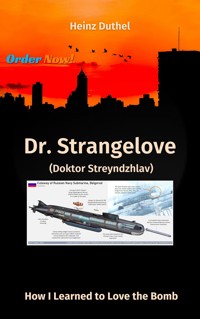
Dr. Strangelove (Doktor Streyndzhlav):
How I Learned to Love the Bomb
Dr. Phil. Heinz Duthel, Ret'd Full Rank Colonel
(KNU),Consul of PRA in Colmar France,
This book provides a structured, analytical examination of the Russian Federation’s nuclear triad and its newest strategic weapon systems. The analysis is based exclusively on open-source intelligence, official statements, and strategic literature. The objective is to explain structure, evolution, technical characteristics, and deterrence logic without operational instruction.
Heinz Duthel
Dr. Strangelove (Doktor Streyndzhlav):
How I Learned to Love the Bomb
Impressum
Bibliografische Information der Deutschen Nationalbibliothek:Die Deutsche Nationalbibliothek verzeichnet diese Publikation in der Deutschen Nationalbibliografie; detaillierte bibliografische Daten sind im Internet über http://dnb.dnb.de abrufbar.
© 2025 Dr. Phil. Heinz Duthel, Ret'd Full Rank Colonel . (KNU),Consul of PRA in Colmar France,
Dr. Strangelove (Doktor Streyndzhlav):
How I Learned to Love the Bomb
Subject of the Book
A structured and analytical examination of the Russian Federation’s nuclear triad and its newest strategic weapon systems.
Source and Data Basis
The analysis is based exclusively on Open-Source Intelligence (OSINT), official government statements, and internationally accessible strategic, military, and security-studies literature.
Objectives
To explain the structural composition of Russia’s nuclear triad, outline its technological and doctrinal evolution, analyze technical characteristics at the strategic level, and assess deterrence logic and geopolitical signaling.
Scope and Limitations
No operational instructions, no tactical employment guidance, and no actionable military procedures.
References:
Official News / Media Links, Institutions, and Intelligence Sources (Open-Source, Publicly Accessible)
The following list identifies official, institutional, and reputable public sources commonly referenced in strategic and intelligence-related open-source analysis. All are publicly accessible and used for monitoring statements, assessments, and policy positions.
United States – Government, Intelligence, and Defense
White House – Official statements, national security releases
U.S. Department of Defense (DoD) – Defense policy, briefings, Nuclear Posture Review
Office of the Director of National Intelligence (ODNI) – Annual threat assessments
Central Intelligence Agency (CIA) – World Factbook, historical analyses
Defense Intelligence Agency (DIA) – Public threat assessments
U.S. Strategic Command (USSTRATCOM) – Deterrence and strategic posture statements
Congressional Research Service (CRS) – Non-partisan strategic and defense reports
National Security Agency (NSA) – Declassified historical material and policy statements
United States – Major Official & Semi-Official Media
Defense.gov
Stars and Stripes
Voice of America (VOA)
Foreign Affairs (Council on Foreign Relations)
War on the Rocks
Russia – Government, Defense, and Intelligence-Related Sources
President of the Russian Federation – Official speeches and decrees
Security Council of the Russian Federation – Strategic policy statements
Ministry of Defence of the Russian Federation – Official briefings and releases
Russian Ministry of Foreign Affairs – Arms control and security statements
Roscosmos State Corporation – Strategic missile and space-related publications
Russia – State and Semi-Official Media
TASS – Official state news agency
RIA Novosti
Sputnik International
RT (Russia Today)
Krasnaya Zvezda (Red Star – military newspaper)
China – Government, Defense, and Intelligence-Related Sources
State Council of the People’s Republic of China – Defense white papers
Ministry of National Defense of the PRC – Official military statements
People’s Liberation Army (PLA) official releases
China Aerospace Science and Technology Corporation (CASC) publications
China – State and Semi-Official Media
Xinhua News Agency
People’s Daily
China Global Television Network (CGTN)
Global Times
International & Multinational Institutions
United Nations Office for Disarmament Affairs (UNODA)
International Atomic Energy Agency (IAEA)
NATO – Official communiqués, strategic concepts
European External Action Service (EEAS)
Organization for Security and Co-operation in Europe (OSCE)
Independent Strategic & Intelligence-Focused Institutions (OSINT)
Stockholm International Peace Research Institute (SIPRI)
International Institute for Strategic Studies (IISS)
RAND Corporation
Center for Strategic and International Studies (CSIS)
Royal United Services Institute (RUSI)
Carnegie Endowment for International Peace
Analytical & Defense-Focused Media (Open-Source)
Jane’s Defence
Defense News
The National Interest
Breaking Defense
Naval War College Review
Bulletin of the Atomic Scientists
Source Note
All sources listed above are used strictly as open-source intelligence (OSINT) inputs. They reflect official positions, institutional assessments, or professional analytical interpretations. Inclusion does not imply endorsement of any narrative but serves to document the informational environment within which strategic deterrence and nuclear policy are publicly discussed and analyzed.
Foreword: Russia’s Defense Capabilities in 2025 Since 1961
This book examines Russia’s defense capabilities in 2025 as the result of a long historical continuum that began in earnest in 1961, a year that symbolized both the apex of Cold War nuclear confrontation and the consolidation of strategic deterrence as the central organizing principle of great-power security policy. From that moment onward, Russian—and previously Soviet—defense planning has been shaped by a persistent awareness of vulnerability, geography, and technological competition. The strategic culture that emerged during this period continues to inform Russia’s military posture today, particularly in the domain of nuclear forces.
In 1961, the Soviet Union stood at the height of its early nuclear confidence, demonstrated by rapid advances in intercontinental ballistic missiles, strategic aviation, and thermonuclear weapons. This period established the foundational logic of deterrence through assured retaliation, a logic that would survive political upheavals, economic crises, and even the dissolution of the Soviet state itself. The events of that era ingrained a belief that national survival depended on the ability to deter existential threats regardless of conventional military balance.
Over the following decades, Soviet defense capabilities evolved in response to an intense arms race with the United States and its allies. Quantitative expansion initially dominated strategic thinking, with large arsenals and redundant systems designed to overwhelm any conceivable defense. Arms-control agreements later imposed limits on this expansion, forcing a gradual shift toward qualitative improvements, survivability, and command-and-control resilience. These adaptations laid the groundwork for the strategic concepts that Russia would inherit after 1991.
The collapse of the Soviet Union marked a period of severe contraction and uncertainty. Defense budgets shrank, procurement slowed, and many legacy systems aged without replacement. Yet even during this period of decline, the nuclear deterrent retained priority status. Strategic forces were preserved as the ultimate guarantor of sovereignty at a time when conventional military power and geopolitical influence were significantly reduced. This prioritization shaped the trajectory of Russia’s defense revival in the early 21st century.
Since the early 2000s, Russia’s defense capabilities have undergone a process of selective modernization rather than comprehensive parity-based competition. The emphasis has shifted from matching potential adversaries across all domains to securing decisive advantages in areas deemed strategically critical. Nuclear forces occupy the center of this approach, supported by advances in missile technology, propulsion, and delivery concepts intended to ensure penetration of evolving defensive systems.
By 2025, Russia’s defense posture reflects this long evolution. Its capabilities are best understood not as isolated technological achievements, but as the cumulative result of decades of strategic adaptation. The modern Russian military integrates conventional forces, nuclear deterrence, and emerging technologies into a coherent framework designed to prevent coercion and preserve strategic autonomy. The nuclear triad remains the cornerstone of this framework, embodying continuity with past doctrine while incorporating new methods and systems.
This foreword sets the historical and conceptual context for the analysis that follows. The chapters of this book do not treat Russia’s defense capabilities in 2025 as a sudden or anomalous development, but as the outcome of a strategic tradition shaped since 1961 by confrontation, constraint, decline, and renewal. Understanding this continuity is essential for assessing not only what Russia’s military can do, but why it has been structured in its present form.
Supplementary Note after the Foreword
Russia’s Nuclear Triad in the 21st Century: Belarus, the Baltic Shift, and the Security Rupture in Northern Europe
This supplementary note is intended to contextualize the strategic environment surrounding Russia’s nuclear deterrence posture in the mid-2020s, particularly the extension of elements of that posture to Belarus from 2025 onward, and the profound deterioration of relations between Russia and Estonia, Latvia, Lithuania, and Finland following the military operation in Ukraine. The purpose is explanatory rather than polemical, addressing how perceptions, historical experience, alliance dynamics, and security dilemmas converged to produce the current situation.
The forward placement of Russian deterrence-related capabilities in Belarus must be understood within the framework of Russia’s long-standing emphasis on strategic depth and buffer zones. Belarus has been closely integrated into Russian military planning for decades through union-state arrangements, joint command structures, and combined exercises. From Moscow’s perspective, deployments on Belarusian territory represent a defensive adjustment to the eastward movement of NATO infrastructure rather than a doctrinal shift toward offensive war-fighting. The logic remains consistent with Russia’s broader deterrence posture: to ensure survivability, shorten response times, and signal resolve under conditions of perceived encirclement.
The sharp hostility now characterizing relations between Russia and the Baltic states and Finland contrasts strongly with the economic reality that prevailed for much of the post-Cold War period. Until recently, these countries maintained extensive commercial ties with Russia. Energy supplies flowed in large volumes, transit trade was substantial, and cross-border logistics were routine. On the Estonian border alone, thousands of lorries crossed daily, connecting the European Union with Russian markets and transport corridors. Economic interdependence functioned as a stabilizing factor, even as political relations remained cautious.
This pragmatic coexistence began to erode well before the military operation in Ukraine. The Baltic states’ strategic outlook has been shaped by historical experience, particularly their incorporation into the Soviet Union during the 20th century. For these societies, sovereignty and alignment with Western institutions were not merely economic or political choices but existential safeguards. NATO and EU membership were therefore pursued as permanent security guarantees rather than temporary policy alignments.
From the Russian perspective, however, the post-1990 expansion of NATO into Eastern Europe was perceived as a violation of the spirit—if not the letter—of assurances given at the end of the Cold War. The progressive incorporation of former Warsaw Pact states and, later, former Soviet republics into Western military and political structures was interpreted in Moscow as strategic encroachment. The NATO intervention in Yugoslavia, conducted without a United Nations Security Council mandate, reinforced Russian perceptions that the alliance was willing to use force unilaterally and outside established international legal frameworks. Subsequent Western military interventions further contributed to skepticism regarding NATO’s declared defensive nature.
These divergent interpretations produced a classic security dilemma. Actions taken by NATO and the EU to enhance the security of their members—enlargement, forward deployments, and military integration—were perceived in Russia as threatening and destabilizing. Russian responses intended to restore strategic balance were, in turn, interpreted by neighboring states as confirmation of hostile intent. Over time, mutual mistrust deepened despite ongoing economic cooperation.
The military operation in Ukraine marked the point at which this fragile equilibrium collapsed. For Estonia, Latvia, Lithuania, and Finland, the use of large-scale military force in Europe fundamentally altered threat perception. Economic interdependence and energy cooperation, once viewed as instruments of stability, came to be regarded as strategic vulnerabilities. The rapid abandonment of Russian energy supplies and transit trade was driven less by economic logic than by security reassessment and political alignment within the NATO-EU framework.




