


7,49 €
Mehr erfahren.
- Herausgeber: A.J.Kingston
- Kategorie: Geisteswissenschaft
- Sprache: Englisch
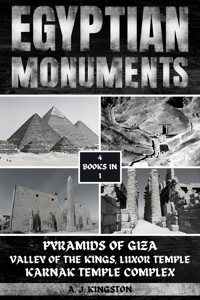
Embark on a captivating journey through the awe-inspiring wonders of ancient Egypt with the "Egyptian Monuments" book bundle. Immerse yourself in the mysteries, legends, and architectural marvels of the Pyramids of Giza, the Valley of the Kings, Luxor Temple, and the Karnak Temple Complex. This exclusive collection of four meticulously crafted books is your key to unlocking the secrets of Egypt's most iconic monuments.
Book 1, "Mysteries Unveiled: Exploring The Secrets Of The Pyramids Of Giza," invites you to step into the enigmatic world of the pyramids. Delve deep into the mysteries that have perplexed scholars and explorers for centuries. Uncover the secrets concealed within these monumental structures, from the precision of their construction to the hidden chambers that hold untold treasures. Prepare to be amazed as you unravel the enigmas of the Pyramids of Giza.
In Book 2, "Echoes Of Eternity: Unraveling The Tales Of The Valley Of The Kings," immerse yourself in the sacred realm of the pharaohs. Journey into the mystical necropolis where the rulers of ancient Egypt were laid to rest. Experience the grandeur of their tombs, adorned with exquisite artistry and steeped in spiritual significance. Unearth the stories of their lives, their beliefs, and their eternal quest for immortality. The Valley of the Kings awaits, ready to reveal its timeless secrets.
Book 3, "Sacred Sanctuaries: Journeying Through Luxor Temple," invites you to step into the realm of gods and goddesses. Explore the sacred halls of Luxor Temple, where myth and reality intertwine. Marvel at the intricate carvings, the towering statues, and the ethereal atmosphere that transports you to a bygone era. Experience the spiritual power that emanates from this ancient sanctuary, as you unravel the symbolism and uncover the profound rituals that once took place within its walls.
Finally, in Book 4, "Divine Majesty: The Marvels Of The Karnak Temple Complex," you will be transported to a sprawling complex that embodies the grandeur of ancient Egypt. Karnak Temple Complex stands as a testament to the architectural genius of the civilization. Discover the colossal statues, the towering obelisks, and the sacred sanctuaries that pay homage to the gods. Marvel at the intricate details carved into every stone and immerse yourself in the divine majesty that defines this extraordinary complex.
With the "Egyptian Monuments" book bundle, you will be captivated by the rich history, the cultural significance, and the awe-inspiring beauty of these iconic landmarks. Each book is meticulously researched, offering you an in-depth exploration of these ancient sites and shedding light on their enduring mysteries. Whether you are an avid history enthusiast, an aspiring archaeologist, or simply fascinated by the wonders of the world, this book bundle is a must-have addition to your collection.
Don't miss this opportunity to embark on a mesmerizing journey through the Pyramids of Giza, the Valley of the Kings, Luxor Temple, and the Karnak Temple Complex. Immerse yourself in the timeless wonders of ancient Egypt and unravel the secrets that have fascinated humanity for millennia. Get your copy of the "Egyptian Monuments" book bundle today and let the magic of Egypt's ancient past come alive within your fingertips.
Das E-Book können Sie in Legimi-Apps oder einer beliebigen App lesen, die das folgende Format unterstützen:
Veröffentlichungsjahr: 2023
Ähnliche















EGYPTIAN MONUMENTS
PYRAMIDS OF GIZA, VALLEY OF THE KINGS, LUXOR TEMPLE, KARNAK TEMPLE COMPLEX
4 BOOKS IN 1
BOOK 1
MYSTERIES UNVEILED: EXPLORING THE SECRETS OF THE PYRAMIDS OF GIZA
BOOK 2
ECHOES OF ETERNITY: UNRAVELING THE TALES OF THE VALLEY OF THE KINGS
BOOK 3
SACRED SANCTUARIES: JOURNEYING THROUGH LUXOR TEMPLE
BOOK 4
DIVINE MAJESTY: THE MARVELS OF THE KARNAK TEMPLE COMPLEX
BY A.J. KINGSTON
Copyright © 2023 by A. J. Kingston
All rights reserved. No part of this book may be reproduced or transmitted in any form or by any means, electronic or mechanical, including photocopying, recording, or by any information storage and retrieval system, without permission in writing from the publisher.
Published by A. J. Kingston
Library of Congress Cataloging-in-Publication Data
ISBN 978-1-83938-380-9
Cover design by Rizzo
Disclaimer
The contents of this book are based on extensive research and the best available historical sources. However, the author and publisher make no claims, promises, or guarantees about the accuracy, completeness, or adequacy of the information contained herein. The information in this book is provided on an "as is" basis, and the author and publisher disclaim any and all liability for any errors, omissions, or inaccuracies in the information or for any actions taken in reliance on such information.
The opinions and views expressed in this book are those of the author and do not necessarily reflect the official policy or position of any organization or individual mentioned in this book. Any reference to specific people, places, or events is intended only to provide historical context and is not intended to defame or malign any group, individual, or entity.
The information in this book is intended for educational and entertainment purposes only. It is not intended to be a substitute for professional advice or judgment. Readers are encouraged to conduct their own research and to seek professional advice where appropriate.
Every effort has been made to obtain necessary permissions and acknowledgments for all images and other copyrighted material used in this book. Any errors or omissions in this regard are unintentional, and the author and publisher will correct them in future editions.
Join Our Productivity Group and Access your Bonus
If you're passionate about history books and want to connect with others who share your love of the subject, joining our Facebook group (search for “History Books by A.J.Kingston”) can be a great way to do so. By joining a group dedicated to history books, you'll have the opportunity to connect with like-minded individuals, share your thoughts and ideas, and even discover new books that you might not have come across otherwise. You can also access your FREE BONUS once you joined our Facebook group called “History Books by A.J.Kingston”.
>> Click Here to Join Our Productivity Group <<
One of the biggest advantages of joining our Facebook group is the sense of community it provides. You'll be able to interact with other history book enthusiasts, ask questions, and share your own knowledge and expertise. This can be especially valuable if you're a student or someone who is just starting to explore the world of history books.
>> Click Here to Follow A.J. Kingston <<
>> Click Here to Download your Free Bonus <<
If you love audiobooks, then joining our YouTube channel that offers free audiobooks on a weekly basis can be a great way to stay entertained and engaged. By subscribing to our channel, you'll have access to a range of audiobooks across different genres, all for free. Not only this is a great opportunity to enjoy some new audiobooks, but it's also a chance to discover new authors and titles that you might not have come across otherwise.
>> Click Here to Join our YouTube Channel <<
Lastly, don’t forget to follow us on Facebook and YouTube by searching for A.J. Kingston.
Table of Contents – Book 1 - Mysteries Unveiled: Exploring The Secrets Of The Pyramids Of Giza
Introduction
Chapter 1: The Enigma of the Great Pyramid
Chapter 2: Uncovering the Architectural Marvels
Chapter 3: The Pyramid Builders: Who Were They?
Chapter 4: Decoding the Hieroglyphs Inside the Pyramids
Chapter 5: The Intriguing Chambers: Secrets within the Structure
Chapter 6: The Pyramids' Alignment with the Stars
Chapter 7: Ancient Burial Customs: Journey into the Afterlife
Chapter 8: Hidden Passageways and Mysterious Tunnels
Chapter 9: Theories and Controversies: Debating the Purpose of the Pyramids
Chapter 10: The Enduring Legacy: Pyramids as Timeless Symbols
Table of Contents – Book 2 - Echoes Of Eternity: Unraveling The Tales Of The Valley Of The Kings
Chapter 1: The Valley of the Kings: Gateway to the Afterlife
Chapter 2: Discovery and Exploration: Unveiling Ancient Tombs
Chapter 3: Tutankhamun's Treasures: A Pharaoh's Resting Place
Chapter 4: Royal Burials and Funerary Rituals
Chapter 5: The Tomb Builders: Master Craftsmen of the Valley
Chapter 6: The Curse of the Pharaohs: Legend or Reality?
Chapter 7: Unraveling the Life and Reign of Ramesses II
Chapter 8: Queens of the Valley: Powerful Women in Ancient Egypt
Chapter 9: The Valley's Hidden Gems: Lesser-Known Tombs
Chapter 10: Preserving the Valley: Challenges and Future of Archaeology
Table of Contents – Book 3 - Sacred Sanctuaries: Journeying Through Luxor Temple
Chapter 1: The Magnificence of Luxor Temple: An Introduction
Chapter 2: Origins and History: Tracing the Roots of Luxor Temple
Chapter 3: The Grand Entrance: Exploring the Avenue of Sphinxes
Chapter 4: Unveiling the Hypostyle Hall: A Forest of Columns
Chapter 5: Sanctuaries and Chapels: Divine Offerings and Worship
Chapter 6: The Obelisks of Luxor Temple: Ancient Symbols of Power
Chapter 7: Reliefs and Inscriptions: Stories Carved in Stone
Chapter 8: Restoration and Conservation: Preserving Luxor Temple's Splendor
Chapter 9: Luxor Temple by Night: Illuminating the Sacred Atmosphere
Chapter 10: Reflections and Insights: Spiritual Significance of Luxor Temple
Table of Contents – Book 4 - Divine Majesty: The Marvels Of The Karnak Temple Complex
Chapter 1: The Enchanting Karnak Temple Complex: Introduction and Overview
Chapter 2: The Great Hypostyle Hall: Pillars of Power and Splendor
Chapter 3: The Temple of Amun-Ra: Center of Divine Worship
Chapter 4: Exploring the Sacred Lake: Reflections of Ritual and Purification
Chapter 5: Precincts of the Divine: Discovering the Different Temples within Karnak
Chapter 6: The Avenue of Sphinxes: A Grand Processional Path
Chapter 7: Karnak's Obelisks: Monuments of Majesty and Symbolism
Chapter 8: The Festival of Opet: Ancient Celebrations at Karnak
Chapter 9: Guardians of History: Unveiling Karnak's Colossal Statues
Chapter 10: Unraveling Karnak's Secrets: Ongoing Archaeological Discoveries and Insights
Conclusion
About A. J. Kingston
Introduction
In the ancient land of Egypt, where the sands whisper tales of a glorious past, lie some of the world's most magnificent and enduring monuments. Welcome to the "Egyptian Monuments" book bundle, a captivating collection that takes readers on a captivating journey through four iconic sites, each shrouded in mystery, steeped in history, and brimming with awe-inspiring beauty.
Book 1, "Mysteries Unveiled: Exploring The Secrets Of The Pyramids Of Giza," invites readers to delve into the enigmatic world of the pyramids. These towering structures, built by the hands of ancient artisans, have long captured the imagination of explorers and scholars alike. Within these pages, the secrets hidden within the pyramids' imposing structure are revealed, from their intricate construction to the enigmatic chambers that lie deep within. Embark on a journey of discovery as ancient mysteries are brought to light.
Book 2, "Echoes Of Eternity: Unraveling The Tales Of The Valley Of The Kings," transports readers to the sacred necropolis where pharaohs lie entombed, their legacies echoing through the ages. Walk in the footsteps of the ancients as you explore the Valley of the Kings, unearthing stories of power, intrigue, and spiritual beliefs. From the grandeur of royal burials to the vivid rituals that accompanied the journey to the afterlife, this book breathes life into the tales of the valley, revealing the splendor and significance of these timeless tombs.
Book 3, "Sacred Sanctuaries: Journeying Through Luxor Temple," takes readers on a spiritual pilgrimage through one of Egypt's most revered temples. Luxor Temple, a sanctuary of immense beauty and significance, awaits those who seek to uncover its secrets. Step into a world where gods and mortals converged, where rituals and ceremonies ignited the spiritual fervor of the ancient Egyptians. Traverse the sacred halls, adorned with intricate carvings and statues, and immerse yourself in the rich tapestry of myths, legends, and religious beliefs woven into the very fabric of this hallowed sanctuary.
Book 4, "Divine Majesty: The Marvels Of The Karnak Temple Complex," presents a breathtaking exploration of a sprawling temple complex that stands as a testament to the grandeur and architectural prowess of the ancient Egyptians. Karnak Temple Complex, a marvel of colossal statues, towering obelisks, and sacred sanctuaries, reveals its majesty within these pages. Uncover the stories of deities honored, rituals performed, and the profound spiritual connection between the divine and the mortal realm. Experience the awe-inspiring legacy left behind by the pharaohs and the dedicated artisans who constructed this monumental complex.
Together, these four books form a comprehensive journey into the heart of ancient Egypt, a world where gods and mortals intermingled, where monumental structures testified to the power and ambition of the pharaohs, and where spirituality permeated every facet of life. Join us on this immersive exploration of the Pyramids of Giza, the Valley of the Kings, Luxor Temple, and the Karnak Temple Complex. Open these pages and step back in time, where the sands of Egypt whisper their secrets, and the monuments stand as eternal testaments to a civilization that has left an indelible mark on the annals of human history.
BOOK 1
MYSTERIES UNVEILED
EXPLORING THE SECRETS OF THE PYRAMIDS OF GIZA
BY A.J. KINGSTON
Chapter 1: The Enigma of the Great Pyramid
In the annals of human history, few architectural marvels can rival the grandeur and majesty of the pyramids of ancient Egypt. Rising from the vast desert sands with a mesmerizing allure, these colossal structures stand as testaments to the ingenuity, engineering prowess, and unfathomable devotion of the pharaohs who sought eternal glory in the afterlife. Among these monolithic edifices, the pyramids hold a place of unrivaled prominence, capturing the imagination of scholars, travelers, and explorers alike.
To understand the awe-inspiring nature of the pyramids, one must first contemplate their imposing structure. Towering above the horizon, these stone giants seem to defy the laws of nature and human capability. Constructed with meticulous precision, the pyramids' sheer size and scale leave one breathless, offering a glimpse into the audacity and vision of ancient Egyptian civilization.
At the heart of the pyramid's structure lies an unwavering commitment to eternity. Each pyramid serves as a monumental tomb, designed to house the mortal remains of the pharaohs, preserving their earthly essence for all time. The pyramids rise as towering beacons of immortality, their formidable presence an eternal testament to the divine authority and enduring power of the pharaohs who commissioned them.
But what sets the pyramids apart from other mortuary structures of antiquity is their geometric perfection. The pyramids stand as pyramidal puzzles, crafted with exacting precision and mathematical accuracy. The base of each pyramid, a massive square, forms a solid foundation upon which the entire structure rests. From this base, the pyramid rises with a series of diminishing tiers, culminating in a point that reaches towards the heavens. This distinctive form, with its symmetrical sides and triangular faces, embodies harmony, balance, and a cosmic symbolism that connects the earthly realm with the celestial domain.
The construction of the pyramids posed an immense challenge, demanding both architectural brilliance and immense labor. To build these monumental tombs, vast armies of workers toiled ceaselessly under the scorching Egyptian sun, their sweat mingling with the ancient sands. Enormous blocks of limestone, weighing several tons each, were quarried from distant locations and hauled across treacherous terrain to the pyramid's construction site. There, they were meticulously stacked, one upon the other, with astonishing precision. The pyramids rose steadily, their monumental mass a testament to the sweat and ingenuity of the countless individuals who dedicated their lives to the pharaoh's eternal legacy.
But what truly astounds the modern observer is not merely the magnitude of the pyramids' construction but the means by which they were accomplished. How did the ancient Egyptians, devoid of modern machinery and technology, manage to build such colossal structures? The answer lies in a remarkable combination of innovative engineering techniques, intricate planning, and unwavering devotion to the divine.
The pyramid's imposing structure rests on a carefully designed internal framework. A labyrinthine network of corridors, chambers, and passageways lies hidden beneath the outer facade, creating an internal structure that provides stability and support. These intricate passages serve not only as conduits for the pharaoh's journey to the afterlife but also as architectural reinforcements, distributing the immense weight of the pyramid across its foundation.
Furthermore, the outer casing stones, meticulously cut and fitted together, formed a smooth outer shell that protected the pyramid's inner sanctum from the ravages of time. Though weathered by centuries of exposure, these casing stones, even in their diminished state, bear witness to the meticulous craftsmanship and unparalleled attention to detail of the ancient Egyptian masons.
As one gazes upon the pyramids' imposing structure, a sense of wonder and awe overtakes the mind. The magnitude of human achievement, the dedication to immortality, and the eternal quest for divine favor become palpable. These ancient structures stand not only as tombs but as symbols of the human spirit's indomitable will, reaching for the heavens and leaving an indelible mark on the tapestry of human history.
In the pyramid's imposing structure, we find a timeless testament to the triumphs and aspirations of the ancient world. The pyramids stand as lasting monuments, forever etched into the fabric of our collective consciousness, inspiring wonder, reverence, and an unquenchable thirst for knowledge. As long as these majestic structures grace the Egyptian landscape, they will continue to captivate the hearts and minds of all who behold them, reminding us of the immeasurable potential of human endeavor.
Architectural precision and engineering marvels are at the very core of the pyramids' enduring legacy. These ancient structures stand as a testament to the unparalleled expertise, innovative thinking, and mathematical acumen of the ancient Egyptians. To comprehend the magnitude of their architectural achievements is to delve into a world where science, artistry, and spiritual beliefs seamlessly merged.
The pyramids' architectural precision is evident in every aspect of their construction. The carefully measured dimensions, precise alignments, and geometric symmetry exhibit a level of precision that is truly awe-inspiring. The base of each pyramid, a massive square, was meticulously laid out with remarkable accuracy, ensuring a solid foundation for the towering structure above. The sides of the pyramids rise at precise angles, converging at a central apex with astonishing exactness. Such meticulous attention to detail is a testament to the advanced mathematical knowledge possessed by the ancient Egyptians.
But the precision of the pyramids extends beyond their external shape. Inside these massive structures, intricate passageways, chambers, and corridors were ingeniously designed to serve both functional and symbolic purposes. The internal passages, leading to the burial chamber and other sacred spaces, were carefully aligned with celestial bodies, highlighting the Egyptians' deep connection to the cosmos and their belief in the pharaoh's divine journey in the afterlife.
The engineering marvels embodied in the pyramids are equally remarkable. The sheer scale of these structures, composed of immense limestone blocks weighing several tons each, defies comprehension. The ancient Egyptians developed innovative methods to quarry, transport, and position these massive stones with astonishing precision. The quarrying techniques employed allowed them to extract enormous blocks from distant quarries and transport them across challenging terrains to the construction sites. The positioning of these stones within the pyramid required careful planning, coordination, and the use of complex systems of ramps and levers, showcasing the engineering prowess of the ancient Egyptians.
The internal structure of the pyramids further highlights their engineering ingenuity. The labyrinthine network of passages and chambers not only served functional purposes but also acted as architectural reinforcements, effectively distributing the immense weight of the pyramid and preventing structural collapse. The precise alignment of these internal spaces required meticulous planning, ensuring the stability and longevity of these monumental tombs.
To achieve such architectural precision and engineering marvels, the ancient Egyptians relied on a combination of empirical knowledge, practical experience, and a deep understanding of their natural surroundings. Their expertise in mathematics, astronomy, and the properties of stone allowed them to create structures that have withstood the test of time, standing as a testament to human achievement.
The pyramids' architectural precision and engineering marvels have fascinated scholars and researchers for centuries. The study of their construction techniques, structural stability, and symbolic significance continues to shed light on the advanced knowledge and technological capabilities of the ancient Egyptians. These awe-inspiring structures remain an enduring legacy, captivating the imagination and inspiring admiration for the remarkable achievements of our ancestors.
The construction techniques employed by the ancient Egyptians in building the pyramids and other monumental structures were nothing short of remarkable. These techniques, developed and perfected over centuries, demonstrate the advanced engineering knowledge and craftsmanship of the ancient civilization.
One of the most notable construction techniques utilized by the ancient Egyptians was the quarrying and transportation of the massive stone blocks used in the construction of the pyramids. The primary material employed was limestone, sourced from quarries located along the banks of the Nile River. To extract the blocks, the ancient Egyptians used a combination of wedges, wooden mallets, and pounding stones to create deep incisions along natural fissures in the rock. By repeating this process and applying force, they were able to split the limestone into manageable pieces.
Once the blocks were quarried, the ancient Egyptians faced the monumental task of transporting them from the quarries to the construction sites. The prevailing theory suggests that they utilized a combination of sledges and ramps. The sledges, typically made of wood and equipped with runners or rollers, were used to transport the blocks over land, with teams of workers pulling them using ropes or employing animal power. To overcome uneven terrain and navigate inclines, ramps were constructed, providing a gradual and controlled ascent for the sledges. The construction of these ramps required careful planning and engineering, as they needed to be sturdy enough to support the weight of the blocks and allow for efficient transportation.
The positioning and alignment of the stone blocks within the pyramid structures also required meticulous craftsmanship and precision. The ancient Egyptians utilized a leveling technique known as "ramp and plumb bob." This involved the use of a ramp to hoist the blocks to their intended locations, while plumb bobs were employed to ensure that the vertical alignment of the blocks was accurate. Adjustments were made as necessary to achieve the desired alignment and create the smooth, polished surfaces seen on the exteriors of the pyramids.
In addition to these techniques, the ancient Egyptians employed other methods to enhance the structural stability of the pyramids. One such technique was the use of "fill" material, which involved packing loose stones and debris between the inner and outer layers of the pyramid to provide additional support and stability. The internal passages and chambers were carefully integrated into the overall design, serving not only functional purposes but also reinforcing the structure by evenly distributing the weight.
The remarkable precision achieved in the construction of the pyramids was further facilitated by the ancient Egyptians' advanced knowledge of mathematics and geometry. The use of simple tools, such as the plumb line, level, and right-angled triangle, allowed them to create accurate measurements and maintain consistent angles and dimensions throughout the construction process.
The construction techniques employed by the ancient Egyptians continue to astound and inspire admiration to this day. The meticulous planning, engineering ingenuity, and skilled craftsmanship involved in the creation of these monumental structures are a testament to the ancient civilization's unwavering commitment to their pharaohs and their profound belief in the afterlife. The legacy of their construction techniques stands as a testament to human ingenuity and the timeless quest to leave a lasting mark on the world.
The purpose and function of the pyramids have long been the subject of speculation, debate, and intriguing theories. While some theories have gained more traction than others, the true purpose behind these ancient structures remains a fascinating enigma.
One prevalent theory posits that the pyramids were built as grand tombs for the pharaohs, serving as eternal resting places and providing a gateway to the afterlife. The ancient Egyptians believed in the immortality of the soul and the divine nature of their pharaohs, who were regarded as god-kings. Constructing monumental pyramids was a way to ensure the pharaohs' transition to the afterlife, accompanied by the necessary provisions, riches, and protective rituals. The internal passages, chambers, and elaborate burial rituals within the pyramids support this funerary theory, emphasizing the importance of the pharaoh's journey into eternity.
Another theory suggests that the pyramids had an astronomical significance, serving as cosmic observatories or celestial markers. Ancient Egyptian civilization had a profound understanding of astronomy, and their religious beliefs often intertwined with celestial phenomena. The alignment of certain pyramids with specific stars, such as the correlation between the Great Pyramid of Giza and the constellation Orion, has led to speculation that the pyramids were designed to capture and harness the power of the stars, symbolizing the pharaoh's connection with the gods and the eternal cycle of life and death.
Some theorists propose that the pyramids held a practical function beyond their religious and symbolic significance. They argue that the pyramids were part of a broader economic and logistical system, serving as centers of administration, storage, and distribution of resources. The pyramids would have acted as massive granaries or treasuries, storing grain, valuables, and tribute from the agricultural surplus of the Nile Valley. This theory suggests that the pyramids were not solely devoted to the pharaohs' afterlife but also played a vital role in maintaining the economic stability and power of ancient Egyptian society.
Additionally, some alternative theories propose that the pyramids served as energy-generating or energy-conducting structures, tapping into the Earth's natural forces or cosmic energies. These theories often draw upon esoteric interpretations, associating the pyramids with mystical and spiritual concepts. However, such theories generally lack substantial scientific evidence or consensus among scholars.
It is important to note that these theories are not mutually exclusive, and multiple purposes and functions may have coexisted within the pyramids. The ancient Egyptians possessed a complex and multifaceted belief system that intertwined religion, symbolism, and practicality. The pyramids, with their imposing structure and enduring legacy, likely served multiple functions that intertwined the earthly and the divine.
Ultimately, the true purpose and function of the pyramids may never be definitively known. The enigma surrounding these ancient structures continues to inspire curiosity, research, and ongoing exploration. As our understanding of ancient Egyptian civilization evolves, new discoveries and insights may shed further light on the purpose and function behind these majestic monuments, unravelling the secrets of the pyramids and offering glimpses into the minds and aspirations of the ancient Egyptians.
The pyramids of ancient Egypt hold an air of mystery and fascination, with their imposing structures and hidden chambers captivating the imagination of scholars and adventurers for centuries. Within the pyramids' intricate design lie secrets waiting to be unveiled, offering glimpses into the beliefs, rituals, and knowledge of the ancient Egyptians.
One of the most intriguing aspects of the pyramids is the hidden chambers nestled deep within their core. These chambers, carefully concealed from prying eyes, contain a wealth of secrets waiting to be discovered. The primary chamber of interest within the pyramids is the burial chamber, believed to be the final resting place of the pharaohs. The burial chamber is often adorned with intricate carvings, hieroglyphs, and artwork, depicting scenes from the pharaoh's journey to the afterlife and the accompanying rituals and offerings. Within these chambers, precious treasures and artifacts were placed alongside the pharaoh, ensuring their comfort and prosperity in the afterlife.
Beyond the primary burial chamber, secondary chambers and passageways add to the enigma. The pyramids feature an intricate network of tunnels, corridors, and hidden chambers that serve various purposes. Some chambers may have been used for symbolic rituals or private ceremonies, while others could have held sacred objects or acted as repositories for ancient knowledge.
The pyramids' chambers also bear witness to the remarkable craftsmanship and engineering skills of the ancient Egyptians. The precision with which the chambers were carved and aligned is a testament to the meticulous planning and execution involved in their construction. The walls of the chambers often contain intricate reliefs, displaying scenes from religious ceremonies, mythological tales, and the pharaoh's divine connections. These reliefs provide insights into the ancient Egyptian belief system, their cosmology, and their reverence for the gods and the afterlife.
The chambers within the pyramids hold secrets that extend beyond their physical presence. They offer glimpses into the religious, cultural, and spiritual beliefs of the ancient Egyptians. These hidden spaces were not merely tombs but gateways to the afterlife, carefully designed to facilitate the pharaoh's successful transition and eternal existence.
The study of the pyramids' chambers continues to yield new discoveries and insights. Archaeologists and Egyptologists have dedicated years of research and exploration to unraveling the secrets held within these ancient structures. Through careful examination of the chambers, their contents, and the inscriptions adorning their walls, we inch closer to understanding the ancient Egyptian worldview, their rituals, and their perceptions of the divine.
However, it is important to note that many mysteries still remain. Some chambers remain sealed or inaccessible, their secrets preserved for future generations or awaiting technological advancements that may reveal their hidden treasures. As the field of archaeology advances and new techniques are developed, the secrets within the pyramids' chambers may yet be fully revealed, shedding light on the rich tapestry of ancient Egyptian civilization and the profound wisdom that lies within.
Chapter 2: Uncovering the Architectural Marvels
The pyramids of ancient Egypt stand not only as architectural marvels but also as testaments to the intricate stonework and masterful carvings of the ancient Egyptians. The craftsmanship displayed in these structures is awe-inspiring, demonstrating the skill, precision, and artistic sensibilities of the ancient artisans.
One of the most striking features of the pyramids is the meticulous stonework that adorns their exteriors. The massive limestone blocks, weighing several tons each, were painstakingly cut, shaped, and fitted together with remarkable precision. The uniformity of the stones and the seamless integration of the individual blocks create a smooth, polished surface that has withstood the test of time.
The intricate carvings found on the surfaces of the pyramids and within their inner chambers are equally impressive. The ancient Egyptians employed a variety of techniques to create these intricate designs, including relief carving, incised carving, and sunken relief. Relief carving involves carving designs or figures that project slightly from the surface, creating a three-dimensional effect. Incised carving involves cutting designs into the surface, while sunken relief carving involves cutting designs into the stone but leaving them recessed within the surface.
These carvings depict a range of subjects, including religious rituals, mythological scenes, and the pharaoh's divine connections. They offer insights into the ancient Egyptian belief system, their cosmology, and their reverence for the gods. These carvings were not merely decorative but served a symbolic and narrative purpose, conveying important messages and perpetuating the religious and cultural heritage of the ancient Egyptians.
The level of detail achieved in the carvings is remarkable. Figures and hieroglyphic inscriptions are meticulously rendered, capturing intricate details of clothing, jewelry, facial features, and gestures. The precision with which the ancient artisans worked, often using simple handheld tools, is a testament to their expertise and dedication.
The ancient Egyptians employed a wide range of artistic conventions and stylistic elements in their carvings. The hieroglyphic script, a system of pictorial symbols representing sounds and concepts, was prominently featured in the carvings. The hieroglyphs provided both a written record and a visual representation of the ancient Egyptian language and culture.
Symbolism also played a significant role in the carvings. Various gods and goddesses were depicted with specific attributes and iconography, allowing viewers to identify and connect with the divine beings. Animals, such as the sacred scarab beetle or the protective cobra, were often included in the carvings to convey specific meanings and associations.
The craftsmanship of the ancient Egyptian artisans extended beyond the pyramids to other structures, such as temples, tombs, and statues. The same level of precision, attention to detail, and artistic excellence is evident in these works as well. The ancient Egyptians' ability to transform stone into intricate and expressive works of art continues to inspire admiration and awe.
The study of the intricate stonework and carvings found in the pyramids provides a window into the ancient Egyptian world. It allows us to glimpse their religious beliefs, their cosmological views, and their artistic sensibilities. The legacy of their craftsmanship endures, leaving an indelible mark on the world and a profound appreciation for the skill and creativity of the ancient Egyptian artisans.
Hidden within the intricate carvings and hieroglyphs of ancient Egyptian art lies a world of symbolism, mystery, and encoded messages. The ancient Egyptians, renowned for their symbolic language and rich religious beliefs, imbued their art with layers of meaning that require careful interpretation and exploration to fully comprehend.
Hieroglyphs, the sacred script of ancient Egypt, form the foundation of this hidden symbolism. These pictorial symbols, combining both phonetic and ideographic elements, allowed the ancient Egyptians to convey complex concepts, religious ideas, and historical narratives. Each hieroglyph had its own distinct meaning, and when combined with others, they created a web of interconnected ideas and symbolism.
The use of hieroglyphs in ancient Egyptian carvings served multiple purposes. On a practical level, they provided a written record, ensuring that the stories and rituals depicted in the carvings would be preserved for eternity. However, the hieroglyphs also acted as a form of visual communication, allowing the viewer to decode the symbolic language and gain deeper insights into the meaning behind the art.
Symbolism in ancient Egyptian carvings extended beyond hieroglyphs. The ancient Egyptians used a variety of symbols and artistic conventions to convey specific ideas and concepts. Animals, for example, held significant symbolism in ancient Egyptian culture. The sacred scarab beetle represented rebirth and regeneration, while the lion symbolized royalty and power. Similarly, the depiction of certain gods and goddesses, with their distinct attributes and iconography, conveyed specific religious beliefs and narratives.
The placement and arrangement of figures and objects within the carvings also held symbolic significance. Hierarchical scale, where the size of a figure reflects its importance, was a common artistic convention. For example, pharaohs would often be depicted on a much larger scale than other individuals, emphasizing their divine status and authority. The positioning of figures in relation to one another and their gestures could convey social hierarchies, relationships, or narrative sequences.
Furthermore, the ancient Egyptians employed subtle details and artistic choices to convey symbolism. Colors played a role in symbolizing various concepts, with red representing life, black symbolizing death or fertility, and green signifying rebirth and vegetation. The use of specific poses, such as the crossed arms of Osiris denoting the god's association with the afterlife, conveyed deeper meanings to those familiar with the cultural and religious context.
The hidden symbolism within ancient Egyptian carvings invites us to delve into the complex world of their belief system and cultural heritage. It requires a multidisciplinary approach, combining linguistic analysis, archaeological research, and an understanding of ancient Egyptian religious beliefs to fully decipher the meanings embedded within the art.
The decipherment of hieroglyphs in the early 19th century, most notably by Jean-François Champollion, revolutionized our understanding of ancient Egyptian symbolism. With the ability to read the hieroglyphs, scholars were able to unlock the hidden messages and narratives within the carvings, shedding light on the ancient Egyptians' worldview, religious rituals, and historical events.
However, despite significant progress in deciphering hieroglyphs, there are still mysteries and uncertainties surrounding the interpretation of ancient Egyptian symbolism. The full extent of their encoded messages may never be fully unraveled, leaving room for ongoing exploration and reinterpretation.
The study of hidden symbolism and hieroglyphs in ancient Egyptian carvings continues to captivate scholars and enthusiasts alike. It allows us to glimpse into the ancient Egyptian mindset, offering insights into their beliefs, values, and cultural practices. As we unlock the secrets of this rich visual language, we gain a deeper appreciation for the intricate beauty and profound symbolism embedded within the art of ancient Egypt.
The pyramids of ancient Egypt stand as enduring testaments to the structural innovations and design capabilities of the ancient Egyptians. These colossal structures, with their massive scale and geometric precision, exemplify the architectural prowess and engineering ingenuity of the civilization that created them.
One of the most remarkable structural innovations of the pyramids is their monumental size. Constructed with immense limestone blocks, some weighing several tons, the pyramids reach staggering heights, defying the limitations of ancient construction techniques. The scale of these structures required careful planning, strategic engineering, and efficient use of resources. The ancient Egyptians developed innovative methods to quarry, transport, and position these massive stones, enabling them to create structures of such monumental proportions.
The design of the pyramids is characterized by geometric precision and symmetry. The base of each pyramid is typically a massive square, serving as a solid foundation upon which the structure rests. From this base, the sides of the pyramids rise at carefully calculated angles, converging at a central apex. This architectural design not only provides stability but also creates an aesthetically pleasing and harmonious form. The symmetry and precision of the pyramid's design demonstrate the ancient Egyptians' advanced mathematical knowledge and their ability to translate it into practical application.
The internal structure of the pyramids showcases further innovations and design considerations. The construction of intricate passageways, chambers, and corridors within the pyramids served multiple purposes. Functionally, these internal spaces provided structural reinforcement, distributing the immense weight of the pyramid and ensuring its stability. Symbolically, these chambers and corridors facilitated the pharaoh's journey to the afterlife, connecting the earthly realm with the divine realm. The incorporation of these internal features demonstrates the meticulous planning and attention to detail that went into the design and construction of the pyramids.
The orientation and alignment of the pyramids also display a remarkable understanding of astronomical principles. Many pyramids were carefully aligned with celestial bodies, such as specific stars or the cardinal directions. This alignment not only showcased the ancient Egyptians' reverence for the cosmos but also served practical purposes, allowing for accurate positioning and synchronization with celestial events.
Additionally, the architectural design of the pyramids involved the use of sophisticated leveling techniques. The ancient Egyptians used water levels, plumb lines, and sighting instruments to ensure the precise alignment and leveling of the stone blocks. This attention to detail and commitment to accuracy played a vital role in creating the structurally sound and visually impressive pyramids.
The enduring legacy of the pyramids' structural innovations and design can be seen in the influence they have had on subsequent architectural achievements. The pyramids served as architectural prototypes, inspiring future civilizations and becoming iconic symbols of grandeur and endurance.
The study of the structural innovations and design of the pyramids continues to provide valuable insights into the capabilities of the ancient Egyptians. Their ability to create monumental structures with such precision and ingenuity is a testament to their advanced knowledge, craftsmanship, and unwavering dedication to their pharaohs and their beliefs. The pyramids stand as timeless reminders of human achievement and serve as a testament to the power of architectural innovation and design.
The pyramids of ancient Egypt, with their impressive monumental scale, stand as awe-inspiring examples of human ambition and engineering prowess. These colossal structures, rising from the desert landscape, capture the imagination and command respect with their sheer size and imposing presence.
One of the defining characteristics of the pyramids is their monumental scale. Built to honor the pharaohs and ensure their eternal legacy, these structures were designed to be visible from great distances and to leave an indelible mark on the landscape. The Great Pyramid of Giza, the largest of them all, reaches a height of approximately 147 meters (481 feet) and was the tallest man-made structure in the world for over 3,800 years.
The construction of such massive structures required tremendous resources, labor, and engineering ingenuity. Vast quantities of stone, predominantly limestone, were quarried and transported to the pyramid sites. The precise fitting of the stones ensured the stability and integrity of the structures, despite their colossal size. The sheer effort involved in hauling these enormous blocks over long distances and maneuvering them into position is a testament to the ancient Egyptians' organizational capabilities and determination.
The monumental scale of the pyramids was not only a demonstration of the pharaohs' power and authority but also served practical purposes. The large size of the pyramids allowed for multiple chambers, passageways, and storerooms within their structure. These internal spaces served various functions, including housing the pharaoh's burial chamber, storing funerary goods, and facilitating rituals and ceremonies associated with the pharaoh's eternal journey.
The grandeur and imposing scale of the pyramids were further enhanced by the surrounding complex, which included causeways, temples, and smaller pyramids for queens and other members of the royal family. The layout and arrangement of these structures added to the overall majesty and visual impact of the pyramid complexes, creating a sprawling architectural ensemble that showcased the pharaoh's power and divine connection.
The monumental scale of the pyramids had a profound impact on ancient Egyptian society. The construction of these structures necessitated the mobilization of large labor forces, leading to the development of organized systems of labor and construction techniques. The pyramids served as symbols of national unity, rallying the population around the pharaoh and fostering a sense of communal identity and pride.
Even today, the monumental scale of the pyramids continues to inspire wonder and admiration. Their enduring presence stands as a testament to the ancient Egyptians' ambition, determination, and architectural achievements. These structures, built with human hands and enduring through the passage of time, evoke a sense of awe and invite contemplation of the capabilities and aspirations of ancient civilizations.
The pyramids' impressive monumental scale serves as a reminder of the grandeur and ingenuity of the ancient Egyptians, their unwavering commitment to the pharaohs' eternal legacy, and the enduring impact of their architectural achievements on the world's collective imagination.
The restoration efforts and preservation challenges surrounding the ancient Egyptian monuments, including the pyramids, are of significant importance in safeguarding these cultural treasures for future generations. Over the years, various initiatives have been undertaken to restore and preserve these architectural wonders, but the task is not without its challenges.
One of the primary challenges in the preservation of ancient Egyptian monuments is the impact of time and weathering. Exposure to the elements, including wind, sand erosion, temperature fluctuations, and moisture, can gradually deteriorate the structures. The constant battle against natural decay requires ongoing efforts to monitor, assess, and address the damage caused by these environmental factors.
The restoration of ancient Egyptian monuments involves a delicate balance between maintaining the authenticity and integrity of the original structures while addressing the need for stabilization and conservation. Restoration efforts often involve meticulous cleaning, repair of damaged areas, reinforcement of weakened structures, and protection against further deterioration. Advanced techniques, including laser scanning, non-invasive imaging, and computer modeling, are employed to gather accurate data and inform the restoration process.
Another challenge in the preservation of these monuments is the impact of human activity. Tourism, while essential for the cultural and economic significance of these sites, can also pose risks. Large visitor numbers, touching, and improper behavior can lead to the erosion of delicate surfaces, deterioration of paintings or carvings, and structural damage. Balancing the accessibility and enjoyment of these sites for visitors with the need for their protection requires careful management and education.
Furthermore, pollution, urban development, and infrastructure projects in the vicinity of the monuments can have adverse effects. Air pollution, caused by industrial activities and vehicle emissions, can accelerate the deterioration of the structures. Uncontrolled urban expansion can encroach upon the archaeological sites, threatening their physical integrity and causing disturbances to the surrounding landscape. Careful urban planning and collaboration between heritage conservation authorities and local communities are vital to mitigate these challenges.
International collaboration and expertise are crucial in addressing the restoration and preservation challenges faced by the ancient Egyptian monuments. Collaborative projects involving archaeologists, engineers, architects, and conservators from various countries have contributed to the knowledge and techniques employed in the restoration efforts. These collaborative endeavors also foster knowledge exchange and capacity building, ensuring that the best practices in restoration and preservation are implemented.
The preservation of ancient Egyptian monuments requires a long-term commitment and dedication to ensure their survival for future generations. It demands a comprehensive approach that encompasses scientific research, monitoring, conservation, and education. By striking a balance between preserving the authentic historical value of these monuments and allowing public access, the cultural heritage can be protected while still allowing for appreciation and understanding of their significance.
Through ongoing restoration efforts, effective preservation strategies, and responsible tourism management, the ancient Egyptian monuments, including the pyramids, can continue to inspire and captivate people from all corners of the world, preserving the legacy of one of humanity's most remarkable civilizations.
Chapter 3: The Pyramid Builders: Who Were They?
The legacy of pyramid construction extends far beyond the physical structures themselves. The monumental pyramids of ancient Egypt have left an indelible mark on human history, culture, and the collective imagination. Their enduring legacy can be seen in various aspects of human endeavor.
Architectural and Engineering Achievements: The construction of the pyramids showcases the advanced architectural and engineering capabilities of the ancient Egyptians. The precision in design, alignment, and construction techniques employed in building these massive structures has served as an inspiration for architects and engineers throughout history. The pyramid's enduring legacy is evident in the development of architectural principles and engineering practices.
Cultural and Religious Significance: The pyramids were not only physical tombs but also representations of the ancient Egyptian worldview and religious beliefs. They served as focal points for religious rituals, offering a connection between the earthly realm and the divine. The construction of pyramids was a testament to the pharaoh's divine authority and ensured their eternal existence in the afterlife. The legacy of pyramid construction is intertwined with ancient Egyptian culture and spirituality.
Symbol of Ancient Egypt: The pyramids have become iconic symbols of ancient Egypt, representing the grandeur, power, and mystique of this ancient civilization. They evoke a sense of awe and wonder, capturing the imagination of people worldwide. The pyramids have become synonymous with Egypt itself, attracting millions of visitors each year and serving as a testament to the enduring legacy of ancient Egyptian culture.
Archaeological Exploration and Discovery: The study of the pyramids has contributed significantly to our understanding of ancient Egyptian history, society, and technology. Archaeological excavations and research conducted at pyramid sites have unearthed invaluable insights into the lives of the ancient Egyptians, their funerary practices, daily life, and the development of their civilization. The exploration and study of the pyramids continue to shed light on the ancient world and shape our knowledge of human history.
Tourism and Cultural Heritage: The pyramids serve as major tourist attractions, drawing visitors from all corners of the globe. Their cultural significance and architectural magnificence make them UNESCO World Heritage sites. The tourism industry surrounding the pyramids supports the local economy, while also promoting awareness and appreciation of ancient Egyptian heritage. The preservation and responsible management of the pyramids ensure that their legacy can be enjoyed by future generations.
Inspiration in Popular Culture: The pyramids have captured the imagination of artists, writers, filmmakers, and creators across various forms of popular culture. They have been featured in literature, films, and artworks, becoming enduring symbols of mystery, adventure, and ancient wisdom. The pyramids' legacy continues to inspire creative minds and shape popular narratives, reinforcing their place in global consciousness.
The legacy of pyramid construction stands as a testament to human ingenuity, ambition, and the quest for immortality. These enduring structures transcend time, serving as reminders of the greatness and achievements of the ancient Egyptians. The pyramids continue to inspire awe, curiosity, and exploration, leaving an indelible mark on human history and shaping our understanding of the ancient world.
Ancient Egyptian craftsmanship is renowned for its exceptional skill, attention to detail, and artistic excellence. The artisans of ancient Egypt mastered various crafts and techniques, creating works of art and everyday objects that continue to astound and inspire admiration.
One of the most notable aspects of ancient Egyptian craftsmanship is their proficiency in sculpting and carving. From colossal statues and reliefs adorning temples to intricate amulets and jewelry, the ancient Egyptians displayed a remarkable ability to breathe life into stone. Sculptors meticulously shaped and chiseled stone, bringing out the finest details of human figures, animals, and mythological beings. The expressive faces, graceful poses, and intricate hieroglyphic inscriptions found in their sculptures reveal the artisans' mastery of their craft.
The ancient Egyptians were also skilled in the art of jewelry making. Goldsmiths and jewelers created intricate pieces adorned with precious stones, such as lapis lazuli, carnelian, and turquoise. Their expertise in metalworking allowed them to fashion delicate gold wire, beads, and pendants, which were meticulously assembled to create stunning necklaces, bracelets, and earrings. The craftsmanship displayed in these jewelry pieces demonstrates the ancient Egyptians' mastery of technique, design, and aesthetic sensibilities.
Textile production was another area where ancient Egyptian craftsmanship excelled. The weavers of ancient Egypt used flax, a plant fiber, to create linen, a fabric highly valued for its lightweight, breathable, and durable properties. The skilled weavers produced fine linen fabrics in a range of colors and patterns, which were used for clothing, furnishings, and ceremonial purposes. The artistry and attention to detail in ancient Egyptian textiles are evident in the intricate weaves, dyed patterns, and decorative motifs.
Ceramics and pottery were also integral to ancient Egyptian craftsmanship. Potters created vessels, bowls, and jars using locally sourced clay. The pottery was then fired, and skilled painters applied intricate designs and vibrant colors, often depicting scenes from daily life, religious rituals, or mythological narratives. The precise brushwork and attention to detail in ancient Egyptian pottery exemplify the artisans' mastery of their craft.
The ancient Egyptians' craftsmanship extended to woodworking as well. Furniture, coffins, and decorative items were intricately carved from wood, showcasing the artisans' ability to transform this organic material into works of art. The detailed relief carvings and ornate designs on wooden objects attest to the meticulous skill and artistic vision of ancient Egyptian woodworkers.
The art of ancient Egyptian craftsmanship was not limited to individual objects but extended to the construction of monumental structures as well. The intricate stonework, precise alignment, and architectural grandeur of the pyramids, temples, and tombs demonstrate the exceptional craftsmanship and engineering abilities of ancient Egyptian artisans. The skill required to quarry, transport, and fit massive stone blocks together with such precision is a testament to their expertise and dedication.
Ancient Egyptian craftsmanship permeated all aspects of their society, from the grandest monuments to the smallest amulets. It reflected their reverence for beauty, their intricate belief system, and their commitment to excellence. The legacy of ancient Egyptian craftsmanship continues to inspire awe and admiration, providing a glimpse into the mastery of skill and artistic vision of one of the world's most remarkable ancient civilizations.
Skilled laborers played a vital role in ancient Egypt, contributing their expertise and craftsmanship to various aspects of society, including construction, artistry, and everyday production. These skilled individuals possessed specialized knowledge and abilities, honed through years of training and practical experience, and their contributions were essential for the flourishing of ancient Egyptian civilization.
In the realm of construction, skilled laborers were responsible for the creation of monumental structures such as temples, tombs, and the pyramids. These craftsmen included stone masons, quarry workers, and builders who possessed the technical know-how to extract, shape, and transport the large stone blocks used in construction. Their skillful work ensured the precision and stability of the structures, as well as the intricate carvings and reliefs that adorned them. From laying foundations to carving intricate details, the expertise of these skilled laborers was critical to the successful completion of monumental projects.
Artistry and craftsmanship thrived in ancient Egypt, with skilled laborers contributing to the creation of exquisite artworks and everyday objects. Sculptors, painters, jewelers, and weavers all played important roles in shaping the artistic landscape of ancient Egyptian society. Sculptors skillfully carved stone statues and reliefs, breathing life into their subjects with precision and attention to detail. Painters adorned walls, pottery, and textiles with vibrant colors and intricate designs, capturing scenes from daily life, religious rituals, and mythological narratives. Jewelers crafted intricate pieces of jewelry, combining precious metals and gemstones to create stunning adornments. Weavers transformed flax into fine linen fabrics, using their expertise to create delicate and intricate patterns. Skilled laborers brought artistic visions to life, showcasing their mastery of technique and their ability to create objects of lasting beauty and significance.
Skilled laborers also played a crucial role in everyday production and craftsmanship. They were responsible for the production of pottery, ceramics, and tools necessary for daily life. Potters skillfully shaped and fired clay vessels, while blacksmiths and metalworkers crafted tools and implements from bronze and other metals. Carpentry and woodworking specialists produced furniture, coffins, and other wooden objects. These skilled laborers ensured the availability of essential goods and materials, contributing to the functionality and quality of everyday life in ancient Egypt.
The training of skilled laborers began at a young age, often passed down from one generation to another within families or through apprenticeships. Specialized schools or workshops may have provided additional training and education. The knowledge and techniques were guarded and preserved, ensuring the continuity of expertise across generations.
The contributions of skilled laborers were highly valued in ancient Egyptian society. Their expertise and craftsmanship were sought after, and their work played a significant role in shaping the material and cultural landscape of the civilization. The legacy of their contributions can be seen in the enduring structures, intricate artworks, and functional objects that have survived to this day.
The role of skilled laborers in ancient Egypt highlights the importance of specialized knowledge and expertise in the development and advancement of civilizations. Their contributions were foundational to the grandeur, artistic expression, and functional aspects of ancient Egyptian society, leaving a lasting impact on the world's understanding and appreciation of this remarkable civilization.
The construction of pyramids in ancient Egypt was a monumental undertaking that required meticulous organization and a hierarchical structure to ensure the successful completion of these grand structures. The process involved a complex system of planning, coordination, and labor allocation, with various roles and responsibilities assigned to different individuals based on their skills and social standing.
At the top of the organizational hierarchy was the pharaoh, the divine ruler of ancient Egypt. The pharaoh held absolute authority and was the driving force behind the construction of pyramids. It was through their decree and command that the construction projects were initiated and overseen.
Directly under the pharaoh's authority was the vizier, a high-ranking official who acted as the pharaoh's chief administrator. The vizier played a crucial role in coordinating and overseeing the construction efforts. They managed the allocation of resources, supervised the workforce, and ensured the efficient flow of materials and labor. The vizier acted as the pharaoh's representative on the construction site, ensuring that the project adhered to the pharaoh's vision and met the desired standards.
Beneath the vizier, a hierarchy of officials, overseers, and scribes organized and managed the various aspects of pyramid construction. Overseers were responsible for specific tasks such as quarrying, transportation, and construction. They supervised teams of skilled laborers and ensured that the work was carried out according to the pharaoh's specifications. Scribes kept detailed records and documentation, recording the progress, resources allocated, and labor involved in the construction process.
Skilled craftsmen and laborers formed the backbone of the workforce involved in pyramid construction. These individuals possessed specialized skills and were organized into different teams based on their expertise. Masons and stonecutters quarried and shaped the massive stone blocks used in the construction. Carpenters and woodworkers crafted wooden supports and framework for the internal structures. Artists and sculptors created intricate reliefs, carvings, and decorative elements. The laborers were responsible for the physical labor involved in hauling materials, moving heavy stones, and performing various construction tasks.
The organization of labor was likely carried out through a system of forced labor, known as corvée labor. The ancient Egyptian society was structured hierarchically, and individuals were obligated to contribute their labor for public works projects, including pyramid construction. Farmers, peasants, and workers from various social strata were conscripted for labor duties, rotating through periods of work and returning to their regular occupations afterward.
Priests and religious officials also played a significant role in the construction of pyramids. The pyramids were not only burial places for the pharaohs but also religious and symbolic structures. Priests performed rituals and ceremonies throughout the construction process, ensuring the divine favor and protection for the project.
The organization and hierarchy in pyramid construction in ancient Egypt were essential for maintaining order, maximizing efficiency, and ensuring the completion of these monumental structures. The coordination of skilled laborers, allocation of resources, and supervision of the workforce were critical elements that contributed to the successful realization of the pharaoh's vision. The construction of pyramids not only demonstrated the grandeur and power of the pharaoh but also served as a unifying force, bringing together the collective efforts and skills of the ancient Egyptian society.
The identity of the pyramid builders in ancient Egypt has long been a subject of fascination and speculation. While much is still unknown, ongoing research and archaeological discoveries have shed light on the individuals behind these magnificent structures.
Historical records and archaeological evidence suggest that the pyramid builders were not slaves, as was once commonly believed, but rather a well-organized workforce comprised of skilled laborers and artisans. The ancient Egyptian society had a hierarchical structure, and individuals were obligated to contribute their labor for public works projects, including pyramid construction, through a system known as corvée labor. Farmers, peasants, and workers from various social strata would have been conscripted to participate in construction duties.
The evidence also points to the existence of a specialized class of skilled workers who played a crucial role in the construction of pyramids. These individuals would have possessed specialized knowledge and expertise in quarrying, stonecutting, masonry, carpentry, and other crafts required for the construction process. The existence of organized workshops and training centers suggests a system of apprenticeship and skill development.
The Egyptian administrative apparatus, under the direction of the pharaoh and his appointed officials, played a significant role in organizing and overseeing the construction projects. High-ranking officials, such as the vizier and overseers, would have been responsible for managing the labor force, coordinating resources, and supervising the construction activities. Scribes would have recorded and documented the progress, resources allocated, and labor involved in the construction process.
While the exact identities of individual pyramid builders remain largely unknown, some inscriptions and artifacts have provided clues. For example, graffiti found in the Wadi Hammamat, an ancient quarrying site, mentions the names of individuals who worked on the construction of the pyramids. These inscriptions offer glimpses into the lives of the workers and their involvement in the monumental projects.
Furthermore, recent advancements in DNA analysis and skeletal studies have provided insights into the physical characteristics and origins of the pyramid builders. Studies have shown that the workers hailed from various regions of Egypt, suggesting a diverse labor force that was drawn from different parts of the country.
It is important to note that while the focus has often been on the construction of the pyramids of Giza, other pyramid complexes and structures were built across ancient Egypt over several centuries. The construction techniques, workforce, and organization may have varied to some extent depending on the time period, location, and specific pharaoh responsible for the project.
Unraveling the identity of the pyramid builders is an ongoing area of research, with new discoveries and advancements in archaeological techniques continually adding to our understanding. Through a multidisciplinary approach encompassing archaeology, anthropology, textual analysis, and scientific investigations, scholars are gradually piecing together the puzzle and unraveling the identities and stories of the remarkable individuals who contributed to the creation of these enduring architectural wonders.
Chapter 4: Decoding the Hieroglyphs Inside the Pyramids
Ancient Egyptian hieroglyphs, often referred to as "the language of the gods," were a sacred script used by the ancient Egyptians to communicate their thoughts, beliefs, and historical narratives. Hieroglyphs played a pivotal role in the civilization, serving as a written language, a form of artistic expression, and a medium for religious and ceremonial inscriptions.
The word "hieroglyph" comes from the Greek words "hieros" meaning "sacred" and "glyphein" meaning "to carve." This reflects the ancient Egyptians' belief that hieroglyphs held divine significance and were a means to access the realm of the gods. The script comprised a combination of pictorial symbols, ideograms, and phonetic signs, allowing for both visual representation and sound-based communication.
Hieroglyphs encompassed a wide range of subjects, from everyday life and historical events to religious rituals and mythology. They were used to inscribe monumental structures such as temples and tombs, as well as smaller artifacts, papyri, and personal possessions. The versatility and adaptability of hieroglyphs made them an integral part of ancient Egyptian culture and identity.
The hieroglyphic script consists of hundreds of individual signs, each representing a specific object, concept, or sound. Some signs were purely pictorial, resembling the objects they represented, while others were more abstract. Hieroglyphic signs could be read from left to right, right to left, or top to bottom, depending on the arrangement and context. They could also be combined to convey complex ideas and concepts.
One of the fascinating aspects of hieroglyphs is the interplay between phonetic and ideographic elements. Some signs represented specific sounds or syllables, acting as phonetic determinatives. These phonetic signs helped to clarify the pronunciation of words and names. In contrast, other signs were ideographic, conveying a complete idea or concept without referring to its pronunciation. This combination of phonetic and ideographic signs added depth and complexity to the hieroglyphic script.
The decipherment of hieroglyphs in the early 19th century by Jean-François Champollion was a significant breakthrough in understanding ancient Egyptian language and culture. Champollion's work, building on the earlier efforts of others, including the Rosetta Stone inscription, unlocked the secrets of hieroglyphs and opened a window into the ancient Egyptian world. Through the study of grammar, vocabulary, and textual analysis, scholars have been able to decipher a vast number of hieroglyphic texts, allowing for a deeper understanding of ancient Egyptian history, religion, and literature.
Hieroglyphs continue to captivate scholars and enthusiasts alike, serving as a valuable resource for unraveling the mysteries of ancient Egypt. The study of hieroglyphs provides insights into the ancient Egyptians' worldview, their social structure, their religious beliefs, and their remarkable artistic and literary achievements. The beauty, complexity, and historical significance of hieroglyphs ensure that this ancient script will continue to be studied and appreciated for generations to come.
The walls and corridors of ancient Egyptian structures hold a wealth of information and artistic expression, as they were adorned with hieroglyphic inscriptions that conveyed narratives, religious beliefs, and historical records. These inscriptions, carefully carved and painted, provide invaluable insights into the ancient Egyptian civilization, shedding light on its culture, language, and worldview.




