


3,99 €
Mehr erfahren.
- Herausgeber: Books on Demand
- Kategorie: Geisteswissenschaft
- Sprache: Englisch
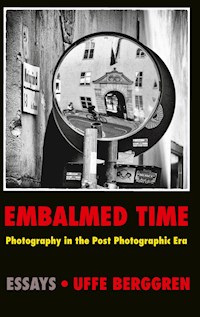
What is a photographic image, a painting or a sculpture other than a way to capture the viewer's attention? The author has hopefully seen something in her environment that she wants to draw the viewer's attention to. The photographic image can, in other words, be said to be a trap for our gaze. These traps may be more or less effective, the viewer must work with this trap in order for it to work. This is because we cannot see something in an image that we have not already seen or we cannot see something that we have not already have been able to imagine. If another person may think the content, there is a possibility that the viewer can also see it. This book contains some thinking about what a photographic image really is in a couple of essays.
Das E-Book können Sie in Legimi-Apps oder einer beliebigen App lesen, die das folgende Format unterstützen:
Seitenzahl: 266
Veröffentlichungsjahr: 2021
Ähnliche




















Contents
The Starting Blocks
The Post Photographic Era
Photography: Documentation or Art Form?
The Peculiarities of the Photographic Image
The Viewer’s Influence on the Emotions of Photography
Creating Photography
Street Photography Continues a Tradition of the ’Flaneurs’
The Possibilities of Technology
Revealing the Hidden Secrets of Photographic Images
Literature
Le voyage d’exploration ne consiste pas à rechercher des terres nouvelles, mais à voir avec un regard neuf.
Marcel Proust: A la recherche du temps perdu
The Starting Blocks
Yet another book on photography? With a few decades left until it’s time to celebrate photography’s two-hundredth anniversary, most things should be said about photography. However, the world has changed during the last 200 years and the view of photography with it. Photography appeared on the scene during the second century of industrialism and technological advances have, during the time photography has existed, has also greatly influenced the development of photography.
However, this is not a book about the purely technical aspects of photography or image analysis as such, although this is touched upon to and fro in the texts. The focus in the following texts lies on the psychology of the seeing, the interpretation and the understanding. How photography is in its “essence” and how it affects us, are some questions I have been looking for answers to in the literature. Of course, the texts have been about how photographs are loaded with emotions and how these trigger yet another set of emotions within the viewer – emotions that can create an individual interpretation and meaning of a photograph deep down inside each and every one of us. Interesting questions, for example, are whether we really can “see” something in a photograph if we don’t we have any previous experience of what we are supposed to “see”.
What is a photograph, a painting or a sculpture other than a way of capturing the viewer’s attention? Hopefully the author of an image has seen something in her surroundings that she wants to draw the viewer’s attention to. In other words, photography can be said to be a “trap” for the eyes, and eventually for the spectator’s mind. These traps can be more or less effective – the viewer must work with the trap for it to work. This is because we cannot see something in an “image” that we have not already seen or, we cannot detect something that we have not already imagined. If another person can “think” the content, there is the possibility that the viewer also can “see” it.
Collecting photographs is, according to Susan Sontag, collecting the world (Sontag1973:1). Whoever collects tries to establish control and by collecting images of the world we probably try to exercise control over something that it is impossible to create control over. You could say that the photographer, who “collects” by making photographs, tries to organize the world, but faces a hopeless task. Still, most photographers, professional as well as hobby photographers, are constantly making pictures that make their archives ever bigger.
How is it that photography has come to play a role in each man’s life, at least in the western world? In addition to the base level, where anyone who wants an ID document has to make a photograph of themselves, there are many variations of photographs in our lives that are not necessary for our existence. Nevertheless, we are involved in the viewing of advertising images, family pictures and media images, and since the dawn of Internet there has been an explosion in the volume of images that we encounter. This is partly because we are exposed to all these photographs, without our own making, and partly because man seems to be wired to solve “riddles”, where photographs can stand for many, in our surroundings. We can probably not stop ourselves, but we enter into the world of photographs and try to create context and meaning looking at them. As we enter this journey into the landscape that some writers call “magical” or “mysterious”, it seems that we benefit from all the experiences we encounter in our attempts to create something similar to a personal meaning with the photograph we for the moment have the opportunity to interact with.
The photographs we make become documents that allow us to understand the world. According to sociologist Piotr Sztompka, there are two ways in which photography can be used in everyday sociology, by making photographs of social situations and by interpreting existing photographic images (Sztompka 2008:5). Making pictures has many areas of interpretation. For starters, it awakens our sensitivity to social situations, as it replaces the passive “look”, where countless chaotic impressions only flow in front of our eyes, with a deliberate “look”, where we consciously select and rank the images according to their significance. Three technical features of the camera are helpful here, says Sztompka. First, we must focus on something, which means choosing something of the highest importance in the observed situation. Second, we must frame the image, which means eliminating the features of the situation that are considered less important. Thirdly, we must determine the depth of field, distinguish foreground from background. This is of course everyday food for the experienced photographer, but as a collection of data for sociological research on everyday life, Piotr Sztompka tries to regard photographs as a foundation. His hope is that the study of photographs made in everyday situations will help us to describe changes and clarify existing conditions. What happens when we “make” a photographic image? A description that paints gives a painterly picture of what is happening has been made by a Mexican writer (De Haene Rosique 2009:9):
Observe, observe, capture on the mechanical retina, define exposure times, find the frame, guarantee the best angle, determine the composition, define focal length, depth of field ... fire the shutter to snatch a fragment of reality with high contrast and semitones to create an alternate reality, visible, tangible and two-dimensional. As is evident, this is no uncomplicated process. In this collection of texts, however, the focus is more on how the viewer perceives the already exposed image than how the photographer has gone about to achieve it.
As mentioned above, this is no uncomplicated process. In this collection of texts, however, the focus is more on how the viewer perceives the already exposed image than how the photographer has gone about to achieve it.
My thought is that because we, at least in the Western world, have been soaked in reproductions of photographs, photography has taken an important place in our lives, whether we like it or not. When I scouted for literature, it struck me how many different types of writers have gone about trying to interpret photography and its role in our lives. They all try to answer questions such as: where is the photograph, when is the photograph, how is the photograph and why is the photograph? One of the more intrusive questions is asked by W. J. T. Mitchell in this form: “What do pictures really want?” (Mitchell 1996). This is a question, among many, that recurs repeatedly in these texts. However, Mitchell (1994:11) has expressed concern that we do not really know what images are and how their relationship to language is, how they work for us viewers and the world, and what we should do with them. It’s a bunch of demanding thoughts.
In summing up the texts in this collection, I dare to interpret the “message” in the texts. Although I did not really foresee that there would be any message in them when I started writing them some years ago. These interpretations are based on the fact that the texts are about the relationship we as viewers have with the photographic image. It is also about how the viewer loads the image with an individual content that is based on the individual’s experiences and references. This is what allows us as individuals to see completely different things in a photograph.
A lot has been written about photographs and photography throughout the ages, however, the texts below do not claim to be comprehensive. However, I would like to point out that it is nothing new to think about photography and its role in our lives. Walter Benjamin, a German philosopher who wrote extensively on media in the 1930s, is an inspiration for my attempts. The thoughts in Walter Benjamin’s “Little history of photography” were an expression of a deep emotional commitment to an ever-open debate about aesthetics that had been triggered by the shared hope of a social revolution, Herbert Molderings (2014:335) argues. Without the empathetic embrace of the actions of the revolutionary masses, which for a literary figure means as much as the prospects of a new audience, new tasks and purposes: Benjamin’s perspective would have relinquished a great deal of their emotional impulses. As an individual expression of the historically unique and never-to-be-repeated artwork, bourgeois intelligence and Marxist labor movement appeared. Walter Benjamin’s “Little History of Photography” remains a sketch that, in Herbert Moldering’s opinion, cannot be completed; it is an intellectual torso where the unfinished always exists as an aesthetic form. In “Little History of Photography”, Walter Benjamin undoubtedly draws a lance for photography, at least in one way. Walter Benjamin (2008:294-5) states:
“It is not the person ignorant of writing but the one ignorant of photography,” somebody has said, “who will be the illiterate of the future.” But mustn’t the photographer who is unable to read his own pictures be no less deemed an illiterate? Isn’t inscription bound to become the most essential component of the photograph? These are the questions in which the span of ninety years that separates contemporary photography from the daguerreotype discharges its historical tension. It is in the illumination of these sparks that the first photographs emerge, beautiful and unapproachable, from the darkness of our grandfathers’ day.
We have seen developments with attempts to integrate image and text. Among others, Sven Lidman, who, at least for the Swedish market, coined the concept of lexivisual representation.
Photographs are only part of all the images that surround us, and there are also drawings, paintings and sculptures. I agree with Sturken & Cartwright (2001: 4-5) who wrote a textbook on visual culture:
“Visual culture should be understood, not only by historians and other ’image experts’, but by all of us who increasingly encounter an astonishing collection of images in our daily lives.”
The visual culture is all around us, we live immersed in it and we constantly interpret visual elements in our everyday lives.
Often the interpretation is done with a certain routine. In what follows some thoughts about the visual are presented, not just about photography. While working on these texts, I have come to develop a certain fondness forAndré Bazin’s (1967: 14) notion that photography does not create eternity, as art does, photography embalms time, saves it from its own downfall. I have therefore called this collection texts for ’The Embalming of Time: Photography in the Postphotographic Era’ – which can be said to point to one of the important features of photography – as a document that we believe shows us “what it looked like, what it was like”. In addition, I became interested in the “post-photographic” about which more follows in the texts.
The Post Photographic Era
Photography today, depending on, among other things, technological developments, has a different appearance than earlier. As a basis for these texts, I have browsed literature that in one way or another has expressed ideas about photography or other images that have been possible to transfer into photographs. The idea was that in these writings I would find arguments for when / how the photographic image begins to be viewed as possible to be regarded as an independent art form. During the reading, however, I have realized that most of the authors in the sample concentrate on what is the difference between everyday photography and art photography. Therefore, this presentation will also address this difference. At the same time, we must keep in mind that many of the disciplines of art crossfertilize each other, so that what emerges as themes in literature, film, photography, music, sculpture or painting does not stay within the narrow niche where they are first presented. New technology also arouses curiosity in people who want to express themselves, which is obvious in terms of the use of film, video, audio recording or the use of digital software. The photographic image is no exception here. The digital development has at least led to that the technology for taking photographs, making film and music recordings of acceptable technical quality has then become affordable for many more than before.
The subtitle “The Post Photographic Era” on this collection of texts indicates that we are living in a time after the photographic era. Since the 1990s there have been descriptions of “the post-photographic era”, among others by William J. Mitchell (1992) and Göran Sonesson (1999) whose thoughts are sometimes used in these texts. What is meant by “the post-photographic era”? Is it all about the transition from analogue to digital technology? Is it about the “magic” in film / photo allegedly disappearing in digital photography? Is it about the phenomenological notion that film and paper copies are objects as opposed to the digital file? The digital file does not, in a way, become an object until printing. The digital file can live its entire existence in digital form. Is the digital format really less of an object than the analog image? Can we imagine digital objects? The digital file has scope and mass - albeit in digital form on a hard drive or USB stick. Is there the same relationship between digital text and analog text in, for example, book or magazine form? Isn’t the digital text contained in an e-book, for example, until it is read or printed? Is it a change in a clear technological sense or is it even something much bigger? Despite the argument about the “post-photographic era”, we must admit that digital photography is also still about “writing with light”.
The Western world sets the agenda for what photography is and is considered as. The western world gave birth to photography, nurtured it and established it worldwide, notes Nikos Panayotopoulos (2002:2). In fact, the photographic history of the West was established as the history of photography. The West has written “grammar” / syntax for international photography, set the framework for photographic production and evaluation in all other countries. The flow of the world’s images is essentially unidirectional and the western world stands at the core of image production and distribution, making the concept of “history” a synonym for a post-constructed genealogy of itself. The semantic framework of the photographic medium – that is, the sum of the principles, rules and traditions – that emerged and developed in the industrialized Western world illustrates the Eurocentric nature of photography. In the colonial world, most of it was euro-centric – the English brought cricket and football as part of teaching the indigenous people of the colonies to become “Englishmen”. The photograph followed in the footsteps of the colonial ambitions of the Western world.
We, according to some thinkers, are now living in the post photographic era, a relative of the postmodernist era. It also means that we live in an era that is the result of a long development of visual art. First came drawings, paintings, then came what we today call photographs. During the almost 200 years that we have lived with images made according to photographic methods since 1839 when Daguerre exposed his first image, photography has found its role in almost all communicative expressions in our society. When modern times have been going on for a while, some thinkers think that in order to describe contemporary times more accurately, we must have a new expression and new categories. We can assume that after the photographic era, we will step into, if we have not already done so, the post-photographic era, pending the next attempt of categorization. Is the post-photographic era about digital technology, then? With digital technology, many expressions converge to be found on the same website where we find texts, videos and photographs and they are available through the same type of reader, computer, cell phone or tablet. In that world, the effect becomes isolating and the behavior can be regarded as evasive if you are off grid. The question is whether this applies especially to photography.
We may see something similar on the way to take place, but we probably don’t know what implications this will have on the future of photography.Already there are camera systems that can “tank” images of an entire city in the form of technology that Google, for example, uses to build two-and three-dimensional maps with street views around the world. Here we sometimes see real street photos of people eating ice cream or hugging each other.
What all this means is of course difficult to overlook, it is at best a divination about how digital technology might affect the photographic future. Already the way in which the photographic image may today be produced with computer assistance means that the camera has become a new tool, which does not require much effort and years of training to create decent photographs. Instead, we can put our power into enhancing our memories, our ideas about the stories that we are capturing and expressing in our world, as if we are strengthening our own bodies and beginning to resemble a cyborg with the digital camera technology to extend our own knowledge and capabilities. However, we do not yet have a camera in our body, but with the miniaturization that is going on we are on the right track. We can have so-called action cameras strapped to our bodies (or our bodies) and our clothes. The technology is used by some police forces to create summaries of events during police interventions. With further miniaturization, it soon becomes difficult to detect if someone is carrying a camera on their body which will eventually mean that we can make high-resolution photographs or video footage continuously on a stroll. When we get home, the imagery is just about ready to be distributed online.
Hardly visible cameras as a fairly integral part of our bodies: what can actually be more post-photographic than that? We know that images today are made to an extent that far exceeds the volume of images made in the 1950s. Is post-photographic about no longer “writing with light”? Probably not, we still command our surroundings to give us their stories and the surroundings do so with the help of light. The importance of the past may have to do with the fact that we are now not paying special attention to cameras because we know that there is a camera in every corner of our existence. It has become difficult to determine if we are “in the picture” and if we will see some “good images” filled with stories during the post-photographic era. The continuous photo shoots of our lives tend to be a contrast to traditional photography which has always been a snippet of reality.
Maybe the market for photographs will be saturated? Possibly if we argue about the careers for professional photographers, who already have a hard time creating their way of life. Of course, it is not possible to imagine that images would not be produced in the future. Interestingly, however, the right to make photographs in public places is under attack in the form of an EU proposal to prohibit photography of architecture, statues and “landmarks” that have an identifiable author in the form of an architect, artist or the like. The proposal is currently on the agenda in Sweden. It’s all about what’s in the back-drop as we walk through a city. It is an ominous sign of the times that the flow of images is likely to be restricted. One consideration is about the costs involved in controlling compliance with such prohibitions.
There are proposals for restrictions on the right to photograph in our surroundings. One example is Hungary, which has decided on severe restrictions. If we all get to photograph what we want, we will create stories all over the world. If a ban on some photography is introduced in the world we take for granted, we will surely land in the post-photography era. No one dares to make pictures in public space anymore, as it has become a criminal offense. What remains are images from the private sphere, which may not be as interesting as the one photographed in public space.
The reality in digital form
Are images of reality becoming different when they appear in digital form? This collection of texts will touch on these issues quite often. Partly because we have now lived with video and photos in digital form for a quarter of a century, and partly since many claim that digital has changed our view of images. The ongoing and probably not completed technology shift in the photographic image in the foreseeable future provides an opportunity to put questions about what happens to the content (meaning) as the technology that carries the content changes character. Many of the writers I rely on for the production of these texts can be called semiotics or phenomenologists. What, then, is semiotics and phenomenology? Semiotics (of Greek semeion: signs) is a collective name for theories and study of signs. Semiotics as science or discipline studies how meanings are perceived, and meaning is formed, in communicative situations, partly in the characters we use in written and spoken language, and in how they occur in other mediating resources such as gestures, images, physical things and biological processes. Phenomenology (of Greek phenomena, it seems) is a theory and method in philosophy, the doctrine of phenomena and being. In phenomenology, we study in particular the relationship between perception and the objects of perception, and seek to explain or describe ideas and beings to ourselves as they appear to us. Therefore, phenomenology does not primarily study causal relationships between objects.
Sarah J. Kember (2008: 175) argues that photography did not die the digital death that was perceived in the late 1900s. Rather, digitization has meant that today there is more of photography, possibly more types, than ever before. Kember believes that after 150 years we are not really sure what photography really is, the reason for this is partly due to the expansion of a limited range of disciplinary and conceptual frameworks. How much has the technology shift in photography affected the photographs and the experience of photographic images? The most important is probably the second part of the question: how will the shift in technology from analog to digital affect our experience of photography and thus the meaning we attribute to it? That is what we usually call a story in the image. If we do not allow a cultural expression such as photography the opportunity to carry content, or meaning, we will disqualify it as a cultural expression.
A new technology for imaging
According to history, the Stockholm exhibition 1866 became the beginning of photography in Sweden (Bremmer 2015:85-6). Photographer Johannes Jaeger had set up his camera equipment at one of the industrial hall stands to capture this scene. After a quick development and copying, the photograph is sent by horse to Ulriksdal’s castle, where the bedridden monarch is allowed to watch the scene just an hour after it has taken place. The day after, the episode is recounted in the daily press, at the same time as the picture is for sale in the exhibition area. Jaeger’s photography certainly sells a lot on its royal brilliance, but as surely as a picture of the exhibition experience itself. The camera has captured the Industrial Palace’s characteristic “deceptive diversity” of people and objects, its abundance of objects.
At the Art and Industrial Exhibition in Stockholm in 1897, photography equipment was also shown and now came closer to the visitor, by making it possible to rent equipment. The media technologies presented to the audience at the exhibition in Stockholm – including the three “timewriters” phonograph, cinematographer and photography – were used at the same time to document and store the exhibition for the future (Ekström, Jülich & Snickars 2006:9). Of course, this was at a time when ordinary people did not have access to the camera. There were also restrictions on photography in the exhibition area for regular visitors. One type of camera that took “smaller” pictures was rented out by, among others, the photo company Sven Scholander. The cameras could expose 8x8, 9x12 or 12x16.5 cm images. The rent for the camera that took pictures in 8x8 cm format was SEK 35 (Ekström, Jülich & Snickars 2006: 10). A typographer at this time had a weekly salary of SEK 25-30 (Kommerskollegium 1903). We can probably assume that it was not the poorest citizens who rented cameras at the Art and Industrial Exhibition in 1897. When photography entered the public arena in the mid-1800s, it was, unsurprisingly, received with the way of thinking, writes the photography academic Victor Burgin (1982: 10). As far as the image is concerned, the criticism was about realism versus romance. The criticism of romantic philosophical foundations came from Auguste Comte’s positivism. The intellect does not shape the external reality as Immanuel Kant saw it, but rather the objective world which must govern our thinking itself. To do that, we must accept that the reality we can see and touch is the only one that exists, writes Burgin. The romance, on the one hand, emphasized the author’s preference: Delacroix writes in 1850 that painting is nothing more than a “sweeping reason”, a bridge between the artist’s mind and the spectator’s. Realism, on the other hand, asserted the world’s preeminence: according to Courbet, art painting can only portray “real and existing things”, a unit that is abstract is not within the realm of the realm of painting. It seems that this discussion, according to Burgin (1982:10), was about the “content” of the image, what we might call meaning, message or “story”. Realism was considered more true is the romantic portrayal of reality. We saw examples of feature films and fiction during the 1950s that formed the basis for the coinage of the concept of “sink realism”. This “industrial” way of thinking about and accepting photography, which was a technical achievement among many others during the 19th century, was probably a usual manner of accepting new technology at this time.
The photographic image helps us to think. Slovenian researcher Ilija Tomanić Trivundža (2014: 217) agrees on the idea that photography, when it was invented during the first half of the 19th century, was conceived as a symbol of rational Western thinking and scientific methods for acquiring the world. By the early 1900s, photography had acquired a never-before-seen social status as a way of (visually) archiving, both as visual facts and in practice to visualise facts. The photograph managed to maintain this status until the early 2000s after weathering attacks on the ontological uncertainties brought about by the digital technology, which turned out to be more about the resurrection than the death of the media. In this simplified and widely accepted story, photography marches in line with modernity’s project of Weberian disappointment around the world and seems to be an example of its “rationalisation and intellectualisation”. Photography will thus be regarded as “modern vision in every sense, but above all in its alliance with the vision of modern epistemology through its realism”. Photography plays its role well in documenting and discussing the modern world. Maybe this is about the seemingly realistic expression of photography. It is easy to “believe” that a photographic image is true, that is, depicts a moment that has taken place, which in turn represents a fragment of a time and a place.
The photograph does not stand alone in front of the viewer. Magnus Bremmer (2015: 17) argues that the history of photography is not merely the story of images. It is also a story of words. The contemporary audience’s first photographic experience was rarely just photographic images, but instead the newly awakened reports and increasingly detailed testimonies in newspapers and magazines that spread around the world in 1839 after the daguerreotype was presented to the French Academy in January of that year. Once photographic images began to circulate in printed editions – first using manual reproduction techniques such as lithography, eventually as pasted paper copies – they were usually flanked by a descriptive, explanatory text. The presence of the printed word in the spread and consumption of photographic images in the 19th century is evident. Even today, it is routinely stated that “we rarely see a photograph that is not accompanied by words”, as Victor Burgin emphasised. This shows that the idea of a photograph being able to stand on its own legs, without being accompanied by text does not really have a historical background.
Magnus Bremmer also thinks that photography was often praised for its detail in the beginning, but that this particular abundance of details was seen as a problem:
But critics also said that photographs showed too much, that they were too detailed. It was found that the mechanical imaging of photo technology made the image indistinguishable, that it could not distinguish the essential details from the essentials. Some thought that the photograph even distracted its viewers. What would you really look at? “The photograph abandons the eye”. (Bremmer 2015:10).
Before the photograph, books and magazines were illustrated with different types of hand drawn images and the cartoonist could omit “irrelevant” details.
The argumentation about realism in art has its roots in a misunderstanding, argues André Bazin (1967:12). The conflict is based on a mix of the aesthetic and the psychological – between real realism, the need to give a valid expression to the world, both concrete and its essence – and the pseudo-realism of fraud aimed at deceiving the eye (or for that matter the mind). That is why medieval art never passed this crisis; at the same time vividly realistic and very spiritual, it knew nothing about the drama that was discovered as a result of technological development. Perspective was the sin of inheritance in Western painting. Now Bazin is a bit diligent, but his comments on the mix of aesthetic and psychological are interesting. The photographic image, even in the form of private photos, may seem to be loaded with a dynamic force that many thinkers have given up trying to explain. More about this in the section “Reading pictures”.
What is photography – film or computer file?
In recent decades, photographers, as well as creators of other forms of media expression, have learned that digital technology is affecting the medium. The impact comes in different shapes. On the one hand, there is a speed in digital photography technology, which, for example, meets the media’s demands for almost immediate publication on the web today, and on the other hand there are fears that the digital image is not as organic as traditional analog photography. Some reasoning is nostalgic, like using hand saws instead of electric saws when you’re carpentering in the summer cottage. Other objections are about the expression. Can the digital image really convey the expression the authors are trying to put into it? The following texts are an attempt to give an orientation in how the thinking may go. At the same time, I should state that what is expressed here largely does so because it fits my view of the photographic image.
Canadian communication theorist Marshall McLuhan (1967:40) saw already in the 1960s how different media cooperate and together create something new: “no medium has any meaning or existence on its own, but only in constant interaction with other media.” Perhaps we may sense this more clearly today when we see how digital technology has brought about a convergence of old media and also created media forms that did not exist before. It may rather be the case that old media is converted in accordance with current technology and developed starting with the old. A struggling cultural magazine that stops printing on paper and switches to online publishing may be an example.




