


10,99 €
Mehr erfahren.
- Herausgeber: Parkstone International
- Kategorie: Geisteswissenschaft
- Sprache: Englisch
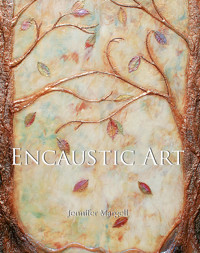
Encaustic painting is one of the world’s most venerable art forms, having been practised consistently around the world since the ancient Egyptians first used it to decorate sarcophagi, and enjoying continuing popularity in the modern era with artists such as Paul Klee and Diego Rivera. In this new text, Jennifer Margell offers readers a comprehensive introduction to the medium, featuring instructive how-tos for encaustic art beginners, revealing interviews with some of the most celebrated practitioners of the medium, and a gallery featuring one of the largest published collections of encaustic art to date.
Das E-Book können Sie in Legimi-Apps oder einer beliebigen App lesen, die das folgende Format unterstützen:
Seitenzahl: 166
Veröffentlichungsjahr: 2023
Ähnliche



















Author: Jennifer Margell
© 2023, Confidential Concepts, worldwide, USA
© 2023, Parkstone Press International, New York, USA
Image-Barwww.image-bar.com
© Kristy Battani, all rights reserved
© Steven DaLuz, all rights reserved
© Brandy Eiger, all rights reserved
© Karen Freedman, all rights reserved
© Lorraine Glessner, all rights reserved
© Carrie Goller, all rights reserved
© Stephanie Hargrave, all rights reserved
© Miriam Karp, all rights reserved
© Jennifer Margell, all rights reserved
© Cheryl D. McClure, all rights reserved
© Edie Morton, all rights reserved
© Debra Neiman, all rights reserved
© Jeremy Penn, all rights reserved
© Richard Purdy, all rights reserved
© Amy Royce, all rights reserved
© Adele Shaw, all rights reserved
© Tony Scherman, all rights reserved
All rights reserved.
No part of this publication may be reproduced or adapted without the permission of the copyright holder, throughout the world. Unless otherwise specified, copyright on the works reproduced lies with the respective photographers, artists, heirs or estates. Despite intensive research, it has not always been possible to establish copyright ownership. Where this is the case, we would appreciate notification.
ISBN: 978-1-78310-329-4
Jennifer Margell
ENCAUSTICA
Featuring Artwork by:
Kristy Battani
Steven DaLuz
Brandy Eiger
Karen Freedman
Lorraine Glessner
Carrie Goller
Stephanie Hargrave
Miriam Karp
Cheryl D. McClure
Edie Morton
Debra Neiman
Jeremy Penn
Richard Purdy
Amy Royce
Adele Shaw
Tony Scherman
Contents
INTRODUCTION
The History
TOOLS FOR ENCAUSTICS
CREATING ENCAUSTIC PAINT
SUPPLIES:
Lessons
LESSON 1: PAINTING & FUSING
LESSON 2: BRUSH APPLICATION
LESSON 3: MIXED MEDIA
LESSON 4: DIMENSIONAL OBJECTS
LESSON 5: USING MASKS
LESSON 6: PHOTOGRAPHY
LESSON 7: TEXTURAL BACKGROUND
LESSON 8: INCISED LINES
LESSON 9: SCRAPING LAYERS
LESSON 10: PHOTO TRANSFERS
SAFETY PRECAUTIONS
Artist Interviews
KRISTY BATTANI
BRANDY EIGER
KAREN FREEDMAN
CARRIE GOLLER
CHERYL D. MCCLURE
EDIE MORTON
JEREMY PENN
AMY ROYCE
TONY SCHERMAN
Encaustic Image Gallery
STEVEN DALUZ
STEPHANIE HARGRAVE
LORRAINE GLESSNER
ADELE SHAW
DEBRA NEIMAN
MIRIAM KARP
RICHARD PURDY
RESOURCES
INTRODUCTION
The first time I saw an encaustic painting I was mesmerized by its beautiful surface, incredible texture, and translucency. I wanted to reach out and touch it. I was determined to try encaustic painting for myself, and as soon as I did, I was hooked. This is not only my story, but I have heard it echoed by so many encaustic artists who have also fallen in love with the possibilities of the medium.
Encaustics are like no other form of painting, in that there are endless techniques and fleeting seconds before your medium solidifies. It is a medium where you have to trust your instincts and paint in the moment. You have to take leaps of faith. In the beginning there are many frustrations, but over time you learn how to work with the beautiful accidents which incur.
The best way to learn the art of painting encaustics is not to create beautiful paintings. The best way to work with the medium is to create painting after painting, focusing on a different technique each time. Even a technique which you do not plan to use will later be another option added to your repertoire.
So many times I have gone to a gallery and marveled at the fantastic work of artists. I wondered how the artists created the piece I was admiring. I wanted to know what motivated the artists, what they were thinking of, what they were feeling, and what physical steps they used to create their artwork. So many times these questions were not answered, and they have become the inspiration behind this book. In this book, for the first time, is a collection of the voice from these encaustic artists. They are successful, talented individuals who have been gracious enough to share the work, their advice, and even their techniques.
Encaustics are a very fresh art form in the grand scheme of things. They were first used by the Greeks three thousand years ago, but have only recently been resurrected as a popular art form. They are rapidly gaining momentum. Although encaustics are now becoming well known in the art community, many people still do not know what they are and have questions about the medium. So many contemporary artists with vastly different styles have the same beautiful story of their relationship with the medium.
The encaustic painting community is a wonderful group because they are so willing to share their advice and experiences with each other. It is a fresh and exciting time for encaustics because the possibilities are endless. Artists around the world are trying new techniques and experimenting in ways which bring to mind the exciting times of the French Impressionists in the early 1900s.
This book brings together one of the largest collection of encaustic paintings printed in one place, featuring over one hundred and fifty paintings by talented contemporary artists. By looking through the pages, you can see that the range of painting styles you can create with encaustics are endless. The wonderful thing about this project is that it is not only a dazzling collection of work, but it also features the voices of these artists. The pages of this book reveal, in the artists’ words, their passion, motivation, and advice.
Jennifer Margell,Poppy Fields, 2011.
Encaustic and photography on birch plywood,
91.4 x 61 cm.
This workbook is intended for artists of all levels. An advanced artist can learn from the personal artist interviews, advice on ground-breaking techniques, and be inspired by the collection of work. This workbook also includes the information needed for anyone brand new to encaustics such as the basic tools and techniques to get started.
Encaustic is not an easy medium to learn, but for myself and so many other artists, it has been by far the most rewarding medium I have painted with. It is great to do a local workshop to learn firsthand how to paint with encaustics, but there are many ways to go about getting started with the medium on your own as well. This workbook also includes information about the materials required, creating encaustic medium, and ten lessons demonstrating the range of techniques available.
When I start a painting, I often wonder what I would like to say. I think about how I can show my individual style and what I want the viewers to feel. I always think of what one artist said in her interview. She was told that if you do not know your voice, you should paint and paint, then lay all of these paintings out. Look to see what thread ties them together. What shapes and colors weave throughout your pieces; this will demonstrate your individual style. This is a thing which you cannot hide if you wanted, so it is best to seek it out and embrace it. Creating this workbook has been a joy and a blessing. Like creating an encaustic painting, it has changed over time from what I originally imagined it to be. I hope the paintings in this book are an inspiration to the readers, the intimate stories and revelations by artists are appreciated, and this project helps to encourage more artists to learn about all the possibilities of encaustic.
The History
Encaustic painting is one of the oldest forms of painting, and stems from the word Enkaustikos, which means “to burn in”. It originated in Ancient Greece three thousand years ago when ancient ship builders would use a combination of wax and resin to seal and waterproof their hulls. Pigments were then added to the medium and led to the decoration of warships.
Most likely the most famous encaustic paintings of all time are the Fayum mummy funeral portraits from the late 1st century BCE or the early 2nd century CE onwards. They were painted by a large community of Greeks who settled in Egypt and adapted to Egyptian customs after the conquest of Alexander the Great. As tradition, funeral portaits were placed over a person’s mummy as a memorial. These portraits were painted either in the person’s prime of life or after death. Many of these mummies have survived to present day, and the portraits maintain their bright and vivid colors because the pigments remain suspended in the wax medium; thereby retaining their vibrance. After the decline of the Roman Empire, encaustic painting fell by the wayside as the country faced instability and economic turmoil. At this time encaustic was largely replaced by tempura, which was easier to work with and more economical. Some painting continued as late as the 7th century, but encaustics soon became a lost art.
Encaustic was briefly revived in the late 18th century by the French archeologist Anne-Claude de Caylus. He studied the ancient murals of Pompeii and experimented with encaustic techniques. Later in the 19th century mural painters in northern climates experimented with encaustics to battle problems of dampness in mural paintings, but success was limited. Leonardo da Vinci experimented with using encaustics in his work, but was not successful. Other European artists including Vincent van Gogh and Julius Schnorr von Carolsfeld used wax in their oil paintings to separate layers of paint with translucent layers.
Adele Shaw, Studio detail.
One of the primary problems of working with encaustics was finding a way to melt the wax. In the 20th century, the invention of portable electronic heating implements revolutionized the art form and made encaustics much more attainable. This factor and the success of early encaustic painters gave rise to the resurrection of encaustic painting.
The founding father of Pop Art, Jasper Johns, is hugely responsible for popularizing the art form and increasing awareness about the medium. He used it in a number of his pieces, including his series of American Flags. Other artists who were responsible for reviving the art form include Alfonso Ossorio, Lynda Benglis, Robert Morris, Nancy Graves, and Tony Scherman. Encaustic is now a modern painting technique which continues to gain popularity.
Wax has many qualities that last the test of time, and encaustic may be the most durable form of painting. Beeswax is moisture resistant, it is a natural adhesive, it does not attract insects, and it resists mildew. Solvents and oils can darken or yellow over time, but beeswax does not change color at all. Because it is an ancient technique which has only recently been revived from obscurity, encaustic is a very exciting medium to experiment in. As it has continued to gain momentum in recent decades, contemporary artists push the limits by exploring the possibilities through materials and techniques. Encaustic is still a fairly new medium in the contemporary artist’s repertoire; many of the pages of history remain to be written.
TOOLS FOR ENCAUSTICS
Many tools for encaustics come from unexpected sources; food tins can be used for mixing colors and an iron can be used to melt wax. Experiment with using different tools to create interesting looks. Here is a list of the basic tools required for painting with encaustics:
HEAT SOURCE:
- A griddle or hot plate is required to melt the wax.
- A hand held heat gun is needed to fuse layers together. A propane torch could also be used instead.
ENCAUSTIC MEDIUM:
- Encaustic medium is a mix of beeswax and Dammar Resin. You can purchase encaustic medium or, for a more cost effective option, you can mix your own.
ENCAUSTIC PAINT:
- Encaustic paint is a mix of encaustic medium (wax and Dammar Resin) with pigment. It is colored and can be purchased professionally mixed, or again you can mix your own. You can dilute encaustic paint with encaustic medium to make it last longer.
SUPPORT:
- A rigid surface is required to paint onto. Experiment with different surfaces such as birch wood, luan, bamboo, or Masonite. Canvas alone can stretch over time, so if you prefer to paint on canvas it is best to stretch it over a solid wood support.
APPLICATION:
- Natural bristle paint brushes such as hog bristle brushes from the hardware store. Do not use plastic brushes because they will melt with heat.
- Paper towels.
OPTIONAL TOOLS:
- A thermometer is a handy tool to help keep the wax in a temperature range from 180-200º Fahrenheit.
- Wood carving tools are fantastic for carving and incising lines into the wax.
- Mixed media materials such as interesting papers, organic materials, small objects, and fabrics.
CREATING ENCAUSTIC PAINT
Mixing your own encaustic medium is not difficult and is a great way to save money on supplies. Encaustic medium is a mixture of beeswax and Dammar Resin. Adding the Dammar Resin to the wax increases the melting temperature of the encaustic medium and makes it more rigid, thereby making it harder to damage.
Beeswax is available filtered or unfiltered. Unfiltered beeswax has a golden tint because of suspended particles of flower pollen and has a stronger smell. It is not very translucent so most artists use filtered beeswax, which has a translucent clear white color. It can be purified naturally using filters. It can also be purified through chemical or solar bleaching, however chemically bleached wax may yellow over time.
Beeswax comes in a number of forms. Most encaustic artists prefer pellets but blocks also work well. To break a large block of wax, you can freeze the block, put it in a paper bag, and then hit it with a hammer. Paraffin wax is petroleum based and a good choice for encaustic art. It is much harder than beeswax but if put under pressure it can crack. It is also cheaper than filtered beeswax, so some artists add a percentage of paraffin to their encaustic medium.
Dammar Resin, pronounced da-mahr, is actually hardened tree sap. It should not be confused with Dammar varnish. Dammar Resin is readily available at art supply stores or online. Most artists prefer to buy it as Dammar Crystals, which is hard Dammar Resin broken up into chunks.
SUPPLIES:
- Filtered Beeswax
- Dammar Resin
- Heat Source & Stir Stick
- Thermostat (recommended)
- Muffin Tins or Containers to pour wax
- Well-Ventilated Workspace
1. Use a scale to weigh 8 parts filtered beeswax to 1 part Dammar Resin. You can experiment with different ratios, but do not use too much resin or your medium will be brittle. If your chunks of Dammar Resin are very large, break them into smaller pieces with a hammer.
2. In a well-ventilated space, add a small amount of wax to your heat source. It will melt at about 140-150º Fahrenheit. You can use a crock pot, electric griddle, or a double boiler over water. Use the thermometer to keep an eye on the temperature and do not leave the wax unattended.
3. Bring the temperature up to 180 - 200º, which is the melting point for Dammar Resin. Slowly add all of the Dammar Resin and use a chopstick or the end of a long paintbrush to stir until it is completely incorporated. Do not bring the temperature above 250º. At any point if you see smoke when painting with encaustics, turn the heat down.
4. Once the Dammar Resin is completely smooth in consistency, add the rest of the beeswax. Reduce the temperature to 175º and stir until all the ingredients are completely mixed together.
5. Next pour the medium into small containers for cooling. If you use muffin tins, later put the tins in the freezer for 20 minutes and the wax cubes will pop right out. Do not allow the tins to come in contact with food after using them with encaustic medium. There are small impurities in Dammar Crystals which you will see at the bottom of your cubes of encaustic medium. If you want to avoid these, you can pour your medium through a metal strainer with a coffee filter or cheesecloth. Your medium is now ready for use.
COLORS & PIGMENTS
Encaustic paint is simply encaustic medium with pigment added for color. Pigment can be added using oil paint, powdered pigments, or Lyra Encaustic crayons. The amount of color that you add to the encaustic determines how transparent your medium will be. You can also choose to buy pre-made encaustic paint blocks with color already added. These blocks have quite a bit of color and are more often pricier, so you can dilute them with encaustic medium to make them last longer and add transparency to your medium.
The most common methods for adding color are to buy colored blocks of medium, or to add oil paints to your medium. The other option is to add powdered pigments, which can also be used to create oil paints. However, you should not use powdered pigments unless you use the correct safety precautions. You will require gloves, respiratory protection, and a controlled airflow. It is not safe to breathe powdered pigments, but once they are incorporated into the encaustic medium they are safe to use like normal encaustic paints.
Adding powdered pigments requires precautions such as using gloves, respiratory protection, and controlling airflow. We will focus on creating encaustic paint using oil paint tubes.
1. Add oil paint to melted encaustic paint either straight on your griddle or in individual containers. Oil paint will slightly soften your medium. If you would like, you can squeeze your oil paint onto paper towels or an oil absorbent material from an auto supply store.
2. Mix well to incorporate.
Jennifer Margell,Nesting,2011.
Encaustic and Mixed Media on Birch, 91.4 x 91.4 cm.
LESSON 1: PAINTING & FUSING
It is easy to get started painting with encaustics. Get together all of your tools including a heat source, encaustic medium, and paint, brushes, and a heat gun (see “Tools For Encaustics”).
1. Use your hot plate or griddle to melt encaustic medium. You may want to use encaustic medium tinted with color to build up a translucent surface. You can mix encaustic medium and encaustic color together right on a heated griddle surface, or use individual tins to hold different colors. Experiment with both methods to see what works best for you.
2. Use a wide natural fiber brush to apply the wax to the substrate in long strokes. A 2” wide hog bristle brush from the hardware store works great. Do not use a brush with plastic or synthetic bristles or they will melt. A solid and porous substrate such as wood or Masonite works well for the painting surface. As you paint with the brush, the wax will solidify quickly. Continue to dip it into the wax often as you paint the initial layer of paint onto your ground.
3. Next you must fuse the layer of wax to the substrate. Most artists use a heat gun, but a propane torch will also work. Use a circular motion to lightly melt the wax and then continue to move to other parts of the painting. It is only necessary to melt the wax until it adheres to the surface below. If you heat an area too long, it will become an uneven mess. You will see the surface of the wax become smooth and glossy after it has been fused. It is common to have air bubbles in the wax, which look like little holes receding into the surface. To alleviate these simply continue to lightly circle the area with the heat source.
4. Paint on an additional layer of wax, fuse, and continue to build up your painting. It is always necessary to fuse the wax between every layer to ensure it adheres to the layer below and will not chip off. After painting two or more layers of wax, continue to paint with different colors, materials, and techniques to develop your piece.




