


53,99 €
Mehr erfahren.
- Herausgeber: John Wiley & Sons
- Kategorie: Fachliteratur
- Sprache: Englisch
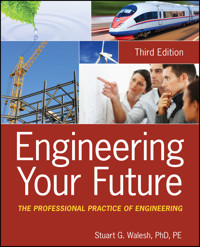
Round out your technical engineering abilities with the business know-how you need to succeed Technical competency, the "hard side" of engineering and other technical professions, is necessary but not sufficient for success in business. Young engineers must also develop nontechnical or "soft-side" competencies like communication, marketing, ethics, business accounting, and law and management in order to fully realize their potential in the workplace. This updated edition of Engineering Your Future is the go-to resource on the nontechnical aspects of professional practice for engineering students and young technical professionals alike. The content is explicitly linked to current efforts in the reform of engineering education including ABET's Engineering Criteria 2000, ASCE's Body of Knowledge, and those being undertaken by AAEE, AIChE and ASME. The book treats essential nontechnical topics you'll encounter in your career, like self-management, interpersonal relationships, teamwork, project and total quality management, design, construction, manufacturing, engineering economics, organizational structures, business accounting, and much more. Features new to this revised edition include: * A stronger emphasis on management and leadership * A focus on personal growth and developing relationships * Expanded treatment of project management * Coverage of how to develop a quality culture and ways to encourage creative and innovative thinking * A discussion of how the results of design, the root of engineering, come to fruition in constructing and manufacturing, the fruit of engineering * New information on accounting principles that can be used in your career-long financial planning * An in-depth treatment of how engineering students and young practitioners can and should anticipate, participate in, and ultimately effect change If you're a student or young practitioner starting your engineering career, Engineering Your Future is essential reading.
Sie lesen das E-Book in den Legimi-Apps auf:
Seitenzahl: 973
Veröffentlichungsjahr: 2012
Ähnliche

















Contents
Preface
Acknowledgments
List of Abbreviations
Chapter 1: Introduction: Engineering and the Engineer
The Playing Field
Definitions of Engineering
Leading, Managing, and Producing: Deciding, Directing, and Doing
The Seven Qualities of Effective Leaders
The Engineer as Builder
Concluding Thoughts: Common Sense, Common Practice, and Good Habits
Cited Sources
Annotated Bibliography
Exercises
Chapter 2: Leading and Managing: Getting Your Personal House in Order
Start with You
Time Management: But First Roles and Goals
Employment or Graduate School?
The New Work Environment: Culture Shock?
The First Few Months of Practice: Make or Break Time
Managing Personal Professional Assets: Building Individual Equity
Concluding Thoughts: Getting Your Personal House in Order
Cited Sources
Annotated Bibliography
Exercises
Chapter 3: Communicating to Make Things Happen
Five Forms of Communication
Three Distinctions between Writing and Speaking
Listening: Using Ears and Eyes
Writing Tips: How to Write to Make Things Happen
Speaking Tips: How to Speak to Make Things Happen
Concluding Thoughts about Writing and Speaking
Cited Sources
Annotated Bibliography
Exercises
Chapter 4: Developing Relationships
Taking the Next Career Step
Personality Profiles
Maslow’s Hierarchy of Needs
Theories X and Y
Delegation: Why Put Off Until Tomorrow What Someone Else Can Do Today?
Orchestrating Meetings
Working with Technologists, Technicians, and Other Team Members
Selecting Co-Workers and “Managing Your Boss”
Caring Isn’t Coddling
Coaching
Teamwork
Effective Professional Meeting and Conference Attendance
Concluding Thoughts about Developing Relationships
Cited Sources
Annotated Bibliography
Exercises
Chapter 5: Project Management: Planning, Executing, and Closing
Project Broadly Defined
Project Management Defined
The Centrality of Project Management
Relevance of Project Management to the Student and Entry-Level Technical Person
Planning the Project
Executing the Project
Closing the Project
Closure: Common Sense and Self Discipline
Cited Sources
Annotated Bibliography
Exercises
Chapter 6: Project Management: Critical Path Method and Scope Creep
This Chapter Relative to the Preceding Chapter
The Critical Path Method
Scope Creep
Cited Sources
Annotated Bibliography
Exercises
Chapter 7: Quality: What is it and how Do We Achieve it?
Everyone is for it!
Quality Defined
A Caution for Engineers and Other Technical Personnel
Quality Control and Quality Assurance
Suggestions for Developing a Quality Seeking Culture
Tools and Techniques for Stimulating Creative and Innovative Thinking
Closure: Commit to Quality
Cited Sources
Annotated Bibliography
Exercises
Chapter 8: Design: To Engineer is to Create
The Root of Engineering
This Chapter’s Approach
Design in the Context of Major Engineering Functions
The Disproportionate Impact of the Design Function
Design in Terms of Deliverables
Design as Risky Business
Design as a Personally-Satisfying and People-Serving Process
The Words “Engineer” and “Create”
Closing Thoughts about Design
Cited Sources
Annotated Bibliography
Exercises
Chapter 9: Building: Constructing and Manufacturing
The Engineer as Builder
Constructing
Manufacturing
Differences between Constructing and Manufacturing
Closing Thoughts about Constructing and Manufacturing
Cited Sources
Annotated Bibliography
Exercises
Chapter 10: Basic Accounting: Tracking the Past and Planning the Future
Relevance of Accounting to the Engineer
The Balance Sheet: How Much is it Worth?
The Income Statement: Inflow and Outflow
Relationship between the Balance Sheet and the Income Statement
Accounting for Your Future
The Impact of Time Utilization Rate and Expense Ratio on Profitability in the Consulting Business
The Multiplier
The Income Statement as Part of the Business Plan for a Consulting Firm
Project Overruns: Implications for Profitability and Personnel
Concluding Thoughts about You and Accounting
Cited Sources
Annotated Bibliography
Exercises
Chapter 11: Legal Framework
Why Law for Engineers?
Legal Terminology
Changing Attitudes: Forewarned is Forearmed
Liability: Incurring it
Liability: Failures and Learning from Them
Liability: Minimizing it
Maintaining Perspective on Liability Minimization
Legal Forms of Business Ownership
Concluding Comments about the Legal Framework
Cited Sources
Annotated Bibliography
Exercises
Chapter 12: Ethics: Dealing with Dilemmas
Inevitable Ethical Dilemmas and Decisions
Defining Ethics
Teaching and Learning Ethics
Legal and Ethical Domain
Codes of Ethics
Dealing with Ethical Dilemmas: Using Codes and Other Resources
Case Study: Discovering a Major Design Error after Construction is Complete
Concluding Thoughts: Seeing Sermons
Cited Sources
Annotated Bibliography
Exercises
Chapter 13: Role and Selection of Consultants
Consultant Defined and Why You Should Care
Why Retain a Consultant? Let’s Do it Ourselves!
Characteristics of Successful Consultants
Consultant Selection Process
Price-Based Selection: Three Costs to the Consultant
Conclusions about the Role and Selection of Consultants
Cited Sources
Annotated Bibliography
Exercises
Chapter 14: Marketing: A Mutually-Beneficial Process
Consider Your View of Marketing: Are You Carrying Some Baggage?
Chapter’s Scope
The Economic Motivation for Marketing Professional Services
Marketing and Selling: Different but Related
A Simple, Powerful Marketing Model
Marketing Techniques and Tools
What Works and What Doesn’t Work
Marketing Concluding Comments
Cited Sources
Annotated Bibliography
Exercises
Chapter 15: The Future and You
What Does the Future Hold?
The World You Will Work In: Same Role but New Stage
How to Lead Change
Concluding Thoughts about You and the Future
Cited Sources
Annotated Bibliography
Exercises
Appendix A: Engineering your Future Supports ABET Basic Level Criterion 3
Appendix B: Engineering Your Future Supports Abet Program Criteria for Civil and Similarly-Named Engineering Programs
Appendix C: Engineering Your Future Supports the Civil Engineering Body of Knowledge
Index
About the Author
Copyright © 2012 by American Society of Civil Engineers. All rights reserved
Published by John Wiley & Sons, Inc., Hoboken, New Jersey.
Published simultaneously in Canada
No part of this publication may be reproduced, stored in a retrieval system, or transmitted in any form or by any means, electronic, mechanical, photocopying, recording, scanning, or otherwise, except as permitted under Section 107 or 108 of the 1976 United States Copyright Act, without either the prior written permission of the Publisher, or authorization through payment of the appropriate per-copy fee to the Copyright Clearance Center, 222 Rosewood Drive, Danvers, MA 01923, (978) 750-8400, fax (978) 646-8600, or on the web at www.copyright.com. Requests to the Publisher for permission should be addressed to the Permissions Department, John Wiley & Sons, Inc., 111 River Street, Hoboken, NJ 07030, (201) 748-6011, fax (201) 748-6008, or online at www.wiley.com/go/permissions.
Limit of Liability/Disclaimer of Warranty: While the publisher and the author have used their best efforts in preparing this book, they make no representations or warranties with respect to the accuracy or completeness of the contents of this book and specifically disclaim any implied warranties of merchantability or fitness for a particular purpose. No warranty may be created or extended by sales representatives or written sales materials. The advice and strategies contained herein may not be suitable for your situation. You should consult with a professional where appropriate. Neither the publisher nor the author shall be liable for any loss of profit or any other commercial damages, including but not limited to special, incidental, consequential, or other damages.
For general information about our other products and services, please contact our Customer Care Department within the United States at (800) 762-2974, outside the United States at (317) 572-3993 or fax (317) 572-4002.
Wiley publishes in a variety of print and electronic formats and by print-on-demand. Some material included with standard print versions of this book may not be included in e-books or in print-on-demand. If this book refers to media such as a CD or DVD that is not included in the version you purchased, you may download this material at http://booksupport.wiley.com. For more information about Wiley products, visit www.wiley.com.
Library of Congress Cataloging-in-Publication Data:
Walesh, S. G.
Engineering your future : the professional practice of engineering / Stuart G. Walesh. — 3rd ed.
p. cm.
Includes index.
ISBN 978-0-470-90044-4 (pbk.), ISBN 978-1-118-16043-5 (ebk.); ISBN 978-1-118-16044-2 (ebk.); ISBN 978-1-118-16045-9 (ebk.); ISBN 978-1-118-16300-9 (ebk.); ISBN 978-1-118-16301-6 (ebk.); ISBN 978-1-118-16302-3 (ebk.)
1. Project management. I. Title.
T56.8.W36 2012
658.4’04–dc23
2011028236
To that growing core of forward-looking engineers committed to the reformation of engineering education and early experience in the U.S. and beyond.
You know who you are and your efforts are bearing fruit.
Preface to the Third Edition
Like the 1995 and 2000 editions, this third edition of Engineering Your Future offers students and recent graduates of engineering, or other technically-oriented academic programs, pragmatic management and leadership knowledge, skills, and attitudes (KSAs). This book is designed to be an insightful textbook for engineering and other technical program studentsand apractical reference book for young technical professionals. Readers may be in the private, public, academic, or volunteer sectors. Emphasis is on professional, that is, non-technical topics that engineers and other technical professionals must master to fully realize their potential in the practice of their chosen profession. Presented in a results-oriented manner, the material in this book will be immediately useful to the student and the young practitioner. Engineering Your Future could also be helpful to experienced professionals who are in a review mode or moving from a primarily technical role to a mostly non-technical one.
TECHNICAL COMPETENCY: NECESSARY BUT NOT SUFFICIENT
Technical competency, although necessary, is not sufficient for those who wish to fully realize their potential in the consulting business, industry, government, academia, or volunteer organizations. They must supplement technical competency with basic management and leadership KSAs. Unfortunately, management concepts, knowledge, and skills are sometimes not introduced in undergraduate engineering and related curricula, and frequently nothing is taught about leading. As a result, aspiring professionals must learn managing and leading mostly by doing which is often inefficient and comes at high monetary cost to the employer, putting the young professional’s career at risk.
This book does not describe how to transition from technical work early in your career to managing and leading later in your career. A premise of this book is that all engineers and other technical professionals can manage and lead from “day one,” that is, already as students. They should immediately manage their time, their assignments, their relationships with others, and their careers. And they should seek out leadership opportunities. Typically, the best managers and leaders in technical organizations are those who began to develop management and leadership KSAs as students. They learned, from the beginning, how to develop the “soft” as well as the “hard” side of their personal professional profiles.
Career management is increasingly important. The parents and grandparents of today’s young professionals often entered into unwritten, but binding “contracts,” with their employers. In that era, the young engineer or other technical professional would typically focus on technical matters and do them well. In turn, the employer would agree to provide long-term employment. Such “employment agreements” are vanishing, average periods of employment with a given employer are diminishing, and major organizational upheavals caused by financial difficulties, acquisitions, mergers, and globalization are increasing. Perceptive students and young professionals will recognize these changes, anticipate employment challenges, and prepare for employment opportunities. Perhaps a little further down the road, they will manage and lead their own businesses. This book will help you engineer your career.
AUDIENCES: STUDENTS AND PRACTITIONERS
I wrote this book with the assumption that readers are, or soon will be, graduates of an engineering or other technical program. The book assumes that readers want to take a pro-active approach and quickly build managing and leading capability on the foundations of their technically-oriented education. I hope that most readers of Engineering Your Future will see it as a means of earning career security, which is a much more viable life strategy than chasing job security.
Because of the two intended audiences, this book can be used as either a textbook for students or a reference book for young professionals. Instructors might use Engineering Your Future as the textbook for a capstone course. Another option is for students to use the book as a reference for many of their courses as they proceed through the curriculum from their freshman year to graduation with a baccalaureate or graduate degree.
Young practitioners can use Engineering Your Future in a just-in-time manner. For example, if you are offered a speaking opportunity or struggling with an ethical question, go immediately to Chapter 3, “Communicating to Make Things Happen” or Chapter 12, “Ethics: Dealing with Dilemmas” for guidance. Private, public, academic, and volunteer sector employers can use this book to support seminars, workshops, and webinars designed for young engineers and other technical personnel. Portions of the book can also be used as a textbook or reference book for young individuals who are not in technical fields.
Students will find much of the material in this book immediately useful. That is, while they are students, future technical professionals can draw on the presented information, tools, and techniques in areas such as goal setting, time management, communication, delegation, meeting facilitation, project management, business accounting, law, ethics, and marketing.
ORGANIZATION AND CONTENT
The book covers many aspects of managing and leading beginning with focusing on the individual and then moving into communication followed by developing productive relationships with others. The book’s theme then shifts from personal development to professional practice topics including project management, achieving quality, design, construction and manufacturing, business accounting, law, ethics, the role and selection of consultants, and marketing professional services. Engineering Your Future concludes with a chapter that encourages the student and young practitioner to embrace and lead change.
Although the student or practitioner reader should follow some sequencing of chapters for effectiveness—e.g., Chapter 11, “Legal Framework” followed by Chapter 12, “Ethics: Dealing With Dilemmas”—reading or teaching all chapters in their order of presentation in the book is not necessary because each chapter is somewhat self-contained. Any given chapter begins with a very brief overview followed by the chapter’s text which typically includes Personal, Historic Note, and/or Views of Others features. The first gives me an opportunity to reinforce a chapter’s content with an anecdote and the other two use history and the thoughts of others to strengthen the chapter’s message. The body of each chapter is immediately followed by a concluding statement, Cited Sources, and an Annotated Bibliography presenting a few carefully-selected resources which, although they were not specifically used in writing the chapter, are related to the chapter’s topics and may be of interest to some readers.
Each chapter concludes with exercises which provide opportunities for readers to further explore or apply ideas, information, and techniques presented in the chapter. Some exercises are well-suited for modest to major team projects. Because teamwork is an integral part of managing and leading, those who use the book for teaching courses and for facilitating seminars and workshops are urged to assign some exercises as team projects. In that way, students and seminar or workshop participants will learn more about the subject matter while acquiring additional insight about being an effective team member and occasional team leader.
ADDITIONS AND IMPROVEMENTS
Since the 2000 publication of the second edition of Engineering Your Future, I have, as a result of study, teaching, and consulting, contemplated numerous refinements and additions to the book. Accordingly, the third edition provided the opportunity to make significant improvements. Examples of improvements are:
Broadened the emphasis from primarily managing to both managing and leading as suggested, for example, by the Chapter 1 discussion of managing and leading and the last chapter’s emphasis on effecting change.Made each chapter more self-standing, as explained above.Refined Chapters 2, 3 and 4 which focus on personal growth and developing relationships.Expanded the treatment of project management from one chapter to two (Chapters 5 and 6) with additions including a more detailed presentation of the project planning-execution-closing process and discussions of the Critical Path Method and scope creep prevention and resolution.Restructured the presentation of quality (Chapter 7) to include major sections describing how to develop a quality culture and ways to encourage creative and innovative thinking.Refined the design chapter (Chapter 8) including aligning it with the subsequent new constructing and manufacturing chapter.Added a constructing and manufacturing chapter (Chapter 9), to follow the design chapter and show how the results of design, the root of engineering, come to fruition in constructing and manufacturing, the fruit of engineering.Omitted the decision economics chapter because this increasingly complex topic is more effectively presented in a separate book intended for engineers and several are available (e.g., Blank and Tarquin 2005, Grigg 2010).Revised the business accounting chapter (Chapter 10) by adding a section that adds value to an understanding of accounting principles by showing how they can be used in career-long financial planning.Modified the legal chapter (Chapter 11) by focusing it even more on the role of the entry-level practitioner in helping to reduce liability exposure, both individual and organizational. The earlier organization of organizations chapter was removed and its essentials, from the perspective of students and young practitioners, were refined and moved into the legal chapter.Refined the treatment of ethics (Chapter 12) by broadening the discussion of ethics codes and including a case study.Refined the consulting chapter (Chapter 13) and expanded the treatment of qualifications-based and price-based selection of consulting firms.Expanded the breadth and depth of the marketing chapter (Chapter 14) which, while it continues to build on a simple, proven win-win marketing model, now includes an expanded discussion of marketing techniques and tools. The marketing model was retained, with added discussion, because of my even stronger belief in its value to those who offer and receive professional services.Finally, the last chapter has been almost completely rewritten. While retaining the previous paradigm discussion, the chapter now includes an in-depth treatment of change, more specifically, how the engineering student and young practitioner can and should anticipate, participate in, and ultimately effect change.THIS BOOK AND ABET ENGINEERING ACCREDITATION CRITERIA
The first edition of Engineering Your Future (Walesh 1995) responded to the growing need for a systematic and comprehensive approach to providing engineers and other technical professionals with non-technical KSAs, although it did not use KSA terminology. After publication of the first edition, ABET, Inc. (formerly the Accreditation Board for Engineering and Technology), adopted Engineering Criteria (EC) 2000, a new statement of outcomes required of all engineering graduates beginning in 2001. EC 2000 influenced the second edition (Walesh 2000) as well as this edition of Engineering Your Future.
ABET Basic Level Criterion 3, Program Outcomes and Assessment, which applies to all 27 engineering disciplines accredited by ABET (2011), states: “Engineering programs must demonstrate that their students attain the following outcomes:
a. an ability to apply knowledge of mathematics, science, and engineering
b. an ability to design and conduct experiments, as well as to analyze and interpret data
c. an ability to design a system, component, or process to meet desired needs within realistic constraints such as economic, environmental, social, political, ethical, health and safety, manufacturability, and sustainability
d. an ability to function on multidisciplinary teams
e. an ability to identify, formulate, and solve engineering problems
f. an understanding of professional and ethical responsibility
g. an ability to communicate effectively
h. the broad education necessary to understand the impact of engineering solutions in a global, economic, environmental, and societal context
i. a recognition of the need for, and an ability to engage in, life-long learning
j. a knowledge of contemporary issues
k. an ability to use the techniques, skills, and modern engineering tools necessary for engineering practice.”
Clearly, engineering programs should be assessed on their demonstrated success in providing graduates with both technical and non-technical knowledge and skills. Six of the required 11 outcomes are non-technical (d, f, g, h, i, and j) and others have non-technical elements (c and e). When used as a textbook or reference book in an engineering program, Engineering Your Future provides content that supports these eight ABET’s non-technical or partly non-technical outcomes as shown in Appendix A by a matrix of chapters versus outcomes.
ABET’s basic-level accreditation criteria are supplemented, for most engineering programs, with program-specific criteria. These criteria include a variety of non-technical outcomes. For example, the Program Criteria for Civil and Similarly Named Engineering Programs state that “The program must demonstrate that graduates can . . . explain basic concepts in management, business, public policy, and leadership; and explain the importance of professional licensure.” All of these non-technical topics are addressed in Engineering Your Future as shown in Appendix B with a matrix of chapters and the five topics. Other engineering programs that include non-technical topics in their program criteria are construction and engineering management and more programs will probably move in that direction.
In summary, this book provides some content that can be used by faculty members in helping their students attain the “a” through “k” outcomes and, as appropriate, satisfy program criteria. My hope is that this book’s content will be useful to those who teach and advise students.
THIS BOOK AND THE BODY OF KNOWLEDGE MOVEMENT
Recognizing the need for major change, and under the leadership of the American Society of Civil Engineers (ASCE), U.S. civil engineering education and prelicensure experience are undergoing major reform. The effort is founded on the aspirational Civil Engineering Body of Knowledge (BOK) which is defined as “the necessary depth and breadth of knowledge, skills, and attitudes required of an individual entering the practice of civil engineering at the professional level [licensure] in the 21st century” (ASCE 2008). Broadly speaking, the civil engineering BOK calls for individuals entering the profession to:
Master more mathematics, science, and engineering science fundamentalsAcquire appropriate technical breadthAttain broad exposure to humanities and social sciencesGain professional practice breadthAchieve greater technical depth in their chosen speciality area.More specifically, the BOK includes 24 outcomes and desired levels of achievement for each outcome at up to three critical points: completion of the bachelor’s degree, completion of the master’s degree or equivalent, and completion of prelicensure experience. Fulfilling the civil engineering BOK requires a bachelor’s degree plus a master’s degree, or approximately 30 semester credits, and on-the-job experience.
Nine of the 24 outcomes are labelled Professional Outcomes, a term that is used in this book along with the term non-technical, which is similar. The names of the Professional Outcomes are: Communication, Public Policy, Business and Public Administration, Globalization, Leadership, Teamwork, Attitudes, Lifelong Learning, and Professional and Ethical Responsibility. The civil engineering BOK is aspirational whereas the previously-discussed ABET accreditation criteria are minimal. For civil engineering, the BOK and ABET criteria can be viewed as bracketing the range of possibilities.
Engineering Your Future, when used as a textbook or reference book in a civil engineering or similar program, provides content that supports achieving the portions of the Professional Outcomes to be fulfilled through the bachelor’s degree. When used by employers of civil engineers, this book will help engineer interns achieve that portion of the Professional Outcomes to be fulfilled through prelicensure experience. The matrix in Appendix C relates the preceding nine non-technical BOK outcomes to the book’s chapters.
Other U.S.-based engineering disciplines have mounted BOK efforts. For example, in 2009, the American Academy of Environmental Engineers (AAEE) published a BOK report (ASEE 2009). The chemical engineering profession conducted three workshops in 2003 that produced a vision and model for reform of undergraduate chemical engineering education (Armstrong 2006) and formed a BOK committee in 2009. The American Society of Mechanical Engineers (ASME) conducted a Global Summit on the Future of Mechanical Engineering in 2008 (ASME 2008) and ASME subsequently formed a vision/body of knowledge task force.
Partly as a result of the BOK movement, many members of the U.S. engineering academic community are considering changes to their programs. Some of these contemplated changes are meant to satisfy the minimum expectations of new or contemplated accreditation criteria. Other changes are more broadly based and are driven by the realization that major program changes—changes that go way beyond the minimum requirements—are desirable and possible. Many U.S. engineering educators, within the framework of each institution’s traditions, mission, and aspirations, are open to and are searching for new approaches to the curricular, co-curricular, and extra-curricular elements of their programs.
The BOK movement extends beyond formal education. Engineer employers, in the business, government, academic, and volunteer sectors, who want to support licensure of their engineering personnel, are interested in helping those aspiring professionals fulfil that portion of the applicable BOK appropriate to the prelicensure experience.
Engineering Your Future is designed to assist academics and practitioners, in all engineering disciplines and beyond, as they work with students and employees to develop professional or non-technical KSAs. For civil and environmental engineers, this book will help students and young practitioners move toward licensure by fulfilling the aspirational BOKs. I trust this book’s content will be useful to those who teach and advise students and to those who supervise, coach, and mentor young engineers and other technical professionals.
Acknowledgments
This book, in the form of its three editions, evolved over three decades as a result of my teaching a university management course; conducting seminars, workshops, and webinars; providing engineering and management consulting services; and researching for and writing all three editions. I acknowledge and sincerely appreciate what I have learned from and with former students; seminar, workshop, and webinar participants; clients; and colleagues.
I obtained and developed other materials and ideas, reflecting primarily management and leadership applications, over almost four decades while I was employed in the public and private sectors in engineering practice and in education and participated in volunteer efforts. During this period, I administered and was administered, managed and was managed, and lead and was lead and, in the process, witnessed some very enlightened and some very poor managing and leading. These excellent learning experiences constitute the personal experience base of this book.
I received a wealth of useful ideas and information from, and have interacted with and been positively influenced by, some exceptional individuals who I was privileged to work with in business, government, academic, and volunteer activities. More specifically, the following friends and colleagues kindly assisted in me in writing this book by suggesting and/or providing resources, outlining key ideas and information, clarifying and tightening text, and answering questions: Richard O. Andersen, PE; Wayne Bergstrom, PhD, PE; Brock E. Barry, PhD, PE; Vincent P. Drnevich, PhD, PE; John A. Hardwick, PE; William M. Hayden, Jr., PhD, PE; Douglas J. Hoover, CFP, ChFC; Jonathan E. Jones, PE; Merlin D. Kirschenman, PE; Chester F. Kochan, PE; David A. Lange, PhD, PE; Thomas A. Lenox, PhD; John W. MacDonald, Col USA Ret.; William D. Minor; Wayne P. Pferdehirt; Debra R. Reinhardt, PhD, PE; Jeffrey S. Russell, PhD, PE; William J. Schoech, PhD, PE; Clifford J. Schexnayder, PhD, PE; and Kimberly A. Walesh. While I am most appreciative of their assistance, I am totally responsible for the manner in which I have used their contributions.
My debt to other professionals is suggested, in part, by the extensive list of references cited in the book. I drew ideas, information, and reference materials from a wide range of sources. The resulting eclectic collection of cited and supplemental references suggests that engineers and other technical professionals can learn much about managing and leading by looking both within and outside of their particular disciplines.
I wrote much of the first edition of this book, which proved to be the most challenging edition and which laid the foundation for the subsequent two editions, in the early 1990’s as my wife Jerrie and I traveled and worked for six months on our vessel Sabbatical while on sabbatical from Valparaiso University. This third edition of Engineering Your Future also reflects insight I gained as a result of authoring Managing and Leading: 52 Lessons Learned for Engineers (Walesh 2004) and co-authoring with Paul W. Bush, Managing and Leading: 44 Lessons Learned for Pharmacists (Bush and Walesh 2008).
Vicki Farabaugh, owner of Creative Computing, helped draft the graphics. Her skills and responsiveness are most appreciated. The contributions of members of the Wiley-ASCE team are appreciated. Betsy Kulamer, ASCE Press Acquistions Editor, helped arrange for joint publication with Wiley and provided content resources. Daniel Magers, Senior Editorial Assistant at Wiley, provided guidance on using the publisher’s standards and then Nancy Cintron, Senior Production Editor at Wiley, guided the book through production. Finally, Jerrie, my wife, did some of the word processing; meticulously proofed punctuation, spelling and grammar; critiqued content; and, as always, provided total support.
—Stuart G. Walesh
Cape Haze, FL
December 2011
CITED SOURCES
ABET, Inc. 2011. “Criteria for Accrediting Engineering Programs.” (www.abet.org). October 7.
American Academy of Environmental Engineers. 2009. Environmental Engineering Body of Knowledge. AAEE: Annapolis, MD.
American Society of Mechanical Engineers. 2008. 2028 Vision for Mechanical Engineering. ASME: New York, NY.
Armstrong, R. C. 2006. “A Vision of the Chemical Engineering Curriculum of the Future.” Chemical Engineering Education, Vol. 40, No. 2, pp. 104–109.
American Society of Civil Engineers. 2008. Civil Engineering Body of Knowledge for the 21st Century: Preparing the Civil Engineer for the Future-Second Edition. ASCE Press: Reston, VA.
Blank, L. and A. Tarquin. 2005. Engineering Economy-Sixth Edition. McGraw Hill Higher Education, New York, NY.
Bush, P. W. and S. G. Walesh. 2008. Managing and Leading: 44 Lessons Learned for Pharmacists. American Society of Health-System Pharmacists: Bethesda, MD.
Grigg, N. S. 2010. Economics and Finance for Engineers and Planners. ASCE Press: Reston, VA.
Walesh, S. G. 1995. Engineering Your Future: Launching a Successful Entry-Level Technical Career in Today’s Business Environment. Prentice Hall PTR: Englewood Cliffs, NJ.
Walesh, S. G. 2000. Engineering Your Future: The Non-Technical Side of Professional Practice in Engineering and Other Technical Fields-Second Edition. ASCE Press: Reston, VA.
Walesh, S. G. 2004. Managing and Leading: 52 Lessons Learned for Engineers. ASCE Press: Reston, VA.
List of Abbreviations
AassetsAAEEAmerican Academy of Environmental EngineersAARAfter-Action ReviewAAWREAmerican Academy of Water Resources EngineersABAAmerican Bar AssociationABETABET, Inc. (formerly Accreditation Board for Engineering and Technology)ACECAmerican Council of Engineering Companies (formerly American Consulting Engineers Council)ACMAssociation for Computing MachineryACOPNEAcademy of Coastal, Ocean, Port & Navigation EngineersA/Earchitect/engineer or architecture/engineering (see also E/A)AGPAcademy of Geo-ProfessionalsAH HAawareness-head-heart-actionAIAAmerican Institute of ArchitectsAIChEAmerican Institute of Chemical EngineersAICPAmerican Institute of Certified PlannersAIPGAmerican Institute of Professional GeologistsAPAAmerican Planning AssociationAPWAAmerican Public Works AssociationASCEAmerican Society of Civil EngineersASEEAmerican Society for Engineering EducationASMEAmerican Society of Mechanical EngineersASQAmerican Society for QualityAU$Australian DollarsBOKbody of knowledgeCADcomputer-aided draftingCADDcomputer-aided drafting and designCASECouncil of American Structural EngineersCEcivil engineeringCEOChief Executive OfficerCFPCertified Financial PlannerChFCChartered Financial ConsultantCIIConstruction Industry InstituteCIPcapital improvement plan or capital improvement programC of Cchamber of commerceCPcritical pathCPMCritical Path MethodCSCcompensated scope creepCSIConstruction Industry InstituteCSOcombined sewer overflowDADdecide-announce-defendDBEDisadvantaged Business EnterpriseDFMdesign for manufacturingDIPductile iron pipeDISCDominance, Influence, Steadiness, ConscientiousnessDVDdigital video discDWTSTWDdo what they say they will doDWYSYWDdo what you said you would doEequity (same as NW) and expenseE/Aengineer/architect or engineering/architecture (see also A/E)ECEngineering Criteria, as in ABET’s EC 2000ECPDEngineers Council for Professional Development (now ABET)EFTearliest finish timeEJCDCEngineers Joint Contract Documents CommitteeESTearliest start timeEVMEarned Value MethodFEFundamentals of Engineering (as in FE examination)FEMAFederal Emergency Management AgencyFPDfirst professional degreeFTCFederal Trade CommissionGNPGross National ProductHVACheating, ventilating, and air conditioningIincomeIEEEInstitute of Electrical and Electronic EngineersISOInternational Organization for StandardizationITInformation TechnologyKSAknowledge, skills, and attitudesLliabilitiesLCDliquid crystal displayLFTlatest finish timeLLlessons learnedLSTlatest start timeMmultiplierMBEMinority Business Enterprisemgdmillion gallons per dayMOEmaster’s (degree) or equivalentNCSEANational Council of Structural Engineers AssociationsNInet incomeNPDESNational Pollution Discharge Elimination SystemNSPENational Society of Professional EngineersNWnet worth (same as E)Ooverhead ratioO&Moperation and maintenancePtotal payroll costP′non-billable payroll costPwtotal payroll cost per weekPBSprice-based selection (see QBS)PEprofessional engineerPEPPProfessional Engineers in Professional PracticePERTProgram Evaluation and Review TechniquePINpersonal identification numberPMproject management or project managerPMIProject Management InstitutePOPpublic owns projectPOWplan our workPOWWOPplan our work - work our planPPproject planPVCpolyvinyl chloride, as in PVC pipeQ&Aquestion and answerQAquality assuranceQCquality controlQA/QCquality assurance/quality control (same as QC/QA)QBSqualifications-based selection (see PBS)QC/QAquality control/quality assurance (same as QA/QC)Rexpense ratio (S/P)R&Rrest and relaxationRFIrequest for informationRFPrequest for proposalRFQrequest for qualificationsROIreturn on investmentRPRResident Project RepresentativeSnon-salary costs that are non-billableSECBStructural Engineering Certification BoardSEIStructural Engineering InstituteSMARTspecific-measureable-achievable-relevant-time framedSOPstandard operating procedureSOQstatement of qualificationsSPCstatistical process controlSWOTstrengths-weaknesses-opportunities-threatsUutilization rateURLuniform resource locatorUSAU.S. ArmyUSACEU.S. Army Corps of EngineersUSCuncompensated scope creepUSMAU.S. Military AcademyVCRvideocassette recorderWBEWomen’s Business EnterpriseWHOWorld Health OrganizationWOPwork our planWSDOTWashington State Department of TransportationCHAPTER 1
INTRODUCTION: ENGINEERING AND THE ENGINEER
We recognize that we cannot survive onmeditation, poems, and sunsets.
We are restless.
We have an irresistible urge to dip our handsinto the stuff of the earth and dosomething with it.
(Samuel C. Florman, engineer and author)
What do engineers and, by extension, many other technical professionals do? What roles and functions do they fulfill? This chapter uses several means to offer answers to those and similar questions and thus lay the foundation for the book’s treatment of the professional or non-technical aspects of engineering. First, the roles of engineers are presented in the context of their frequent, dynamic interaction with clients, owners, customers, and constructors-manufacturers and other implementers. Then the chapter presents several definitions of engineering as another means of suggesting what engineers do within the framework of various constraints. These definitions also introduce the engineer’s creative role. A discussion of leading, managing, and producing invites engineers to engage in all three roles early, beginning as college students. Included is a description of the seven qualities of effective leaders. Building, in the broadest sense, is discussed noting that this activity in its various forms is widely practiced across engineering. The wisdom of developing productive habits concludes the chapter.
THE PLAYING FIELD
Engineers and other technical professionals interact dynamically among themselves and with clients, owners, customers, constructors, manufacturers, and other implementers. The interaction process, as illustrated in Figure 1.1, typically begins with a client, owner, or customer retaining a professional (e.g., engineer or architect) to conduct a study, perform preliminary designs, prepare a complete design, and deliver a contract package consisting of plans and specifications or other formal design. The client-owner-customer could be a private or public sector entity, such as a business or a municipality.
Lesen Sie weiter in der vollständigen Ausgabe!
Lesen Sie weiter in der vollständigen Ausgabe!
Lesen Sie weiter in der vollständigen Ausgabe!
Lesen Sie weiter in der vollständigen Ausgabe!
Lesen Sie weiter in der vollständigen Ausgabe!
Lesen Sie weiter in der vollständigen Ausgabe!
Lesen Sie weiter in der vollständigen Ausgabe!
Lesen Sie weiter in der vollständigen Ausgabe!
Lesen Sie weiter in der vollständigen Ausgabe!
Lesen Sie weiter in der vollständigen Ausgabe!
Lesen Sie weiter in der vollständigen Ausgabe!
Lesen Sie weiter in der vollständigen Ausgabe!
Lesen Sie weiter in der vollständigen Ausgabe!
Lesen Sie weiter in der vollständigen Ausgabe!
Lesen Sie weiter in der vollständigen Ausgabe!
Lesen Sie weiter in der vollständigen Ausgabe!
Lesen Sie weiter in der vollständigen Ausgabe!
Lesen Sie weiter in der vollständigen Ausgabe!
Lesen Sie weiter in der vollständigen Ausgabe!




