


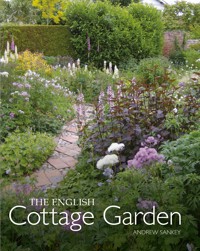
28,49 €
Mehr erfahren.
- Herausgeber: The Crowood Press
- Kategorie: Lebensstil
- Sprache: Englisch
The instantly recognizable English cottage garden encapsulates that delightful mix of scented climbers, drifts of flowers inter-mingled with herbs and vegetables, fruit trees and traditional features. Much loved and copied throughout the world, it is uniquely individual. With no strict rules to adhere to, it is a garden style that is both informal and functional, celebrating fragrance, flowers and seasonal interest at its heart. The old cottage style of gardening, that blended planting to create a flowery yet productive plot within a small space, is still highly relevant and easily transferable to today's modern garden, whether it be a city courtyard or a large garden in the country. Appropriate for gardeners of every level of ability, The English Cottage Garden covers all aspects of designing a cottage-style garden; from choosing the right trees, climbers, shrubs and perennials to creating an authentic cottage feel to the planting It also covers the use of colour within the garden; how features can establish a framework and create focal points; and why companion planting is essential to this style. Illustrated throughout with a wealth of photographs showing gardens, planting combinations, colourful border schemes and individual flowers, this book is an essential read for anyone interested in the quintessential cottage garden.
Das E-Book können Sie in Legimi-Apps oder einer beliebigen App lesen, die das folgende Format unterstützen:
Seitenzahl: 442
Veröffentlichungsjahr: 2021
Ähnliche



















THE ENGLISH
Cottage Garden
THE ENGLISH
Cottage Garden
ANDREW SANKEY
First published in 2021 by
The Crowood Press Ltd
Ramsbury, Marlborough
Wiltshire SN8 2HR
www.crowood.com
This e-book first published in 2021
© Andrew Sankey 2021
All rights reserved. This e-book is copyright material and must not be copied, reproduced, transferred, distributed, leased, licensed or publicly performed or used in any way except as specifically permitted in writing by the publishers, as allowed under the terms and conditions under which it was purchased or as strictly permitted by applicable copyright law. Any unauthorised distribution or use of this text may be a direct infringement of the author’s and publisher’s rights, and those responsible may be liable in law accordingly.
British Library Cataloguing-in-Publication Data
A catalogue record for this book is available from the British Library.
ISBN 978 1 78500 950 1
Cover design: Kelly-Anne Levey
Contents
Preface
Introduction
1 The History of the Cottage Garden
2 Creating the ‘Cottage Garden Style’
3 Cottage Planting Style
4 Cottage Flowers
5 Companion Planting
6 Green Structure
7 Traditional Features
Appendices
I Gardens to Visit
II List of Plants for Dry Sun
III List of Plants for Dry Shade
IV The Cottage Garden Society
Bibliography
Index
Preface
My first introduction to the style of the English cottage garden came when I was given a copy of Margery Fish’s book, We Made a Garden. Having been enthralled with the book, I then travelled down to Somerset to see her wonderful cottage garden at East Lambrook Manor. Shortly after this, Geoff Hamilton started to construct his cottage gardens for the BBC Gardeners’ World programmes and it soon became apparent that this was the style of gardening I myself wished to adopt.
Not long after this I moved to Lincolnshire and started my own garden design/landscaping business, and I soon realized it was difficult to obtain the more unusual plants required for a number of my garden designs, in particular plants for dry shade positions. This encouraged me to look for a larger garden with the potential to run a small specialist nursery. This resulted in purchasing a Grade II listed cottage (built in 1852) with a good-sized old cottage garden. Although the original garden (like many in Lincolnshire) had once been an extremely long strip stretching back to the village pond, the plot that came with the cottage was much reduced. Nevertheless, at almost half an acre it was more than enough for me to manage. Luckily the garden was pretty much a blank canvas, having a couple of large old fruit trees, a vegetable patch, various outbuildings and a chicken hut; and this afforded me the opportunity to make something special of the garden.
A very small back garden in Cambridge planted up in a cottage garden style
It was here that my love for cottage gardens blossomed. Overtime I re-designed the garden, I created different rooms/areas, spring and summer borders, and began experimenting with colour schemes and companion planting. I joined the Cottage Garden Society and then helped form the Lincolnshire branch, eventually becoming chairman. Within a few years I opened the garden under the National Gardens Scheme; I then started writing articles and lecturing on different aspects of the cottage garden.
This book is the culmination of my years working on my own cottage gardens, designing and creating cottage gardens for clients, experimenting with companion planting and lecturing widely on the subject. I very much hope you enjoy it.
Introduction
The cottage garden is a unique style of gardening that has developed in England since the medieval period and now reflects the very essence and charm of our English villages. The much-romanticized cottage garden with its glorious drifts of traditional flowers, roses, gnarled old fruit trees and neatly clipped front hedges is the image that immediately springs to mind. However, if we set aside this idealistic Victorian image for a moment and focus on the older cottager’s garden, we discover a garden plot used primarily to grow vegetables and medicinal herbs with a few chickens and pigs. The layout of these simple productive gardens was determined by its location (region), its soil, the availability to acquire new plant introductions, but more than anything else, the individual owner’s desire to create a garden that not only provided for all the needs of his family, but had attractive flowers to mark the passing of the year and to yield intoxicating scents to lift the spirits.
In these modern times we have no necessity to grow food to live on, to keep valuable animals, to grow herbs for medicinal use or to plant large fruit trees for a late season crop. With these original elements not required you might wonder why the cottage garden has remained highly fashionable, and more importantly, still hugely relevant. The answer is that many of the other original features that contributed to the character of the old cottage gardens are still immensely suitable and easily transferable to the modern garden. Cottage gardens were generally small plots with cottagers having little time to garden (normally only after a long day’s work) and little or no money to spend on them. This resulted in a garden where the flowers needed to be tough and able to thrive without much attention; where there was no wasted space and plants were pushed in together and allowed to self-seed (creating a typical profusion of cottage flowers); and where every garden was individualistic, due to each cottager having to work with plants that suited their particular site and soil.
A modern gardener inherits many of these same problems – a small sized garden, a limited budget to spend and little time to devote to the garden due to the pressure of work. The cottage garden style is therefore a wonderful solution to the modern way of life and the ever-decreasing size of gardens. The timeless appeal of the cottage garden and its old-fashioned flowers that are tough, floriferous and often highly scented, match the criteria for a flexible, easy maintenance and year-round interest garden. This style of garden can be adapted by the individual owner to suit his/her own requirements; whether that be a keen gardener wanting a garden full of plants, an inexperienced gardener simply requiring a pleasant oasis to sit and relax in after work, or someone more interested in cooking requiring a garden with a few vegetables, herbs and flowers in pots.
The instantly recognizable cottage garden style can happily be designed to create that essential ‘chaotic mix’ of flowers in any shape or size of garden. A cottage garden doesn’t necessarily require a beautiful thatched cottage, as this style of garden can easily be adapted for long back gardens of terraced houses, larger lawned gardens of country properties or even the tiny gardens of newly built modern town houses.
The aim of this book is to provide both inspiration and a comprehensive source for garden design ideas and solutions, techniques, features, planting schemes, and in particular, plant combinations that can be used to create the modern cottage garden style. Although the introductory chapter deals with the history of the cottage garden, the main focus of the book is on creating a cottage-style garden – which traditional features are suitable, how to attain a cottagey feel to the planting, how companion planting works, how to create colour-schemed borders and which plants should be used to suit different garden situations.
The subject matter within this book – which includes garden design ideas, examples of planting schemes and ideas on how to improve an existing garden – although centred upon cottage-style gardens, is also relevant to all other gardens. With this in mind, the book will be of interest not just to cottage gardeners, but to any amateur or professional gardener wishing to extend their knowledge of gardening techniques and plants, and students studying general gardening or garden design courses. I therefore feel sure that this book will be a useful addition to the library of all enthusiastic gardeners.
Chapter 1
The History of the Cottage Garden
The ‘cottage garden’ is quintessentially English. It immediately brings to mind a quaint thatched cottage with a beautifully scented rose rambling over its door, a neatly clipped hedge with a picket gate and paths with scented flowers spilling over in sweet disorder.
However, the highly romantic style of today’s cottage garden with its borders of traditional flowers intermingled with trees, shrubs, and newer varieties of plants, which are now usually planted in beds around lawns, is a relatively modern form of the cottage garden. This is in complete contrast to the enclosed medieval yard, where beds of vegetables and herbs were simply grown to ensure the poor peasant-cottager could survive on a basic diet of bread, pottage and ale.
Cottage gardens in the past were never consciously designed but evolved over the centuries to fulfil the needs of the poorer classes (labourers, cottagers and village craftsmen) who generally lived a ‘hand-to-mouth’ existence. With little or no wealth to speak of, they took advantage of the native flora, new vegetable introductions and the discarded flowers from the lord of the manor or farm owner for whom they worked.
A beautiful thatched cottage with a garden planted in the traditional cottage style, with roses climbing up the cottage walls and a profusion of flowers spilling over the border under the windows.
THE MEDIEVAL GARTH
Unfortunately, only the important fashionable gardens of the royal and wealthy were ever considered worthy of recording, making it more difficult to trace the early development of the cottage garden. Written evidence about what they grew and how they grew it is scarce. We do, however, know something about the monastery gardens in Europe and can safely assume techniques and flowers filtered down to the peasant-cottagers who worked the land. We can be certain that these early gardens had limited varieties of vegetables and herbs which would have been common throughout Britain. A poor cottager had little need of decorative flowers which weren’t considered essential, although I’m sure a few native plants would have been welcome.
The medieval hovel and Saxon garth.
The Domesday Book (1086) tells us there were vast numbers of garths in England. The word ‘garth’ is an early term for a plot or garden, and they would have varied greatly in size, some being tiny and some of possibly a few acres. The garth was always enclosed: either with a dead hedge, wattle hurdles, a paling fence (vertical posts driven into the ground) or a ‘thorn’ hedge.
Within this enclosure were raised beds for vegetables and herbs. A separate area would have been fenced off for the pig(s) to prevent the animals from eating the precious roots. In the early medieval period, the word ‘vegetable’ wasn’t used – it comes from the French vegetablis meaning to grow and entered the English language sometime in the fourteenth century. Vegetables were called root herbs, worts, leaf beet, or simply referred to by their names – onions, garlic, leek, beets. All these would have been grown in raised beds approximately 1m (3ft) in width being edged with wooden planks or a low wattle fence. This method was probably passed on by the monks, as it was a vital part of the ordered layout within the monastery vegetable and physic gardens. It allowed the free-draining beds to be worked on from either side without compacting the soil.
Reconstruction of a thirteenth-century flint cottage with wattle enclosure for basic vegetables and herbs, at the Weald and Downland Museum.
The small cottages of either wattle and daub or stone, had an earthen floor and thatched roof (no chimney). It was a basic shelter supporting a large family, and during the winter months sheltering the precious animals as well. The village craftsmen and small farmers had similar but larger buildings on a greater area of land and possibly a barn to accommodate the animals. However, everyone gardened and grew the same vegetables and herbs and in general lived on a diet of cabbages, onions, kale and roots (turnips and skirret).
Apart from the vegetables, cottagers had a pig(s), chickens and a few essential herbs they considered worthwhile, which they grew in the garden or up against the cottage. These herbs had three uses: culinary, medicinal and strewing. The strong-tasting herbs were always used for the pot or to flavour ale. Healing herbs were gathered from hedgerows, meadows and woods, but it would have made sense to have the most frequently used medicinal herbs close at hand in the garden, and we know that the monastery and castle gardens had raised beds filled with certain physic herbs. The strewing of herbs mixed with rushes upon the floor was commonplace and helped repel vermin to some extent.
William Langland’s Vision of Piers Plowman, in 1394, states that the ‘croft’ (possibly half an acre behind the cottage) provided a harvest of ‘peas, beans, leeks, parsley, shallots, chilboles [some sort of small onion], chervil and cherries half-red’. Geoffrey Chaucer, throughout his Canterbury Tales, makes mention of ‘beds of wortes’ (root vegetables) and medicinal herbs in the yard.
The Feate of Gardening, a poem from the late Medieval period by Master Jon Gardener, is unique in that it is the first practical guide to gardening. There has been much speculation as to who Gardener actually was, but more important is the information in his work, as he mentions over 100 plants grown in gardens during the period. There is guidance on sowing and setting of worts, seeds and vines; on grafting apple and pear trees; and on when to harvest. I shall not go through the full list of trees, herbs and flowers in the poem, but would like to mention some of the flowers in the section beginning ‘Of other herbs I shall tell’. This includes rue, sage, thyme, hyssop, borage, mint, savory, yarrow, comfrey, valerian, honeysuckle, lavender, cowslip, strawberries, daffodil, primrose, foxglove, hollyhock and peony. It illustrates the use in gardens of both native and newly introduced plants in this period.
If we summarize the medieval plot, we can confidently say it contained basic vegetables, some essential herbs, possibly a few native wildflowers, a few animals (pigs and chickens) and a compost heap. There are no fruit trees just yet (as fruit would simply have been gathered from the wild in season) and no flowers purely for decoration, although wild plants may well have self-seeded around the garden. In this period, all plants had to be of use.
A large swathe of native foxgloves in English woodland.
POTTAGE
‘Pottage’ was the widely eaten food of the cottager, being rather like a thick soup. This consisted of either peas or beans that had been grown in the field strips around the village and then dried. Added to the pottage were any available vegetables or herbs, and a new introduction in the medieval period was the ‘pot marigold’ which became widely grown in cottage gardens, as its petals could be added either fresh or dried to bulk out the pottage.
The most common medieval pottage was ‘bean and onion’. The field bean was a staple of the medieval diet and could be dried and stored for use throughout the year. Onions were the most common vegetable grown in beds and included leeks, garlic, shallots and scallions (a type of everlasting onion).
THE TUDOR AND ELIZABETHAN GARDEN
With the end of the Wars of the Roses and as relative peace returned in Tudor England, gardens began to change. Henry VIII and his court embraced the new knot designs within gardens and welcomed new and interesting flowers and herbs. Vegetables began to be pushed out of the privy garden (private show garden) and instead flowers that were more decorative than useful took their place. Orchards full of new varieties of fruit trees (often purchased from France) became a gentleman’s pride and joy.
Long beds of herbs the Tudors would have grown for culinary, medicinal and strewing purpose in the Tudor Walled Garden at Cressing Temple Barns.
The nosegay garden, full of flowers and herbs found in all gardens of the sixteenth century.
However, it was with the long reign of Queen Elizabeth I (1558–1603) that peace and prosperity created a climate of stability that the country had never seen before, and gardening became a great pastime that all classes would benefit from. There was improvement in housing, farming and diet. Herbals, gardening and husbandry books were printed for the first time throughout this period and give us an insight into the advances made in both garden design and the wonderful plants introduced from Europe and the New World. During this golden period the cottage garden starts to take on the form that we recognize as the English cottage garden today.
Thomas Tusser explains the essential work on a farm month by month and gives us a particularly good snapshot of the vegetables, herbs and flowers which he suggests should be grown by the Yeoman farmer’s wife. One Hundred Good Points of Husbandry, although aimed at the relatively wealthy middle-class farmer, lists the flowers and herbs he believes are essential to any garden. These would eventually trickle down to the cottager/labourer throughout this period. Within his book are a number of different lists: seeds and herbs for the kitchen, herbs and roots for salads, strewing herbs and herbs for physic; but the most interesting is a list of herbs, branches and flowers for windows and pots – this particular list confirming the use of flowers for decorative purposes in addition to being useful plants.
The 1580 edition of Tusser’s second book, Five Hundred Pointes of Good Husbandrie, includes: columbines, cowslips, cornflowers, daffodils, sweet briar rose, gilliflowers (red and white), carnations, lavender of all sorts, larkspur, lilies, double marigolds, nigella, heartsease pansy, pinks of all sorts, rosemary, roses of all sorts, snapdragons, Sweet Williams, French marigolds, violets, rose campion, wallflowers, iris and even love-lies-bleeding. When Tusser states these flowers are suitable for windows and pots, I believe that the term ‘windows’ equates to ‘for growing under the windows’ – which of course would make sense as women generally planted the prettiest and most highly scented flowers under the windows for maximum enjoyment.
Tusser’s list is a fairly comprehensive one but it has to be remembered that the Elizabethan farmer, particularly the English sheep farmer, may well have been as wealthy as most of the gentry due to the great demand for English wool. They might not have spent vast sums of money on the design of the garden, but they certainly wished for a well-stocked and well-organized garden. Of course, it needs to be remembered that the cottager’s garden would have been a pale reflection of the one up at the big farm and would have had only a small number of the flowers listed. However, Tusser’s list is backed up by other gardening writers, herbalists and poets (including Shakespeare). John Clare, known as the Northamptonshire Peasant Poet, mentions in his poem The Cottager (written in the early nineteenth century) that the cottager’s meagre bookshelf still contained ‘prime old Tusser’. This illustrates just how influential Tusser’s book was to the cottager, even centuries later.
In his Description of England (1587), William Harrison tells us:
If you look into our gardens annexed to our houses how wonderfully is their beauty increased, not only with flowers, but also with rare and medicinal herbs.
Another poet who describes the flowers commonly grown in an Elizabethan garden is Richard Barnfield, in his poem The Affectionate Shepherd (1594); although not all these wonderful flowers would have reached the cottage garden as this time, they would gradually filter down to become firm favourites in the next century. The part of the poem that describes the garden is as follows:
Nay, more than this, I have a garden plot
Wherein there wants nor herbs, nor roots, nor flowers;
Flowers to smell, roots to eat, herbs for the pot,
And dainty shelters when the welkin lowers:
Sweet-smelling beds of lilies, and of roses,
Which rosemary banks and lavender encloses.
There grows the gillyflower, the mint, the daisy
Both red and white, the blue-veined violet;
The purple hyacinth, the spike to please thee,
The scarlet dyed carnation bleeding yet;
The sage, the savory, the sweet marjoram,
Hyssop, thyme, and the eye-bright, good for blind and dumb.
The pink, the primrose, cowslip and daffodil,
The hare-bell blue, the crimson columbine,
Sage, lettuce, parsley, and the milk-white lily,
The rose and the speckled flower called sops-in-wine,
Fine pretty king-cups, and yellow boots,
That grows by rivers and by shallow brooks.
TABLE 1.1: ‘NEW’ INTRODUCTIONS IN TUDOR/ELIZABETHAN TIMES
The dates given below equate to the plant being mentioned in a period herbal or gardening book. If the date is ‘circa’ it means that the plant may well have arrived earlier.
Before the Elizabethan period orchards were only found in connection with monasteries, but they become important attachments to any garden of note during the sixteenth century. An orchard was often more than just a collection of fruit trees, often having drifts of wildflowers, bee skeps, and arbours in which to rest and shade oneself from the sun (as Shakespeare frequently tells us). Apple and pear trees became an integral part of the garden for the first time and possibly encouraged the cottager to copy the wealthy and include fruit trees in the larger gardens behind cottages.
Crown Imperial.
Yellow foxglove.
Monkshood.
Cupid’s dart.
New exotics from the Balkans/Turkey region and from South America became much sought after for display within gardens of wealthy courtiers. These incredible new flowers were highly expensive and only to be found in the best gardens at the end of the Elizabethan period, often planted in special raised beds or pots. The list of ‘new’ arrivals is impressive and includes the tulip, hyacinth, Crown Imperial, lilac, delphinium, sunflower, larkspur and catananche (Cupid’s dart). These new arrivals when added to the commonly grown flowers and herbs from the medieval period form the basis of what we would refer to today as traditional cottage garden flowers.
There were of course some new vegetable arrivals. The potato, tomato and runner bean all arrived from South America via Spain. However, it would be centuries before any of these became generally grown in the cottage gardens.
USE OF ELIZABETHAN HERBS
Herbalists, garden writers and poets extol the virtues of herbs for: medicine, cooking, strewing, celebrations, weddings, funerals, grave flowers, garlands, wreaths, nosegays, pest repellents, flavouring drinks, sweet waters, plague protection, lucky charms, cosmetics and love potions.
Strewing herbs were particularly important in the Elizabethan period and remained so until the mid-eighteenth century. A mixture of rushes and herbs were strewn on the floor to make it feel warmer, smell better and deter vermin, lice and fleas. Thomas Tusser, in his best-selling One Hundred Good Points of Husbandry, first published in 1557, had a section ‘Strewing Herbes of all Sorts’, which doesn’t just include the usual herbs of rosemary, lavender, tansy and wormwood (Artemisia), but also includes flowers such as daisies, roses, violets, primroses and cowslips to add prettiness and scent. Queen Elizabeth I’s favourite strewing herb was meadowsweet, and John Gerard extols this herb’s virtues in his herbal of 1597, telling us:
The leaves and flowers far excel all other strewing herbs, for to deck up the houses, to straw in chambers, halls, and banqueting houses in the Summer time; for the smell thereof makes the heart merry and delighteth the senses; neither doth it cause headaches as some other sweet smelling herbs do.
THE SHEPHERD’S CALENDAR
Bring hether the Pinke, and the Purple Cullambine, With Gellifloures Bring Coronation, and Sops-in-Wine, Worne of Paramoures; Strowe me the ground with Daffadowndillies, And Cowslips, and Kingcups and loved Lillies; The pretie Pawnce And the Cherisauce, Shall match the fayre flower Delice.
Edward Spenser (1579)
THE SEVENTEENTH-CENTURY COTTAGE GARDEN
The design of the English garden followed the fashion in Europe, and in particular France, where formality was the key feature and topiary became ever more important. Yew and box were grown in their thousands to feed the demand for intricate designs laid out in symmetrical patterns called parterres. The vast formal designs that stretched over acres of levelled estate with wonderful water features and fountains couldn’t be replicated in the smaller gardens of farmers or cottagers. However, a little topiary probably crept in, as can be seen from paintings of cottage gardens in the nineteenth century. The thorn or privet hedge surrounding the garden, or a yew tree placed up against the cottage wall could be clipped into an abstract form or perhaps peacocks either side of the cottage gate. A little topiary is still to be found in cottage gardens today but is more likely to be a train or cat in design.
Also, during the beginning of the seventeenth century the eight species of plants considered florists’ flowers were being developed. It is believed that Huguenot weavers fleeing France brought with them the Primula auricula with its stunning markings and beautiful form. These plants needed care and attention but very little space, and being hardy, could easily be grown in pots by artisan cottage weavers and lace-makers in the north of England, who bred and showed their prize plants regularly. The weavers in Paisley developed particular varieties of pinks known as ‘Paisley pinks’ but many new varieties were being cultivated in the northern counties giving the cottage gardens many of its traditional flowers still to be found today. This art became known as ‘floristry’ and as well as the auricula and pinks, anemone, carnation, hyacinth, ranunculus, tulip and polyanthus were included. The first florists’ societies were formed, and members met to display their flowers at ‘florists’ feasts’ in the local pub.
Vegetables and soft fruit, too, began to be grown for show, and a particular favourite was the ‘gooseberry’. This fruit was originally grown to make a ‘green sauce’ to go with the goose (to help cut through the fat). However, growing gooseberry bushes and showing the fruits became popular in the Midlands and North, where ‘gooseberry clubs’ sprang up. They too, met at the pub in late summer and competed for the biggest or weightiest fruit – something that still happens in a few places in the north of England today.
Sir Thomas Browne, a keen observer of life, moved to Norwich in 1637 and wrote a marginal note ‘in the country a few miles from Norwich … a handsome bower of honeysuckles over the door of a cottage of a right good man’, next to one of his poems in praise of the simple healthy country life. We tend to think that cottage doors should be covered with English roses but actually it was more usual for a honeysuckle to climb over the doorway as the wonderful scent could waft into the cottage at night and also give protection to the cottage from evil and witches.
Sweet rocket.
Honesty seed-heads (satten flower).
Cornflowers.
Bellflowers.
Sunflower.
Feverfew.
In 1677 the agriculturalist/horticulturalist John Worlidge wrote the book Systema Horticulturae or The Art of Gardening and said, ‘scarce a cottage in most of the southern parts of England, but hath its proportionate garden, so great a delight do most men take in it.’ Although this book is well and truly aimed at the wealthy end of the gardening scale and talks at length about design and features that should be incorporated in any good garden of the period – those being walks, arbours, fountains, grottoes, statues and other necessary ornaments, as well as the new ‘exotic plants’ required – there is a chapter devoted to ‘Vulgar Flowers’. The introduction begins, ‘There are many Flowers that either for scent or show are raised in the more ordinary Country Gardens’, after which Worlidge goes on to list some of the vulgar (common) flowers grown. The list includes bellflowers, cranesbill, feverfew, toadflax, blew-bottles (cornflowers), nigella, candytuft, satten flower (honesty), scabious, foxgloves, gilliflowers, flower of the sun, rockets (hesperis or sweet rocket), double chamomile and common amaranthus (love-lies-bleeding). He also mentions pilewort or lesser celandine, which was more likely to have been grown for its use as a poultice. Scabious too, may well have been grown not just for its flowers but also its medicinal value to help with coughs.
By 1700, an average cottage garden might well be half-an-acre to an acre in size and enclosed within a quickthorn (hawthorn) hedge with native and self-seeded plants growing both beneath and over the top of the hedge. A reasonable variety of vegetables could be grown, herbs for culinary and medicinal uses and a few fruit trees. Some chickens, pigs and bees would be kept, and a climber would cover the cottage door. Finally, there would be a few beds of scented and decorative flowers under the cottage windows and possibly a pot or two of flowers that required special attention.
THE EIGHTEENTH-CENTURY COTTAGE GARDEN AND THE ENCLOSURE ACTS
This century saw a rapid and complete change in garden design with a truly English idea: the ‘natural’ garden – better known as the English Landscape Movement. The formal gardens with their topiary, parterres, grand water features, terraces and flowers were swept away in favour of gardens that ‘nature’ would applaud: grass, trees and water (huge lakes), some with classical temples and grottoes depending on the designer. The immense new Palladian house was now to sit in a sea of green with a natural view in every direction as far as the eye could see. To achieve this illusion the ‘common land’ was taken from the villagers by way of the Enclosure Acts, and in some cases the whole village would be destroyed as it constituted a blot on the landscape! Nothing could stand in the way of the vast new parkland.
What of the cottage garden during this great upheaval? With the loss of common land, it was vital the cottage garden continued much as it had before by providing vegetables, fruit and herbs for the poor labourers and village craftsmen. However, they did gain from the ‘big house’, because where the old formal gardens were pulled apart and the plants discarded, the cottagers eagerly rescued these lovely flowers and ensured they proudly graced the cottage gardens instead. In this way many old varieties of flowers were saved and passed down from generation to generation being loved and admired in the cottager’s plot.
A mid-eighteenth-century thatched cottage of mud and stud near Harrington Hall in the Lincolnshire Wolds.
An excellent insight into a cottage garden of this period comes from a pamphlet by Thomas Bernard in 1797 called An Account of a Cottage and Garden near Tadcaster, with observations upon labourers having freehold cottages and gardens…. It is such a wonderful illustration of how a labourer and his wife coped and gardened that I have reproduced an extract of the account below:
Two miles from Tadcaster, on the left-hand side of the road to York, stands a beautiful little cottage, with a garden, that has long attracted the eye of the traveller. The slip of land is exactly a rood [¼ acre], inclosed by a quick hedge; and containing the cottage, fifteen apple trees, one green gage, and three winesour plum trees, two apricot trees, several gooseberry bushes, abundance of common vegetables, and three hives of bees; being all the apparent wealth of the possessor.
His name is Britton Abbot; his age sixty-seven; and his wife’s nearly the same. At nine years old he had gone to work with a farmer; and being a steady careful lad, and a good labourer, particularly in what is called task work, he had managed so well, that before he was twenty-two years of age, he had accumulated near £40. He then married, and took a little farm at £30 a year; but before the end of the second year he found it prudent, or rather necessary to quit it, having already exhausted, in his attempt to thrive upon it, almost all the little property that he had heaped together. He then fixed in a cottage at Poppleton; where, with, two acres of land, and his common right, he kept two cows. Here he had resided very comfortably, as a labourer, for nine years, and had six children living; and his wife preparing to lie in of a seventh, when an inclosure of Poppleton took place; and the arrangements made in consequence of it, obliged him to seek for a new habitation, and other means of subsistence for his family.
He applied to Squire Fairfax, and told him that, if he would let him have a little bit of ground by the road-side, ‘he would shew him the fashions on it’. After enquiry into his character, he obtained of Mr Fairfax the ground he now occupies; and planted the garden, and the hedge round it, which is a single row, thirty-five years old, and without flaw or defect. Mr Fairfax was so much pleased with the progress of his work, and the extreme neatness of his place, that he told him he should be rent free.
Britton Abbot says he earns 12s and sometimes 15s and 18s a week, by hoeing turnips by the piece, setting quick, and other task work. He gets from his garden, annually, about forty bushels of potatoes, besides other vegetables, and his fruit is worth £3 to £4 a year. His wife occasionally goes out to work; she also spins at home. And takes care of his house and garden.
This account clearly illustrates a number of things – the devastating effects of enclosure on a village in England and the loss of common land; that a good thick hawthorn hedge was in general the hedge of choice to surround the cottage garden; that potatoes were now being grown as a crop in Yorkshire; that the garden had a small orchard of fruit trees, gooseberry bushes and beehives; and possibly most importantly of all, that it was the woman who tended the garden and herbs.
On those estates where the village was totally destroyed because it was sited too close to the house and therefore interfered with the new landscape, some considerate landlords took the decision to re-position the village out of sight, but, at the same time create a new architect-designed model village as a show piece. This gave the owner the opportunity to demolish what he considered the ramshackle, unsanitary, poorly constructed cottages and hovels and improve the lot of his workers and their health.
In his 1775 Hints to Gentlemen of Landed Property, Nathaniel Kent says:
The shattered hovels which half the poor of this kingdom are obliged to put up with are truly affecting to a heart fraught with humanity. Those who condescend to visit these miserable tenements, can testify that neither health nor decency can be preserved within them.
The Board of Agriculture (1790s) had similar worries and talked about reform of the poor labourers’ housing stock, but although there was some concern, only a very few landlords would create a model village, and when they did so it was more for aesthetic reasons than worries about the plight of their labourers’ living conditions. However, for the first time we have a designed cottage and garden which would try to combine ‘utility and beauty’. All cottages would have the same area of garden enclosed by a neat hedge with a central path leading down to the door (all of which were painted the same colour). There might be a rustic structure or porch over the front door and to the side or back perhaps a wash house and pigsty. A large fruit tree might be planted in each garden and a brick privy down the end. The size and design of the garden varied according to how generous the landlord was but would have been large enough to grow a good quantity of vegetables, herbs, soft fruit bushes and flowers. This seemed like an improvement and although the cottages looked quaint from the outside, unfortunately they were often too small for the size of labourer’s family and the gardens only just of an adequate size.
Two photographs showing a row of Chippenham Park Estate cottages. All cottages are well set back from the road and given the same frontage in which to grow fruit trees and vegetables.
Possibly the first model village was built by Lord Orford at Chippenham Park, Cambridgeshire (1702–12) after he had obtained permission from the king to alter and enlarge his park. This required extending into the village, so a new village was designed by Adam Russell with gardens at the front.
Nuneham Courtenay, Oxfordshire, was created by Simon Harcourt, 1st Earl Harcourt in 1749. The name Nuneham means ‘new village’, with Courtenay coming from the thirteenth-century ‘Curtenay’ family that lived there. The 1st Earl demolished the old manor house, medieval church and unsightly clay cottages around the village green to create space for Nuneham House and its landscape park. The new semi-detached single-storey cottages were built out of sight of the hall and either side of the main Oxford road, each with its own garden.
The picturesque village of Milton Abbas today with the two rows of cottages hidden away in the valley so that they didn’t destroy the view of the new landscape park. Each cottage had its own appointed garden front and back.
Between 1773 and 1780 the village of Milton Abbas in Dorset was designed and constructed by the partnership of architect William Chambers and landscaper Lancelot Brown, after Lord Milton (Earl of Dorchester) decided that the beastly town of Middleton was going to interrupt his view of the new landscape. Instead, a lane consisting of thirty-six newly constructed thatched cob cottages, each housing two families, was tucked away in the wooded valley out of sight. Between each cottage was a horse chestnut tree creating a tree-lined avenue. Unfortunately, we know little about the gardens accompanying these cottages, but they surely had cottage gardens to provide for the families.
In the late 1830s a picturesque village was planned to accompany Harlaxton Manor in Lincolnshire, which was being built for the new owner Gregory Gregory. The gardens around each dwelling were reasonably large and all had a well. No two gardens were designed the same, but all were hedged, and it is thought planned and possibly planted by the estate’s head gardener. Often a little topiary, prettily edged paths and a few fruit trees (still to be seen today) were added.
Many more model villages would be built in the nineteenth century for factory workers by employers concerned about the normally atrocious living conditions and, like all things, some were far better designed and had larger gardens than others. But new model villages were in general few and far between; most cottagers continued to live a very simple life in leaky, damp, extremely draughty and over-crowded dwellings with little warmth, no running water and holes in the thatch!
THE NINETEENTH-CENTURY COTTAGE GARDEN
The old proverb ‘Poverty’s no disgrace but ’tis a great inconvenience’ sums up the beginning of this century when a number of factors would make things decidedly worse for the cottager. The Enclosure Acts were still gathering pace with seven million acres of land being enclosed by 4,000 Acts of Parliament between 1750 and 1870, thus wiping out virtually all the common land in and around rural villages and creating lasting hardship for the cottagers. In 1804 the Corn Laws were introduced, stopping the import of cheap grain so that British farmers could keep their prices high. This was good for farmers but devastating for poor labourers who struggled to buy bread. Food prices were higher but agricultural labourers’ wages fell to the lowest level ever recorded. The 1840s became known as the ‘Hungry Forties’ as a series of poor harvests and potato failures exacerbated the situation and starvation became commonplace.
At this time the cottager relied entirely upon his garden to be self-sufficient in food to feed his large family, and at what seems a particularly difficult and desperate period for cottagers we still hear of well-tended and productive cottage gardens.
William Corbett, author of Rural Rides (1822), comments on what he sees:
… in almost every part of England … the most interesting of all objects, that which is such an honour to England, and that which distinguishes it from all the rest of the world, namely, those neatly kept and productive little gardens round the labourer’s houses…
With so many cottagers struggling to survive it seems ironic that this period, from the early to mid-nineteenth century, was also probably the heyday of the cottage garden. All the elements that were so essential to a traditional cottage garden were present:
• a good-sized hedged plot being both productive and pretty
• a mixture of vegetables, herbs and flowers
• colour and fragrance
• use of free or cheap materials throughout the garden
• something in flower in every season
• native plants and flowers loved by bees
• fruit trees – mainly apples and pears
• few shrubs (lilac possibly) and no lawn
• chickens and pigs commonly kept
It would be these flowery gardens that so delighted gardeners, writers and artists later in the century and had such a huge influence on Gertrude Jekyll and William Robinson, who enthusiastically proclaimed that the ideas gained from cottage gardens should be admired and utilized in the new garden designs that architects and gardeners were creating. It would therefore seem appropriate at this juncture to describe the two main distinct forms of cottage garden in England c.1830–60.
The cottage close to the lane
If the cottage was built extremely close to the lane (as many were in the Cotswolds) the small front strip of garden under the cottage windows was considered the ideal position for the pretty mix of flowers. These tiny narrow areas were still often walled or hedged and had a picket gate leading to the front door. The little garden itself was crammed with flowers: tall hollyhocks, larkspur, scented mignonette, pinks, stocks, sweet rocket, marigolds, Sweet Williams, nigella, forget-me-nots, campanulas, columbines and Michaelmas daisies. The deep windowsills of the cottage could accommodate pots of polyanthus or auricula, and over the door would be a rose or honeysuckle.
This attractive cottage with a lovely display of typical flowers, would once have had a picket fence and gate at the front, and a substantial back garden for vegetables, herbs, fruit and animals.
Behind the cottage was the large area devoted to vegetables, herbs and large old fruit trees. Closest to the cottage would be an area for valuable herbs. Being near the cottage they were within easy reach for use in cooking and herbal teas. Flora Thompson’s Lark Rise to Candleford illustrates this planting:
As well as their flower garden, the women cultivated a herb corner, stocked with thyme and parsley and sage for cooking, rosemary to flavour the home-made lard, lavender to scent the best clothes, and peppermint, pennyroyal, horehound, camomile, tansy, balm and rue for physic. They made a good deal of camomile tea, which they drank freely to ward off colds, to soothe the nerves, and as a general tonic.
Also close to the cottage was the wash-house and probably a large bed of soapwort (Saponaria officinalis) – the plant used to clean clothes much the same as washing powders today. Outside the back of the cottage was the main vegetable area, which might have been one large area with vegetables grown in rows, or perhaps large beds with narrow paths running between them. Beyond the vegetable plot was the less well-kept grassy area of a small orchard where large old fruit trees were grown. These would have been apple and pears mainly. The semi-shade created beneath the large spreading branches was ideal for native self-seeders like snowdrops, winter aconites and primroses in the early part of the year, which were quickly followed by bluebells, pulmonarias and foxgloves. Beehives were normally positioned near to the fruit trees for pollination and the chicken house was also generally kept in the orchard. Stacks of wood for the fire would be gathered into wigwams (so the outside kept the inside dry) and positioned close to the fruit trees. A little further on would be the pigsties, and then finally at the bottom of the garden, the outhouse. Here also might be the muck heap with all the vital pig muck added, which would be essential for replenishing the vegetable patch. In Lincolnshire, the last third of a long cottage garden was often a large ‘bean patch’ – being furthest away from the cottage as it required very little attention.
A cottage garden in Thimbleby, Lincolnshire
The cottages in the village of Thimbleby (one of which I visited in 2002 with the Lincolnshire Cottage Garden Society) were originally laid out in exactly the same way as described above. The village, mentioned in the Domesday Book of 1086, has one main street with thatched cottages sited virtually right on the road which runs down to the church at the far end. The narrow strips in front of each cottage are (even today) simply devoted to flowers, however, at the back of each cottage there was once a highly productive garden of approximately one acre.
The thatched cottage is set right on the road and originally had a picket fence running along the front separating its narrow cottage garden from the lane.
The back garden is still the original size associated with the cottage in medieval times and was originally purely devoted to growing vegetables and fruit, and keeping pigs and chickens.
Trees, shrubs, raspberry canes, feverfew, a patch of potatoes and teasels can all be seen in the large back garden. A red shirt in the foreground acts as a bird scarer on the newly sown vegetable patch.
In true cottage garden fashion, everything in the back garden is mixed together – cottage shrubs, broad beans, teasels and buttercups.
The garden area nearest to the back of the cottage when we visited was devoted to vegetables in beds cut into the lawn in irregular blocks. Some old cottage flowers and shrubs rambled around both the cottage and the large vegetable patch, and beyond this there were three disused brick pigsties and some old-gnarled fruit trees. Further on still the garden became rather wild, as it had been let go somewhat, but was considered valuable for wildlife. Discussing the cottage garden with the owner, a lovely lady in her eighties, we discovered that she had never purchased a single plant from either a garden centre or nursery in her entire life. She explained that every plant in the garden had been given to her as either a cutting, seeds or a piece of root split off a friend’s plant. It was delightful to hear that the old cottage method of exchanging cuttings and seeds was still alive in small rural communities, very much tying in with another of Flora Thompson’s descriptions – ‘As no money could be spared for seeds or plants, they had to depend upon roots and cuttings given by their neighbours.’
A cottage garden in Hipsburn, Northumberland
It was pure chance that on a visit to Alnmouth I came across Ann Taylor’s cottage garden in Hipsburn. This again is a cottage set close to the road but having a long productive back garden with cottage flowers near to the back door, a vegetable patch and a large area of grass beyond that. The grassed area at the end was originally part of the productive garden and probably had fruit trees and animals, but in more recent times had become part of a common area across the backs of all of the cottages. It was a delight to find a cottage garden laid out in such a manner.
The cottage set back from the road
If the cottage was set back from the road then a very different layout became the norm. A central path would run from the picket gate down a straight line to the front door. Over the door was always a rustic porch or structure and climbing over this a rose or honeysuckle. On either side of the door and under the windows were flowery borders of highly scented and traditional cottage plants. Here the scent could waft into the cottage through the windows on hot summer’s days and be appreciated inside. Or if the strips under the windows were too narrow, then an area of traditional flowers, herbs and self-seedlings were all crammed into a large patch.
Looking down the garden over the bright cottage flowers to the vegetable patch, and then beyond to the lawned area at the bottom.
To quote Flora Thompson again:
Nearer the house was a portion given up entirely to flowers, not growing in beds or borders, but crammed together in an irregular square, where they bloomed in wild profusion. There were rose bushes there and lavender and rosemary and a bush apple-tree which bore the little red and yellow streaked apples in late summer, and Michaelmas daisies and red-hot pokers and old-fashioned pompom dahlias in autumn and peonies and pinks already budding.
The grass path leading down the garden from behind the greenhouse to the vegetable patch.
A cottage garden set back from the lane, c.1870.
The central path would always be edged with plants to make a wonderful display running down towards the door. The plants chosen would differ according to the part of country where the cottager lived. It might be double daisies, marigolds, London Pride, cottage pinks, or, as my grandad had, garden auriculas.
Following the same line of the path would be rows of vegetables and potatoes, and behind these would be rows of raspberry canes and gooseberry bushes. A number of fruit trees would probably be placed around the outside edge of the garden near to the hedge and these would probably have climbers rambling up through them. A well, pigsty, chicken shed and muck heap would be placed wherever possible.
Whittaker’s Cottage. This agricultural labourer’s cottage at the Weald and Downland Museum in West Sussex was built in the mid-1860s and shows the small cottage garden of approximately 9m (30ft) wide mainly at the front of the cottage which is set back from the lane.
By 1870 England had moved from an agricultural nation to an industrial one. Victorian ingenuity and the growth of factories rapidly changed every part of society. There was new wealth being generated, a vast new middle class, a growing rail network and the accelerated expansion of towns and cities. With a sudden demand for land for workers’ housing many towns expanded into the surrounding countryside and the villages started to be swallowed up. Hovel-like cottages were pulled down and the in-fill of large areas between cottages accelerated the loss of yet more common ground.
New farm machinery (threshing machines/ploughs) and an agricultural depression resulted in a great reduction in the need for manpower and many farm labourers became destitute. Thomas Hardy commented in a letter to Rider Haggard that village tradition was ‘absolutely sinking, had nearly sunk, into eternal oblivion’. It is no surprise, then, that many labourers made the choice to up-sticks and leave their homes and move to a town or city to work in the new factories where there was a chance of regular paid work. Anything seemed better than trying to survive on a pittance and a plot of land. Many cottage gardens were probably simply abandoned, although maybe a few favourite plants were taken. Relocated to long streets of new terraced housing with only a tiny back yard, many former cottagers wished to grow food to supplement their poor wages and luckily some progressive factory owners ‘allotted’ them some land for this purpose.
Allotments had first appeared in the late sixteenth century as common land was grabbed by the wealthy due to their need to create fields for their sheep (first enclosures) – English wool being superior to anything in Europe and therefore our greatest export. Commoners were then allotted land next to their tenanted cottage as part of their wages. This was still very much the case in the nineteenth century: as Flora Thompson in Lark Rise to Candleford mentions, the men of the village worked on either their gardens or allotments for an hour or two after their tea-supper. These allotment plots were divided into two, one half planted with potatoes and the other half wheat or barley – ‘the garden being reserved for green vegetables, currant and gooseberry bushes, and a few old-fashioned flowers.’ Allotments as we know them today took off at the beginning of the nineteenth century – the first Act of Parliament for land of 20 acres to be made available in parishes to help with the relief of poverty being passed in 1819. Later, in 1887, the Allotments and Cottage Garden Compensation for Crops Act was supposed to encourage local authorities to provide allotments if there was a demand. However, this Act wasn’t strong enough and would require further Acts of Parliament through to 1950.
ADAM BEDE
Adam Bede, written by George Eliot in 1859, describes a delightful large type of cottage garden:
Adam walked by the rick-yard, at present empty of ricks, to the little wooden gate leading into the garden – once a well-tended kitchen garden of a manor-house; now, but for the handsome brick wall with stone coping that ran along one side of it, a true farmhouse garden, with hardy perennial flowers, unpruned fruit trees, and kitchen vegetables growing together in careless, half-neglected abundance. In that leafy flowery, bushy time, to look for any one in this garden was like playing ‘hide-and-seek.’ There were the tall hollyhocks beginning to flower, and dazzle the eye with their pink, white and yellow; there were the syringas and Guelders roses, all large and disorderly for want of trimming; there were leafy walls of scarlet beans and late peas; there was a row of bushy filberts in one direction and in another a huge apple-tree making a barren circle under its low-spreading boughs.
HILL CLOSE GARDENS




