


7,49 €
Mehr erfahren.
- Herausgeber: Open Book Publishers
- Kategorie: Geisteswissenschaft
- Sprache: Englisch
In these powerful and stylishly written essays, Maria Manuel Lisboa dissects the work of Paula Rego, the Portuguese-born artist considered one of the greatest artists of modern times. Focusing primarily on Rego’s work since the 1980s, Lisboa explores the complex relationships between violence and nurturing, power and impotence, politics and the family that run through Rego’s art.
Taking a historicist approach to the evolution of the artist’s work, Lisboa embeds the works within Rego’s personal history as well as Portugal’s (and indeed other nations’) stories, and reveals the interrelationship between political significance and the raw emotion that lies at the heart of Rego’s uncompromising iconographic style. Fundamental to Lisboa’s analysis is an understanding that apparent opposites – male and female, sacred and profane, aggression and submissiveness – often co-exist in Rego’s work in a way that is both disturbing and destabilising.
This collection of essays brings together both unpublished and previously published work to make a significant contribution to scholarship about Paula Rego. It will also be of interest to scholars and students of contemporary painting, Portuguese and British feminist art, and the political and ideological aspects of the visual arts.
Das E-Book können Sie in Legimi-Apps oder einer beliebigen App lesen, die das folgende Format unterstützen:
Veröffentlichungsjahr: 2019
Ähnliche


















ESSAYS ON PAULA REGO
Essays on Paula Rego: Smile When You Think about Hell
Maria Manuel Lisboa
https://www.openbookpublishers.com
© 2019 Maria Manuel Lisboa
This work is licensed under a Creative Commons Attribution 4.0 International license (CC BY 4.0). This license allows you to share, copy, distribute and transmit the work; to adapt the work and to make commercial use of the work providing attribution is made to the authors (but not in any way that suggests that they endorse you or your use of the work). Attribution should include the following information:
Maria Manuel Lisboa, Essays on Paula Rego: Smile When You Think about Hell. Cambridge, UK: Open Book Publishers, 2019, https://doi.org/10.11647/OBP.0178
In order to access detailed and updated information on the license, please visit https://doi.org/10.11647/OBP.0178#copyright
Further details about CC BY licenses are available at http://creativecommons.org/licenses/by/4.0/
All external links were active at the time of publication unless otherwise stated and have been archived via the Internet Archive Wayback Machine at https://archive.org/web
Any digital material and resources associated with this volume are available at https://doi.org/10.11647/OBP.0178#resources
Every effort has been made to identify and contact copyright holders and any omission or error will be corrected if notification is made to the publisher.
ISBN Paperback: 978-1-78374-756-6
ISBN Hardback: 978-1-78374-757-3
ISBN Digital (PDF): 978-1-78374-758-0
ISBN Digital ebook (epub): 978-1-78374-759-7
ISBN Digital ebook (mobi): 978-1-78374-760-3
ISBN Digital (XML): 978-1-78374-761-0
DOI: 10.11647/OBP.0178
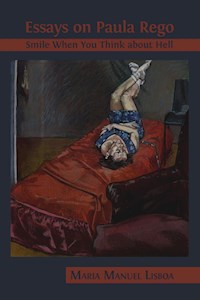
Cover image: Untitled (Abortion Series 1998). Copyright Paula Rego, Courtesy Marlborough Fine Art, all rights reserved.
Cover design by Anna Gatti.
In memory of Chris Dobson, distinguished scientist, knight of the realm and much-loved friend. He was the man whom, as Head of House of my college, St. John’s College, Cambridge, a malign fate forced me, a card-carrying feminist, to address as ‘Master’. Sometimes.To my two grandmothers: Belmira Gabão and Adelina Lisboa. And to my two lovely mothers-in-law: Winifred Brick and Anne Woolf (Mrs. Ogre). A grandmother is a mother twofold and a good mother-in-law is a gift that keeps on giving.
Contents
Acknowledgments
ix
A Note on Images
xiii
Prologue: A Patriot for Me
1
1.
Past History and Deaths Foretold: A Map of Memory
33
2.
(He)art History or a Death in the Family: The Late 80s
95
3.
The Sins of the Fathers: Mother and Land Revisited in the Late 90s
129
4.
An Interesting Condition: The Abortion Pastels
199
5.
Brave New Worlds: The Birthing of Nations in First Mass in Brazil
275
6.
I Am Coming to Your Kingdom, Prince Horrendous: Scary Stories for Baby, Perfect Stranger and Me
291
7.
Paula and the Madonna: Who’s That Girl?
353
8.
Epilogue: Let Me Count the Ways I Love You
389
Appendix A
Translation of Alexandre Herculano’s A Dama Pé de Cabra (The Lady with a Cloven Hoof)
409
Appendix B
Translation of Hélia Correia’s ‘Fascinação’ (‘Enchantment’)
433
Works Cited
441
List of Illustrations
459
E-figures
477
Index
459
Acknowledgments
Life has thrown at me my fair share of the slings and arrows of outrageous fortune, but in my Sea of troubles they have always been there: the lovely friends and relatives who have taken up arms on my behalf, kept me safe and made the difference in the choice between to be or not to be.
Paula Rego puts dangerous and delightful thoughts in the most upright of minds without even trying. The inspiration for these acknowledgements comes from her and I blame her entirely for the implied violence. In approximate alphabetical order, Victoria Best, the loveliest of friends, who if I asked her to help me hide a body would say: ‘Of course I will, darling. Perfect timing: I’ve just finished baking you a cake’; Janet Chow, Colin Clarkson, Fiona Colbert, Hélène Fernandes, David Lowe, Sonia Morillo Garcia and Mark Nichols (I did say more or less alphabetically), magician librarians who would provide me with good reference books on how to carry out a perfect murder; Margaret Clark who would hide the body in her garden and use it for compost and Ken Coutts who would look disapproving but whose moustache would nevertheless twitch ever so slightly; Céline Coste Carlisle who would make me a tarte tatin to restore my energy after the deed was done; Chris Dobson who may well have been the best, kindest, most intelligent and funniest man I have ever known, and who might not have helped but would have watched and laughed if I tripped and fell over in the process of wrongdoing; Mary Dobson who would look at me standing over the body dripping knife in hand and say: ‘Oh, Manucha, I don’t believe you would ever murder anybody. You are a very special person’; Peter Evans, who would be delighted that I’d finally turned into a film noir femme fatale and Isabel Santaolalla who would organize everything incredibly efficiently including the collection and disposal of the body; Robert Evans, who would raise an eyebrow, remain perfectly poker-faced but help anyway; the Gentlemen Porters of my College, who would suggest the College cellars as a good place to hide the evidence; Philippa Gibbs, who would help as long as the victim wasn’t Welsh; Margaret Jull Costa who would translate my alibi plan into several languages; Ádela Lisboa, Ana Cristina Lisboa and Zé Rodrigues, my lovely and loving relatives who would help because that’s what family does; Teresa Moreira Rato, my friend whether I’m right or wrong (since we were five years old), who, when asked would stub out her cigarette and go and get a spade; Coral Neale, who would look a bit annoyed and say, ’I’ll help but only after midnight: I’m working till late’; Máire Ní Mhaonaigh, who would be a bit concerned but would place the body in the basket of her bike and deal with it in five minutes flat; John O’Sullivan, Aicha Rehmouni, Farida Hadu, Jack Glossop, Des O’Rourke and Jamie Pineda and with fond memories of Jean-Pierre Laurent (‘Madame, time eez nussing when I am wiz you’) who would serve me the body medium-rare on a silver platter with a delicious sauce; John Rink, the man of my dreams who would wash up the murder weapon, dry it and put it away neatly; Helen Watson, who would say: ‘I wish you hadn’t done it Manucha, but a friend’s a friend. Of course I’ll help’.
And as ever, with love to Laura Lisboa Brick, who I hope would visit me in prison.
***
This volume gathers together both my published and unpublished work on Paula Rego. The bulk of it, ‘A Map of Memory’, is composed of Paula Rego’s Map of Memory: National and Sexual Politics, my monograph previously published by Ashgate but now out of print. A shorter version of chapter 5, ‘Brave New Worlds: The Birthing of Nations in First Mass in Brazil’ was published previously in Portuguese in Brazil as ‘Admirável Mundo Novo? A Primeira Missa no Brasil de Paula Rego’ in João Cézar de Castro Rocha (ed.), Nenhum Brasil existe: pequena enciclopédia (Rio de Janeiro: Topbooks Editora, 2003), pp. 73–91. Chapter 7, ‘Paula and the Madonna: Who’s That Girl?’ was first published in Ann Davies, Parvathi Kumaraswami and Claire Williams (eds.), Making Waves Anniversary Volume: Women in Spanish, Portuguese and Latin American Studies (Cambridge: Cambridge Scholars Publishing, 2008), pp. 185–201. Chapter 6, ‘I Am Coming to Your Kingdom, Prince Horrendous: Scary Stories for Baby, Perfect Stranger and Me’ is an entirely new essay. I am grateful to the original publishers and editors of the essays published previously for permission to reproduce modified, extended and translated versions of the works.
Images are numbered following the principle of giving chapter number and image number separated by a full stop. Thus the fourth image in chapter 1 is 1.4. For these purposes the Prologue is noted as chapter 0 and the Epilogue as chapter 8.
All translations from Portuguese literary works, including poetry, critical texts and interviews are my own.
I am very grateful to Paula Rego for giving me permission to reproduce her images and above all for creating them. Erin Sleeper, Celia Duque Espiau and Mary Miller at Marlborough Fine Art were endlessly patient with my disorganization in keeping track of the digital images with which they kindly provided me. I thank them and apologize.
I am more than grateful to Alessandra Tosi, my publisher (for the second time), for her patience and kindness, and Lucy Barnes (in honour of steel snowflakes).
I am also very grateful for research grants from St. John’s College, Cambridge, and from the University of Cambridge, which made this book possible.
A Note on Images
The bulk of the images in Essays on Paula Rego: Smile When You Think about Hell are reproduced in the book, and referred to in the normal way as figures (fig.). However, there are a small number of images that could not be reproduced in the text, but which can be found online. In order that the reader has access to these images in some form, we have provided links to their location online and we refer to these linked images as e-figures (e-fig.). For clarity of reference, the e-figures are numbered separately in the text and listed separately at the end of the book.
In projecting their anger and dis-ease into dreadful figures, creating dark doubles for themselves and their heroines, women [artists] are both identifying with and revising the self-definitions patriarchal culture has imposed on them.
Sandra Gilbert and Susan M. Gubar
‘No sight so sad as that of a naughty child’, he began, ‘especially a naughty little girl. Do you know where the wicked go after death?’ ‘They go to hell’, was my ready and orthodox answer. ‘And what is hell? Can you tell me that?’ ‘A pit full of fire’. ‘And should you like to fall into that pit, and to be burning there for ever?’ ‘No, sir’. ‘What must you do to avoid it?’ I deliberated a moment: my answer, when it did come was objectionable: ‘I must keep in good health and not die’.
Charlotte Brontë, Jane Eyre
She looked mournful as she always did though she smiled when she talked about hell. Everyone went to hell, she told me, you had to belong to her sect to be saved and even then — just as well not to be too sure.
Jean Rhys, Wide Sargasso Sea
Ella (writes home) — Dear all. Having a wonderful time. Yesterday we learned how to die.
Polly Teale, After Mrs. Rochester
Prologue: A Patriot for Me
© Maria Manuel Lisboa, CC BY 4.0 https://doi.org/10.11647/OBP.0178.11
Patriotism is not enough.
Edith Cavell
Is there another plot?
Virginia Woolf
Always historicize!
Frederic Jameson
It dawned on me that here were people who had spent their lives re-connecting pictures to the worlds from which they came.
R. B. Kitaj
Pre-Figuring the Motherland
This is a book about love. It is about ‘doing harm to those one loves.’1 Under patriarchy it is probably true that gender power and privilege come with a price tag, namely the possibility that a significant proportion of men must be married to women who do not love them. ‘Without thinking highly either of men or of matrimony, marriage had always been her object; it was the only honourable provision for well-educated young women of small fortune, and however uncertain of giving happiness, must be their pleasantest preservative from want’ (Austen, 1985, 163). In Pride and Prejudice, the much-quoted words of Charlotte Lucas give accurate expression to a wider situation with implications for supposed true-love matches not only in the novel — Elizabeth and Mr. Darcy, Jane and Mr. Bingley — but far beyond its boundaries. If women depend upon their men for social significance, status, visibility and even subsistence, it follows that, on the part of the woman, the imperatives of need (to be financially kept) and want (love, desire) become at best impossible to disentangle, while at worst the latter acts as a thin euphemism for the former. Angela Carter put it pithily, if brutally: ‘the marriage bed is a particularly delusive refuge from the world because all wives of necessity fuck by contract’ (Carter, 1987, 9). Contracts of employment, on the whole, do not specify the requirement of loving one’s boss. And what happens, furthermore, when even the simulacrum of love breaks down, and the subaltern rebels? The turning of the worm is another definition of revolution, and it is partly the subject of the essays that follow. This is a book about love. It is also about reversals in love, with all the multiplicity of meanings that such an expression entails.
In the words of one of her exegetes, Paula Rego enters the Great Tradition of art by the back door, and once there lays down repeated visual statements concerning a binary world whose territorial lines are demarcated by the battle of the sexes (Rosengarten, 1999a, 6). In this pictorial universe, whose referent is realpolitik patriarchy, sexual politics set the agenda. The Catholic philosopher Jean Guitton stated, with some recklessness, that ‘the soul of woman is not concerned with history’ (Guitton, 1951, 221): ‘the truth is that woman is more near to the human than man, so easily estranged from what is human. […] One of the missions of woman, after that of generation, is to reconcile man to man and to disappear. She does not herself perform those deeds which transform history, but she is the hidden foundation for them’ (Guitton, 1951, 228). This view, belied by the intensity with which Roman Catholicism has deemed it necessary to deny the female historical role from Eve onwards, neglects also a vast world of experience that historiography has only recently begun to uncover. If a woman’s home is her castle, in one form or another ‘history has intruded upon the household and disrupted its traditional order’ (Armstrong, 1996, 157), but the reverse also applies. The family as cornerstone of the social fabric has itself the power to change from homely to that unheimlich(unhomely, uncanny) in which Freud detected the potential for psychic — and arguably political — anarchy (Freud, 1919, 335–76). Working from the standpoint of the ‘counterhistorian’ — which, as will be argued, is the position reproduced in a visual medium by Paula Rego — Catherine Gallagher and Stephen Greenblatt write as follows:
To mainstream historians, gender relations had appeared too stable and universal for historical analysis. […] The feminist historian denied its naturalness by subjecting it to historical analysis […] to show that gender relations, despite the endurance of male domination, only appear to stand outside of the historical processes. […] Feminist counterhistorians raised a metahistorical question: What was it that made phenomena ‘historical,’ and why did so much ‘culture’ fail to qualify? (Gallagher and Greenblatt, 2000, 59)
In the work of Paula Rego, as her observers have often remarked, and as the well-known feminist aphorism would have it, the personal always becomes political: ‘public and private are not separate but intersective’ (Lowder Newton, 1989, 156). More unusually, however, as will be argued over the course of these essays, the political is translated back into the immediately accessible vocabulary of the personal: history is paraphrased in images drawn from domestic life, and national politics find expression through the familiar lexicon of interpersonal relations. The thoroughfare between the personal and the political, therefore, becomes a two-way system, in the context of which one term is easily exchanged for the other and back again. In an otherwise unflattering review of Rego’s The Sin of Father Amaro series of 1998, discussed in chapter 3, Tom Lubbock defines Rego’s ‘basic plot’ as ‘an ambivalent one of female survival, cunning, secrets, resistance and revenge, all qualified by a deep emotional investment in subjection and victimhood.’ He went on to write that the narratives that lie behind her pictures ‘are always woman-centred, but I’ve never understood why she’s called a feminist artist. Men may appear in her pictures as passive toys, but there is always an offstage context of invincible male power. Liberation and equality aren’t her business at all.’ (Lubbock, 1998).
Much has been written about the tension, in Paula Rego’s life and work, between external conformity and internal revolt, about the struggle between outward good manners and an inward drive towards an iconoclasticism that sometimes borders on the profane (McEwen, 1997, 17, 36). Germaine Greer discerns this struggle in what she terms the ‘effort to present a violent and subversive personal vision in acceptable decorative terms’ (Greer, 1988, 29), and Paula Rego herself, in conversation with John McEwen, talks about hiding in ‘childish guises — or female guises. Little girl, pretty girl, attractive woman,’ and the concomitant ‘flight into story telling,’ or painting ‘to fight injustice’ (McEwen, 1997, 17). Typically, however, her description of concealment behind infantile masks, whether in life or in art, presents itself as a deliberately transparent smokescreen, designed to let us know that is precisely what it is. She knows that we know she is lying, since seldom in the aesthetic recording of childhood, for example, has any artist in the visual or written arts so repeatedly depicted infancy as uniformly and utterly lacking in innocence, in any shape or form. It has been suggested that her work of the late eighties and beyond is more akin to the early work she did as a student at the Slade School of Art in London in the early fifties than anything she did in between (McEwen, 1997, 52). If so, this return to what might be termed her artistic infancy, her aesthetic beginnings, is surely, in a roundabout way, also the return to the savage, post-lapsarian childhood: namely that phase that Freud accurately described as the very opposite of innocent, rather as immoral, anarchic and incestuous (Freud, 1905, 1916–1917): a place from which Rego tells a series of ugly truths.
According to one of her interviewers, Paula Rego works with the constant awareness that ‘our trajectory on Earth is always and irremediably violent’ (Marques Gastão, 2001, 59). Paula Rego herself has talked about the preponderance in her work of secrets, lies, hypocrisy, deceit, intrigue and survival, and states unnervingly that ‘these things happen all the time’ (Kent, 1998, 14): ‘I am interested in reproducing violence. […] I refer to violence in pictures, in photography, not direct violence against people. But when you do violence within a painting, you are not sorry. In painting everything is allowed!’ (Rego, quoted in Macedo, 1999, 12). For Agustina Bessa-Luís, in Rego’s images usually ‘there is a white flag in someone’s hand, but bloodbaths are more engrossing’ (Rego and Bessa-Luís, 2001, 106). The woman who as a child told her cousin stories so horrific that she herself was too scared to finish them, the painter who has stated that she paints ‘to give terror a face’ (McEwen, 1997, 40, 72), the artist who in a recent interview claimed that her greatest fear to this day is the dark (Paula Rego, 1997), may paint to exorcise fear, but she also paints with a perverse desire to frighten her viewers. Alberto Lacerda sees Rego as absolutely ‘honest in displaying her innermost world for what it is, good or bad,’ laying ‘her subconscious bare, […] naked’ (quoted in McEwen, 1997, 76), and Greer argues she ‘breathes the dangerous air of the region where […] painting refuses to grow up and become discreet, self-knowing, genital and self-pleasuring’ (Greer, 1988, 29). I would argue that the honesty, the recklessness, the refusal all tend towards the same objective: namely, the destabilization of a series of received expectations and assumptions, whether moral, psychological, political or national.
These expectations and assumptions hinge on definitions of childishness, innocence and purity that she denounces as illusory. She exposes guilt at the heart of surface respectability, and in Marina Warner’s words, counts herself ‘among the commonplace and the disregarded, by the side of the beast, not the beauty’ (Warner, 1994, 8). In doing so, however, she also problematizes straightforward binaries of good and evil, weakness and strength, victimization and oppression. In Victor Willing’s words, ‘all the time, in Paula’s pictorial dramas things are going wrong [but] the accumulating disasters add up to a somehow survival’ (Willing, 1983a, 272). For another critic, in the same vein, she startles us by forcing upon us the moment when ‘in a compelling domestic world […] the banal suddenly slips into the peculiar, and our vile bodies become oddly liberating’ (Morton, 2001, 107).
Victor Willing also remarked upon the importance of the theme of domination in Rego’s work: parental domination of children, state control over individuals, personalities in the thrall of passion, conscience grappled by guilt (Willing, 1997, 34). The outcome is usually violent, and the drive towards this violence is frequently gender- and family-based. This understanding of gender aggression as the propelling force in Rego’s pictures offers me a point of entry into a body of work that also clearly gestures towards a political arena far beyond interpersonal psycho-dynamics or sexual politics.
Paula Rego has been, on-and-off, resident in Great Britain since the age of 17,2 but in her own understanding she has always been viscerally Portuguese in theme and pictorial feel; nonetheless, the national histories and political controversies of both her country of birth and her adopted country of residence often provide the narratives that inform her work. Rego herself has stated that ‘my paintings have never been about anything else’ (Pinharanda, 1999, 3); ‘I am Portuguese. I live in London, I like living in London, but I am Portuguese’ (Rodrigues da Silva, 1998, 11). But is that really so? ‘Up to a point, Lord Copper.’ Up to a point, Dame Paula.3
Be that as it may, it is clearly beyond dispute that her works have become more visually striking and more literary in the last three decades. But it is also true, however, that although they speak at multiple and diverse levels to audiences outside a Portuguese context, an understanding of certain recurring Portuguese national themes is necessary for any critical interpretation of Rego’s art: without it, any appreciation will be limited. And in considering the vital component of national influence, it is also essential to understand the polemical edge to her work, and the revisionism it imposes upon certain historical and political ‘sacred cows’ of Portugal, past and present. Having said that, it is self-evident that certain salient Portuguese characteristics (gender imbalance, misogyny, imperial history, racism) are not the preserve of Portugal alone, but define other parts of the world too, including Great Britain. In these respects, the world, or at least most of it, is Portuguese: not so much ich bin ein Berliner as somos todos portugueses.
The Things that Define Us
In pictures such as the early works of the 1960s (figs. 1.1–1.2) the untitled Girl and Dog series of the 1980s (figs. 1.13; e-fig. 6; e-fig. 7; 1.21; 1.22; 1.23; 1.26–1.33), the family paintings from the same period (figs. 2.1; 2.3–2.5; 2.8–2.11; 2.13; 2.14), The Sin of Father Amaro pastels of 1997–98 (figs. 3.1; 3.2; 3.4; 3.5; 3.7–3.9; 3.12; 3.14; 3.19–3.21; 3.23; 3.27) and the untitled series on abortion of 1998–1999 (figs. 4.3–4.5; 4.14; 4.15; 4.24–4.26; 4.30; 4.31; 4.37; 4.38; 4.41; 4.49), reflections upon the political past and present of Rego’s land of birth in two of its key historical moments are ongoing, beyond the immediate themes of sexuality and gender antagonism. One such moment is the period of the maritime discoveries and empire-building in the sixteenth century, and the other, the forty-year dictatorship of António de Oliveira Salazar’s Estado Novo (New State) in the twentieth. The latter is now very much consigned to memory in Portugal as an unfortunate political lapse that has been fully overcome. The former is still the linchpin of a nostalgia for days of lost greatness. In her work post-1974 (following the establishment of democracy in Portugal), as we shall see, Paula Rego contests the belief that dictatorship (or at least the oppressive mindset to which it gave rise) and the associated officialdom of Roman Catholicism as the state religion (linked to the state by Concordat) are no longer factors in Portuguese national life. She also, albeit less explicitly, works on the basis of a deep-rooted scepticism that the period of the maritime and imperial adventure of the fifteenth and sixteenth centuries constituted the nation’s heyday — a supposition which, to this day, overwhelmingly rules historical thinking in Portugal.4
In 1950, at the height of Salazar’s dictatorship and not long before Rego left Portugal for Britain, the great Portuguese poet Miguel Torga, who a decade previously, in 1939, had been imprisoned by the political regime for sedition, wrote the following poem, entitled ‘Motherland’:
I knew the definition in my childhood.
But time erased
The lines which on the map of memory
The teacher’s cane had engraved.
Now
I know only how to love
A stretch of land
Embroidered with waves. (Torga, 1992)5
In a move familiar to those acquainted with his writing, Torga succeeds in wrong-footing the imposition of a national identity prescribed by diktat (the teacher’s cane), transforming it instead into a more diffuse and thus anarchic concept, demarcated by fluid (here literally watery) boundaries of love, devoid of jingoistic allegiance. The juxtaposition of authority (despotic teachers, patriotic preachings, nationalist declarations) against a stance that rejects them, operates through a discourse which, almost as a by-the-way, also alters the priorities of that nation-speak. The sea, which has defined Portuguese national identity for the past six centuries, in Torga becomes at best pleasant, but not necessary (and elsewhere in his work, at worst, a national liability): it is the peripheral decorative trimming stitched, on second thoughts, upon a land that itself is given teluric primacy. Similar and associated sleights of hand are identified, in the reading that follows, as the hallmarks of Paula Rego’s work of a lifetime, whereby she contests the rankings of identity and authority within issues of nationhood, gender and family, and thus radically rewrites national memory. ‘The starting point of critical elaboration is the consciousness of what one really is, and is “knowing thyself” as a product of the historical process to date which has deposited in you an infinity of traces, without the help of an inventory’ (Gramsci, 1971, 324).
Rego keeps history at the centre of her work, whilst simultaneously effecting that two-way translation outlined earlier, whereby the remote historical process (the political) becomes available through the transformative medium of day-to-day human relations (the personal) and vice-versa. Thus, to name but two examples, the revenge exacted upon autocratic rules of government finds articulation through the image of the unmanned, attacked and invisible father that institutionally represents the former in The Policeman’s Daughter (1987, fig. 2.13). Meanwhile, church intervention in sexual behaviour finds expression through the private drama of school-girl abortions in the 1998–1999 pastels (figs. 4.3–4.5; 4.14; 4.15; 4.24–4.26; 4.30; 4.31; 4.37; 4.38; 4.41; 4.49).
The rendering of political imperatives in familiar because familial shape becomes all the easier in light of the very propensity on the part of the latter to draw, for their own propaganda purposes, upon metaphors of family life as the means of delivering to the nation a workable image of itself and its rulers. For almost six decades, and from her earliest work, Paula Rego has drawn thematically upon the dictatorship of Salazar, and what has been described as its ‘chauvinistic rhetoric’ (Rosengarten, 1997, 44). Paintings of the 1960s such as Salazar Vomiting the Homeland (fig. 1.1), When We Had a House in the Country (fig. 1.2) and Iberian Dawn(e-fig. 3), albeit in the more cryptic style of her earlier abstract and cut-and-paste works, offer — not least through their titles — a harsh critique of the regime then at the height of its powers.
The term ‘chauvinistic rhetoric’ neatly encapsulates one of the aspects of a regime whose self-defining discourse held out as its political touchstone the perpetuation of gender inequality. Rego’s work requires at least a sketchy understanding of the complex political and ideological palette into which she has been dipping her brush for over fifty years. Its key components include politics (fascism), religion (Roman Catholicism) and gender (patriarchy). The readings that follow will contend that as far as this artist is concerned, and as demonstrated by themed series such as The Sin of Father Amaro (figs. 3.1; 3.2; 3.4; 3.5; 3.7–3.9; 3.12; 3.14; 3.19–3.21; 3.23; 3.27) and the untitled abortion pastels (figs. 4.3–4.5; 4.14; 4.15; 4.24–4.26; 4.30; 4.31; 4.37; 4.38; 4.41; 4.49), the toppling of the Estado Novo regime in 1974 does not appear to have laid political ghosts to rest. In what follows I shall concern myself primarily, although not exclusively, with images from the 1980s onwards, and with themes that address themselves to national events in Portugal in the twentieth and twenty-first centuries. The backdrop of History in Rego’s work, however, as suggested earlier, also refers us occasionally to Portugal’s imperial history in the sixteenth century.
I shall now offer a brief overview of the key historical events that to some extent continue to shape this artist’s understanding of her country of birth.
The Portuguese overseas empire was built up in the wake of the nation’s maritime discoveries from the fifteenth century onwards, and extended as far as Japan to the east, Brazil to the west and large chunks of Eastern and Western Africa to the south. It was lost in three waves. By the end of the seventeenth century, most of the territories in the East Indies and South Asia had been lost to other European powers. Brazil declared independence in 1822, and the African colonies finally gained independence in 1975 in the aftermath of the collapse of the Estado Novo regime in 1974. The economic policy that brought Salazar to power in the early 1930s and underwrote his political longevity had been based on the creation of national financial revenue from the resources of the nation’s colonies in Africa, namely Mozambique, Angola, Guinea-Bissau, Cape Verde and S. Tomé and Príncipe. The Estado Novo dictatorship lasted from 1933 to 1974, for most of that period under the rule of Salazar himself, who only relinquished power for reasons of health in 1968, two years before his death. Salazar had come to power initially as Minister of Finance in 1928, with a brief to restore the Portuguese economy. It had become severely compromised during the preceding century due to political agitation at home and territorial losses abroad. Salazar accepted the position on condition of being granted absolute control over other ministries and over general governmental income and expenditure, and in 1933 became President of the Council of Ministers (Prime Minister), with full dictatorial powers. He proceeded to put in place the full machinery of dictatorship, including a single-party political structure, punitive persecution of ideological and political dissidence, a massive apparatus of censorship over the press as well as all other printed and cultural matter (literature, art and music), and a state police. He also went on to remodel the nation according to well-defined lines. These encompassed his vision of a motherland dedicated to the tenets of family life, religion, and obedient citizenship.
As a young man, Salazar had studied for the priesthood and went as far as taking minor orders before leaving the seminary to study Law and Economics at the University of Coimbra. His earliest public manifestations involved the self-confessed dream of one day becoming the Prime Minister of an absolutist monarch. By the time he entered political life in earnest, these views had been somewhat revised in light of the reality of a deposed monarchy and an extant republic. His over-arching plan for the nation involved a declared anti-democratic intent based on a pyramidal power structure: state authority, duly underwritten although not in any sense controlled by the Catholic Church, was to oversee all areas of national life. To this effect the regime signed a Concordat with the Vatican in 1940. The habit of official or quasi-official alliances between the church and the state in Portugal, in any case, had dated from much further back than the 1940 or even the 1847 Concordats with the Vatican. From the moment that Henry the Navigator dreamed of a maritime escape from the restrictions of Iberian land confinement in the early fifteenth century, a dream impelled at least as much by imperial warmongering and mercantile greed as by humanist curiosity and a thirst for knowledge, the Catholic Church in Portugal, albeit with some unease, jumped on the sea-bound bandwagon. The advantages and disadvantages (the advantages of new worlds to convert, the disadvantages of the damage that expanding scientific knowledge and ensuing scepticism might do to clerical authority) were weighed up by the Catholic Church and they tilted in favour of exploration. Since at least the Renaissance, therefore, the church in Portugal has variously sought and gained the support first of absolutist monarchs-by-divine-right and, later, autocratic systems of government including, for almost half of the twentieth century, the dictatorship of Salazar’s Estado Novo regime.
Whether with the aim of Inquisitorial persecution of Jews and heretics at home; the evangelical proselytizing of the heathens abroad from the fifteenth to the eighteenth centuries; the smoking-out of liberalism and republicanism in the nineteenth century; or the suppression of socialism and atheism in the twentieth, the Catholic Church in Portugal has always found willing bed-fellows in the authoritarian extremes of governmental rule. The role of Roman Catholicism in the life of the nation has informed Paula Rego’s work from its earliest manifestations, and, as we shall see, remains a recurring preoccupation to date.
Salazar’s all-embracing blueprint for the nation set down hierarchical structures topped by God, the Prime Minister and the (male) citizen, husband and father as bailiffs of national stability. Under the Estado Novo, the citizen was deemed to owe obedience to the state and to the church, and the family was seen as the very fabric of society, being itself envisioned as a rigid structure demarcated by its own power configurations: the husband and father was designated the head of the family (chefe de família6) and as such was authorized, both on a legal and quasi-legal basis, to exact obedience from his subaltern female relatives and children.7 The metaphor of the family, as the kernel of obedient participation in this superstructure, obtained both in its concrete specifications and at a metaphorical level. It involved a redefinition of Portuguese colonial policy in Africa. And to this effect, the Salazar regime promoted a narrative that cast Portugal as the motherland and the African colonies as its (happily) obedient children.
The strength of Salazar’s economic policies, which succeeded in restoring Portugal’s balance of payments and in strengthening his political power base, involved a re-definition of Portuguese colonial policy in Africa. To this purpose the tightening of the legislature through a new constitution, which included a series of Colonial Acts, went hand in hand with a vast propaganda effort that valorised the family as the linchpin of national life. Through the efforts of a well-oiled propaganda machine, Portugal duly emerged, as already indicated, as the self-styled mother of its obedient overseas offspring, after 1951 no longer to be known as colonies but instead as ‘overseas provinces’ (Newitt, 1995, 437). In this context it may be relevant to note that Salazar’s image, as constructed by António Ferro, his Secretary of State for Propaganda from 1933 onwards, prioritized his mission as saviour of the nation and restorer of its lost imperial glories. The nature of Ferro’s propaganda tapped into popular myth, and particularly referenced an open wound in the nation’s history. Portugal’s large empire, spanning four continents (Europe, Africa, South America and Asia) had begun to disintegrate even within the time-span of its expansion in the sixteenth century. This unravelling was encapsulated by one particular event, which itself came to enshrine the nation’s nostalgia for past achievements and endures to the present. In 1578, the young king, Don Sebastião, undertook a military campaign to attempt to recover and consolidate Portuguese holdings in then-agriculturally-rich North Africa. The campaign ended in military disaster at Alcácer Quibir (Ksar-el-Kebir), in what is now Morocco, and the king himself died in battle, although his body was not found. Don Sebastião was unmarried and the heir to the throne was Cardinal Don Henrique, an elderly uncle who as a cardinal of the church could not himself marry and beget an heir. Cardinal Don Henrique died two years after Alcácer Quibir, and more than four hundred years after independence from Spain, the historical nightmare of the Portuguese became a reality: next in line to the throne by bloodline was Philip II of Spain. So, in 1580, the country fell again under the dominion of its neighbour, the avoidance of which had defined the nation’s political life since independence from it in 1143. The period of Spanish rule lasted for sixty years, and came to be widely regarded as the darkest period in the nation’s history. Partly for this reason, the absence of Don Sebastião’s body, unrecovered from the battleground, gave rise to the most potent legend in the nation’s imagination to this day: namely that the monarch, whose cognomen came to be ‘o Desejado’ (‘The Desired One’) had not in fact died. Rather, he would return on a misty morning, riding out of the sea to save the country from foreign occupation and restore it to former glory. Sebastianismo, as the phenomenon came to be known, endures as the metaphor for national nostalgia and imperial longing in important aspects of the nation’s cultural life. It characterized the longing for a lost golden age, and was driven by a quasi-messianic hope for its restoration. As such, it continued to be a lasting marker of Portuguese national identity, enduring well beyond any feasibility of a Sebastianic return. Its manifestation in the present is the nation’s continuing and unreflecting celebration of the age of empire. The philosopher António Sérgio ponders to damning effect some of the possible roots for the persistence of Sebastianismo in the Portuguese psyche:
The hypothesis advanced here is as follows: Portuguese messianism (of which Sebastianismo is a phase) has its roots not in national psychology […] but in social conditions akin to those of Jews, reinforced by Jewish messianism […] and which can be understood as an awareness of edenic Fall. The longing for a Messiah, a Desired leader, a Redeemer is common to all races; but the social and mental situation the Jews and the Portuguese exacerbated in these two peoples a tendency common to all […] the special conditions of Jews in Portugal tending naturally to reinforce the longing for a Messiah. The catastrophe of Álcacer Quibir and the disappearance of the king […] added to the fact that national circumstances are unsatisfactory regarding patriotic pride, account for the persistence of the old dream [of a Sebastianic return] in the soul of a people unready for initiative and self-government. (Sérgio, 1976, 249)
António Ferro exploited this Sebastianic longing by presenting Salazar to the nation as Don Sebastião #2, its saviour and restorer of economic and imperial (now colonial) fortunes. He did this first in his capacity as one of very few journalists who, over a period of many years, succeeded in persuading Salazar to be interviewed. Then, as the Head of the National Secretariat of Propaganda from 1933, he promoted an image of the elusive leader as a monastic figure: a celibate and unmarried man like Don Sebastião himself, wedded to his job and to his country, ever labouring to bedeck his bride in suitably glorious trappings. Let us hear Ferro’s description of Salazar’s first eruption onto national political life, in a John-the-Baptist-style text entitled ‘First Appearance’:
This is the 6th of June 1926, and we are at Amadora. The atmosphere is electric with the joy of recent victory. Never before was this aerodrome so packed, so throbbing with hope. There is a coming and going of soldiers, officers, fraternizing civilians staring at the trees, the houses, the very earth they are walking on, just as though their Portugal reborn was all fresh to them. There is a blazing sky, a merciless sun. Our spring is a thing to be reckoned with, and as there was once a ‘Napoleon Winter’ and a ‘General Winter,’ so we can now have our ‘Brigadier Spring.’ […] Salazar was temporary Minister for a mere matter of days, but just long enough to have left a faint trail of hope. In all the alternations of the situation, in the swift ups-and-downs of those first months of the dictatorship, one would hear from time to time the cry: ‘If only Salazar would come — if only they would fetch him!’ But there was no answer. There was only the silence, the romantic silence of Coimbra, which gives the outline of the city when one sees it from the carriage window of a train something of the air of a picture in a frame. One would have said that already the image of Dr. Oliveira Salazar had become almost a dream, just a memory like the ‘Desired One.’ And then it happened. A wave of revolution still on-going brought him again to the Terreiro do Paço, to the Ministry of Finance. (Ferro, 1939, 111–13, italics added)
The epiphanic lexicon of Ferro’s hagiographic text both implicitly and explicitly evokes Sebastianic longing channelled through the figure of the nation’s leader, as expressed for example in Fernando Pessoa’s poem of the same period on the theme of the disappeared king:8
What voice is it that floats on the waves
But is not the sea’s?
It’s a voice that speaks to us
But if heard, it grows silent
Due to being heard.
And only when, half-asleep,
Unbeknownst to us we listen
To its message of hope
To which, like a sleepy child
Asleep we smile,
They are the islands of good fortune.
Lands out of time,
Where the King lies awaiting.
But as we waken,
The voice fades and all is sea.9
Ferro’s propaganda, in particular his presentation of Salazar’s supposedly ascetic lifestyle, was extraordinarily successful, both at home and abroad (e-fig. 1).10 In the long term, however, Salazar’s economic policy in the twentieth century uncannily repeated the single greatest mistake of Portuguese imperial policy from the fifteenth through to the nineteenth centuries, by placing all of the nation’s eggs into the colonial basket. The impact of the loss of territories in the East Indies in the sixteenth and seventeenth centuries, and of Brazil in the nineteenth, had already left the nation in the grip of a financial deficit almost impossible to redress, and with a severely imperilled economy that Salazar had been brought to power to restore. It is curious, therefore, that while successfully fulfilling this brief in the short-term, he did so by means of measures that proved to be myopic in the medium and long term.
The colonies that had underpinned the regime’s economic success and therefore its political viability paradoxically turned out to be also the principal factor in its downfall. One of the key causes of the eventual unpopularity of the regime, from 1961 onwards, was the conflagration of a war of independence in Angola, followed shortly afterwards by similar insurgencies in Guinea-Bissau (1963) and Mozambique (1964). From 1961 onwards, therefore, colonial interests could only be sustained at the price of a costly and bloody war on three fronts. Up to fifty per cent of the nation’s annual revenue was channelled into military activity in Africa, and many lives were lost. The African colonies ceased to be a source of income; young men’s lives were lost in massive numbers and the ensuing resentment in Portugal contributed significantly to the downfall of the regime on 25 April 1974, four years after Salazar’s death and six years after he relinquished power on health grounds. One year after the restoration of Portugal to democracy, the colonies gained independence. The loss of what had been, for half a century, one of the nation’s very few sources of revenue entailed economic as well as demographic consequences. To this day, they have confined Portugal near to the bottom of the economic league of European Union nations.
Let us return now to the family metaphors drawn upon by the propaganda of the Estado Novo regime. João Medina describes the modus operandi of the family ideology as encapsulated in a series of seven paintings entitled Salazar’s Lesson, created for display in every classroom of every school throughout the nation and its colonies (Medina, 1999, 209–28).11 The painter, Jaime Martins Barata, was one of the regime’s apparatchiks. He was responsible for much of the fascist-flavoured art that was popular under the regime and was printed on book covers, posters, postage stamps and murals. One picture in this series in particular, entitled God, Motherland, Family: a Trilogy of National Education (e-fig. 2),12 allegorized the Salazarista global vision outlined above: a nation — and empire — of obedient women and happy peasants, monitored by an invisible God, whose earthly delegates were the Prime Minister himself and his deputy within the cellular infrastructure of the family, namely the husband and father.
Salazar himself outlined the trinity of God, Nation and Family in all its unassailability:
We don’t argue about God and virtue; we don’t argue about the Motherland and its history; we don’t argue about authority and its prestige; we don’t argue about the family and its morality; we don’t argue about the glory of work and about the duty to work (Salazar quoted in Medina, 1999, 215).13
As preached to the nation’s children, ‘in the Family, the head is the Father; at School, the head is the Teacher; in the nation, the head is the Government’ (Primary School Year 4 Reading Book, 108, 1961). The following texts come from reading books issued in the 1960s and early 1970s by the Ministry of National Education, as obligatory reading practice for children at various levels of primary education. The title of the first reading lesson in Year 3 of primary school was ‘The Motherland’:
Son, do you know what is the Motherland?
The Motherland is the place where we were born, the place where our parents and many generations of Portuguese people like us were born.
All the sacred territory which […] so many heroes defended with their blood or expanded at the sacrifice of their lives, all that is our Motherland. It is the land in which those heroes lived and now rest, side by side with saints and wise men, writers and artists of genius. The Nation is the mother of us all — those who have departed, those of us who still live and those who will follow us. […]
The Motherland is the blessed soil of all Portugal, with its islands in the Atlantic (the Azores and Madeira, Cape Verde, S. Tomé and Príncipe…) and our lands on both coasts of Africa, India, Macau, faraway Timor.
On this side of the seas and across them is our blessed Motherland, all the territories upon which, under the shadow of our flag, the sweet word Mother! is uttered in the beautiful Portuguese language… (Ministério da Educação Nacional, s.d., 5–6)
And the following passage details also the (filial) duties owed by all good citizens — including children — to the Head of State:
Our Motherland is a large family composed of all the Portuguese peoples, without distinction of place or race.
Like all families, it too has a head who fittingly rules it and represents it — the Head of State, who at present is known as the President of the Republic.
In a proper family, the head, who is the father, has to be loved, respected and obeyed by his children. So too, in a nation conscious of its duties, the Head has to be esteemed and honoured by its citizens.
To pay homage to our Head of State, to bestow upon him the honours owed to the high office he fills, is therefore a duty of loyalty to the motherland, which we are duty-bound to love and serve.
So, children, if on any occasion His Excellency, the President of the Republic walks by you, or you find yourselves in his presence, salute him with respect, because in him you will behold the Supreme Head of the Nation to which you have the honour to belong, the Head of the great Portuguese Family. (Ministério da Educação Nacional, s.d., 174)
I will conclude this section with a brief outline of some of the ways in which the Estado Novo’s regime, in all its nationalist insularity and intolerance of political or ideological pluralism (as proclaimed by Salazar’s own slogans — ‘orgulhosamente sós’ (‘a nation proudly alone’) and ‘tudo pela Nação, nada contra a Nação’ (‘all for the Nation, nothing against the Nation’) worked specifically to the detriment of women.
In many ways, of course, the rationale underpinning Salazar’s overall intent was in no way specific to a Portuguese setting, and Rego’s statement that her work is ‘always about Portugal,’ even when it clearly is not (see subsequent chapters regarding her work on nursery rhymes, fairy tales, world literature, etc.) should be read in this context: namely that the defining characteristics of oppression, including gender oppression, are a truly international affair. The collusion of domestic ideology and societal paternalism is an old story in Portugal, but globally, too, there have always been ‘two ways of seeing the world that might be read as having significant political implications’:
Upper and middle-class men look for the extension of familial hierarchy into the public sphere and middle-class women do not. […] Elite men sought to control women’s independence as well as the independence of the working class in imagining the world as a patriarchal family with themselves at the head. (Lowder Newton, 1989, 161)
From the late eighteenth century onwards, what by now amounts to an entire discipline (Women’s Studies; Feminist Studies) has gathered an immense body of data on how, across boundaries of time and place, male monopoly over the public sphere (with its potential for power, heroism and abstract endeavour) has consigned women to the limitations of domestic agency, meaning that ‘women were trapped in immanence while men could heroically struggle for transcendence, for the personal glory that comes with sacrifice and valour’ (Benjamin, 1986, 79). Such apportioning of immanence and transcendence conformed exactly with the Estado Novo’s governing ideology conventionally operated on the basis of a sexual double standard that demanded from women an asexual spirituality not required of the earthier male. Rego’s work may be preoccupied with this syndrome as a Portuguese phenomenon, but her very willingness to extrapolate from her own lived experience in two countries testifies to her awareness of the global nature of the problem.
Be that as it may, and returning again to specifically Portuguese concerns, a fair amount has been written about the conditions of suffocation and oppression experienced by people in general, but women in particular under the Estado Novo (Flunser Pimentel, 2000; Sadlier, 1989; Tavares, 2000). In 1940, as mentioned previously, the interests of the church and state in Portugal were officially intertwined through the signing of a Concordat with the Vatican. This authorized, among other things, the state’s intention to enforce upon women the imperative of emulating the cultural icon of the Virgin Mary as the only acceptable role model of femininity. In Jessica Benjamin’s words, ‘the idealization of motherhood, which can be traced through popular culture to […] anti-feminist […] cultural politics, can be seen […] to naturalize woman’s desexualization and lack of agency in the world’ (Benjamin, 1986, 85). Under the Estado Novo, domesticity, chastity and obedience to the husband as official head of the family — and through him Salazar as head of state, and God as universal ruler — were all officially preached by ministerial command.
The Salazarista blueprint for national life was partly modelled on Hitler’s Germany and drew upon the formula that prescribed to women the concerns of kinder, kücher, kirche (children, kitchen, church), to the exclusion of all else.14 The envisioned prescription of domestic family arrangements entailed the subordination of the obedient housewife and mother to a benevolent yet authoritarian father-figure. In Portugal, under the fascist regime of Salazar, the duties of domesticity, obedience, submissiveness, piety and chastity were not merely preached but enforced through legislation on marriage, divorce and the right to work.15 Maria Antonietta Macciocchi offers an important analysis of what she terms the problem of women’s acquiescence to fascism in various European countries in the 1930s and 40s (Macciocchi, 1979).
Brecht compared the relationship that exists between women and X to that between a protector, or pimp, and his whores. The man puts them onto the streets to make profits from them, and gives them strength through pleasure. […] [F]ascism has shown in a dramatic way that women could be made to serve, in the sense of both regression and repression. They are caught in the grip of a state masochism intended to produce […] joy. […] The ‘emotional’ plague of fascism is spread through a plague of familialism, which requires women to lose their autonomy in submitting to him who bears the whip. Women are crucified by continual procreation, and always subject to patriarchal authority as mothers, wives and daughters. (Macciocchi, 69–73)
Her insights bear a striking relevance to an understanding of the social order with which Paula Rego contended in the past, and upon which she continues to meditate today. Jane Caplan, commenting on Macciocchi’s work, discusses the latter’s argument that fascist movements enlist women’s loyalty by ‘addressing them in an ideological-sexual language with which they are already familiar through the “discourses” of bourgeois Christian ideology’:
In abstract terms, this is to say that the system of signs and unconscious representations which constitute the ‘law’ of patriarchy is invoked in fascist ideology, in such a way that women are drawn into a particularly supportive relation with fascist regimes. (Caplan, 1999, 61)
This would include for example the promotion of abnegated motherhood, which with threefold utility serves the interests of patriarchy (sons and heirs for men), Christianity/Catholicism (mariological purity) and the state (soldiers for the fatherland’s/motherland’s armies). Let us look again at Caplan:
If you are taken in by the Catholic Church’s adulation of the Virgin Mary, you will also be open to address as fascism’s fertile Mother; if the Holy Family is an ideal relation in your eyes, you will be readily incorporated in the fascist family. Thus the originality of fascism is not the content of its ideology, but the use it makes of pre-existent ideology which is already deeply inscribed in the unconscious. Macciocchi is saying that you can’t talk about fascism unless you are also prepared to discuss patriarchy. […] [She] locates the originality of fascism not in any capacity to generate a new ideology, but in its conjunctural transformation and recombination of what already exists. (Caplan, 1979, 62)
Macciocchi quotes Hitler as saying that ‘in politics, it is necessary to have the support of women, because the men will follow spontaneously’ (Macciocchi, 1979, 69). The enlisting of the female constituency’s obedience was built into Salazar’s own grand plan. The crucial importance he attached to the promotion of family values in themselves, but even more so as linchpins of social stability, was emphasized repeatedly in the course of interviews and orations throughout the 1940s, 50s and 60s:
When we refer to the family what we have in mind is the home; and when we speak of the home we mean its moral environment and its function as an independent economic unit that both consumes and produces. Women’s work outside the family sphere disintegrates home life, separates its different members, and makes them strangers to each other […] Life in common disappears; the work of educating the children suffers and families become smaller. […] We consider that it is the man who should labor and maintain the family and we say that the work of the married woman outside her home, and, similarly that of the spinster who is a member of the family, should not be encouraged. (Salazar, 1939, 161–62)
And elsewhere, in similar vein:
How could I break the wave of feminine independence that is coming over the world? Women show such a need for freedom, such a frenzy for the pleasures of life. They don’t understand that happiness is reached through renunciation, rather than enjoyment […] The great nations should set an example by confining women to their homes. But these great nations seem oblivious to the fact that the solid family structure cannot exist where the wife’s activity is outside the home. And so the evil spreads and each day becomes more dangerous. What can I do, I myself, in Portugal? I know only too well, alas, that all my efforts to bring women back to older ways of living have remained practically useless! (Salazar quoted in Sadlier, 1989, 3)
Salazar was too modest about his own achievements. These statements, made in the context of a Catholicism that Paula Rego has described as ‘scary’ and ‘ridden with guilt’ (McEwen, 1997, 27) were prefigured by the shadowy spectre of Marian worship, which simultaneously served the patriarchal interests of the state and the theological necessities of the church.
This outline offers a glimpse into the backdrop to Paula Rego’s life and the political/ideological set-up she left behind when she moved to Britain in 1951 (itself in the grip of a backlash as men had returned from war and women — who had been partly emancipated by the circumstances of the conflict — were relegated to their old roles). She left Portugal, but from her adopted home (which in any case, in the 1950s was not so very different from what she’d left behind) she continued to do battle with it in her work. In the words of one of her most perceptive observers, her painting is full of ‘a profound revolt, moral, social and political,’ and stands as ‘a female assertion opposing the chauvinism of an ironic, dismissive, oppressive society’ (Lacerda, 1978, 12). This applies both then and now, because as we know, some things never change.
Her work of the last fifty years, both before and after the establishment of democracy in Portugal, and notwithstanding the improvements in women’s rights in many Western societies during that time, has been structured by strong narratives whose linchpin is survival. And survival, too, must have been what was originally on her father’s mind when he famously urged her, aged seventeen, to leave Portugal because it was no place for a woman (quoted in McEwen, 1997, 44). This indictment has been corroborated by Rego’s work. In it, however, paradoxically — and, as will be argued, in a mood of retribution — survival tends to be the monopoly of the female, while the failure to do so pertains to the male, both at an individual level and regarding the institutions of church, state and the patriarchal family.
In what follows I shall concentrate on works created between the 1980s and the time of this volume’s publication, with some reference to earlier works of the 1960s. The 1980s mark Rego’s move away from the abstract cut-and-paste method of the early work to a more naturalist narrative art. It is also the period in which the dimension of the personal and the familial comes to infiltrate her work, underlying the artist’s political and ideological preoccupations with Portuguese national life. One of the paradoxes of Paula Rego’s work, when contemplated diachronically across six decades, is that her confrontation with the patriarchal, clerical and political interests of pre-democracy Portugal was raised to an even higher pitch in the decades that followed the advent of democracy in 1974 — a time when historically, but not, it would seem, for this artist, the ghost of dictatorship in Portugal had supposedly been laid to rest. In the works of the 1980s, but even more so in those of the decades that followed, her anger appears to escalate in proportion to the prolongation of disappointed political hopes. Such pieces include The Sin of Father Amaro series of pastels of 1997–1998 (figs. 3.1; 3.2; 3.4; 3.5; 3.7–3.9; 3.12; 3.14; 3.19–3.21; 3.23; 3.27), to be discussed in chapter 3, and the abortion works of 1998–1999 (figs. 4.3–4.5; 4.14; 4.15; 4.24–4.26; 4.30; 4.31; 4.37; 4.38; 4.41; 4.49), debated in chapter 4. The dawning realization that many bad, old instincts endure in post-revolution Portugal has resulted in mounting anger, as manifested in some of her most startling works to date.
From Practice to Theory
In reviewing the critical pursuit of interpretation, Frederic Jameson urged its practitioners always to historicize (Jameson, 1981, 9). With reference to R. B. Kitaj, a painter to whom Paula Rego is morally as well as emotionally akin. David Peters Corbett emphasizes precisely that drive to ‘enter painting on the stage of history,’ thus ‘breaching the boundaries which separate art and history’ and connecting ‘the painting with the world’ (Corbett, 2000, 46–48). Corbett directs us to Virginia Woolf’s statement that ‘there is a zone of silence in the middle of every art. The artists themselves live in it’ (




