


30,99 €
Mehr erfahren.
- Herausgeber: John Wiley & Sons
- Kategorie: Geisteswissenschaft
- Serie: Blackwell History of Europe
- Sprache: Englisch
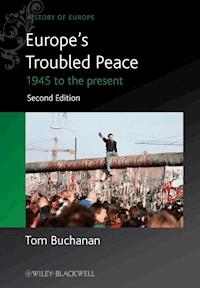
This revised second edition now extends to the end of the first decade of the twenty-first century, covering the financial crisis and the related crisis in European integration, the impact of the “War on Terror” on Europe, and the redefinition of Europe following EU enlargement.
- Thoroughly revised and expanded, this integrated history of Europe now covers the end of the Second World War up to the end of the first decade of the twenty-first century
- Includes new sections on immigration and ethnicity in Europe after the Cold War, and the role of historical memory in contemporary Europe
- A final new chapter assesses the role of Europe within the wider world of the twenty-first century, the financial crisis and the related crisis in European integration, the impact of the “War on Terror” on Europe, and the redefinition of Europe following EU enlargement
- Covers the history of central and eastern Europe in depth, as well as that of Western Europe
- Discusses in detail the impact of the Cold War across the continent
Sie lesen das E-Book in den Legimi-Apps auf:
Seitenzahl: 711
Veröffentlichungsjahr: 2011
Ähnliche



















Contents
Maps
Illustrations
Acknowledgments for the Second edition
Acknowledgments for the First Edition
Introduction
1 The War and its Legacy
Conquest and Occupation
Collaboration
Resistance
Liberation, 1943–1945
Neutral Europe
The Human and Physical Cost
Judgment
Conclusion
2 Europe between the Powers, 1945–1953
From Grand Alliance to Cold War, 1941–1947
The German Question
Marshall Aid and Economic Security
NATO and the Defense of the West
Culture and the Cold War
Conclusion
3 Restoration, Reconstruction, and Revolution
A New Europe?
Politics in Western Europe
Western Europe: Reconstruction and Welfare
Scandinavia: Paths to Security
Southern Europe: Dictatorship and Civil War
The Soviet Union and Central and Eastern Europe
Between East and West: Finland, Austria, and Yugoslavia
Conclusion
4 Consolidating Western Europe, 1950–1963
Fears and Aspirations
Towards Affluence: The Economy and Social Change
From Korea to Berlin: The International Context
“No Experiments”: West Germany, Britain, and Italy
France and Algeria
Social Democratic Alternatives
Conclusion
5 Western Europe in the 1960s
The Cultural Divide
The New Society: Economic and Social Change
The Limits to Reform: Italy, West Germany, and Britain
The Enigmatic Republic: France, 1958–1968
Revolt: Students and Workers, 1967–1969
The Persistence of Dictatorship: Spain, Portugal, and Greece
Conclusion
6 The Soviet Union and Eastern Europe, from 1953 to the 1970s
New Societies, Recurrent Crises
Khrushchev and de-Stalinization
The Crisis of 1956: Poland and Hungary
The Start of the Brezhnev Era
East European Alternatives: Romania, Yugoslavia, Albania
From Prague Spring to Brezhnev Doctrine
Conclusion
7 Western Europe in the 1970s
The Era of Détente
Willy Brandt’s Ostpolitik, 1969–1974
The New Economic Insecurity
West European Politics
The Rise of Terrorism, c.1970–1981
Intellectual and Cultural Developments
Transitions: Spain, Portugal, and Greece
Conclusion
8 Western Europe in the 1980s
Towards the Post-Industrial Society
Postmodern Cultures?
The New Cold War
Thatcher’s Britain
Mitterrand’s France
Helmut Kohl and West Germany
Breaking the Mold? New Political Movements
Southern Europe
Conclusion
9 European Integration
Perspectives on Integration
The Foundation of the EEC
De Gaulle and the EEC, 1958–1969
Stagnation, 1970–1984
The Single European Act and “1992”
Maastricht and After
Conclusion
10 The Fall of the Communist Regimes
“All that is solid melts into air”
Poland and Solidarity, 1980–1981
Gorbachev and Soviet Reform, 1985–1990
1989: The Fall of Communism in Eastern Europe
German Reunification, 1989–1990
The End of the Soviet Union, 1990–1991
Conclusion
11 Europe after the Cold War
Building Europe?
West European Politics
Troubled Waters: Italy and Germany
Western Europe: The Economy and EMU
Post-Communism: Eastern Europe and the Former USSR
The Balkan Wars
Conclusion
12 Europe in the New Millennium
Diversity and Union
Memory and the “European Identity”
The “War on Terror” and the Security of Europe
West European Politics
The Politics of Intolerance
On Europe’s Borders
From Financial Crisis to European Crisis
Conclusion
Notes
Guide to Further Reading
Index
Blackwell History of Europe
General Editor: John Stevenson
The series provides a new interpretative history of Europe from the Roman Empire to the end of the twentieth century. Written by acknowledged experts in their fields, and reflecting the range of recent scholarship, the books combine insights from social and cultural history with coverage of political, diplomatic and economic developments. Eastern Europe assumes its rightful place in the history of the continent, and the boundary of Europe is considered flexibly, including the Islamic, Slav and Orthodox perspectives wherever appropriate. Together, the volumes offer a lively and authoritative history of Europe for a new generation of teachers, students and general readers.
Published
Europe’s Uncertain Path: 1814–1914R. S. AlexanderEurope between Dictatorship and Democracy: 1900–1945Conan FischerEurope’s Troubled Peace: 1945 to the Present, second editionTom BuchananEurope in the Sixteenth CenturyAndrew PettegreeFractured Europe: 1600–1721David J. Sturdy
In preparation
Europe: 300–800Peter HeatherEurope in Ferment: 950–1100Jonathan ShepardThe Advance of Medieval Europe: 1099–1270Jonathan PhillipsEurope: 1409–1523Bruce GordonEurope from Absolutism to Revolution: 1715–1815Michael Broers
This second edition first published 2012© 2012 John Wiley & Sons, Ltd.
Edition history: Blackwell Publishing Ltd. (1e, 2006)
Wiley-Blackwell is an imprint of John Wiley & Sons, formed by the merger of Wiley’s global Scientific, Technical and Medical business with Blackwell Publishing.
Registered OfficeJohn Wiley & Sons Ltd, The Atrium, Southern Gate, Chichester, West Sussex, PO19 8SQ, UK
Editorial Offices350 Main Street, Malden, MA 02148-5020, USA9600 Garsington Road, Oxford, OX4 2DQ, UKThe Atrium, Southern Gate, Chichester, West Sussex, PO19 8SQ, UK
For details of our global editorial offices, for customer services, and for information about howto apply for permission to reuse the copyright material in this book please see our website at www.wiley.com/wiley-blackwell.
The right of Tom Buchanan to be identified as the author of this work has been asserted in accordance with the UK Copyright, Designs and Patents Act 1988.
All rights reserved. No part of this publication may be reproduced, stored in a retrieval system, or transmitted, in any form or by any means, electronic, mechanical, photocopying, recording or otherwise, except as permitted by the UK Copyright, Designs and Patents Act 1988, without the prior permission of the publisher.
Wiley also publishes its books in a variety of electronic formats. Some content that appears in print may not be available in electronic books.
Designations used by companies to distinguish their products are often claimed as trademarks. All brand names and product names used in this book are trade names, service marks, trademarks or registered trademarks of their respective owners. The publisher is not associated with any product or vendor mentioned in this book. This publication is designed to provide accurate and authoritative information in regard to the subject matter covered. It is sold on the understanding that the publisher is not engaged in rendering professional services. If professional advice or other expert assistance is required, the services of a competent professional should be sought.
Library of Congress Cataloging-in-Publication Data
Buchanan, Tom, 1960–Europe’s troubled peace : 1945 to the present / Tom Buchanan. – 2nd ed.p. cm.Includes index.
ISBN 978-0-470-65578-8 (pbk.)1. Europe–History–1945– I. Title.D1051.B83 2012940.55–dc23
2011033745
A catalogue record for this book is available from the British Library.
For Robert, Alex, and Francis
Maps
1.1
The Nazi empire, autumn 1942
2.1
Postwar Germany and neighboring countries showing zones of occupation and administration
2.2
Europe in the Cold War
6.1
Communist eastern Europe, showing prewar boundaries
9.1
From the EEC to the EU: the growth of European integration, 1957–2004
11.1
National and ethnic distribution in Yugoslavia
11.2
The Dayton Peace Accord; shaded areas mark lands held in October 1995
Illustrations
1.1
The liberation of Paris, August 25, 1944: surrender of German troops
2.1
Advanced units of the 1st US army and the 5th Soviet Guard army meet at the destroyed bridge across the River Elbe at Torgau, April 25, 1945
4.1
The Berlin Wall in 1984
4.2
The Berlin Wall in 1984
5.1
Student leader Rudi Dutschke and Gaston Salvatore (on the right) on a Vietnam demonstration in Berlin, 1968
6.1
Soviet tanks enter Budapest during the Hungarian uprising (October 24–November 11, 1956)
7.1
The prime minister of the DDR, Willi Stoph, meets Chancellor Willy Brandt at Erfurt railway station, March 1970
7.2
General Franco and his designated successor, Juan Carlos, 1973
8.1
Erich Honecker and Chancellor Helmut Kohl listen to national anthems in Bonn, September 1987
9.1
From left to right: Jean Monnet, Robert Schuman, Konrad Adenauer, and Walter Hallstein meeting to sign a draft treaty of the Schuman Plan, March 1951
12.1
Holocaust Memorial, Berlin
12.2
Memorial to the forced laborers at Auschwitz concentration camp, Pere la Chaise cemetery, Paris
12.3
The Valley of the Fallen, Spain
12.4
German troops in Kosovo, 1999
12.5
Spain’s defense minister Carme Chacon reviews a guard of honor during a ceremony at the defense ministry in Madrid, April 14, 2008
12.6
Nicolas Sarkozy and Carla Bruni, Egypt, 2007
12.7
Vladimir Putin and Silvio Berlusconi
12.8
2010: Greece, strikes and protest
Acknowledgments for the Second edition
I am most grateful to Tessa Harvey, History Editor at Wiley-Blackwell, for proposing a second edition of Europe’s Troubled Peace. I would also like to thank the Project Editor Isobel Bainton for her help in preparing the revised manuscript and identifying illustrations. The major change in this edition is a new final chapter. This covers the period 2000–2011 and includes a few passages from the former Conclusion. Aside from some minor corrections the main body of the text is unaltered.
T.B.OxfordJuly 2011
Acknowledgments for the First Edition
I would like to thank John Stevenson, the series editor, and Tessa Harvey, history commissioning editor at Wiley-Blackwell, for inviting me to write this book. Tessa and her staff have been unfailingly supportive and helpful as the project has come to fruition and I am particularly grateful to Angela Cohen for overseeing the final stages. The book was mainly written during sabbatical leave in Trinity term 2004: I would like to record my gratitude to the University of Oxford for granting me this period of leave, and to my colleagues at OUDCE, above all Christine Jackson and Diana Wood, for providing such magnificent cover both during my sabbatical and the year’s secondment that preceded it. I am indebted to John Stevenson, Andrew Latcham, and Martin Conway for reading the manuscript at varying stages of completion and making invaluable comments and corrections. Martin, in particular, has provided tremendous support and guidance throughout the whole project. Any remaining errors in the text are, of course, my responsibility. A work of synthesis such as this inevitably rests above all on the research carried out by the many scholars who have written on the history of postwar Europe. I very much hope that, without unduly burdening the text with footnotes, I have adequately indicated my debt to them. I must thank Julia and the boys for all of their patience and understanding when I was working on the book during the long summer of 2004.
T.B.OxfordMay 2005
Introduction
Europe’s Troubles
In January 1995 the French President François Mitterrand, close to the end of his second term of office and, indeed, of his own remarkable life, made an emotional valedictory address to the European Parliament. He reminded the assembled MEPs of how World War II had brought “grief, the pain of separation, the presence of death – all as a result of the mutual enmity of the peoples of Europe.” He went on to lay the blame for such suffering squarely on the nationalistic sentiments endemic in Europe at a time when “everyone saw the world from his or her own viewpoint, and … those viewpoints were generally distorting.” Mitterrand praised those who, after the war, had been able to envisage a “more radiant future … based on peace and reconciliation.” Yet he concluded by appealing to Europeans to continue the struggle to overcome their past, and warned that “nationalism means war!”1 A few years earlier his peroration might have seemed fanciful; yet now western Europe was witnessing, as a rather forlorn observer, precisely such a devastating war of rival nationalisms in the former Yugoslavia (1991–5). In the mid-1990s imagery of “ethnic cleansing” in Bosnia, and even of starving prisoners in camps, uncomfortably connected Europe’s present with the problems of its recent past.
Mitterrand spoke for a generation that had either participated in the war or whose lives had been directly affected by it (a group that included most leading European statesmen and women well into the 1980s). By their standards, the history of Europe since 1945 could well be viewed as a triumph, not so much in terms of the remarkable growth and diffusion of prosperity, but simply in terms of the avoidance of the war, dictatorship and mass killing which had plagued the continent between 1914 and 1945. But peace is, of course, more than simply the avoidance of war, and the long peace of the decades after 1945 rested on the deliberate creation of new institutional arrangements that made war between west European states unimaginable. In the course of the 1990s these arrangements began to be extended to include central Europe as well. This does not mean that Europe was free from conflict after 1945. As we shall see, in addition to the unprecedented division of the continent imposed by the Cold War (c.1947–91) and the often brutal imposition of Soviet authority on its satellite states, the peace of Europe was regularly disturbed by political violence, by vibrant new political and social movements, and – in the case of both southern and eastern Europe – the pains of transition from dictatorship to democracy. Even so, by the end of the century Europe seemed smaller, tamer and more homogeneous than it had been prior to 1945, and a central theme of this book will be how this less dangerous (and in most ways better) Europe was created.
Because the war – and the lessons learnt from it – did so much to determine the evolution of Europe after 1945, Chapter 1 will examine the conflict and its legacy in some detail. This introduction, however, looks at the broader context, and asks what went so badly awry in Europe during the first half of the twentieth century, especially in the two decades after the end of World War I (1914–18). Six themes will be explored below: politics, international relations, the economy, social divisions, culture, and European imperialism. In each case the question to bear in mind is how the severe and chronic problems that were evident prior to 1945 could be overcome in the postwar era.
The hallmark of inter-war politics was the unprecedented richness of ideological variety and the absence of the kind of consensus that came to characterize politics in western Europe after 1945. In Spain during the 1930s, for instance, the whole political spectrum could be observed, from revolutionary anarchism and communism on the left, via an embattled liberalism to various brands of conservative and Catholic authoritarianism on the right. Understandably, the inter-war years have been viewed above all in terms of the failure of democracy. Quite apart from the establishment of Mussolini’s fascist dictatorship in the early 1920s and Hitler’s overthrow of the Weimar Republic in 1933, different forms of dictatorship became the norm during these years throughout eastern and southern Europe. In the Soviet Union, meanwhile, under Stalin’s leadership the Communist Party embarked on an ambitious and ruthless program of industrialization and agricultural collectivization. By 1939 democratic government was limited to Britain, France, Switzerland, the smaller states of north-west Europe, and Scandinavia. Although a rather successful experiment in social democracy was under way in Sweden, on the whole the mood in the democracies was defensive and pessimistic. The future seemed to lie with the regimes of right and left that could mobilize their populations, either by terror or by appealing to class hatreds, nationalist or ethnic passions, and utopian visions.
Yet to concentrate on the anti-democratic forces of both ideological extremes ignores the degree to which democracy was itself part of the problem. In the late nineteenth and early twentieth centuries European states had undergone incomplete processes of democratization in response to the emergence of more educated, literate, and urban “mass” societies. Even in Britain universal suffrage (for all men and women aged 21 or over) was not achieved until 1928, while French women did not receive the vote until 1944. Democracy had come, in the words of British Prime Minister Stanley Baldwin, “at a gallop,”2 and too rapidly for many European countries after 1918. Consequently, democracy came to mean many different things in the inter-war years, often negative. For some it represented an ungovernable cacophony of small interest groups; for others a means by which elites divided the corrupt spoils of office; while in Spain the coming of the reforming Second Republic in 1931 posed a deadly threat to the interests of the rich and powerful. It was, moreover, far from clear who the real democrats were. Many on the left, for instance, rallied to defend “bourgeois” democracy at the eleventh hour in the mid-1930s, but this was more a response to the threat of fascism than any genuine reconciliation. Such an instrumental approach to democracy was again evident in eastern Europe in 1945–8. In the West, a crucial task for politicians after 1945 would therefore be to identify democratic politics with prosperity and social harmony rather than with crisis and weakness.
In the sphere of international relations, the most spectacular failing was, of course, the inability to prevent the outbreak of a new European war in September 1939. The principal aggressors during the 1930s were undoubtedly Hitler and Mussolini, but their aggression emphasized the underlying failure to establish a new order for European security after 1918, whether based on the newly formed League of Nations or – more narrowly – on the strength of Britain and France. Much of the blame must attach to the Treaty of Versailles (1919), which humiliated Germany (through territorial losses and the imposition of reparations payments) without destroying the basis of its military and economic power. Moreover, the formation of a host of weak new states in central and eastern Europe out of the former Austro-Hungarian and Russian empires became a source of weakness as soon as Germany and the Soviet Union regained their strength. Even so, success had seemed tantalizingly close in the late 1920s, when the signing of the 1925 Locarno Treaty (which guaranteed the borders of western Europe) was followed by the temporary stabilization of Germany’s Weimar Republic and the rescheduling of German reparations. Locarno fostered a belief that not only could Franco-German antagonism, the storm center of European instability since 1870, be overcome, but even that the time was ripe to take a significant step towards a “European Federal Union.”3
Such optimism was destroyed in the early 1930s by the Depression, by the revival of nationalism, and above all by the advent of Hitler’s Nazi regime bent on revising the Treaty of Versailles. By the mid-1930s the League had collapsed as an effective forum for resolving international disputes, and Britain and France were pursuing their national and imperial self-interest, rather than collective security, through the “appeasement” of Germany and Italy. At Munich in September 1938 war was averted, but only by presenting Hitler with the German-populated borderlands of Czechoslovakia. Meanwhile, the Soviet Union also pursued its own interests, opposing fascism in Spain during the Civil War (1936–9), but forging a nonaggression pact with Hitler in August 1939 when it became clear that the Western democracies would not form an alliance to contain him. Accordingly, when Britain and France did go to war on September 3, 1939 in response to Hitler’s invasion of Poland, they lacked any worthwhile allies. The United States, which was still recovering from the Depression and was prone to powerful isolationist sentiments, leaned towards the democracies but remained officially neutral.
The problems of Europe owed much to a world economy which, dislocated by World War I, almost ground to a halt following the crash of 1929. The impact of the Great Depression was most visible in the more developed industrial nations: in the early 1930s unemployment peaked at 6 million in Germany, 3 million in Britain, and 13 million in the United States. International trade was hit hard, and by 1938 only the Scandinavian economies had restored their 1929 levels of exports. For most European countries 1929 was an economic benchmark not to be reached again until the late 1940s (and then rapidly surpassed). Although the crisis is often visualized in terms of idle factories, coal mines, and shipbuilding yards, across the continent farmers were confronted with a collapse in agricultural prices. Even in France and Germany, let alone eastern Europe, agriculture was still woefully unmechanized and many farmers were forced to abandon the market and await better times (which came during and after the war). Indeed, the one benefit of the Depression for the industrial world was the steady decline of international commodity prices which, paradoxically, made the 1930s a period of some affluence for those in work. Where manufacturing prospered it tended to be in the production of goods designed for an expanding domestic market, such as automobiles and household appliances. In 1938, for instance, there were already 1.2 million privately owned cars in Germany, and 2 million in Britain.
The political impact of the Great Depression was profound. High unemployment undermined confidence in the democracies – fatally in the case of Germany – and encouraged those most affected to turn to leaders offering extreme solutions. The German people rallied to Hitler’s drive for full employment, even though the economy was increasingly geared not simply to recovery but to making war. In France the leftist Popular Front swept to power in the elections of May 1936 offering a new deal for the workers after a number of years of harsh deflation. However, its policies, which included a 40-hour week and the first paid holidays, soon encountered determined opposition from employers. Meanwhile, the apparent immunity of the Soviet Union from the Depression enhanced the attractiveness of communism throughout Europe. Economists were shocked by the scale of the crisis, but no new consensus emerged as to how to solve it. The ideas of the Cambridge economist John Maynard Keynes, whose work proved so internationally influential after 1945, were by no means generally accepted before the war. In the absence of any common international program for recovery, democratic governments turned to a range of short-term pragmatic measures, such as protectionism, imperial preference, currency devaluation, and cartelization. For their part, the fascist regimes resorted to autarky (self-sufficiency), barter agreements for raw materials, and, ultimately, the forcible seizure of resources by conquest.
The brief, carnivalesque experience of the French Popular Front, when workers occupied their factories and coal mines to reinforce the verdict of the ballot box, was a reminder of how Europe’s social divisions could still erupt into class conflict. In Spain, an even more destructive blend of social, political, and religious violence marked the early months of the Civil War in 1936. European societies remained intensely class conscious: educational opportunities were still largely determined by wealth, social services were patchy and often rudimentary, and working-class budgets were still dominated by the costs of basic housing and nutrition. Inequalities were even greater in parts of rural Europe. Across southern Spain, Portugal, and Italy, for instance, landless laborers experienced extreme poverty and insecurity. In general, the Depression had served to reinforce the established social order, whether under a democracy such as Britain or an allegedly egalitarian dictatorship such as Nazi Germany. At the same time, however, powerful social solidarities survived the economic and political traumas of the inter-war years, such as the working-class culture of factory and community. Religion, too, played an increasingly important role in defining social and political identities. The Catholic Church, still deeply suspicious of democracy, proved remarkably adept at maintaining its autonomy under both democracies and dictatorships. Across Europe lay “Catholic Action” organizations such as the JOC (Young Christian Workers) flourished during the 1930s.
In many countries questions of race and ethnicity gained a remarkable and destructive new salience in the inter-war years. Violent anti-Semitism, of course, became central to the politics of the Nazis, if not to their political appeal. Once established in power, they proceeded to establish a “racial state,”4 using both legal means and thuggery to separate out the German population from Jews and other minorities. However, it must be recalled that, while Nazi anti-Semitism was unparalleled in its extremism, awareness of ethnic difference had been heightened across the new states of central and eastern Europe after 1918. For instance, restrictions on numbers of Jews who could attend the universities and join professions were widespread by the 1930s. Moreover, many of these new states were undermined by ethnic differences, such as the resentment felt by Croats against a Serb-dominated Yugoslavia or by Slovaks against the Czech domination of Czechoslovakia. The question of Transylvania, where a large Hungarian population was placed under Romanian rule in 1919, remained highly contentious into the communist – and indeed into the post-communist – era.
Developments in both the high arts and in popular “mass” culture contributed to the instability in the inter-war years. The fractured, subversive impact of modernism in literature and the arts before 1914 was greatly amplified by World War I, which led many to question prewar assumptions about patriotism, religious belief, and technological progress. Indeed, the war, and the Russian Revolution of 1917 which it brought about, were not simply military and political convulsions, but immense cultural shocks in their own right. The culture of the 1920s reflected a world in which traditional values and hierarchies had been found wanting, but in which no new certainties had been established. The consequences were most striking in the artistic ferment of Germany’s Weimar Republic, where culture rapidly became the focus of bitter conflict. Here, broadly modernist and democratic forms of expression, (such as the theater of Bertolt Brecht and Bauhaus design and architecture) clashed head-on with conservatives committed to preserving the cultural purity of the German Volk from “degenerate” influences.
It was inevitable that, due to the advent of new technologies and new forms of cultural activity, culture would be fiercely contested during the inter-war years. This applied most obviously to the advent of radio and the cinema, but also to advances in photography and propaganda. No authority – political or spiritual – could afford to ignore the opportunities offered by radio to communicate with the public in their homes, or the potential of cinema to shape dreams and desires. European dictatorships were fully alive to the importance of culture as a means of creating new concepts of community, whether racial or ideological. As the German critic Walter Benjamin observed in 1936, Nazism had achieved the “introduction of aesthetics into political life.”5 The Nazis’ stage-managed rallies were used to show a nation on the march: ironically, their mastery of modern techniques of lighting and cinematography enabled them to create a mythologized past. Mussolini’s regime was infatuated with the cinema, and built the Cinecittà film production complex in 1937. In the Soviet Union the initial modernism and abstraction of the immediate post-revolutionary era gave way in the 1930s to a “Socialist Realist” style that forced artists to celebrate the achievements of the Communist Party and its leaders. These contrasting “totalitarian” styles were, famously, juxtaposed in the rival pavilions at the Paris Exposition of 1937.6
Finally, it is important to note that, despite the immense destruction caused by World War I, Europe was still a preeminent force in the world. The British and French empires, in particular, were larger than ever after 1918, swollen with “mandates” (former territories of the defeated German and Ottoman Turkish empires) awarded by the League of Nations. Portugal, Belgium, the Netherlands, Italy, and Spain also retained significant colonial possessions. Empires remained highly attractive, as a mark of prestige and national pride, as an economic asset (providing raw materials and markets) during the Depression, and as a source of military recruits. Both Spain and Italy were engaged in bitter campaigns to expand their empires (Spain in Morocco in the 1920s; Italy in Abyssinia in 1935–6). However, empire also carried a cost. Britain and France, in particular, had to “think imperially” when considering grand strategy, and to be aware of the challenge from new imperial powers – such as Japan and the United States – in the Pacific. Colonial powers also had to combat the rise of nationalism (especially in India) and to prove that imperial rule brought genuine benefits to the colonized. In many respects, therefore, the European empires were living on borrowed time in the inter-war years. Although they survived World War II, it rapidly became apparent (to some countries more swiftly than others) that formal empire was no longer sustainable, and by the 1960s all of the leading European states had refocused their attention on Europe.
Europe on the verge of World War II provided, therefore, a diverse and bewildering spectacle. The fault lines of conflict ran not only between the nations of Europe, but also within them. If, to take Mitterrand’s argument, the world was seen from a plurality of viewpoints, then these perspectives might just as well be ideological, national, or religious. What would the future hold? In the West there were the first glimmerings of how this dysfunctional Europe could be made to work. For instance, new economic thinking already envisaged a more constructive role for the state, and a balance between the needs of the free market and the provision of welfare. Moreover, the seeds of the idea had been sown that states would have to sacrifice some of their sovereignty in order to protect their vital interests. Yet the dictators, fascist and communist, were articulating their own very different prescriptions, and by the late 1930s they seemed to be in the ascendancy. All would hang on the unpredictable outcome of war.
1
The War and its Legacy
Conquest and Occupation
Between 1939 and 1942 most of Europe was united under German domination. At its greatest extent the territory occupied by Germany and its allies stretched from the Caucasus to the Atlantic coast of France, and from Greece to Norway (see Map 1.1). In addition to Britain and the USSR, only a small number of neutral states retained some degree of independence. Having rapidly overrun Poland and western Europe in 1939–40, Hitler took his greatest gamble by invading the Soviet Union in June 1941 (“Operation Barbarossa”) while leaving an undefeated Britain in the rear. Although the Soviet resistance stiffened as German troops approached Moscow, vast tracts of territory and more than 3 million Red Army soldiers were lost in the first six months of combat on the Eastern Front. By September 1942, after a further successful campaigning summer, German forces stood on the Volga at Stalingrad, some 2,000 kilometers from Berlin.
What was the nature of this new German empire? According to Nazi rhetoric this was a “New Order,” a hierarchy within which non-Germans would have their designated part to play. The “Germanic” peoples, such as the Dutch and Norwegians, might eventually be absorbed into the Reich, whereas the fate of the Slavs of eastern Europe would be resettlement and enslavement. Yet while there were those in the more privileged groups eager to collaborate on such terms (see below), Hitler had no intention of sharing power with them. The New Order enshrined Germany’s domination of Europe, and its true nature was one of economic exploitation, political oppression, and increasingly severe racial persecution. The German war economy required immense amounts of labor, food, raw materials, and bullion which, apart from that which could be supplied by the neutral states, had to come from the conquered territories. The trade of occupied Europe was reoriented towards Germany with some, often unforeseen, success. For instance, contrary to Nazi ambitions for the economic exploitation of the east, France provided as much food as, and more industrial material than, all of the occupied Soviet territory.1 Indeed, Germany took 30–40 percent of the wartime national product of France, the Netherlands, and Norway. The Nazis also made up their labor shortages with foreign workers, initially volunteers from allied and satellite states and latterly those drafted from occupied territory, as well as prisoners of war and concentration camp inmates. By 1945 forced and foreign labor constituted 25 percent of industrial employment in Germany and 20 percent of the civilian labor force.2
Map 1.1 The Nazi empire, autumn 1942.
Source: Jeremy Noakes and Geoffrey Pridham, Nazism, 1919–1945, vol. 3, Foreign policy, war and racial extermination, pp. 642–3 (Exeter University Press, Exeter, 2001 edn.). Used with permission.
The nature of Nazi occupation varied greatly. This was no uniform, monolithic empire, but rather one that reflected the inconsistencies and varied power structures of Nazi Germany. Some territory (such as western Poland, Alsace-Lorraine, and Slovenia) was incorporated directly into Germany. The Czech lands (Bohemia and Moravia) had already been absorbed into the Reich, in March 1939, but as a quasi-autonomous “Protectorate.” Elsewhere, there was an immense diversity of forms of government. The Nazis occasionally entrusted power to indigenous fascists, such as Vidkun Quisling in Norway, but they soon became a focus for popular hatred and resistance. The leading Belgian fascist Léon Degrelle was, by contrast, kept at arm’s length by the German military authorities and eventually volunteered to fight on the Eastern Front. In occupied Denmark the prewar government was allowed to remain in office until 1943, while in the Netherlands a German civilian authority supervised the work of the local administration (although this was increasingly staffed by members of Anton Mussert’s Dutch Nazi Party). France was divided into a zone of military occupation in the north and west (with some 67 percent of the population, 66 percent of cultivated land, and 75 percent of mining and industry) and a “free” zone under the collaborationist regime of Marshal Pétain, based in the spa town of Vichy. The whole of France was eventually occupied in November 1942 as fears grew of an Allied invasion. In eastern Europe, meanwhile, different agencies vied for control, and grandiose titles did not always carry great power. Alfred Rosenberg, minister for the Occupied Eastern Territories, and Hans Frank, Governor General of occupied Poland, saw their own authority dwindle as the war progressed, while that of Heinrich Himmler and the SS – charged with carrying through the extermination of the Jews – increased.
These conquests, which brought large Jewish populations under German rule, both encouraged and facilitated a murderous radicalization in Nazi racial policy. Although Hitler had prophesied in his Reichstag speech of January 30, 1939 that a new world war would result in the “destruction of the Jewish race in Europe,”3 the thrust of Nazi policy in the late 1930s had been to encourage Jewish emigration. This changed with the invasion of Poland and, more significantly, with Operation Barbarossa, when SS special commandos (Einsatzgruppen) were detailed to murder Nazism’s supposed ideological and racial enemies behind the front line. These units shot as many as 2 million men, women, and children in cold blood, often with the willing help of local populations. At the same time, senior Nazis began to speak of a “complete solution of the Jewish question within the German sphere of influence in Europe.”4 Further emigration was blocked and steps taken to organize the deportation of the Jews to occupied Poland. This policy was systematized at the Wannsee Conference of January 20, 1942, under the chairmanship of Reinhard Heydrich, where the organizational arrangements were made for Europe to be “combed through from west to east.”5 The purpose of this deportation was mass industrialized murder, initially pioneered at a number of smaller camps in Poland where Jews were killed by mobile gas vans. Most western Jews were sent to Auschwitz, a sprawling industrial and extermination complex where those deemed unfit to work (80–90 percent) were murdered in gas chambers on arrival. Those Jews selected to work for IG-Farben’s synthetic rubber plant could only expect to live for three to four months – only one month if set to work in the associated coal mine.6
The “final solution” reflected the sense of power and boundless ambition felt by Nazi officials at the height of their supremacy within Europe. By late 1941 the Soviet Union seemed close to collapse and Britain was engaged in its own struggle for survival against the German U-boats in the Atlantic. Even the entry of the United States into the war following the Japanese attack on Pearl Harbor (December 7, 1941) made little initial difference as it would take almost a year for US servicemen to be deployed in action, and even then in North Africa rather than Europe. Moreover, war with Japan further stretched British resources and some 70,000 British and imperial troops capitulated at Singapore in February 1942. There were, however, also causes for concern on the German side, notably the very limited support that Germany received from its allies, and even from its Axis partner Italy. For all Mussolini’s martial bluster, it soon became clear that Italy was ill prepared, both militarily and economically, for modern warfare. The Italian army suffered humiliating setbacks at the hands of the Greeks (October 1940) and the British in North Africa, while newly colonized Abyssinia was liberated in 1941. Half of Italy’s modern and expensive battleship fleet was severely damaged at anchor in Taranto by British torpedo bombers. The war economy was inefficient, slow to expand, and crippled by a lack of energy resources which forced Italy into dependence on Germany. By 1942 Italy had sent 290,000 workers to Germany in exchange for supplies of coal and steel. Hitler’s other allies, Hungary, Romania, and Bulgaria, were largely agrarian states. Their prewar authoritarian governments were already locked into economic dependence on Germany, and mainly concerned with rectifying their own territorial grievances. Alongside Finland, which joined the war on Germany’s side to take revenge for the Soviet aggression directed against it in the winter of 1939/40, these allies were, at best, able to play an auxiliary military role on the Eastern Front.
Collaboration
Many in occupied Europe chose to collaborate with Nazi Germany, for a range of personal, ideological, and ethnic reasons. Collaboration was a far more complex phenomenon than its best-known image – of shaven-headed women humiliated after the liberation of France for sleeping with German soldiers – would suggest. In fact, collaboration represented a gradient down which all occupied populations might travel to some degree, and which might well go no further than the quite proper relations of local authorities with an occupying power. In cases of economic relations it was often difficult to tell where “business as usual” and an eye for profit elided into unacceptable levels of support for the German war effort. In France, for instance, contracts placed by the German authorities were not easily refused and, in any case, provided otherwise unobtainable employment for as many as 3 million workers. Yet their labor produced aircraft, shells, and uniforms, while French construction companies built the “Atlantic Wall” and a giant submarine base at Saint-Nazaire.7 At the individual level, too, there were many gray areas. For instance, François Mitterrand, the future French president, slipped easily between working for the collaborationist Vichy regime and the resistance. In such cases, many would argue subsequently that they collaborated out of a sense of duty to protect their countrymen from the worst of the occupation. Some governments or heads of state opted to remain in post rather than seek exile, while Pétain famously described himself as the “shield” of France. Many lower-ranking officials and members of the police also continued in office, and some would undoubtedly have shared the Nazis’ anti-communism and anti-Semitism. In all these cases, of course, the supreme test came when Nazi demands, notably for the deportation of the Jews, placed their own compatriots in danger.
Collaboration requires a context, as the occupiers must be willing to work with the occupied. This was far less likely to be the case in eastern Europe where the prime Nazi objective was to create Lebensraum (“living space”) for the expansion of the German race and to crush the indigenous Slavic population. In Poland, for instance, where Nazi (and, indeed, Soviet) policy was to destroy the prewar elites, collaboration was barely an option. Conversely, the Czechs, who were deemed to be semi-Germanic, enjoyed a relatively privileged status in their “Protectorate,” retaining their own president and civil service. Here, collaboration was both possible and actively pursued, encouraged by the iron hand of Protector Heydrich in 1941–2. One major failing of Nazi rule was in the occupied Soviet territories, where resentment at Stalin’s policies in the 1930s plus local anti-Semitism had created a reservoir of potential support. This was particularly strong in the Baltic states and eastern Poland, which had only been seized by the USSR in 1939–40. The Nazis encouraged the Balts, Belorussians, and Ukrainians to play an active role in the extermination of the Jews, and thousands of Ukrainian and Russian “Hiwi” auxiliaries served in the Wehrmacht. However, Nazi policy towards the region was blinkered by notions of racial superiority, and many opportunities were missed. Andrei Vlasov, a Red Army general captured in 1942 who turned against Stalin, was not allowed to form his “Committee for the Liberation of the Peoples of Russia” until September 1944, too late to influence events on the Eastern Front. Tellingly, German occupation policy was far more successful in the Caucasus, where the Wehrmacht was in charge and where local religious and cultural identities were respected.
Amongst those who wholeheartedly chose political collaboration, small minorities identified fully with Nazism and sought to integrate into the “New Order.” For instance, some 50,000 Dutch, 40,000 Belgian, and 20,000 French volunteers served with the Waffen SS on the Eastern Front, alongside smaller numbers of Scandinavians. Such ideologically motivated collaborators tended to be prewar fascists who saw the Nazis as leading an international crusade against communism (and were greatly relieved when the Nazi–Soviet Pact was shattered by the German assault on the Soviet Union). There was, however, no automatic correlation between prewar and wartime political positions. Many conservative nationalists (such as Charles de Gaulle, who was often denounced as a “fascist” during his career) were above all patriots who detested the German occupation. Likewise, not all collaborators came from the right. A number were former socialists, such as Henri De Man in Belgium and Marcel Déat in France, who felt that the events of 1940 proved the failure of capitalism and parliamentary democracy. For them, to collaborate was to side – not necessarily in an opportunistic manner – with the new and enduring reality in Europe.
Other collaborators might not share Nazi goals or ideals but still saw the German victory as a chance to promote their own agenda for radical political change. For instance, Pétain had initially appeared as a reassuring figure amidst the chaos of July 1940. He enjoyed public support in negotiating an armistice and abolishing the Third French Republic (which was overwhelmingly approved in parliament by 569 votes to 80). However, Pétain’s attempt to create a more traditionalist, Catholic, and xenophobic France under the trinity of “work, family, fatherland” alienated many who might have supported a more politically neutral regime. Instead, Vichy’s assault on republican values and its ultra-conservative policies served to galvanize resistance. This was compounded from 1942 by the failure to protect the French people from the Nazi labor draft and the rounding up of the Jews (in which the French police played a crucial role). By this stage Pétain had lost control of his two principal assets which had given him some leverage with Berlin: control over the French fleet and the colonial empire. In 1942–4 Vichy’s collaboration became increasingly overt under the premiership of Pierre Laval, and its paramilitary police force, the Milice, was effectively engaged in a civil war with the resistance.
Collaboration also offered opportunities to ethnic groups who welcomed German aggression as an opportunity to break up existing states and to assert their own cultural and political independence. Before the outbreak of war Germany had encouraged Slovak separatists to secede from the rump Czecho-Slovakia in March 1939, and Slovakia became a German satellite state under the Catholic priest Joseph Tiso. Other examples included the fascist Ustasha in Croatia, some Flemish nationalists in Belgium, Breton autonomists in France, and Irish Republicans. Such groups might act as useful auxiliaries to Nazi rule, and as a means further to divide and rule the conquered, but if given too much authority their role could well prove counterproductive. For instance, once in power the Ustasha embarked on a murderous pogrom of Serbs, Jews, and Gypsies. Their intention was to create an ethnically homogenous greater Croatia, but their brutality generated considerable support for Tito’s Partisans.
The legacy of collaboration was extremely influential in postwar Europe, and nothing, apart from the defeat of Nazi Germany itself, did more to discredit inter-war fascist ideology. The punishment of collaborators (see below) eliminated a whole tier of politicians and ideologues either through execution, imprisonment, removal of political rights, or simple popular disapproval. The attraction of fascism had hardly been destroyed, but it had been driven to disguise itself for decades to come. The specter of the “quisling” also hung over the Soviet domination of postwar eastern Europe and guaranteed a certain degree of autonomy for Soviet allies in the satellite states. Moreover, collaboration – alongside the resistance – sponsored a postwar political realignment as many who had formerly identified with the authoritarian right, such as Catholics, now came to see that their values could be enshrined in the democratic politics emerging from the war. In the process, a veil was drawn over the realities and complexities of collaboration that was not lifted until the subject was critically reexamined by historians and film-makers in the early 1970s.8 It should also be remembered that, while the memory of collaboration remained generally negative, in parts of central and eastern Europe a more positive connotation survived. For instance, with the fall of communism in 1989/90 the Ustasha and Tiso regimes were often seen in Croatia and Slovakia as a brave first essay at independence.
Resistance
On August 25, 1944, General de Gaulle, leader of the Free French, arrived in Paris and proclaimed that it was a city “liberated by herself, by her own people, with the help of the armies of France.”9 Despite such rhetoric, no occupied country was in fact in a position to liberate itself during the war. Even though large resistance armies developed in some countries, notably Yugoslavia, Poland, Greece, and Albania, their success was ultimately dependent on the ability of the Allied armies to drive out the Germans. The case was made, tragically, in Poland where the advancing Soviet forces encouraged the Polish resistance to launch the Warsaw uprising (August 1944) and then held back while it was brutally crushed by the Germans. By October, some 15,000 Polish fighters and 200,000 civilians had died. The extensive Slovak uprising of November 1944 was also defeated, and attempts by the French Maquis to confront German forces directly in the Vercors massif (July 1944) resulted in heavy losses. This is not to imply that the resistance movements were militarily irrelevant, as they played a significant role in disrupting communications, collecting intelligence, and assisting the escape of Allied airmen and prisoners. However, the resistance was as much to do with the future as with the present. Few countries conquered by the Nazis witnessed a simple restoration of the old order after the liberation, and the new politics was – to a degree at least – forged within the resistance.
Defeat was so complete and so disorienting in 1939–41 that there were very few resisters “of the first hour.” In the case of France it was Pétain after all who embodied constitutional legitimacy, while de Gaulle – who claimed to speak in France’s name from London – was merely a deserter supporting an apparently lost cause. In western Europe, unless one was the member of particular persecuted groups, it was generally possible to play a waiting game in a war that appeared to be almost over. In the absence of the communists, who did not explicitly support the resistance until June 1941, there was no coherent political leadership, and initially resistance was the somewhat eccentric choice of isolated individuals. As the war progressed, however, the context changed. Above all, the tightening of Nazi occupation policy propelled many into resistance – for instance, those fleeing compulsory labor service or Jewish deportation orders often formed the basis of the French Maquis in the hills. The changing tide of the war and the growing unpopularity of collaborators gave resistance a new legitimacy, despite the increasingly savage Nazi reprisals against civilian populations. In eastern Europe the situation was far starker. Here resistance – in the case of the Polish Home Army (AK), the Serb Chetniks, and later on the Russian Partisans – was from the outset a question of national survival in the face of the genocidal assaults of the Nazis and their allies. In Poland, the resistance was not only an armed movement, but also represented a remarkable attempt to sustain Polish culture and politics underground. For the Chetniks, resistance represented not only opposition to occupation but also a struggle to ensure that the Serbs maintained their dominant role if and when the kingdom of Yugoslavia was restored.
The development of the resistance was hugely influenced by the policies of Hitler’s opponents. Churchill saw the potential benefits from an early stage, and in the summer of 1940 directed the new Special Operations Executive (SOE) to “set Europe aflame.” More realistically, it would build up small intelligence networks which might eventually be capable of more sophisticated military operations. (SOE was later joined by the American Office of Strategic Services – OSS – the forerunner of the CIA.) The Western Allies came to play a decisive role as the main source of military and political support – witness Churchill’s pragmatic decision in 1943 to favor the communist-led Partisans (now a quarter of a million strong) over the royalist Chetniks in Yugoslavia. Likewise, Churchill and Roosevelt eventually overcame their suspicions and decided to back de Gaulle even though, following the capture of Algeria, they initially saw more practical value in working with former Vichyites such as Admiral Darlan and General Giraud. However, while the resistance may have been a morale-raising myth in the dark days of 1940–1 and later a military asset, it was increasingly a political embarrassment given the prominence of communists in its ranks. The supreme allied commander Eisenhower claimed that it was worth five or six divisions at D-Day, but thereafter saw it as a politically divisive and “dissident” force in the rear of his advancing armies.10
For the communists, the decisive moment was the German invasion of the Soviet Union. This greatly simplified matters as most communists had been ardent anti-fascists during the 1930s and the Nazi–Soviet pact had made immense demands on their political discipline. Now, for the first time, a substantial political force that was used to operating in clandestinity joined the resistance. The Yugoslav Communist Party had, for example, been illegal for much of the inter-war period, and many leading Yugoslav communists had been involved with the International Brigades in the Spanish Civil War. In most countries the communists soon emerged as the largest resistance movement, sometimes, as in Greece and Yugoslavia, in bitter competition with other political forces. The success of the communist resistance in the Balkans was a source of mounting concern to the Allies as it heralded the formation of communist regimes at the end of the war in Yugoslavia, Albania and (very nearly) in Greece. At the same time, it should be noted that – at least until the advance of the Red Army into eastern Europe reduced the problems of communication – its independence was also a concern to Moscow. These political tensions were less overt in western Europe, where cooperation was more common. For instance, a broad-based French National Council of the Resistance (CNR) was established in May 1943 following the intercession of de Gaulle’s emissary Jean Moulin, and a committee for the liberation of occupied northern Italy was forged in January 1944.
Like collaboration, resistance was a highly complex phenomenon that often belied its straightforwardly heroic image. The German bomb plotters, responsible for the unsuccessful July 1944 attempt to kill Hitler, contained many whose politics were profoundly authoritarian and nationalistic. The Polish resistance was equally heroic, but seemed unable to empathize with the plight of the Jews. The commander of the Polish Home Army reported to London in September 1941 that “the overwhelming majority of the country is anti-Semitic.”11 Many in the resistance movements were engaged just as much in civil wars – with collaborators and rival resistance groups – to determine the political future as they were in the struggle against the occupation. Moreover, the morality and political value of resistance violence was often questionable given the inevitability of reprisal. In March 1944, 335 Italian prisoners were killed in the Ardeatine caves in retaliation for the death of 33 German soldiers in a Partisan bomb attack in Rome. Although the German perpetrators were later brought to justice, some of the victims’ families believed that the Partisans should also be punished for violating Rome’s status as an “open city.” Likewise, the assassination of Heydrich by Czech SOE agents in 1942 provoked harsh reprisals against the civilian population (including 173 slain in the village of Lidice).
In western Europe the influence of the resistance was immense, but its exact political character was surprisingly elusive. It proved too incoherent to determine the postwar political order, as many of its members had wished, and no single party was able to capture and channel its energies. The resistance had for the first time thrown together representatives of a wide range of political, religious, and social groups, enabling them to see beyond the rigid ideological positions of the 1930s. A character in Alberto Moravia’s novel Two Women nicely captures this sense of stripped humanity prevalent in the latter stages of the war when he observes that “you and I are two human beings, and what we are, we are because of what we do and not because of any honours or degrees.”12 Thus, the resistance came to embody certain values – humanist, egalitarian, anti-fascist, and patriotic – that appealed across the somewhat constrained spectrum of postwar politics. None would turn the myth of the resistance to their advantage better than de Gaulle, draped in the cross of Lorraine and surrounded by a loyal coterie largely forged in exile. Yet in the 1970s the resistance would also be used to legitimize causes as varied as an anti-tax movement in Denmark and the violence of the Italian Red Brigade terrorists.
Liberation, 1943–1945
The course of the war hinged around the events of late 1942 and early 1943, with the German defeats in North Africa, and, above all, the great Soviet victory at Stalingrad in January 1943. Here, an entire army was destroyed and the myth of German military invincibility was shattered irretrievably. Although thereafter Germany was still capable of mounting powerful offensives, notably at Kursk (July 1943) and in the Ardennes (December 1944), the tide of war had clearly changed in the Allies’ favor. On the Eastern Front a relentless series of Soviet offensives in the year after Kursk evicted the invaders from Soviet soil and brought the Red Army into Poland and the Balkans. Now Hitler’s allies were steadily transformed into enemies, starting with the Allied invasion of Sicily which precipitated the overthrow of Mussolini on July 25, 1943. King Victor Emmanuel eventually led Italy into the Allied camp on September 8, 1943, although the “45 days” of confusion had allowed German troops to occupy the peninsula as well as the Italian zone of occupation in the Balkans and the Greek islands. Mussolini was rescued by German commandos and restored to lead the puppet “Republic of Salò” in the north. Hungary, too, was occupied in March 1944 when its ruler Admiral Horthy sought to withdraw from the war, and a government of the fascist Arrow Cross movement was imposed in October. However, Romania did successfully change sides in August 1944, and 110,000 Romanians died in this new war alongside the 300,000 lost on the Eastern Front. Bulgaria and Finland followed suit in September.
Figure 1.1 The liberation of Paris, August 25, 1944: surrender of German troops. Photo © akg-images.
Meanwhile, the D-Day landings (June 6, 1944) by British, American, and Canadian troops had opened the long-awaited “Second Front” in western Europe. After desperate fighting in Normandy, in August the Allies broke out across northern France and into Belgium (see Figure 1.1). By early 1945 German resistance was being squeezed between Allied armies advancing through the Rhineland, Poland, the Balkans, and Italy. In the west an Allied army, now – unlike at D-Day – predominantly composed of American troops, swept across the Rhine in March 1945. The Wehrmacht was rapidly collapsing, and more than 300,000 prisoners were taken in the Ruhr pocket alone. Allied troops now fanned out to the east and south, encountering the advancing Soviet forces south of Berlin. In central Europe the Red Army had been delayed by stubborn resistance in Budapest (October 1944 – February 1945), but it advanced more swiftly through Poland and Prussia. In mid-April Marshal Zhukov opened his assault on Berlin, and some 78,000 Soviet troops died amongst the ruins before the Red Flag was raised over the Reichstag building. Hitler, having appointed Admiral Dönitz as his successor, killed himself on April 30. Dönitz offered Germany’s formal surrender on May 7 and delivered up the German garrisons in Bohemia, Holland, Denmark, and Norway to the Allies. He and his government were then unceremoniously arrested on May 23 by the Allied military authorities who were now Germany’s true rulers.
Underpinning the military victory of the Allies was a fundamental shift in the balance of resources available to the two sides. In many respects, this outcome was implicit in Hitler’s decision to go to war with both the USSR and the USA in 1941. If Hitler failed to win a swift victory in the east, and if a lasting alliance could be brokered between such ideologically disparate enemies, it was probable that a combination of Soviet manpower and US productive capacity would ultimately prevail. By the latter stages of the war, although the Allies could not always match the quality of the German equipment – notably in armored vehicles – they held a decisive advantage in sheer quantity. This imbalance was exacerbated for Germany by the distortions imposed by Nazi policy in the final stages of the war. Despite the success of Albert Speer, Hitler’s Minister for War Production from 1942, in increasing production in the face of Allied strategic bombing, vital resources were diverted into the production of technologically advanced but unproven new weapons as well as, of course, into the extermination of the Jews (the “Holocaust”). The Nazis were fearful of alienating public support and slow to admit that Germany was involved in a “total war.” Moreover, they were constrained by their own ideology. Female labor, for instance, was mobilized reluctantly and inefficiently, even though 13 million men were under arms. By contrast, the Allies approached the final phase of the war with single-minded lucidity. Difficult questions were postponed in the interest of maintaining the alliance (given that Soviet assistance was also thought to be needed in the defeat of Japan). The United States sustained the war efforts of both its principal Allies through the food, raw materials, and other resources made available under the lend-lease arrangements. The greater mobility of the Soviet forces, and their rapid advance in 1944, was greatly facilitated by American supplies, including 375,883 lorries, 380,135 field telephones, and a mountain of spam.13 For Britain, US aid meant that extraordinary levels of resources could be directed into the war: 5 million men and women were in uniform and a further 5 million worked in the munitions industry.




