


53,99 €
Mehr erfahren.
- Herausgeber: John Wiley & Sons
- Kategorie: Fachliteratur
- Serie: Wiley Finance Editions
- Sprache: Englisch
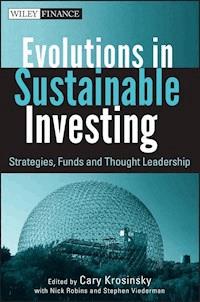
Sustainable Investing is fast becoming an essential method of generating long-term returns, moving beyond the negative approaches to socially responsible investing that have dominated the field. This book, our second on the subject, provides over 15 case studies of leading global investors and companies demonstrating how they successfully apply sustainability aspects to their core strategies. Learn from prominent thought leaders Dan Esty and Paul Hawken among others who have contributed key chapters. Our chapter on performance shows clearly how these strategies have been working once negative approaches are parsed out by those examining fund returns. This book also examines in great depth what data exists, and what's on the horizon, to best measure & capture sustainability successfully. Regional perspectives, including 3 chapters on Asia, and focuses on Canada, Australia, Africa & India are also included, as is a look across asset classes. Sustainable Investing, when performed with a positive perspective, has been outperforming the mainstream, unlike negative approaches designed to match benchmark returns. From eco-efficiency to sustainability-driven innovation and beyond, investors of all shapes & sizes need to know how best to position themselves for the radical market shifts underway.
Sie lesen das E-Book in den Legimi-Apps auf:
Seitenzahl: 785
Veröffentlichungsjahr: 2011
Ähnliche


















Contents
Cover
Series
Title Page
Copyright
Dedication
Acknowledgments
About the Editor
About the Contributors
Introduction
Chapter 1: The Sustainability Imperative
SUSTAINABILITY: A BUSINESS MEGATREND
GETTING THE VISION RIGHT
GETTING THE EXECUTION RIGHT
BUILDING A SUSTAINABILITY PERFORMANCE SYSTEM
SUMMARY
NOTE
Chapter 2: Jupiter Ecology
ROOTS OF THE FUND
JUPITER ECOLOGY'S INVESTMENT PROCESS
GOOD GOVERNANCE
BUILDING A FOLLOWING
BUILDING ON FIRM FOUNDATIONS
ASSESSING COMPANIES FOR THE LONG TERM
VOTING AND ENGAGEMENT: PARTICIPATING IN THE PROCESS OF CHANGE
FINDING GREAT GREEN COMPANIES
FUND PERFORMANCE
NOTE
Chapter 3: A Predictor of Performance
INVESTMENT IN NATURAL CAPITALISM
DISCOVERING OPPORTUNITIES
IDENTIFYING THE COMPANIES OF THE FUTURE
SUMMARY
Chapter 4: Highwater Global
HAWKEN TAKES ON DOMINI
FUND DRIVERS BASED ON GLOBAL SUSTAINABLE THEMES
FINDING INVESTMENT OPPORTUNITIES
SUSTAINABLE INVESTING IS RESPONSIBLE INVESTING
SUMMARY
NOTE
Chapter 5: Further Context
STARTING POINT FOR MEASURING SUSTAINABILITY
SUSTAINABILITY 2.0'S FIVE FACTORS
SUMMARY
NOTE
Chapter 6: Sustainable Asset Management
SAM'S ORIGINS AND EVOLUTION
BUILDING A SUSTAINABLE INVESTING PRACTICE: BASIC BUSINESS SEGMENTS
MEASURING INTANGIBLES: SUSTAINABILITY RESEARCH METHODOLOGY
SUSTAINABILITY LENS: ACTIVE PORTFOLIO MANAGEMENT
SAM AND PERFORMANCE
SAM'S EXTENDED FAMILY: DOW JONES SUSTAINABILITY INDEXES
SUSTAINABILITY ADVOCACY AND COMPANY ENGAGEMENT
SUMMARY
NOTE
Chapter 7: Domini and BP
DOMINI SOCIAL INVESTMENTS
SAFETY, ENVIRONMENTAL, AND ETHICAL CONCERNS
DOMINI INVESTMENT PHILOSOPHY
BUSINESS MODEL ANALYSIS: KEY PERFORMANCE INDICATOR ALIGNMENT MODEL
INTEGRATING BUSINESS MODEL ALIGNMENT AND STAKEHOLDER RELATIONSHIP STRENGTH
NOTE
Chapter 8: The Story of Calvert
UNCONVENTIONAL HISTORY
CALVERT'S PEOPLE
CALVERT'S METHODOLOGIES: SIGNATURE, SOLUTION, AND SAGE
CALVERT'S PERFORMANCE
SUMMARY
NOTE
Chapter 9: Winslow
BLAZING A TRAIL
INVESTMENT PROCESS
PERFORMANCE CONSIDERATIONS
SUMMARY
NOTE
Chapter 10: Portfolio 21
PORTFOLIO 21: A HISTORY
THEORY OF SUSTAINABILITY AND CHANGE
IN SEARCH OF FORWARD-LOOKING COMPANIES
RESULTS
SUMMARY
NOTE
Chapter 11: Northwest and Ethical Investments
HUMBLE BEGINNINGS
NEW DIRECTION
EVOLVING INVESTMENT APPROACH
CORPORATE ENGAGEMENT PROGRAM
KEY PRODUCTS AND PERFORMANCE OVER TIME
LOOKING FORWARD: NEI'S MERGER WITH NORTHWEST FUNDS
NOTE
Chapter 12: Looking for a Green Century
BACKGROUND
GREEN CENTURY FUNDS
GREEN CENTURY EQUITY FUND
TRILLIUM ASSET MANAGEMENT AND THE BALANCED FUND
TRILLIUM ASSET MANAGEMENT CORPORATION
CARBON FOOTPRINT OF THE BALANCED FUND
SEEKING SAFER PACKAGING: THE BISPHENOL-A REPORT
SHAREHOLDER ADVOCACY
SUMMARY
NOTE
Chapter 13: Pictet Water
EVOLUTION OF INVESTMENT STRATEGY OVER TIME: ORIGINAL VERSUS CURRENT MISSION
FOUNDERS AND KEY DECISION MAKERS
METHODOLOGY
METRICS: WHAT IS IMPORTANT AND WHY
PICTET'S INVESTMENTS
COMPANIES PICTET HAS NOT INVESTED IN, AND WHY
PERFORMANCE REVIEW
SUMMARY
NOTE
Chapter 14: Inflection Point Capital Management and Strategically Aware Investing
STRATEGICALLY AWARE INVESTING
BEYOND ENVIRONMENTAL, SOCIAL, AND GOVERNANCE TOWARD A NEW MODEL OF CORPORATE SUSTAINABILITY
PORTFOLIO CONSTRUCTION
INVESTMENT PROCESS
SUMMARY
NOTE
Chapter 15: Environmental Metrics
THEORETICAL AND PRACTICAL NEEDS FOR SUSTAINABLE INVESTMENT
AVAILABLE DATA AND METRICS
CHALLENGES AND OPPORTUNITIES MOVING FORWARD
SUMMARY
NOTE
Chapter 16: Crawford Chemicals
CRAWFORD'S ENVIRONMENTAL DILEMMA
MARKETS FOR CARBON PERMITS AND CAP AND TRADE
EUROPEAN UNION EMISSIONS TRADING SCHEME
PROS AND CONS OF THE MARKET FOR CARBON PERMITS
PREDICAMENT OF SUSTAINABILITY IN THE CHEMICAL INDUSTRY
SUMMARY
NOTE
Chapter 17: Using Statistical Tools
UNDERSTANDING THE TREND
SUMMARY
NOTE
Chapter 18: Barriers to Sustainable Investing
MISSING PLANET PROBLEM
OVERCOMING THE BARRIERS
STRATEGY AND TACTICS
NOTE
Chapter 19: The Silent “S” in ESG
ASSESSING SOCIAL METRICS TO INCREASE BUSINESS PERFORMANCE
RISK MANAGEMENT
SUMMARY
Chapter 20: Sustainable Investing
THE NEW NORMAL
CLIMATE CHANGE MITIGATION, ADAPTATION, AND SUSTAINABILITY RESEARCH
ADAPTATION AS KEY TO INVESTMENT AND PRACTICE
ECOSYSTEM SERVICES
MAKING USE OF DATA AND FINDINGS
SUMMARY
NOTE
Chapter 21: Bloomberg
PROVIDING INVESTOR INSIGHT AND INCREASING TRANSPARENCY
SUMMARY
NOTE
Chapter 22: Aviva
AVIVA'S HISTORY AND INVESTMENT PHILOSOPHY
AVIVA'S SRI INVESTMENT PROCESS
SRI PORTFOLIO CONSTRUCTION
CASE STUDY 1: GREEN TIRES
CASE STUDY 2: THE RESPONSIBLE SUPPLY CHAIN
ENGAGEMENT ACROSS ALL ASSET CLASSES
CONCLUSION
NOTE
Chapter 23: Generation Investment Management
A NEW MODEL FOR GLOBAL EQUITIES
SUMMARY
NOTE
Chapter 24: Insight Investment
ABOUT INSIGHT
INVESTMENT RESEARCH ON ESG ISSUES
CASE STUDY: CLIMATE CHANGE
CASE STUDY: EUROPEAN ELECTRICITY UTILITIES
CASE STUDY: BIOFUELS
REFLECTIONS/TAKEAWAYS FROM THE CASE STUDIES
SUMMARY
NOTE
Chapter 25: The Unexpected Role Model
CHINA'S RESOURCE SCARCITY AND ITS EMPIRICAL NEED FOR EFFICIENCY
SHAPING CHINESE ENERGY-EFFICIENCY NORMS
CHINESE POLICY SETTING
TRANSLATING CHINA'S ENVIRONMENTAL POLICIES INTO INDUSTRIAL OPPORTUNITIES
SUMMARY
NOTE
Chapter 26: Ethical Asia
REPORTING IS ON THE RISE
CSR WORKS WHEN COMPANIES AND SOCIETY ARE ALIGNED
FOCUSES IN ASIA: LABOR AND ENVIRONMENT
SUMMARY
Chapter 27: Mitigating ESG Risk in Asian Portfolios
THE CHALLENGE: LACK OF DISCLOSURE
ESG INTEGRATION IN ASIAN PORTFOLIOS
FUNDING ESG RESEARCH
BUILDING INSTITUTIONAL CAPACITY
USE OF INDEXES, BENCHMARKING, AND SCREENING
SUMMARY
NOTE
Chapter 28: Sustainable Investing and Canada
THE BASICS
GROWTH OF CANADA'S SUSTAINABLE INVESTMENT INDUSTRY
CONTEXT AND TRENDS
SUMMARY
NOTE
Chapter 29: High-Risk Areas, Resources, and Sustainability
BLACKLISTED
BACKGROUND
ENTER RIO TINTO
ORDINARY BUSINESS ACTIVITIES
SUMMARY
NOTE
Chapter 30: Sustainable Investing in Africa's Frontier Markets
STRONGER ECONOMICS: THE CASE FOR INVESTING IN AFRICA
SUSTAINABILITY ISSUES IN AFRICA
ROLE OF INDEXES
INTERNATIONAL EXPOSURE
FUTURE TRENDS: ESG, MEDIA COVERAGE, AND NETWORKS
SUMMARY
NOTE
Chapter 31: Evolution of ESG in India
SUSTAINABILITY ISSUES IN INDIA
OPPORTUNITIES IN INDIA'S SUSTAINABLE INVESTING MARKET
CONSIDERING THE INTEGRATION OF ESG FACTORS
SUMMARY
REFERENCES
Chapter 32: Indexes
THE “WHAT” AND “WHY” OF INDEXES
INDEX ARCHITECTURE
RESEARCH QUALITY AND INDEPENDENCE
LESSONS FROM THE LEADING SUSTAINABILITY INDEXES
COMPANY REACTIONS TO INDEXES AND THEIR IMPACTS
SUMMARY
NOTE
Chapter 33: How Asset Owners Can Achieve a Sustainable Investing Framework
IMPORTANCE OF VALUES AND BELIEFS
INTEGRATED ALLOCATIONS AND TARGETED ALLOCATIONS
RISK FACTORS AND ESG BETA
QUANTITATIVE METHODS OF RISK AND RETURN
MONITORING FRAMEWORK
SUMMARY
NOTE
Chapter 34: On Performance
SRI TECHNIQUES
ESG AFFECTS INVESTMENT PERFORMANCE
TRENDS FROM PERFORMANCE REPORTS
SUMMARY
NOTE
Chapter 35: Private Equity
PRIVATE EQUITY AS A NICHE OF GENERAL ASSET MANAGEMENT
PE'S FIT WITHIN SUSTAINABLE INVESTING
DEVELOPMENT FINANCE INSTITUTIONS LEVERAGE OF EMERGING MARKETS PRIVATE EQUITY
PE-SPECIFIC ESG METHODS
PE BEST PRACTICES AND ESG CASE STUDIES
CONTRASTING PE AND LISTED EQUITY INVESTORS
NEW SI ACTIVITY IN THE PE ASSET CLASS
PE ALLOCATIONS INCREASE
INCREASED PE FUNDS FOCUSED ON EMERGING MARKETS
FUTURE SUSTAINABILITY THEMES IN PE
SUMMARY
NOTE
Chapter 36: Blue Wolf
CHALLENGES AND OPPORTUNITIES
GENERATING RESULTS
LABOR RELATIONS CODA
SUMMARY
Chapter 37: New Business Models, Measurement, and Methodologies
RESOURCES AND PRODUCTS VERSUS WEALTH
TREND OF DOING MORE WITH LESS
IMPROVING OVERALL PERFORMANCE
SUMMARY
Chapter 38: Terminology and Intention
VALUES
FINANCIAL PERFORMANCE
FIDUCIARY DUTY: UNIVERSAL OWNERSHIP
IMPACT
MAPPING TECHNIQUES TO MOTIVATION
SUMMARY
NOTE
Conclusion
NOTE
Appendix A: Sample Curriculum
SYLLABUS
Appendix B: Investors
Index
Founded in 1807, John Wiley & Sons is the oldest independent publishing company in the United States. With offices in North America, Europe, Australia, and Asia, Wiley is globally committed to developing and marketing print and electronic products and services for our customers' professional and personal knowledge and understanding.
The Wiley Finance series contains books written specifically for finance and investment professionals as well as sophisticated individual investors and their financial advisors. Book topics range from portfolio management to e-commerce, risk management, financial engineering, valuation, and financial instrument analysis, as well as much more.
For a list of available titles, please visit our Web site at www.wileyfinance.com.
Copyright © 2012 by John Wiley & Sons, Inc. All rights reserved.
Published by John Wiley & Sons, Inc., Hoboken, New Jersey. Published simultaneously in Canada.
No part of this publication may be reproduced, stored in a retrieval system, or transmitted in any form or by any means, electronic, mechanical, photocopying, recording, scanning, or otherwise, except as permitted under Section 107 or 108 of the 1976 United States Copyright Act, without either the prior written permission of the Publisher, or authorization through payment of the appropriate per-copy fee to the Copyright Clearance Center, Inc., 222 Rosewood Drive, Danvers, MA 01923, (978) 750-8400, fax (978) 646-8600, or on the Web at www.copyright.com. Requests to the Publisher for permission should be addressed to the Permissions Department, John Wiley & Sons, Inc., 111 River Street, Hoboken, NJ 07030, (201) 748-6011, fax (201) 748-6008, or online at www.wiley.com/go/permissions.
Limit of Liability/Disclaimer of Warranty: While the publisher and author have used their best efforts in preparing this book, they make no representations or warranties with respect to the accuracy or completeness of the contents of this book and specifically disclaim any implied warranties of merchantability or fitness for a particular purpose. No warranty may be created or extended by sales representatives or written sales materials. The advice and strategies contained herein may not be suitable for your situation. You should consult with a professional where appropriate. Neither the publisher nor author shall be liable for any loss of profit or any other commercial damages, including but not limited to special, incidental, consequential, or other damages.
For general information on our other products and services or for technical support, please contact our Customer Care Department within the United States at (800) 762-2974, outside the United States at (317) 572-3993 or fax (317) 572-4002.
Wiley also publishes its books in a variety of electronic formats. Some content that appears in print may not be available in electronic books. For more information about Wiley products, visit our web site at www.wiley.com.
Library of Congress Cataloging-in-Publication Data:
Evolutions in sustainable investment : strategies, funds and thought leadership / Cary Krosinsky, editor ; with Nick Robins & Stephen Viederman. p. cm. – (Wiley finance series) Includes index. ISBN 978-0-470-88849-0 (hardback); ISBN 978-1-118-15790-9 (ebk); ISBN 978-1-118-15791-6 (ebk); ISBN 978-1-118-15792-3 (ebk) 1. Investments–Social aspects. 2. Investments–Environmental aspects. 3. Social responsibility of business. 4. Investment analysis. I. Krosinsky, Cary. HG4515.13.S87 2012 332.6–dc23 2011029130
To not only the next generation, but perhaps especially two generations forward–and those beyond:
May we find a way to build a successful bridge to your future.
Acknowledgments
Many thanks are required here, but likely I will touch successfully only on some. Thanks to the thought leaders who took time out of their busy schedules to contribute to this book, including Paul Hawken, Dan Esty, Roger Urwin, et al. Your dedication to the ideals we share is valued greatly. Also great thanks to the academic institutions whose MBA students contributed to the book, including the University of Michigan, Duquesne, Presidio, Marlboro, the London School of Economics, the University of Maryland, and Columbia University. It was great to have the final chapter contribution come from Lloyd Kurtz of the Haas School at Berkeley. Lloyd was in many ways the first-ever researcher in this field. Thanks also to the peer reviewers, especially Dana Krechowicz of Sustainable Prosperity and my friend and colleague at Trucost, Dr. James Salo. Great thanks as well to Amr Addas of Concordia University for his extensive and thoughtful peer review. Amr is a member of the Core Faculty at the John Molson School of Business responsible for developing the Sustainable Investment Professional Certification (SIPC), the first certification of its kind for professionals in the finance, investment, and corporate world. I wish them every success with this groundbreaking new program. Thanks as well to my wife, Valerie Brown, who added her own thoughts and edits and put up with my efforts off hours to get this book accomplished. Thanks to the great folks at John Wiley & Sons, including Debra Englander, Susan McDermott, Jennifer MacDonald and Natasha Andrews-Noel. And thanks most of all to Nick Robins and Stephen Viederman. These two visionaries helped shape this book. Their thinking and investment philosophies are reflected throughout and are always in mind, and their ongoing insights and counsel are greatly appreciated.
About the Editor
Cary Steven Krosinsky is coeditor and author of Sustainable Investing: The Art of Long Term Performance (Earthscan, 2008).
He was a member in 2005 of the 70-person expert group that helped oversee and create the United Nations Principles for Responsible Investment.
Since 2008, he has been senior vice president in North America for U.K-based Trucost and has served as a senior advisor to the well-received Newsweek Green Rankings. Trucost maintains the only comprehensive global database that objectively quantifies the environmental impacts of public and private companies.
Cary also teaches sustainability and investing at both Columbia University's Earth Institute as well as an MBA class at the University of Maryland's Smith School of Business.
He originally worked in collaboration with Trucost in 2005 on its Sustainable City award–winning Carbon Footprint study of U.K. portfolios and on the International Finance Corporation–sponsored Carbon Counts Asia report in 2007.
Cary has a background in data management and analysis, and has served on the management committees of three data and analytics companies: Trucost, CapitalBridge, and Technimetrics.
He is a frequent speaker at universities, including the Massachusetts Institute of Technology, Columbia Business School, Darden School of Business (University of Virginia), the Northstar Initiative (University of Minnesota), and many more.
Cary's other honors and memberships include:
Member, Circle of Advisors, Marlboro College Graduate School MBA in Managing for Sustainability ProgramAdvisor, Bard College MBA Sustainability (scheduled for 2012)Technical Advisor, Investment Work Group, STARS (Sustainability Tracking, Assessment and Rating System) for UniversitiesMember, Advisory Board, Association of Climate Change OfficersFounder/Director, Investor WatchAdvisor, Dwight Hall SRI Fund, Yale UniversityEditorial Board Member–GHG Measurement and Management Journal, EarthscanEditorial Board Member–Journal of Sustainable Finance and Investment, EarthscanAbout the Contributors
Adam Blumenthal is cofounder and managing partner of Blue Wolf Capital Partners LLC, a private equity firm specializing in investments in middle-market companies in which managing relationships with government or labor, or resolving financial or operational distress, is critical to building value. He is a director of four portfolio companies, including American Builders Supply Co., Finch Paper LLC, Northern Resources Nova Scotia Corporation, and Gloucester Engineering Co., Inc. Prior to Blue Wolf, Adam served, from 2002 to 2005, as first deputy comptroller and chief financial officer for New York City Comptroller William C. Thompson Jr., and held positions including president and vice chairman of American Capital, a publicly traded business development company, from 1989 to 2002. Adam has an MBA from the Yale School of Management.
Howard Brown is founder of dMASS.net and chairman of o.s.Earth Inc. For more than 20 years as chief executive of RPM (Resource Planning & Management) Systems, Inc., in New Haven, CT, he worked with companies such as Duracell, Avery Dennison Corp., Exxon Mobil Corp., General Electric Co., Pfizer Inc., Warner-Lambert Co., and Whirlpool Corp. to establish or enhance their environmental practices and performance measurement.
Sam Brownell received his MBA from the University of Maryland's Robert H. Smith School of Business in May 2011. Born and raised in Washington, DC, he attended Loyola University in Baltimore, where he majored in economics and minored in math. Prior to business school, Sam worked on the trading desk at JMP Securities in San Francisco, where he passed all three levels of the CFA Examination. Going forward, he plans to work for an investment management firm in either sustainability research or risk management.
Lucy Carmody is the executive director of Responsible Research, managing a team of twelve analysts who produce sectoral, thematic, and company research highlighting the sustainability performance of Asian-listed companies. Lucy also manages the Asian Sustainability Rating project. Prior to setting up Responsible Research, Lucy enjoyed over a decade of experience in Asian equity research and sales with top-tier banks, including Barclays Capital. Lucy is co-chair of the Asian Association of Independent Research Providers, an advisory board member of Impact Exchange Asia, and an advisor to the Asian Water Project. She has consulted on projects for the International Finance Corporation, UNPRI, United Nations Conference on Trade and Development, and the Emerging Market Disclosure Project. Prior to Responsible Research she set up CSR Practice, an ethical investment and strategic corporate philanthropy consultancy. Lucy holds a Masters degree from St John's College, University of Cambridge.
Nancy Degnan is the executive director of the Center for Environmental Research and Conservation (CERC), an organization of the Earth Institute at Columbia University. CERC is a consortium of Columbia University, the American Museum of Natural History, the Wildlife Conservation Society, the New York Botanical Garden, and EcoHealth Alliance. Its mission is to build environmental leadership and solve complex environmental problems in pursuit of conservation of biodiversity. Nancy's research and writing has focused on community-based initiatives in education, sustainable development, and redevelopment as well as in microfinance and enterprise development. At CERC, Nancy spearheads initiatives and programming in education, training, and research in conservation science. The primary focus is to bridge the science and non-science communities with the goal of informing decisions and practices about environmental sustainability in corporations, nonprofit and public sector organizations.
Laura Dodge has worked in Asia since 1994 as a journalist, consultant, and an academic. She writes extensively on business and financial trends in Asia, with publications in the McKinsey Quarterly, Bloomberg, the Economist Intelligence Unit [EIU], CNN, and the U.S. China Business Council, among others. Laura has a doctorate in political science and has taught courses in Asia politics at Temple University in Japan and City University in Hong Kong. She currently teaches at Nanyang Technological University in Singapore.
Daniel C. Esty is the coauthor of the business bestseller Green to Gold and a recent follow-up Green to Gold Business Playbook, published by John Wiley & Sons in 2009 and 2011, respectively. He was environmental advisor to the Obama presidential campaign and transition team and, as of March 2011, commissioner for the newly formed Department of Energy and Environmental Protection in the State of Connecticut. He currently is on leave from Yale University, where he is Hillhouse professor and director of the Center for Business and the Environment. As a senior official at the U.S. Environmental Protection Agency, he helped to craft air and water pollution regulations and government policies affecting waste, food safety, and other issues, and was also the principal architect of the environmental provisions for the North American Free Trade Agreement.
Colm Fay is a student at the Erb Institute at the University of Michigan pursuing a dual MBA and MS in natural resources and the environment and will graduate in April 2012. He is interested in the overlap between business, environmental conservation, and social impact. He has six years of experience in financial services consulting and currently is working on academic projects focused on conservation finance and payments for ecosystem services. Colm hopes to pursue a career in impact investing focused on conservation and poverty alleviation in emerging markets.
Malte Griess-Nega has over 10 years of experience in entrepreneurial businesses. He currently is completing his executive MBA at the London Business School and works for Serengeti Capital spearheading its effort to raise a private equity fund focused on small and medium-size businesses in West Africa. Prior to this, he founded a management consultancy focused on branded consumer products. He started his career in Deutsche Bank's investment banking division.
Ashley Hamilton is a shareholder engagement expert that has worked with Canada's leading responsible investors in various consulting roles since 2005. She recently took on a new position as Shareholder Engagement Executive at Pensions & Investment Research Consultants (PIRC) in London, UK. Ashley has a Master of Arts degree from the University of British Columbia where she focused her research on responsible investment and corporate social responsibility. She has volunteered with a number of organizations, including the International Working Group of the US Social Investment Forum, the Responsible Investing Initiative at Carleton University, and the Vancouver Living Wage Campaign.
Paul Hawken is an environmentalist, entrepreneur, journalist, and author. Since the age of 20, he has dedicated his life to sustainability and changing the relationship between business and the environment. His practice has included starting and running ecological businesses, writing and teaching about the impact of commerce on living systems, and consulting with governments and corporations on economic development, industrial ecology, and environmental policy.
Sara Herald received her MBA from the University of Maryland's Smith School of Business in 2011. Originally from the Washington, DC, area, she graduated magna cum laude from Georgetown University in 2006 with a degree in Spanish and English. Prior to business school, she managed the Teach in Spain program in Seville, Spain, for the Council on International Educational Exchange, an educational nonprofit organization. Areas of interest include corporate social responsibility initiatives and shareholder advocacy campaigns.
Dr. Matthew J. Kiernan is founder and chief executive of Inflection Point Capital Management (IPCM). Prior to founding IPCM, he was the founder and chief executive of Innovest Strategic Value Advisors. He is the author of two books and numerous articles about nontraditional drivers of investment risk and return. His most recent book is Investing in a Sustainable World published by AMACOM in 2008. He holds advanced degrees in political science and environmental studies and a doctorate in strategic environmental management from the University of London.
Erika Kimball is a registered nurse and sustainable business professional dedicated to reducing the environmental footprint of the healthcare industry. The founder and cochair of the green team at California Pacific Medical Center in San Francisco, Erika completed received her MBA in sustainable management from Presidio Graduate School in December 2010. She now collaborates with organizations driving positive change in the health care industry.
Dana Krechowicz is research associate at Sustainable Prosperity. She has six years of international experience working at the intersection of business and environmental sustainability. Dana previously worked in the capital markets research team at the World Resources Institute (WRI) in Washington, DC. While there, she coauthored a series of reports examining the financial impacts of environmental risks on key sectors in South and Southeast Asia, working closely with HSBC's Climate Change Centre of Excellence. Prior to WRI, Dana worked as an equity analyst in the Paris and Toronto offices of Innovest, rating the exposure of companies in a variety of sectors to environmental, social, and corporate governance risks and opportunities. She holds an International MBA focused on sustainability from the Schulich School of Business in Toronto.
Amrita Vijay Kumar is a recent winner of the first annual scholarship of the Journal of Environmental Investing Scholarship Program (JEI SP) for her paper, “Challenges and Opportunities–Using Carbon Finance to Scale SMEs in West Africa.” She is a strong proponent of using investment as a tool to enable social and environmental change, experiencing this firsthand through her work with Piper Jaffray's clean-tech banking area and with E+CO, a social venture fund that channels investment to energy businesses in emerging markets. She has also worked on pioneering carbon finance projects that have helped prevent deforestation in Indonesia and have scaled clean energy businesses in West Africa. Amrita has also consulted for the Environmental Defense Fund on nitrogen management strategies for U.S. agriculture and is the winner of the J.P. Morgan prize for Best Emerging Markets Portfolio in the 2011 Inaugural Impact Investing Competition. She is a fellow of the Erb Institute for Global Sustainable Enterprise and graduated from the University of Michigan in 2011 with an MBA and an M.Sc. in natural resources.
Lloyd Kurtz is chief investment officer at Nelson Capital Management, a money management firm based in Palo Alto, CA. He is also affiliated with the Center for Responsible Business, Haas School of Business, UC Berkeley, where he oversees the Moskowitz Prize, an annual award for the best quantitative research on social investing. He is a lecturer in investments at Santa Clara University and in 2010 served as faculty cochair for the Value of Values conference, presented by the Santa Clara Initiative for Financial Innovation and Risk Management. He is a chartered financial analyst.
Dr. David A. Lubin has more than 25 years of experience leading technology and consulting firms that have become world leaders in the field of corporate performance management. David currently serves as chairman of the Esty Sustainability Network, a research consortium led by him and Dan Esty. Before joining the Esty team, David served as chairman of the board of Palladium Group, a firm he founded with David Norton (the cocreator of Balanced Scorecard http://en.wikipedia.org/wiki/Balanced_scorecard) to advance the application of business analytics to measuring and improving corporate performance. He cofounded Renaissance Solutions in 1991, which became a publicly traded global information technology and management consultancy. Before beginning his career in business, David was a member of the faculties at both Tufts and Harvard universities.
Jenna Manheimer is currently pursuing a master's in public health with emphasis on environmental health policy at Columbia University. She is particularly interested in water resource management, conservation, and quality control, as well as sanitation systems in areas of limited resources. Holding an undergraduate degree in Spanish literature and biology, she has worked in disease control with the New York City Department of Health and in Mexico advocating for human rights, and Jenna will also participate in an internship with UNICEF in Madhya Pradesh, India, promoting hygiene and sanitation in a rural setting.
Dean Martucci is with Cogenra Solar, a Khosla Ventures funded start-up manufacturer of solar cogeneration systems, technology that is redefining solar efficiency and payback for the renewable distributed energy market. A partner with Environmental Entrepreneurs and member of the International Society of Sustainability Professionals, Dean completed his MBA in sustainability management at the Presidio Graduate School in December 2010.
J. Jason Mitchell rejoined GLG Partners in 2010 to launch and oversee the firm's sustainability investment strategies. Jason acts as advisor for the U.K. government's Commonwealth Business Council, presenting renewable energy solutions across sub-Saharan Africa, most recently in Ghana and the Niger Delta states. From 2009 to April 2010, Jason worked as chief operating officer of Hydrotech International, as advisor to the African Development Corp., and presented at the 2009 Copenhagen Climate Summit. His articles and comments frequently appear in the press, most recently in Institutional Investor Magazine, Wall Street Journal, Global Times (China), Aftenposten (Norway), and responsible-investor.com.
Thomas O. Murtha finances and develops sustainable businesses in energy and technology, as managing director for clean technology and environmental services at investment bank Enclave Capital LLC. Previously, Tom managed an alternative energy public equity and late-stage private equity portfolio for the Strategic Investment Group at Merrill Lynch. At T. Rowe Price in Baltimore, MD, Tom was a co–portfolio manager for the Global Technology Fund and International Stock Fund. Earlier in his career he worked in Tokyo, Hong Kong, London, and New York for the investment bank Robert Fleming/Jardine Fleming. Tom holds the chartered financial analyst credential and obtained an MPA degree in environmental science and policy from Columbia University as well as an MA in economics and a BS in mathematics from Ohio University.
Michael Musuraca was a managing director of Blue Wolf Capital Management, a private equity firm based in New York City, and Blue Wolf Capital Fund II, L.P. Michael currently is working as a consultant on pension and corporate governance issues. From 1996 to 2009, he served as the designated trustee to the New York City Employees Retirement System, a 300,000-plus member pension fund with assets of approximately $40 billion. He also served, from 1997 until 2009, as a trustee to the Cultural Institutions Retirement System, a $1 billion fund with members from the major cultural institutions and day care facilities in the New York City metropolitan area. Michael was also a member of the Principles for Responsible Investment board and was the labor representative to the Advisory Board of the New York City Independent Budget Office, and currently is serving on the board of the Shareholders Education Network, Sustainalytics, and Verité.
Thomas J. Nist serves as the director of Graduate Studies in the Donahue Graduate School of Business at Duquesne University in Pittsburgh, PA. In this role, Thomas is responsible for managing graduate business programs for their relevance in a rapidly evolving global marketplace. As Donahue chair in Investment Management, he is charged with building a nationally recognized program in investment management at Duquesne University, where his work also includes launching an investment fund with student-portfolio managers, advising the student Finance and Investment Management Association, coordinating the finance and investment advisory boards, and managing outreach and visibility with the corporate and professional investment community. He also teaches courses in corporate finance and commercial banking and is committed to the case method of instruction. Tom was recently named to the list of “25 Most Influential People Setting Global Trends in Cash Management” by the Institute of Financial Operations.
Simon Powell is head of sustainable research for CLSA in Hong Kong since 2009. CLSA is an independent Asian brokerage and investment group that has built a reputation for leading equity research and economic analysis, consistently voted best in Asia. CLSA was one of the first research houses in Asia to integrate environmental, social, and governance assessments into its securities coverage. CLSA is an active proponent of environmental awareness and action and was one of the first financial firms in Asia to write about pollution, carbon trading, and the “greening” of Asia, winning multiple awards for its research. Previously Simon was country head of Taiwan and head of utility research for CLSA, having joined in 2006 from his prior engagement as a director of consulting for Infosys.
Curtis Ravenel leads Bloomberg's global sustainability initiatives. This effort integrates sustainability considerations into all firm operations and leverages the Bloomberg terminal to evaluate sustainability-related investment risks and opportunities for its 300,000 customers. Curtis has worked for Bloomberg in multiple roles: He was the financial controller for Asia managing accounting, tax, treasury, and audit services for 23 legal entities, preceded by various roles in the capital planning and financial analysis groups. Curtis earned his MBA at Columbia Business School.
Nick Robins has over 20 years of experience in the policy, business, and investment dimensions of sustainable development. He currently heads HSBC's Climate Change Centre of Excellence and writes in a personal capacity. Prior to this, he was head of socially responsible investing funds at Henderson Global Investors, where he launched the world's first climate audit of an investment fund and designed the multithematic Industries of the Future sustainability fund. He is author of The Corporation that Changed the World: How the East India Company Shaped the Modern Multinational (Pluto Press, 2006) and coeditor (with Cary Krosinksi) of Sustainable Investing: The Art of Long-Term Performance (Routledge, 2008).
Dr. James Salo is senior vice president of strategy and research of Trucost. He is responsible for Trucost's research efforts in North America and coordinates Trucost's Advisory Panel. At Trucost, James has been the research lead for the Newsweek Green Rankings, Carbon Counts USA 2009 assessment of investment fund carbon exposure, and Carbon Risks and Opportunities in the S&P 500. James has earned a D.Phil. from Oxford University at the Oxford University Centre of the Environment on Environmental Impacts and also has a combined BA/MA degree in environmental science and policy from Clark University.
Sumantra Sen is a chartered wealth manager and a member of Chartered Institute for Securities and Investment with over 15 years of exposure to global capital markets and portfolio management. In recent assignments, he has been managing teams of analysts engaged in portfolio analytics, wealth structuring, and investment research at some of the leading global banking and financial service organizations. He is the founder of Responsible Investment Research Association, a not-for- profit organization with objectives to build a multi-stakeholder forum for responsible investment practice in India. His ongoing doctoral and independent research focuses on corporate governance and mainstreaming of environment, social, and governance factors into the investment management process.
Graham Sinclair is principal at SinCo, a boutique sustainable investment architecture firm with advisory engagements in frontier and emerging markets research. Since 2006, engagements have modeled investments integrating environmental, social, and governance factors into systems, strategy, and indexes for clients ranging from trillion-dollar investment managers to international organizations such as the International Finance Corporation, United Nations, and World Business Council for Sustainable Development, and include developing investor networks in emerging markets as project manager for the Principles for Responsible Investment and leading the Africa Sustainability Investment Forum project. Graham has nine years of specialist experience in sustainable investment globally after eight years in pensions consulting and investment banking in southern Africa. He has lectured at more than 25 business and graduate schools on four continents.
Bud Sturmak is managing director of RLP Wealth Advisors, a forward-thinking, independent wealth management firm providing retirement plan consulting, asset management, and financial planning services for individuals, families, nonprofit organizations, and corporations. Bud Sturmak helps lead RLP's cofiduciary retirement plan consulting program, which assists corporations and nonprofits in the prudent oversight of their plans. Additionally, he helped develop RLP's customized sustainable investment solutions for individuals and institutions that integrate environmental, social, and governance analysis. Bud received a BA from Dickinson College in 1995 and has been working in the investment business since 1996.
Dr. Rory Sullivan is strategic adviser at Ethix SRI Advisers and a senior research fellow at the University of Leeds. Previously he was head of responsible investment at Insight Investment, widely recognized as one of the world's leading responsible investment managers. He has written widely on investment, climate change, and development issues. His books include Valuing Corporate Responsibility: How Do Investors Really Use Corporate Responsibility Information? (Greenleaf, 2011) and with coeditor Craig McKenzie, the edited collection, Responsible Investment (Greenleaf, 2006).
N.A.J. Taylor researches and writes about morality and harm in world politics, particularly in relation to modern warfare. He has been published widely in academic journals and edited books, and regularly contributes to debates in news media, including ABC, Al Jazeera, SBS, and radio. In addition, he is a founding member of the United Nations Expert Group on Responsible Business and Investment in Conflict-Affected Areas, and casual lecturer at La Trobe University. He holds both a Bachelor of Economics in Economic History and Master of International Studies with honors from the University of Sydney, and is completing a doctorate in the School of Political Science and International Studies at the University of Queensland.
Mark L. Trevitt is an investment professional integrating sustainability into the capital markets and business. As a founding contributor to the Responsible Investment Academy, he designed and developed several lessons on analyzing the investment risk and opportunities presented by sustainability challenges. He has worked with the United Nation's Principles of Responsible Investment to evaluate and address systemic risks from environmental issues through collaborative engagement. An author for The Economics of Ecosystems and Biodiversity (TEEB) study, he contributed sections on the impacts and dependence of business on ecosystems. He also created an industry-leading analytical tool for assessing companies' risk from water scarcity.
Roger Urwin assumed the new post of Global Head of Investment Content in July 2008 after acting as the Global Head of the Watson Wyatt investment practice from 1995 to 2008. Roger joined Watson Wyatt in 1989 to start the firm's investment consulting practice and under his leadership the practice grew to a global team of 500. His prior career involved heading the Mercer investment practice and leading the business development and quantitative investment functions at Gartmore Investment Management.
Roger's current role includes work for some of Towers Watson's major investment clients both in the UK and internationally. He is also involved with the Watson Wyatt thought leadership group (Thinking Ahead Group). He is the author of a number of papers on asset allocation policy, manager selection, and governance. He is on the Board of the CFA Institute and an Advisory Director to MSCI Inc. Roger has a degree in Mathematics from Oxford University and a Masters in Applied Statistics also from Oxford. He qualified as a Fellow of the Institute of Actuaries in 1983.
Alexis van Gelder has over 15 years of leadership and management experience in the U.S. Air Force. In 2010, he completed his MBA in sustainable management from the Presidio Graduate School and currently is embarking on a new career as a product designer and sustainability consultant. His primary focus is on waste reduction and sustainable water management solutions.
Fernando Viana is a business consultant and advisor, investment banker, and private investor with over 20 years of experience in financial and managerial positions. After many years on Wall Street working as a finance specialist in diverse industries, such as media, telecommunications, and information technology, Fernando became a senior investment banker and managing director at a boutique mergers and acquisitions (M&A) and advisory firm focused on Latin America. He formed his own company in 2002 to advise private companies pursuing M&A, strategic, or capital-raising projects and, more recently, to consult and invest on projects related to renewable energy, clean technology, and sustainability. Among other projects, he wrote a master's thesis titled “Feedback Loops on Environment, Energy, and U.S. Foreign Policy,” arguing that the United States should elevate climate change policy to a key variable in the conduct of foreign policy.
Dan Viederman is the chief executive officer of Verité, a global nongovernmental organization (NGO) committed to ensuring that people in factories and farms work under safe, fair and legal conditions. He has managed NGOs that work in developing countries since 1993, with most of his overseas experience occurring in China. Dan has been pleased to serve several world-class institutions in addition to Verité, including the World Wildlife Fund and Catholic Relief Services. For Dan's work with Verité he was named winner of the 2007 Skoll Foundation Award for Social Entrepreneurship and Schwab Foundation United States Social Entrepreneur of the Year for 2011.
Stephen Viederman has been involved in sustainable/impact investing since the early 1990s as president of the Jessie Smith Noyes Foundation. In addition to writing and speaking, he is on the advisory committees of Inflection Point Capital Management, Strategic Philanthropy, and Ethical Marketplace; he is on the finance committee of the Christopher Reynolds Foundation, is a fellow of the Governance and Sustainability Institute, and is a contributing editor of the Journal of Sustainable Finance and Investment.
Becky Weisberg completed two BA degrees, in English and psychology, from the University of Rochester, NY. She currently is completing her MBA degree with a concentration in sustainability from Duquesne University in Pittsburgh, PA. While receiving her MBA, she assisted in publishing two case studies and in writing a research paper. She also works with two companies on projects related to composting.
Alex Wood is the senior director of policy and markets at Sustainable Prosperity in Ottawa, Canada. Alex has extensive experience in the integration of economic and environmental issues in both the United States and Canada. He previously served as special advisor for corporate environmental affairs at TD Bank Financial Group. He also served as acting chief executive officer and president of the National Round Table on the Environment and the Economy (NRTEE). Before returning to Canada, Alex worked for 8 years at WWF International's Macroeconomics Program Office in Washington, DC.
Pavel Yakovlev is a professor of economics at Duquesne University in Pittsburgh, PA. He conducts research in public, international, and peace economics. He has written articles and book chapters on economic growth, arms trade, military spending, taxation, political institutions, torture, traffic fatalities, suicide, and battlefield deaths. Pavel earned his PhD and MA degrees in economics from West Virginia University and his BS in economics and business administration from Shepherd College.
Roselyne Yao is senior analyst at SinCo. She conducts sustainable investment research and analysis, such as the research study commissioned by the International Finance Corporation titled “Sustainable Investment in Sub-Saharan Africa” in 2010–2011. Through 2010 Roselyne was a research analyst for JPS Global Investments. She is a steering committee member at AfricaSIF.org, the Africa Sustainable Investment Forum. Roselyne received her MBA from the University of Illinois in 2009 and passed the CFA level I exam in June 2009.
Introduction
Most people1 would agree that we are entering a world of peak oil and rising energy prices. There are pending fresh water and food shortages in many parts of the world coupled with theoretically unsustainable yet inevitable increases in population. We further see soaring unsustainable debt as well as the ravages of climate change anticipated by science compounded by the pending effects of warming seas and a loss of vital coral reefs. There is a similarly critical loss of biodiversity, a shortage of arable land, and increasing inequity between the rich few and the many without. This is expected to lead to unrest from the many who don't have enough for themselves and their families, or any prospects of success, happiness, enrichment, and well-being, and may well continue to struggle from a lack of the classic definition of work, in a world of increasing automation.
Yet the majority of investors do not take such things into consideration in their traditional mainstream fund management strategies.
There can be danger as well within the so-called socially responsible investment (SRI) world, whose participants can get stuck focusing on narrow issues, at times equally if not less mindful of the trends now unfolding, regardless of a general intention to invest to a set of values. These sets of values sets vary widely. As the SIF Trends report of 2010 showed, while trillions of dollars are invested in a “socially responsible” manner, upward of 90% of that sum has been deployed over time using unsophisticated screens that arguably miss many of these risks and perhaps are especially not well positioned to harness the radical, transformational changes in technology and society that are developing to solve these problems of sustainability.
With sustainability risks and opportunities having become a global imperative and megatrend for business (see Chapter 1), it is now critically important that asset owners, their advisors, and fund managers build a connection to this reality within their investment strategies. In the United States alone, a majority of Americans have some portion of their retirement assets tied up in mainstream strategies that do not factor in the new realities before us.
It is critical to point out that we are talking about a positive investment strategy that we see as the way forward–one that seeks the right opportunities while being equally mindful of macro trends and emerging risks from rapidly changing planetary conditions and the soaring wave of innovation and technology unfolding in university laboratories and elsewhere that will leave traditional business models behind.
A flat investment in the S&P 500 simply won't protect the average investor from the shifting seas. Taking a positive angle to investment and sustainability is critical–and equally critical is that this approach be adapted by the mainstream investment community to the point where this simply becomes an additional lens on top of existing practices, while the unsuccessful, negative approaches of the past are left behind.
The very good news is that large-capitalization companies aim to herald the way forward in a number of ways; such companies have clear risks now to their supply chains, and so they are already driving critical change–protecting their resources and business flows while innovating to ensure profitability. These companies are increasingly among the most efficient as well, and the correlation between the best-run companies and those being strategically mindful of their sustainability risks and opportunities is now becoming clear.
Perhaps most important, these companies are often flush with cash, well positioned with branding, and in a position to acquire innovation and bring it most efficiently and quickly to scale. These companies include those in the social media and technology spaces. A revolution is also under way to ensure that food, water, energy, and other basic needs are met in a world of shrinking resources and increasing mouths to feed. Every sector is affected by these trends. The clearest risk of all is to do nothing and be left behind. The best news of all perhaps is that markets need winners and losers in this regard as well.
The last two generations of fund managers have succeeded using strategies that have brought them great personal wealth. These strategies don't need to change at all. What is required is an additional lens of sustainability risks and opportunities to catch the predictable surprises of the future. In fact, the trends before us are now so clear that at some point in the not-too-distant future, advisors and fund managers could well be considered in breach of their fiduciary duty for not considering sustainability realities, as most today do not. Thus a sea change in practice is pending, which alone would guarantee further positive change.
The last decade saw a myriad of risks that were not black swans but rather inevitabilities that could have been prevented. From Enron to WorldCom, Adelphia to Tyco International, the tech bubble to the credit crunch and its abusers, rogue traders to Bernie Madoff and Allen Stanford: All of these variations of creative accounting, overvaluation, and looking the other way could have been foretold or easily avoided. The new predictable surprises before us are clearly emerging from environmental trends that may well be unstoppable, with related affects to the human condition. Investors can readily observe and consider the quality of management and operations, including the growing correlation between employee motivation and share price success. Innovation is harder to measure but critical to consider.
In this book we walk through the investment practices of those who believe that this sustainability megatrend has emerged already. We review practices regarding global fund managers who have factored sustainability risks and opportunities successfully into their considerations, or are in the process of converting fully in this direction.
Perhaps the most important thing we can stress is that politics needs to be fully removed from this equation. Too often, the mainstream investment community is biased toward the right, while the left is biased towards the SRI realm. There are few exceptions to this either way, with both camps potentially ignoring practical matters regarding unstoppable trends of sustainability. Investing to one's values is fine, if that's what one wants to do with one's money. Through our definition of sustainable investing, we separate the value we see in sustainability from the primarily negative screening values-based approach that tends to dominate SRI, especially in the United States.
Sustainable investing, then, sits neatly between the mainstream on the right, providing value opportunities that are sensible for any investor to pursue, and for investors on the left, who want to participate in an evolved, practical, positive perspective, that if taken to scale, can lead to the sustainable world they seek to aspire to.
Sustainable investing represents the practical center–where most investors and investment belongs. It is no different from how most political elections unwind, favoring the center, where the majority wants decisions to be taken. The same must be true for the aggregate goals of investment in general, aspiring to and protecting values of fairness, equity, and well-being while providing full incentives and opportunity, avoiding societal crash and burn in a rush to an unsustainable top.
Take a blinkered mainstream approach, without a sustainability lens, and you risk missing out on the crises that continue to affect markets globally, the clear trends toward innovation, and the companies that figure to deliver solutions going forward. Take a purely values-based approach, and you risk missing the very same practical opportunities in eco-efficiency and innovation, where the sustainability we require will come from.
The world and all of its various stakeholders need a sustainable investing dynamic to take hold, unless we are self-destructive as a species. I strongly suspect that we are not–and that the majority of the global population desires a world that is not unsustainable. As investors, then, the question arises: Are we best positioned for this inevitability, much as large global corporates, governments, cities, and countries also see themselves in an active, ongoing race to be the most sustainable, productive, educated, healthy, and prosperous possible?
And so let us now embark on a journey through the investors who fully integrate sustainability into their DNA, or intend to, and the metrics, data and regional considerations that are most relevant to get this right. This book in effect charts the history of SRI, while also observing the concurrent trends towards increased use of sustainability factors within investment decision making. It is exciting to witness the more positive, sustainability-minded, value-based investment philosophies, using values, coming out of the purely values-based approaches that have long predominated.
We observe the approaches of those who have been taking a more positive, opportunities-based approach successfully, and the longest, including the Jupiter Ecology Fund (Chapter 2), through others who attempt to embed these opportunities fully, including the Highwater Global Fund (Chapter 4) and Sustainable Asset Management (Chapter 6). We also observe how some of the longest U.S.-based SRI fund managers are now moving more in this direction, including Calvert (Chapter 8), and take an in-depth look at how Domini avoided BP (Chapter 7). Other long-standing fund managers who embed sustainability in North America in different ways are also discussed, including Winslow (Chapter 9), Portfolio 21 (Chapter 10), NEI Investments in Canada (Chapter 11), and Green Century (Chapter 12). European perspectives are also observed closely with looks at Pictet (Chapter 13), Aviva (Chapter 22), and Generation (Chapter 23), as well as Rory Sullivan's attempts to fully integrate sustainability at Insight (Chapter 24). Further regional perspectives are provided with three chapters on Asia (Chapters 25–27) as well as glimpses at Canada, Australia, Africa, and India (Chapters 28–31). Macro issues are also addressed, with analysis and use of environmental metrics (Chapters 15, 16, and 37), the lack of use of sustainability criteria and why (Chapters 17 –20), and Bloomberg's efforts in this area that attempt to bridge this gap (Chapter 21). Other macro issues include the potential for indexes (Chapter 32), private equity (Chapters 35–36), and performance (Chapter 34). Terminology is addressed at the end (Chapter 38) by Lloyd Kurtz, one of the longest-standing SRI researchers in the field.
You will also hear from many thought leaders in this book. They include those in the just-mentioned chapters as well as Roger Urwin on asset allocation considerations (Chapter 33) and noted author and entrepreneur Paul Hawken (Chapter 3). Let's start then with Dan Esty, author of the seminal work Green to Gold (John Wiley & Sons, 2009), and his partner David Lubin. The consistent message is that all organizations must seek sustainability as a strategic imperative to have the best chance of future success. The same is very much now true for global investors as well.
1. Throughout the text, unless otherwise specified, $ are stated in U.S. dollars.
CHAPTER 1
The Sustainability Imperative
David A. Lubin and Daniel C. Esty
Noted author, consultant, and educator Dan Esty returned to government in early 2011 as head of Energy and the Environment for the state of Connecticut. The public sector will benefit from the same toolkit and opportunity set he has provided to the corporate world via his seminal work Green to Gold (John Wiley & Sons, 2009) and related endeavors. Only through seizing the opportunities emerging from the megatrend of sustainability can corporations become the winners of tomorrow. There is a clear race to sustainability emerging between corporates and between countries and states. Investors likely cannot ignore these trends for much longer.
Our research into the forces that have shaped the competitive landscape in recent1 decades reveals that “business megatrends” have features and trajectories in common. Sustainability is an emerging megatrend, and thus its course is to some extent predictable. Understanding how firms won in prior megatrends can help executives craft the strategies and systems they will need to gain advantage in this one.
SUSTAINABILITY: A BUSINESS MEGATREND
The concept of megatrends is not new, of course. Businessman and author John Naisbitt popularized the term in his 1982 best seller of the same name, referring to incipient societal and economic shifts such as globalization, the rise of the information society, and the move from hierarchical organizations to networks.
Our focus is on business megatrends, which force fundamental and persistent shifts in how companies compete. Such transformations often arise from technological innovation or from new ways of doing business, and many factors can launch or magnify the process of change. Business megatrends may emerge from or be accelerated by many factors including financial crises, shifts in the social realities that define the marketplace, or the threat of conflict over resources. The geopolitics of the Cold War, for example, drove the innovations that launched both the space race and rapid developments in the field of microelectronics—ultimately unleashing the information technology megatrend. Electrification, the rise of mass production, and globalization were also megatrends, as was the quality movement of the 1970s and 1980s. The common thread among them is that they presented inescapable strategic imperatives for corporate leaders.
Why do we think sustainability qualifies as an emerging megatrend? Over the past ten years, environmental issues have steadily encroached on the capacity of businesses to create value for customers, shareholders, and other stakeholders. Globalized workforces and supply chains have created environmental pressures and attendant business liabilities. The rise of new world powers, notably China and India, has intensified competition for natural resources (especially oil) and added a geopolitical dimension to sustainability. “Externalities” such as carbon dioxide emissions and water use are fast becoming material—meaning that investors consider them central to a firm's performance and stakeholders expect companies to share information about them. These forces are magnified by escalating public and governmental concern about climate change, industrial pollution, food safety, and natural resource depletion, among other issues.
Consumers in many countries are seeking out sustainable products and services or leaning on companies to improve the sustainability of traditional ones. Governments are interceding with unprecedented levels of new regulation—from the recent Securities and Exchange Commission ruling that climate risk is material to investors to the Environmental Protection Agency's mandate that greenhouse gases be regulated as a pollutant. Further fueling this megatrend, thousands of companies are placing strategic bets on innovation in energy efficiency, renewable power, resource productivity, and pollution control. What this all adds up to is that managers can no longer afford to ignore sustainability as a central factor in the long-term competitiveness of their companies.
Megatrends require businesses to adapt and innovate or be swept aside. So what can businesses learn from previous megatrends? Consider the quality movement. The quality revolution was about innovation in the core set of tools and methods that companies used to manage much of what they do. Quality as a central element of strategy, rather than a tactical tool, smashed previous cost versus fitness for use barriers, which meant the table stakes were dramatically raised for all companies.
The information technology (IT) revolution was about tangible technology breakthroughs that fundamentally altered business capabilities and redefined how companies do much of what they do. Digital technologies deeply penetrated corporations in the 1980s and 1990s, and the trend accelerated as IT made its way into the daily lives of workers and consumers with the advent of desktop computing and the Internet. In both the IT and quality business megatrends—as in others we've studied—the market leaders evolved through four principal stages of megatrend driven value creation:
1. They focused on reducing cost, risks, and waste and delivering proof of value.
2. They redesigned selected products, processes, or business functions to optimize their performance—in essence, progressing from doing old things in new ways to doing new things in new ways.
3. They drove revenue growth by integrating innovative approaches into their core strategies.
4. They differentiated their value propositions through new business models that used these innovations like quality and IT to enhance corporate culture, brand leadership, and other intangibles to secure durable competitive advantage.
GETTING THE VISION RIGHT
Just as winners in previous megatrends outperformed competitors by following a staged evolution in strategy, so too must companies hoping to lead (or even compete) in the emerging sustainability wave.
Stage 1: Doing Old Things in New Ways
Firms focus on outperforming competitors on regulatory compliance and environment-related cost and risk management. In doing so, they develop proof cases for the value of eco-efficiency. At its inception 30 years ago, 3M's Pollution Prevention Pays (PPP) was just this kind of initiative. As of 2005, PPP had reduced 3M pollutants by more than 2.6 billion pounds and saved the company more than $1 billion. It also laid the foundation for the nearly completed Environmental Targets 2005–2010 program, which will reduce expenses related to energy usage, emissions, and waste by another 20%.
Stage 2: Doing New Things in New Ways
Firms engage in widespread redesign of products, processes, and whole systems to optimize natural resource efficiencies and risk management across their value chains. DuPont's “zero waste” commitment, for instance, increased the company's prioritization of eco-efficiency across operations. Its decision to shed businesses with big eco-footprints, such as carpets and nylon, was based on an analysis that the business and environmental risks would outweigh their potential contribution to future earnings.
Stage 3: Transforming the Core Business
As the vision expands further, sustainability innovations become the source of new revenues and growth. Dow's sweeping 2015 Sustainability Goals, designed to drive innovation across its many lines of business, yielded new products or technology breakthroughs in areas from solar roof shingles to hybrid batteries. The core business, which traditionally had relied on commodity chemicals, has shifted toward advanced materials and high-tech energy opportunities fully integrating sustainability into Dow's business strategy
Stage 4: New Business Model Creation and Differentiation
At the highest level, firms exploit the megatrend as a source of differentiation in business model, brand, employee engagement, and other intangibles, fundamentally repositioning the company and redefining its strategy for competitive advantage. For example, Unilever's recently announced Sustainable Living Plan would seem to qualify if executed fully. Unilever, the global consumer goods giant, has pledged that by the year 2020, it will halve the environmental footprint of its products and source all of its agricultural materials sustainably while helping 1 billion people with their health and well-being.2
GETTING THE EXECUTION RIGHT
Gaining advantage in a megatrend is not just about vision—it's also about execution in five critical areas: leadership, methods, strategy, management, and reporting. In each area, companies must transition from tactical, ad hoc, and siloed approaches to strategic, systematic and integrated ones.
Systematic Methods for Assessing Value
With a sustainability vision in place, the executive team must marshal specialized capabilities for weighing options and quantifying benefits and risks. Just as the quality and IT megatrends ushered in new skill sets and fresh perspectives, the sustainability megatrend will require firms to update traditional business tools—business case analysis, trend spotting, scenario planning, risk modeling, and even cost accounting—to encompass the specialized requirements of environmental sustainability.
Most current methods that companies use to track or project sustainability impacts generate inconsistent, incomplete, and imprecise data. Recognizing that if they can't measure it, they can't manage it, companies are developing better means of gauging costs and benefits related to corporate sustainability and of benchmarking performance. Fujitsu, for instance, employs a performance assessment scorecard—its “cost green index”—that assesses the potential cost, productivity, and environmental impacts of eco-efficiency initiatives across the firm.
Other companies are repurposing standardized tools and methods to bring a sustainability focus to all aspects of the business. For example, 3M, a longtime quality leader, is now applying lean Six Sigma methodologies originally aimed at improving operational efficiency and product quality to driving direct reductions in energy use, waste, and greenhouse gas emissions. To meet aggressive five-year sustainability targets, its Six Sigma leadership group has trained 55,000 employees in how to use these methods. As sustainability-related methods and tools mature, we expect training programs and certifications not unlike certified IT roles or black and green belts in the quality domain to emerge.
Developing Distinctive Strategies




