


18,99 €
Mehr erfahren.
- Herausgeber: John Wiley & Sons
- Kategorie: Geisteswissenschaft
- Sprache: Englisch
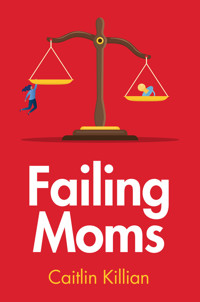
While many claim that being a mom is the most important job in the world, in reality motherhood in the United States is becoming harder. From preconception, through pregnancy, and while parenting, women are held to ever-higher standards and are finding themselves punished - both socially and criminally - for failing to live up to these norms. This book uncovers how women of all ethnic backgrounds and socioeconomic statuses have been interrogated, held against their will, and jailed for a rapidly expanding list of offenses such as falling down the stairs while pregnant or letting a child spend time alone in a park, actions that were not considered criminal a generation ago. While poor mothers and moms of color are targeted the most, all moms are in jeopardy, whether they realize it or not. Women and mothers are disproportionately held accountable compared to men and fathers who do not see their reproduction policed and almost never incur charges for "failure to protect." The gendered inequality of prosecutions reveals them to be more about controlling women than protecting children. Using a reproductive justice lens, Caitlin Killian analyzes how and why mothers are on a precipice and what must change to prevent mass penalization and instead support mothers and their children.
Sie lesen das E-Book in den Legimi-Apps auf:
Seitenzahl: 495
Veröffentlichungsjahr: 2023
Ähnliche




















Table of Contents
Cover
Dedication
Title Page
Copyright Page
Acknowledgments
Introduction
1 All Moms Are Bad Moms
Nineteenth century
Twentieth century
Anxiety in twenty-first century mothering
Images of modern mothers
2 Preconception Discrimination
Egg versus sperm donors
Men’s neglected role in reproduction
Preconception care – for women only
Beyond the individual
How to do conception right
3 Criminal Pregnancies
Fetuses over women
“Chemical endangerment”
Misguided fears about alcohol use during pregnancy
Slippery slope
4 “Neglectful” Mothers
Overbearing Americans
Neglect
Class and race
Helping our children and ourselves
5 Mothers of Maimed and Murdered Children
Mothers who kill
When the mom gets more time than the attempted murderer
Fathers off the hook
Costs beyond those convicted
Even in a “society of saints” there will be deviants
6 Fighting Back, Fighting for the Future
Accepting “good enough” parenting
Moving from individual to collective responsibility
Fixing real problems instead of worrying about fake ones
Help instead of punishment for those who need it
Fathers and other caregivers
Better social policies
Conclusion
References
Index
End User License Agreement
Guide
Cover
Table of Contents
Begin Reading
Pages
ii
iii
iv
vi
vii
viii
1
2
3
4
5
6
7
8
9
10
11
12
13
14
15
16
17
18
19
20
21
22
23
24
25
26
27
28
29
30
31
32
33
34
35
36
37
38
39
40
41
42
43
44
45
46
47
48
49
50
51
52
53
54
55
56
57
58
59
60
61
62
63
64
65
66
67
68
69
70
71
72
73
74
75
76
77
78
79
80
81
82
83
84
85
86
87
88
89
90
91
92
93
94
95
96
97
98
99
100
101
102
103
104
105
106
107
108
109
110
111
112
113
114
115
116
117
118
119
120
121
122
123
124
125
126
127
128
129
130
131
132
133
134
135
136
137
138
139
140
141
142
143
144
145
146
147
148
149
150
151
152
153
154
155
156
157
158
159
160
161
162
163
164
165
166
167
168
169
170
171
172
173
174
175
176
177
178
179
180
181
182
183
184
185
186
187
188
189
190
191
192
193
194
195
196
197
198
199
200
201
202
203
204
205
206
207
208
209
210
211
212
213
214
215
216
217
218
219
220
221
222
223
224
225
226
227
228
229
230
231
232
233
234
235
236
237
238
239
240
241
242
243
Dedication
To Gregory Wright, my partner, and the blended family we are lucky to have, Gabriel Benhaïm-Killian, Noah Benhaïm-Killian, Harrison Wright, and Stella Wright
Failing Moms
The Social Condemnation and Criminalization of Mothers
Caitlin Killian
polity
Copyright Page
Copyright © Caitlin Killian 2023
The right of Caitlin Killian to be identified as Author of this Work has been asserted in accordance with the UK Copyright, Designs and Patents Act 1988.
First published in 2023 by Polity Press
Polity Press
65 Bridge Street
Cambridge CB2 1UR, UK
Polity Press
111 River Street
Hoboken, NJ 07030, USA
All rights reserved. Except for the quotation of short passages for the purpose of criticism and review, no part of this publication may be reproduced, stored in a retrieval system or transmitted, in any form or by any means, electronic, mechanical, photocopying, recording or otherwise, without the prior permission of the publisher.
ISBN-13: 978-1-5095-5772-1
ISBN-13: 978-1-5095-5773-8(pb)
A catalogue record for this book is available from the British Library.
Library of Congress Control Number: 2023931392
by Fakenham Prepress Solutions, Fakenham, Norfolk NR21 8NL
The publisher has used its best endeavors to ensure that the URLs for external websites referred to in this book are correct and active at the time of going to press. However, the publisher has no responsibility for the websites and can make no guarantee that a site will remain live or that the content is or will remain appropriate.
Every effort has been made to trace all copyright holders, but if any have been overlooked the publisher will be pleased to include any necessary credits in any subsequent reprint or edition.
For further information on Polity, visit our website: politybooks.com
Acknowledgments
Paradoxically, or not, given the subject of this book, I could not have written it without my mother’s death. I dedicated my first book to my parents, Sylvia and Larry Killian. I wrote most of that book during graduate school when I had no children and finished it during the beginning of my career as a sociology professor when I had only one child. Over a decade later, raising four kids, teaching, doing committee work, and juggling other research projects, I had the idea for Failing Moms. I wrote part of an introduction, a few pages of chapter 2, and an article with Emma Thomas, now a section of chapter 3,“Fetal Alcohol Syndrome Warnings: Policing Women’s Behavior Distorts Science,” published in 2020 in the Journal of Applied Social Science 14(1): 5–22. That was all I could manage as I bounced from crisis to crisis with my elderly parents. I could do some research during the summers and winter breaks, but I never had a sustained period to sit down and write. Time for the book was in even shorter supply the following year when I suddenly found myself responsible for my mother after my father, her primary caregiver, died unexpectedly. I was the epitome of the sandwich generation. A year later, my mother was diagnosed with cancer. She died a few months later in August, and I had a fall semester sabbatical. A full draft of this book was finished by late December.
I have several people to thank for their support along the way. My partner, Gregory Wright, and my best friend from high school, Anna Boardman, read chapters of the manuscript. My friends Nancy Mahl and Kirsti Morin both read an entire draft of the book and gave me valuable feedback. Alejandra Lopez provided encouragement and advice and looked over a version of my proposal. Bill Winders jumped on the phone at a moment’s notice when I was trying to make some decisions about how to write about a source. I also had a sounding board in colleagues and friends from Drew University in different disciplines, including Christopher Andrews, Angie Calder, James Carter, Christina McKittrick, and Jennifer Olmsted. Reading background literature for the book on the porch of Tina McKittitrick’s lake house during a long weekend trip to the Adirondacks was particularly nice.
My friends at Drew and I traded maternity clothes and child care when our kids were little and we were working toward tenure. Especially memorable was the time I watched three toddler boys in Tina’s office in the biology department one afternoon when the daycare center closed for a snowstorm but the university remained open. I was the only mother who did not have to work at that time, but I ran out of diapers and had to improvise, so maybe my colleagues were the lucky ones. My friends from college also helped me parent. Kira Vol took a train from DC to New Jersey late at night and watched my eldest while I was in the hospital giving birth to the baby who was already dead. She knitted the blanket Elijah was buried in. Nicole Jassie helped get me through both of my sons’ bar mitzvahs. Both Kira and Nicole listened patiently to my complaints about the vicissitudes of parenting a teenager. I also want to thank Lee Akst, Tracy Andrews, Amy Duberstein, and Irene Oh for their ongoing friendship. Even if we don’t see each other, or even talk for a while, we always reconnect as close as where we left off. Bisous to Kahina Hadim and Veronique Delmas Ognar for their long – and bilingual – friendship. Darcy Draeger and Stacy Strum, my fellow volunteers for democracy, deserve kudos for all they do working for the greater good while parenting, dealing with relatives’ health issues, and managing life in general. My Zumba crew, especially Jane Curtis, Aleida Heiman, Vijaya Kesanakurthy, and Linda Sharland, extended homes and arms (oy, Ana’s arm sequence hurts!) when I joined the community. A big thank-you to all my friends not listed here as well. I cherish them. Talking honestly about challenges with kids, having collective outlets, and being there for one another – I wish every mother had the social support I’ve been fortunate to have.
This book is about the worst things mothers can face and the support moms need and don’t get, and Polity believed it was important for people to get this message. I thank Karina Jákupsdóttir, my editor, for the many meetings and for always genuinely listening as she guided this book to fruition, as well as my copy-editor Gail Ferguson, the design team, and other production and marketing staff at Polity. I am also grateful to the anonymous reviewers who gave of their time, probably while working and possibly while parenting as well. It takes a village of friends and strangers to make a book.




