


Erhalten Sie Zugang zu diesem und mehr als 300000 Büchern ab EUR 5,99 monatlich.
- Herausgeber: Wilton Square
- Kategorie: Geisteswissenschaft
- Sprache: Englisch
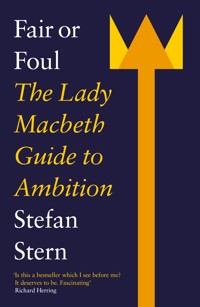
Stefan Stern draws on the major themes of Macbeth and discusses how they can be applied to ambition in modern life. From the success of the first US woman Vice President, Kamala Harris, the obstacles she faced and the possibilities that still lie ahead, to Boris Johnson's young aspirations to be 'world king' and the pathological intensity of his ambition, Stern considers the careers and personal lives of politicians, sports stars and business people, to name a few, to illuminate this strange and powerful driver. Discover how ambition and success work together, how attitudes have shifted over time, and how gender roles have an impact on our goals. Incisive, contemporary and accessible, this book is for anyone who is looking for a change of direction or emphasis on how to move forward. It will also provide consolation, amusement and plenty of insightful meditations on the complex nature of ambition.
Sie lesen das E-Book in den Legimi-Apps auf:
Seitenzahl: 247
Veröffentlichungsjahr: 2026
Das E-Book (TTS) können Sie hören im Abo „Legimi Premium” in Legimi-Apps auf:
Ähnliche



















‘This is a book which is rich, witty and deeply thoughtful (not unlike a Shakespeare play). Stefan Stern has created a timely book about the meaning of life and work out of a timeless work of art. It’s brilliant’ Julia Hobsbawm, Bloomberg commentator and author of The Nowhere Office
‘What does success mean in the era of Elon Musk? How should we think about work when so many white-collar employees are at home? Those important questions are tackled in this warm, humorous book. Long-time fans of Stefan Stern’s writing know him for making wise mischief at the expense of business gurus and seven-figure CEOs. Now he shows why our highest ambitions should be not for ourselves but each other. Hear hear’ Aditya Chakrabortty, Senior Economics Commentator, Guardian
‘A probing yet compassionate meditation on ambition and its discontents, revealing with wit and energy the perpetual battle in the human heart between greatness and goodness. Fair or Foul offers a vivid tour through business, politics and culture that will help you find the elusive terrain where ambition spurs achievement yet retains its humanity’ Daniel H. Pink, #1 New York Times bestselling author of Drive, When and The Power of Regret
‘Deliciously thoughtful – a beguiling and scholarly guilty pleasure. Stefan’s jaunty writing style enables him to smuggle in some very subtle ideas, which are challenging both personally and politically. A book to read quickly, and then re-read slowly’ Laura Empson, professor in the management of professional service firms, Bayes Business School (formerly Cass), University of London
‘I have seen ambition close up and it is not always a pretty sight. Stefan Stern lifts the lid on the dark side, but also finds time to consider the good that ambition can do. This book may not get you to No.10 but it could help you lead a happier and more fulfilling life’ Ayesha Hazarika, broadcaster and journalist
‘Ambition cuts both ways, it fuels dreams and fatal errors too. Yet oddly, we don’t talk about it. Stefan Stern’s vital, brilliant new book brings ambition back into the conversation. A must-read for anyone asking themselves what they really want and what they are willing to do to get it’ Herminia Ibarra, professor of organisational behaviour at London Business School and author of Act like a leader, think like a leader
‘Funny, clever, wise – and damned useful’ Lucy Kellaway, former Financial Times columnist and founder of the Now Teach charity
‘Ambition, as Lady Macbeth knows, can be an illness. But it can be a great energy source too. The most interesting ambition is the most personal – like Tim Minchin’s aim to be “unpigeonholeable”. So the important question is: what are you ambitious for?’ Margaret Heffernan, keynote speaker and author of Wilful Blindness
‘This elegant book takes you by the hand and helps you explore this contested terrain of ambition, with many wise friends, instructive examples, and literary resources to guide you on the way. It is a joy to read, and very wise’ Eve Poole, author of Robot Souls
‘Stefan Stern is the Pep Guardiola of ambition, writing a blinder to explain exactly what drives us. He too is a winner’ Kevin Maguire, associate editor of the Daily Mirror, a New Statesman columnist and a regular guest on Good Morning Britain
‘By exploring ambition through one of our best-known plays, Stefan Stern invites us to view both anew. But he does more than that. With erudition (Aristotle, Freud and many others join Shakespeare on these pages), with wit (this book is sometimes laugh-out-loud funny) and with the wisdom gained from decades of observing those who get to the top (or don’t), he helps us examine not just what work means to us, but life too’ Michael Skapinker, former Financial Times columnist and author of Inside the Leaders’ Club: How top companies deal with pressing business issues
‘A wonderfully readable meditation on one of the most potent and treacherous drivers of human behaviour … This isn’t primarily a business book. But if every would-be billionaire or thrusting CEO were to read it (let’s hope), the world might be a less fractured, more hospitable place’ Simon Caulkin, former management columnist for the Observer
‘This is the book Stefan was born to write: a parle of a lifetime’s passion for “the play” with decades observing the vicissitudes of ambition. The result is magnificent. Across the terrain of illness, success, enough – Stefan observes, pokes, explains. A must read for anyone with ambitious aspirations: or those who observe from afar. And I guess that’s everyone’ Lynda Gratton, professor of management practice, London Business School and co-author of The 100 Year Life
‘You won’t read a more entertaining, lively and thoughtful book in the field of business and leadership than Fair or Foul: The Lady Macbeth Guide to Ambition. Ambition, as a construct, has been absent from the business literature, but this book, combining behavioural insights through the lens of Macbeth, is so novel, very well written and an absolute pleasure to read. This is a MUST-read for anybody interested in an important aspect of human behaviour, AMBITION!’ Professor Sir Cary Cooper, ALLIANCE Manchester Business School and Chair of the National Forum for Health & Wellbeing at Work
For Rachel, Josie and Rosa
And in memory of John Murray, a good, ambitious man
With special thanks to the patrons of this book: Jane Christopherson Simon Stern Adam Thow
Contents
Cover
Title Page
Dedication
Prologue
1
.
Illness
2
.
Success
3
.
Spur
4
.
Unsex
Theatrical Interlude
5
.
Whole
6
.
Brief
7
.
Enough
Last
Notes
Acknowledgements
A Note on the Author
Copyright
Cover
Contents
Begin Reading
Prologue
… Two truths are told,
As happyprologuesto the swelling act
Of the imperial theme.
(Macbeth, Act I scene iii)
What is ambition?
Here are a few attempts to define and describe it:
A person’s desire for recognition and importance … a strong desire for self-actualization and self-development … striving to be better than others … sympathy for the people who have achieved a lot in life … willingness to work in one’s free time and weekends to achieve the goal …1
Ambition can be thought of as an ego defence, which, like all ego defences, serves to protect and uphold a certain notion of the self … it is not necessary to be ambitious to be high-reaching, or indeed to feel alive.2
Ambition among employees is generally positive and indirectly beneficial for individual job performance evaluations, but also poses some risks to organizational retention management.3
There is no reason to believe that the man’s ambition is more powerful than the woman’s. Where losing and winning are concerned, in situations defined as equally competitive for both boys and girls, there are no differences in achievement striving.4
Ambitious people are energetic, status-seeking, determined to reach their goals, and rarely procrastinate or lose sight of their mission. It is this particular syndrome that predicts career and life success. Furthermore, we suspect that missing any one of these four characteristics will have a significant negative effect on career success.5
According to Freud, ambitious people are necessarily neurotic and potentially father murderers. From the Jungian perspective, ambitious people suffer from a regressive restoration of the persona which blocks their potential for personal growth. According to Adler, ambition is a neurotic defence against low self-esteem.6
The mind … of an ambitious man is never satisfied; his soul is harassed with unceasing anxieties, and his heart harrowed up by increasing disquietude.7
Ambition begins with understanding the aspirations you have for yourself and your team. These aspirations are often expressed in the form of goals that define your desired outcomes. Knowing how far to reach for any given aspiration is key to harnessing healthy ambition.8
Ambition is nothing but a displacement activity for unhappy people.9
[Ambition is] an honest expression of the mountains one wishes to climb10
If you’ve picked up, stolen or (preferably) bought this book, I presume it is because you find the topic of ambition intriguing. And why wouldn’t you? Ambition is something most of us have to reckon with, or deal with, at some stage of our lives.
Whether it is in the run-up to a set of important exams at school or college, or before a job interview, or an extended work assignment, the question of ambition inevitably arises. How much do you really want something? (Whether it is success, recognition, or money.) What sacrifices are you willing to make? How hard are you prepared to work? What corners could you cut, and what ethical boundaries might you cross? What levels of sycophancy are you able to muster?
In a long career – they still exist, I think – employees will inevitably wonder ‘should I stay or should I go?’ Loyalty to an organisation may be rewarded. But it may not be. And the ambitious have to calculate whether long service is worth it. Will patience be a virtue, or a mistake? It might turn out to be a form of masochism.
These are some of the questions ambitious people will ask themselves, whether consciously or not. We should have some answers to them by the time you reach the closing pages.
You may have picked this book up because of its title. So perhaps I should explain straight away what this book is and what it is not.
It is not really a book about Lady Macbeth, or Macbeth, although both characters will feature fairly prominently. I first read and then saw Shakespeare’s play about forty years ago. In 1987 as a student I directed a production of it.fn1 The play has remained lodged in me. It is, I think, the most powerful story ever told about ambition and (spoiler alert) the perils of pursuing ambition too far.
But why Lady Macbeth in the title, and not the husband, who is the play’s protagonist? She is sometimes simplistically thought of as a purely evil person, almost a fourth witch to complement the three ‘weird sisters’ Macbeth meets early on in the play. But she is much more interesting and complicated than that. And, arguably – I will argue it! – she has a more sophisticated understanding of human nature, and society, than she is often given credit for.
So the title of this book is a kind of ironic homage to her. But it is tongue-in-cheek, and slippery – a message to its author as much as to its readers. I hope that the discussion which follows contains a shaded and even-handed account of what ambition is, the good and the bad of it.
Two other things that this book is not. It is not a work of political economy. That would have required me to take a narrower or more reductive view of the basic economic necessity to work and earn, preferably well. I will not spend too much time on the economic facts of life, even though they are real, and unavoidable. Here, I am trying to consider a few characteristics of ambition in the round.
Nor is this book a ‘lockdown project’, or a Covid-inspired work in any way. Of course, the shattering experience of the pandemic has caused many people to reassess their lives and attitude to work and success. Priorities have been recalibrated. Some have spoken of having a new perspective on life, and this is all to the good.11 But, as hinted at above, I have personally been wrestling with the question of ambition for most of my adult life. This subject is not a new venture for me. The Macbeths have never been far from my mind.
The Macbeth theme remains strong and timeless because Shakespeare’s understanding of human nature is so rich and profound. (No wonder one twentieth-century commentator, the Polish critic Jan Kott, published a book called Shakespeare Our Contemporary [1961].) Almost everything you need to know about ambition is contained within this play. So my seven chapters consider different aspects of ambition, all starting with a few lines from the play which touch upon that element of it. For those of you who want a bit more Shakespeare for your money, I offer a Theatrical Interlude between Chapters Four and Five, a bit of (more-or-less) old-fashioned commentary (or Practical Criticism) of Act I scene vii, which is clearly the best dramatic scene ever written in the English language. I will not be taking questions at this time.
Who is this book for? It is for ambitious people, naturally. (Welcome, ambitious people!) But it is also for unambitious people. It can be read, I hope, by anyone, whatever stage in life they have reached. It is a book for those who are just starting out in their careers, full of dreams and anticipation, or for others who have reached the top but are now asking if it was all really worth it. This is a book for those who worry that they may not have achieved enough in life and wonder if they are right to feel that way. It is a book for others who crave reassurance that they were wise not to push too hard for a promotion or for another more elevated or more glamorous role. This might even be a book which rescues potential Macbeths from making a fatal mistake.
But, candidly, this is also a book which I wanted to write for myself. Because most of the above questions or uncertainties apply to me too. In my mid-fifties, I now have enough life to look back and reflect on, and also (I hope) a decent amount of living still to do. Where am I headed? Have I made and am I making the right choices? I will try to let you know, if you’re interested, by the time you get to the final chapter.
The world needs ambitious people. We have to be ambitious – to solve problems and to make life better; to make human life sustainable. It is healthy and natural for individuals to want to achieve more and improve the condition of their lives. Ambitious scientists helped us to emerge from Covid lockdowns. Ambitious businesspeople will create new jobs and industries. Ambitious parents want the best for their children, and so on. It would be odd to denigrate ambition, or dismiss it as unnecessary, unattractive or wicked.
And yet an excess of ambition, and selfish ambition, can clearly do a lot of harm. It can make people unhappy. It can destroy lives and organisations. It could destroy the planet. From a writer’s point of view, crazed ambition can also provide us with endless morality tales and dramas: the best stories, and a renewable source of Schadenfreude.
So with Lady Macbeth as our guide – sort of – let us consider what ambition is and what we need to understand about it.
This is, I hope, an ambitious book. Let’s aim high – but not recklessly high. I am not saying ‘be careful what you wish for’; rather, ‘be thoughtful about what you wish for’. If you are up for that discussion, read on.
1. Illness
… Thou wouldst be great;
Art not without ambition, but without
Theillnessshould attend it
(Act I scene v)
It had been a hard day’s night. Macbeth and Banquo, generals in King Duncan’s army, were returning from battle, where they had fought heroically. But then: surprise, and temptation! They meet three witches on a blasted heath, who declare that Macbeth will become king and that Banquo will be the father of future kings. Macbeth recognises immediately that this apparently happy prediction is problematic:
This supernatural soliciting
Cannot be ill; cannot be good
(Act I scene iii)
That’s the trouble with good news: you never know if you should really take it at face value. What’s the catch? There’s a catch, right?
What does it take to spark ambition, to trigger the appetite to strive for more? For Macbeth it was this chance encounter – but was it a chance encounter? – with the ‘weird sisters’. And yet even as he wrote home to tell his wife about this exciting news, she had doubts about his fitness for the task ahead: killing the king and seizing the crown. While waiting for him to return Lady Macbeth gives voice to her concerns:
… Yet do I fear thy nature:
It is too full o’th’milk of human kindness,
To catch the nearest way. Thou wouldst be great;
Art not without ambition, but without
The illness should attend it
(Act I scene v)
Illness. Sickness. Malady. It might seem an odd way of describing the healthy desire to rise and achieve. But Lady Macbeth is on to something. Rana Foroohar has written about the predisposition many successful types have towards paranoia: ‘According to some professionals I’ve spoken to about this topic, many chief executives, urban elites and generally hard-charging, goal-oriented types fit somewhere along the paranoid spectrum … Empathy, guilt and time can be in short supply in the paranoid’s world, a phenomenon that hasn’t been helped along by social media and high speed, digital culture.’1
Paranoia is one kind of illness. But I doubt that this is quite what Lady Macbeth had in mind. Rather, she was thinking about the almost insane, obsessive quality that the truly ambitious, in her view, tend to possess. You don’t have to be crazy to murder the monarch, but it helps. Healthy ambition might settle for second or even third best. But if ambition is attended by ‘the illness’, then only the first and biggest prize will do. And even then that might not be enough. You probably won’t cure the illness with a single achievement. It is a chronic condition.
When the actor Kit Harington, famous for playing the role of Jon Snow in the TV series ‘Game of Thrones’, took on another Shakespearean lead, Henry V, in London in 2022, he noticed a similar unending quality in that character’s intense make-up. ‘Henry has this one line where he says: “Think’st thou the fiery fever will go out, with titles blown from adulation?” That question of, “Will this thing inside that’s wrong go away, if I get adulation?” That really spoke to me.’2
Nice, sensible people may recoil a little at this idea. Surely we can have reasonable, stretching ambitions without becoming unhinged or deranged? I am sure we can. Jacinda Ardern, the former prime minister of New Zealand, impressed many with her calm and dignified leadership during the Covid crisis. Sebastian Coe reached the top in sport and sports administration without obviously ‘losing it’ (and we will meet him again in the closing chapter). But look at the majority of the highest, biggest achievers. How nice and sensible are they? Reflecting on Walter Isaacson’s biography of Steve Jobs, the driven founder and genius behind Apple, John Naughton wrote, ‘Reading it, you wouldn’t want to work for Jobs. On the other hand, you’re glad that people like him exist.’3 In the workplace, most of us would try to avoid having a boss like Jobs.fn1 While entrepreneurs typically possess many positive characteristics such as passion, drive and an ability to inspire, they can also be self-obsessed workaholics who demand perfection and struggle to see other people’s point of view. Michael Crick alluded to this in an interview with the Observer:
I think two-thirds of really successful high-achievers are charming monsters … Alex Ferguson [the football manager] is a perfect example. When he is charming, he’s a delight, totally thoughtful and considerate. And yet he can be an absolute bastard, utterly ruthless, cut off people who were his friends, exactly as [Nigel] Farage has done. That combination has taken many people to power. I’ve no doubt even Hitler, Stalin and Saddam Hussein had certain charms.4
And yet keeping the boss happy, even when they are dictatorial and hard to please, is clearly a good career move. As Professor Jeffrey Pfeffer of Stanford’s Graduate School of Business has argued in his extensive study of power at work (for example, his book Power: Why Some People Have It – and Others Don’t5), it is only natural for a boss to prefer an apparently admiring and supportive colleague to one who is negative, unco-operative and openly sceptical about the leadership on offer.
This presents a practical challenge to those who are ambitious at work: how much cognitive dissonance can you live with, before it does you lasting harm? A certain amount of sycophancy and obfuscation – ‘Up to a point, Lord Copper’ – may be needed. But living a lie is not good for your mental health or, if you’ve got one, your soul. Unless, of course, you are really, really ambitious. Such people seem to have a higher tolerance for ‘sucking it up’. It is a kind of resilience, albeit not necessarily an attractive kind.fn3
It is also intimately connected to an individual’s capacity to live with deceit. Fascinating psychological research has revealed how liars get better at lying, and more used to it, the more they do it.6 They feel no embarrassment, or pain. To some extent they self-select for those environments where you have to be something of a politician. They have the illness all right. Poor Cordelia tells her father, in Act I scene i of King Lear:
I want [i.e. lack] that glib and oily art
To speak and purpose not.
It doesn’t end well for her. On the other hand, her slippery sisters don’t end up any happier either.
Politics
No one has, as yet, formally accused Boris Johnson of harbouring murderous intent, certainly not on the same scale as history’s infamous dictators. (There was a disputed ‘let the bodies pile high’ remark, possibly made at the height of the Covid pandemic.) But few people in recent years, in Britain at least, have manifested ambition of such pathological intensity as the former prime minister. (Such is the extent of his ambition that it is risky to commit to saying anything about him in writing so far ahead of publication. He could have had a second or even third term as prime minister by the time you get to read this.)
What explains the apparently almost irresistible force that is B. Johnson Esq.? A former boss, Sir Max Hastings, is (these days) pretty damning. ‘He is a fundamentally weak man, save in his personal ambition,’ he has written.7
Johnson once offered his own self-assessment, when he went on BBC Radio 4’s Desert Island Discs in 2005. ‘My silicon chip, my ambition silicon chip, has been programmed to try to scrabble up this cursus honorum, this ladder of things,’ he said.8
A biographer, Tom Bower, has suggested that the so-called Phaeton complex,9 described by the French philosopher and psychoanalyst Maryse Choisy, may help us understand some of Johnson’s behaviour.10 This psychological condition arises when a child suffers cruelty and is traumatised by the actions of at least one parent (Bower points the finger at Johnson’s father, Stanley). Fame and adulation may offer some solace to those afflicted with this complex.
A study in the 1970s by the Jamaican writer and politician Lucille Iremonger found that 62 per cent of British prime ministers between 1809 and 1940 had lost one or both parents by the age of fifteen, whereas only between 10 per cent and 15 per cent of fifteen-year-olds on average were similarly affected in that period.11 (Johnson senior was not dead during his son’s youth, but intermittently absent.) Hugh Berrington, a politics professor from Newcastle University, later observed that the Phaeton complex led sufferers to be less sociable and tolerant, instead becoming ‘ambitious, vain, sensitive, lonely and shy’. (These are the sorts of adjectives that even his friends – and Johnson’s circle of true friends is very small – use about him.) ‘If it was lonely at the top, it is because it is the lonely who seek to climb there,’ Professor Berrington said.12
That is one theory. It is also worth noting that his closest family members call Johnson by his real first name, Alexander (Al for short), and not Boris, which is a middle name, and one which Johnson adopted when he was a schoolboy at Eton. It has always seemed to me that the name ‘Boris Johnson’ should be presented as I did there: within quotation marks. ‘Boris Johnson’ is, I think, an invented persona, a defence mechanism against a cruel and threatening world. It is also a variety act which has gone down very well with some audiences and has helped to build a career and a reputation, of sorts. ‘Boris Johnson’ is a vehicle for Al’s ambition.
A more charitable view has been offered by the journalist Tom McTague, who admittedly has spent a lot more time with Johnson than this author has. In a long piece for the Atlantic magazine McTague sought to explain what really motivated him:
Johnson has written that the central struggle of civilization is that which is waged between ‘the powerful men and women who want their deeds recorded, and the literary figures who are able to record them … Life’s goal, in other words, is not avoiding temptation before some kind of final judgment, but achieving the ‘deathless fame’ of doing great things and having them recorded. Those who pretend otherwise – or even believe otherwise – are, in Johnson’s mind, necessarily ridiculous. And therefore those who get themselves worked up by an extramarital affair there, or a scandal here, fail to grasp the precious, fleeting nature of life that must be grabbed and lived before it is snuffed out. This is not, principally, a moral outlook.13
This may get nearer to the truth. Johnson is a powerful operator partly because he obeys few conventions of civilised behaviour. Shamelessness is his superpower. He grasps opportunities when he sees them, and plays by nobody else’s rules other than his own. To him morality is so often simply pious humbug – except when it is him getting the rough treatment. Carpe diem, as the classicist might say. Chaos is nothing to fear. Something (and someone rich) will turn up to bail him out. It has always happened before. Such blasé confidence in the face of all evidence is more than mere denial. It is a psychological condition.
Only naïve people would be surprised that politics might attract the highly ambitious. But must it be the scene of so much questionable behaviour? Brian Klaas, associate professor at University College London, wrote the book Corruptible: Who Gets Power and How It Changes Us,14 which in part answers this question. He explained in the New Statesman what conclusions he had come to after researching and writing the book.
Our modern society has made it extremely unattractive to normal, decent human beings to end up in positions of power … I think there’s lots of people who think – ‘I could make the world a little better, but the cost might be enormous to me.’
I conducted 500 interviews with some of the worst people around – and they weren’t normal. There are quirks about them, there’s something wrong with some of them, but they’re all very, very good at getting into power. And that’s not an accident.
Dr Klaas also pointed out that these successful ambition monsters benefit from having a compliant audience as well as active helpers.
There are ways you can counteract that tendency or amplify it, and I think we’re unfortunately amplifying it quite a lot … only the power hungry compete, so it’s no surprise you end up with these corruptible people in power … [But] you can’t be a leader if you don’t have followers. So as much as we complain about the leaders we have, we have to acknowledge, at least in a democratic society, that we put them in there. That’s not about the bad people, that’s not about systems. That’s about us.15
A slightly more hopeful account of politics is put forward by Sir Chris Bryant, a Labour MP. Excitable as a young politician, his outlook has matured. Now he is thoughtful about what he wishes for, and distinguishes between good ambition and bad ambition, as he explained on BBC Radio 4:
I think I’ve always wanted to climb the greasy pole … [as a new MP] I was running at the gate like a madman – there’s good ambition and bad ambition. I think I wanted everyone to see me when I first arrived in parliament, and in particular the prime minister, so he would make me minister for tiddlywinks or whatever. [Now] I much prefer getting things done … that is good ambition, getting things done.16
Even in the wake of the horrible murder of another MP, Sir David Amess, in October 2021, the conclusion of Paul Goodman, himself a former MP, was that little could deter the truly ambitious from pursuing a career at Westminster: ‘In the raw trade-off between ambition and caution, ambition will doubtless continue to win out, and there will be no shortage of people willing to come forward to stand for Parliament. At least for the moment.’17
History would seem to bear that judgment out. Ambition provides a kind of medicinal support, an energy boost for those undermined by frailties or infirmities, physical or psychological. As Lord (David) Owen showed in his 2008 book, In Sickness and In Power: Illness in Heads of Government During the Last 100 Years,18




