


Erhalten Sie Zugang zu diesem und mehr als 300000 Büchern ab EUR 5,99 monatlich.
- Herausgeber: The History Press
- Kategorie: Geisteswissenschaft
- Sprache: Englisch
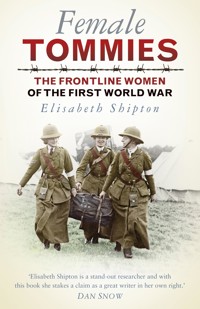
The First World War saw one of the biggest ever changes in the demographics of warfare, as thousands of women donned uniforms and took an active part in conflict for the first time in history.Female Tommies looks at the military role of women worldwide during the Great War and reveals the extraordinary women who served on the frontline. Through their diaries, letters and memoirs, meet the women who defied convention and followed their convictions to defend the less fortunate and fight for their country. Follow British Flora Sandes as she joins the Serbian Army and takes up a place in the rearguard of the Iron Regiment as they retreat from the Bulgarian advance. Stow away with Dorothy Lawrence as she smuggles herself to Paris, steals a uniform and heads to the front. Enlist in Russia's all-female 'Battalion of Death' alongside peasant women and princesses alike. The personal accounts of these women, who were members of organisations such as the US Army Signal Corps, the Canadian Army Medical Corps, the FANY, WRAF, WRNS, WAAC and many others, provide a valuable insight into what life was like for women in a male-dominated environment.
Sie lesen das E-Book in den Legimi-Apps auf:
Seitenzahl: 543
Veröffentlichungsjahr: 2014
Das E-Book (TTS) können Sie hören im Abo „Legimi Premium” in Legimi-Apps auf:
Ähnliche




















In memory of my grandmother, Catherine O’Donnell, who served in the WAAF from 9 April 1943 to 3 June 1946.
Contents
Title Page
Dedication
Foreword
Acknowledgements
1 Women and their Place in War
2 1914: The Western Front
3 Women Working in the Trenches
4 Women Doctors and the Military
5 Wartime Resistance and Espionage
6 Flora Sandes
7 Russia
8 British Women’s Services, from 1917
9 Women in the American Military
10 The Foundations for Women in Wartime
Bibliography
Plate Section
Copyright
Foreword
Today, the presence of women in war zones around the world causes little surprise. The tragic deaths of journalists Marie Colvin in Syria (2012) and Anja Niedringhaus in Afghanistan (2014) made international headlines, but the ability and suitability of both women to undertake the work they had chosen was unquestioned. Meanwhile, the deployment of female military personnel to Iraq, Afghanistan and elsewhere is taken for granted.
While women still form a minority within the armed forces of most nations, the range of roles they undertake has expanded. Servicewomen are encouraged to expect equal treatment in terms of pay and opportunities. The exclusion of women from close combat roles is gradually disappearing in countries such as Australia and the United States. In some nations, such as Israel, women are routinely conscripted to perform national service. Even in nations such as Afghanistan, where gender segregation is fundamental to national culture, women are encouraged to serve with the armed forces.
The origins of this contribution are rooted in the First World War, which served as a catalyst for change in virtually every field of life and on every continent. As we mark the centenary of the war, Elisabeth Shipton’s book provides a timely and important reminder of the war’s profound impact on the lives of women. For many, life would quite simply never be the same again. On the home front, widespread personal loss and privation were augmented by the terror of coming under fire from modern weapons delivered by long range aircraft, warships and artillery. While nursing remained an important option for women seeking an active role, the escalating demands of the war effort required many to undertake completely new roles, including service with the newly founded women’s branches of the armed forces. Their experience would inform that of women during the Second World War and continues to reverberate today.
Hilary Roberts
Research Curator of Photography, Imperial War Museum
Acknowledgements
Writing and researching this book has been a great experience from start to finish, but I could not have done this without the help and support of others. My first thanks go to Jo DeVries for commissioning the project and for her encouragement and enthusiasm throughout. Also to Sophie Bradshaw, Rebecca Newton and all the hard-working team at The History Press.
My friends and family have been key, from reading early drafts, to assisting with foreign translations and allowing me to bounce ideas off them, not to mention making me countless cups of tea whilst I wrote. In particular I would like to thank my father Alyn for not only translating a series of French books but for always being there to talk things through with me and offering plenty of sound advice. Also my mother Siobhan for all her endless encouragement, and Tom for keeping me going. I am extremely grateful to Melanie Hall for helping me with further translations and to Daniel Bellissimo for going out of his way to find and digitise text for me in the Italian National Central Library in Florence. I would also like to mention Mike Gallacher, Tony Dougall, Eileen North and Doctor Simon Smith for first setting me on the path of historical research. I wish to say a special thank you to Lieutenant-General Sir Christopher Wallace for sharing his extensive military knowledge and for all his support.
The British Library became a second home to me and I will forever be indebted to their extensive resources and high level of service. I’d like to thank the staff at the Templer Study Centre at the National Army Museum for being so helpful and accommodating. The Army Medical Services Museum in Aldershot received me with great generosity and enthusiasm and followed up by posting copies of documents to me with further suggestions for more material of interest. These along with other individual regimental museums (including my former employers the Royal Green Jackets (Rifles) Museum) are a great national asset and retain remarkable archives available to the public. I am also grateful to the Liddle Collection at Leeds University and the archival staff at the Royal Air Force Museum in Hendon, London. Thanks also to Jane Naisbitt, Carol Reid and their colleagues at the Canadian War Museum in Ottawa for providing copies of Grace MacPherson’s diaries and related material.
During my archival research, the most unforgettable experience was listening to the recorded interviews with individuals who lived through the First World War, courtesy of the Imperial War Museum’s collections. After reading the diaries of Mairi Chisholm and Florence Farmborough, to hear their voices really brought home what this generation of women achieved and their bravery. In addition to thanking the Imperial War Museum, which kindly provided photographs for this publication, I am particularly grateful to Hilary Roberts, Research Curator of Photography at the museum, for taking the time to talk to me about the role of women and photographic journalism. Last, but by no means least, I would like to thank Rosalie Maggio, co-author of Marie Marvingt – La Femme d’un Siecle for generously giving me permission to use a photograph of Marvingt from her own collection.
1
Women and their Place in War
The last half century has gained for women the right to the highest education and entrance to all professions and occupations, or nearly all. … By what toil and fatigue and patience and strife and the beautiful law of growth has all this been wrought? These things have not come of themselves. They could not have occurred except as the great movement for women has brought them out and about. They are part of the eternal order, and they have come to stay. Now all we need is to continue to speak the truth fearlessly, and we shall add to our number those who will turn the scale of equal and full justice in all things.
Lucy Stone, American suffragist, 1893.1
It took just four years, but the First World War saw one of the biggest ever changes in the demographics of warfare, as thousands of women donned uniforms and took an active part in conflict for the first time in history. When the First World War came to an end in 1918, both Britain and the United States had established women’s auxiliary corps to support their armed services. In 1917, Russia had gone a step further and formed several women’s combat units.
Nearly 200,000 women had, in one form or another, seen active service with British forces by 1918. At that date, over 57,000 women were serving in the Women’s Army Auxiliary Corps, 9,000 women in the Women’s Royal Air Force, and 5,450 in the Women’s Royal Naval Service. Between 70,000 and 100,000 women had worked during the course of the war as members of voluntary aid detachments and over 19,000 women had been military nurses. In the United States, over 16,500 women served with the American Expeditionary Force overseas, of which 233 were ‘Hello Girls’ working for the Army Signal Corps. Meanwhile over 12,000 women worked in the United States Navy and Marine Corps as Yeomen (F) and Marines (F).2 Furthermore, medical units (including a military hospital entirely staffed by women) were set up on both the Eastern and Western Fronts, and in Britain.
In 1918, the Canadian army proposed its own women’s army auxiliary corps, but the war ended before it was put into effect. At the same time, in Germany, the army set about establishing a women’s signal corps, women who would work as telephone, telegraph and radio operators. Whilst they did not see active service during the conflict, the idea was pursued over the following years, but the restrictions placed on Germany by the Treaty of Versailles ensured that all women were listed as civilian employees rather than being counted as military personnel.3
At the beginning of the twentieth century, it would have been inconceivable for women officially to enlist in the army or the navy of any of the participant countries, let alone take on a combative role. War was a man’s world in which men fought to defend their monarchy, their government, their home country and their families, including their women. In the past, women had gone to theatres of war but not in an official military capacity. For example during the Peninsular and Napoleonic Wars in the early 1800s, the European armies had numerous camp followers, among whom soldiers’ wives, mistresses and dependants (as well as prostitutes) would travel with the baggage train. Over time the term ‘camp follower’ became synonymous with a woman of loose morals. When the reporter Dorothy Lawrence acquired a uniform and managed to reach the Western Front trenches in 1915, she had to defend herself from accusations that she was a camp follower. In the Napoleonic era, some officers’ wives would travel to the Continent to be closer to their husbands, usually living in nearby towns. Sometimes they would watch a battle unfold from a distance, but they were no more than spectators. Yet as the nineteenth century progressed, and large pitched battles on open plains were replaced with trench warfare and modern firepower, this changed.
It was generally felt at the end of the nineteenth century that women did not belong in conflict and that they would not be able to cope mentally or physically with the harsh reality and violence of war. Of course, during the previous hundred years there had been a number of women who had challenged this view. In the early 1800s, James Barry, a young Irishman, went to medical school in Edinburgh, qualifying in 1812, before joining the British army. He is thought to have served during the battle of Waterloo before working across the world, holding posts in Cape Town, the Caribbean, the West Indies and Canada, attaining the senior rank of Inspector-General of Hospitals. It was only after Barry’s death in 1864 that it emerged he had been a woman, christened Margaret Ann Bulkley.4 During the American Civil War (1861–65) a number of women were known to have fought in combat. One of these was Sarah Edmonds who posed as a Union soldier called Frank Thompson. Like the British woman Flora Sandes in the First World War, Edmonds began the war as a nurse. There was also Jennie Hodgers who called herself Albert Cashier and continued to live as a man after the war, enjoying the benefits of her military pension.5
Although their stories intrigued audiences, these women were considered exceptional, their actions only justifiable under unique circumstances, and therefore not to be repeated. Society was generally suspicious of women who wanted to be like men, to act like them, to dress like them and to cut their hair short. It contravened the very image of womanhood and raised questions about female sexuality.6
Nevertheless, during the late 1800s and early 1900s there was a general movement in Europe, Australasia and North America for female equality, through education, occupation and the fight for women’s suffrage. It was not the case that all the women who took part in the First World War were educational reformers or political campaigners, but the movement created an environment in which women were able to take a significant step towards equality and go on to enlist in the armed forces. The war provided an opportunity for women to realise their potential, to demonstrate their capabilities and to use their skills on a grand scale.
The war also provided an opportunity for the suffragists to promote their cause, finally to persuade their governments that they, like men, should be allowed to vote. In the United States, the campaigners for women’s suffrage and equality organised the first National Women’s Rights Convention in 1850. In addition to suffrage, the attendees, both female and male, discussed a range of issues for women including education and employment opportunities, the right to earn the same as men and property law for married women. The conventions were held annually, except during the American Civil War, during which the campaign was suspended. Proponents of female suffrage had supported those arguing for the African-American vote, hoping that a new amendment could make both groups eligible. However the new legislation granting African-Americans the vote in 1866 referred to ‘male’ citizens, meaning that the wording excluded women. Two prominent suffragists, Susan B. Anthony and Elizabeth Cady Stanton, rejected the legislation and tried to encourage a petition for it to be reworded to grant universal suffrage, but to no avail.
It was at this point that a schism developed between America’s female suffragists following a dispute on strategy. In 1869 Cady Stanton and Anthony formed the National Woman Suffrage Association, which campaigned for multiple issues, whilst Lucy Stone founded the American Woman Suffrage Association. Unlike the National Association, Stone’s organisation worked alongside men and focused solely on suffrage. It was also less militant. Stone had married into the Blackwell family, but significantly decided not to change her name. Her husband, Henry Browne Blackwell, co-founded the American Woman Suffrage Association with his wife. His sister, Elizabeth, was the first American woman to qualify as a medical doctor. In 1890 the separate organisations combined to form the National American Woman Suffrage Association. Importantly, by 1900, Wyoming, Utah, Colorado and Idaho had all granted women suffrage. Then in 1917, a new group was formed, the National Woman’s Party, which saw the First World War as a significant opportunity to win federal legislation. The group believed that by suspending activity during the Civil War they had lost out in 1866, so this time they were determined to shout even louder, becoming more militant and even picketing outside the White House.7
The British suffrage movement also experienced a schism, resulting from a difference in approaches. In the later half of the 1800s, the main suffrage group in Britain was the National Union for Women’s Suffrage Society (NUWSS) which had most in common with Lucy Stone’s American Woman Suffrage Association. One of the most prominent figures in the NUWSS was Millicent Garrett Fawcett, whose husband Henry was a Liberal MP (as her father had been) and supported votes for women in a similar manner to Henry Browne Blackwell. In fact, it was Blackwell’s sister Elizabeth who had inspired Garrett Fawcett’s elder sister, Elizabeth Garrett Anderson, to study medicine, later becoming a British medical pioneer. Having grown up in an educated political household, Millicent Garrett Fawcett had a thorough understanding of the British political system and her approach was to use the law to support the emancipation of women.8
However there were others who were more impatient for change. The Women’s Social and Political Union (WSPU) was formed in Manchester in 1903. Frustrated at how little women had achieved so far, Emmeline Pankhurst and her daughters Christabel and Sylvia led the WSPU, adopting a more militant approach like that of National Woman’s Party in the United States. Yet unlike the NUWSS and the National Woman’s Party, the WSPU focused solely on obtaining the vote for women. In the early years this saw an exciting change of pace, with the promise of action. It attracted many members and in 1906 the headquarters moved to London.9 While the NUWSS members were typically working- and middle-class women, the WSPU appealed more to the upper classes.
Both the United States and Britain were still campaigning for suffrage when the First World War began. Yet women in New Zealand voted for the first time in 1893 and by 1902 Australia had granted women the federal vote followed by the state vote in 1911.10
While the actions of the suffragists helped bring women together and find a collective voice, at the same time it created outside resistance to these women, who were perceived as troublesome and demanding. When Field Marshal Lord Kitchener11 (Secretary of State for War 1914–16) was serving as a General during the Boer War (1899–1902), he encountered the human rights activist Emily Hobhouse. She campaigned relentlessly about the poor condition of the women and children held in concentration camps, demanding that Kitchener took responsibility for the situation. Her campaign did a great deal to turn public opinion against the war. Hobhouse was a source of intense irritation to Kitchener and he referred to her as ‘that bloody woman’. Her protests did little to convince Kitchener that women belonged in war. Men were seen to qualify for the vote as they were eligible to fight for their country, which entitled them to national citizenship. Therefore, when women campaigned to be militarised during the First World War, the state and military authorities were concerned that military service would promote their right to suffrage, prompting them to go to some lengths to explain their reluctance for women to become involved. When the shortage of manpower along the front became severe, the state and the military had to reconsider. In most cases it was made abundantly clear that women would only be employed as civilians, on contract. There was, however, no uniform policy: some women were enlisted and some were enrolled as civilians, while others worked for voluntary organisations brought under military control.
Education was another way in which women were attempting to close the gender gap and compete more fairly with men. Throughout the latter half of the 1800s, educational opportunities were expanding for women. As well as more investment and support from the government (particularly with elementary schooling), new academic schools were established, such as Queen’s College, London, founded in 1848 by Frederick Denison Maurice, a professor at King’s College, London. This was followed by the North London Collegiate School in 1850, Cheltenham Ladies’ College in 1854 and a series of schools established in 1872, and governed by the Girls’ Public Day School Trust. Yet ‘most of the new white-collar jobs, such as clerking and elementary-school teaching, were only open to those who had continued in education until the age of sixteen, a commitment not all families were willing to make.’12 In 1900 the majority of girls who were educated outside their homes attended small, privately-run schools rather than these new institutions. However the establishment of the grammar school system under the 1902 Education Act meant that by 1913 there were over 1,000 grammar schools making secondary education more readily available to the middle classes.13
By enabling women to obtain academic qualifications at school on a par with their male contemporaries, the education crusade naturally extended to gaining a wider acceptance of women at university. In Britain, new institutions of higher education began to be established, such as Bedford College, London, founded in 1849. Although Bedford was largely restricted to training middle-class women to be teachers and governesses, both of which were deemed suitable professions, it was a step in the right direction. By 1878, the University of London was accepting female students and by the early 1900s it had three women’s colleges. ‘In the mid-nineteenth century, women were permitted to take Local Examinations for entrance to Oxford, and Cambridge (tests that had been designed to help non-elite men qualify for admittance). They were not, however, permitted to matriculate or even to attend classes at first. Both universities resisted accepting female students long after other institutions had done so.’14 Emily Davies, who established Girton College with Barbara Bodicon and Lady Stanley, successfully campaigned for women to attend lectures at Cambridge from 1870, and five years later Newnham Hall was founded, while Oxford’s first two women’s colleges, Lady Margaret Hall and Somerville, were founded in 1889 and 1879 respectively.
Helen Gwynne-Vaughan (née Fraser), who was destined to be the chief controller of the Women’s Army Auxiliary Corps and then head of the Women’s Royal Air Force, embarked on her university career in 1899. She was the niece of Lord Saltoun, a Scottish peer, and had to battle hard to gain her family’s consent to study, as they ‘adhered to the view that education spoilt a girl’s chances of marriage’.15 However if she insisted on going, they felt that either Oxford or Cambridge would be the most suitable choice. Having just turned twenty-one, Helen passed the Oxford entrance exam, but then discovered that the university would not award any woman a degree. Instead she became ‘one of the first women students at King’s College’16 London, graduating with a degree in Botany in 1904. Continuing with her academic career and eventually earning a PhD, she became a vocal supporter of the women’s suffrage movement. Although she did not join any of the national societies, she did befriend Dr Louisa Garrett Anderson, and together they founded the London Graduates’ Union for Women’s Suffrage in 1909.
In America, one of the first co-education colleges was Oberlin College founded in 1833. At first women were only allowed to take preparatory courses but within four years women were allowed to undertake a full bachelor’s degree. The first women to do this graduated in 1841.17 From then on the educational opportunities for women in the United States continued to grow.
As more women began to attend university, a new career path opened up to women: medicine. Louisa Garrett Anderson was a member of this new generation of skilled women. Along with Dr Flora Murray, she founded the first military hospital in London in 1915, to be entirely run by women. The entry of British women into medicine had begun in 1859 when Louisa’s mother, Elizabeth Garrett (Millicent’s elder sister), was in her mid-twenties and met Dr Elizabeth Blackwell. Having gained her qualifications in the United States, Blackwell was the first female to be entered onto Britain’s General Medical Council Register when she returned to England to practise. Elizabeth Garrett was so inspired by this example that she was determined to qualify too. Her applications to the London teaching schools and universities in London and Scotland were rejected. Eventually she was accepted by the Society of Apothecaries, obtaining her licence in 1865. She was then entered onto the Medical Register and later earned an MD from the University of Paris in 1870. In 1871 she married, becoming Elizabeth Garrett Anderson, and established the New Hospital for Women in London, which was staffed solely by women, providing medical students and newly qualified doctors with the opportunity to practise.
Meanwhile, Sophia Jex-Blake led a small group of prospective medical students wanting to qualify in Scotland. In 1869, they succeeded in having female medical students admitted to Edinburgh University. However within four years the University overturned its decision. Whilst some of the students opted to go to Switzerland to finish their training, Jex-Blake herself responded by founding the London School of Medicine for Women in 1874. In 1883, Elizabeth Garret Anderson became dean of the school, forming close ties with the New Hospital and ultimately overseeing the school’s incorporation into the University of London.18 Jex-Blake later moved back to Edinburgh, where in 1886 she founded the Edinburgh School of Medicine for Women.19 One of the first students was Elsie Inglis, who, within a few years, along with some of the other students, had a public falling-out with Jex-Blake, and they founded a new, separate school in Edinburgh, the Medical College for Women, in 1889.20 Once qualified, Inglis took up the post of resident medical officer at Elizabeth Garrett Anderson’s hospital in London.
Female physicians were not widely accepted in what was, like the military, a predominantly male world. Garrett Anderson’s hospital was one of the few that offered women jobs and medical experience. Generally they found themselves specialising in women’s healthcare, such as gynaecology, as female patients began to show a preference for female doctors. It was more difficult for women to be accepted in other spheres of medicine such as surgery. Consequently, when war was declared in 1914, many female physicians offered their services to the army, because they were keen to have an opportunity to face new medical challenges and further their careers. They were flatly refused, however, and instead they looked to join one or another of the new voluntary organisations where their skills would be appreciated. One of these organisations was the Scottish Women’s Hospital formed by Elsie Inglis, which was to send medical units to France, Serbia and Russia.
At the same time as the women’s movement grew and developed, so did public philanthropy, resulting in many new voluntary organisations. One of the largest of these groups was the International Red Cross Organisation. The original concept had come from the Swiss Henry Dunant, who had been shocked by the large number of men who had died during the Battle of Solferino in Italy in 1859 owing to the lack of medical treatment. He proposed a humanitarian society to treat the wounded and a treaty in which governments recognised the neutrality of this society on the battlefield. This resulted in the founding of the International Red Cross Committee in Geneva in 1863 and the first Geneva Convention in 1864. After the formation of the International Red Cross, individual countries began to form their own national Red Cross organisations. Confusingly France had three separate branches. The first, the Society to Aid Wounded Soldiers (Societé de Secours aux Blessés Militaires) was formed following the Franco-Prussian war of 1870. However, members felt that it excluded women and, as it didn’t offer nursing training, a second, more female-dominant group was formed in 1879, the Association of French Ladies (Association des Dames Françaises). Then, in 1881, the Union of Women in France (Union des Femmes de France) was established, the third such organisation under the Red Cross.21 Other countries generally only had one national Red Cross service.
The mid-1800s also saw the formation of two other voluntary organisations that would have a major impact in the First World War, looking after the welfare of soldiers: the Young Men’s Christian Association and the Salvation Army.
The growth of philanthropy during this period coincided with the expansion of nursing and by 1900 it had became a suitable occupation for women (excluding the upper classes). By the start of the First World War, nursing was one of the few avenues open to women wanting to work alongside the military. It was a logical extension of the traditional role of a caring mother, the doting daughter and the loving sister. It is therefore unsurprising that the majority of the female voluntary societies established by 1914 were medical organisations, using the nursing profession as a platform for women’s war work. Yet compared to the typical female nurse, the members of these voluntary groups tended to be from the middle and upper classes, women who were used to supporting philanthropic projects and who were ladies of leisure, able to devote much of their spare time (and money) to supporting these ventures. Many of the women were unskilled and received basic first aid training. They did not consider themselves as nurses, but rather as trained volunteers.
In Britain the institution of military nursing had only developed over the last fifty years and was relatively new. Florence Nightingale, and the popularity of her story, was instrumental in establishing modern nursing. Having befriended Sidney Herbert, who was the Secretary for War during the Crimean War, Nightingale had succeeded in getting his permission to travel to the conflict zone with a group of thirty-eight female volunteer nurses in October 1854, where they remained until 1856. Nightingale was then appointed by the War Office to oversee the training of female nurses for the military and she established the first secular training institution for nurses at St Thomas’s Hospital, London, in 1860. A year later the first female nurses were employed by the army at Woolwich, London. In 1881 the Army Nursing Service was established and in 1882 a small group of nurses was selected to support the army in Egypt and the Sudan.22 Throughout the 1880s, the Nursing Service expanded and in 1902 it was replaced by Queen Alexandra’s Imperial Military Nursing Service.23
Meanwhile, in America, during the American Civil War, Sally Louisa Tompkins established and worked in a hospital for Confederate soldiers in Richmond, Virginia. In recognition of her work, the Confederate President Jefferson Davis appointed Tompkins as a Cavalry Captain in the army and she was referred to as ‘Captain Sally’. When she died she was buried with full military honours.24 Tompkins’ work helped remove the stigma associated with nursing as a female profession. A decade after the New England Hospital for Women and Children25 was founded in 1862 it began to run a nurse training school, and in 1873 Linda Richards graduated as America’s first officially trained nurse. Twenty years later, the author and journalist Mary Roberts Rinehart trained as a nurse, although she had originally considered a career in medicine, but was too young to attend medical school. Her training allowed her to join the Red Cross in 1915 and travel to France and Belgium during the First World War. In 1901 the United States Army Nurse Corps was established, followed by the United States Navy Nurse Corps in 1908. In addition, the American Red Cross was organised by Jane Arminda Delano, who, in anticipation of the United States joining the First World War, used the Red Cross to create a substantial nursing reserve that would support the Army Nurse Corps.26 In Canada, the army had employed female nurses in the years before the formation of the official Canadian Army Nursing Corps in 1908.27
From 1868, the British Nightingale system of nursing was replicated in the United States and Australia. Certainly in Australia, towards the end of the nineteenth century, numbers of male orderlies in hospitals and institutions were increasingly being replaced by female nurses. Nursing became more popular, applicants became more competitive and hospitals became more selective. In 1900 the Australasian Trained Nurses’ Association was established in order to standardise training and working conditions. In the same year the Australian Army Medical Corps was formed, followed by the Australian Army Nursing Service Reserve.28
In the early years of the First World War, it was up to a series of voluntary organisations and a set of enterprising individuals to carve out a role for women. In Britain there were several groups that were established before the war that would go on to have a major role in the forthcoming conflict.
At the same time as contending with the growing suffrage debate, the British Government was reforming its army. The Territorial and Reserve Forces Act of 1907 provided a platform to form new auxiliary organisations. Up until then, the reserve army had consisted of local militia, yeomanry and volunteer regiments. During the Boer War, the British army had found itself seriously overstretched in a long, protracted war for which it was heavily criticised. To supplement the regular forces in South Africa, the British Government raised three contingents of the Imperial Yeomanry and deployed 140,000 men from the reserves. This in turn raised fears over the weakened state of Britain’s home defence and initiated campaigns for conscription.29 The 1907 act reformed the current system and established a territorial force, organised in a similar way to the regular army, but only intended for home defence. Importantly there was a general recognition that in order to be ready in the event of war, the new organisations had to be properly trained in peacetime.
Significantly the act also established a territorial medical service, which included the Territorial Force Nursing Service. In 1909, the Voluntary Aid Detachment (VAD) scheme was launched, which was intended to supplement these new medical services. To oversee this new organisation, two separate voluntary societies were involved – the British Red Cross Society (BRCS) and the St John Ambulance Association. The VAD is generally remembered as a society of female volunteers, but initially the organisation was open to both men and women. As the war progressed, the number of women increased, and fewer men joined as they were called up. Originally the term VAD related to a unit of members, the men’s units numbering approximately fifty-six, and the women’s units approximately twenty-three; but within a few years the term VAD was being used to describe an individual member. The scheme was open to existing BRCS and St John Ambulance branches, as well as independent societies, provided that the members were adequately qualified (the examinations had to be awarded by institutions approved by the War Office).
The British branch of the Red Cross was originally dubbed ‘The British National Society for Aid to the Sick and Wounded in War’, but it was renamed ‘The British Red Cross Society’ in 1905, with a royal charter in 1908. From 1907, the BRCS established local branches to recruit members. The St John Ambulance Association had been formed in 1887 ‘to train men and women in First Aid to minister to the sick and wounded in war and for the benefit of the civil population in time of peace.’30
Should war be declared, the detachments had to be ready to go into action immediately as part of Britain’s home defence. Along with regular meetings, first aid training and official inspections, they had to make preparations for hospitals and medical supplies. This typically involved securing the promise of bedding, clothes, furniture, hospital premises and anything else they considered essential, so that at short notice the detachment could provide an emergency hospital.
Katharine Furse joined Detachment 22 of the Westminster Division of the VAD in London around the beginning of 1910. Aged thirty-four, Furse was a mother of two young sons and had been widowed five years previously. She had been deeply affected by the loss of her husband and, while looking for a worthwhile occupation, she saw the scheme advertised in the newspaper. Furse devoted herself to her detachment and through it she made life-long friends:
The first meeting I attended was at the London and Scottish Drill Hall where we were set to roll bandages and here I met Isabel and Rachel Crowdy and later their sisters Mary and Edith, all of whom became much beloved friends who have been a great stand-by throughout my life ever since. … gradually I became absorbed in the work of the detachment and began to see light ahead in life.31
She had great admiration for Rachel Crowdy who had trained as a nurse at Guy’s Hospital. Like Furse, Crowdy was a proactive member and, on joining the detachment, she applied through the Apothecaries’ Hall so that she could work as the group’s dispenser.
Furse was always enthusiastic, looking for ways to improve, and whilst the regulations stipulated members only had to attend a minimum of twelve meetings per year, she did not think this sufficient and encouraged more regular attendance. The level of commitment and standard of the different detachments varied across the country. The standard training included ‘First Aid, Home Nursing, Cooking, Laundry, [and] Carpentry’32 but the VADs found it difficult to get hospital experience as very few institutions were prepared to take them on. Each year the detachment was inspected by the War Office, for which the members became increasingly competitive:
The Division of Westminster made most elaborate preparations for these occasions. For the first, we took over Epsom College and converted it into a hospital, where I was improvised into Quartermaster for the day, having no experience, but quite ready to pretend that I could give out stores, etc. Another year the inspection was in one of the Westminster drill halls and 22 London was given the Ambulance Train to improvise. The cotton dress and its starched adjuncts were most unsuitable for carpentry and rough work on a hot day, but we flung ourselves into the phantasy and produced a very creditable ‘train’ out of practically nothing. Later V.A.D.s 128 and 146 London actually ‘converted’ ordinary railway carriages on a siding at Paddington Station into an ambulance train, and here we produced a much more realistic effect.33
Increasingly the detachments were encouraged to improvise, something which would become a necessity during war to an unanticipated degree. The VADs also organised summer camps, but Furse says little about these other than mentioning the fact that she didn’t particularly like camping. However she was keen to make amendments to the uniform:
Regulations for V.A.D. uniform were particularly irksome as this consisted of washing cotton dresses with starched collars, cuffs and belts, and a Sister Dora cap perched on the head. For out of doors we had a full length coat of navy blue serge and what used to be called a ‘motor cap’, like a heavy flat plate made of serge with a peak; this one tried to balance on one’s head, using 9-inch long hat-pins or special safety pins.
Our Commandant being of practical and independent character, insisted on our being allowed to wear felt hats, and she prescribed a blue knitted cardigan as an unofficial extra. Living in Surrey, and travelling to London as I did, even this was not very suitable, so I had a coat and skirt made on the lines of a military tunic and, when other members of the Detachment approved this, we agreed to try to get it generally adopted as uniform. I don’t remember consulting Mrs. Gray [the Commandant] before writing on 6th January, 1913, a separate letter to every member of the Uniform Committee at 9 Victoria Street, not one of whom did I know personally at the time except Dr. Cantlie, to whom went a particularly touching appeal … Members of the Committee told me later of their surprise when all those present reported that they had received a similar letter from this unknown but insistent lady. They granted her request, which was all that mattered to us and, after the war, I gave the original ‘costume’ to the War Museum.34
Such was Furse’s reputation that within a few years of joining the Westminster Detachment, she and Rachel Crowdy were invited to establish new detachments in the Paddington area.
In 1907 Edward Baker founded an entirely separate organisation, the First Aid Nursing Yeomanry (FANY). While serving as a cavalry sergeant-major in the Sudan in the 1890s, Baker had witnessed dying men on the battlefield, and he knew that many lives would have been saved had medical assistance been able to reach them earlier. He proposed a nursing corps of women riding on horseback, arriving quickly at the scene and administering first aid, while the oxen carts and horse-drawn ambulances were still slowly and precariously navigating the rough terrain. Baker was to be the head of this organisation that would provide the ‘missing link’ in military medical care, and for this he assumed the rank of captain.35 In addition to receiving first aid training, members would also ride regularly, train to drive horse-drawn ambulances, carry stretchers and hold summer camps.
Pat Beauchamp (née Waddell) joined the FANY in 1913 and described the summer camps in her memoirs:
Work was varied, sometimes we rode out with the regiments stationed at Bisley on their field days and looked after any casualties. (We had a horse ambulance in those days which followed on these occasions and was regarded as rather a dud job). Other days were detailed for work at the camp hospital near by to help the R.A.M.C. [Royal Army Medical Corps] men, others to exercise the horses, clean the officers’ boots and belts, etc., and, added to these duties was all the everyday work of the camp, the grooming and watering of the horses, etc. … The afternoons were spent doing stretcher drill: having lectures on First Aid and Nursing from a R.A.M.C. Sergeant-Major, and, when it was very hot, enjoying a splash in the tarpaulin-lined swimming bath the soldiers had kindly made for us. Rides usually took place in the evenings, and when bedtime came the weary troopers were only too ready to turn in! Our beds were on the floor … we had brown army blankets, and it was no uncommon thing to find black earth beetles and earwigs crawling among them!36
The women also went on marches with games and exercises designed to test their training. In one such game the members:
Were lined up and divided into groups, some as stretcher bearers, some as ‘wounded’, some as nurses to help the ‘doctor’, etc. The wounded were given slips of paper, on which their particular ‘wound’ was described, and told to go off and make themselves scarce, till they were found and carried in (a coveted job). When they had selected nice soft dry spots they lay down and had a quiet well-earned nap until the stretcher bearers discovered them. Occasionally they were hard to find, and a panting bearer would call out ‘I say, wounded, give a groan!’ and they were located. First Aid bandages were applied to the ‘wound’ and, if necessary, impromptu splints made from the trees near by. The patient was then placed on the stretcher and taken back to the ‘dressing station.’
‘I’m slipping off the stretcher at this angle,’ she would occasionally complain. ‘Shut up,’ the panting stretcher bearers would reply, ‘you’re unconscious!’37
The members of the FANY learned to shoot and took part in shooting competitions. Many of the women had learnt to ride on their family and friends’ countryside estates, or had been hunting and were therefore familiar with guns. In 1910 an article in the FANY magazine argued that ‘Every woman should be able to load and fire a revolver. In moments of danger there cannot always be one of the stronger sex at hand, and for our work especially, this would come in useful.’38
The FANY was a voluntary organisation and therefore its members had to be financially independent: paying an enrolment fee, buying uniforms, paying for courses and riding schools, and for the care and maintenance of their horses. Therefore the majority of its members were from the middle and upper classes.39 The backlash against the suffrage movement, in particular the demonstrative Suffragettes, meant in general that British society was uncomfortable with women being different and taking on these masculine roles. Recognising this, the original uniform reflected the clothes typically worn by an Edwardian woman:
A scarlet tunic with high collar and white braid facings, a navy blue bell-shaped skirt with three rows of white braid at the bottom, long enough to cover the feet, and a hard-topped scarlet hat with a shiny black peak. The women wore white gauntlet gloves & carried riding crops or small canes as well as white first aid haversacks (backpacks). The mess uniform for official occasions consisted of a short scarlet jacket with pale blue facings worn over a white muslin dress with a scarlet sash.40
An early recruit was Mabel St Clair Stobart, a widow in her late forties, who described herself as a feminist and became involved with Garrett Fawcett’s suffrage campaign, but disagreed with the Suffragettes:
My attention was drawn to an organization, the Women’s First Aid Nursing Yeomanry, which was then being formed under the aegis of a Mr. B., who styled himself Captain B. It had a recruiting office in an upper room above Gamage’s shop in the Kingsway, and I well remember standing on the pavement on the opposite side of the road, looking across at the window, making up my mind whether I should or should not cross the road and join the organization. I crossed, climbed the stairs and joined the Corps. Now, I don’t want to be unloyal or ungrateful, but frankly the aims and efforts of the promoter, though well meaning, were absurdly unpractical.
We were to be nurses mounted on horseback, yeomanry nurses, and we had visions of galloping bravely on to the battlefields and snatching the wounded from under the cannons’ mouths and rendering them first aid. We rode horses, wore scarlet tunics, helmets, and divided skirts, and brandished whips, and were doubtless picturesque. But though it was a move in the right direction, it was all unpractical and would have led nowhere except to derision. The Corps was subsequently reorganized and has done excellent work on serviceable lines of its own. But at the time of which I speak there was no hope of reform from within.41
Stobart is describing the beginning of an internal dispute amongst the members of the FANY and Captain Baker, and by association, his daughter Katie. The members were dissatisfied with Baker as a leader, in particular his draft constitution for the corps and mismanagement of their finances. As a result of the dispute, Stobart resigned from the corps and took many of the other members with her.42 At that point in 1909 there were nearly 100 members.43 It was shortly afterwards, in January 1910, that Grace Ashley-Smith, a twenty-three-year-old Scot, joined the FANY, which was now much smaller in number. After leaving school, Ashley-Smith had ‘spent a year at Aberdeen University, studying physical training, riding, and fencing, and then went to a convent in Brussels for two years to learn French’.44 On seeing the newspaper advertisement for the FANY, as an accomplished horsewoman, she was captivated by the notion of a female yeomanry. She quickly established herself as a prospective leader and became focused on rebuilding the corps and ultimately removing the Bakers in 1912. As a fiery and energetic individual, Ashley-Smith’s leadership was tempered by the more pragmatic Lillian Franklin who had joined early in the previous year. Ashley-Smith became secretary, with the rank of sergeant-major; Franklin became treasurer and second lieutenant.45 Little more is known of Baker during the years after he left the FANY. Apparently one day ‘he walked out of his home in Greater London and failed to return.’46
Ashley-Smith described those early years in her diary:
I spent the next few months fighting for my own way in the office. Soon I had the girls in khaki astride skirts with tunics to match, and I wrote out a scheme of training based on the R.A.M.C. training manual. I laid down that we were to help the R.A.M.C. with the removal of wounded from dressing stations to clearing hospitals, and were to be mounted to save time in reaching our goal. Riding on battlefields was quietly dropped from our programme. (This did not prevent Franklin and myself riding in a pageant at the Crystal Palace. We had to come in at a full gallop, leap from our horses, bandage wounded men, pull one up on our saddles, and gallop off amid the shouts and spears of Zulus, and to the wild applause of thousands of spectators …)
I hunted round for recruits and pestered all my friends to join. That was the first step. The second was to weed out the others, amongst them a soulful lady with peroxide hair, very fat and hearty, who insisted on wearing white drawers with frills under her khaki skirt. She also insisted on falling off at every parade and displaying them. She was so breezy and warm-hearted that it cost me a pang, but she had to go; no women’s movement could have survived those white frilly drawers on parade. Within two months we had twelve recruits and Mr. Baker promoted Miss Franklin and myself to be sergeants.
We had a full programme. Weekly riding drills at Savigears and Regents Park, driving once a fortnight on Saturdays when we could have the use of Gamage’s van horses for our ambulance wagon, and classes in signalling. We all took Courses in First Aid and Home Nursing.47
The new khaki uniform introduced by Ashley-Smith also included riding breeches, puttees and boots. The design was more practical, with a shorter skirt allowing the women to ride astride rather than side-saddle. This was a bold and confident statement and affirmation that the corps wanted to be taken seriously. The choice of khaki was symbolic and identified the FANY as a military organisation. Ashley-Smith also worked hard to distance the FANY from the suffrage debate and to work with the current political system.
Meanwhile Stobart, having left Baker and the FANY, established a society of her own, the Women’s Sick and Wounded Convoy Corps. While the FANY looked to provide transport between the dressing stations or regimental aid posts on the frontline and clearing stations or field hospitals, the Convoy Corps would provide transport and medical service between the clearing stations and the base hospitals. These were generally further behind the frontlines and the hospitals to which the patients were later transferred. Stobart appreciated the need for support from a recognised authority and, like Ashley-Smith, she forged ties with the RAMC. Stobart wanted the women to ‘be allowed to form a supplementary Army Medical Corps with opportunities of training and discipline similar to those which were given to the Territorial R.A.M.C. men.’48 She explained:
At this moment the ‘Votes for Women’ agitation was sadly upsetting social equilibriums. … I knew from personal experience that women could do things of which tradition had supposed they were incapable. I viewed the situation from an angle of my own. My feeling was that if women desired to have a share in the government of the country, and this seemed a legitimate ambition, they ought to be capable of taking a share in the defence of their country.
I thought that in the present agitation women were putting the cart before the horse, and I made up my mind to try and provide proof of women’s national worthiness, in the belief that reward of political enfranchisement would be the natural corollary. I want to lay stress on this point, for this was the secret motive power that initiated my War work. I don’t remember speaking on any suffrage platforms, I contented myself with the secretly-held belief that in helping women to take a share in national defence I was working none the less effectively for the goal of women’s enfranchisement.49
Taking an office in Westminster, Stobart organised first aid courses similar to those undertaken by the VAD and the FANY, as well as riding drills and horse management. As with the other societies, members learned to adapt buildings into hospitals and make carts and railway trucks suitable for the transport of patients. They also held summer camps in which they set up their own tents, did their own cooking and practised medical and riding drills, as well as digging trenches. What made the Women’s Sick and Wounded Convoy Corps distinct was that all the members were women, even the doctors and the surgeons.
Wanting to expand the credibility of this women’s corps, Stobart successfully registered it as a voluntary aid detachment in 1910. She also hoped ‘that wider notions as to the work allotted to women might permeate Red Cross circles.’ Yet Stobart was to have a great falling out with the Red Cross when it failed to acknowledge all of the corps’ achievements, and her biography is laced with bitterness. She says that despite her commitment and co-operation with the VAD scheme the Red Cross ‘always looked askance at me and regarded me as a dangerous and undesirable element.’50
Stobart’s fallout with the BRCS started in the autumn of 1912, when the First Balkan War began. The Ottoman (Turkish) Empire had been the dominant power, with the smaller countries fighting for independence throughout the late 1800s and all the countries looking to expand and consolidate their territories. Bulgaria, Greece, Montenegro and Serbia formed a military alliance, the Balkan League, and in October 1912 went to war against the Ottoman Empire. This was an opportunity for the Women’s Sick and Wounded Convoy Corps to demonstrate their effectiveness in an actual conflict. Stobart met with Sir Frederick Treves, the chairman of the British Red Cross, and requested permission to be sent out. She recalled, ‘Sir Frederick smiled sarcastically and said that there “was no work fitted for women in the Balkans”.’ Stobart was incredulous. Well aware of the overcrowding in the hospitals and the acute shortage of qualified medical staff, she knew that her female doctors and surgeons would be of great assistance. However Sir Frederick Treves ‘replied that the soldiers would object to being nursed by women, and as to the women surgeons – a woman would be incapable of operating in a hospital of war’.51
Stobart was determined to find some way of getting out to the Balkans. In 1911 she had married for the second time, but unusually for the period she retained the name of her first husband. Her second husband, John Herbert Greenhalgh, supported her fully, and following her disagreement with Treves, accompanied her to their London Club. It was there he saw Noel Buxton, a Liberal MP with connections to Bulgaria, and suggested that his wife approach him. After explaining everything to Buxton, Stobart was invited to go with him to Bulgaria. He was due to travel in just a few days’ time. Of course Stobart accepted the invitation and immediately began preparing a unit of the Women’s Convoy Corps, which included three female doctors and surgeons, and arranging the medical supplies and equipment. She planned to travel ahead, and once she had organised somewhere for them to work, she would send them a telegram instructing them to set off. Within two days, Stobart and her loyal husband, as the honorary treasurer of the corps, set off on the Orient Express with Noel Buxton and his brother. The journey took four days.
Arriving in Sofia, the capital of Bulgaria, Stobart was introduced to the director of the Bulgarian Red Cross Society, Dr Radeff, who accepted the offer of the unit. However she needed the permission of Dr Kiranoff, head of Bulgaria’s military medical services. He was at that time stationed in Stara Zagora with the Bulgarian army headquarters. Stobart urgently needed his permission so that she could cable her unit, and, dissatisfied with a set of vague telephone messages, she set off to Stara Zagora to speak to him in person. On arrival, Stobart and the Buxtons were given a reception with the mayor, Dr Kiranoff and other local officials. Stobart found herself giving the group an impromptu speech in German – their common language – about English women. This greatly impressed Dr Kiranoff, and he readily accepted the Women’s Convoy Corps. He asked Stobart about the unit and where she would like them to operate, to which she replied: ‘I want, please to go as near the front as possible.’52
It was arranged that the unit would be stationed in Kirk-Kilisse, a town to which the army headquarters was preparing to move, and which was likely to be in the middle of all the action. Dr Kiranoff said that he wanted a surgical team, so Stobart sent a telegram to her unit to set off immediately and bring the required surgical equipment. As the corps was a voluntary organisation, Noel Buxton, who was chairman of the Balkan War Relief Committee, paid for the unit to travel to and from Sofia. After that the Bulgarian Government paid for them, as they were attached to the Bulgarian army under the Bulgarian Red Cross. While waiting for her unit to join her, Stobart met Queen Eleanore of Bulgaria, who herself was working as a nurse, and she generously provided the Corps with gifts of bedding and clothing for their new hospital. Stobart wrote:
The Unit numbers sixteen, and included, besides myself as Commandant and Directrice, two Sisters (Miss V. Adams and Miss P. Gadsden), four other fully qualified trained nurses, six members for general duty as cooks, dressers, nurses, etc., and the three women doctors: Dr. Alice Hutchinson, Dr. D. Tudor, and Dr. E. Ramsbotham.53
Miss Greg, a VAD, had volunteered as a probationer in the unit. Within six weeks of the outbreak of war, she found herself in Bulgaria with only three months’ hospital training. Greg was nervous about the potential dangers ahead and concerned that the BRCS had issued statements discouraging women’s organisations independently going to the Balkans. But despite this, Greg knew this was a ‘unique opportunity to gain some war experience.’54 The unit went slowly to Kirk-Kilisse as part of a convoy of fifty-three carts travelling across the mountainous countryside, haunted by the fear that the war might be over before they arrived and that they would return home humiliated. They passed through land that had recently been reclaimed from the Turks, and they had to cope with inadequate food supplies. While they were cooking what they had managed to throw together, they often found that the oxen drivers had taken the bedding straw as food for the animals. Once they arrived in Kirk-Kilisse the Buxton brothers secured them more bedding and they made their quarters in an old building. At night, however, they had to contend with rats running over them as they tried to sleep. They found their living conditions to be an extreme contrast to those they had left behind in England. However this was only the beginning of what was to be an enormous lesson in the realities of war. The women had to clean and sanitise the building that had been designated as their hospital while contending with the immediate arrival of fifty men whose wounds had been left unattended for a period of six days. Stobart proudly recalled that, despite Sir Frederick Treves’ warnings, there were no objections to being treated by female medics and all who visited the hospital were greatly impressed. The unit arrived in Bulgaria at the end of November 1912, and following the armistice, returned to England in January 1913 after two months of hard work behind the frontlines.
Stobart then went to visit family in British Columbia for three months. When she returned, she discovered that her fellow members of the Women’s Sick and Wounded Convoy Corps no longer wanted to be an organisation that acted independently of the BRCS. Instead they wanted to conform with other VAD units and follow the directives of Treves and his staff. Stobart was saddened that they were ‘desirous of giving up their individuality as a Corps and throwing in their lot wholesale with the B.R.C. Society’55 She felt that this decision meant the BRCS was unlikely to build on her achievements and experience in Bulgaria and thereby expand the role of its female members. The only units which the BRCS itself had sent to the Balkans were made up of men, and at the annual general meeting of the London branches, while these individuals were praised, Stobart and her corps were not mentioned. Stobart was deeply hurt. Standing down from her role of corps director, she and her husband returned to Canada.
At the same time, Grace Ashley-Smith was looking for an opportunity for the FANY to prove itself. The escalation of the Irish home rule debate and the rising militancy of Irish politics in 1913 led to fears of a rebellion and consequently a possible role for the women. The Ulster army accepted Ashley-Smith’s offer of an ambulance unit should events develop into war. After demonstrating their capabilities to the Ulster army’s principal medical officer, Ashley-Smith and another member, Cicely Mordaunt, were invited to Belfast for interview. Provided with a car and an officer, they were given a tour of the area and the buildings where their proposed hospital would be. They returned to England and held a camp at Pirbright, Surrey. There they were met by newspaper reporters who photographed them and publicised the ladies’ plans to fight for Ulster.56 However the idea of a group of ladies participating in a war did not sit well with the majority of the Ulster army and raised concerns that extra men would be required to guard them. Notwithstanding Ashley-Smith’s efforts to emphasise the feminine virtues of her group through her writing, advertisements and interviews, because FANY members were more than simply nurses, some viewed the organisation as one that masculinised women. Over the next few months, relations with the Ulster army fizzled out and nothing came of it.57
Despite the FANY’s setbacks, Katharine Furse thought that an Irish war could still provide ‘a patriotic use’ for the VADs, but later admitted, ‘my main motive in wanting to help Ulster, was my wish to put my Red Cross work into practice.’58 Unlike the FANY, the VADs were officially recognised by the War Office and their role in supporting the army’s medical services was more traditional and they did not wear khaki. They were also protected by the Red Cross emblem – although on a trip to Ireland with Rachel Crowdy, Furse realised that not everyone respected this international symbol:




