


20,40 €
Mehr erfahren.
- Herausgeber: John Wiley & Sons
- Kategorie: Geisteswissenschaft
- Serie: Feminist Perspectives
- Sprache: Englisch
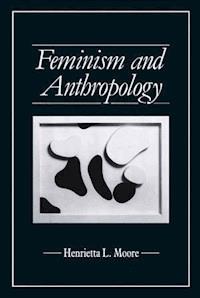
This is the first book which examines the nature and significance of a feminist critique in anthropology. It offers a clear introduction to, and balanced assessment of, the theoretical and practical issues raised by the development of a feminist anthropology.
Henrietta Moore situates the development of a feminist approach in anthropology within the context of the discipline, examining the ways in which women have been studied in anthropology - as well as the ways in which the study of gender has influenced the development of the discipline anthropology. She considers the application of feminist work to key areas of anthropological research, and addresses the question of what social anthropology has to contribute to contemporary feminism.
Throughout the book Henrietta Moore's analysis is informed by her own extensive fieldwork in Africa and by her concern to develop anthropological theory and method by means of feminist critique. This book will be of particular value to students in anthropology, women's studies and the social sciences.
Sie lesen das E-Book in den Legimi-Apps auf:
Seitenzahl: 548
Veröffentlichungsjahr: 2013
Ähnliche



















_____________________
Copyright © Henrietta L. Moore 1988 The right of Henrietta L. Moore to be identified as author of this work has been asserted in accordance with the Copyright, Designs and Patents Act 1988.
First published in 1988 by Polity Press in association with Blackwell Publishers Ltd. Reprinted 1989, 1991, 1992, 1993, 1994, 1995, 1997, 2000 Transferred to digital print 2003
Editorial office: Polity Press 65 Bridge Street Cambridge CB2 1UR, UK
Marketing and production: Blackwell Publishers Ltd 108 Cowley Road Oxford OX4 1JF, UK
All rights reserved. Except for the quotation of short passages for the purposes of criticism and review, no part of this publication may be reproduced, stored in a retrieval system, or transmitted, in any form or by any means, electronic, mechanical, photocopying, recording or otherwise, without the prior permission of the publisher.
Except in the United States of America, this book is sold subject to the condition that it shall not, by way of trade or otherwise, be lent, re-sold, hired out, or otherwise circulated without the publisher’s prior consent in any form of binding or cover other than that in which it is published and without a similar condition including this condition being imposed on the subsequent purchaser.
ISBN: 978-0-7456-6799-7 (Multi-user ebook)
A CIP catalogue record for this book is available from the British Library.
Typeset in 10.5 on 12 pt Malibu by Times Graphics, Singapore
Printed and bound in Great Britain byMarston Lindsay Ross International Ltd,Oxfordshire
Preface and Acknowledgements
1 Feminism and Anthropology: The Story of a Relationship
2 Gender and Status: Explaining the Position of Women
3 Kinship, Labour and Household: Understanding Women’s Work
4 Kinship, Labour and Household: The Changing Nature of Women’s Lives
5 Women and the State
6 Feminist Anthropology: What Difference Does It Make?
Notes
References
Index
For My Mother
The writing of this book has been punctuated for me by the expressions of dismay, amusement, support and envy with which my friends and colleagues have responded at different times to the news that I was engaged in such a task. It is undoubtedly both impertinent and foolhardy to write a book entitled ‘Feminism and Anthropology’. There is no agreed way of defining or characterizing either of the key terms in question. There are many feminisms, just as there are many anthropologies. This book is not, and nor could it ever be, a comprehensive and definitive account either of feminism or of anthropology, let alone of their ‘relations’.
It is commonly assumed that books about feminism are either ‘women’s books’ or books ‘about women’. This provides the unsympathetic reader with an excuse to avoid engaging with the issues raised, and can sometimes be seen as a justification for laying the book aside altogether. The identification of feminist concerns with women’s concerns has been one of the many strategies employed in the social sciences to marginalize the feminist critique. This marginalization is quite unjustified, and one of the aims of this book is to demonstrate that the feminist critique in anthropology has been, and will continue to be, central to theoretical and methodological developments within the discipline as a whole. The basis for the feminist critique is not the study of women, but the analysis of gender relations, and of gender as a structuring principle in all human societies. It is for this reason that I can say that this book is not in any way concerned with the critique of male bias in the discipline of social anthropology, because it looks, not backwards to what we have already achieved, but forwards to the future of feminist anthropology, and to the contributions it will make to particular areas of the discipline in the future.
The structure of the book has a certain narrative historical form. Chapter 1 discusses the history of the relationship between feminism and anthropology. Chapter 2 deals with debates on gender, sexual asymmetry and male dominance, as well as with how these issues feed into problems of universalism and the future of comparative studies in anthropology. These debates were the ‘first’ ones to be dealt with by feminist anthropology, although they are by no means resolved, and the next few years are likely to see substantive new publications on gender symbolism – including new material on masculinity – and on sexual inequality. Chapter 3 discusses the relationship between Marxist and feminist anthropology, and considers the impact which feminist anthropology has had on traditional areas of anthropological enquiry, including property, inheritance and the sexual division of labour. These debates were extremely important in the late 1970s and early 1980s, and they are part of a more general shift in anthropological thinking which took place at that time. Chapter 4 deals with debates concerning the rise of capitalism, and the way in which forms of labour and the sexual division of labour have been transformed. The chapter goes on to discuss feminist theories of the relationship between productive and reproductive labour under capitalism, and shows how data from non-Western countries can provide new vantage points from which to view old debates. It concludes with a discussion of the changing ‘family’. Chapter 5 presents material on women and the state which is arguably the ‘newest’ and most exciting area of feminist scholarship in anthropology; and it draws on perspectives developed in earlier chapters to outline the areas of the discipline in which feminist anthropology is likely to be making substantive contributions in the future. It also provides material on which to base a critique of feminist theorizing and feminist politics.
I am very aware that in writing this book I have given prominence to some areas of anthropological enquiry at the expense of others. My justification for doing this is simply one of space, as well as the fact that, in trying to demonstrate the value of the feminist critique in anthropology, I have been concerned to develop coherent themes rather than to catalogue the impact of feminist thought on all areas of the discipline. None the less, there is relatively little discussion of ‘rites’ and ‘rituals’, which have always been key areas of anthropological enquiry. Some anthropologists may feel that this is a significant omission, but I feel that the important developments in those fields with regard to the feminist critique in the discipline are adequately covered by the discussion of symbolic approaches to gender in chapter 2. I am also aware of the lack of discussion concerning the role of religion in human social life, and I can only hope that other authors may take on the formidable task of providing a comprehensive account of the impact of the feminist critique in this area.
Writing, as all authors acknowledge, is a collaborative exercise. However, this is most especially the case with regard to this book because most of the substantive content and the theoretical approaches are based directly on the work of other feminist scholars. It will be apparent to those already familiar with the anthropological material that I have drawn heavily on the work of a number of feminist anthropologists. It could not be otherwise: without the very brilliant work of these women it would not have been possible to write this book, because there would have been no feminist anthropology to write about. I have cited them extensively, and I only hope that, where I may have omitted to refer to them directly, they will understand that my debt to them is none the less for that. I also wish to acknowledge my debt to many anthropologists who do not think of themselves, and would not wish to be thought of, as feminists, and to many scholars from other disciplines who would certainly not want to be thought of as anthropologists!
I have depended enormously on the help and support of many friends and colleagues while I have been writing this book. I would especially like to thank Michelle Stanworth, who first encouraged me to write this book, and whose intellectual insight and fine editing skills have proved to be my saving. I would also like to thank Margaret Jolly and Megan Vaughan for commenting on the final draft of the manuscript and Anne Farmer for typing it, as well as many others who have provided support and advice.
Anthropology is the study of man embracing woman.
Bronislaw Malinowski
The feminist critique in social anthropology, as in the other social sciences, grew out of a specific concern with the neglect of women in the discipline. However, unravelling the history of that neglect is difficult because of the ambiguous way in which social anthropology has always treated women. Women were not ignored in traditional anthropology.
At the level of ‘observation’ in fieldwork, the behaviour of women has, of course, like that of men, been exhaustively plotted: their marriages, their economic activity, their rites and the rest. (Ardener, 1975a: 1)
Women have always been present in ethnographic accounts, primarily because of the traditional anthropological concern with kinship and marriage. The main problem was not, therefore, one of empirical study, but rather one of representation. In a famous study which discusses this problem, the authors analysed the different interpretations given by male and female ethnographers to the position and nature of Australian Aboriginal women. The male ethnographers spoke of the women as profane, economically unimportant and excluded from rituals. The female researchers, on the other hand, described the women’s central role in subsistence, the importance of women’s rituals and the respectful way in which they were treated by men (Rohrlich-Leavitt et al., 1975). Women were present in both sets of ethnographies, but in very different ways.
The new ‘anthropology of women’ thus began, in the early 1970s, by confronting the problem of how women were represented in anthropological writing. The initial problem was quickly identified as one of male bias, which was seen as having three layers or ‘tiers’. The first layer consists of the bias imported by the anthropologist, who brings to the research various assumptions and expectations about the relationships between women and men, and about the significance of those relationships for an understanding of the wider society.
Male bias is carried into field research. It is often claimed that men in other cultures are more accessible to outsiders (especially male outsiders) for questioning. A more serious and prior problem is that we think that men control the significant information in other cultures, as we are taught to believe they do in ours. We search them out and tend to pay little attention to the women. Believing that men are easier to talk to, more involved in the crucial cultural spheres, we fulfill our own prophecies in finding them to be better informants in the field. (Reiter, 1975: 14)
The second bias is one inherent in the society being studied. Women are considered as subordinate to men in many societies, and this view of gender relations is likely to be the one communicated to the enquiring anthropologist. The third and final layer is provided by the bias inherent in Western culture. The argument here is that, when researchers perceive the asymmetrical relations between women and men in other cultures, they assume such asymmetries to be analogous to their own cultural experience of the unequal and hierarchical nature of gender relations in Western society. A number of feminist anthropologists have now made the point that, even where more egalitarian relations between women and men exist, researchers are very often unable to understand this potential equality because they insist on interpreting difference and asymmetry as inequality and hierarchy (Rogers, 1975; Leacock, 1978; Dwyer, 1978; see chapter 2 for further discussion of this point).
It is hardly surprising, therefore, that feminist anthropologists saw their initial task as one of deconstructing this three-tiered structure of male bias. One way in which this could be done was by focusing on women, by studying and describing what women really do, as opposed to what men (ethnographers and informants) say they do, and by recording and analysing the statements, perceptions and attitudes of women themselves. However, correcting male bias in reporting, and building up new data on women and women’s activities, could only be a first step – albeit a very necessary one – because the real problem about incorporating women into anthropology lies not at the level of empirical research but at the theoretical and analytical level. Feminist anthropology is, therefore, faced with the much larger task of reworking and redefining anthropology theory. ‘Just as many feminists found that the goals of the women’s movement could not be fulfilled by the “add-women-and-stir method”, so women’s studies scholars discovered that academic fields could not be cured of sexism simply by accretion’ (Boxer, 1982: 258). Anthropologists quickly recognized themselves as ‘heirs to a sociological tradition’ that has always treated women as ‘essentially uninteresting and irrelevant’ (Rosaldo, 1974: 17). But they also recognized that simply ‘adding’ women to traditional anthropology would not resolve the problem of women’s analytical ‘invisibility’: it would not make the issue of male bias go away.
Models and muting
Edwin Ardener was among the first to recognize the significance of ‘male bias’ for the development of models of explanation in social anthropology. He proposed a theory of ‘muted groups’, in which he argued that the dominant groups in society generate and control the dominant modes of expression. Muted groups are silenced by the structures of dominance, and if they wish to express themselves they are forced to do so through the dominant modes of expression, the dominant ideologies (Ardener, 1975b: 21–3). Any group which is silenced or rendered inarticulate in this way (gypsies, children, criminals) may be considered a ‘muted’ group, and women are only one such case. According to Ardener, ‘mutedness’ is the product of the relations of dominance which exist between dominant and sub-dominant groups in society. His theory does not imply that the ‘mute’ should actually be silent, nor does it necessarily imply that they are neglected at the level of empirical research. Women may speak a great deal, their activities and responsibilities may be minutely observed by the ethnographer, as Ardener points out, but they remain ‘muted’ because their model of reality, their view of the world, cannot be realized or expressed using the terms of the dominant male model. The dominant male structures of society inhibit the free expression of alternative models, and sub-dominant groups are forced to structure their understanding of the world through the model of the dominant group. As far as Ardener is concerned, the problem of muting is a problem of frustrated communication. The free expression of the ‘female perspective’ is blocked at the level of ordinary, direct language. Women cannot use the male-dominated structures of language to say what they want to say, to give an account of their view of the world. Their utterances are oblique, muffled, muted. Ardener, therefore, suggests that women and men have different ‘world-views’ or models of society (Ardener, 1975a: 5).1 He goes on to link the existence of ‘male’ and ‘female’ models to the problem of male bias in ethnographic accounts.
Ardener argues that the kinds of models provided by male informants are the sort of models which are familiar and intelligible to anthropological researchers. This is because researchers are either men, or women trained in a male-oriented discipline. Anthropology itself orders the world in a male idiom. The fact that linguistic concepts and categories in Western culture equate ‘man’ with society as a whole – as in ‘mankind’, and as in the use of the male pronoun to mean both he and she – has led anthropologists to imagine that the ‘male view’ is also ‘society’s view’. Ardener’s conclusion is that male bias exists not just because the majority of ethnographers and informants are male, but because anthropologists – women and men – have been using male models drawn from their own culture to explain male models present in other cultures. As a result, a series of homologies is established between the ethnographer’s models and those of the people (men) who are being studied. Women’s models are suppressed. The analytical and conceptual tools to hand actually prevent the anthropologist from hearing and/or understanding the views of women. It is not that women are silent; it is just that they cannot be heard. ‘Those trained in ethnography evidently have a bias towards the kinds of models that men are ready to provide (or to concur in) rather than towards any that women might provide. If the men appear “articulate” compared with the women, it is a case of like speaking to like’ (Ardener, 1975a: 2).
Ardener correctly identifies the problem as residing not just in the practice of anthropological fieldwork, but in the conceptual frameworks which underlie that practice. Theory always informs the way in which we collect, interpret and present data, and as such it can never be neutral. Feminist anthropology is not, therefore, about ‘adding’ women into the discipline, but is instead about confronting the conceptual and analytical inadequacies of disciplinary theory. The task itself is a formidable one, but the most immediate question is one of how it should be tackled.
Women studying women
Ardener’s contention that men and women have different models of the world obviously applies as much to the anthropologist’s society as it does to the society being studied by the anthropologist. This fact raises the interesting question of whether female anthropologists look at the world differently from their male colleagues and, if so, whether this gives them some special advantage when it comes to studying women. These kinds of issues were taken up very early on in the development of the ‘anthropology of women’, and fears were expressed that what had once been ‘male bias’ would be replaced by a corresponding ‘female bias’. If the model of the world was inadequate when seen through the eyes of men, why should it be any less so when seen through the eyes of women? The issue of whether women anthropologists are more qualified than their male colleagues to study other women remains a contentious point. The privileging of the female ethnographer, as Shapiro points out, not only casts doubt on the ability of women to study men, but ultimately casts doubt on the whole project and purpose of anthropology: the comparative study of human societies.
Implicit in many discussions of sex bias, and in much of the literature in women’s studies … is the assumption that only women can or should study women – what we might call the it-takes-one-to-know-one position. This attitude, prompted by a feminist awareness of the distorting views of women held by the largely male social scientific establishment, also finds support in the practicalities of fieldwork; the division between men’s and women’s social worlds is sharply drawn in a large number of societies. Tendencies towards a sexual division of labour in our profession, however, require critical reflection more than they require epistemological justification or a new source of ideological support. After all, if it really took one to know one, the entire field of anthropology would be an aberration. (Shapiro, 1981: 124–5)
Women in the ghetto
Milton (1979), Shapiro (1981) and Strathern (1981a) have all pointed to problems concerning the assumption of a privileged status by women ethnographers with regard to the women they study. Critical reflection on this issue suggests that the problems are of three kinds. First, there is the argument about ghettoization and the possible formation of a sub-discipline. This argument is concerned with the position and status of women’s anthropology within the discipline as a whole. The most salient fear is that, if an explicit focus on women or the ‘female point of view’ arises as an alternative to a focus on men and the ‘male point of view’, then much of the force of feminist research is lost through a segregation which consistently defines such work as the ‘not male’: the ‘female anthropology’. This fear arises in part because the ‘anthropology of women’, unlike any other aspect of anthropology, consists of women studying women. The women who study women fear not ghettoization but marginalization, and this is a very well-grounded fear. However, to see the issues in these terms misses the point somewhat because it totally fails to take into account the very important distinction between the ‘anthropology of women’ and feminist anthropology. The ‘anthropology of women’ was the precursor to feminist anthropology; it was very successful in bringing women ‘back into view’ in the discipline, but in so doing it was more remedial than radical. Feminist anthropology is more than the study of women. It is the study of gender, of the interrelations between women and men, and of the role of gender in structuring human societies, their histories, ideologies, economic systems and political structures. Gender can no more be marginalized in the study of human societies than can the concept of ‘human action’, or the concept of ‘society’. It would not be possible to pursue any sort of social science without a concept of gender.
This does not, of course, mean that efforts to marginalize feminist anthropology will cease. They will not. Anthropology has sometimes been praised for the way in which feminist critiques have found acceptance in mainstream anthropology, and for the way in which the study of gender has become an accepted part of the discipline (Stacey and Thorne, 1985). This praise may be deserved, at least in part, but we do need to heed those who point to the relatively small number of courses on gender, to the difficulty of getting research funds to work on gender issues, and to the relatively small number of employed women anthropologists. It is still abundantly clear that the political marginalization of feminist scholarship has much to do with the gender of its practitioners.
The accusation that the study of women has become a sub-discipline within social anthropology can also be tackled by reformulating our perception of what the study of gender involves. Anthropology is famous for a remarkable intellectual pluralism, as evidenced by the different specialist sub-divisions of the discipline, for example, economic anthropology, political anthropology, cognitive anthropology; the various specialist areas of enquiry, such as the anthropology of law, the anthropology of death, historical anthropology; and the different theoretical frameworks, such as Marxism, structuralism, symbolic anthropology.2 It is true that there is considerable disagreement in anthropology about how such typologies of the discipline should be constructed. However, when we try to fit the study of gender relations into a typology of this kind, we immediately become aware of the irrelevance of the term ‘sub-discipline’ with regard to modern social anthropology. In what sense are any of the categories in such a typology sub-disciplinary? This question is one which is further complicated by the fact that the study of gender relations could potentially occupy a position in all three categories. Attempts to assign sub-disciplinary status to feminist anthropology have more to do with processes of political containment than with serious intellectual considerations.
The universal woman
Returning to the issue of women studying women, the second problem concerning the proposition that ‘it takes one to know one’ concerns the analytical status of the sociological category ‘woman’. The anxieties about ghettoization and the formation of a sub-discipline of ‘women’s anthropology’ are, of course, related to genuine fears about marginalization, but they are also connected to the ghettoization of ‘women’ as a category and/or object of study in the discipline. The privileged relationship between female ethnographer and female informant depends on the assumption of a universal category ‘woman’. However, just as constructs like ‘marriage’, the ‘family’, and the ‘household’ require analysis, so too does the empirical category ‘woman’. The images, attributes, activities and appropriate behaviour associated with women are always culturally and historically specific. What the category ‘woman’, or, for that matter, the category ‘man’, means in a given context has to be investigated and not assumed (MacCormack and Strathern, 1980; Ortner and Whitehead, 1981a). As Brown and Jordanova point out, biological differences do not provide a universal basis for social definitions. ‘What cultures make of sex differences is almost infinitely variable, so that biology cannot be playing a determining role. Women and men are products of social relations, if we change the social relations we change the categories “woman” and “man”‘ (Brown and Jordanova, 1982: 393).
On the basis of this argument, the concept ‘woman’ cannot stand as an analytical category in anthropological enquiry, and consequently there can be no analytical meaning in such concepts as ‘the position of women’, the ‘subordination of women’ and ‘male dominance’ when applied universally. The inevitable fact of biological difference between the sexes tells us nothing about the general social significance of that difference. Anthropologists are well aware of this point, and they recognize that feminist anthropology must not claim that women cannot be confined to and defined by their biology while simultaneously refining female physiology into a cross-cultural, social category.
Ethnocentrism and racism
The third problem with regard to the theoretical and political complexities of women studying other women concerns the issues of race and ethnocentrism (bias in favour of one’s own culture). Anthropology has been, and is still, critically involved in coming to terms with its colonial past, and with the power relationship which characterizes the encounter between those who study and those who are studied (Asad, 1973; Huizer and Mannheim, 1979). However, anthropology has yet to respond to the arguments of black anthropologists and black feminists who point to the racist assumptions which underlie much anthropological theorizing and writing (Lewis, 1973; Magubane, 1971; Owusu, 1979; Amos and Parmar, 1984; Bhavnani and Coulson, 1986). This is, in part, because anthropology has tended to approach the problem of Western cultural bias – which it recognizes and has analysed exhaustively – through the notion of ethnocentrism. The fundamental importance of the critique of ethnocentrism in anthropology is not in doubt (see chapter 2 for a demonstration of this point). Historically, anthropology has emerged out of, and been sustained by, a dominant Western discourse. Without a concept of ethnocentrism, it would be impossible to question the dominant categories of discipline thinking, to think outside the theoretical parameters those categories impose, and to interrogate the foundations of anthropological thought. The concept of ethnocentrism underlies anthropology’s critique of anthropology. However, there are issues which cannot be contained in, or confronted under, the notion of ethnocentrism, because they are not engaged by the terms of this internal critique. Anthropology talks about the ‘ethnocentric’ assumptions of the discipline rather than the ‘racist’ assumptions. The concept of ethnocentrism, while immensely valuable, tends to sidestep the issue somewhat.3 This can be demonstrated by looking afresh at some of the material already discussed in this chapter.
At the beginning of this chapter I discussed the debates which arose in the new ‘anthropology of women’ concerning male bias in the discipline. One sort or layer of male bias was correctly analysed as being inherent in Western cultural assumptions, and was seen as being imposed on other cultures through the process of anthropological interpretation. This argument is undoubtedly correct, but it must be seen itself as part of an emerging body of anthropological theory. It is quite clear that as a theoretical proposition it contains the assumption that anthropologists come from Western cultures, and that, by extension, they are white. Critics would, of course, be quite justified in saying that to assume that someone comes from a Western culture does not mean that it is also assumed that they are white; they might add that Western cultural biases will be evident in the work of Western-trained anthropologists whether they are Westerners or not. These are fairly standard responses, but to accept them uncritically also means accepting the argument that when the term ‘anthropologist’ is used it automatically refers to both black and white anthropologists. This is difficult because feminist anthropologists know only too well that the term ‘anthropologist’ has not always included women. Exclusion by omission is still exclusion.
However, the deconstruction of the sociological category ‘woman’, with the recognition that the experiences and activities of women always have to be analysed in their socially and historically specific contexts, provides a basis from which feminist anthropologists could begin to respond to the arguments concerning racism in the discipline. There are a number of reasons why this should be so. First, it forces us to reformulate the privileging of the woman ethnographer with regard to the women she studies, and to acknowledge that the power relations in the ethnographic encounter are not necessarily ones which are erased simply by commonalities of sex. Secondly, it brings into theoretical and political focus the fact that, while women in a variety of societies share similar experiences and problems, these similarities have to be set against the very different experiences of women worldwide, especially with regard to race, colonialism, the rise of industrial capitalism and the interventions of international development agencies.4 Thirdly, it shifts the theoretical focus away from notions of ‘sameness’, from ideas about the ‘shared experience of women’ and the ‘universal subordination of women’, towards a critical rethinking of concepts of ‘difference’. Anthropologists have always recognized and emphasized cultural difference; it has been the bedrock of the discipline. Furthermore, it has been the aspect of anthropology which feminists and many others outside the discipline have applauded most. Anthropological data have been extensively used as the basis for a critique of Western culture and its assumptions. This is why it is necessary to say something about why the anthropological concept of ‘cultural difference’ is not the same thing as the notion of ‘difference’ which is beginning to emerge in feminist anthropology.
Anthropology has struggled long and hard to establish that ‘cultural difference’ is not about the peculiarities and oddities of ‘other cultures’, but rather about recognizing cultural uniqueness, while at the same time seeking out the similarities in human cultural life.5 This is the basis for the comparative project in anthropology. Understanding cultural difference is essential, but the concept itself can no longer stand as the ruling concept of a modern anthropology, because it addresses only one form of difference among many. Anthropology has always investigated kinship, ritual, economics and gender in terms of the way in which these are organized, constructed and experienced through culture. The differences which have been observed have therefore been interpreted as cultural differences. But, once we agree that cultural difference is only one form of difference among many, this approach becomes insufficient. Feminist anthropology has recognized this insufficiency in so far as it formulates its theoretical questions in terms of how economics, kinship and ritual are experienced and structured through gender, rather than asking how gender is experienced and structured through culture. It has also gone on to ask how gender is structured and experienced through colonialism, through neo-imperialism and through the rise of capitalism. But it must be said that it has, for the most part, still to confront the question of how gender is constructed and experienced through race. This is largely because anthropology still has to unravel and take on board the difference between racism and ethnocentricism (see chapter 6).
Feminist anthropology is not alone, by any means, in its attempts to understand difference and to look at the complex ways in which gender, race and class intersect and cross-cut each other, as well as the way in which all three intersect with colonialism, the international division of labour and the rise of the modern state. Marxist anthropology, world systems theory, historians, economic anthropologists and many other practitioners in the social sciences are engaged in parallel projects. The question of difference, however, poses a particular problem for feminists.
Feminism and difference6
When we move away from the privileged status of the woman ethnographer with regard to the women she studies, and away from the concept of ‘sameness’ on which the notion of the universal ‘woman’ is based, we find ourselves questioning, not only the theoretical assumptions of social anthropology, but the aims and political cohesiveness of feminism. ‘Feminism’, like ‘anthropology’, is one of those words which everybody thinks they know the meaning of. In a minimalist definition, feminism could be taken to refer to the awareness of women’s oppression and exploitation at work, in the home and in society as well as to the conscious political action taken by women to change this situation. Such a definition has a number of consequences. First, it implies that, at some fundamental level, there exists a unitary body of women’s interests, which should be and can be fought for. Secondly, it is clear that although feminism recognizes differences in feminist politics – socialist feminists, Marxist feminists, radical separatists and so on – the underlying premise of feminist politics is that there is an actual, or potential, identity between women. This premise obviously exists because it is the basis on which or from which the unitary body of women’s interests is derived. Thirdly, feminist politics further depends for its cohesion – whether potential or actual – on women’s shared oppression. The recognition of shared oppression is the basis for ‘sexual politics’ premised on the notion that women as a social group are dominated by men as a social group (Delmar, 1986: 26). The end result is that feminism as a cultural critique, as a political critique and as a basis for political action is identified with women – not with women in their socially and historically distinct context, but with women as a sociological category. The problem for feminism is that the concept of difference threatens to deconstruct this isomorphism, this ‘sameness’, and with it the whole edifice on which feminist politics is based.
Both anthropology and feminism have to cope with difference. Looking at the relationship between feminism and anthropology, we can see that feminist anthropology began by criticizing male bias within the discipline, and the neglect and/or distortion of women and women’s activities. This is the phase in the ‘relationship’ which we can refer to as the ‘anthropology of women’. The next phase was based on a critical reworking of the universal category ‘woman’, which was accompanied by an equally critical look at the question of whether women were especially well equipped to study other women. This led, quite naturally, to anxieties about ghettoization and marginalization within the discipline of social anthropology. However, as a result of this phase, feminist anthropology began to establish new approaches, new areas of theoretical enquiry, and to redefine its project not as the ‘study of women’ but as the ‘study of gender’. As we enter the third phase of this relationship, we see feminist anthropology begin to try to come to terms with the real differences between women, as opposed to contenting itself with demonstrations of the variety of women’s experiences, situations and activities worldwide. This phase will involve the building of theoretical constructs which deal with difference, and will be crucially concerned with looking at how racial difference is constructed through gender, how racism divides gender identity and experience, and how class is shaped by gender and race. In the process of this, feminist anthropology will be involved not just in reformulating anthropological theory but in reformulating feminist theory. Anthropology is in a position to provide a critique of feminism based on the deconstruction of the category ‘woman’. It is also able to provide cross-cultural data which demonstrate the Western bias in much mainstream feminist theorizing (see chapters 5 and 6 for further discussion of this point). The third, and current, phase of the relationship between feminism and anthropology is thus characterized by a move away from ‘sameness’ towards ‘difference’, and by an attempt to establish the theoretical and empirical grounds for a feminist anthropology based on difference.
This chapter is concerned with what it is to be a woman, how cultural understandings of the category ‘woman’ vary through space and time, and how those understandings relate to the position of women in different societies. Contemporary anthropologists who explore the position of women, whether in their own or another society, are inevitably drawn into the debate concerning the origins and universality of women’s subordination. An interest in the hierarchical relations between men and women has been a feature of the discipline of anthropology since its earliest days. The emergence of theories of evolution in the nineteenth century gave new impetus to the study of social and political theory, and to the related question of the social organization of non-Western societies. Crucial to an understanding of social organization in such societies were such concepts as ‘kinship’, ‘the family’, ‘the household’ and ‘sexual mores’. In the debates which ensued, relations between the sexes became central to the theories put forward by the so-called ‘founding fathers of anthropology’.1 As a result, a number of the concepts and assumptions which figure prominently in contemporary anthropology, including feminist anthropology, owe their origins to various nineteenth-century theorists. It is true, of course, that many of the claims of nineteenth-century thinkers have been challenged and found wanting. In anthropology, Malinowski and Radcliffe-Brown, among others, criticized the search for a hypostatized past – especially the emphasis on unilinear evolution and the transition from ‘mother-right’ to ‘father-right’. The 1920s and 1930s saw the establishment of anthropology as a defined discipline, with an emphasis on empirical fieldwork. What took place was a rethinking of kinship, and an explicit emphasis on the function of social institutions in specific societies, rather than on their place in some putative historical schema. My aim in claiming that many of the theoretical assumptions of the nineteenth century are still with us is to show that the concerns confronted by the anthropology of women have a necessarily long history in the discipline. Furthermore, the very fact that intellectual continuities and discontinuities exist is an important part of understanding the necessity for a contemporary feminist critique.
Lesen Sie weiter in der vollständigen Ausgabe!
Lesen Sie weiter in der vollständigen Ausgabe!
Lesen Sie weiter in der vollständigen Ausgabe!
Lesen Sie weiter in der vollständigen Ausgabe!
Lesen Sie weiter in der vollständigen Ausgabe!
Lesen Sie weiter in der vollständigen Ausgabe!
Lesen Sie weiter in der vollständigen Ausgabe!




