


21,99 €
Mehr erfahren.
- Herausgeber: John Wiley & Sons
- Kategorie: Geisteswissenschaft
- Sprache: Englisch
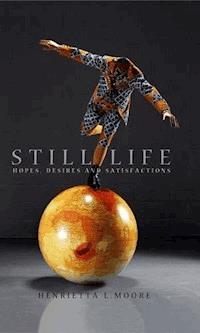
How adequate are our theories of globalisation for analysing the worlds we share with others? In this provocative new book, Henrietta Moore asks us to step back and re-examine in a fresh way the interconnections normally labeled 'globalisation'.
Rather than beginning with abstract processes and flows, Moore starts by analyzing the hopes, desires and satisfactions of individuals in their day-to-day lives. Drawing on a wide range of examples, from African initiation rituals to Japanese anime, from sex in virtual worlds to Schubert songs, Moore develops a theory of the ethical imagination, exploring how ideas about the human subject, and its capacities for self-making and social transformation, form a basis for reconceptualizing the role and significance of culture in a global age. She shows how the ideas of social analysts and ordinary people intertwine and diverge, and argues for an ethics of engagement based on an understanding of the human need to engage with cultural problems and seek social change.
This innovative and challenging book is essential reading for anyone interested in the key debates about culture and globalization in the contemporary world.
Sie lesen das E-Book in den Legimi-Apps auf:
Seitenzahl: 380
Veröffentlichungsjahr: 2013
Ähnliche

















Table of Contents
Cover
Dedication
Title page
Copyright page
Acknowledgements
1 Thinking Again
After Globalization
Culture, Subjectivity and Ethics
The Ethical Imagination
Hopes, Desires and Satisfactions
2 Still Life
Culture As Object
A Short History of the Campaign Against Female Circumcision in Marakwet
Education as a Form of Knowledge
3 Slips of the Tongue
‘A Good Man is Hard to Find’
The Real of Fantasy
Connected Worlds
4 Other Modes of Transport
Relational Subjects
Connected Worlds and Modes of Transport
Sexuality Goes Global
5 Second Nature
Capitalizing on Meanings
Language, Representation and Affect
Art, Aesthetics and Affect
Inside the World of Objects
Relations With Self and Others
6 Arts of the Possible
Of Markets and Gods
Faith and Reason
Political Ecologies and the Hopes of Democracy
7 New Passions for Difference
Hope Springs Eternal: Affect and the Resurgence of ‘Life Itself’
The Triumph of the New or the Remaindered Subject?
Cyprus
Egypt
The Return of the Subject?
References
Index
For
Megan Vaughan
Copyright © Henrietta L. Moore 2011
The right of Henrietta L. Moore to be identified as Author of this Work has been asserted in accordance with the UK Copyright, Designs and Patents Act 1988.
First published in 2011 by Polity Press
Polity Press
65 Bridge Street
Cambridge CB2 1UR, UK
Polity Press
350 Main Street
Malden, MA 02148, USA
All rights reserved. Except for the quotation of short passages for the purpose of criticism and review, no part of this publication may be reproduced, stored in a retrieval system, or transmitted, in any form or by any means, electronic, mechanical, photocopying, recording or otherwise, without the prior permission of the publisher.
ISBN-13: 978-0-7456-3645-0
ISBN-13: 978-0-7456-3646-7 (pb)
ISBN-13: 978-0-7456-3793-8 (epub)
ISBN-13: 978-0-7456-3794-5 (mobi)
A catalogue record for this book is available from the British Library.
The publisher has used its best endeavours to ensure that the URLs for external websites referred to in this book are correct and active at the time of going to press. However, the publisher has no responsibility for the websites and can make no guarantee that a site will remain live or that the content is or will remain appropriate.
Every effort has been made to trace all copyright holders, but if any have been inadvertently overlooked the publisher will be pleased to include any necessary credits in any subsequent reprint or edition.
For further information on Polity, visit our website: www.politybooks.com
Acknowledgements
This book was written during a period of leave made possible by the award of a Major Research Fellowship (F/07 004/AL) from the Leverhulme Trust. I am deeply grateful to the Trust for their generous and much needed support.
I always find that every book draws inspiration from particular scholars whose ideas and insights flow through the text, shaping it in ways that exceed the possibilities of citation. In this case, the work of Henry Jenkins, Lauren Berlant and Rosi Braidotti has had a profound impact on my thinking.
1
Thinking Again
This book is an attempt to think again about how to analyse the worlds we share with others. One part of this challenge is how we might understand what being historical means; how do we create the personal and political horizons that define our understandings of the present, as well as the forms of belonging and interconnection that characterize it? The present, of course, is never still, never fully present. We may be haunted by our pasts, but human social life is equally lived in a relentless forward gear. It’s not just that we are open to the future, to potentialities and possibilities, but also that our perceptions and evaluations of change are formative both for ourselves and for the times we live in. It may be that ‘the times they are a-changing’, as the old Bob Dylan song goes, but perceptions of time and change are connected to historically specific modes of being, particular understandings of ourselves as subjects and agents in history. The Enlightenment, for example, is often said to be both a period of history and a way of being in the world, characterized by certain sorts of individuals with particular ways of thinking about the world; so too modernity. How we are placed in time and space links to modes of being – specific ways of thinking, feeling and acting, of relating to things, to others and to ourselves. Political and economic changes alter these ways of being, and new ways of seeing and understanding drive forward further possibilities for change. In the chapters that follow, I puzzle over the challenge that analysing social change presents, and the dilemmas posed by trying to think about the connections between the kinds of people we are and wish to become, and the times we live in, with all their promise of technological, political and social transformation.
In the contemporary moment, as many chapters in this book demonstrate, there is a huge interest in self-making, and self-stylization. This is not just about self-cultivation as a form of individualization or the embrace of possessive individualism, but more properly as Foucault described it, a desperate attempt to imagine the present, ‘to imagine it otherwise than it is, and to transform it not by destroying it, but by grasping in it what it is’ (1998: 311). Stylization in music, in dress, in politics and in all aspects of personal and intimate life is part of a drive to give form not only to the self, but to the world, and to relations with others. It is an obstinate search for a style of existence, a way of being. It accounts, in part, for the massive drive towards authenticity, truth and reality that is observable in so many different domains of life around the globe. A palpable commitment to the value of the present. This drive towards, and demand for, the ‘real’ is evident not only in contemporary forms of religious stylization, but also, and perhaps more surprisingly, in the engagement with virtual worlds and financial markets, as well as in the collapsing of distinctions between art, entertainment and politics (see Chapters 5 and 6).
Lesen Sie weiter in der vollständigen Ausgabe!
Lesen Sie weiter in der vollständigen Ausgabe!
Lesen Sie weiter in der vollständigen Ausgabe!
Lesen Sie weiter in der vollständigen Ausgabe!
Lesen Sie weiter in der vollständigen Ausgabe!
Lesen Sie weiter in der vollständigen Ausgabe!
Lesen Sie weiter in der vollständigen Ausgabe!
Lesen Sie weiter in der vollständigen Ausgabe!




