Merlin Unwin Books
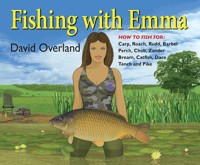
Fishing
with
Emma
David Overland
HOW TO FISH FOR:
Carp, Roach, Rudd, Barbel
Perch, Chub, Zander, Bream
Catfish, Dace, Tench and Pike
ii
For Dad who taught me to fish
and taught me to paint
First published in Great Britain by Merlin Unwin Books, 2013
This ebook edition published in 2021
All rights reserved
Copyright © David Overland 2021
The right of David Overland to be identified as the author of this work has been asserted in accordance with Section 77 of the Copyright, Designs and Patents Act 1988.
This ebook is copyright material and must not be copied, reproduced, transferred, distributed, leased, licensed or publicly performed or used in any way except as specifically permitted in writing by the publishers, as allowed under the terms and conditions under which it was purchased or as strictly permitted by applicable copyright law. Any unauthorised distribution or use of this text may be a direct infringement of the author's and publisher's rights, and those responsible may be liable in law accordingly. All enquiries should be addressed to Merlin Unwin Books (see address below).
Published by:
Merlin Unwin Books
Palmers House
7 Corve Street
Ludlow
Shropshire SY8 1DB
U.K.
www.merlinunwin.co.uk
Designed by Merlin Unwin Books
ISBN 9781913159450
iii
Contents
1.
Roach on the Canal
1
2.
Carp from a Commercial Fishery
8
3.
Dace Chase
14
4.
Tench: the Glorious Sixteenth
20
5.
Carp on the Controller Float
25
6.
In Search of Canal Bream
30
7.
Emma Goes for Gold (Rudd)
33
8.
Difficult Fish from a Hard Place (Crucian Carp)
36
9.
In Search of Big Bream
38
10.
Emma Rigs up to Catch Carp
43
11.
Emma’s Night Out (Eels)
48
12.
Emma on the Edge (Carp)
54
13.
Emma in a Spin (Zander)
57
14.
Emma’s on a Roll (Barbel)
61
15.
A Mackerel to Catch a Pike
67
16.
Emma and the Big Cat
73
17.
Emma’s Bad Day (Chub - and a surprise guest)
76
18.
Emma’s Revenge (Pike)
81
19.
Spikes and Stripes (Perch)
86
iv
About the Author
David Overland was born in Newport, Wales, in 1960 and throughout his working life as
a civil servant, for the charity sector and later in the ornamental fish industry, he’s also
worked as a Freelance Illustrator, writing and drawing comics, book illustrations and
record covers.
David lives in Monmouthshire with his wife Mary and their two sons, Sam and Ben. He has
been a passionate coarse fisher all his life.
Foreword
As a child I spent many happy hours fishing with my Grandfather on the banks of the
Norfolk Broads. He was a man of few words and so I watched what he did and copied him,
putting on worms, maggots or small lumps of bread. Things were simple in those days,
nothing more than a rod and a few floats. We caught roach, perch and other types of small
fish, with rarely a blank day.
Later when my sons were small, I in turn took them fishing and passed on the knowledge
I had gained from my Grandfather. But I wasn’t able to explain why we did things like we
did; I had never been told, I had just copied Grandad. If only
Fishing with Emma
had been
published then. It explains all the different techniques for catching the main species of
coarse fish – and why they work.
Fishing with Emma
has great appeal for everyone: young and old, beginners and experi-
enced hands, men and women alike. In fact, everyone who has an interest in angling will
both enjoy and benefit from Emma’s words of wisdom. It is easy to read, informative and
entertaining: the pictures are delightful.
I wasn’t certain that I liked Emma at first – I think I was jealous of the tight jeans!
However, as I looked through the pages I became more keen to see what she was up to
next, and what she was going to catch, and how she was going to do it.
As for me, I have recently acquired a small stream of my own and I am able to spend a
few contemplative hours fishing quietly, just as I did when I was young. But now, having
read this book, I will know exactly what I am doing and why, I hope, the dace will be there
waiting for me!
–
Sally Pizii, Angling Coach
1
MONMOUTHSHIRE CANAL BETWEEN PONTYPOOL
AND ABERGAVENNY ON AN EARLY SPRING MORNING.
IT’S SUNNY NOW
AND GETTING WARM
BUT IT WAS COLD
LAST NIGHT.
I WONDER WHAT’S
MOVING DOWN
THERE...
1. Roach on the Canal
2
LET’S SEE...
FISH ARE DRAWN TO STRUCTURE AND COVER
BRIDGES PROVIDE BOTH – SO
ARE A GOOD STARTING POINT
OVERHANGING TREES ARE
ANOTHER FISH MAGNET
THIS SPOT
HAS OVERHANGING
TREES ON THE
FAR BANK
AND A BRIDGE
TO MY RIGHT
EARLIER I THREW
SOME BALLS OF
GROUNDBAIT INTO
THE SWIM FROM
THE BRIDGE
Emma’s first decision is where to fish.
Cover from the bridge and the trees
on the far bank provide an excellent
holding spot for fish. As well as shelter
and cover, later in the year berries and
insects will fall from the trees making
them a superb larder. Although it’s
early in the year and they’ve no leaves
yet, there will still be fish hanging
around under them.
Most canals have a shallow shelf
either side of a deeper middle
channel, so the first job is to work out
the depth. Emma’s fished here many times and knows the depth,
contours and layout beneath the surface, so she doesn’t need
to do this (but check out the chapter on Crucian Carp where
she’ll show you how this is done).
Throughout the book Emma’s using cheap basic tackle to
demonstrate that you don’t need to spend too much to get
started in fishing. Her rod today is an 11-foot Match rod
(basically a float rod) which is ideal for this sort of fishing.
The rod is an entry level rod from one of the main tackle
manufacturers which she bought with the reel for around £30.
She’s prepared her swim with Groundbait. This powder, when
mixed with water, attracts fish into the area and gets them
looking around for food.
3
OUR RIG IS
SIMPLE –
A WAGGLER
THE BULK OF THE
WEIGHT OF SHOT
LOCK THE FLOAT
THE REMAINDER
ARE EVENLY SPACED
ALONG THE BOTTOM
HALF OF THE LINE
UNDER THE FLOAT
A FEW SHOT
AND THE
HOOKLINK
NOW WE
CAN CAST TO
THOSE REEDS –
TREE ROOTS
OR SHOWING
FISH
THOSE BUBBLES
ARE FISH ON TO OUR
GROUNDBAIT –
SO I’LL JUST FLICK
THE FLOAT –
RIGHT INTO
THE MIDDLE
OF THEM
LIKE
THIS
Emma added some breadcrumb and maggots to the mix and has
brought maggots and a small tub of worms along for bait.
Her line is 4lb (0.14 dia) breaking strain and she’s using a size 18
barbless hook on a short 2lb (0.08 dia) hooklink. The weaker line is
hookside to protect the fish. If the line does break it’ll break at its
weakest point on the hooklink, well below the float, so a fish won’t be
left dragging the float and shot around with it.
The Waggler is a float that’s perfect for stillwater. It is attached
bottom-end only and locked into place with the bulk of the shot.
Splitshot are tiny round weights that can be squeezed onto the line,
tight enough to hold their position but not too tight that they can’t
be reopened with a fingernail and moved.
This Float takes 4AAAs, so
Emma uses 3AAAs and a BB to
lock the float and then six No.
8s go on to the lower half of
the line. So if there’s 4 feet
of line below the float then
the smaller shot are evenly
spaced on the lower 2 feet of
line.
This is all about casting –
splitting the weights in this
way will keep the hook and the
float apart as they’re cast.
THE BEST WAY TO HOOK
A MAGGOT IS TO NICK
THE POINT OF THE HOOK
THROUGH THE LOOSE SKIN
AROUND THE TWO DARK
SPOTS (BREATHING TUBES)
ON THE BLUNT END – THIS
WAY THEY’LL LOOK NATURAL
AND STAY WRIGGLING
LONGER.
4
NOW EMMA CAN’T SEE WHAT’S HAPPENING UNDER
THE SURFACE BUT LOOK HOW EASY IT IS FOR US.
THERE ARE THREE MAIN
SPECIES THAT THE ANGLER
MIGHT COME ACROSS ON THIS
PARTICULAR STRETCH
OF CANAL –
AND IT’S ROACH
THAT ARE EMMA’S
TARGET SPECIES
FOR TODAY.
AND ROACH
PERCH
SKIMMER BREAM
The trick to casting well is practice – do this with just the float and the
shot and practice wherever and whenever you can. Practice distance,
practice accuracy, try different shotting patterns, try different types
of float, practice!
It’s a given that fish will seek shelter and cover; it’s another matter to
be able to confidently cast your rig up to, rather than into, obstacles
and avoid snagging up. So: practice.
Emma’s using maggot on a size 18. Now this may seem a small hook but
this is a lightly-fished canal. On some of the really hard-fished ones,
you’d need to go even smaller.
It takes a while to get used to hooking maggots like this so don’t worry
if yours aren’t perfect. Some anglers deliberately hook them through
the body saying that this releases their juices which draw the fish in.
There are three main species in this part of the Canal:
Skimmer (juvenile Bream), deep-bodied shoaling fish which are a
favourite with Match anglers.
Perch – bold, striped predators – are Emma’s favourite fish (or more
specifically a big Perch is Emma’s favourite fish) and there are Roach.
Roach are found everywhere: rivers, ponds, lakes and streams as well
as canals. Roach are a favourite of many anglers. A fish of a pound is a
good one, a two-pounder is a real specimen and anything over two and a
half is a monster!
Like many of our Coarse species small Roach are much easier to catch
than big Roach which are a real challenge and a great achievement.
5
A LITTLE
ROACH
THAT’S A
BITE!
A TINY
BREAM!
ANOTHER
EMMA FISHES FOR ABOUT AN HOUR CATCHING
LOTS OF SMALL ROACH AND SKIMMERS UNTIL –
NOW THERE’S A BOAT –
I’LL BRING IN MY LINE WHILST
HE PASSES AND SHOW YOU
A TRICK –
YEP! DOESN’T
ALWAYS WORK
BUT WHEN IT DOES IT’S
USUALLY A GOOD ’UN AND
IT’S USUALLY A ROACH
I’VE SWAPPED THE
MAGGOT FOR A
WORM AND MOVED
THE SHOT UP AND...
– THAT MIGHT
JUST FIND US A
BIGGER ROACH
Emma casts into the area which she Groundbaited earlier as it’s
already showing signs of the presence of feeding fish. As soon as her
float settles she throws a handful of maggots at it and after a few
moments her float slides away.
The first Roach is small and can be swung safely to hand. Emma keeps
a small pair of forceps within reach for easily unhooking small fish like
this and the tiny barbless hooks come out easily.
The next fish is a Skimmer but for the next hour or so after, it’s Roach
all the way.
Now lots of anglers get annoyed by the boats but you must remember
that these boats bring with them an opportunity.
Emma’s got to bring in her line anyway, then she moves the shot up
under the float and swaps maggot for worm. As the boat chugs past,
its engine churns up the water, pulling great clouds of mud from the
bottom.
She flicks her bait into the wash from the engines where the worm will
sink slowly and bounce around in all that stirred-up muddy water.
Remember that the fish are used to the boats and that the older fish,
the wiser fish, the bigger fish, have realised that as the boat stirs up
the bottom, all sorts of goodies get drawn up in the water.
Moving the shot away from the hook allows the bait to move naturally
around in the churned-up water but it also makes the rig much harder
to cast. This is where all that practice bears fruit. With all the shot
6
under the float, a tangle is much more likely. Casting with an upward
underarm flick will prevent this (if you practice) or simply cast as
normal but stop the line by dropping your finger onto the spool as the
rig’s about to hit the surface, which will straighten everything out as it
lands.
Emma’s trick finds a bigger Roach. Whether they follow the boats or
whether the boats draw them out, she doesn’t know but many of her
best canal Roach have fallen to this method.
A soft rod with a full action is a rod that bends easily along its length.
This allows the rod to act as a shock-absorber, especially useful with
barbless hooks. Playing a fish is the process of tiring it out prior to
netting. It’s natural to want to see the fish especially if it’s pulling back
a bit but trying to hurry a fish or get it to the surface too soon can
cause real problems.
Emma uses her Landing net to get the fish out; she keeps the net out in
front of her with one hand whilst drawing the fish over it with the rod
in her other. It pays to practice this with smaller fish so that on the
day you bag a monster, you’ll know what you’re doing.
Emma carries on fishing and soon swaps worm for Caster. She also
fishes around the edges of the area where the fish are feeding as the
larger fish are often suspicious and can hang back. She feeds regularly
but sparingly and soon puts together a good catch of Roach. She
doesn’t usually use a keepnet but on this occasion it allows us to see the
results.
I’M GOING TO
NEED THE NET
FOR THIS ONE!
THIS IS A REALLY
SOFT ROD WITH A
FULL ACTION
WHICH MINIMISES
THE CHANCE OF THE HOOK
PULLING OUT
THE TRICK TO
PLAYING A FISH IS NOT
TO RUSH IT
I’VE GOT THE NET JUST
UNDER THE SURFACE IN
MY LEFT HAND
THERE HE IS: AN OUNCE
OR TWO OFF A POUND
I RAISE THE ROD IN
MY RIGHT TO DRAW
THE FISH OVER IT
THAT’S A SUPER FISH FOR HERE
RIGHT – I’M KEEPING
THE WORM ON – I’LL SEE
IF I CAN FIND ANOTHER
ONE
7
ANOTHER
SMALL FISH
A BITE!
THAT’S
A FISH
SOON
ANOTHER
AND ANOTHER
I’VE GOT TIME
FOR ONE MORE
SEVERAL MORE
FISH LATER –
THAT’S WELL
OVER 40 IN A
FEW HOURS