


Erhalten Sie Zugang zu diesem und mehr als 300000 Büchern ab EUR 5,99 monatlich.
- Herausgeber: Old Pond Books
- Kategorie: Fachliteratur
- Sprache: Englisch
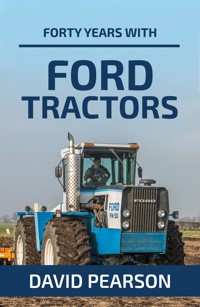
David Pearson spent more than four decades working for Ford's tractor business, starting on the production line at the maker's Dagenham factory before moving to the Basildon tractor plant opened in 1964. He went on to become the maker's UK sales manager, and earned a reputation among farmers and dealers as the man who knew all there was to know about Ford tractors. Along the way, he was involved in the development of some of the most famous machines to bear the blue livery, from the Dexta to the 7000, and the FW articulated tractors to the 7810. Edited by agricultural journalist Martin Rickatson, Forty Years with Ford Tractors builds on a series of recollections which originally featured in Classic Tractor magazine, and includes additional material to tell David's fascinating story in full. It includes a comprehensive selection of black-and-white and colour photographs, many of which have never before been published and will be of interest to all Ford fans and tractor fans more generally.Front cover photograph: (c) Dave Franciosy / www.farmingphotography.co.uk
Sie lesen das E-Book in den Legimi-Apps auf:
Seitenzahl: 195
Veröffentlichungsjahr: 2019
Das E-Book (TTS) können Sie hören im Abo „Legimi Premium” in Legimi-Apps auf:
Ähnliche



















FORTY YEARS WITH FORD TRACTORS
David Pearson with Martin Rickatson
Contents
Dedication
To my good friend Tony Speakman and to my daughter Nicky
Foreword by Rory Day
The basis of this book first took the form of a series of ‘Memory Lane’ articles run over a period of 14 months in Classic Tractor magazine. I’m sure I wasn’t the only one who was enthralled by David Pearson’s tales of his experiences with the tractor division of the Ford Motor Company during a remarkable career that spanned almost 40 years.
From field-testing prototype Fordson Dextas in the mid-1950s to having a substantial input into the design of the high-hp Ford 70 Series almost 40 years later, David truly is a man who can say he has ‘been there, done that’ and lived to tell the tale.
He never tires of talking about the old times, and was always only too willing to clear up the occasional queries that cropped up during his long running series of recollections and stories. For those who have never met the man, David is a true gentleman, with none of the airs and graces that are usually associated with those who have served as senior management in a large company. His work was always more than a job, and even in retirement his love of Ford tractors remains as strong as ever.
This book, which encompasses all those reminiscences and more, plus the photos that were used and many additional ones, serves as a fitting tribute to his contribution to agriculture, to tractor development, and to Ford tractors in particular.
Rory Day Editor, Classic Tractor July 2016
Foreword by Andrew Watson
The agricultural machinery business is a relatively small community of people with a passion for farming and an engineering bent. Over the years there has been a small number of key figures who have shaped the industry and have led from the front. David Pearson is one of that number.
His vision, allied to his knowledge of farming and engineering and his focus on listening to and understanding the needs of farmers and dealers, has made him one of the most successful and special people in this business, and we owe him a considerable debt of gratitude. Among the many legacies he has left is that as the father of high-powered tractors. It was his vision that led during the 1970s to the development of iconic models including the first turbocharged Ford, the 7000, and the legendary FW-30 and FW-60 articulated models.
David was an inspirational leader from the day he joined Ford’s tractor business in 1955. At that time, Bill Batty was CEO, and everyone understood that the very highest standards of performance were a fundamental requirement of all who worked in the company. David was a prime proponent.
Those who worked with him knew that striving to exceed these standards and fulfil the needs of dealers and customers, thereby helping the company attain the best possible market share, guaranteed David’s total support. Known by almost everyone in the UK agricultural industry, he set an enviable standard of commercial performance.
David played a key role as manager of the Ford Tractor Training Centre at Boreham House during the critical launch in 1964 of the Basildon-built 6X series of tractors. Later he became sales manager for the southern region of the UK in the immediate post-6X years. This was a time that called for the ultimate in dealer support and customer relations, an area in which David excelled by establishing strong personal relationships. At the same time he focused on fleet owners, visiting them and establishing a unique level of trust between manufacturer and key customers. He was also a powerful motivator of his sales team, never tolerating second rate results.
David rose still further to become general sales manager, and the business thrived under his leadership alongside that of executive director Geoff Tiplady, particularly after the successful integration during the mid-1980s of the New Holland harvesting equipment range, creating Ford New Holland. David’s well-deserved retirement from the business coincided with the beginnings of the formation of today’s New Holland tractor and harvesting brand.
He still lives within a stone’s throw of Boreham House, not many miles from Basildon, and stays in touch with the business he helped to create. David is a true legend of our industry, and his drive and vision are inspirational to us even today.
Andrew Watson Business director, New Holland UK and Republic of Ireland Basildon, July 2016
1
Beginnings in Agriculture
When I was a small boy of eight, I discovered a farm at the end of the road along which we lived. Olders Farm, in Angmering, West Sussex, was 50 acres of mostly grassland, with two acres of fodder beet for the dairy unit of 20 Ayrshire cows. Fascinated by its comings and goings, I asked the farmer if he would allow me to help with mucking out and feeding. So began my fascination with farming.
With the promise that one day I would be paid, probably half a crown, I was allowed to take on certain farm tasks. I loved the work, and would happily spend every day of my school holidays there. Our only form of power was a Shire horse, which pulled the cart that carried the manure out to the field, but neither this nor my father’s warning against my choice of industry could put me off – I wanted to work in farming.
As my youth progressed, I continued spending every spare moment on the farm. One Saturday, when I was about 16, I was invited to a wedding at the local golf club, but didn’t plan a late evening – I had promised to look in on a sow due to farrow later that night. The best laid plans often go awry, though, and while at the reception I was introduced to Martinis. In my innocence, I had no idea they were neat alcohol, and while I did get back to check on the pig, all I can remember was waking up at 6 o’clock the following morning with a very sore head, surrounded by the sow and 21 piglets.
Two years later, I can recall my father telling me that if I was ever to get married and start a family, I would have to find a job that paid more than the £4 a week to which I had finally graduated. With my agricultural interests in mind, he suggested I write to Massey Ferguson and to Ford, the two biggest names in tractors at that time.
December 1954 saw me taking the trip up to Coventry for an interview at the MF factory. To my surprise, I was offered a job on the spot, and was told I could start work the following September. But that was nine months away – and I couldn’t afford to wait that long.
My next trip was to Dagenham, home at that time of Ford’s UK tractor manufacturing business, where the world-famous Fordson Major was produced. Somehow I got an appointment to see Harry Power, the head of the Fordson manufacturing operations, and father of Harry and John, who both later worked for the company. I explained to Mr Power that all I wanted to do was drive tractors, whereupon he told me that I would have to learn how to make them before I could do that!
Again, I was lucky enough to be offered a job on the spot, and this time it was to start almost immediately. I gratefully accepted, and was told I could begin work on the tractor line in D Building at 7.15am on Monday, 10 January 1955, on a salary of six pounds and three shillings a week. The parents of my father’s secretary lived in a house in Upminster, which was a train and bus journey away from the plant, and initially looked as if it would provide handy lodgings. However, I omitted to tell them about the 7.15am start time, which meant I had to creep around when rising at 5.30am to catch the train to Dagenham Heathway and then a bus to the plant. I found this very embarrassing and soon found new digs with people who were more used to getting up at this ungodly hour.
On my first day at the plant, I found the line foreman and introduced myself. Ten minutes later I was straight in the thick of things, having been sent to D building, where engines were tested below ground in the dynamometer test beds. Each test bed had two engines, one running and one waiting its turn. There were ten bays, with two engines and one man in each bay, and each engine was run for one hour, in heat of almost 90°F – outside there was 10in of snow. If an engine was deemed to be running OK, it then started on its journey down the line to becoming a Fordson Major, the key Ford tractor model of the period.
I was told to dress in a white coat – although everyone else seemed to be wearing blue overalls. The engine tester, who was supposed to be supervising me, ignored me until, after two hours of watching, I asked if I could help connect up the inlet and exhaust, bolt the engine to the dynamometer and turn on the water for cooling. He looked at me in amazement but agreed, and after an hour he realised I had got the hang of it and sat down to read his paper. We were now mates. When I later returned from lunch he had a pair of blue overalls for me, well soaked in oil. He then removed my white coat and placed it in the bin, informing me I wouldn’t be needing it any more. I later learned that white coats were worn by inspectors and a change of clothes made me ‘one of the boys’ instead of one of ‘them’. This was undoubtedly a very important day in my life and never to be forgotten. I soon knew the first name of every man on the line, and to them I became ‘Dave’.
After two weeks on the dynamometers, I moved on. Every other Monday morning I got a new job in a new location. By week three, I was repairing the engines that hadn’t performed correctly on the dyno test. Slowly but surely I built up the engines and gearboxes, assembled rear transmissions and finally, at the end of the year, reached the end of the line – the repair floor. This is where tractors with problems or parts missing were repaired and approved for shipment.
Tractors going for export did not have batteries fitted, to prevent theft during shipping, so in order to start them batteries on trolleys were connected to the tractors’ terminals. To start the tractor, the throttle was fully opened, the starter depressed, and the cable then connected from the battery. We were always short of space, and on one occasion there were three Majors lined up nose to tail. If I had read the red tag that one day had been fixed to a particular tractor, I would have known it was seized in first gear and I wouldn’t have tried to start it. As a result we now had three tractors all needing new front hoods and bonnets! My mate on the repair floor, Alf, rushed over, removed the warning tag and complained to the foreman that I could have been killed …
Just as I was wondering what I would be doing the following week, a man I hadn’t seen before came across to tell me that next Monday I should report to Mudlands Farm at Rainham, four miles away, better known as the field test site. All modifications to existing tractors were tested here, and prototype tractors started their life at Mudlands before being sent out to work on farms in the local area, which comprised very heavy land adjacent to the River Thames.
At the time I arrived, the engineers had been doing some re-engineering exercises on the Major’s crown wheel and pinion to try to reduce production costs. Testing involved doing figures of eight, turning left with the left brake on and then vice versa. However, the new reduced-cost crown wheel and pinion seldom lasted long enough to get the tractor out of the shed, and we were changing four or five a day! In the end, the need for reliability won the day and we kept the original tried-and-tested arrangement.
As the tractors were on test 24 hours a day, everyone had to do some night work. On the edge of the River Thames where the test track was situated, large piles of soil had been dumped many years previously during the building of the London Underground, and it was quite a spooky place. One night driving round the track pulling a weighted sledge, I got a tap on the shoulder and turned to see a bald man with a stocking over his head. I have to admit I was terrified – until I realised it was a mate doing the same job as me who’d got bored and decided to pull a prank!
The manager of the test site was a wonderful man named George Smale, and I later worked at Ford with his son, Bob. We had a big shed that represented desert working conditions, with a floor of cement dust that also came to cover the walls and ceiling. One day a young lad was working in there and I was persuaded to throw a half-shaft on to the roof to dislodge the cement – as you can imagine, the air became choked with dust and it was impossible to see a thing. A full five minutes passed before he crawled out, choking and spluttering. It wasn’t until then that the colleagues who’d goaded me into playing this prank told me the boy’s father was the plant manager! Fortunately, no one else ever knew who the culprit was …
I had been promised that I would soon be driving the prototype of the new Dexta tractor, named not after the breed of little black cattle, but as in dextrous – skilful and able. In March 1956 a message came to me to cancel my digs and collect all my gear. Along with two charming Irishmen – one, Ted Lonergan, who became a very good friend – I was to then go with two new prototype Dextas and a little grey Ferguson for comparison to our test site, which was to be the Elveden Estate in Suffolk. The new task would see me back in farming for the next two years.
The digs Ford had chosen for us were in a pub sited just 6ft from the main railway line, and we were shown a double bed and told we were all sleeping in it! Before I had time to refuse, the two Irishmen had said they were not having it and walked out. Eventually, we found better lodgings at the Bell at Mildenhall, which was to be our home for the next two years. Daily expenses were 16 shillings – about 75 pence – which paid for our bed, breakfast, a packed lunch and an evening meal. We had jugs and bowls in the room for washing and shaving.
Elveden Estate is one of the best pheasant shoots in the country. King George V was a regular visitor to the shoot, but never drew a peg – he always had the King’s Stand, right in the middle. Gamekeeper figures I was shown from the estate recorded a bag of 3,248 birds in one day in 1912, and 22,788 pheasants in the 1904–05 shooting season. And vermin control was always a high priority for the keepers; in 1903 alone there were 14,662 rats killed on the estate.
We arrived at Cranhouse Barn, which adjoined the house of the keeper, whose name was lofty – he was well over 6ft tall. The farm was overrun with pheasants, and in those days I considered it a prize if I could chase one on to the verge and take it out with my car’s front numberplate. The temptation was enormous, and although we were warned not to even think about it, I have to admit we did do a bit of poaching. Elveden grew huge fields of lucerne, and when we drove home at night across a field, hen pheasants roosting on the ground would take off at the sight of the tractor lights, not knowing where they were in the darkness. After a bit of practice we could actually catch them in our hands, or better still get them with a stick and go back and pick them up. I should add that this only ever took place on a Thursday night prior to going home for the weekend, never more than two each and only in the shooting season …
In later years, Ernest Doe, of the well-known Ford tractor dealership and a legend in his own lifetime, regularly took me shooting at Elveden. Over a drink after one shoot I admitted my youthful activities to Lofty the keeper, who was still working on the estate. All he said was: ‘Tell me something I don’t know …!’
Elveden Heath had been a battle training ground during the war, and we ploughed thousands of acres over the two years, almost every day picking up unexploded mortars or shells between plough mouldboards and discs. Fortunately for us, none of them ever exploded!
As a vast 25,000-acre estate of mainly light land, we could work in any weather. I had changed from a 45-hour week being paid £6.30 to an 84-hour week being paid for a 140-hour period of two seven-day weeks on and two days off. That was a lot of money in those days, but we couldn’t think of a better place for it to go than the till behind the bar at the Bell.
It was about this time in my life, at just 21 years old, that I was presented with a golden opportunity for a young man. I was back home in Sussex, where the local golf club always had a big New Year’s Eve ball, and I got a phone call from the secretary asking if I would like to partner a young Canadian girl staying at the club over Christmas. Hesitantly, I said yes.
She was a charming girl and we had a great evening, after which I invited her out for lunch the following day. I arrived at her hotel to pick her up in my mother’s Ford Prefect, but she took one look at it and suggested going in her car, which to my amazement was a brand new Ford Zodiac drop-head. This should have told me something: her car was worth more than I earned in a year. We saw quite a lot of each other for the few days left before she returned to Canada, and I still have the stuffed tiger she left me as a gift. When a friend later suggested that I had ‘missed out’, he had to repeat her surname to me until I could work out what he meant – she was a Johnson, of the Johnson & Johnson pharmaceuticals family.
2
New Fordsons for a New Era
As 1957 came around, we had finished testing, and it was time to launch the new Dexta as a smaller companion for the Major. I was moved from Suffolk to Ford’s training centre, the Boreham House stately home in Essex, to show our dealer salesmen what the new tractor could do. West Country dealers were delighted that the new Dexta would enable them to compete against the popular Massey Ferguson 35, while for those in the more arable east the Major remained the more important machine. The Dexta, though, was a brilliant tractor to demonstrate, with lots of torque. With a two furrow plough attached, it was possible to set the throttle at 800rpm and get off and walk beside the tractor – not something that ‘health and safety’ would approve of today! On very cold days in Elveden we often did this to keep warm, until one day one of the drivers, Wally Ward, slipped as he got on and went under the rear wheel. He escaped, black and blue with bruises – fortunately the ground was frosted, which saved his life.
If there was a spare bed at Boreham House, I used to stay the night during the week, but at the weekend the house was empty, and I had my pick of the rooms. Often I would find tasks to do to keep me entertained over the weekend, and one day I decided to clear the shingle banks that slowed the water flow of the brook that ran through the grounds. As I loved driving the county crawler with dozer blade that we had on loan, I began to use it to shift the stones. I’d not been in the brook very long, though, before the track drive wheels filled with shingle and I was stuck. My first thought was to call out Fred Ridout from Co-Partnership Farms at the bottom of the drive. He arrived with a winch-equipped tractor, but it wouldn’t move the County, and we soon had a snapped wire rope.
To my embarrassment, the crawler stayed stuck in the brook for a couple of weeks, with the water at seat level. The next person to try and help extract it was an ex-army man working for the company, who suggested this would be an excellent exercise for the tank recovery unit at Colchester Garrison. This, however, turned out to be overkill – about a dozen soldiers with officers arrived and started to study the situation. Their main power unit was a Thornycroft Antar 6 × 4 tractor unit, complete with miles of steel cable, sprags, chains and a trailer load of equipment. The Antar was so heavy it broke all the drain covers as it came down the drive. Meanwhile, the County had to come out forwards as there was a bridge immediately behind it, and in front was a spinney about 100 yards long.




