


Erhalten Sie Zugang zu diesem und mehr als 300000 Büchern ab EUR 5,99 monatlich.
- Herausgeber: Books on Demand
- Kategorie: Ratgeber
- Sprache: Englisch
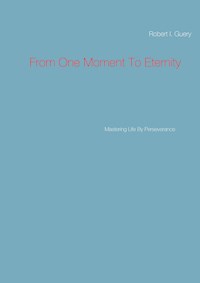
In this essay the author describes the main aspects of a successful life in business, family, and society. He deals with changes and continuity in life that are closely connected. Although the different aspects of this essay can be found in single publications, written by specialists in particular fields, it is not easy to find a publication giving the reader an overall view that integrates all those aspects into one work. The reader will be able to find many practical descriptions and suggestions to make life simpler and easier.
Sie lesen das E-Book in den Legimi-Apps auf:
Seitenzahl: 129
Veröffentlichungsjahr: 2015
Das E-Book (TTS) können Sie hören im Abo „Legimi Premium” in Legimi-Apps auf:
Ähnliche


















Table of Contents
Foreword
Part One: Time versus Lifetime
1.1. Time as a dimension
1.2. A happy life
1.2.1. Nutrition
1.2.2. Modesty
1.2.3. Human relationships
1.2.4. Variety
1.2.5. Awareness of natural environment
Part Two: Professional Lifetime
2.1. Business as a continuous process
2.1.1. Customer relationships – the value of continuity
2.1.2. Perseverance in business
2.1.3. Flexibility in business
2.1.4. Shareholder value – short- and long-term business
2.2. Management as a continuous process
2.2.1. The life-cycle approach
2.2.1.1. The life-cycle approach in human relationships
2.2.1.2. The life-cycle approach in product development
2.2.1.3. The life-cycle approach in services
2.2.1.4. The life-cycle approach in processes
2.2.2. Cooperation and conflict management
2.3. Continuous learning
2.3.1. A learning culture
2.3.2. A learning process
2.3.3. A learning leadership
2.3.4. A learning infrastructure
2.4. Social competence in business
2.4.1. The importance of social competence in business
2.4.2. Social competence related to human resources
2.4.3. Social competence related to environmental issues
2.4.4. Social competence related to third-world countries
2.4.5. Social competence in the industrialized countries
Part Three: Family Lifetime
3.1. Continuity in family life
3.1.1. The value of continuity
3.1.2. Perseverance
3.1.3. Flexibility
3.1.4. Short- and long-term aspects of family life
3.2 Family life – a long and continuous process
3.2.1. The life-cycle approach
3.2.2. Conflicts in the family
3.3. The learning process
3.4. Social competence
Part Four: Social Lifetime
4.1. Continuity in social life
4.1.1. The value of continuity
4.1.2. Perseverance
4.1.3. Flexibility
4.1.4. Short- and long-term aspects of social life
4.2. Social life – an extended and permanent process
4.2.1. The life-cycle approach
4.2.2. Conflicts within society
4.3. The learning process in society
4.4. Competence in social life
Epilogue
Foreword
Change and continuity
We talk about changes, we read and learn about changes. We feel that changes make life interesting.
Even so, do we really have as many changes in our lives as the media, schools, economists, and others suggest?
The answer is that there are only a very few “real,” major changes in life; most of the changes we experience are small, part of a continuous process that goes on and on.
The best analogy for this is a movie. Movies are composed of many thousands of single pictures. If they run fast enough, the human eye cannot distinguish between the individual pictures, and we see “continuity.” The result, the continuity, is composed of many small “changes.”
Another example, analogous to the development of a product, is the moment when a single drop causes the liquid in a glass to spill over. Before the last drop, there were thousands of drops that filled up the glass almost to the top. The change occurs when the liquid spills over, but it is an event that would not happen without the continuous process that precedes it.
Although everybody has a different perception of what change is, it is fair to say that real, major changes are perceived as sudden events, occurring within a very short time. Unfortunately, such sudden changes are mostly negative, like natural or manmade disasters. Earthquakes, nuclear explosions, wars, and various kinds of accident are always experienced as sudden changes in life. And yet, when a village is destroyed in an earthquake, what is destroyed in a few seconds is the work of generations, work that is the result of a continuous process over many years.
Changes thus have many dimensions. By traveling around, we can change our environment, culture, and even our language. But in all such “changes,” we also experience many common factors. As a result of globalization, the environment is becoming more and more similar wherever we are. New buildings all over the world are often very similar; offices and businesses are furnished in the same way in order to make it easier for those of us undergoing the “change” in our environment to feel comfortable, which means moderating or even eliminating that “change.” Very much the same applies to culture. We can watch the same performances in theaters, opera houses, cinemas, or rock venues in most western countries, and some countries are joining the western world with enthusiasm. With regard to language, English is becoming the shared language of most countries, making it possible to move without change, although other important languages, such as Chinese, Indian, French, Spanish, and German, remain.
Thus, the real issue is to distinguish between continuity and change. Is there a valid difference between the two? The notion of change is definitely a subjective one. The older we get, the more likely it is that we experience a feeling of déjà vu, of the fact that a change is not really a change because it is very similar to an event that has already happened before. But to put our experience into perspective, we have to remember that the average life expectancy is only 80 years, compared to the evolution of plants and animals that started about 500 Million years ago! Therefore, the true limitation to our potential, to perceiving a situation as a continuous one or as a change, is caused by our physical or psychological capabilities as human beings.
“Managing Change” and similar slogans are bound to be attractive to us. In this book, I will try to focus on a very important aspect of our life – continuity. However, the interaction that occurs between change and continuity will pervade this book from beginning to end, because there is no change without continuity and no continuity without change, just as there is no evil without good and no good without evil. By “change,” we understand the beginning of a new phase, and by “continuity,” we mean a return to “normality” after the change has taken place.
The true challenge in this book is to define the difference between continuity and change. As said above, the perception of this difference depends on our own characteristics, such as our age, sex, culture, and more. Consequently, I am sure that readers will have different opinions about the views expressed in this work. In spite of that, I hope and trust that persons reading this book will see life in another dimension by the time they have finished it. I also hope that by having written this book I have been able to make a small contribution toward understanding life and our environment in a different way.
Part One: Time versus Lifetime
Yesterday is History
Tomorrow is a Mystery
Today is a Gift
1.1. Time as a dimension
“Everywhere is within walking distance, if you have the time.”1 “Life, if you know how to use it, is long.”
I once heard it said in a TV discussion that only the very rich and very poor have time at their disposal. Others are driven by the economic and social systems they inhabit.
I disagree with this statement.
Time is the only real asset in life, because it is irreplaceable and the only asset that is distributed to everybody on an equal basis. True, some of us have a longer life than others do, but this is not necessarily the result of wealth or poverty. Because time is the only real asset we have, we should handle it with extreme care. The real “marketplace” for us should be “time against time” rather than “goods against money.”
Time is running; every second, every minute, every hour, every day, it runs at the same pace for everybody. For rich or poor, for ill or healthy, for black or white, for young or old, physically and objectively it runs at the same speed. In absolute terms, this is the only right, and yet it does not apply to “my time.” My time is limited, and so, subjectively it is running faster. My only option to “slow down” the pace is to compress “more” into a certain time unit. The continuity of time is given, but the way of changing that lies in our hands. The name of the game is to find the right number of “changes” to compress into a given time unit. This is achieved through concentration. In this way, we do not waste our time, regardless of whether we are young or old, more or less educated, female or male, or have any other distinguishing characteristics. Through concentration, we add life to our years, instead of adding years to our life by medical means.
The daily time at our disposal is the same for everybody.2 However, the way we use our time varies from one person to another. Some of us are very efficient in using time, but most of us are not really aware how precious this asset is.
The best business in the world would be a business that sold real time. How many times have we heard people say, “If only I could stop time,” “If only I could turn back the clock”? Unfortunately, we cannot do that. However, what we can do is use our limited time as efficiently as possible, from this moment on. The future is starting this very second!
Can you catch time?
At the same time, we need to realize that a certain process needs a certain time. If we think about the growth of plants, of children, of enterprises, we can see that they need time to reach a certain stage. The same applies to mental evolution, resulting in our educational level. We need a certain time to finish a piece of work, to find a suitable job, to reach professional competence, i.e., time plays a central role in our whole life. If we do not appreciate and accept this fact, we get into difficulties.
Often we try to accelerate a process by artificial means. The results are mostly disappointing. During the acceleration phase, side effects appear, and at the end, less is achieved than would have been possible had we let the process progress without intervention.
According to Indian meditative philosophy, every day is like a new life. Every morning is a new beginning, a new chance, like a child that opens his eyes for the first time. We reach the zenith at noontime, and in the afternoon it starts to get dark. We can consider every day as a continuity and have to take every day as a whole life. If we could not make it today, tomorrow we have another chance. A year is like 365 new lives; therefore, we always have new chances. For the same reason, however, we should not plan too far, because more often than not life is different from what we expect.
However, there are a few means that allow us to stretch time, all of them to do with feelings and memories rather than physical dimensions. First of all, feelings and memories are long living, whereas facts and figures are merely short-term phenomena. How many of us remember the name of the first IBM manager? And how many remember Mozart, Schubert, or Beethoven? Memories are the only dimensions that can override time. We bear people in mind after they have died, we feel like they are still with us, we imagine that they talk to us or are engaged in activities we remember. Dreams are also memories, connected mostly with the past, but we feel like they are happening right now.
This dimension of memories and dreams plays an extremely important role in our life. Who has no dreams? Who has no memories? These are ways to escape from the sober reality that the clock is ticking and there is no way to stop it. We give ourselves a short period of relief from the daily routine, engaging in a form of imaginary recreation that gives us the fresh energy to deal with the ongoing problems of real life. This process of alternation is a proven way of dealing with stress situations efficiently. By “diving” into a dream world, or into refreshing memories, before returning to the “real world,” we can master such situations much easier than by focusing on the stressing factors themselves.
Time heals. As it advances, our physical and psychological injuries are cured and we feel better. This is a fact that we cannot change and have to be aware of. Thus, patience is an essential feature in our lives.
1.2. A happy life
Life is continuity. From the day we are born until the day we leave this world, we are going our own way. We go through our personal development, which includes education in all its forms. We build up relationships and, hopefully, give back to society at least as much as we have received from it. Although each of us possesses specific genetic characteristics (posture, look, ways of expression) that stay with us for our whole life, we can improve our quality of life considerably by an attitudinal approach, by enriching life with joy and happiness.
What makes us happy in life? Wealth, status, or success in our profession? There are countless definitions of happiness and again this is a subjective feeling that cannot be exactly defined. In my opinion, there are two main components in happiness, one physical, the other mental. Both of them are tied up closely but can be detected separately.
1.2.1. Nutrition
Many of us believe that our physical appearance is the result of genetic factors. While this is true to a certain extent, we can have considerable influence over the way we look. I want to focus on those factors that are extensively under our own control, and the most important of these is without doubt our nutrition. I have been able to experience, in the case of my own body, the difference that nutrition can make in life and how much proper nutrition can add to the quality of life.
In today’s life, we have an enormous range of food to choose from. It is exactly this fact that makes it difficult to select the right components for optimal nutrition, particularly because the “right” nutrition is different for everybody. I am not going to suggest the perfect diet for you because you can find thousands of books, pamphlets, brochures, and recipes containing diets, of which not one is likely to suit you perfectly. The reason for that is that everybody has a different body; everybody has to find out for themselves what their optimal diet is.
However, I want to focus on one factor that causes the most problems with diets. This is the issue of continuity, or of permanence, which will accompany us through this whole book.
I am convinced that everybody could adopt a healthier life style and lose a few pounds by applying a certain diet. We need a “kick” in our life to start such a diet. Usually, it is an illness, a change in lifestyle, or a change in the environment that motivates us to start a diet. The beginning is hard, but most of us manage to lose most of the excessive weight, and we are happy. We are so happy that we go back to our old habits, eat excessively, and put the weight right back on. We are back to square one. So what happened here? As is well known, one of the most difficult tasks in life is to change a person’s habits. Hence, although we can apply a “shock therapy” and lose weight, we return to the old situation as soon as the reason for the diet has disappeared, or at least once we think it has disappeared.




