


4,99 €
Mehr erfahren.
- Herausgeber: tredition
- Kategorie: Lebensstil
- Sprache: Englisch
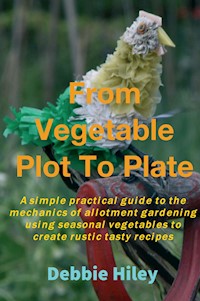
A simple practical guide to the mechanics of allotment gardening using seasonal vegetables to create rustic tasty recipes.
Das E-Book From Vegetable Plot To Plate wird angeboten von tredition und wurde mit folgenden Begriffen kategorisiert:
recipes, vegetarian, Allotment gardening, Vegetable Growing
Das E-Book können Sie in Legimi-Apps oder einer beliebigen App lesen, die das folgende Format unterstützen:
Seitenzahl: 71
Veröffentlichungsjahr: 2019
Ähnliche



















From Vegetable Plot To Plate
A simple practical guide to the mechanics of allotment gardening using seasonal vegetables to create rustic tasty vegetable recipes
By Debbie Hiley
© 2019 Debbie Hiley
Cover, Illustrations: Debbie Hiley
Publisher: tredition
ISBN
Paperback
ISBN 978-3-7497-7407-4
Hardcover
ISBN 978-3-7497-7408-1
eBook
ISBN 978-3-7497-7409-8
All rights reserved
Contents of this work are protected by copyright law No part of this work may be copied without prior permission from the author.
From Vegetable Plot To Plate
A simple practical guide to the mechanics of allotment gardening using seasonal vegetables to create rustic tasty vegetable recipes
By Debbie Hiley
Contents
INTRODUCTION
GETTING STARTED
GROWING SPRING VEGETABLES
SPRING VEGETABLE RECIPES
GROWING SUMMER VEGETABLES
SUMMER VEGETABLE RECIPES
GROWING AUTUMN VEGETABLES
AUTUMN VEGETABLE RECIPES
GROWING WINTER VEGETABLES
WINTER VEGETABLE RECIPES
ACKNOWLEDGEMENTS
RESOURCES
Introduction
My interest and enthusiasm in gardening and cooking have spanned over many years, by writing this book I am combining these two interests. Growing allotment plot vegetables through the seasons accompanied by some of my favourite seasonal vegetable recipes.
Having been a vegetarian for thirty years and most recently a pescatarian I have always preferred the wonderful taste of home-grown vegetables as the taste is second to none, wonderful flavours on a plate. The finished product may not be the most attractive looking vegetable that you have ever seen but I assure you it makes up for this in taste alone. Growing good food for me was the main purpose of having an allotment plot.
I am now retired from my career as a paediatric nurse which spanned over thirty-six years. Although I do feel that this has provided me with a good foundation as it contributed somewhat to me being able to attend my allotment plot by providing me with the available time in between shifts and nurturing the patience required which has enabled me to be able to commit to and attend to it.
Having an allotment plot is a great hobby which is also very relaxing, creative, rewarding and at the same time challenging. Never the less it is always a joy to tend to, nurture and enjoy the rewards of your personal efforts. There is a great sense of community. You can join in with social banter with other allotment holders or alternatively you may prefer solitary time to yourself, it can be as interactive as you want it to be. Not only is there the added bonus of fresh air and exercise, but there is also an overall sense of wellbeing, so it is great for holding the mind body and soul together. With the ultimate goal of having the achievement and fulfilment of growing and harvesting your own delicious tasting vegetables.
In the present climate where land is being acquired for building developments, plot holders have had to take a political stand to prevent their land from being used in this way. In the village that I reside in, we needed to take this very approach, as the threat of building a small development on some of the allotments was proposed. I am happy to report that we were successful in preventing this proposition from happening. Community spirit prevailed in the end, and it was a positive outcome for the allotment holders.
More recently in 2018, the future of our allotments have been protected by the introduction of a key strategy for services and facilities in villages, with the implementation of a village plan. The idea being, that any future proposed developments for a village, should take into consideration the local village plan and remain within its framework. These plans will become part of the strategic development plan produced by district councils and, therefore, will carry weight in the determination of planning applications.
Allotments are an environmental asset, firstly creating a green space for numerous wildlife species and secondly providing a sense of community and well being for the plot holders themselves.
Over the last fifteen years I have tended my allotment plot with a fair amount of success and also with some failures along the way. It can be a ride of highs and lows. On balance a great learning curve. I will share my experience and tips for growing vegetables, which stems from trial and error and shared tips from other passionate allotment plot holders. My main aim of this book is to provide a practical guide to creating and enjoying your own plot.
Getting Started
Finding an allotment
Getting started and finding an allotment plot mainly depends on where you live in relation to it. To make it achievable you need to be reasonably close to it so that you are not travelling too far. A good starting point is to check with your local authority, the parish or borough as most allotments are council owned. Some may be privately owned by churches or local organisations and businesses. It is always a good idea to talk to one of the existing tenants on the allotment plots that you are considering to rent. The annual rent can vary according to the plot area, site, facilities, and ownership.
The best time to take on an allotment plot is the beginning or end of the year. This then allows you the time to prepare the ground in readiness for the allotment calendar year and maintains your enthusiasm and interest to continue. Once you have decided that you would like to have a go you do need to act as soon as possible as most local authorities have a waiting list for allotment plots. It is dependent on how high the demand is as to whether you will be able to take on a plot right away.
The best advice that I can give to anyone wishing to take on a plot is to share a plot when getting started. Check the tenant agreement as some authorities do not allow for sub-letting of a plot. If sharing, this allows you to get a taste for the planning and work involved on a smaller scale. After tending a shared plot, you can then decide whether this is the right size for you, it is dependant and to suit your own personal needs.
If you are given the opportunity to share an existing allotment holders plot as I was, I do think that this is by far one of the best situations to find yourself in, so that you find out what it is all about. This is how I started off initially, my lovely allotment neighbour Ben allowed me to work an area of his allotment. After a couple of years I was still serious enough to continue and needed more room to grow and so took on a full allotment when it became available. This gave me a taste for what was involved and conveniently, advice was always to hand. This opportunity also gave me a taster for what I was letting myself in for. So what are you waiting for, take the plunge, jump in and give it a go.
Factors to consider
There are many factors to consider when contemplating the idea of having an allotment, I must admit I was wearing my rose tinted glasses before I acquired my very overgrown plot. The time and effort we put in at the beginning was backbreaking, but well worth the physical effort when you get to taste the end result on your plate.
These considerations are better broken down into two main groups, both personal factors and plot factors.
Personal – time, commitment, motivation, physical capability and cost.
Plot – Location, cost, site position, size of plot, type of soil, and tenant agreement.
Personal
Time - It is possible to attend a plot with a minimum of a weekly visit. Although you will have to attend more often when regular watering and harvesting is needed.
Commitment - Regular care is needed to keep on top of routine tasks, you decide how much, little or how often you do them.
Motivation – What are your aims and what do you want to achieve, and be aware of your strengths and limitations.
Physical capability – Basic physical capability is an advantage as Some of the ground work can be strenuous.
Cost – The overall cost depends on how you want to approach the plot and what funds you have available. If you already have tools the expense is reduced.
Plot
Location – The location of the plot is important, a short travelling distance and close proximity to home is helpful and more achievable.
Cost – Plot prices do vary dependant on your location and facilities available to you.




