


Erhalten Sie Zugang zu diesem und mehr als 300000 Büchern ab EUR 5,99 monatlich.
- Herausgeber: Luath Press
- Kategorie: Geisteswissenschaft
- Sprache: Englisch
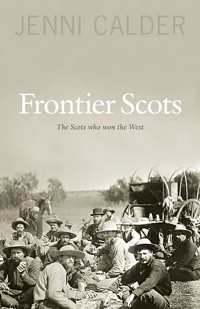
Today there are up to 25 million Americans who claim to have Scottish heritage. Many of these people are the descendants of Scots who journeyed to America in the 19th Century, and became true pioneers in the West. These men and women were real cowboys and homesteaders; they were sheriffs and outlaws; they mined gold and built railroads; and they were among the first to conquer the frontier, making lives for themselves in the wild west. Most importantly they became the Scots who helped to shape the United States of America. From the commended to the condemed, the Scots who braved America's frontier territories have made a lasting impact on what is now the world's most powerful country. This is an accurate and fascinating depiction of these people and their stories, giving real insight into the lives of the frontier Scots.
Sie lesen das E-Book in den Legimi-Apps auf:
Seitenzahl: 331
Veröffentlichungsjahr: 2020
Das E-Book (TTS) können Sie hören im Abo „Legimi Premium” in Legimi-Apps auf:
Ähnliche


















JENNI CALDER was born in Chicago, educated in the United States and England, and has lived in or near Edinburgh since 1971. After several years of part-time teaching and freelance writing, including three years in Kenya, she worked at the National Museums of Scotland from 1978 to 2001 successively as education officer, Head of Publications, script editor for the Museum of Scotland, and latterly as Head of Museum of Scotland International. In the latter capacity her main interest was in emigration and the Scottish diaspora. She has written and lectured widely on Scottish, English and American literary and historical subjects, and writes fiction and poetry as Jenni Daiches. She has two daughters, a son and a dog.
First published 2009
eISBN: 978-1-913025-82-3
The paper used in this book is acid-free, recyclable and biodegradable. It is made from low-chlorine pulps produced in a low-energy, low-emission manner from renewable forests.
Printed and bound by
Exacta Print, Glasgow
Typeset in 10 point Sabon
by 3btype.com
The author’s right to be identified as author of this book under the Copyright, Designs and Patents Act 1988 has been asserted.
© Jenni Calder 2009
Contents
Introduction
CHAPTER 1 Trailblazers
CHAPTER 2 Texas
CHAPTER 3 Securing the Frontier
CHAPTER 4 Overlanders and Homesteaders
CHAPTER 5 Cowboys
CHAPTER 6 Prairie Sod and Mountain Pasture
CHAPTER 7 Gold, Silver and the Iron Road
CHAPTER 8 Building Communities
CHAPTER 9 Range War
CHAPTER 10 Wilderness
Chronology
Map of American West
Bibliography
Introduction
IN 1842, JOHN REGAN, from Ayrshire, took passage from Liverpool to New Orleans and made his way up the Mississippi River to Burlington, Iowa. He settled on the Spoon River in Illinois, purchasing 40 acres of land for £10 sterling, on which he grew corn and raised pigs. It was hard work. He built an 18-by-14-foot house, ploughed, sowed, harvested and threshed his corn, and took it to market. Cutting firewood was a major task – the winters were long and cold. His wife made bread, butter, soap and candles, spun flax and wool, and made the family’s clothes. She also got a job as a teacher to bring in some cash. In his book The Western Wilds of America (1859) Regan wrote:
In that western country a man who feels himself unable or disinclined to strike in boldly with his own hands, and help himself, will find himself continually behind… the immigrant must be a man of action – be first and last in everything. If he cannot do a thing well, let him do it nevertheless, and wait on no one for aid, if aid be scarce.
The Regans were among the thousands who left Scotland in the first half of the 19th century and made their way to what was then the Far West. Most of them travelled as families and individuals rather than as groups. Unlike Canada, the US saw few settlements of whole communities from Scotland and as Scottish Americans followed the frontier, they became increasingly dispersed. Their neighbours might come from anywhere in Europe, or they might have no neighbours at all. The settler, Regan said, had ‘to learn life anew’, adapt to an alien landscape and an existence among strangers. At first Regan was homesick, but gradually that faded: ‘Every year the settler passes in the new country, he is striking his roots more widely and firmly into the soil, and his attachments to the far-off land wither and decay, till at last he has nothing of regrets to trouble him.’
Yet often immigrants did not stay long enough in one place to grow roots. They might settle initially in one of the eastern states, then cross the Appalachians to Kentucky or Tennessee, then move on again as new territories were opened up. They were undeterred by vast distances and difficult journeys. In 1793, Scottish-born James Stuart was an Indian trader on the frontiers of the newly formed United States of America. His son Robert married Nancy Currence Hall, and they had two sons, James and Granville. Granville was born in Clarksburg, Virginia, in August 1834. Three years later the family headed west. From Wheeling, not far from Clarksburg, they took a steamboat down the Ohio River to the Mississippi, where another steamboat took them north to Rock Island, upriver from Burlington. The last stage of their journey, by wagon, took them a short distance east to Princeton, near the Illinois River. From Wheeling to Princeton took them a month.
Robert Stuart, second-generation Scottish American, stayed only a year in Illinois before moving his family west again, across the Mississippi to Iowa. There, he took up land claim number 16 on a creek called the Wapsanohock – ‘crooked creek’ in the Musquawkee language. There, Robert built a one-room log cabin, and the boys played with the local Indian children. The school they went to was a log cabin with an earth floor.
Five years later the family moved again, to a farm on the Red Cedar River, near what is now Cedar Falls but was then the edge of wilderness. Granville and James learned to hunt, fish and canoe. In 1849 news of gold strikes in California caused huge excitement. Like thousands of others, Robert Stuart, with three companions, set off on the overland trek across the Great Plains and the Rocky Mountains for the gold fields. They reached the Sacramento valley in the autumn of that year. After two years of no great success Robert returned home, this time travelling by ship to Nicaragua, crossing to the Gulf of Mexico, another ship to New Orleans and then up the Mississippi. But the following year he headed west again, taking his two sons. They set off with two light-spring wagons, each pulled by four horses, loaded with supplies and spare clothing, bedding and weapons. They slept in the wagons. As Granville would write years later, ‘after many annoyances and much profanity’ they arrived at Council Bluffs on the ‘wide swift flowing muddy’ Missouri River. For $10 per wagon and team, an exorbitant price, they were ferried across the river, and continued the long, arduous and often dangerous journey to California.
The progress of the Stuart family, from Virginia where many Scots settled, moving west as new territories opened up, and the career of Granville Stuart in particular, encapsulate many of the experiences of Scottish Americans who followed the frontier. Granville will make many appearances in the chapters that follow. He had a typical pioneer upbringing. He was 18 when he went to California, where he and his brother James staked their claims and prospected for gold. Later, Granville would be a trader, a cattleman, a vigilante, a land agent and a politician. At the age of 70 he became librarian of the public library at Butte, Montana, and at 84 he was commissioned to write a history of the state. His life spanned a period of extraordinary change, which saw the American West settled and the frontier tamed: in 1890 it was declared officially closed by the US Census Board. By that time Native Americans were confined to reservations, towns and their institutions were burgeoning, fortunes had been won and lost, communications transformed. Towards the end of his life Granville wrote:
I have seen the tide of emigration sweep from the Mississippi river to the Pacific coast, and from the Rio Grande to Alaska. I can remember when there was not a single railroad west of the Mississippi, when there was not a telephone or telegraph line in existence, and a tallow dip was our best means of illumination.
In his memoir, Forty Years on the Frontier (1925), he portrays himself as a rugged and acute frontiersman who made a significant contribution to conquering the wilderness. Whatever his own agenda, it remains a valuable source.
Charles Mackay visited the US in the 1850s, and responded excitedly. ‘It is on American soil that the highest destinies of civilisation will be wrought out to their conclusions,’ he wrote, ‘and the record of what is there doing, however often the story may be told, will be always interesting and novel. Progress crawls in Europe, but gallops in America.’
For those who at that time were beginning to infiltrate the trans-Missouri west, ‘gallops’ was an appropriate word, as horses played so significant a role in the events of the last phase of the frontier. Thirty years later Lord Bryce commented: ‘The West is the most American part of America... the part where those features which distinguish America from Europe come out in the strongest relief.’ The Scottish input to the frontier character and its legacy was considerable.
Scots played a significant part in every stage of American history. In the colonial period Scottish merchants and ministers, lawyers and doctors, and perhaps above all teachers, were prominent and influential. Scottish ideas crossed the Atlantic in books and in people’s heads, and were absorbed by those who shaped the Declaration of Independence and the American Constitution. Scottish people were seen as reliable and hard-working settlers, opening up the wilderness and securing it. That legacy remained with the next generations, as the Stuart family exemplify.
In the 19th century, Scots were among the millions of Europeans who poured into the United States and provided labour for the mines and factories, and homesteaders for the newly-opened territories. They explored the Far West and were key players in the fur trade that brought the first Europeans to the Rockies and the Pacific Northwest. Appropriately, in Steven Spielberg’s 2006 television series Into the West there are identifiable Scots among the mountain men portrayed in the first episode. One of them sells a captive Cheyenne woman to the hero Jake Wheeler: Thunder Heart Woman becomes Jake’s wife. And viewers familiar with the novels and film scripts of A.B. Guthrie Jr. (the name is Angus in origin) were no doubt amused to note that one of Spielberg’s overlanders is called – A.B. Guthrie jr. Another Guthrie, Woody, ensured that the folk record of cowboy life survived, in songs such as ‘The Chisholm Trail’, ‘Billy the Kid’ and ‘Whoopee Ti Yi Yo’, songs that themselves often reflected the influence of a Scottish tradition.
Scots fought on both sides in the Civil War, as they had done in the Revolutionary War. They fought Native Americans, and championed them. They were law makers and law breakers. As new communities were planted west of the Missouri, they established businesses and institutions. They helped to develop the commercial potential of ranching, mining and railroads, providing money, managerial and banking skills, and imagination, as well as labour. They are prominent in the history of the American West, and also in its myths and in the fiction and films it has generated.
In the 1890s, around a hundred years after James Stuart settled in Virginia, a group of Scottish families from Dundee made their way to Montana, where in the Big Belt Hills, not far from Helena, they settled and farmed. As far as Helena they were able to travel by train, but the last stage of their journey was by wagon on a rough country track. Although by this time the American frontier was deemed to be closed and Model T Fords would soon be bumping along that track, their life in the Montana hills was not so different from that of the Stuarts in Illinois and Iowa. The wilderness was still there. On the mountain pastures they raised sheep and fended off the wolves and coyotes. They made the most of the summer months and battled through savage winters. Their story is told by Ivan Doig, the grandson of one of them, in his memoir, This House of Sky (1987). It is a story indelibly stamped with a Scottish inheritance. Ivan’s father, Charles Doig, who was born in Montana and worked in the mountains all his life, never lost the Scottish timbre of his voice. Ivan’s writing is imbued with the resonance of his Scottish origins and the experience of his pioneer forebears.
Scots made good pioneers. They were ubiquitously characterised as tough, courageous and hardworking. Many were Presbyterians, which predisposed them to a pragmatic endurance and a faith in survival, even when long separated from the accustomed manifestations of religion. Many were Highlanders, formed by a terrain as demanding if not on the same scale as the American West. Some had been schooled in the equally unforgiving environment of the Industrial Revolution. The Scottish soldier was a presence in all America’s wars, before and after the Revolution. Many pioneer communities could produce a fiddler to perform when celebrations were in order, and that fiddler, if not a Scot himself, would likely owe his style and his music to a Celtic tradition.
Scots also relished the scope for freedom of thought and action which they found on the frontier. There is no doubt that some abused the opportunities that came their way, helped themselves to land, exploited those less fortunate than themselves, and assisted in the destruction of the native population. But they were also conspicuous among the heroes and heroines of the frontier (although the records inevitably have much less to say about the latter), sung and unsung. They were adventurous and astute explorers and innovators as well as tenacious travellers and homesteaders.
In his book America Revisited (1905), David Macrae commented specifically on Scots in the West. ‘America is another Scotland on a huge scale,’ he said. And he added, ‘America would have been a poor show if it had not been for the Scottish.’ There is scarcely an episode in the dramatic and resonant story of the American West in which Scots do not appear. That resonance reaches back across the Atlantic, for North America is part of Scotland’s history. The bagpipes that were heard on the walls of the Alamo, the Gaelic spoken by Montana cowboys, the volume of Robert Burns’s poetry carried by John Muir on his long walks, these belong with the continuing narrative of Scotland’s past.
CHAPTER 1
Trailblazers
Give me a home in the far, far west;
That’s the place I love the best.
‘The Far, Far West’, traditional, as remembered by J. E. McCauley, Texas
ON 24 APRIL 1813 a small party of men reached Fort Osage on the Missouri River. They had crossed the Rocky Mountains from the Pacific coast. They were led by a man called Robert Stuart, who had grown up in the parish of Callander on the edge of the Scottish Highlands. While thousands were heading west from the eastern states, they had travelled 2,000 miles in the opposite direction from a part of the American continent almost unknown to white people.
Stuart and six men had left the fur trading post of Astoria, near the mouth of the Columbia River, in June of the previous year, entrusted with carrying dispatches to New York. The dispatches reported on the progress of the trading enterprise initiated by John Jacob Astor who had founded the American Fur Company in 1808 and had plans to expand. He decided to challenge the dominance of the British North West Company, which had outposts in the Columbia River area, and for this purpose he recruited men, several poached from the rival company, to set up Astoria. The plan was for Astoria (in present-day Oregon) to become a focus of trading activities, gathering in furs from a vast hinterland and loading them on ships. Some would make the long and difficult voyage round Cape Horn to the east coast; others, it was hoped, would sail west and supply the oriental demand for furs.
All the men with Robert Stuart were experienced frontiersmen; two of them were also Scots. Robert McClellan, though Pennsylvania born, was a Highlander by descent. As a young man he had led pack trains across the Alleghenies, the mountains that marked the first frontier of the American colonies. For a while he was an army scout. William Clark – who with Meriwether Lewis led the first US expedition to cross the Rockies east to west and was himself of Scottish extraction – described him as ‘brave, honest and sincere, an intrepid warrior’. He also had a volatile temper. Ramsay Crooks had been born in Greenock on the River Clyde, the son of a shoemaker. In 1803, at the age of 16, he accompanied his widowed mother to Montreal. Three years later he was engaged in the fur trade with McClellan, along the upper reaches of the Missouri. The two men established a trading post at Calhoun, Nebraska. When they joined Astor’s venture in 1811 they were veterans of the wilderness – mountain men, as the few white men who had penetrated the Rockies were called.
When Washington Irving was asked by J.J. Astor to write an account of Astoria’s short but action-packed life he responded with enthusiasm. He celebrated an episode of hardship and adventure, which opened the way to settlement and the expansion of the young United States of America. The fur hunters were the vanguard, who blazed trails that would eventually ‘carry the American population across the Rocky Mountains and spread it along the shores of the Pacific’:
Without pausing on the borders, they have penetrated at once, in defiance of difficulties and dangers, to the heart of savage countries; laying open the hidden secrets of the wilderness; leading the way to remote regions of beauty and fertility that might have remained unexplored for ages, and beckoning after them the slow and pausing steps of agriculture and civilisation.
Irving was himself the son of a Scot, William Irving from Shapinsay in Orkney, who had emigrated to New York in 1763. In his account, he highlighted the fact that Scots were the engine of the fur trade conducted by the North West Company and the Hudson’s Bay Company, as partners, as traders, as factors of remote trading posts deep in the wilderness, and as explorers. When Astor launched his subsidiary Pacific Fur Company in 1810, it was almost inevitable that his expedition to the Pacific would be manned by Scots. Laurence Oliphant, a Scot who visited the US in the early 1850s, stressed the stamina and toughness of Scots involved in the fur trade, and also their ‘shrewdness and sagacity’ in harnessing the skills of the voyageurs who were vital to North West Company success.
Robert Stuart was a tall, dark-haired, prepossessing man, the son of a crofter and schoolmaster, who had first tried to make his way as a teacher. His uncle, David Stuart, was one of many Highlanders recruited by the North West Company, and when Robert’s father died in 1807 David suggested that Robert should join him at the company’s headquarters in Montreal. Robert was offered a post as clerk, which involved checking beaver pelts before their export to Europe. Montreal was the hub of the fur trade, where the Nor’Wester partners gathered for sumptuous and riotous dinners and drinking sessions, but Robert’s role was modest and dull. When John Jacob Astor came to Montreal looking for recruits for his proposed Pacific coast venture both Robert and his uncle were keen to sign up. There were plenty of their compatriots of like mind. Their fellow adventurers included Alexander Mckay and his son Tom; Donald Mackenzie, a cousin of Alexander Mackenzie, the first explorer to cross the continent; Duncan McDougall, and Alexander Ross.
Irving described the Scots in general as ‘characterised by the perseverance, thrift, and fidelity of their country, and fitted by their native hardihood to encounter the rigorous climate of the north, and to endure the trials and privations of their lot’. Alexander Mckay had accompanied Mackenzie on both his expeditions. Donald Mackenzie had 10 years’ experience with the North West Company, and as well as having a good knowledge of ‘Indian trade and Indian warfare’ was ‘seasoned to toils and hardships’ with ‘a spirit not to be intimidated’. He was also an excellent shot. Later, Ramsay Crooks and Robert McClellan were taken on.
Astor proposed two expeditions, one overland and one by sea, sailing south and rounding Cape Horn into the Pacific. It would be hard to say which journey was the more hazardous. In September, 1810, David and Robert Stuart, the Mckays, McDougall and Ross boarded the Tonquin in New York, along with a cargo of tools and materials to build a trading post, weapons and ammunition, and goods – cloth, axes, knives, fishing tackle, kettles, frying pans – to trade with the natives. From the start there were problems. Captain Jonathan Thorn did not care for the Scots (as well as members of the expedition there were Scots among the crew) or for the French Canadian voyageurs who were also on board. He did not like the fact that the Scots spoke Gaelic and the voyageurs spoke French, neither of which he could understand. He was stubborn and autocratic, a man of ‘a jealous and peevish temper,’ according to Alexander Ross, and seemed particularly to dislike Robert Stuart. The Tonquin’s months at sea were filled with friction, and at times confrontation.
After a difficult voyage, the following spring the Tonquin eventually arrived at the mouth of the Columbia River and faced the notoriously treacherous sandbanks that guarded it. Thorn’s determination to enter the river, in spite of high winds and a heavy sea, resulted in the loss of eight lives and nearly of the ship. But land-fall was eventually made on the southern bank of the estuary, and the business of clearing the thickly wooded site was begun. Alexander Ross, whose account of the expedition, Adventures of the First Settlers on the Oregon or Columbia River, was published in 1849, felt that it would have been hard to find a more problematic site for ‘the emporium of the west’:
[it was] studded with gigantic trees of almost incredible size, many of them measuring 50 feet in girth, and so close together, and intermingled with huge rocks, as to make it a work of no ordinary labour to level and clear the ground.
While the ‘no ordinary labour’ of creating Astoria was going on, supervised by Duncan McDougall, Captain Thorn continued up the coast, hoping to trade with the natives. He and all but one of those on board, including Alexander Mckay, were never seen again. Eventually it was learnt that they were killed by Indians on Vancouver Island.
It took two months to clear an acre and prepare a site for a trading post. Felling trees and constructing buildings were just the beginning. Contacts had to be made with those who would supply the beaver pelts on which success depended. For this purpose, an expedition set off up the majestic Columbia River, following it to the east, then bending sharply to the north, until they reached the confluence with the Okanogan, which crosses into what is now Canada. With half the party David Stuart continued up the Okanogan, where he established another trading post. Washington Irving’s comment strikes a heroic note:
In the heart of savage and unknown country, 700 miles from the main body of his fellow-adventurers, Stuart had dismissed half his little number, and was prepared with the residue to brave all the perils of the wilderness, and rigours of a long and dreary winter.
Alexander Ross, who was for a spell left at the confluence of the rivers with only a small dog called Weasel for companionship, tells us rather more about the experience of survival in ‘this unhallowed wilderness’, as he called it, ‘without friend or white man within hundreds of miles of me, and surrounded by savages who had never seen a white man before’.
Every day seemed a week, every night a month. I pined, I languished, my head turned grey, and in a brief space 10 years were added to my age. Yet man is born to endure, and my only consolation was in my Bible.
Although reliance on the bible was perhaps not typical of the mountain men, it provides an insight into a strain of the Scottish character which was a source of fortitude. Many emigrant Scots brought their religious conviction with them, whether Presbyterian, Catholic or Episcopalian, and for thousands of settlers it was a mainstay. But Ross’s comments on his fellow fur-traders were caustic. In his view they were ‘dissolute spendthrifts who spin out, in feasting and debauchery, a miserable existence, neither fearing God nor regarding man, till the knife of the savage, or some other violent death, despatches them unpitied’. It is perhaps not surprising to find Ross pleading for resources to evangelise the natives, whom he regarded as more promising material than the white men who first encroached on their territory. Unlike the latter, the Indians in his view exhibited ‘a strong desire and capacity for receiving moral and religious instruction’.
While David Stuart was setting up a trading post on the Okanogan, in the northern part of central Washington, his nephew Robert was exploring the Willamette Valley nearer the coast, which would later attract large numbers of settlers. Stuart reported that the area was ‘delightful beyond expression’, full of potential for farmers. But at Astoria, things were not going well. Many of the men working on clearing the site had never handled an axe; some had never handled a gun. Both were essential tools. The autumn of 1811 brought a shortage of food, and the prospects for winter were not encouraging. However, the trading post’s first New Year was celebrated with some gusto. Duncan McDougall recorded the day in his journal:
At sunrise, the drums beat to arms and the colours were hoisted. Three rounds of small arms and three discharges from the great guns were fired, after which all hands were treated to grog, bread, cheese and butter...
When the sun went down another salvo was fired and there was dancing until three in the morning. Seventeen days later the first group of Astor’s overland expedition, including Donald Mackenzie and Robert McClellan, finally reached the end of an epic journey. Four weeks later, the canoes of the rest of the party appeared. Weak and demoralised, they had battled through snowstorms, fended off Indian attacks, and negotiated the rapids and whirlpools of the most formidable rivers of the northwest, latterly living on little but beaver skins.
The overland party was led by William Hunt, a 27 year old American based in St Louis who had the task of recruiting in Montreal and Michilimackinac, between Lakes Huron and Michigan, and then in St Louis, the real starting point. It took weeks to equip the expedition. They needed horses and provisions, weapons and ammunition, and trade goods. They had to be prepared for hostile Indians, and also for rival fur traders. They were competing not only with the North West Company, but with the St Louis Fur Company who had their eye on the headwaters of the Missouri and were suspicious of the Astorians.
It was late in October before they set off up the Missouri. It was the following July before they struck west across the prairies: the five partners, Hunt, McClellan, Crooks, Mackenzie, and Joseph Miller, a Missouri trader; 45 French Canadian engagés, and 11 trapper-hunters. Most of the 82 horses were needed to carry baggage; everyone except the partners was on foot. Ahead, beyond a vast stretch of dry prairie, were range upon range of mountains, unpredictable rivers, uncertain food supplies, and possibly hostile Indians. In the course of the ordeal that followed they suffered near-starvation, desperate thirst and sickness. They were helped by some Indians, harassed by others. They relied on fragments of information to find their way, and frequently had to backtrack when a chosen route proved impossible. Eventually, with winter approaching, they reached the Snake River (in Idaho) but did not know whether to follow it up or downriver. As Washington Irving put it:
They were in the heart of an unknown wilderness, untraversed as yet by a white man. They were at a loss what route to take, and how far they were from the ultimate place of their destination, nor could they meet, in these uninhabited wilds, with any human being to give them information.
Hunt split the party into three, led by McClellan, Crooks and Mackenzie. One party went upriver, another down, while the third headed north. The snows came. There was no game, and they had to eat their horses. Mackenzie and McClellan at last reached the Columbia River, to arrive at Astoria on 18 January. It was nearly a month before the remainder of Hunt’s expedition finally made it.
Yet the potential for trade was real. Beaver were plentiful, the local tribes, in spite of some hostility and suspicion, were sufficiently co-operative, and though sorely tested by the ordeals of getting there, there was no lack of courage and determination amongst the incomers. A serious challenge to success, however, came from the North West Company, the former employer of many of the men, whose ambitions and energy showed no sign of dwindling. Not long after the Astorians had begun to get themselves established, a canoe was seen making its way downriver towards the embryonic trading post. In it was David Thompson, one of the North West Company’s partners, who had been visiting a Nor’Wester post recently set up near what became Spokane. Those involved were John MacTavish, a relative of Simon MacTavish, founder of the North West Company whose fur-trading career had begun in Albany, New York, burly red-haired Finan MacDonald from Lochaber, and Jacques Finlay, a Scottish Métis. Macdonald and Finlay had accompanied Thompson (who was Welsh) on his epic 1807 journey to the mouth of the Columbia River.
Astor had originally attempted to defuse possible rivalry with the Nor’Westers by inviting them to become involved with his enterprise. At first they had declined; now David Thompson was accepting the offer. But rivalry didn’t just concern those competing for furs. Britain and the US both had their eye on the potentially lucrative northwest, and with boundaries undefined and the area largely unmapped the activities of those carving out routes through the wilderness and setting up trading posts had a political dimension. In 1803 Thomas Jefferson had successfully negotiated the Louisiana Purchase which vastly expanded US territory south and west. At this stage there was not a great deal of interest in the prairies, but the Pacific northwest was another matter, offering potential for settlement as well as for trade, and a route to the west and the markets of the orient.
It would be over 40 years before the matter was settled and Britain gave up claim to Oregon and Washington Territories. But first there was a war, which in 1812 involved an attempt by the US to invade Canada (British North America as it was then designated) with the hope, if not the expectation, that Canadians would embrace American liberty. The war made little impact either on the Scots of the North West Company or those of Astor’s American Fur Company. Their priorities were commercial rather than political, if indeed their main concern was not simply staying alive.
The war, inconsequential in outcome, certainly made no difference to Robert Stuart. On 29 June 1812, not knowing that five days before the first shots of a war between Britain and the United States had been fired, Robert Stuart, with his six men, set off with their dispatches for New York. They made their way up the Columbia River to the confluence with the Walla Walla and then struck north for Spokane. A Shoshone guide indicated that there was a route through the Rockies to the south of that taken by Hunt and his men through the Tetons. But the threat of attack from Crow Indians deterred Stuart and he decided to aim for Hunt’s route. In spite of this diversion the Crows raided and stole their horses. Crooks was ill, and a quarrel with McClellan resulted in the latter storming off on his own. It proved a gruelling and useless detour, but finally, with help from more Shoshone, Stuart crossed the Continental Divide through South Pass. It would be the route that 30 or so years later thousands of emigrants would take in the opposite direction.
Stuart was through the mountains but his problems were not over. They had run out of food and hoped for buffalo, but were at first disappointed. They found McClellan, on the edge of starvation, ‘worn to a perfect skeleton’, and struggled on. Stuart had no illusions about the nature of the challenge:
The phantoms which haunt a desert are want, misery and danger, the evils of dereliction rush upon the mind. Man is unwillingly acquainted with his own weakness, and meditation shows him only how little he can sustain, and how little he can perform.
It was perhaps this humility in the face of an unrelenting landscape that enabled him to carry on.
Finally, they reached the Sweetwater and followed it to the North Platte. It was November, and Stuart decided to over-winter beside the river, near present-day Casper, Wyoming. In five months they had travelled more than 2,000 miles. But they became aware of Arapaho Indians in the area, and decided to move on. They passed the confluence of the Laramie and North Platte Rivers, where 20 or so years later Robert Campbell and William Sublette would build a trading post, which became Fort Laramie. They halted a little further on near present-day Torrington, close to the border with Nebraska. They celebrated the New Year of 1813 with a feast of buffalo. They had run out of tobacco, so smoked the cutup remnants of a tobacco pouch.
In March, Stuart and his band resumed their journey, following the Platte River east until they reached the Missouri on 18 April. Six days later they arrived at Fort Osage, the only US garrison west of the Mississippi. Ten months after leaving Astoria Stuart was in St Louis, where quite a stir was caused by the first news of William Hunt, who had left St Louis 18 months earlier, and developments at Astoria. There was also excitement at the route Stuart and his men had taken across the Divide. The Missouri Gazette reported:
By information received from these gentlemen, it appears that a journey across the continent of N. America, might be performed with a wagon, there being no obstruction on the whole route that any person would dare to call a mountain in addition to its being much the most direct and short one to go from this place to the mouth of the Columbia River.
Stuart still had a long way to go. He left St Louis on horseback, and headed east through Missouri, Illinois, Indiana and Kentucky, and then continued by stagecoach. He arrived in New York on 23 June. From coast to coast had taken him a year.
Stuart’s report to John Jacob Astor soon became irrelevant. The opportunistic Nor’Westers took matters into their own hands. John McTavish arrived at Astoria where Duncan McDougall and Donald Mackenzie made the decision to abandon the venture and sell up to the North West Company. A British frigate was expected any day to reinforce the message conveyed by McTavish that there was little to be gained by resisting the Nor’westers. McDougall returned to employment in his former company. Washington Irving commented regretfully on the debacle. Under the United States, he said, ‘the country would have been explored and settled by industrious husbandmen; and the fertile valleys, bordering its rivers, and shut up among its mountains, would have been made to pour forth their agricultural treasure to contribute to the general wealth.’ He envisaged ‘a line of trading posts from the Mississippi and the Missouri across the Rocky Mountains, forming a high road from the great regions of the west to the shores of the Pacific’. But although a setback for the US, the territories of Oregon and Washington did of course become American, and some, at least, of what Irving envisaged came to pass.
By the time Irving’s account was published there were already several forts established, many with Scottish connections. Astoria itself was renamed Fort George, then abandoned. In 1825, the Hudson’s Bay Company, which by this time had taken over the North West Company, set up an impressive new post 100 miles upriver, above the mouth of the Willamette. Fort Vancouver would play a key role not only in the fur trade but in the early decades of settlement in Oregon. It was presided over by the redoubtable, larger-than-life Dr John McLoughlin, a Quebec-born Scot with a medical degree from Edinburgh University, who had married the widow of Astorian Alexander McKay, killed when the Tonquin was attacked at Nootka on Vancouver Island. McLoughlin performed a tricky balancing act, maintaining the supremacy of the Hudson’s Bay Company in the face of increasing American fur trading encroachment, while frequently assisting the American pioneers who were crossing the Continental Divide in increasing numbers. His employers, however, were not keen to make American settlement in Oregon easier.
Fort Vancouver was a community in itself, with extensive buildings and warehouses, a church and a jail. Ocean-going ships came up the river with supplies and departed with their cargo of furs. McLoughlin cultivated orchards and grew vegetables with which he often fed destitute emigrants. The Astorians would have found it all difficult to imagine. Further north, near what would become the border with Canada, was Fort Colvile also on the Columbia, which curves northwards where it is met by the Snake River. Fort Colvile was established in 1826. Sent there as an apprentice clerk in 1839 was a young man called Angus MacDonald from Torridon, Wester Ross, a nephew of Archibald MacDonald who was already well established in the fur trade. Angus MacDonald was tall and black-haired, and appears as the quintessential mountain man. He wore buckskins, became a skilled horseman and marksman, and acquired a thorough knowledge of wilderness survival skills. He spoke, as well as his native Gaelic, English, French and several Indian languages, and was immersed in Indian culture and legend. His wife Catherine was a Nez Perce.
Fort Union, on the Missouri near the mouth of the Yellowstone, was founded in 1828 by Kenneth Mackenzie. Mackenzie had emigrated from Ross-shire 10 years earlier, at the age of 21. He worked for the Columbia Fur Company based in St Louis. When, in 1827, it merged with the American Fur Company he was put in control of the Upper Missouri and pioneered trade with the Blackfeet. The fur trade was highly dependent on good relations with native tribes, as they supplied the furs. Although there were independent white trappers, they were officially discouraged. The bulk of the furs was brought in by the Indians who traded them for a range of goods, including blankets and kettles, weapons and ammunition, and alcohol. The latter was illegal, but still found its way into Native American hands. Mackenzie himself ran into trouble when he established an illicit distillery at Fort Union. Later, he made a success of a legal liquor business, and did well from the land-speculation boom that came with the railroad.
The Scots seemed to have a talent for establishing good relations with native peoples. The success of the North West Company and the Hudson’s Bay Company relied on this, and many Scots sealed their connections with individual tribes by marrying Indian women. Most of these unions were without benefit of clergy and many did not survive. But others did – Angus and Catherine MacDonald are a good example. Such partnerships were accepted in frontier situations, but were often problematic in ‘civilised’ social environments, and their children could have a difficult time. A recurrent theme in frontier literature concerns the ‘half-breed’, who feels he or she has no place in either Indian or white society. There were exceptions, particularly notable in Canada. James Douglas, son of a Scot and a black Caribbean woman who became governor of British Columbia, had an Indian wife, as did Moray-born Donald Smith, Lord Strathcona, politician, businessman and driving force behind the Canadian Pacific Railway.




