


Erhalten Sie Zugang zu diesem und mehr als 300000 Büchern ab EUR 5,99 monatlich.
- Herausgeber: Birlinn
- Kategorie: Lebensstil
- Sprache: Englisch
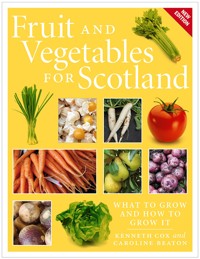
GARDEN MEDIA GUILD PRACTICAL BOOK OF THE YEAR Fruit and vegetables have formed a fundamental part of the Scottish diet for thousands of years. This fascinating and practical book explores the history of fruit, vegetable and herb growing in Scotland, and provides a contemporary guide to the best techniques for growing produce, whether in a garden, allotment, patio or window box. Packed with hundreds of colour photographs, drawings and descriptive diagrams, this is a detailed and comprehensive bible for the gardener. In addition to advice on climate and soil conditions, it has contacts for organisations, specialist societies, nurseries and suppliers, as well as a detailed bibliography and list of useful websites. This is an essential reference book for anyone aiming to get the best possible results from their garden produce north of the border.
Sie lesen das E-Book in den Legimi-Apps auf:
Seitenzahl: 689
Veröffentlichungsjahr: 2020
Das E-Book (TTS) können Sie hören im Abo „Legimi Premium” in Legimi-Apps auf:
Ähnliche



















Kenneth Cox. His popular books Garden Plants for Scotland (2008) and award-winning Fruit and Vegetables for Scotland and Scotland for Gardeners (2009) have made him Scotland’s best-selling garden writer. The son and grandson of renowned plantsmen, Ken is a nurseryman, gardener and garden-centre owner at Glendoick, near Perth, Scotland, world famous for rhododendrons. As a plant-hunter, he has led expeditions to unexplored parts of Tibet and India and discovered new rhododendron species. He has also created many successful rhododendron and azalea hybrids, and has written 12 books on plants, gardens and plant-hunting. He recently joined the board of Trellis.
Caroline Beaton. From a family of enthusiastic amateur gardeners, she now lives in Orkney. She is a fish-eating ‘vegetarian’, interested in food and where it comes from. Her new veg plot in Orkney is a challenging work in progress and she is currently saving for a polytunnel.
FRUIT AND VEGETABLES
FOR SCOTLAND
Kenneth Cox and Caroline Beaton
To Katy and Ingrid with love, CB
To Jane, KC
This edition published in 2018 byBirlinn LimitedWest Newington House10 Newington RoadEdinburghEH9 1QS
www.birlinn.co.uk
Reprinted 2020
First published in 2012Reprinted 2015
Copyright © Kenneth Cox andCaroline Beaton, 2012
The moral rights of Kenneth Cox and CarolineBeaton to be identified as the authors of thiswork have been asserted by them in accordancewith the Copyright, Designs and Patents Act 1988
All rights reserved. No part of this publicationmay be reproduced, stored or transmittedin any form without the express writtenpermission of the publisher
ISBN: 978 1 78027 533 8
British Library Cataloguing-in-Publication DataA catalogue record for this book is availablefrom the British Library
Designed and typeset by Mark Blackadder
Printed and bound by PNB Print, Latvia
Contents
PREFACEWhy Grow Fruit and Vegetables?
INTRODUCTION
1 A Short History of Fruit and Vegetable Growing in Scotland
2 Why Eat Fruit and Vegetables? The Scottish Diet
3 The Ground Rules for Growing Fruit and Vegetables in Scotland
4 Getting Started: What Do I Need?
5 Where to Grow Fruit and Vegetables
6 Pests, Diseases and Weeds
PART 1Fruit
1 Tree or Stone Fruit
2 Soft or Bush Fruit
3 Indoor Fruit
PART 2Vegetables
1 Bean Family (Legumes)
2 Cabbage Family (Brassicas)
3 Cucumber Family (Cucurbits)
4 Leaf Crops and Salads
5 Onion Family (Alliums)
6 Potato Family (Solanaceae)
7 Root Vegetables
8 Other Vegetables
PART 3Culinary Herbs, Edible Flowers and Further Information
1 Annual and Biennial Herbs
2 Perennial Herbs
3 Edible Flowers
4 Further Information
Acknowledgements
Bibliography
Index
Ken Cox with his giant ‘Sàrpo Mira’ potatoes.
For Ken
I’m a nurseryman by trade, growing mostly ornamental plants, so I love growing things. I’m fascinated by plant breeding and the history of fruit and vegetables – where they come from and how they evolved throughout history. I’ve really enjoyed listening to and recording Scotland’s fruit and vegetable gurus waxing lyrical – Willie Duncan on apples and Alan Romans on potatoes, for example. And then, of course, there’s eating the stuff – fresh asparagus spears straight from the garden to the steamer and dipped in pools of lightly salted melted butter; dark-red, sweet ‘Tulameen’ raspberries plucked from the canes and popped straight into the mouth; removing a few earwigs from home-grown artichokes; young broad beans shelled from their downy pods and fried in bacon, tomatoes and garlic in a recipe from Catalonia . . . These are a few of my favourite things.
Caroline Beaton and Peter Milne lifting kohlrabi.
For Caroline
My passion for growing vegetables is the direct result of my passion for food. But that’s only part of the story. It is the joy of connection with the soil, the relaxation engendered in an hour or two in the sun (and even in the rain) encouraging beautiful plants to do their best for you, the challenge of beating the slugs and bugs without actually poisoning the earth in the process and the tremendous satisfaction of the harvest and the resultant sharing (174 cucumbers and counting). And gardening is a great cure for grumpiness, too.
PREFACE
Why Grow Fruit and Vegetables?
Some might wonder why we need a book on fruit and vegetables for Scotland? With the plethora of fruit and vegetable books available, what does a specifically ‘Scottish’ book do differently? The answer is quite simple. Virtually all the fruit and vegetable books on the market were written by southerners who describe the conditions they are familiar with. The Scottish climate demands a different approach to gardening, whether in the timing of sowing crops or selection of appropriate varieties. For example, you would not know by reading Alan Titchmarsh or Carol Klein that ‘outdoor tomatoes’ are impossible in most of Scotland or that you might struggle to ripen sweetcorn or peaches or quinces. Scotland has a perfect climate for many kinds of fruit and vegetables, from strawberries and blueberries to potatoes and kale, but even then it helps to know which varieties to choose. One of many examples we could give is the apple ‘Cox’s Orange Pippin’, often sold by supermarket chains and DIY stores in Scotland, but which seldom sets fruit this far north and is a complete waste of money.
Scotland also has a fascinating but largely untold history of breeding of some of the world’s most important fruit and vegetable crops – onions, raspberries, blackcurrants and potatoes, for example. We wanted to share and celebrate the knowledge of Scotland’s fruit and vegetable experts, few of whom have put pen to paper, and by pulling all this together give as much practical advice as possible to Scotland’s gardeners, whether they garden in mild or severe climates, from Stornoway and Lerwick to Galloway and Jedburgh. This revised and updated edition includes newer varieties of fruit and vegetables, as well as updates on allotments and community gardens, chemical legislation, pests and diseases, and the issues concerning Scotland’s diet.
Why Grow Your Own Fruit and Vegetables?
Everyone is well aware that we can buy a huge range of fruit and vegetables from a local supermarket 52 weeks of the year and therefore many people can’t see the point of ‘growing your own’. Despite this, it seems clear that inside almost every human lies a primeval urge to grow edible plants. Humans have been sowing seeds and eating the results for millennia, from the moment nomadic hunter-gatherers first settled in villages and communities. Many of our twenty-first-century fruit and vegetables find their origins in the Tigris and Euphrates valleys in what is present-day Iraq and Iran, an area known as ‘the cradle of civilisation’, where humans first began growing things to eat rather than simply gathering from the wild. Scotland’s crofters and farmers have grown both to eat and to sell over hundreds of years, while our parents, grandparents or great-grandparents lived through government-inspired vegetable production when the Second World War’s ‘Dig for Victory’ campaign encouraged them to grow food crops in every available space to guard against starvation in the face of U-boat blockades.
‘Grow your own’ is something that has inspired generations of gardeners, passing down from parent to child. Interest in fruit and vegetable growing has intensified in recent years as concerns have increased over imported food, pesticide residues and food miles. We are now encouraged to grow things to eat, no matter how small a space we have in which to garden. A generation back, in the 1970s, it was the gro-bag that inspired many first-time gardeners to have a go. I remember television footage of east London tower blocks transformed using Fisons Gro-Bags, filled with cascading flowers and fruit, changing concrete balconies into modern Hanging Gardens of Babylon. These days television chefs and gardeners such as Nigel Slater, Bob Flowerdew and Monty Don as well as Scotland’s own Jim McColl and the Beechgrove Garden team encourage us all to grow things to eat. This new level of interest means that the demand for allotments has never been higher.
Two other questions that this book has forced us to examine are: what might be done about the notoriously poor Scottish diet? and why, despite having an excellent climate and ample rainfall, does the UK import 65 per cent of the vegetables and over 90 per cent of the fruit we eat?
Vegetables beckon and intrigue in a way that no fish or piece of meat ever could.Nigel Slater
Vegetables are the food of the earth; fruit seems more the food of the heavens.Sepal Felicivant
Sex is good, but not as good as fresh sweetcorn.Garrison Keillor
You are what you eat. For example, if you eat garlic you’re apt to be a hermit.Franklin P. Jones
And for a little balance:
I don’t dislike vegetables, I hate them. Not all of them but certainly the common types such as cabbage, turnips, onions, Brussels sprouts and lettuce.John Cushnie (BBC Gardeners’ World)
CHAPTER 1
A Short History of Fruit and Vegetable Growing in Scotland
Early History
What were Scotland’s early inhabitants eating and did they practise ‘grow your own’?
The Pictish and Celtic inhabitants of Scotland were hunter-gatherers or nomadic herders who existed on a diet of meat and wild fruit and vegetables. The Iron and Bronze Ages saw the founding of the first Scottish settlements. Archaeologists have found remains of up to 160 different edible plant species including raspberries, blaeberries, brambles, sloes, bird cherry, cloudberry, wild vegetables, herbs, grains and hazelnuts at crannogs (loch dwellings on stilts) on Loch Tay. However, most fruit and vegetables grown in Scotland are not native and find their origins far from our shores. The Persian Empire of Darius in 510–450 bc was well known for its extensive collections of peaches, apricots and other cultivated fruit which spread to Greece via Alexander the Great and later to the Roman empire. Despite Roman historian Tacitus’s description of Britain’s climate as ‘wretched’, the Romans are known to have introduced large numbers of fruit and vegetable crops into Britain, many of which had come along trade routes into Europe – cucumbers from India, eating apples from Central Asia and onions from Egypt – which were dispersed throughout the empire. As the Roman incursions into Scotland were short-lived and the long-term frontier was established at Hadrian’s Wall, it is unlikely that they introduced anything of note directly into Scotland, but plants which began to appear in English gardens would have moved north via merchants and farmers. Roman fruit-growing was sophisticated and included complex training and pruning, grafting of best varieties onto rootstocks and winter storage of apples and pears. Roman literature contains several detailed manuals on fruit and vegetable husbandry.
Falkland Palace Orchard, Fife. Some of Scotland’s earliest orchards were planted at monasteries and palaces.
Much Roman knowledge of gardening was lost in Britain during the Dark Ages and was not rediscovered until the establishment of Christian monasteries and abbeys. Records suggest there were gardens and orchards associated with Cistercian and other religious orders throughout much of Scotland during the Middle Ages, from St Andrews, Dunfermline, Lindores and Balmerino in Fife to Borders towns such as Jedburgh and north to Pluscarden near Elgin. Plants were grown for both their nutritional and healing properties – parsnips were thought to cure digestive problems, leeks to help heal bone breakages, celery was used as a contraceptive, lettuce for cleansing the blood. Turnips and tomatoes were considered aphrodisiacs. Strangely, the radish was condemned by Culpeper in his famous herbal of 1652, as ‘they breed but scurvy humours in the stomach and corrupt the blood’.
The Scots are considered to have been rather slow starters in the world of gardening compared to much of Europe, reaching horticultural preeminence only in the last 300 years. My grandfather, Euan Cox, paints a very gloomy picture of the state of Scottish horticulture before the seventeenth century in his 1935 book, A History of Gardening in Scotland: ‘In Truth, we were a barbarous nation . . . Scotland lay in a backwater . . . out of touch.’ Scotland’s political instability, he argues, prevented advances in agriculture, horticulture and garden fashions from spreading from the Continent and from England. More recent research published in Forbes Robertson’s Early Scottish Gardeners and their Plants concludes that Euan Cox’s account is over harsh, citing seventeenth-century travellers’ reports of what were clearly well-established non-monastic gardens and orchards in Dunfermline, Glasgow, Paisley and Linlithgow and the King’s Knot Garden below the walls of Stirling Castle. Robertson has found contemporary accounts of cultivation of onions, leeks, turnips, carrots, parsnips, beetroot, radish, cabbage, kales, peas, beans and lettuce in the gardens of rich estates from the seventeenth century onwards. In 1692, the Earl of Crawford recorded in his diary the fruit he sampled on a tour of Scottish estates. He lists 22 varieties of apples, 40 of pears and 36 of plums, as well as apricots and gooseberries.
John Reid’s The Scots Gard’ner, 1683, was probably Scotland’s first gardening manual.
Walled Gardens
From the Middle Ages onwards, at the back of town houses, long, narrow, often walled plots of land, known as ‘rigs’, were used as smallholdings to raise livestock and chickens and to grow vegetables. You can still see the layout of rigs in towns such as Linlithgow, St Andrews and Newburgh in Fife. At Culross Palace, Fife, a seventeenth-century merchant’s house has a garden re-created in the style of the period. Here you’ll find Scotch Dumpy hens rooting around the medicinal and culinary herbs, vegetables, Scottish apples, quince and medlar, typical of the plants in a Scots garden of this period.
Culross Palace in Fife, with its re-created seventeenth-century Scottish merchant’s garden.
The late sixteenth and early seventeenth centuries saw the beginning of Scotland’s love affair with the walled garden. The first were extensions to the walls of the L-shaped baronial castle but, as the need for fortification passed, the gardens became larger and more elaborate. ‘The kitchen garden is the best of all gardens,’ John Reid writes in the first-ever Scottish gardening manual, The Scots Gard’ner (1685). He gives specific instructions on how to make one – ‘Make the bordures 6 foot broad’ – and explains where it should be sited – ‘The kitchen garden may be placed nearest the stables, for the convenience of wheeling in manure, and out of sight of the house; because of the impropriety of the view.’
One of the reasons for the popularity of walled gardens in Scotland was that the microclimates and shelter afforded by the walls allowed a wide range of otherwise tender fruit and vegetables to be successfully grown, and over a much longer season. The warmth of south and west walls was perfect for protecting blossom and ripening fruit, and their height protected tender plants from the full force of Scotland’s ferocious winds. The series of eighteenth-century walled gardens along the coasts of Caithness and Sutherland – Dunbeath, Langwell, Castle of Mey and Sandside – are carefully sited to afford the maximum amount of shelter. Horticultural consultant Colin Stirling gives the example of a walled garden in Orkney where the wind shelter allows potatoes to be harvested three weeks earlier than those planted outside the walls.
Inverewe, Wester Ross, showing the curved walled garden which follows the line of the beach.
By the mid eighteenth century, the fashion was to build walled gardens away from the house and often on a considerable scale. Some of the largest in Scotland include Hopetoun (over 20 acres), Brechin Castle (13 acres), Blair Castle’s Hercules Garden (9 acres), Amisfield (7 acres) and Wemyss Castle (6 acres). Some walled gardens were divided into two or more compartments – for orchard, cut flowers and vegetables, for example. By the end of the eighteenth century, a country estate was not considered complete without a productive walled garden. A permanent monument to the art of eighteenth-century fruit growing is Scotland’s most extraordinary garden building, the Dunmore Pineapple near Falkirk, constructed c.1775 to celebrate the first production of pineapples in heated frames.
Not all walled gardens are fully walled and not all are of conventional shapes. Many have three walls, leaving the lower end fenced to allow frost to drain. There are several oval walled gardens in Scotland but Netherbyres, near Berwick, is the only elliptical walled garden in the world. Others follow the contours of the land or, in the case of Inverewe, the curved beach. One important eighteenth-century Scots fruit and vegetable expert was author James Justice, whose The Scots Gardiner’s Director (1765) was a primer for anyone running a walled garden. Another was William Forsyth, who ran the Royal Kitchen Gardens for George III at Kensington Palace in London. He was famous for treating fruit-tree canker with a mixture of cow dung, lime and wood ashes.
Crofters and Peasant Farmers
While the rich landowners and merchants were extending their palette via their well-staffed walled kitchen gardens, the ordinary peasant or crofter living off the land in the seventeenth century had a restricted and monotonous diet based on oats made into porridge, gruel and oatcakes – barley, for making alcohol, and a limited number of vegetables, such as kale and pea flour used to make bannocks. Most crofters would have had hens and possibly a cow or some goats for milk and cheese. Meat and herring were available from time to time. All but the rich faced the common threat of starvation. Historian T. C. Smout describes the 1690s as the worst recorded period of famine, with huge numbers of fatalities, which he attributes mainly to price rises following several poor oat harvests. Before the invention of canning and refrigeration, fruit and vegetable storage was all-important. Crops were dried, clamped, bottled, kept in ice houses or salted to keep them edible for as long as possible. The ‘hungry gap’ in late spring and early summer was the period of lowest food resources, when fresh, new-season food was not yet available and stored food had run out or spoiled.
A planticru on North Ronaldsay, Orkney, formerly used to grow kale (photo Linda J. Weston).
On the west coast and islands, many practised the lazy bed cropping system – raised beds in strips, often on rocky, boggy or peaty soil, with paths dug out to provide drainage and the planting area in between filled with composted seaweed waste, dung and any other available organic matter. Many west-coast gardeners still use adaptations of this system. In the Northern Isles, young kale was planted out in small circular drystone walled enclosures called kailyards, known as plantie-crubs on Shetland and planticrus on Orkney, where they were still used until relatively recently.
The eighteenth century saw a revolution in Scottish agriculture. A raft of innovations, technology and knowledge improved the Scots diet immeasurably. New practices were popularised by crusading improvers such as farmer, geologist and evolution pioneer James Hutton, judge and writer Lord Kames and farming innovator John Hamilton, Lord Belhaven. They sought to make Scottish agriculture and horticulture more productive, adopting practices from England and the Continent. Improved ploughs and harvesting equipment allowed greater productivity, as did increasing understanding of soil fertility and the benefits of crop rotation. Viscount ‘Turnip’ Townshend from Norfolk promoted the use of turnips as a large-scale agricultural crop while, in Scotland, it was the hardier swede which became more widely planted from the 1770s onwards. These provided winter feed for animals as well as humans, allowing dairy production year-round and more reliable supplies of meat.
The Pineapple, Dunmore, near Falkirk, is Scotland’s most unusual garden building.
Lowlanders were early adopters of new agricultural practices, while the Highlanders and Islanders were more resistant to change. The eighteenth century saw the addition of New World plants to the Scottish diet – many via Scottish plant hunters – including tomatoes, peppers, marrows, pumpkins and Jerusalem artichokes. Most were initially met with suspicion. Though introduced to Europe from South America in the late sixteenth century, the potato did not find favour in Scotland until the eighteenth century, when it transformed the calorific intake of crofters and farmers. It was arguably a potato-fuelled increase in life expectancy for both adults and infants which prompted the movement of labour to the newly expanding cities of the early Industrial Revolution.
Victorian Innovation
The nineteenth century saw another golden age of horticultural innovation born of new technologies. Gardeners were expected to keep their employers’ tables filled with fresh food year-round. Melons, cucumbers, pumpkins, squash and other tender vegetables were produced with the aid of artificial heat. From the 1750s onwards, hot beds of manure, heating up as they composted, provided a source of warmth for protecting and forcing crops in winter and early spring. The National Trust’s garden at Acorn Bank in Cumbria has been experimenting with raised beds heated through the winter under low plastic tunnels by the composting of a mixture of manure and sawdust. I was amazed at the results of this ‘free’ heat, allowing perfect crops of lettuces ready to harvest from March onwards. As fuel prices rise ever upward, I suspect that some of these old and forgotten methods of raising food will come back into vogue. The late eighteenth and nineteenth centuries also saw innovation in fruit growing, with heated walls, stove houses and glasshouses allowing crops such as pineapples, apricots and vines to be grown in Scotland’s walled gardens.
The nineteenth century witnessed the first celebrity garden writers in horticultural magazines and books. Despite being crippled with arthritis, Scots polymath J. C. Louden (1783–1843) sustained a career as a botanist, garden designer and town planner, prolific writer and garden magazine editor. He had an opinion on almost everything and is said to have published a mind-boggling 66 million words in a lifetime’s writing. His An Encyclopaedia of Gardening (1822) (available to download free from Google Books) is surely the most ambitious Scottish horticultural book of all time. The 1,052 pages cover every aspect of gardening: the origins of garden plants, botany, soils, fertiliser and the cultivation of fruit and vegetables in Britain and other countries. Much of his advice on crop rotation, prevention of disease, manures, propagation and pruning is as sound today as it was then, and the range of wisdom and common sense puts many more recent authors to shame. However, his views on crop protection would raise a few eyebrows these days. In the chapter ‘Means of Defence’, Louden recommends ‘the man trap . . . a barbarous contrivance though rendered absolutely necessary in the exposed gardens around great towns’; the humane man trap, ‘which simply breaks the leg’; and the spring gun, ‘a variety of blunderbuss . . . found extremely useful in the neighbourhood of London’.
By the mid nineteenth century, hot beds and heated walls had gradually fallen from favour. The rapid evolution of glasshouse technology led to the construction of large-scale practical and ornamental greenhouses, vineries and palm houses. Scot Charles McIntosh published the influential The Greenhouse, Hothouse and Stove (1838), a manual of new techniques for forcing exotic crops. Greenhouses were used both to supply tender and out-of-season fruit and vegetables and to house the now-fashionable exotic plants sent back from all over the world by intrepid plant hunters such as William and Thomas Lobb, employed by Veitch Nurseries of Exeter. Many Scottish landowners had access to abundant coal, which they used to heat glasshouses to produce tropical delicacies. Edinburgh-based greenhouse company MacKenzie and Moncur designed and built many of Scotland’s finest greenhouse complexes, such as those still extant at Geilston, Kailzie and Dunskey.
MacKenzie & Moncur, Scotland’s greenhouse dynasty, supplying much of Britain in the nineteenth and early twentieth centuries.
In parallel with the fruit and vegetable adventures of Britain’s upper classes, an entirely different strand of gardening evolved through the eighteenth and nineteenth centuries – that of competitive fruit and vegetable shows, held amongst the workers in the newly industrialising cities. Lancashire weavers became fanatically competitive gooseberry growers, producing fruit the size of apples, and this craze spread north to Scotland. The 1827 catalogue of Edinburgh nurserymen Dicksons and Co. lists an astonishing 194 varieties of gooseberry. Competitive showing of vegetables continues to this day with the Scottish branch of the National Vegetable Society.
Plant breeding is something we now take for granted, but deliberate hybridising for desired characteristics, such as larger yield or disease resistance, is a relatively recent science. Nobody knew, 250 years ago, that you could hybridise plants to ‘improve’ them. Pioneer Thomas Knight from Herefordshire began deliberately crossing strawberries and peas in the 1780s and 1790s. Before this, seed was simply collected from crops and stored for the following year with no deliberate human intervention. Local crop landraces such as Shetland kale had evolved over time to suit local conditions but, once Gregor Mendel’s experiments in the 1850s revealed the laws of inheritance, breeders could begin to deliberately manipulate crops, resulting in more productive strains and increases in yields and disease resistance. Scottish potato breeders William Paterson and Archibald Findlay were amongst the first to take advantage of this new-found knowledge.
The Royal Botanic Garden, Edinburgh’s ‘Really Wild Veg Project’ focuses on the wild ancestors of the fruit and vegetables we eat. Tests on wild versus domesticated celery and cabbage have revealed little difference in the taste in blind tests. The yield is what has changed.
The Twentieth Century
The Edwardian mansion and walled garden at Manderton near Duns is often referred to as the swansong of the great British country house. The grounds and gardens were once looked after by up to 100 gardeners but this was short-lived. Gardeners were among those conscripted and slaughtered in the trenches of the First World War, and Europe-wide food shortages saw the government, through the Defence of the Realm Act, requisition land and triple the number of allotments for growing food to 1.5 million. Most walled gardens were given over to feeding the population. Even Buckingham Palace had its flower borders replaced with a cabbage patch, and parts of Kew Gardens became fields of potatoes. Wounded soldiers were encouraged to turn to gardening as physical and mental therapy to help recovery from the horrific injuries and mental trauma they had suffered. Only 20 years later, the Second World War saw a return to large-scale vegetable growing, this time under the banner ‘Dig for Victory’, the brainchild of Aberdonian professor John Raeburn. Schools were required to grow food too; and great Scottish gardens, such as Drummond Castle in Perthshire, were turned over to market gardens. Scottish-raised potatoes were a key to the avoidance of starvation for Britain’s population during the U-boat blockades. This countrywide, cross-class experience of growing things may have been responsible for the post-war gardening boom which has seen the British become some of the world’s keenest and most talented gardeners.
The expansion of the railways and the ability to move fresh produce around the country saw Scotland’s commercial fruit production expand, reaching a peak in the early twentieth century with apples, soft fruit and heated greenhouses full of tomatoes. Sadly, it was not to last, as Scottish growers found it increasingly hard to compete with growers in more favourable climates further south. Scotland’s tree fruit industry went into decline, although our commercial fruit and vegetable sector is still an important contributor to the country’s GDP. Potatoes, soft fruit, turnips/swedes and peas are the most economically significant crops.
Second World War vegetable propaganda, including the ‘Dig for Victory’ campaign. Scottish-raised potatoes saved Britain from starvation
CHAPTER 2
Why Eat Fruit and Vegetables? The Scottish Diet
It is almost universally acknowledged that fresh fruit, vegetables and grains should be the mainstay of the Western diet, for both health and environmental reasons. In 2005, the World Health Organization highlighted the correlation between the consumption of fruit and vegetables and reduced risk of heart disease, diabetes, cancer and other illnesses. Ironically, the adoption of a Western diet, with its increase of processed foods and calorific intake, and the decrease in exercise, is having a catastrophic effect on health and obesity levels in many parts of the developing world. The evidence that fruit and vegetables are very good for you is unambiguous, but scientists are still trying to work out exactly how this happens. These beneficial effects appear to be the combination of fibre, vitamins and antioxidants, minerals, proteins, amino acids and polyphenols which fruit and vegetables contain. Most importantly, these effects are strongest with fresh, naturally ripened fruit and vegetables. Long transportation and storage, juicing and most processing also reduce efficacy. The claims on the packets of fruit-based pills and tablets on sale in health food stores are likely to be largely wishful thinking, as the production process will have removed most of the goodness. Many so-called ‘healthy’ snacks are loaded with sugar and/or salt and can in no way be considered good for you. The James Hutton Institute (formerly the Scottish Crop Research Institute) in Invergowrie is a key player in this research, examining the absorption of antioxidants through the gut into the colon and the bloodstream. Significant health-promoting fruit and vegetables which have come to light in recent years include blackcurrants, raspberries, Aronia (chokeberry), which inhibits colorectal cancers, rhubarb, which has significant cancer treatment properties, and spinach, which appears to help prevent cataracts in the eye. Even if we don’t understand exactly what the causes are, there is universal agreement that a diet high in fruit and vegetables is good for us. All we have to do is persuade people to act on this information. It should be a win-win situation. With one of the worst diets in Western Europe, we Scots eat too much meat, sugar, carbohydrates, and fried and processed food, and not enough fruit, vegetables or fibre. The Scottish government has been wrestling with the issue of how to improve Scotland’s dangerously unhealthy diet for almost two decades, publishing the Scottish Diet Action Plan (1996, revised 2005):
A well-balanced diet is vital to good health. Conversely, a badly balanced diet is harmful and predisposes people to a variety of serious illnesses including diabetes, coronary heart disease and some cancers. Our diet in Scotland is notoriously unhealthy and worse than that of almost any other country in the Western world. Indeed, next to smoking, it is the most significant reason for our poor health record. Children’s diets are particularly poor, with many failing to eat green vegetables and fruit.
Fruit and vegetables provide a wide range of nutrients . . . increasingly recognised as protective of health. These foods are rich sources of several vitamins, including folic acid, which, in addition to preventing deficiency diseases such as anaemia, are important before and during early pregnancy for the developing foetus and will help prevent arterial damage, coronary heart disease and strokes later in life.
‘5-A-DAY’
In 1996, the (then) Scottish Executive published targets for fruit and vegetable consumption for ‘average intake to double to more than 400 grams per day’, which is equivalent to ‘five portions’. So what progress has been made? Sadly, very little, it seems. There was a small rise in the early years, but the consumption of fruit and vegetables has stuck at an average of around three portions per day, with no rise since 2003, and the latest figures (2016) actually show a drop in consumption. Women eat more fruit and vegetables than men. Only one in five adults (20 per cent) met the 5-a-day recommendations, while one in ten (10 per cent) did not consume any fruit or vegetables at all (The Scottish Health Survey 2014, Vol 1, main report, the Scottish Government). In comparison, England and Wales claimed an increase from 3.7 to 4.3 portions. Many researchers have tried to ascertain why so many people in Britain eat such a low fruit and vegetable diet. A 2014 survey of 10,000 UK adults (BBC Good Food Nation) indicates that on an average day 64 per cent of the population of Great Britain do not get their 5-a-day. Of those who don’t consume five portions of fruit and vegetables a day, the top reasons given were the expense (22 per cent) and simply not caring enough (22 per cent), followed by not believing it was necessary (20 per cent). Not knowing how to incorporate fruit and veg into their diets was also a factor for 16 per cent. Community Food and Health (Scotland) (www.communityfoodandhealth.org.uk) reports that food insecurity in general (not having access to enough food) is becoming increasingly common, as seen in the rise in the number of food banks.
One way of helping to achieve the 5-a-day target is for more people to grow their own. If children can be inspired to grow and eat fruit and vegetables, they’ll understand where they come from and hopefully learn to enjoy eating them for the rest of their lives. The challenge for policy makers is to break the cycle where the parents and grandparents don’t and won’t eat vegetables or fruit so don’t encourage their children and grandchildren to do so. Food tastes are set very early in life and studies suggest that children follow their parents’ example. Telling children to eat fruit and vegetables when parents ignore this advice tends to have the opposite effect, putting children off. Some studies suggest that the mother’s diet during pregnancy and breastfeeding may affect food tastes in children. Social class is a factor here, with A, B, C1 adults and children tending to eat a better diet, contributing to significantly greater longevity and reduced incidence of obesity and obesity-related disease. The Scottish Curriculum for Excellence includes food education for all schoolchildren. Not before time.
Of Scotland’s adults, 27 per cent are obese (2009), a figure which is increasing all the time. This has been described as Scotland’s major public-health time bomb. The reasons given for the obesity increase include poverty, poor education, lack of exercise, restricted access to fresh food, limited cooking skills and the time-poor adult preference for foods that are high in fat, and salt- and sugar-processed food (especially processing that uses high fructose corn syrup). Politicians, policymakers and campaigners have acknowledged all these issues but have yet to come up with joined-up and radical governance which actually delivers their targets. Scotland’s primary schools have seen a dramatic decline in organised sports outwith the statutory PE lesson, although attempts are being made to reverse this through the Scottish government-funded ‘Active Schools’ programme. Since 2008, Scotland’s government has addressed the issues of school meals, partly modelled on Finland’s successful intervention into its population’s diet, which has reduced heart disease and obesity. So how can we ensure that school children eat more fruit and vegetables? The ‘Big Eat In’ (2010) saw several Glasgow schools opt for compulsory school meals for 11–12 year olds for a period of a year. Supported by parents, teachers and pupils, the scheme was a success, but lack of funding, challenges of space, and the removal of food preparation and cooking facilities in many schools has meant that the scheme has not been rolled out nationally.
The Daily Mail loves to decry such intervention as part of the ‘nanny state’ but in other countries this would be viewed as a common-sense approach to saving lives by improving health and well-being. Supermarket lobbying scuppered the UK government’s attempts to have ‘traffic light’ food labelling to allow people to see at a glance what might be good for them. As it did with the smoking ban, the Scottish government has taken a lead on intervention, with the introduction of minimum alcohol pricing and taxes on sugary drinks. Needless to say, this has been fought all the way by the food, drink and supermarket industries. If UK politicians don’t have the courage to stand up to vested interests, then we’ll be looking at US levels of obesity and diabetes in the next 20 years. We have no choice but to act.
Where Do the Fruit and Vegetables We Eat Come From? World Food Production and Distribution
Scotland’s climate is suited to growing a wide range of fruit and vegetables. Scotland was self-sufficient in apples, tomatoes and many other crops 100 years ago. Now we import most of them. A quick look at the labels of the fruit and vegetables in any supermarket shows how much is flown in from afar – blueberries from Chile, beans from Kenya, apples from New Zealand and so on. The UK is the world’s largest destination for food transported by air, and the amount of fresh food shipped in has been growing at a rate of about 6 per cent a year for much of the last two decades. Before this, Britain, like other countries, enjoyed mainly seasonal, locally produced food – rhubarb in March-May, asparagus in May-June, strawberries in June, raspberries in July, brambles in September – but now the concept of seasonality has almost disappeared and we can buy almost any fruit or vegetable at any time of year. This has its drawbacks, however. The condition of supermarket produce may be partly responsible for the reluctance of people to eat it. Fruit and vegetables are often picked unripe, transported halfway round the world, ripened in sheds with CO2 and often taste of nothing. Out-of-season strawberries can taste like turnips; avocados are rock hard and rot without ever ripening. The same can commonly be said of apples, pears, mangos, peaches, apricots and many more. Chefs, garden writers and campaigners such as Hugh Fearnley-Whittingstall and Jamie Oliver have been promoting local produce and seasonality for many years, with only limited success as far as the supermarket offerings are concerned. I’m not advocating a return to the old days – I resented being fed nothing but rhubarb for six weeks in early summer – but we could all benefit from eating locally grown seasonal fruit and vegetables with fewer food miles and which could be picked ripe and eaten fresh.
Leaflets from some of the many organisations encouraging ‘Grow Your Own’, at Glasgow’s Nourish Conference, 2011.
Though it is certainly desirable for us to eat crops grown locally and in season and to reduce ‘food miles’, it would be naive to believe we can produce all our fruit and vegetables in Scotland. Don’t assume that it is better for the environment to eat a locally grown tomato if it needs to be produced in a heated greenhouse. Producing the same crop outdoors or in unheated tunnels in a warmer country and flying it in will use significantly less fossil fuel energy and release less carbon dioxide. Fair Miles (Oxfam, 2009) pointed out that fruit and vegetable production in Africa sent to the UK (a value of £1 million per day) directly sustains the livelihood of over a million Africans. The report concludes that simply adding up food miles does not always lead to helpful conclusions on sustainability.
Most fruit and vegetables – organic and non-organic alike – are now produced commercially in vast, water- and fertiliser-intensive monocultures, often under plastic tunnels. Crops are transported at significant expense in refrigerated planes and trucks, from continent to continent. Intensive agriculture in hot and often desert climates causes the draining of aquifers and the diverting of rivers so they no longer reach the sea. The result is irreversible salination of river deltas and permanent loss of marsh habitat such as is happening in Almeria, Spain, and in the Nile delta, Egypt. Except when consumer pressure can be brought to bear, supermarkets aim to maximise shareholder value by buying the cheapest available fruit and vegetables, largely without considerations of fair trade, environmental impact or sustainability. The long-term results of the degradation of soil and water quality are largely ignored by governments in the face of economic necessity, in the case of producers, and political pressure from the vested interests of powerful multinational food conglomerates in Western countries. The consequences will be irreversible and, for some afflicted by water shortages, life threatening.
THE PROBLEM WITH SUPERMARKETS
Almost all of us use supermarkets to buy most of our food. Due to competitiveness in retailing, Britain has relatively cheap fresh fruit and vegetables compared with some other Western countries. The downside is that the supermarkets have more or less destroyed the local food economy in Britain. Aggressively cheap supermarket pricing, sometimes selling at a loss, also means that small-scale local fruit and vegetable growing and retailing is almost always uncompetitive – which is why your local greengrocer probably closed down years ago, as did your town’s wholesale vegetable market. The consequences of pressure to produce cheaper and cheaper food often forces farmers to compromise on the long-term sustainability of their production activities just to remain viable. One major Scottish supermarket vegetable supplier told me, off the record, that the supermarkets regularly break contracts with and impose unfair terms on most of their suppliers. Though they are invited to testify at government inquiries into supermarket practices, producers can’t afford to speak out, as their supermarket customers will immediately cease trading with them.
Fair trade principles need to be applied to smaller UK producers who simply cannot remain in business in the face of sustained supermarket pressures to cut costs. The UK Groceries Code Adjudicator, charged with ensuring fair play, has limited power to fine or force supermarkets to act fairly. The Scottish government claims to want a viable local food economy in Scotland, but there is no real hope of this happening without the help of legislation, through intervention in the supply chain, taxation and changes to local government business rates. Such interventions in the food and drink sector can be stunningly successful, as demonstrated by the 2002 Small Breweries Tax Relief scheme, brought in under Gordon Brown’s chancellorship. This allowed a 50 per cent excise duty reduction for small breweries so they were able to compete with the economies of scale of the huge multinational breweries. The result was a boom in microbreweries all over the UK. Scotland’s local food economy could be encouraged by just such an initiative, with reduced rates and taxation for small independent businesses and increased rates for larger corporations.
Good for Ewe community allotments, Wester Ross, which unusually include some indoor allotment sites.
Don’t be fooled by the ‘we support local producers’ banners in your local supermarket. These are Scottish producers who supply the whole of the UK with strawberries, potatoes and turnips, so the ‘local’ claims are misleading as these are national suppliers; supermarkets rarely deal with suppliers who cannot supply countrywide. As the Food Justice report (2010) concluded, we need to focus on the real cost of food, taking into consideration the full environmental impact of its production and distribution, including transport and wastage. Only then do locally produced food crops on smaller-scale mixed farms of livestock, grains, fruit and vegetables become an obvious solution both economically and environmentally. Several organisations are campaigning for such change in Scotland, including Transition Scotland and Nourish Scotland.
Food waste expert Tristram Stuart (www.tris-tramstuart.co.uk) reports that, in the UK, 20–40 per cent of fruit and vegetables grown for supermarkets is rejected because it is the ‘wrong’ size, shape or colour. Perfectly edible, the produce is dumped. Globally, the figures are shocking. In the USA, households, retailers and food services throw away 40 million tonnes of food each year, enough to feed all of the one billion malnourished people on the planet. Despite claims of supply chain efficiency by the supermarkets, Stuart estimates that up to half of the entire Western food supply is wasted between the farm and the fork.
One excellent initiative to make use of food which would otherwise be dumped is FareShare Foodcloud, where supermarket surplus produce is distributed to charities and community groups to be turned into nutritious meals. With Scottish distribution from Glasgow, Edinburgh, Aberdeen and Dundee, FareShare reaches over 1,300 towns and cities, providing food for 28.6 million meals a year and supporting 485,000 people every week.
Encouraging an Increase in Fruit and Vegetable Growing and Consumption in Scotland
Successive Scottish governments have stressed the importance of locally grown food and have invested considerable time and funding into commissioning reports and research in this sector. Recipe for Success: Scotland’s National Food and Drink Policy (2009) supported the increased provision of new allotment sites and aimed to help public bodies, communities and individuals to set them up. The 2009 Grow Your Own Working Group brought together policy makers, allotment representatives and others to develop a strategy which allowed everyone in Scotland to have access to land to grow their own food and to encourage more people to do so. A further report, Community Growing in Scotland (2011), spelled out the wider strategy, that there was
. . . also a need to explore alternative, more flexible and adaptable approaches to both individual and community urban food growing. A broader approach to community growing has the potential to increase the amount of land available and provide growing opportunities for a wider range of people . . . Whilst allotments are the most prevalent form of community growing, a range of other models are in use. These include community gardens, community orchards, landshare, community supported agriculture and workplace growing . . .
This report provides the basis for concerted and coordinated cross-sector action to secure a step-change in the scale and impact of community growing in Scotland . . . Allotments are only part of the picture.
Recipe for Success: Scotland’s National Food & Drink Policy – Becoming a Good Food Nation (2014) ‘reaffirms the Scottish government’s commitment to promoting the sustainable economic growth of the food and drink industry’ and also articulates a new aspiration that Scotland should become a ‘Good Food Nation, a Land of Food and Drink not only in what we as a nation produce but also in what we buy, serve and eat’. The Scottish government wants food to be a key source of pride for the people of Scotland – ‘food which is both tasty to eat and nutritious, fresh and environmentally sustainable’ – with delivery of these aims by 2025. Plans include a Food Commission and local champions to drive change and priorities of food in the public sector, children’s food and local food. Such things are laudable, certainly. But is government delivering on these policy aims? Let’s first examine procurement of food for NHS hospitals, for example. Of the health boards who supplied data to a 2017 BBC survey, most sourced over 50 per cent of the food served to patients from abroad. And most operated a food budget of less than £3 per day per patient. These two figures are clearly related. Many health boards sourced chicken from Thailand, as it was significantly cheaper, thus missing out on an opportunity for local food provision. Campaigning organisation Nourish Scotland encapsulates the goals: ‘For Scotland to grow more of what we eat and to eat more of what we grow.’ Which sums it up perfectly. The information and strategies in these many reports are commendable, but implementing them is far more challenging than writing them. National and local government can make widespread change happen, but all too often there are multiple small agencies beavering away and making little headway when there is little sign of joined-up government across all the sectors which need to work together. One key problem area is the difficulty of accessing meaningful funding, especially for existing projects.
Trellis, the umbrella organisation for Scotland’s therapeutic horticulture, is involved in more than 400 Scottish garden projects, ranging from hospitals to community allotments, mental health rehabilitation, dementia, combat stress/PTSD, and gardens and orchards in schools. Fiona Thackeray, development manager at Trellis, eloquently describes the struggle for funding that many projects experience: ‘Much funding puts a heavy emphasis on innovation . . . because many funders are into the idea that you must have brand exposure/publicity . . . and the way to do that is by getting news headlines and photo opportunities.’ Conversely excellent proposals are often refused funding because they are not ‘novel’ – even if the proposed scheme is a good/ proven model that has worked well elsewhere. I think we need to convince funders that the bias towards ‘novelty’ should be challenged. Common sense says they should do the opposite of what they do now and instead to say: ‘We will fund well-planned, tried-and-tested projects, innovative or not, because we know that they work and we care more about the long-term results than our own short-term profile.’
Politicians and funders are reluctant or unable to understand that community grow-your-own initiatives need funding and good management over several years to have any chance of long-term success. Bringing fruit and vegetable crops to market is a complex business and requires a range of skills. Poorly planned and short-term funding for such projects is often money wasted. Grow-your-own projects tend to need some infrastructure up front and a modest amount of core funding over several years. What they tend to be offered is one-off short-term funding for new initiatives and often for infrastructure only. The secret of success is usually a motivated and experienced leader who can bed in a local, sustainable team to take the project forward.
A good example of how government often fails to spot great funding/investment opportunities, and which illustrates the lack of joined-up government, is the Food Link Van in Skye and Lochalsh. Set up in March 2000 with local investment, topped up with a grant of £1,000, this excellent scheme now annually distributes more than £90,000 worth of Skye and Lochalsh-produced cheese, fruit, herbs and vegetables to local retailers and restaurants who proudly advertise their locally sourced food. Skye is now a favourite destination for food lovers. As the original Food Link neared retirement age, some funding for a new refrigerated van was required which would enable it to carry fresh meat and fish, as well as fruit and vegetables. Try as they might, the Food Link members were told that ‘funding to subsidise transport is not available’. This Food Link scheme clearly ticks every box in every Scottish government report on encouraging local food economies, and the government is happy to subsidise farmers via EC grants to produce food and to subsidise crofters to work their land. Why subsidise rural bus transport year after year but not food distribution? Scheme member Dede MacGillivray told me in 2009, ‘The economic and social benefits the van brings to Skye and Lochalsh, particularly through the tourism sector, are enormous – many local restaurants and hotels have built their reputation upon using high-quality local ingredients.’ I contacted the Food Link scheme again in 2017 to see if the situation had improved. Funding had again been turned down. The Food Link Van is a model scheme which fulfils so many criteria deemed important by the Scottish government. Not only should this scheme be supported but the government should encourage similar schemes in other parts of Scotland, as it is an ideal way of kickstarting the national food economy that the government claims to champion but fails to support.
The Food Link Van, Skye, is an excellent local food economy initiative, allowing distribution of local produce to hotels and shops (photo Carole Inglis).
CLIMATE CHALLENGE FUND
Many older funding schemes, such as the Sustainable Action Fund and the Greener Initiative, have been replaced as a major source of finance for grow-your-own initiatives by the Climate Challenge Fund (CCF). The Scottish government has pledged to cut Scotland’s carbon emissions by 42 per cent by 2020, apparently one of the most ambitious targets in the world. Reducing food miles is seen as part of this strategy. From 2008 to 2016, 550 groups were awarded over £66 million to deliver 730 projects which varied from alternative transport to waste disposal, forestry, and fruit and vegetable growing. Two of the best CCF allotment projects are Shettle-ston Community Project and the Concrete Garden, both in Glasgow (see p. 53–4). Another CCF-funded scheme, Reclaiming the Knowledge Data Gathering Project, is a research project on the Uists and Benbecula which is collecting data on current fruit and vegetable production in the islands. As project leader Laura Donkers states: ‘In both farming and crofting, the average age of practitioners is exceeding 55 and there is a real need to attract young people who are motivated to work in this area. The production of an accessible, relevant horticultural publication that is written for island inhabitants and speaks to a broad demographic is a vital aspect to supporting local growing initiatives and championing more sustainable lifestyles.’ The research led to the publication of an online leaflet with advice on the best way to grow fruit and vegetables in this part of the Western Isles (https://uistlocalfoodforlocalpeople.wordpress.com).
Another successful CCF-supported project is the Tayport Community Garden in Fife, which was founded in 2015, growing and selling produce from the garden but also teaching gardeners in the community how to get the most out of their own gardens. This project is one of the best I have looked at, in terms of outreach and engagement of the wider community, and it won an award as the best CCF growing scheme in 2017.
While some CCF-funded projects have undoubtedly been successful, others quickly floundered as soon as the funding ran out. A major flaw at the outset was the funding timescale, demanding hurried, poorly conceived applications and a requirement for all funds to be spent within 6 to 12 months of the awards being made. The rushed timescale was not a recipe for well-planned and well-embedded, sustainable schemes. Communities rushed headlong to grab the available cash, filling in the forms with fanciful carbon-saving data. Worse, some funds for grow-your-own projects did not reach their applicants until late summer, entirely missing the growing cycle because the scheme demanded that all funds be spent by the following March. Neither the Green MSP I interviewed, whose party supported this project, nor the Scottish government’s then environment minister was willing or able to concede there was a problem or to agree to do anything about it, blaming ‘treasury rules’. The finance minister told me that this was nonsense and that they had placed no such restrictions. The Review of the Climate Challenge Fund (June 2011) did address the need for longer term funding (now up to two years) and longer lead times, but large sums of money have already been wasted which could have supported more sustainable, better planned schemes.
If the Climate Challenge Fund is not the best funding solution, then what would make a lasting difference to this sector? Voluntary community-based growers can’t become experts on horticulture, management, fund-raising or food distribution and storage overnight. New initiatives need careful planning and ongoing mentoring, evaluation and advice from those who already run successful schemes. Replication of success rather than looking for novelty is the best driver for grant applications. Throwing short-term funding at Scottish fruit and vegetable growing will have no lasting impact unless the big issues are considered. We can’t afford simply to tinker at the margins. For example, if the Scottish government insisted on a quota of locally produced food for all public sector food procurement in prisons, hospitals and schools, it would create a sustainable large-scale, cost-effective and resilient local food economy and local producers would reduce their dependency on the whims of supermarket buyers. As the Greenspace Scotland report proposes, all government departments – health, education, environment, agriculture – as well as retailers will need to work together for this to happen. One good initiative is the ‘Scots Origin’ brand being used in some schools’ catering to indicate produce which has been grown in Scotland.
Scotland already boasts dozens of excellent businesses and initiatives to serve as models for local food economies. East Ayrshire Council’s Food for Life initiative required locally raised food products to be used wherever possible to provide local schoolchildren with healthy meals. This is exactly the sort of best practice which could be rolled out nationally. Another innovative company is Earnside Energy near Glenfarg, Perth, an ambitious integrated process using food waste to create methane for heating homes and fertiliser for crops. Systems like this could be used to heat glasshouses for food production.
Growwild.co.uk, Oxenfoord Organics, East Coast Organics, Bellfield and Mcleod Organics all demonstrate a viable Scottish growing and distribution model for local and/or organic fresh vegetables. Further south, Riverford in Devon runs a franchise network of participating organic farms, delivering more than 47,000 meat, fruit and vegetable boxes each week from Yorkshire to Cornwall. Riverford’s philosophy is to deliver locally produced food where possible and anything imported must come by road/ship rather than by plane. The Findhorn Community in Moray pioneered the Community Supported Agriculture (CSA) model in Scotland in its EarthShare scheme, where the food consumer bought a share of the food production and/or exchanges labour for food. Members had an organic vegetable box delivered each week. Sadly it was forced to close in 2010, after 16 years, largely due to issues of tenancy on its rented land, but the CSA model they pioneered has been copied successfully elsewhere. Other CSA schemes in Scotland include Tap o’ Noth Farm in Aberdeenshire and Whitmuir the Organic Place in West Linton. To grow a sustainable Scottish local food economy, the CSA model has considerable further growth potential – as does the setting up of mutual/cooperative schemes. Pete Ritchie, owner of Whitmuir and board member of Nourish Scotland, suggests the establishment of thousands more crofts and smallholdings for small-scale produce-growing. Nourish Scotland also set up an invaluable mentoring scheme (http://www.nour-ishscotland.org) called ‘Making a Living from Local Food’, where established businesses offer mentoring to new start-ups, sharing skills, experience, funding information, finance and marketing advice. If Scotland wants a national sea change in how we produce and buy food, we need to think big but recognise that small is often beautiful.
FOOD TO FORK MOVEMENT
This began in California (where else!) in the 1970s, introduced by restaurateur and activist Alice Waters at Chez Panisse in Berkeley. Inspired by local food culture in France, Waters built relationships with farmers and growers to supply seasonal produce for her restaurant. The movement has grown across the USA and into other parts of the world, and many restaurants, from Ballymaloe in Cork, Ireland, to Le Manoir aux Quat’Saisons in Oxford now advertise home-grown vegetable production used in their cooking. Andrew Fairlie at Gleneagles, Scotland, runs a walled garden not far away which grows a huge range of herbs and vegetables for this famed Michelin-starred restaurant. For a cheaper lunch, the Applecross walled garden grows food for the Potting Shed restaurant situated in the old greenhouse complex. The Royal Botanic Garden, Edinburgh began its own small market garden in 2016 to supply vegetables for its cafés.
Produce Markets
Like many others, I love visiting and shopping at food markets, and every time I visit one in France or Spain – or London, for that matter – I wonder why we can’t do it here in Scotland. As long as the supermarkets maintain a stranglehold on the distribution of fruit and vegetables, there will be little or no change to the availability of locally produced fresh food. Supermarkets demand suppliers who can supply nationally and won’t look at small local suppliers. Re-establishing retail produce markets in Scotland’s towns and cities for fruit and vegetables, baking, meat and fish is one way to really make a difference. Great though they are, we are not talking about once-a-month farmers’ markets. Food markets need to be open much more often – for several days a week – so that they change people’s buying habits for the weekly shop. This requires large-scale markets where producers and stallholders can sell directly to the public, creating a proper local food economy and an attractive alternative to the supermarket. Almost every town in southern France has them. Closer to home, Borough Market in London, St Nicholas Market in Bristol, Kirkgate Market in Leeds and the Bull Ring Market in Birmingham are all thriving. Markets are traditionally the hub of the town and a way for local producers and fishermen to sell the volumes of food that they need to so that they are not slaves to the whims of the supermarkets and their restrictive terms. For produce markets to happen on a significant scale, there has to be government and local council support, and politicians need to have the courage to resist the inevitable heavy-handed lobbying of the supermarkets. Indeed, it should be possible to make approval for a supermarket development site to be conditional on the building of an independent produce market for the community which might even share a car park with the supermarket.




