


28,49 €
Mehr erfahren.
- Herausgeber: Airlife
- Kategorie: Lebensstil
- Sprache: Englisch
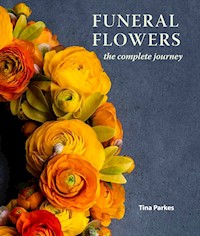
Funeral flowers are many things - a tribute to the deceased, a comfort to the bereaved and a source of joy for all at a sad time. The challenge is to design sensitive, personalized creations for the client at a competitive price. This book is full of ideas and inspiration for the client to select, for the funeral director to use and for florists to follow. This beautiful and practical book sets out many options for the florist so their funeral work can provide a personalized and thoughtful tribute. It starts with a visual feast of designs, organized by season and colour, and then explains in detail how to make key floral tributes, to best serve the client and to build a successful business. It showcases over a hundred full-colour floral tributes, and demonstrates twenty step-by-step examples of how to make key arrangements. It explains how to create original designs, from initial planning and sketching to final ideas. Finally, advice is given on efficient ordering and costing for profitability and reduced wastage, as well as environmental considerations. Written by a leading florist, it demonstrates tenderness and care in every aspect of a sensitive and emotional final journey, so that funeral flowers can best mark the loss and celebrate the life of a loved one.
Das E-Book können Sie in Legimi-Apps oder einer beliebigen App lesen, die das folgende Format unterstützen:
Seitenzahl: 279
Veröffentlichungsjahr: 2021
Ähnliche



















Funeral Flowers
The complete journey
Funeral Flowers
The complete journey
Tina Parkes
First published in 2021 byThe Crowood Press LtdRamsbury, MarlboroughWiltshire SN8 2HR
This e-book first published in 2021
© Tina Parkes 2021
All rights reserved. This e-book is copyright material and must not be copied, reproduced, transferred, distributed, leased, licensed or publicly performed or used in any way except as specifically permitted in writing by the publishers, as allowed under the terms and conditions under which it was purchased or as strictly permitted by applicable copyright law. Any unauthorised distribution or use of this text may be a direct infringement of the author’s and publisher’s rights, and those responsible may be liable in law accordingly.
British Library Cataloguing-in-Publication DataA catalogue record for this book is available from the British Library.
ISBN: 978 1 78500 865 8
AcknowledgementsI would like to say a huge thank you to my gorgeous long-suffering partner James, who has kindly taken and edited all the photos and lived with this book for two years. Without his patience and support this book may have never been finished. I would also like to thank my amazing business partner and problem-solver extraordinaire at the British Academy of Floral Art who has cleared my schedule, enabling me to work on the book, supported me throughout the project and who came up with the title.
Huge thanks to my lovely family, especially my mum who kindly proofread the book, my friends who must think I have fallen off the edge of the earth, all my fantastic colleagues at the Academy – I am so lucky to work with such a high-calibre team, my doctors and amazing dialysis nurses who support me and keep me healthy.
Thank you also to Anthony Head who generously supported me with his time and amazing Oasis products; Paul at LeRoy’s funeral directors in Exeter for his time and insight into the funeral director’s industry and thoughts on the future; the Co-Op in Exeter for letting us take some photographs using their coffins; Paul and his team at BJ Richards in Saltash, for all their support with their beautiful own-grown flowers; and the two customers whose funeral designs are in the book.
Contents
Introduction
I am so lucky to do the job I love, to use my passion and creativity and share this with others. People are often surprised when I tell them funeral work is my specialist area of floristry. Many expect you to say the trendy wedding work or the glamorous corporate work, but not for me; the emotive funeral work is, I believe, the most powerful work and where I find the most creativity, innovation and challenge. The most amazing compliment that I have been paid is when a customer said that the flowers helped them through the darkest time. To be able to have a positive impact on someone’s life is pretty special. Flowers can enable them to have a focal point for the funeral, be a reminder of all those thinking of them and convey all the unspoken love and respect from those close and those who could not be there in person.
Flowers can say so much that can be difficult and often remain unsaid in the traditional British culture. The scent can instantly take you back to happy memories and the softness of natural flowers reminds us of the beauty that life does possess.
I love the unique and innovative challenge that lays with each piece as you get to know the family and listen to the stories of the deceased to build up a picture of ideas. Then you have to work with budgets (big and small) and tight timetables to bring the design into fruition. I have created a woven high-heeled shoe for a lady whose most loving memory was that, when she was little, she used to make her granny laugh slopping around in her high-heeled shoes. I have designed a funeral blanket that all the family wanted to be part of creating, so they each made a section and we joined them together, to three interlocking wreaths, each one with a different flower that had personal meaning representing a different family member.
For me, this is the honour of being able to create beautiful and emotive funeral flowers.
Even the classical tribute bases can be personalized with different floral materials or colour selections in myriad variations. I hope this book will enlighten and inspire you to the unending possibilities of funeral flowers. I have included some memorial/venue designs because these are also becoming more popular and are an interesting area that can be explored further in your business.
I have designed the first section of the book as a visual aid to show ideas that can be created or developed when you are talking to your clients. There are sections of seasonal designs, which are key for environmentally focused designers needing to show the client what is naturally available in each season, and for those working with tight budgets – seasonal materials are generally more reasonable. The colour section is useful when colour is your customer’s key connection. The step-by-step section can aid construction of the key designs, and at the back in the appendix you will find a basic content list for each design to aid with the construction of any of the pieces.
CHAPTER 1
Funeral flower guide
spring
Golden Ranunculus wreath.
Yellow Freesia wreath.
‘Nannie’ letters in spring flowers especially created for a client and included in the book with their kind permission in loving memory of the late Mrs Judy Ware.
Spring double-ended 1.8m (6ft) spray created for a client and included in the book with their kind permission in loving memory of the late Mrs Judy Ware.
Tied spring spray.
Tulip and feather spray.
Hellebore garland.
summer
Looped-edge Beargrass wreath.
Two basket hearts.
Triangular spray.
White waxed summer posy.
Tied Gerbera sheaf.
Dahlia loose heart.
Bramble-edged wreath.
Coffin-topper.
autumn
Autumn Heather heart.
Cone-edged wreath.
Autumn Malas wreath.
Grouped posy.
Dried leaf-edged cross.
Ghost Pumpkin and Rose posy.
Yellow sympathy basket.
Ribbon-edged loose cushion.
winter
Cone-edged wreath with section spray.
Succulent based planted cross.
Succulent based star.
Succulent and Chrysanthemum based wreath.
Honesty wreath.
Red Rose open wreath.
Photinia-edged white Rose posy.
Loose Rose and Ivy cross.
pink
Cone-edged wreath.
Book casket spray.
Loose posy.
Grouped posy.
Cosmos wreath.
Dried leaf-edged cross.
Grouped pedestal.
Sympathy vase design.
Loose posy with pink Roses.
Open large heart.
Soft open wreath.
Wood-edged based Peony heart.
Triangular spray.
Waterfall pedestal.
Open heart.
Gypsophila based posy.
Soft autumn wreath.
Tied sheaf.
peach & orange
Faced tied posy.
Late summer saddle spray.
Rose and berry wreath.
Bark-edged based heart.
Autumn wreath.
Poppy wreath.
Red ribbon-edged based heart.
Autumn Horse Chestnut wreath.
red
Woven Ranunculus posy.
Red Rose open wreath.
Red Nerine square.
Woven wreath.
Creamy large-headed Rose posy.
Autumn berry wreath.
Autumn berry wreath with lichen twigs.
Berry-rich cross.
Gladioli on a cushion of moss.
Celosia wreath.
Berry-edged square.
Gerbera wreath.
yellow
Yellow Tulip posy.
Planted foliage and Kalanchoe wreath.
Large, loose, open posy.
Wreath with a strip of flowers.
Aum.
Hydrangea based posy.
white & green
Galax cupped wreath.
White, waxed summer posy.
Single remembrance flower.
Succulent and Chrysanthemum based wreath.
Succulent based planted cross.
Pods, grasses and leaves wreath.
Floral blanket.
Wild wreath.
blue & purple
Floating translucent design.
Black ribbon-edged wreath.
Memorial candle and vase design.
Clematis and Rose single-ended spray.
Hydrangea garland.
Wispy wild white heart.
Summer mixed wreath.
Vegetative parallel design.
Summer mixed double-ended spray.
Summer mixed single-ended spray.
Blue Hydrangea posy.
Whitewashed wooden cross.
CHAPTER 2
History of funeral flowers and the development of the traditional shapes
There is evidence throughout history of flowers being linked to the rites and rituals of burials, both in writing and on pictures carved or painted on stone, as well as preserved flowers and flower arrangements. Flowers have been found at the grave site as far back as the Stone Age. Maybe the scented flowers were to keep evil spirits away and to serve as protection from the other side.
WREATHS AND GARLANDS
Wreaths and garlands were important in ancient Egyptian times, the wreaths being made of connected, overlapping garlands. These wreaths were used to protect you and see you were accepted as one of the disciples of OsIris, King of the Dead and hence protected by him. The design was an intermediary stage between garlands and wreaths of later cultures. The circle itself was a symbol of the Sun, eternal life and the life-giving and ever-returning god Ra. Wreaths were draped around the mummy, fitting between the mummy and the coffin, and were thin, flexible and detailed, intricate almost like jewellery; their production took a long time. Those who could not afford real wreaths used dried ones or simply had them painted on their mummies.
The wreaths were made from weaving or sewing palm or papyrus fibres; around this thread a strong leaf, such as Olive or Salix, was folded, and in between colourful flowers or petals were placed. Everything was then sewn together. Common flowers and leaves used were Nymphaea, Salix, Delphinium, Centaurea, Iris, Papaver, Chrysanthemum, Matthiola, Olive and celery. Nymphaea were considered the most holy flowers. Evidence has also been found that some graves were decorated with flowers.
Interestingly, wreaths were especially important for the Greeks and Romans and not only did they take them to a funeral, they also sent them if they could not attend in person. The wreaths were traditionally made from fresh greens and flowers, but dried materials were also used if people could not afford fresh flowers. For the wealthy, some wreaths were made of gold and precious stones.
FLORAL MATERIAL SYMBOLISM
We have inherited several customs from Greek mythology, including each god or goddess having his or her own symbolic flower or foliage, e.g. Aphrodite and the Rose, the symbol of love. The symbol of Hades, god of the dead, is Cupressaceae (Cypress), which has been one of the most common pieces of foliage used in funeral work, although it has lost favour in recent years. His wife Persephone’s symbol is the white Lily. The Greeks placed a branch of Cypress on the door when someone in the family had died in order to let the death be known to the people in the town.
The wreaths in Greek and Roman times were made with binding and were compact due to the delicate nature of the flowers. A common practice was to use a ring of flexible materials as a base for small wreaths, and packed straw or grass for more stable, larger ones. Flowers and foliage were tied in small bouquets or bunches and added. They favoured scented flowers such as Roses, Viola, Matthiola and Hyacinths along with herbs. Mentha, Origanum, Rosmarinus and Myrtaceae were also used for their scent.
DECLINE IN FLOWER USE
We see a decline in the use of flowers for all occasions with the fall of the Western Roman Empire and the growing importance of the Christian Church. For the Church, the use of flowers was a purely Pagan tradition. Once, the Pope even that claimed picking flowers was theft from nature and God himself. However, by the Middle Ages we see old traditions and customs as well as new ones becoming incorporated into Christian rituals. For example, the wreath of thorns symbolizes the suffering of Jesus on the cross, the red Rose is the blood, and the white Rose as well as the white Lily are symbols of Mary’s virtue.
By the middle of the Middle Ages we see a general increase in the use of flowers. With the funerals of the wealthy, there is a reappearance of flower arrangements at funerals, but this time honouring the dead rather than the gods.
THE REBIRTH OF FLOWERS
The rebirth of flowers came in the Renaissance period with fresh materials from the new worlds. The colours became darker and more dramatic, although the design styles and techniques used remained traditional.
In the Rococo period, we see new fashions, trailing lines, lighter materials and colours introduced. Winter arrangements took on a more rustic appearance with more evergreen foliage used.
In the nineteenth century, within the age of industrialization, we saw the flower trade in France beginning to move into proper shops. This trend is then seen spreading out in Europe, and we see the introduction of more lavish flower arrangements with more attention to colour and material, e.g. the Biedermeier style started in Germany with its individually wired flowers arranged in circles and patterns according to colour.
NEW DEVELOPMENTS
During the mid-nineteenth century, we see a new development in flower design for funerals with more commercially grown materials, as well as new materials from around the world. Phoenix and Cycas palm leaves imported dry from Japan inspired larger, looser wreaths and other shapes, such as the posy and horseshoe. In Victorian England, other shapes such as crowns, monograms and crosses (the symbol of suffering and the final victory of faith) were being used. Techniques such as binding and wiring were popular with the use of moss, hay, clay, wood and wires for the mechanics.
PROFESSIONAL FLORISTRY
Greater development of the profession began in the twentieth century with education for florists, exhibitions and competitions. The ever-increasing quality of floral materials and mass production helped make floral materials more affordable. Wreaths of one material, such as flowers, moss or foliage, became fashionable. Evergreen wreaths became popular during the winter months, many times with a repetition of smaller wreaths on the main one. Also crosses, anchors and hearts representing belief, faith and love were in vogue.
In the mid-nineteenth century, flowers for the coffin were now changing from wreaths and garlands placed on the sides and bouquets placed on the top to decorations with one or two bigger arrangements on the top of the coffin. These were made from moss blocks that resembled in size and shape the floral foam brick we use today.
WILDFLOWER DESIGNS
A passion for wildflowers emerged between the nineteenth and twentieth centuries. These were arranged in a much more natural manner, in a wider spectrum than the predominant white of the nineteenth century, when we see more monochromatic colour schemes often using one variety of flower and green to compliment. Popular flowers were Carnations, Roses and various Lilies. Techniques improved from the nineteenth century, and more attention was paid to proportions, colour and shapes. In the Second World War years (1939–45) flower production stopped, and the land was used for food. Flowers were deemed a luxury, so florists pooled their resources for deliveries due to petrol rationing and funeral wreaths were produced with only foliage.
THE SOCIETY OF FLORISTRY
In 1951 the Society of Floristry was formed to give wider recognition to florists and to improve the standard of floristry through examinations and recognized qualifications.
PRODUCT DEVELOPMENT
In the 1960s, the biggest development was the introduction of floral foam. Initially, this was purely technical and did not change the designs, because it was invented to replace the moss bases. In the late 1960s and 1970s, it started to influence a complete change in design.
DESIGN STYLES
During the 1970s the vegetative and form linear styles become more popular with the form linear inspiration based on the Ikebana (meaning ‘the way with flowers’ or ‘living flowers’) style from Japan. This style focuses on the individual components in the design – the shape, lines and forms rather than the outline, volume and total expression of the decorative style.
The vegetative style, which takes its inspiration from nature, habits, seasons, environment and growth patterns, is different from the style seen at the beginning of the century, which was a decorative style but with a natural feeling.
THE 1980S AND 1990S
During the 1980s, we saw an explosion of exotic flower materials with imports from the Netherlands gaining in momentum. During the 1990s, the decorative use of twigs, berries, lichens and moss grew, and developments in education with the inclusion of European design processes took place. A wide range of different preformed funeral bases changed the funeral industry with the focus on personalization. Hobbies, passions and professions are represented in preformed bases of musical instruments, pets, sporting symbols and more. Recently, a wider range of multicultural religious symbols have been added.
During the 1990s, we saw a change in the funeral flower market with the flower being replaced with requests for charitable donations and family flowers only. This seems to be moving back to personal choice; you can give a donation as well as sending flowers. Flowers allow an acknowledgement of love, thoughtfulness and kindness that is missed when they are not permitted. Flowers have traditionally been used to soften this difficult time and bring some beauty and unspoken words to the loved ones.
THE FUTURE
As florists we need to attract new generations with the focus on personal expression. Flowers can make a farewell a moment of beauty, but also offer comfort and something to focus on during grief and remembrance. The floral tribute should create an emotional bond or message between the deceased and those left behind.
We need to communicate our customers’ sincere emotions by designing flowers for each client personally, mixing both old and new techniques and values with new materials to offer a connection between their lost one and themselves.
WHICH DESIGN SHAPE IS MOST SUITABLE?
Wreath
The traditional symbolism of a circle is that it is everlasting, or with no beginning or end. This also applies to the cycle of our seasons and nature’s circle of life and death. This use of symbolism is seen in many cultures; for example, we give rings during a marriage ceremony to symbolize everlasting love. The everlasting circle interpreted as everlasting love can give the bereaved great comfort and is why the wreath has long been a popular funeral shape in England. The first records show that in 1000BC, the wreath was used as a consecration to the dead.
Sketch of a wreath exploring the placement of section sprays instead of a traditional spray on top of the basing.
The wreath’s outline is a circle, although the elevation may vary depending on the style of the wreath. The design may be formal or informal. Attention should be paid to the hole in the centre, which should always be balanced. A good rule of thumb to keep a pleasing proportion is for the hole to be one third to one half of the diameter of the wreath. The use of dark or light colours or the juxtaposition of the colour scheme can change the perception of this.
Cross
These come in many shapes and are often associated with religion, faith or heraldry. They can be formal (based) or informal (loose) in design and are traditionally given by immediate family members.
Succulent based planted cross with petals of a Protea glued around the edge to soften the effect and link the colours together.
The Latin cross, which is the most common Christian cross, is also known as the Crux Immissa. This shape consists of a long staff crossed near the top with a shorter bar. You can buy these from wholesalers in 2ft, 3ft and 5ft lengths.
The Greek cross, with two bars of equal length, crosses at right angles in the middle. This is one of the most ancient crosses. In Christian mythology, the four equal arms point in the four directions of the earth, representing the spread of the gospel or the four platonic elements (water, fire, earth and air).
The double cross has eight equal legs and symbolizes regeneration or revival. It is formed by combining the Greek cross with the letter chi (X).
The cross of St Peter is an inverted Latin cross, which according to tradition was used in the crucifixion of St Peter because he felt he was unworthy to die the same way Christ did. It also signifies humility.
A Celtic cross is a form of the Latin cross with a circle around the intersection of the two bars. The form emerged in Ireland and Britain in the Middle Ages beginning in the ninth century. It is said to represent self, nature, wisdom and God.
The Maltese Crosse is a cross symbol consisting of four Vs or arrowheads joined together at the tips. It is a heraldic cross variant that developed from earlier forms of eight-pointed crosses in the sixteenth century and is said to have been introduced to Malta by the knights of St John of Jerusalem upon taking possession of the islands in 1530. Its eight points denote the eight obligations or aspirations of the knights – to live in truth, have faith, repent one’s sins, give proof of humanity, love justice, be merciful, be sincere and wholehearted, and to endure persecution.
The cross of St Andrew is an X-shaped or diagonal cross. According to tradition it represents Saint Andrew, who is supposed to have been crucified on a cross of that form at Patras, Greece. This form can also represent the last kiss for the deceased.
Double-ended spray
This is a traditionally softer, informal design given by several of the close family members and often is displayed on the top of the coffin. It can be one type of flower, mixed flowers and foliage or all foliage. Modern designs may also include bulbs and planted plants, which can be removed by the family after the funeral to be planted in the family’s garden as a memorial. These sprays are diamond-shaped designs with the flowers arranged into a floral foam or moss block. We do sometimes use the American term ‘casket spray’ (see the following image) to describe a large spray designed to completely cover the top of the coffin. The double-ended spray is sometimes displayed on an easel in the USA.
Casket or couch spray
This is the American terminology for our coffin spray (couch being an old reference to the coffin spray). A casket is different to a coffin in its shape. Traditionally coffins were made to fit the deceased person, tapered at the head and feet and wider at the shoulder, whereas the casket is a rectangular shape. This floral spray is rectangular or diamond in shape and the design covers the top of the casket completely or it can be a half size to be used with an open casket. The American caskets often have a rounded lid, so a floral saddle base or sim is required to enable the design to be attached firmly.
Sketch of a coffin-top design, keeping the design low and textured to fit the top of the coffin.
Single-ended spray
These are teardrop-shaped and smaller than the double-ended spray. They can be one type or mixed flowers and foliage and are one of the more reasonable-costing traditional funeral designs. They tend to be sent by distant family, friends, colleagues and neighbours.
Posy
A simple round design that can be both formal (based) and created on a posy pad, or informal, often sent by younger children or sent to children’s funerals with the connotation of an innocent design. A posy is usually made in floral foam but can be made in moss or be created as a tied design.
Cushion/pillow
A square or rectangular shape representing a comfortable resting place for your loved one. These can be based or loose in design and made on a moss or foam base.
Box-pleated, ribbon-edged loose cushion with two grouped focal areas. The Santini and Helichrysum link the colours together in the design. The russet tone and yellow together but the opposite way around, with the yellow in the centre of the Helichrysum and the russet shade on the outside and reversed on the Santini.
Heart
A symbolic tribute either informal or formal in design. These can be open (with a hole in the centre), solid or double (two hearts linked together). They can be based or informal, made in floral foam or moss. The broken heart was popular in the early twentieth century based in white flowers with a jagged red line of flowers running through the centre of the heart, breaking it into two pieces. More recently we have seen a rise in based hearts using only Roses.
Sheaf
A more informal design that has recently risen in popularity with environmentally focused customers. They can be easily redistributed, i.e. sent on to a nursing home or hospital to be enjoyed after the funeral. The long stems can be easily dismantled and redisplayed in vases or arrangements. The tied sheaf is traditionally a cheaper design option because there are no sundries to cost in. It is often sent by neighbours or friends. These can be small, simple gestures or large sheaves that can cover the whole coffin.
Garland
Some religious ceremonies use garlands of flowers for funerals. The rise of woven funeral coffins has increased the popularity of these as they can be looped around the coffin. They can be made of environmentally disposable materials that can connect with the natural material of the coffin, for example, rope, willow whips, silver birch or vines. There are also products like garland cages that click together to form a garland of your chosen length. A delicate garland with simple flower content can evoke a feeling of simplicity and delicateness.
This bound garland of Hellebores and Ruscus is ideal for draping around a coffin or for decorating a memorial venue.
Figurative design
These tend to fluctuate in popularity depending on cultural trends, and there are so many different bases that can be bought through wholesalers now for funerals. These can help personalize the funeral by connecting with the deceased’s hobby, pet or passion – football, for example.
Emblem tribute
These represent an organization’s insignia, emblem or logo, often created on floral foam sheets that are cut to shape and then covered with a mass of flower heads and or foliage in a pave, blocked or grouped design. These designs are sent to the funeral from the management and staff of the organization.
Letter tribute
These often accompany the coffin in the hearse and display names such as Dad, Mum, Nan, Grandad, Son etc., or they can be built up into the deceased’s name or pet name.
‘Nannie’ spelled out in late spring flowers.
Star
A simple shape that has connotations of being among the stars or being part of something much larger or being a star. This design is often textured or based to keep the clear outline.
Succulent based star. The beautifully textured star-like structure of these little plants creates gorgeous repetition with the overall star-shaped frame.
Funeral blanket
These designs are often rectangular or square, and flower and foliage materials are either glued or stitched to burlap, felt bases or sim. They are symbolic of covering the deceased in love.
Funeral scarf
We have seen more of these designs emerging recently – they tend to be a small version of the rectangular blanket resembling a strip of floral material draped over or along the top of the coffin.
RELIGIOUS OR FAITH FUNERAL FLOWER ETIQUETTE GUIDE
Sending flowers to a funeral is a personal choice, but it is best to read the obituary, contact the undertakers or speak to the family to find out the family’s wishes; each religion or faith has different procedures or customs on the appropriateness of sending flowers, what type of flower/designs are suitable and when to send them. These are some general outlines as a guide, but it is always best to check.
Catholic
All types of funeral flower arrangements are welcome.
Protestant
All types of funeral flower arrangements are welcome at both the memorial service and the funeral.
Jewish
It is not customary to send flowers to a Jewish funeral or to the family home during Shiva (the first seven days following the funeral).
Hindu
Most floral arrangements are accepted; garlands are more commonly worn at a Hindu funeral. The aum is the symbolic tribute representing both unmanifest and manifest aspects of God.
Muslim
It is not generally considered good etiquette to send flowers to a funeral, so it is best to seek consent from family members before sending flowers to an Islamic funeral.
Mormon
Most flowers are appropriate, but avoid tributes in the shape of a cross or crucifix.
Eastern or Greek Orthodox
Most flowers are accepted, and white flowers are favoured.
Sikh
The khanda is the symbol of the Sikh faith. It is an amalgam of three symbols – a double-edged sword (khanda) and a throwing weapon (chakar/chakram) in the centre and two single-edged swords (kirpan), crossed at the bottom, which sit on either side of the khanda and chakar.
CHAPTER 3
Using flowers to express love and sympathy
This chapter looks at how a range of flower designs can be used to express emotion, love and sympathy, and also explores card message ideas.
Remembrance candle and vase design suitable for a memorial or church service or as a sympathy gift.
SYMPATHY FLOWERS, PLANTERS AND FRUIT BASKETS
These are sent directly to the homes of the loved ones left behind. They can convey compassion when words do not seem enough, giving comfort at a time of great sadness. Not too large and suitable for a home environment, something already arranged or planted is a great choice because it requires less work, although if you know the recipient is a great lover of arranging flowers then cut flowers are also great. Fruit baskets or gourmet baskets, particularly in Jewish cultures, are greatly appreciated. These designs can offer comfort and convey your condolences whilst helping to care for the recipient and reminding them that the sender is thinking of them. A planted design is a great choice as it can last for months after the rest of the flowers have died. Flowers can be sent before and after the funeral. It is useful to confer with other family members to try and spread the deliveries out to give the family a longer display of flowers.
China grass-covered vase, ideal for flowers that prefer to be in water.
Please note that if the deceased was religious then certain customs will need to be observed, e.g. if the deceased was Jewish, the immediate family will hold Shiva in their homes for seven days after the passing. It is customary during this time for friends and co-workers to come by the home and pay their respects to the family. Desserts, fruit and Kosher food baskets are traditionally taken or sent to the home but not sympathy flowers.
All white flowers can be classical and elegant, or a selection of bright flowers can represent the celebration of life. Also consider adding flowers with fragrance to uplift the spirit.
A grouped pedestal, creating a softer look with a vegetative feel. Perfect for when you want to create an impact with flowers.
A VIEWING AT A CHAPEL OF REST
A viewing is an opportunity for people to pay their respects to the deceased and the family. It is often one or two days before the funeral and may take place in a chapel of rest, at the funeral directors or in some cases at the deceased’s home. Flowers that need to be suitable for a home are best prearranged; arrangements/baskets, vase designs or planted designs can then be taken home if the family wishes.
FUNERAL FLOWERS
These are an expression of grief, love and condolences sent on the day of the funeral to the funeral directors, crematorium, church, graveside or sometimes the home of the deceased if requested. The flowers chosen should represent the deceased person’s culture, religion, personality, character and/or qualities and convey the relationship or message from the sending person/client. The trend we are seeing is towards personal expression within the floral designs conveying an emotional message. Flowers not only make the farewell a moment of beauty, but they also offer comfort and something to focus on during the service. There are a huge range of styles and designs of funeral flowers that can be personalized to reflect our customers’ emotions of loss, love and grief. There is some useful information on religious, cultural and ethnicity customs on p.103.




