


80,99 €
Mehr erfahren.
- Herausgeber: John Wiley & Sons
- Kategorie: Geisteswissenschaft
- Sprache: Englisch
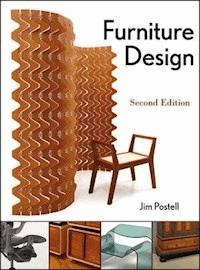
The comprehensive guide to furniture design— expanded and updated
Furniture designers draw on a range of knowledge and disciplines to create their work. From history to theory to technology, Furniture Design offers a comprehensive survey of the essential craft- and practice-related aspects of furniture design.
Generously illustrated with photographs and drawings—including a new color section—this Second Edition features updated coverage of material specifications, green design, digital design, and fabrication technologies. It also features twenty-five case studies of furniture design that represent a broad selection of works, designers, and techniques, including recent designs produced within the last decade.
The book explores:
- Furniture function and social use
- Form, spatial organization, and typological orders
- Structural integrity and composition
- Accessibility, universal design, human factors, and ergonomics
- The design process, from schematics through fabrication
- Materials, processes, and methods of fabrication
- Professional practice and marketing
- The history of furniture design, from prehistory to the digital age
Complete with a glossary of terms and a comprehensive bibliography, Furniture Design, Second Edition is a one-stop resource that furniture designers will turn to regularly for the advice, guidance, and information needed to perform their craft.
Sie lesen das E-Book in den Legimi-Apps auf:
Seitenzahl: 684
Veröffentlichungsjahr: 2012
Ähnliche




















Contents
Preface
Acknowledgments
Foreword
Foreword to the First Edition
Chapter 1: Introduction to Furniture Design
Furniture
Design
Furniture + Design + (X) = Furniture Design
Chapter 2: Function and Social Use
Human Body Supports
Activities: Eating, Reading, Typing, and Writing
Containing: Storing, Displaying, and Organizing
Defining Space: Enclosing, Shaping, and Partitioning
Classifications Based on Social Use
Chapter 3: Form, Spatial Organization, and Typological Orders
Form
Spatial Organization
Typological Orders
Summary
Chapter 4: Furniture Case Studies
Overview of Furniture Case Studies
Lessons from the 25 Furniture Case Studies
Chapter 5: Furniture Design Theory
Inquiry
Systems Theory
Firmitas, Utilitas, and Venustas
Modernism
Built Form and Culture
New Formalism: Theories of Digital Form
Chapter 6: Design
Design Principles
Design Thinking
Design Ethos
Design Processes
Design Phases
Professional and Disciplinary Boundaries
Chapter 7: Materials
Material Matters
Material Properties
Materials: A to Z
Chapter 8: Processes and Methods of Fabrication
Preparing Shop Drawings and a Materials Takeoff List
Securing Materials, Equipment, Supplies, and Hardware
Bending
Carving
Cutting, Drilling, Milling, and Planing
Assembling and Gluing
Joinery, Mechanical Connections, and Fasteners
Upholstery
Sanding
Finishing, Painting, Sealing, Staining, and Surfacing
Delivery and Installation
Repairing, Restoring, and Resurfacing
A Chronological Overview of Tools
Technology: The Art and Science of Fabrication
Chapter 9: Professional Practice and Marketing
Industry
Green Marketing
Retail and Wholesale
Design for Less
Alternative Retail
Industrial Entrepreneurs: Silent Heroes
Furniture Epicenters
The Business of Furniture Design
Chapter 10: Historical Overview
How Societies Have Thought about Designing, Making, and Using Furniture
The Earliest Cultures
Prehistory to Antiquity
Early Christian and Islamic Cultures
The Rise of Europe
The American Colonies and the Emerging United States
The Classical Style
The Industrial Revolution
Eclecticism
Revivals
Craft and Design
Modernism and the Machine Age
Rising Heroes of Evolving Modernism
The Twenty-First Century: The Digital Age
Appendix: References and Sources
Glossary
Bibliography
Index
Supplemental Images
FigureTI-1 Danish Institute for Study Abroad Furniture Design workshop. Drawing and sketching at full scale.
Photography: courtesy Erik Skoven, DIS.
Cover images: Left: reproduced by permission of Design + Construction Strategies
Right: reproduced by permission of Integrated Environmental Solutions (IES)
Cover design: Anne Michele Abbott
Copyright © 2012 by John Wiley & Sons, Inc. All rights reserved.
Published by John Wiley & Sons, Inc., Hoboken, New Jersey.
Published simultaneously in Canada.
No part of this publication may be reproduced, stored in a retrieval system, or transmitted in any form or by any means, electronic, mechanical, photocopying, recording, scanning, or otherwise, except as permitted under Section 107 or 108 of the 1976 United States Copyright Act, without either the prior written permission of the Publisher, or authorization through payment of the appropriate per-copy fee to the Copyright Clearance Center, Inc., 222 Rosewood Drive, Danvers, MA 01923, 978-750-8400, fax 978-646-8600, or on the web at www.copyright.com. Requests to the Publisher for permission should be addressed to the Permissions Department, John Wiley & Sons, Inc., 111 River Street, Hoboken, NJ 07030, 201-748-6011, fax 201-748-6008, or online at http://www.wiley.com/go/permissions.
Limit of Liability/Disclaimer of Warranty: While the publisher and author have used their best efforts in preparing this book, they make no representations or warranties with the respect to the accuracy or completeness of the contents of this book and specifically disclaim any implied warranties of merchantability or fitness for a particular purpose. No warranty may be created or extended by sales representatives or written sales materials. The advice and strategies contained herein may not be suitable for your situation. You should consult with a professional where appropriate. Neither the publisher nor the author shall be liable for damages arising herefrom.
For general information on our other products and services, or technical support, please contact our Customer Care Department within the United States at 800-762-2974, outside the United States at 317-572-3993 or fax 317-572-4002.
Wiley publishes in a variety of print and electronic formats and by print-on-demand. Some material included with standard print versions of this book may not be included in e-books or in print-on-demand. If this book refers to media such as a CD or DVD that is not included in the version you purchased, you may download this material at http://booksupport.wiley.com.
For more information about Wiley products, visit our Web site at http://www.wiley.com.
Library of Congress Cataloging-in-Publication Data:
Postell, James Christopher, 1958-
Furniture design / Jim Postell. — Second edition.
pages cm
Includes bibliographical references and index.
ISBN 978-1-118-09078-7 (cloth); 978-1-118-35170-3 (ebk.); 978-1-118-35171-0 (ebk.); 978-1-118-35315-8 (ebk.); 978-1-118-35316-5 (ebk.); 978-1-118-35318-9 (ebk.)
1. Furniture design. I. Title.
NK2260.P67 2012
749—dc23
2012002907
978-1-118-09078-7
Preface
Alvar Aalto (1898–1976), Charles Rennie Mackintosh (1868–1928), and Frank Lloyd Wright (1867–1959) were architects who integrated custom furnishings into their buildings and interior spaces (Figure P-1). Interior designers such as Eileen Gray (1878–1976), Yoshiharu Hatano (b. 1946), Eva Maddox (b. 1944) and Andrée Putnam (b. 1925) are renowned for their skill in blending textures and furnishings with interior space. Henry Dreyfuss (1904–1972) and Bill Stumpf (1936–2006) were industrial designers who utilized industrial manufacturing processes in their furniture designs. Woodworkers and artisans such as Wendell Castle (b. 1932), Sam Maloof (1916–2009), George Nakashima (1905–1990), and Pierluigi Ghianda (b. 1926) worked throughout their lives to create furniture with remarkable handcraft and finish (Figure P-2). Charles (1907–1978) and Ray (1912–1988) Eames, Poul Kjærholm (1929–1980), Pierre Paulin (1927–2009), Charlotte Perriand (1903–1999), Gatano Pesce (b. 1939), and Hans J. Wegner (1914–2007) developed professional careers designing furniture. Regardless of their academic background or professional affiliation, these individuals are renowned for innovative furniture designs (Figure P-3). Consider the viewpoints brought to furniture design by these individuals and the unique disciplinary qualities within the fields of art, architecture, interior design, and industrial design. There are pronounced differences in the way architects and interior designers create a sense of place by designing, selecting, and locating furniture; in the way industrial designers seek to resolve industrial fabrication processes and integrate utility, human factors, and ergonomics in design; and in the way that artists are trained in their craft. Many individuals and disciplines to contribute to the body of knowledge of furniture design.
Figure P-1 Experiments with bent and laminated wood—furniture components for the Paimio Sanatorium and the library in Viipuri, Finland. Designed by Alvar Aalto.
Photography by Jim Postell, 2006.
Figure P-2 Three-seat settee, designed and fabricated by Wendell Castle (1968). Stacked-laminated, carved cherry wood.
Photography by Jim Postell, 2011.
Figure P-3 Stacked Tongue 577 chairs, designed by Pierre Paulin (1967), tubular steel armature surrounded with rubber webbing and expanded foam, upholstered in polyester stretch fabric. Manufactured by Artifort. 33½ inches wide; 35½ inches deep; 24 inches high; 133/8 inches seat height (85 cm wide; 90 cm deep; 61 cm high; 34 cm seat height).
Photography by Jim Postell, 2011.
Think about the influence that material properties, use, applied forces, the surrounding environment, and ergonomics have on furniture design. Reflect upon the historical, cultural, political, and societal conditions revealed in the way people sit, rest, work, and play, or the human factors research and anthropometric data on which furniture designers rely. Many factors should be considered when designing furniture. Most are situated within personal, cultural, disciplinary, and professional frames of reference.
This second-edition textbook is written to serve students and furniture designers as a comprehensive survey and resource to give a deeper understanding and provide knowledge and inspiration for designing and making furniture. It has been rewritten to deliver a more extensive overview of furniture design through further documentation and analysis, with focus upon the stories and design intentions behind the furniture examples presented in this book. There are broader examples of furniture presented throughout the book, in-depth material specifications, and updated material covering digital design and fabrication technologies. The primary intention of this book is to articulate how ideas, use, design process, materials, and fabrication methods contribute to furniture design. This was a central theme in the first edition. This edition attempts to be more effective in achieving that goal.
Revisions have been made to each of the 10 chapters, which include:
Chapter 1, “Introduction to Furniture Design,” presents an expanded overview to the discipline and introduces threads of disciplinary-centered research and research methods. Basic relationships are outlined between furniture and design, setting the stage for a comprehensive and extensive survey.
Chapter 2, “Function and Social Use,” describes social-use categories, notions of utility, ergonomics, and function.
Chapter 3, “Form, Spatial Organization, and Typological Orders,” addresses a range of physical, compositional, and spatial characteristics in furniture design.
Chapter 4, “Furniture Case Studies,” presents 25 furniture studies organized in chronological order with new sustainable and digital design updates. In addition to the case studies, selected furniture projects by students highlight unique ways of thinking about furniture design, whose pedagogy and methodology were drawn from this book.
Chapter 5, “Furniture Design Theory,” examines the nature of furniture design, focusing on aspects of comfort, performance, structural integrity and composition, how furniture works and feels, green design, and digital fabrication, and includes expanded discussion on human factors, ergonomics, and aesthetics.
Chapter 6, “Design,” presents an overview of design principles and focuses on the phases, processes, tools, skills, and ethics of designing furniture. This edition introduces more designers, further examples of furniture pieces, and more specific working methods of design—including digital design technologies.
Chapter 7, “Materials,” outlines an updated palette of natural, composite, and synthetic materials and discusses material properties and surface characteristics relative to furniture design.
Chapter 8, “Processes and Methods of Fabrication,” discusses ways of fabricating furniture (beyond woodworking technologies), with an overview of hand, power, and digital tools.
Chapter 9, “Professional Practice and Marketing,” covers professional aspects related to the marketing, branding, and business of designing, making, and selling furniture. Furniture companies are included as both a source and resource for the reader. Expanded content is given to economic forces, global markets, professional outlets, and venues, in which the public and the discipline interact.
Chapter 10, “Historical Overview,” highlights how societies have thought about, designed, fabricated, and used furniture from ancient Egypt up to the present. Revised content has been added to include recent furniture designs produced or fabricated within the past 10 years.
Designing furniture relies upon judgment, theory, and technical knowledge from several professions and disciplines. The breadth and depth of knowledge necessary to design, specify, select, fabricate, and arrange furniture in space is extensive. This book draws on this knowledge and, in doing so, reaches out to students, faculty, the general public, and professionals in allied fields of design.
It remains a challenge for some individuals to acknowledge furniture design as a stand-alone profession or even as a vocation because it is intertwined with several disciplines. It is difficult to formulate a collective dialogue about furniture design because each discipline approaches design and fabrication from unique perspectives and each perspective is tethered to specific assumptions, frameworks, and agendas.
Look back to the time when interior design was an emerging field and consider its historical beginnings. One can determine that interior design developed from several fields, the work of key individuals, unique professional practices, and established academic programs. The fields of architecture, design, fine arts, and the decorative arts, in conjunction with the professional practices of James Adam (1732–1794) and Robert Adam (1728–92), Elsie de Wolfe (1856–1950), and Florence Knoll (b. 1917) would deserve recognition for their contribution to the emergence of interior design as a discipline and emerging profession.
In the 1950s, the discipline of industrial design began to emerge. The work of Norman Bel Geddes (1893–1958) and Raymond Loewy (1893–1986) helped to promote interest in the discipline, as did emerging industrial fabrication processes and new mass customization and digital fabrication technologies.
It is important to acknowledge the collective influence architects, interior designers, industrial designers, and fine artists have had on the disciplinary and academic stature of furniture design, but one should also consider the important roles that entrepreneurs, fabricators, craftspeople, engineers, human factor researchers, and the general public have played as well.
It is the author’s hope that this book will remain a useful survey for students and faculty, and continue to serve as a resource for designers and fabricators interested in furniture design.
Acknowledgments
Many individuals contributed to the first edition of this book. To those who took time to discuss and comment on the manuscript drafts, contribute drawings or photographs, provide information, resources, ideas, and encouragement, I am sincerely grateful.
For the past 25 years, I have taught in the School of Architecture and Interior Design within the College of Design, Architecture, Art, and Planning at the University of Cincinnati. DAAP is composed of many design disciplines and has a long history of cooperative practice providing students with professional internships in firms across the country and around the world. DAAP provides a design-centered, collaborative environment. To those students who have participated in my furniture design seminar at the university and in taking the course, have documented and analyzed, or designed and fabricated working prototypes of furniture, you have been a continued source of inspiration, knowledge, and joy for me as an educator.
The numerous visits to galleries and museums that have furniture among their collections, here in the States and abroad, have been a significant resource for research. I am grateful to the Mingei International Museum in San Diego; the Metropolitan Museum of Art and MOMA in New York; the Cincinnati Art Museum; the Pompidou Center, Musée d’Arts Décoratifs, Musée du Louvre, and Musée D’Orsay in Paris; the Victoria and Albert Museum in London, and the Designmuseum Danmark in Copenhagen. The collective experiences viewing and studying furniture in a museum setting have contributed to a broader, research-based perspective about furniture and design.
Furniture showrooms, design centers, and international furniture fairs continue to be important venues where one can see, touch, sit, meet with the owner or manager of a furniture company, and discuss what sells and learn why. Among the hundreds of showrooms visited over the past 20 years, Paustian in Copenhagen, M2L in NYC, the San Francisco Design Center, the Merchandise Mart in Chicago, Voltage in Cincinnati, Cassina’s showroom in Milan, and Kartell’s showroom in Helsinki are among the best. Furniture fairs including, Highpoint, NC, ICFF in New York, the Salone del Mobile di Milano, and NEOCON in Chicago are all important events to see and visit for anyone interested in furniture design. They continue to be an invaluable resource of contemporary furniture design, and the peripheral design-centered receptions, parties, and openings are excellent opportunities for those in the industry, designers, and clients to interact.
Designing and making furniture over the past 30 years has yielded for me an inner sense of assurance on the subject. I am fortunate to have had the opportunity to design over 400 individual furniture pieces for architectural and interior commissions.
Meeting and getting to know those who design furniture is invaluable. I am grateful to have known many furniture designers, including Erling Christoffersen, professor at DIS; Boris Berlin, co-owner of KOMPLOT Design, and Troels Grum-Schwensen in Copenhagen; Yoshiharu Hatano in Castelleto Ticino (Italy); Mario Bellini, Achille Castiglioni, and Ettore Sottsass, all of whom have had offices in Milan; and Emiliano Godoy of GODOYLAB in Mexico City.
To those who have written about furniture design, I am particularly indebted, especially to Mark Hinchman, Anne Massey, John Pile, David Pye, and Edward Lucie Smith.
To those companies that make furniture, including, B & B Italia, Cassina, Vitra, Giogetti, Fritz Hansen, Rud Rasmussen, and to those individuals who craft furniture, including Pierluigi Ghianda, Mario Terraneo, Soren Holst Pedersen of PP Mobler Design, and the late George Nakashima, you and your work have been sources of inspiration.
To the readers of Furniture Design, it is a special satisfaction for me to introduce this second edition. I hope this book complements those books in the classroom and on your shelves and continues to inspire students and designers in their quest to better understand the comprehensive and extensive nature of designing and making furniture.
I thank Paul Drougas, acquisitions editor at John Wiley & Sons, for the opportunity and encouragement to write a second edition of this book. This edition has provided an opportunity to make changes both substantial and marginal in response to suggestions from students, teachers, and designers who use the book.
Shortly after John Pile agreed to write the foreword for the first edition of this book, he passed away. His books on the subjects of modern furniture and interior design are marked by their balance of technical information and thoughtful insight about design, supported by great images. John had a remarkable career as a teacher, author, and practitioner—always with focus on design. He contributed significantly to the study of furniture design and interior design and was influential in the development of this book. He was a source of inspiration, a mentor, and a supporter for the book. I wish to dedicate this edition in his honor.
Foreword
Few objects carry with them the historical and technical heritage of furniture. A chair is not only an object for seating but also a flag-bearer for the cultural specificities of the society where it was made and used. Furthermore, the magic of furniture is that, through daily use, social context is influenced in an ongoing and evolving two-way dialogue.
Given the fact that basically everyone is in constant contact with a wide variety of furniture pieces on a daily basis, it is very strange that designing furniture is not the core theme of several undergraduate and postgraduate programs. One would think that after thousands of years of making, using, repurposing, and disposing of furniture we would have a comprehensive and structured understanding of the lifecycle of these objects. But this is not the case. Furniture is designed by architects, industrial designers, craftsmen, or engineers who learned little about it in school and most of it working with the industry, studying on their own or by good old trial and error.
That was my case. While in my BA I had one amazing design studio with Óscar Hagerman that centered on furniture design and seating ergonomics—but that was it. Even in my ergonomics and materials courses, furniture was merely a footnote. After graduation, I had no option but to improvise. Truth be told, I improvised a lot—and in many areas—as my undergraduate degree in industrial design was as broad in scope as any, therefore only scratching the surface of everything I should’ve learned to become an expert in any field of design. That’s how it is, and one could say fortunately, as one of the great qualities of an industrial designer is being a generalist. If we wanted to be an expert in every field an industrial designer might work in, we would need decades of training.
However, something’s different about furniture design. With such objects as computers, medical equipment, transportation, or even lighting, the designer is but one of many experts in a team where each discipline collaborates on the realization of the product. Furniture designers, however, usually work by themselves and only sometimes at the final stages of the process do engineers or manufacturers get involved in migrating the design to the production floor. Therefore, the designer nowadays needs a very particular combination of knowledge in aesthetics, ergonomics, manufacturing processes, materials, finishes, marketing, and cost analysis, to name a few areas.
After my BA and five years of working independently, I enrolled in a postgraduate degree program, where I had a fantastic furniture design course with Mark Goetz and another one in Denmark with Flemming Steen Jensen, Erling Christoffersen, and Bjorli Lundin. These hands-on courses were magnificent in advancing my understanding of what furniture design and manufacturing was all about. A few years later, I started a furniture brand aimed at creating an environmentally and socially responsible manufacturing platform where designers could learn, discuss, and create furniture that was green, useful, and beautiful. In this context, I frequently encountered designers who were lacking in one area or another, thus proposing pieces that were not feasible in technical or economic terms, or who were not aware of historical and formal references they are expected to know.
Furniture design is indeed a demanding discipline, and acquiring the necessary knowledge is not an easy task.
Jim Postell has compiled in this book a powerful tool for both students and professionals that addresses all aspects of furniture design, from materials, fabrication, and functionality to history, theory, and professional practice. Most importantly, it relates these issues to the design process, thus bridging the gap between the isolated knowledge of specialized courses and the real-world necessities of the furniture designer. With this extended second edition, the author brings us closer to the understanding of this fascinating discipline and the role and responsibilities of the designer in their social sphere.
Emiliano Godoy
Foreword to the First Edition
The field of furniture design is strangely diverse. It does not have a well-established definition and is not regularly studied in colleges or universities.
It is also odd to remember that most of the world’s population does not make use of furniture except, perhaps, for a few stools or benches. Western civilization, however, beginning thousands of years ago, has become addicted to the use of furniture of the most varied sort. In the modern world, we are in touch with furniture at almost every moment. We sit in chairs, work and eat at tables, sleep in beds, and are hardly ever out of sight of a number of furniture items, for better or for worse.
Furniture is now produced and distributed for homes, for offices, for schools, for hospitals, and for every other situation in which people are to be found. In spite of this near glut of furniture, the sources of the designs that are so ubiquitous are obscure. Most furniture now comes from factories, but the designs factories produce are generally anonymous, the work of staff that exists mostly to develop variations on earlier designs whose origins are lost.
There are, of course, some exceptions. Most historic furniture can be traced to cabinetmakers such as Chippendale and Sheraton or to architect-designers such as the Adam brothers, but these are rare exceptions mostly to be found only in museums and auction galleries. In the modern world, we know the names of the designers of those special creations we call classic: Eames, Breuer, Mies van der Rohe, Bertoia, Rietveld, and Le Corbusier. If we look into the backgrounds of these famous figures, we find that they were not trained to be furniture designers. They were architects, sculptors, or, in some instances, industrial or interior designers. When they turned to furniture, they had to rely on their background knowledge of structure, materials, human body mechanics, and the many other issues that relate to successful furniture design.
Design history is full of examples of many efforts by distinguished designers that have fallen by the wayside, while a few highly successful designs have come from unexpected sources—one thinks of the Rowland stacking chair, the Pollack office chair, or the Noguchi coffee table. Efforts to establish some form of training for designers who wish to work on furniture have not met with much success. A brief course in furniture design is offered in some interior and industrial design programs, but architectural training is too demanding to include even limited exposure to the field. Some schools with major programs in furniture design are oriented toward craft techniques and train master woodworkers who produce a single, one-of-a-kind effort demonstrating craftsmanship but offering little to the broader world of furniture. In the end, it must be admitted that furniture design is generally self-taught, whether the learner is also a craftsperson, architect, sculptor, or layman.
To turn at last to this book, we find an author determined to give aid to the would-be furniture designer, whatever professional background or lack of professionalism that person may have. In this one volume, we can confront issues of function, materials, structure, production techniques, and whatever philosophical and theoretical matters may have a bearing upon the realities of furniture.
Although many books deal with furniture (as this book’s bibliography can attest), most are histories, picture books, or studies for collectors. Very few even touch on furniture design as a process, a skill, or a matter for serious study. Here we have a book determined to make up for the furniture design shortage. It is hard to imagine a more complete and comprehensive coverage of this neglected subject brought up-to-date with such tireless effort!
John Pile
chapter 1
Introduction to Furniture Design
Dictionary and encyclopedic sources use words like accessories, equipment, and movable objects to define furniture.1 Words can describe the performance and physical characteristics of furniture, but those who design, make, and use furniture know that furniture design extends far beyond dictionary or encyclopedic definition. Furniture design concepts lead to the production of useful items that result in tactile experiences (Figure 1.1). In nearly every case, furniture is something people experience through direct human engagement. In addition, one’s understanding and knowledge of furniture evolves with use and over time.
Figure 1.1 The Knit chair in use. Designed by Emiliano Godoy (2004). This chair was awarded a Bronze Leaf at the International Furniture Design Competition Asahikawa 2005 in Asahikawa, Japan.
Photography courtesy of John Curry, GODOYLAB, 2005.
Designing furniture relies on intuition, judgment, design skills, engineering principles, and knowledge in a broad range of disciplines helpful with problem solving. Designing furniture requires inspiration, a concept or idea, and the commitment to give pleasure to those who use it.
The inevitable shift from designing furniture to fabricating furniture generates an appreciation for both the obvious and subtle ways in which making can influence the design process. Through the process of making furniture, one will learn about hand, power, and digital tools, material properties and working methods, assembly processes, and the time required to finish a project. Fabricating furniture demands precise skill and workmanship and often results in a sense of craft for those directly involved in the process. Making furniture does not necessarily guarantee an ability to design furniture, but it will result in an expanded knowledge of materials, tools, and joinery, which in turn generates a broader appreciation and respect for furniture design.
Furniture design is deeply rooted in the human condition. It is a social science that belongs to the humanities, an applied art that draws upon many design disciplines, and is dependent upon a working knowledge of materials and fabrication techniques. It is a holistic and interdisciplinary field of study.
Before delving into the nature of furniture design, consider the terms furniture and design and reflect upon the fundamental and symbiotic relationships bound in the meaning and etymology of these two words.
Furniture
By many accounts, furniture includes a broad range of moveable objects organized in four main categories:
Human body support devices (
Figures 1.2
and
1.3
)
Surfaces and objects to support various activities (
Figures 1.4
and
1.5
)
Storage and display pieces (
Figures 1.6
and
1.7
)
Spatial partitions
3
(
Figures 1.8
and
1.9
)
Figure 1.2 Reclining with the chaise longue at Villa Savoye, Poissy, France.
Photography by Stephan Dober, 2011.
Figure 1.3 Plan side and front views of chaise longue (known as LC/4) designed by Charlotte Perriand, Pierre Jeanneret, and Charles-Édouard Jeanneret (Le Corbusier) (1928–1929). Originally manufactured in chrome-plated steel, fabric, and leather by Thonet Frères, Paris, then by Cassina, Italy since 1965. 22¼ inches wide; 63 inches deep; 28¾ high (56.5 cm wide; 60 cm deep; 73 cm high).
Drawing by Ashley Hermann, 2006, courtesy of Jim Postell.
Figure 1.4 Outside café tables and chairs, Paris, France.
Photography copyright © William A. Yokel, 2005.
Figure 1.5 Drawing table, designed by Robert Mallet-Stevens (1927) for professional use in his Paris office. Made with tubular metal, poplar wood, and hard lacquer paint.
Photography by Jim Postell, 2011.
Figure 1.6 Case goods (cabinet and bookcase) designed by Mogens Koch, fabricated by Rud. Rasmussen (since 1932), Copenhagen, Denmark.
Photography courtesy of Rud. Rasmussen, Denmark, 2006.
Figure 1.7 Cabinet, designed by Ettore Sottsass (1948–1949). Made with lacquered wood and brass-plated tubular steel.
Photography by Jim Postell, 2011.
Figure 1.8 Furniture as space–space as furniture. Dupont Corian exhibit, designed by SOM, 2005.
Photography by Brian F. Davies, 2004.
Figure 1.9 Living Sculpture in nine components, designed by Verner Panton (1970–1971). Made using mass-polyethylene, with an internal armature supported by expanded polystyrene foam, upholstered in wool. Overall size: 86 inches wide; 201 inches deep; 169 inches high (220 cm wide; 510 cm deep; 430 cm high). Fabricated by Mira-X.
Photography by Jim Postell, 2011.
Furniture pieces are designed and fabricated to assist in the many ways people sit and rest, work and play, organize or display items, and partition space. This view suggests a broad utilitarian framework, in which function is perceived to be the primary intended purpose of furniture. Although function, utility, and social use are important aspects of the performance of furniture, rarely does function alone inspire great design. Furniture design draws upon ideas of beauty, principles of design, theory, material properties, fabrication technologies, business economies, environmental design matters, and the surrounding spatial context in which it is placed, all of which are integral and intertwined with function, utility, and social use. Considerations that influence what we think about and feel regarding furniture design include:
Aesthetics (the meaning of form)
Historical precedent (examples from the past)
Principles of design (i.e., unity, harmony, hierarchy, spatial order)
Function and social use (ergonomics, comfort, proxemics)
Design processes (sketching, iterative overlays, model studies, digital modeling, full-scale working prototypes, collage assemblies)
Material (classification, characteristics, properties, availability, cost)
Fabrication processes (hand, power, digital)
Environmental design matters (sustainability, renewable materials, off-gassing)
Surrounding context (the spatial setting for furniture)
Professional practice (economic, legal, and business decisions)
A goal in designing furniture is to consider all design aspects in a comprehensive and integrated manner, while maintaining focus and critical engagement upon the primary concepts and ideas that inspire design.
Utilitarian considerations can channel the development and refinement of design ideas but rarely inspire them. Utility is grounded by specific categories of social use, associated with the broader classifications of building and zoning nomenclature. In this book, categories of social use include:
Health care
Hospitality
Institutional
Office
Recreational
Religious
Residential
Retail
Storage
Broad categories of social use are dependent on particular activities and affected by specific circumstances, which are nearly always influenced by place, occupancy, and time. As an example, day care furniture is a specific type of furniture cross-linked with institutional and residential categories. A law firm is a specific type of office classification, as is an accounting firm or a telemarketing company. Furniture for a Catholic church, a Jewish synagogue, or Islamic mosque, falls under a liturgical classification. These factors and circumstances are discussed in Chapter 2.
The word furniture is derived from European verbs, nouns, and adjectives. The French verb fournir means “to furnish.” Furniture provides a place setting for work, rest, and play. It also contributes to the ambiance and style of interior space (Figure 1.10). Furniture provides people with desired items and necessary equipment that complement and complete interior space.
Figure 1.10 The dining table and chairs (with retractable leaves) complement the recessed circular soffit and surrounding millwork in Eliel Saarinen’s residence at Cranbrook Academy, Bloomfield Hills, Michigan.
Photography by Jim Postell, 2009.
The Latin adjective mobile means “movable,” which is an important characteristic of furniture. The French meubles, the Turkish mobilya, and the Danish møbel all translate into the English word furniture. Freedom from the physical structure of a building provides designers with an opportunity to create spatial relationships between movable elements and built-in components. The creation of spatial relationships through the size, location, and orientation of furniture pieces places furniture design within the disciplines of architecture and interior design.
Spatial order and spatial organizations include:
Grid: a regular tessellation that divides space into a series of contiguous cells, which can then be used for spatial indexing purposes. Grids can be generated from square or rectangular cells, triangular, circular, or, hexagonal formations.
Linear: relating to, consisting of, or using lines in form or in spatial sequence.
Centralized: drawing spatial relationships into, around, or toward a central area or point.
Radial: elements radiating out from a central area or point. (spiraling or swirling) in a circular, lineal, or spiral path.
Cluster: a small group of elements gathered closely together (
Figure 1.11
).
Figure 1.11 Clustered furnishings within the Salon Théâter, (Appartements Napoléon III), Musée du Louvre.
Photography by Jim Postell, 2011.
Though furnishings are nearly always freestanding and movable, some pieces challenge the conventional paradigm by being mechanically attached to a floor, wall, or ceiling (see Figures 1.12 and 1.13) and therefore lose the characteristic of their mobility. In either scenario, interior space is made complete through the size, location, orientation, and surface treatment of tangible built-form and intangible use.
Figure 1.12 Built-in manicure stations at Alverno Salon and Spa, Cincinnati, Ohio. The storage units and manicure stations are mechanically attached to the floor and wall, enabling internal and continuous space for electrical power and air return ducts.
Designed by Jim Postell, 2003. Photography copyright © Scott Hisey, 2004.
Figure 1.13 Built-in and tiled reclined seating in the master bathroom at Villa Savoye, Poissy, France. Designed by Le Corbusier (1928).
Photography by Jim Postell, 2011.
Architecture embraces the art and design of building. It is site dependent and site responsive. Many architects have designed custom furniture pieces to complement their buildings and complete their interior spaces. Alvar Aalto, Antoni Gaudí, Charles Rennie Mackintosh, Eugène Vallin, and Frank Lloyd Wright were architects who routinely sought to accomplish this goal. Furniture can contribute significantly to its architectural setting, designed and fabricated as one-of-a-kind pieces, specifically to complement and complete a room, space, or landscape (see Figure 1.14).
Figure 1.14 Eugène Vallin, salle à manger (dining room), Musée de l’Ecole de Nancy.
Photography by Jim Postell, 2011.
Industrial design is a relatively young discipline with mass production and mass customization as its primary focus and disciplinary theme. Furniture design provides opportunity for exercising these core values and, therefore, finds itself aligned with the discipline of industrial design. Digital fabrication techniques, workmanship, assembly processes, and packaging are important to both industrial design and furniture production because of the shared dependence each discipline has with mass production and mass customization. Furniture pieces that are designed, fabricated, and branded as industrial design products include ergonomic task chairs, folding tables, and modular shelving units. These products are designed to have identical or deliberate quantitative outcomes resulting from industrial production technologies and are not conceived as site-specific furnishings. Renowned designers, whose furniture designs are dependent on mass-production and mass-customization technologies include Achille Castiglioni, Antonio Citterio, Bruce Hannah, Philippe Starck, and Bill Stumpf (see Figure 1.15).
Figure 1.15 Richard III, designed by Philippe Starck (1982–1984), manufactured by Baleri Italia as a single shell molded structure in rigid polyurethane and finished with polyurethane enamel in metallic silver. 36¼ inches wide; 32¼ inches deep; 36 inches high (92 cm wide; 82 cm deep; 91.5 cm high).
Photography by Jim Postell, 2011.
Art, as a process, is steeped in the creation of making things. More often than not, artwork produced by an artist reveals, among other qualities, the mark of the maker. Furniture aligns itself with and is marketed as fine art when the nature of craft and craftsmanship (workmanship of risk) is revealed through the process of making. Furniture, when considered a work of art, results from personal skill and subjective judgment in the production and fabrication of a one-of-a-kind piece. Furniture pieces made by Ron Arad, Wendell Castle, Émile Gallé, Sam Maloof, George Nakashima, and Andrea Zittel have been exhibited in galleries and museums and the pieces made by their own hand are marketed as fine art (see Figure 1.16).
Figure 1.16 Chair by its Cover, Zig-Zag, designed and fabricated by Ron Arid (1989–1990).
Photography by Jim Postell, 2011.
Buying, selling, and marketing furniture is a business. Sales are influenced, in part, by the display of furniture in a particular setting (i.e., store, showroom, ad, journal, book, exhibit, or web site). Price, quality, function, aesthetics, historical context, and branded appeal also influence sales. As a business, furniture is carefully marketed through specific venues with consideration towards the competition and broader market demand for similar products. Furniture companies such as Cassina and Knoll invest heavily into carefully designed environments to display their furniture product line. Furniture businesses follow suit. From Paustian in Copenhagen to M2L in New York, Boston, and Washington; to the office furniture showrooms in Chicago’s Merchandise Mart; to Voltage in Cincinnati, high-end furniture showrooms play an important role not only in providing an environment in which to display and sell furniture and furnishings but also to inform the public and give voice to furniture design in a larger historical, societal, and cultural context.
M2L is a business dedicated to modern design. Started in 1985, the company has showrooms in New York, Boston, and Washington, D.C. M2L is a source for high-end residential and office furniture, whose designs span the twentieth century and include collections from many modern masters, such as Josef Hoffmann, Eileen Gray, and Marcel Breuer. M2L’s showroom in Georgetown’s Design District provides a modern setting among turn-of-the-century industrial warehouses. The furniture showroom is designed as a beautiful, minimal white interior space, providing an environment best suited to display the collection of furniture and furnishings available through M2L (Figure 1.17).
Figure 1.17 M2L Showroom in Washington, D.C., (2007) designed by Robert M. Gurney.
Photography by Maxwell MacKenzie, courtesy of M2L.
Design
One can think of design as structured play.5 It’s a process resulting from creative thinking, intuitive judgment, and hard work. As a process, design develops through a working method that is shaped by technical information, informed by theory, and dependent on communication skills. Design ideas develop within a conceptual and contextual framework and are dependent on the operations and abilities of the designer’s hand and head.
The design process utilizes both the right and left hemispheres of the brain. The left side of the brain processes information in a linear manner, working from part to whole relationships. It takes pieces of information and organizes them in a logical order, then it draws conclusions. The left-brain person would enjoy making schedules and planning the fabrication of furniture. The right side of the brain, however, processes from whole to parts, holistically. It starts with the big picture, not with specific details. The right-brain person wants to see, feel, or touch furniture. Thus furniture designers who can activate both sides of the brain often enhance the design process, furthering the considerations of conceptual, structural, functional, tactile, aesthetic, spatial, economic, and cultural needs and desires, all at the same time.
The word design is distinct from the word project. While design entails processes of inquiry and methods for exploring and synthesizing ideas (Figure 1.18), a project is the coherent resolution of purpose and presence (Figure 1.19). At some point in time, design efforts will transform into projects. A project can be revealed in a drawing, model, working prototype, or fabricated work. It’s not the medium that distinguishes a design from a project; rather, it is the presence of resolved and synthesized aspects, clarity of idea, function, purpose, and, very often, the intent to make real.
Figure 1.18 Hand sketching in the initial phase of design—exploring spatial relationships with furniture, Children’s Chapel, Cincinnati Children’s Hospital Medical Center.
Design sketch by Jim Postell, 1994.
Figure 1.19 Children’s Chapel, Cincinnati, Ohio—fabricated and installed furnishings by Heartwood Furniture Company, 1995.
Photography by Michael Toombs, 1995.
The words design and designate are derived from the Latin verb designare. Designare translates “to mark out,” taken from de, “of,” and signare, “to mark,” or the noun signum, “a mark or sign.”6 The Italian word for project is la progettazione, referring to the planning stage between design and fabrication. Il progetto translates into “the plan.” The word design is sometimes used to mean “the plan” and can imply planning or intending for a purpose.
At the core of designing furniture is a body of knowledge and the skills necessary to integrate the tangible and intangible aspects that become furniture. Tangible aspects include:
Materials (characteristics, workability, and finish qualities)
Fabrication
processes (tools, performance, quality, and limitations)
Resources (time, money, and access to equipment and supplies)
Intangible aspects include:
The program (intention, purpose, function)
Theory and history (inquiry, rationale, precedent)
Ergonomics and proxemics (designing for a set of activities, within the limits of the human body and the study of how people communicate in and through space)
Knowledge about the human body and the human condition
The design process
Marketing and branding strategies
Professional practice
Designers can build upon their understanding of the present and be better equipped to foresee into the future when they have gained insight from the successes and failures, processes, and aspirations of others in the past. Look carefully at the design and fabrication processes from the past. Consider the innovative use, available materials, the joinery, and aesthetics, all of which can inform and inspire new furniture designs.
Design skills include the ability to graphically communicate and physically model ideas. Though technical instruction can be taught, design skills need to be exercised and will improve with experience. Furniture designers need to learn how to design, sketch, draw, draft, make study models, and use computer programs, while simultaneously developing a working knowledge about materials, fabrication techniques, and the human body, when they actively design furniture. In regard to the skills and knowledge necessary to design furniture, experience in both designing and making furniture is perhaps the best teacher a student can have.
Furniture + Design + (X) = Furniture Design
The primary intention of combining the terms furniture and design together is to articulate an emerging discipline in the combined synthesis of the two terms. The phrase furniture design establishes a framework for an emerging discipline that is comparable to interior design, industrial design, fashion design, or graphic design—a discipline that is co-dependent with other allied design fields and, yet, one that has a core body of knowledge. It is an area of study that extends beyond the summation of furniture and design. It combines the arts and sciences, business and marketing strategies, and design and fabrication processes. It engages furniture as tangible objects, materials, and built-form, as well as part of a larger history of design; informed by research, ideas, developed by design processes, theory, utility, comfort, use, and aesthetics.
Furniture design needs to be practiced in order to be fully appreciated; however, some aspects can be studied, learned, and taught. Designers, educators, fabricators, industrial entrepreneurs, museum curators, and writers have developed an enormous body of knowledge about furniture design. This body of knowledge is available to the public through books, journals, museum and gallery exhibits, and web sites. A growing number of universities and colleges offer courses in furniture design—many within art, industrial design, interior design, and architecture programs. Generally, the course content and student learning outcomes from furniture offerings address the following areas of research and inquiry:
History (societal and cultural themes)
Human factors (anthropometrics, ergonomics, and proxemics)
Humanities (psychology, sociology, human perception)
Theory (inquiry, research methods, aesthetics)
Design (processes, phases, paradigms)
Skills (drawing, model making, digital design and fabrication)
Materials (characteristics and performance)
Fabrication processes (means and methods—hand, power, digital techniques)
Professional practice
Research methods can focus one’s inquiry within the vast body of knowledge of furniture design. Through the process of gathering, organizing, and analyzing information, a stage is set for producing innovative work. Research can inform ideas and clarify specific knowledge about furniture design. It can enlighten designers and fabricators in ways to resolve technical matters regarding material properties, fabrication processes, marketing strategies, and business planning. There are scores of books, journals, reports, professional organizations, academic institutions, web sites, furniture companies, showrooms, and galleries available to the designer today, and a wide range of professional practice venues, to support one’s study of the field of furniture design.
Within the broader study of the humanities, areas of research include:
Human perception/psychology/behavior science
Sociological/cultural inquiry
Anthropometrics/ergonomics/proxemics
Social use/notions of place-making and dwelling
Business identity/branded environments
One can study economic, legal, and business matters in tandem with material and technical aspects of fabricating furniture. Research methods can channel and inform relationships between broad areas of inquiry and more focused studies in specific areas. They can also expand focused inquiry into broader, more complex understandings.
There are, essentially, two primary approaches to research methods:
Empirical studies (learning by doing)—i.e., designing, drawing, making, testing. Generally, an inductive approach—working from concrete realities into general ideas.
Scientific methods (systematic and quantitative)—i.e. gathering information, organizing data, and statistical analysis. Generally, a deductive approach—working from ideas and concepts down to concrete realities.
There is a third approach that is reflective in nature, involving the study of precedent, the writings of others, or investigating design processes. (These approaches tend to be more scientific than empirical.)
Themes and streams of research inquiry include:
Theory (human factors, ergonomics, proxemics, comfort, social use)
Design (processes, methods, techniques)
Material research
Fabrication technologies
Professional practice
History
Themes and streams are akin to the braids of a rope—they are interdependent on one another and collectively strengthen the totality of one’s research or inquiry.
Data Visualization: Mapping Data from Research
Maps, line graphs, Venn diagrams, matrixes, and charts are common methods used to graphically visualize research-based data. Recently, data visualization has developed in several directions:
Theoretical
Methodological
New technological areas
Advances include the development of a grammar of graphics, deeper understanding of human perception and implications for graphical layout, better approaches to visualizing multidimensional data, and organizing large data sets.
Consider some of the ways one might map or visualize information related to furniture design. One can compare the relative strength of various glues or the relative cost to manufacture comparable chairs. One could diagram the global production centers and look at the exportation / importation values regarding furniture sales broken down by country and by year. One could look at the ads in specific journals and analyze the type or spatial context of the furniture shown within the ads. However the approach, researching furniture design involves the gathering, organizing, and analyzing of information, most of which can be gathered, ordered, synthesized, and presented through a variety of graphic techniques, which include:
Venn diagrams
Charts (pie, bar, graph)
Two- or four-axis models
Matrixes
Lexicons
Venn Diagrams
Venn diagrams indicate relationships between classifications and interrelated subsets drawn as simple, closed curvilinear shapes (Figure 1.20). As an example, consider a Venn diagram that graphically indicates the professional and disciplinary relations engaged in furniture design. Notice how the diagram sets a framework for the shared relationships and influences between the individual subsets by the size, location, and spatial relationships of the curvilinear shapes.
Figure 1.20 Venn diagram indicating shared and dependent relations among the disciplines of Art, Industrial Design, Engineering, Architecture, and Interior Design. High technologies (workmanship of certainty) stem from the left side of the diagram, while lower technologies (workmanship of risk) stem from the right side.
Diagram by Jim Postell, 2011.
Charts, Two- or Four-Axis Models, and Matrixes
A chart, two- or four-axis model, or matrix can indicate quantitative and qualitative relationships within a general or specific framework. An example of a two- or four-axis model might indicate the number and concentration of expensive/inexpensive furniture pieces relative to a cross-axis indicating volume of sales or some other quantitative measure (see Figures 1.21, 1.22, and 1.23).
Figure 1.21 Pie chart indicating the concentration of social use and furniture types of advertisements in Interior Design magazine from 1970 to 2005.
Illustration by Alice Zhang, 2007, courtesy of Jim Postell.
Figure 1.22 Pie chart indicating the concentration of furniture types manufactured by Knoll between 1941 and 1960.
Illustration by Cynthia Fels, 2006, courtesy of Jim Postell.
Figure 1.23 Integrating Human Factors Research in the design process: images and design of Slat chair by Matt Puhalla (2006).
Furniture design research is often applied, realized through design and fabrication venues. Designers utilize human factors research and anthropometric data in the design of chairs. This engages a scientific method working from assumed principles within the constraints of quantitative data (Figure 1.23). Designers also explore and experiment with materials and fabrication techniques rather inductively. Through the process of experimenting with materials and methods of fabrication, designers can discover fascinating applications and opportunities for utilizing materials to achieve innovative performance in design (Figure 1-24).
Figure 1.24 Success in experimenting with an innovative technique of cutting wood in order to achieve a resilient, spring-like quality in the wood.
Photography and design by Mary Dickerson, (2011).
Mapping information can indicate relationships between fixed and variable conditions and help to visualize data within the constraint of an established framework such as time, place, or cost.
Lexicons
A lexicon is a collection of words or terms that relate to a branch of knowledge, discipline, or part of a specific population or subset. The discipline of furniture design includes a broad collection of subheadings, ranging from:
Technical (i.e., jointer, rabbet joint, PVA glue, closed cell, roto-mold)
Descriptive (i.e., luster, knock-down, symmetrical)
Process focused (i.e., sketching, injection mold, digital fabrication)
Social use (i.e., hospitality, office, residential)
Theoretical (i.e., ergonomic, lumbar lordosis,
haptic sensation
)
A broad lexicon of terms exists within each of the distinct categories outlined in the preceding list. Furniture styles are generally broken down by periods such as Queen Anne, Georgian, Modern, and Post-Modern. Most furnishings are described by their social use (i.e., residential furniture, outdoor furniture, nursery furniture, office furniture, etc.). Designers utilize an exclusive vocabulary of terms (aka design-speak), which include parti, iteration, enfilade, unity, and dichotomy. Historians understand words like cathedra, voyeuse, and coffer.
A lexicon can be organized or visualized in a number of ways. Terms can be grouped, listed alphabetically, defined, mapped, analyzed, and used in context. Lexicons are useful in organizing the parameters for pointed, focused, design inquiry.
The lexicon shown in Figure 1.25 delineates synthetic intersections of social use and formal composition. The lexicon is an attempt to organize furniture pieces into discrete components, which include physical, spatial, and functional headings. The organization of a lexicon is generally less important than the process and discoveries that transpire through its conception, development, and resolution. As an exercise, consider completing the lexicon or determine other organizational approaches that establish boundaries and constraints to categories and typologies of furniture.
Figure 1.25 Furniture design lexicon.
Lexicon by Jim Postell, 2006.
The primary goal for many furniture designers is to create designs that improve upon existing products or to provide entirely new designs that deliver new ways to work, rest, or play. In doing either, designers broaden the world through fresh and personal points of view.
As a tangible reality, furniture is composed of materials and finishes, held together by engineered joinery, and experienced physically and spatially. Furniture is also composed of intangible aspects that reveal ideas about comfort, ergonomics, proxemics, cultural meaning, social status, use, spatial organization, and aesthetics. These intangible aspects serve as a basis for theory. Not all dimensions are measurable, and neither are details limited to physical characteristics. It is imperative to consider tangible and intangible aspects concurrently when designing and making furniture.
Before we delve into the intangible aspects of theory, let’s first consider the broader taxonomy of function and social use categories within a cultural and societal framework, followed by the more descriptive and measurable characteristics of built-form.
Endnotes
1. The terms movable and equipment are used to describe furniture in the following sources: Webster’s Illustrated Contemporary Dictionary (Encyclopedic edition, J. G. Ferguson Publishing Company, Chicago, 1988); The American Heritage Dictionary of the English Language, 4th edition (Boston, MA: Houghton Mifflin Company); The Compact Oxford English Dictionary, revised edition (Oxford: Oxford University Press, 2003); and www.dictionary.com.
2.The Compact Oxford English Dictionary, revised edition (Oxford: Oxford University Press, 2003).
3. The organization of furniture using typological categories is a common approach. Edward Lucie-Smith, in Furniture: A Concise History (London: Thames and Hudson, 1993), outlines four headings, “the first of which responds to the idea of function stating one can sit on a piece of furniture (stools, benches, and chairs); or else one puts things on it (tables and stands); sleeps or reclines on it (beds and couches); or uses it for storage (chests and wardrobes)” (p. 8).
4.The Compact Oxford English Dictionary.
5.Structured play is a phrase that faculty have used to describe the activity of design in the First Year Design Studio in the School of Architecture and Interior Design, College of DAAP at the University of Cincinnati.
6.The Compact Oxford English Dictionary.
chapter 2
Function and Social Use
The best of today’s furniture provides for many human needs and desires, revealing the latest conceptions of function and social use. In this chapter, function and social use are interpreted broadly to include matters of comfort, performance, intended purpose, activity, structural integrity, spatial order, and aesthetics (Figures 2.1 and 2.2). Primary categories of function and social use include:
Human body supports
Activities
Containing
Defining space
Figures 2.1 and 2.2 Overlay indicating human scale and use with Nook and Stow, a modular box designed to serve multiple functions in a Montessori classroom environment: spatial order, storage, and human scale.
Design by Liz Pisciotta (2009). Images by Liz Pisciotta.
Human Body Supports
Sitting, Working, Resting, and Sleeping
Furniture supports the human body in the course of sitting, reading, dining, working, resting, and sleeping. Many people spend 75 percent of their entire day (from dawn to dusk) in or on some type of human body support. It is important to consider the spatial and temporal context in which furniture is used, and how it is used. How is the human body supported? For how long—how frequently, and in what social setting? Activities, body movement, and body posture are important to consider in design. Reading a newspaper requires a different posture from typing on a keypad, yet both are done while being seated. While some people hold books and folded newspapers in their hands; others read with the pages lying flat on a table.
Beds, benches, bus, car, and plane seats, chairs, couches, futons, hammocks, inflated therapy balls, mattresses, rockers, sofas, stools, and wheelchairs are some of the many furniture pieces designed to support the human body for up to 15 hours out of every 24-hour cycle (Figure 2.3). At a minimum, human body supports should enable five conditions:
Body movement
Support the weight of the body as evenly as possible
Maintain the natural curvature of the spine when standing while being seated (lumbar lordosis)
Avoid inward compression of the lower vertebrae of the spine (kyphosis)
Minimize uncomfortable pressure points
Figure 2.3 Human figure seated.
Sketch by Gil Born.
Conventionally, furniture serves to keep people and activities off the ground. Even sleeping bags and picnic blankets offer some degree of separation from the moisture, dirt, and temperature of the ground. But when the grass is warm and dry and the ground is clean, either can be a wonderful place to sit, rest, or sleep (Figure 2.4). Before we focus on furnishings that support the body for various purposes above the ground, consider how people enjoy sitting, resting, working, and sleeping on the ground.
Figure 2.4 Clusters of people sitting and lying on the grass.
Photography by Jim Postell, 2006.
Man-made body supports include elevated platforms and raised surfaces used for sitting and resting. Backless benches made from logs, retaining walls, and steps can support a wide range of people and activities. These furnishings are often site-dependent, incorporated through their size, location, orientation, and surface articulation with the surrounding landscape (Figure 2.5).
Figure 2.5 Sitting on a log bench.
Photography by Jim Postell, 2006.
Stools are considered the oldest portable human body support. The three- and four-legged stools that existed in ancient Egypt remain a popular furniture type today. Consider the similarities and differences in the form, materials, and fabrication of the hand-worked three-legged Egyptian stool in Figure 2.6 and the laminated sauna stool designed by Antti Nurmesniemi in Figure 2.7. In both cases, the splayed three-leg support offers effective and efficient support to handle both vertical loads and lateral forces. The sauna stool gives functional expression to the detail between leg and seat pan, and the oil-concentrated teak leg supports work well within the changing moist and humid conditions of a sauna.
Figure 2.6 Egyptian-grown and hand-carved stool with splayed legs, ca. 1560 BCE.
Photography courtesy of John Stork.
Figure 2.7 Sauna stool designed by Antti Nurmesniemi (1952), fabricated by Vuokko. Laminated birch ply seat pan with turned, teak leg supports. 17 inches wide; 16 inches deep; 17 inches high (43 cm wide; 40.5 cm deep; 43 cm high).
Photography by Jim Postell, 2006.
Chairs can be thought of as stools with backs. Backs give spatial orientation and provide lateral support for sitting. Backs can also indicate social order. The Greek klismos chair has been referred to as “the chair with a back”1 because up to 500 BCE, chairs with backs expressed social significance through their use and were considered thrones. Throughout history, chairs have denoted social status through their form, size, material, and placement.
The verb “to sit” signifies holding a position of power in many languages. The terms and phrases chairman, to chair a meeting, and seat of learning all refer to social status. Chairs often distinguish between individuals being served and those serving others. Those who stood generally served those who sat (Figure 2.8). Sitting postures also relate to regional traditions and social circumstances as much as they respond to a desire of comfort or need for support.
Figure 2.8 Egyptian stone relief: king makes offering to Throth, 1070–712 BCE.
Photography courtesy of Cincinnati Art Museum, John J. Emery Fund. Accession No. 1945.64.
The klismos chair gave dignity and poise to a broader spectrum of users, underscoring an emerging social and gender equity within the Greek democracy. The drawing overlay of the klismos chair in Figure 2.9 is based on an interpolation of surviving pottery and sculptural relief.2
Figure 2.9 Greek klismos chair, 700–400 BCE.
Drawing courtesy of Jim Postell, 2006.




