


1,99 €
Mehr erfahren.
- Herausgeber: Publisher s13381
- Kategorie: Geisteswissenschaft
- Sprache: Englisch
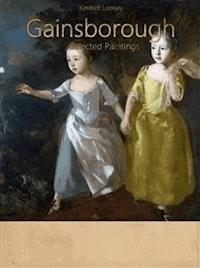
Thomas Gainsborough (1727 – 1788) was an English portrait and landscape painter, draughtsman, and printmaker. He surpassed his rival Sir Joshua Reynolds to become the dominant British portraitist of the second half of the 18th century. He painted quickly, and the works of his maturity are characterised by a light palette and easy strokes. He preferred landscapes to portraits, and is credited with Richard Wilson as the originator of the 18th-century British landscape school. Gainsborough was a founding member of the Royal Academy.Gainsborough was noted for the speed with which he applied paint, and he worked more from observations of nature and of human nature than from application of formal academic rules. The poetic sensibility of his paintings caused Constable to say, "On looking at them, we find tears in our eyes and know not what brings them."
Das E-Book können Sie in Legimi-Apps oder einer beliebigen App lesen, die das folgende Format unterstützen:
Veröffentlichungsjahr: 2017
Ähnliche


















Gainsborough
Selected Paintings
By Kimbell Looney
––––––––
First Edition
*****
Copyright © 2017 by Kimbell Looney
Table of Contents
Title Page
Copyright Page
Foreword
Paintings
Foreword
THOMAS GAINSBOROUGH (1727 – 1788) was an English portrait and landscape painter, draughtsman, and printmaker. He surpassed his rival Sir Joshua Reynolds to become the dominant British portraitist of the second half of the 18th century. He painted quickly, and the works of his maturity are characterised by a light palette and easy strokes. He preferred landscapes to portraits, and is credited with Richard Wilson as the originator of the 18th-century British landscape school. Gainsborough was a founding member of the Royal Academy.
Gainsborough was noted for the speed with which he applied paint, and he worked more from observations of nature and of human nature than from application of formal academic rules. The poetic sensibility of his paintings caused Constable to say, "On looking at them, we find tears in our eyes and know not what brings them."
Gainsborough's enthusiasm for landscapes is shown in the way he merged figures of the portraits with the scenes behind them. He said, "I'm sick of portraits, and wish very much to take my viol-da-gam and walk off to some sweet village, where I can paint landskips and enjoy the fag end of life in quietness and ease." His landscapes were often painted at night by candlelight, using a tabletop arrangement of stones, pieces of mirrors, broccoli, and the like as a model. His later work was characterised by a light palette and easy, economical strokes.
Gainsborough's only known assistant was his nephew, Gainsborough Dupont. In the last year of his life he collaborated with John Hoppner in painting a full-length portrait of Lady Charlotte Talbot. is most famous works, Portrait of Mrs. Graham; Mary and Margaret: The Painter's Daughters; William Hallett and His Wife Elizabeth, nee Stephen, known as The Morning Walk; and Cottage Girl with Dog and Pitcher, display the unique individuality of his subjects.
Gainsborough's works became popular with collectors from the 1850s on, after Lionel de Rothschild began buying his portraits. The rapid rise in the value of pictures by Gainsborough and also by Reynolds in the mid 19th century was partly because the Rothschild family, including Ferdinand de Rothschild began collecting them.
Paintings
Portrait of John Thornton, Esq., 1727 – 1788, oil on canvas, 914.4 x 711.2 mm
Portrait of Thomas Chubb, 1727 – 1788, oil on canvas, 736.6 x 635 mm
Clayton Jones, 1744 / 1745, oil on canvas, 762 x 635 mm




