


16,99 €
Mehr erfahren.
- Herausgeber: The Crowood Press
- Kategorie: Lebensstil
- Serie: A Gardener's Guide to
- Sprache: Englisch
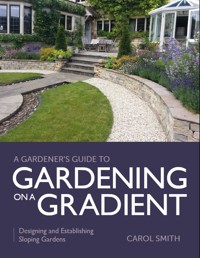
Gardening on a Gradient: Designing and Establishing Sloping Gardens is a complete guide to tackling one of a garden designer's biggest challenges. Whatever the size or the gradient, creating a garden on a sloping site presents lots of conflicting possibilities and potentially expensive choices. Whether home gardener or professional designer, this accessible book will guide you through the challenge, from the initial garden site assessment and survey, right through the design process to the final stages of planting. Step-by-step instructions and explanative diagrams offer readers practical solutions and tried-and-tested methods, as well as inspiration and some novel ideas drawn from sloping gardens around the UK.
Das E-Book können Sie in Legimi-Apps oder einer beliebigen App lesen, die das folgende Format unterstützen:
Seitenzahl: 219
Veröffentlichungsjahr: 2022
Ähnliche



















First published in 2022 byThe Crowood Press LtdRamsbury, MarlboroughWiltshire SN8 2HR
www.crowood.com
This e-book first published in 2022
© Carol Smith 2022
All rights reserved. This e-book is copyright material and must not be copied, reproduced, transferred, distributed, leased, licensed or publicly performed or used in any way except as specifically permitted in writing by the publishers, as allowed under the terms and conditions under which it was purchased or as strictly permitted by applicable copyright law. Any unauthorised distribution or use of this text may be a direct infringement of the author’s and publisher’s rights, and those responsible may be liable in law accordingly.
British Library Cataloguing-in-Publication Data
A catalogue record for this book is available from the British Library.
ISBN 978 0 7198 4069 2
Image credit
K Quinn Ferris, Dreamstime.com, (p.77) top.
Cover design by Blue Sunflower Creative
CONTENTS
Dedication and Acknowledgements
Introduction
1 Slopes and Levels: Analysis and Options
2 Creating A Brief
3 Surveying and Using Section Drawings
4 Design Considerations
5 Establishing a Sloping Garden
6 Planning the Planting Scheme
7 Planting Design Theory
8 Plant Groups and Selection
Conclusion
Recommended Gardens and Nurseries
Index
DEDICATION
In 2011 my first book, Designing Gardens with Plant Shapes, was dedicated to our first grandchild, Lily Mia. We now have a second grandchild, a boy named Maxwell, so it seems fitting to dedicate this, my second book, to Max.
ACKNOWLEDGEMENTS
I would like to thank everyone for their unfailing encouragement when I was writing this second book. Aimed at all gardeners, from keen beginners to students to professionals, it has been born out of personal experience and my lecturing days.
First, to Colin, my wonderful husband and closest friend, whose constant support is second to none; his numerous cups of tea have kept me going! His encouragement, patience and unfailing belief in me have been constant throughout the last twelve months as I wrote the book. My great son Kevin for his continued interest in my progress even though working on a PhD himself. My amazing daughter Sharon is incredibly busy with two children and working full-time, but always finds the time to ring, and often remotivates me when the going has been challenging.
My dear friends Sue Evans, Tina Williams, Diane Elt, Joy Beech, Amy Stone and Sharon Minchin have for many years lent an ear to my ideas and encouraged me in my desire to write about my passion for plants and gardens.
Thank you all.
INTRODUCTION
A sloping garden will present any gardener with a challenge that can seem rather intimidating, and even over-whelming. What on earth can you do with it? Where do you start? Even a professional might find themselves puzzling over the same questions, but at least they will be able to draw on experience and technical knowledge. However, although this type of site may be a difficult proposition, demanding additional time, assessment and forward planning, the end results will be well worth the extra effort required.
Whatever level you are working at, certain factors will reduce the options open to you, and it is fair to say that budget is at the top of the list of these factors. Broadly speaking, all the initial decisions that will need to be made will be influenced by the amount of money available for the project. These include the choice of whether to approach the development from a ‘construction’ perspective, usually involving the costly building of steps and retaining structures, or to adopt the more cost-effective option of remodelling the site by undertaking ‘earthworks’. That is not to say that the earthworks approach cannot include steps; of course it can. Indeed, it may be the case that, due to a greater percentage of the work being less costly ‘soft’ works, adding steps of hard materials becomes affordable. And, by using natural materials such as tree bark for the treads and natural timbers for the risers, such hard landscaping structures can become even more cost-effective. All these options will be explored in Chapter 4.
Chapters 1 to 5 look at all aspects of the pre-build stage, the aim being to take the reader through the process, so that they have a strong structure that can be applied to the development of any sloping garden. Details are given in step-by-step stages regarding the assessment and recording of both existing and proposed site levels, progressing into the ways in which the levels will inform design choices and planning: the number and position of steps, the height of retaining structures, the proportions of hard or soft landscaping. Most of the descriptions are diagrammatic, with explanatory text. They also encompass drawing techniques with supporting text, providing a visual means by which all aspects of the sloping site can be assessed and all options for improving it can be shown.
Chapters 6 to 8 focus on the planting and soft landscaping aspects, the effect on decision-making of working with a slope, and why it is important to identify site specifics such as aspect, drainage and soil characteristics. Due attention needs to be paid to all of these, as they will have a radical impact on the success or otherwise of the sloping garden. Planting design considerations and options, including the most appropriate plant groups for plant choices, are all explored in detail, in the form of a small plant library with images and explanatory text.
Having worked on many sloping garden sites, both large and small, during my career as a garden designer, I know only too well the challenges that they present. Not least of these is the difficulty of obtaining reliable information. The advice available on working through this particular challenge is very disparate and fragmented – and much of it is conflicting, anyway. Time-consuming multiple website visits, reading and searching to discover the few paragraphs dedicated to the subject in books and magazines, are not only frustrating, but also incredibly laborious when you just want to get on with the job in hand. That pile of notes on website shortcuts, books and articles covering your desk will lack cohesion, cause confusion and fail to give you a clear way forward.
The main goal of this book is to provide anybody facing the challenge of a sloping site with a concise, detailed, easily read and understood handbook, which as far as possible covers the questions, uncertainties and confusion they may have. Informative text, logical procedures, diagrams and images aim to provide the reader with all they need to tackle the challenge with inspiration and confidence. The final result should be the creation of a sloping garden that is safe, easy to access and enjoyable to move around. It will not only look beautiful but will have been a pleasure to develop.
CHAPTER 1
SLOPES AND LEVELS: ANALYSIS AND OPTIONS
From the flat plains of Norfolk to the undulating, mountainous peaks of the Lake District, the UK is a land of extremely varied levels; as a result, many a gardener will find themselves having to deal with a sloping site. This varied terrain presents all sorts of interesting challenges in terms of leisure pursuits, both at home and away. In the broader landscape, it can provide a place for exciting experiences such as hill walking, abseiling and climbing, for relaxation and exercise. Closer to home, the smaller landscape – your own piece of green space– offers the opportunity to participate in, and take great satisfaction from, another outdoor activity: gardening!
Fig. 1.1 A sloping front garden before development…
Fig. 1.2 …and after.
Some gardeners love to indulge in an unspoken rivalry through the summer months, partaking with their neighbours in the ‘perfect lawn’ competition. They may go to great lengths to achieve the neatest stretch of grass, complete with stripes. However, it is fair to say that a completely flat garden, even one with an impressive lawn, can lack interest – it can even be a bit boring. When the whole garden can be seen all at once, there is no ‘draw’ and therefore no need to explore it further, to satisfy the observer’s natural sense of adventure. Introducing changes of level and division to a flat garden will increase the visual interest, creating a desire to take a journey into and around the garden, to enjoy the adventure. It is not dissimilar to the ways in which an artist will use perspective, colour, light and shade to draw the viewer into a picture.
Fig. 1.3 Steps in the style of an amphitheatre.
Fig. 1.4 Steps with a landing midflight.
Gardening on a slope will always demand some level of intervention to improve its function. There will be a cost involved, but the impact of this will be offset by the bonus of greatly increased ‘kerb appeal’ and usability. For example, when steps are designed with more than simply function and essential safety in mind, they can provide a significant amount of interest. One source of inspiration might be an amphitheatre, which has a high visual impact, with its strong, dynamic curves and gently ascending levels. It would of course be impossible to have such a large structure in an average garden, but the general idea can be scaled down to fit, resulting in both a retaining structure and steps at the same time (seeFig. 1.3). The steps with cushions on them can provide additional seating for outdoor entertaining, and form a retaining structure that is much more attractive than a plain brick or block wall would be. A plain wall would not only look harsh, but also create a strong sense of division, whereas the curving steps link the upper and lower levels together in a much softer, more appealing way.
A sloping garden will require even more time and thought than a flat garden. First, there will need to be detailed consideration of the practicalities, such as where steps and flat areas will be best placed. Second, you will need to look at the design opportunities that are open to you, and which can make a huge improvement, raising the garden’s visual interest and injecting the wow factor. It is an undeniable fact that a sloping garden will require investment, so why not make the most of the opportunity to create a beautiful garden, rather than one in which you regret the things you did not do?
There are a number of advantages and disadvantages to the sloping garden. It is great to adopt a constructive and positive approach to developing such a site, but it is equally important to recognize the potential disadvantages.
Potential Disadvantages
• The gradient: how steep or complicated is the gradient, and does it run in different directions? Particular thought will need to be given to the design if it slopes towards a neighbouring property; how will water run-off will be kept within the confines of the boundaries?
• Cost: is it a project that needs professional input in the form of a garden designer, landscape architect, structural engineer or contractor? If it does, this will be more expensive, but the additional costs will be worthwhile if it helps you to achieve a safe, functional outcome.
• Slope direction – towards the property: the direction of the slope will have a bearing on the drainage aspects of the development. For example, there may be a need for a drainage system around the house perimeter. Such a system may have already been installed, usually in the form of a gravel-filled channel. Alternatively, drainage may be required next to a path or patio at the base of a slope to prevent run-off on to the surface. Hard surfaces are usually found directly outside the house and need to be kept frost-free and non-slippery during the winter months.
• Shade: frost and ice are not the only slip hazards. A hard surface that lies in shade, whether because of the direction in which it faces, or because of overhanging tree branches, fencing and walls, will often remain damp and become slippery due to an algal growth on the surface.
• Slope direction – away from the property: if this is the case, much of the garden will not be seen from the house unless the terrain is remodelled to raise its level.
Fig. 1.5 The surrounding sloping land all runs down to the lowest point in front of the tree.
Advantages
• Additional height: mounded earth, with the addition of strategically placed trees, can be used to block an undesirable view or, conversely, to maximize a favourable view.
• Increased visual impact: can be achieved by terracing or re-contouring the slope. Natural contours give an exceptionally soft, visually relaxing effect and raised mounds can also be utilized to create distinct areas within the garden.
• Higher viewpoints: different levels can allow for the creation of a raised deck area for relaxation and dining, overlooking a lower lawn area for games or providing a new viewpoint on to a particularly beautiful planting scheme.
• Natural vantage points: a slope can offer the opportunity to create vantage points both in the garden and beyond, providing perfect sitting areas.
• A sense of enclosure and privacy: this will prevail if the slope is towards the house, with all of the garden being seen from the lower viewpoint of the property. On the other hand, where a garden is sloping away from the house, less attractive features such as a shed can be hidden out of sight.
• A sense of intrigue and adventure: the observer will be drawn to explore if the slope is away from the house, to discover what is beyond and can be seen.
• Inclusion of high-impact features: the slope may provide an opportunity to include features such as water cascades. These are especially effective in a sloping garden – not only are they visually impressive, they can also help with drainage, an important consideration if a sloping garden is to function effectively.
The Design Process: Site Analysis
In order to establish a strong starting point, the first key to designing and planning a garden, and more importantly a sloping garden, is an assessment of the site. The aim is to establish the difference between the highest and lowest points of the garden. There may be more than one highest and lowest point if the slope runs in different directions, but this is not a common occurrence. This may sound like an oversimplification, but all will become clear in Chapter 3, where the technique of section drawing will be demonstrated. This is the base from which everything else will evolve – once you can see the slope and measure the difference between the highest and lowest points drawn to scale, you can progress on to calculating the height of the retaining structures, the number of steps required, or the proposed height of a single mound or several mounds of varying heights. With a thorough assessment early on, planning the development becomes a much easier task.
The second key to designing a garden is to adopt a structured, planned approach, in which the task is broken down into ‘bite-sized’ stages, making the whole process feel much more accessible. The site analysis is the first stage. There are many factors to be considered and taking the time to don your boots and coat, and grab your notebook, pencil and camera to go out and create a checklist is a constructive way to begin the task ahead.
Fig. 1.6 A site analysis sheet.
The site analysis involves making detailed observations and recording them as notes, with supporting photographs. Once you are back at your desk, the next step is to set up the photos and notes as a Word or Publisher doc on a PC or stick the pictures in a notebook and write observations alongside each one. This will give you a visual description of what you have observed around the site. Your notes might read as follows: ‘existing slope is too steep to walk comfortably, existing steps are in poor condition, slope is south-facing’, and so on. Once you have built up a detailed analysis, your observations will underpin design decisions that will be taken when you reach that stage in the project.
You will also need to carry out a levels survey to add to the site analysis. The method for doing this will be covered in Chapter 3.
While you are working through the process of analysing the site, you may find that ideas start to emerge. These can be recorded alongside your pictures. The challenges of a sloping site may lead you to consider all sorts of interesting concepts that would not occur to you when working on a flat site. The changes of level will enable the creation of a more visually dynamic composition and open up many possibilities, such as terracing, water cascades, raised beds instead of walls, and seating areas on different levels to maximize views, to name just a few. Improving functionality and safety are the main aims when developing a sloping garden. For example, a flight of steps may be provided with ‘landings’, to give resting points at certain intervals, making it less taxing than walking up a steep slope without steps (seeFig. 1.4).
The surface of the slope is of paramount importance when considering safety. If it is of grass or bare soil, there are potential slip and erosion issues. Both these issues can be mitigated by decreasing the gradient to a gentle slope. A slope may not be so steep that it requires this particular treatment – it may be shallow, or somewhere between the two – yet it will still need to be remodelled, perhaps by splitting the levels in order to provide a flat surface for tables, chairs, and other garden structures.
When doing your site analysis, your checklist should include the following (take photographs of each observation as you work around the site):
• In which direction does the slope run – towards or away from the property, or in more than one direction? These variables offer different design opportunities and require different management of the garden development.
• Are there signs of run-off? There may be evidence of this in the form of a soil sediment line at the base of the slope. It suggests that soil erosion is occurring due to the two factors of the soil type and the gradient of the slope, and is a strong indicator that retaining structures or a soil stabilization method will be required.
• On a scale of 1 to 10, how steep or shallow is the slope? (Instructions on how to calculate this accurately can be found in Chapter 3.)
• Are there any existing steps and/or retaining structures such as walls? Measuring the total height of these can be used to give a rough overall change of level.
• What is the access to the site like? Is it affected by the slope, and if so, how? Is the access up or down the slope? This will influence material choices particularly to ensure safe winter weather use.
• What is the aspect of the site? This will affect the levels of sun and shade in the garden. For example, an east-facing slope or garden will have less sun, especially in the evening.
• Is there enough flat space around the property? If not, then excavation will need to be carried out to increase the capacity for pathways and patio areas. If the slope is running away from the property, a method called ‘cut and fill’ can be used to create flat areas; there is more detail on this in Chapter 3.
• How is the garden to be used? The answer to this question will depend upon the taste and situation of the owner. They may be a single older person, or a younger one, they may have a family or they may be a couple without children. Almost every type of owner will appreciate a flat area outside the house, either at the front or the back, or both, depending on where the slope is. This area could be used for entertainment or for simply sitting out with a cup of tea, or to provide a level area by an entrance door. A garden that is being designed for a family, for example, is likely to require a flat lawn area for children’s games and activities.
• Approximately, where are any structures to be sited?
• Will the garden need a ramp or ramps, as well as steps? This would be the case if the garden is to be used by an elderly or disabled person.
• What is the budget?
Design Options and Budget
It is exciting at the beginning of a garden project, when you start to explore the possibilities and consider exactly what it is that you want, and where it is going to be. When designing or planning any garden, efficient and safe functionality is a major goal and this becomes even more of a priority in the case of a sloping garden. The final positions of a patio, an entertainment area and the more functional parts of any garden all require careful planning and consideration. A patio at the bottom of a slope, for example, a long walk from the kitchen or barbecue area, will not be practical – not least because your food may be cold by the time it gets to the table!
The time you spend making decisions about whether to include a summerhouse, pergola or arbour, highimpact features such as a fountain or cascade, exciting large steps, expansive planting, or innovative use of materials, can be short-circuited by drawing up a wish list before you even start to think about where to position them and what they are to be made from. However, before you get carried away with all these exciting ideas, your first priority when working with a sloping site is to get the ‘bones’ of the garden right. This means making carefully considered decisions on the positioning of level areas and steps, and working out how they will link with each other, enabling easy access to and from one to the other, and allowing for an easier journey around the garden and up and down the slope.
The design possibilities open to you will be strongly influenced by the budget that is available – inevitably, the bigger the budget, the greater the number of design opportunities. With a more generous budget, you may be able to incorporate retaining structures and terraces made of more costly hard materials, such as slabs, brick, block, stone and sleepers. Such structures often appear on a gardener’s wish list, but their inclusion can only become a reality if there is enough money available. They involve extra costs in terms of labour and the engagement of a skilled contractor to install them, and sometimes also need more work in the form of a drainage system. In terms of design and the finished look, this type of development will give a more formal appearance to the garden, but this can be softened with planting, particularly in the vicinity of the hard faces of the retaining structures.
If the budget available is less generous, or you have a personal preference to create a more ‘naturalistic’ style to the development, your best way forward may be via the creation of modified slopes, otherwise known as ‘earthworks’. In this case, the greater proportion of the budget will be absorbed by the costs of an operator on a digger moving earth around to create mounds and undulations that will reduce the gradient of the slope. Finished with a grass surface, or a combination of grass and large drifts of loose planting, these can look really beautiful. They will be low-maintenance and reduce the need for expensive drainage systems. In addition, they provide an environmentally healthy green space, with wildlife-friendly micro habitats. There are many reasons why this type of development is currently extremely popular.
Most projects that involve a significant amount of construction, whether it is to be done by a contractor or by a self-builder, will need to be scheduled for the months of the year when the weather is expected to be better. If time is lost on a late summer/early autumn project, delaying it until later into the year, when the weather is less reliable, the work will probably be pushed over into the following spring. Most contractors will not lay slabs or build walls requiring the use of mortar if there is any risk of excessive wet and/or frost. Delays can prove to be costly, particularly where a contractor has been engaged and has no other project to move on to, and the garden owner is suffering the inconvenience and mess of months of muddy boots and machinery. Whichever approach is being followed – hard landscaping or earthworks – it is important to use the site analysis and assessment to identify any potential delays and difficulties that might occur later on. Factoring in and resolving any increased costs at an early stage can help to prevent undue worry and frustration.
CHAPTER 2
CREATING A BRIEF
One of the main aims when designing and planning a garden should be to resolve any structural and aesthetic problems in an existing layout or a new site. Undertaking a proper assessment and analysis, and drawing up a detailed brief, may seem laborious and time-consuming, but it is the only way to achieve the eventual desired outcome of a safe, attractive and manageable sloping garden. Taking this approach, and creating a clear and concise brief, is a productive and valuable use of your time. Hopefully it will prevent any misunderstandings or unplanned costs during the development of the project.
Fig. 2.1 A garden that had a slope from right to left.
Fig. 2.2 The order of the tasks to be undertaken.




