


19,20 €
Mehr erfahren.
- Herausgeber: John Wiley & Sons
- Kategorie: Geisteswissenschaft
- Sprache: Englisch
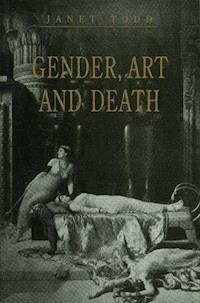
In this book, Janet Todd, one of the leading authorities on seventeenth- and eighteenth century women writers, discusses gender issues from the Restoration to Romanticism investigating women authors and the fascination with culturally privileged art and with heroic death.
Sie lesen das E-Book in den Legimi-Apps auf:
Seitenzahl: 394
Veröffentlichungsjahr: 2013
Ähnliche



















Gender, Art and Death
Janet Todd
Polity Press
Coyright © Janet Todd 1993
The right of Janet Todd to be identified as author of this work has been asserted in accordance with the Copyright, Designs and Patents Act 1988.
First published in 1993 by Polity Press
in association with Blackwell Publishers
Reprinted 2005, 2007
Polity Press
65 Bridge Street
Cambridge CB2 1UR, UK
Polity Press
350 Main Street
Maiden, MA 02148, USA
All rights reserved. Except for the quotation of short passages for the purposes of criticism and review, no part of this publication may be reproduced, stored in a retrieval system, or transmitted, in any form or by any means, electronic, mechanical, photocopying, recording or otherwise, without the prior permission of the publisher.
Except in the United States of America, this book is sold subject to the condition that it shall not, by way of trade or otherwise, be lent, re-sold, hired out, or otherwise circulated without the publisher’s prior consent in any form of binding or cover other than that in which it is published and without a similar condition including this condition being imposed on the subsequent purchaser.
ISBN: 978-0-7456-1054-2
ISBN: 978-0-7456-1055-9 (pbk)
ISBN: 978-0-7456-6888-8 (eBook)
British Library Cataloguing-in-Publication Data
A CIP catalogue record for this book is available from the British Library.
Typeset in 10 on 12pt Palatino
by CentraCet, Cambridge
Printed and bound in Great Britain by
Marston Book Services Limited, Oxford
This book is printed on acid-free paper.
For further information on Polity, visit our website: www.polity.co.uk
Contents
Acknowledgements
Introduction: memory and women’s studies
1 Aphra Behn: the ‘lewd Widow’ and her ‘Masculine Part’
2 Spectacular deaths: history and story in Aphra Behn’s Love Letters, Oroonoko and The Widow Ranter
3 Pamela: or the bliss of servitude
4 Marketing the self: Mary Carleton, Miss F and Susannah Gunning
5 ‘A martyr to her exigencies’: Mary Ann Radcliffe
6 Mary Wollstonecraft and the rights of death
7 Thoughts on the death of Fanny Wollstonecraft
8 Jane Austen, politics and sensibility
9 Who’s afraid of Jane Austen?
Index
Acknowledgements
I should like to thank the British Journal of Eighteenth Century Studies for permission to reprint ‘Pamela: or the bliss of servitude’; Studies on Voltaire and the Eighteenth Century for ‘Marketing the self: Mary Carleton, Miss F and Susannah Gunning’; and Harvester-Wheatsheaf for ‘Jane Austen, politics and sensibility’, from Feminist Criticism: theory and practice, ed. Susan Sellers. ‘Who’s afraid of Jane Austen?’ originally appeared in Jane Austen: new perspectives (Women and Literature, new series, vol. 3), ed. Janet Todd (New York: Holmes & Meier, 1983), pp. 107–27, and is reprinted by permission of the publisher.
Introduction: memory and women’s studies
In 1971 when teaching in Florida I began the Mary Wollstonecraft Newsletter to write about women of the 1970s. It was a time when Wollstonecraft was hardly known and when many considered such female and polemical figures unacceptable as topics of serious research. Outside the confines of counter-academic newsletters it was still difficult to make comment on Helen Maria Williams except as a footnote to Wordsworth or on Mary Hays beyond a ‘thing ugly and petticoated’. Alistair Cooke, the presenter of heritage Britain to America through the series ‘Masterpiece Theatre’, could not tell the Marys Shelley and Wollstonecraft apart, and both were known mainly for helping Percy create Frankenstein. It would be some time before women scholars had to worry about constructing a prescriptive alternative canon or establishing totalizing laws for the interpretation of female authors.
It was not mere prejudice that prevented literary criticism. Before the ‘death’ of the author and his or her ‘evacuation’ from the text, comment required a certain familiarity with the writer in the reader of the criticism. Hence inevitably those few interested in the work of early women were forced into some biography. This biographical interest differed from traditional biographical-literary interest since the latter was usually dependent on an already existing literary reputation of an author; the new feminist biography desired to make reputation and present a subject both as an achiever in a conventional way and as a voice of an alternative message. There was a good deal of identification and much searching for parallels as a generation sought validation for the present through turning the past into its predecessor. Inevitably Mary Wollstonecraft, who had the marketing awareness to call her work A Vindication of the Rights of Woman instead of Letters on Education, was rediscovered.
I have recently been to a museum of labour in my present home town of Norwich, where I noted many of the items familiar to me from a kitchen I inhabited as a child in Wales. What do I see when I look at them in the museum? What does a person of twenty or thirty see, one who is unlikely ever to have cleaned the range or turned the mangle? There is, I suspect, sentimentality for both groups inherent in the uncontextualizing of the item – the one with the now overlaid memory risks the indulgence of heritage, momentarily licensed to bore others with a newly sanctioned, untheorized reminiscence; the other can be triggered to speak generally, with the security of a prepackaged and inexperienced opinion, of the place of woman in an alien economy of an alien household. Both responses are oddly embarrassing: distant cultural memory irritates those who have placed it; the condescending generalization irritates those for whom memory appears if not truth, then at least the truth effect. It is impossible to look at the 1970s biographies of Mary Wollstonecraft without the embarrassment of past use or present abuse.
By 1976, my own Mary Wollstonecraft Newsletter had metamorphosed into Women & Literature and was much overshadowed by a new generation of more academically acceptable and sponsored periodicals. So for volume 1 of the new Signs I was asked to write a review article of the biographies of Mary Wollstonecraft, the clustering of which had been a phenomenon of the early 1970s. I could not yet assume knowledge of her now utterly familiar life and I told it with the enthusiasm and seriousness that marked the not-so-new convert. I took my information mainly from Godwin’s Memoirs of the Author of A Vindication of the Rights of Woman, the extraordinary inappropriateness of which in 1798 I was certainly not prepared to admit when the popular psychology of the 1970s urged self-expression and a burning of physical or rhetorical masks; nor was I briefed to see the gender appropriation in the work when subterfuges and strategies had not yet become the clichés of criticism.
It is easy to look back and see the fashioning of image. In the 1970s I could regard with some amusement Emma Rauschenbusch-Clough summarizing the subject of her 1898 biography: ‘The vindicator of the rights of her sex is not known to have betrayed a woman during the whole course of her sad, eventful life. She disdained to tamper with the affections of any man’ – clearly this is not a biography needing reprinting in a ‘post-feminist’ decade. I was equally amused at G. R. Stirling Taylor’s 1911 image: ‘Mary Wollstonecraft plunged deeply into that sea of primeval emotion and desire which flows and rages for ever at the base of every one of the little lighthouses of passing social theory.’ But now the 1970 biographies also clearly reveal their stylistic date; in America Eleanor Flexner’s Mary Woll-stonecraft, for example, was typical in its lack of interest in intellectual trends in the formation of its subject’s ideas, in its seriousness, and in its approval of its subject; in Britain Claire Tomalin’s Life and Death of Mary Wollstonecraft was more flippant but equally sure of singular identity and peculiar female subjectivity. Rooted at the time in America, I was clearly irritated not by Tomalin’s discursive and metaphysical naïvety but with her failure of tact when she described her subject as a woman of ‘imperfect heroism’ in language I labelled excessive and crass. I took her to task for various errors which she would not have fallen into had she been reading the little feminist magazines in which we fans of Mary Wollstonecraft were placing our supportive and empirical scholarship.
But, despite what I saw as factual errors and lapses of taste, I appreciated Tomalin’s biography and was affronted to read the review of the Oxford historian Richard Cobb in the Times Literary Supplement for 6 September 1974, in which he called Wollstonecraft silly, egotistical, envious, rancorous and meddlesome and her works mediocre and ill written. Having just completed the first full-length bibliography of Mary Wollstonecraft, I was peculiarly familiar with the tradition of abuse stemming from the Reverend Richard Pol-whele’s The Unsex’d Females in 1798 (which lubriciously associated Wollstonecraft with the new botany and a vision of young girls dissecting vegetable ‘organ[s] of unhallow’d lust’), travelling through the Anti-Jacobin review (which had the hopelessly monogamous Wollstonecraft lending herself ‘to half the town’), to Ferdinand Lundberg and Marynia L. Farnham’s Modern Woman: The Lost Sex (which reduced Wollstonecraft and her oeuvre to a case of penis envy over which lay ‘the shadow of the phallus … darkly, threateningly’ and her reputation to the poisoned source of later feminism). Full of righteous information, I wrote an answer to Cobb called ‘The Polwhelean Tradition and Richard Cobb’.
In an American context of spirited feminism, I had assumed by 1974 that the overt defamatory tradition was extinct: so, as I wrote, ‘it was with something akin to a naturalist’s wonder before a live dodo’ that I reviewed Cobb’s opinion. Now that a couple of decades have gone by and I too find myself irked at being corrected out of a lifelong ‘Fanny Burney’ into ‘Frances’ or out of providing their titles to aristocratic women such as the Duchess of Newcastle and the Countess of Winchilsea, I am a little more sympathetic to older critics who cannot avoid calling women authors by their first names, however sternly I took the habit to task in the 1970s: ‘Mary was always silly’ wrote Cobb in that sophisticated-familiar-coterie tone I did not then associate with the Times Literary Supplement – though even at that distant time I did note the existence of Cobb in Tomalin’s acknowledgements. My review was overkill; a more subtle English reader answered the jauntiness by pointing out that on the night of her attempted suicide Wollstonecraft did not follow the course of the boat race, as Cobb had declared.
A decade on and Mary Wollstonecraft was widely known; many of her early enthusiasts had either moved sideways into ‘French’ feminism or versions of feminist theory privileging discourse, or they had shifted into opposing the academic intellectual process in its entirety. The first group inevitably found biographical scholarship of the undeconstructed sort hopelessly old-fashioned, while the opposers tended to sneer at any academic feminism: I remember giving lectures on Wollstonecraft in the late 1970s and early 1980s that were on the one hand blamed for any criticism of a figure who had become an icon and on the other for not discussing the gendered pen and constructed authority rather than the woman author, omitting proper articulation of the newly fashionable dichotomy: public and private. By now Wollstonecraft was well enough known for specific and detailed comment to be made on her most famous works. Biographies trailed off.
At this point a figure who let far less dangle out in a 1970s way and was far more secretive came into partial view: Aphra Behn. Despite her reputation for having led a licentious life, she could not easily be brought into the libertarian philosophies of the 1960s since even a cursory glance at her work revealed a support for royalist absolutism and a commitment to social hierarchy. Consequently she did not inspire the early feminist biographical enthusiasm which Mary Wollstonecraft had received. Her work, not falling into the autobiographical and polemical pattern of Wollstonecraft’s, was also against her and only when race became a far more important issue for general critics in the late 1980s, so catapulting her short political fiction Oroonoko to fame, did she inspire much critical comment.
As women writers changed from being women authors into producers of discursive strategies, and as writing turned from being self-expression into performative act, it was clear that Behn was poised to make it into feminist fashion, to become the star (in the rarefied firmament of early modern women’s scholarship) of the 1980s, as Wollstonecraft of the 1970s. By now even vulgar feminists were wise to strategies and the involuntary investment of the critic’s self in criticism. Construction had been followed by reconstruction and deconstruction; psychoanalysis of the text followed psychologizing of the author, and the discursive took over from the textual which had annihilated the literary.
But Aphra Behn had a slow start. Exactly a decade after my founding the Mary Wollstonecraft Newsletter I was asked to review Reconstructing Aphra, which came out in 1980. Clearly I was aware of change, but not more than was proper in suburban New Jersey where I then lived; so I faced the flamboyant packaging of Angeline Goreau’s book with the uneasiness of a devotee of the historical footnote. As a reviewer, I received from the publisher a card listing Behn’s accomplishments, a picture of the buxom Aphra, seductively complemented by the larger coquettish picture of the author herself. Though censorious I managed to find ‘the narcissism … overt and appealing’, it seems, and I looked forward to the reconstruction of Aphra and the deconstruction of Angeline, as more or less promised. The performance as usual was duller than the promise, but at this distance what amuses me is my own bemused reaction to the marketing of an image: what I was seeing was of course the future – a feminist message packaged by post-feminism.
Nonetheless the substance was of its age. Aphra Behn was the everywoman for our time: ‘Her autobiography is ours’, wrote Goreau. Inevitably, since little is clear in the life of Behn, much of what Goreau wrote was in the subjunctive, the treatment was high romance.
Yet Behn’s strength in critical fashion lay not in her apititude for biography but in her apparent refusal. At the moment biography (except in the mythical financial rewards it is said occasionally to achieve) is not well respected in fashionable academic circles. It may provide material for a study of genre but it itself is rarely practised by the ambitious young Cultural Materialist or New Historicist intending to make a mark on the academy. Indeed a thoroughgoing New Historicist biography would be an extraordinary thing, encoding the subject within the totalizing strategies of its meta-discourse. How would it be written or articulated? How would a life of negotiated speaking be constructed? How tell the story of theatrical role and masquerade? How represent the self in the language of the modern? Why, when there is disjunction between the speaking voice and representation of the self, try to represent the self self-identically at all? If female signature does not represent female consciousness and certainly not unconsciousness in the text, then why search for female signature and why write its life and times? If female univocality is merely a strategy and there is no identity of authorial voice, what shall the biographer listen to? If all is reduced to referentiality, exchange commodities and the female body, how tell one reference and one body from another, one biography from another? Does this wonderfully repetitive language avoid the embarrassment a reader would feel if I called Mary Wollstonecraft a sister or reminisced about a mangle? Can one hold to these unimaginative epistemological niceties or will the biographer and the reader, playing of course with the possible fictitiousness of selves, be jointly seduced back by story itself? I suppose one should never worry about narrative losing out. How then if one wished to straddle the historical and New Historical fence might that old-fashioned enterprise of producing a historical continuum of identity be changed? How might one comment on single texts and avoid that now maligned enterprise of making early texts enabling pretexts for a production of modern feminism?
And even if one wished to compromise, to write biographical and historical criticism using the useful insights of New Historicism, one has the problems of one’s own rhetoric. What language should be chosen? In an article published in 1983, part of which I used in a book finished in the late 1980s called The Sign of Angellica, I wrote that Mary Carleton’s texts offered mixed self-projections ‘in keeping with other Restoration images created by women, with men in mind’. I used that phraseology because I then (too optimistically) hoped to appeal to a general reader as well as a specialized scholar and because I was signalling my awareness that this was twentieth-century commentary on seventeenth-century material by quoting and reversing a popular, quite obviously sexist advertisement of a few years before. In a recent article, a much younger scholar quoted me and went on to claim that the texts in fact present ‘a mutually destabilizing conjunction of distinct personae’. Now is this transformative discourse figuring a new representational regime in criticism? If it is adopted, does the adopter add to the critique of the regime of modernity or extend the regime backwards? In other New Historicist instances is the use of economic and sociological, the terminology of exchange and circulation, a hopeless involvement in a market economy or a proper understanding of present ideology? Are there any cooperations and compromises possible?
Without having the desire or competence to discuss the history of New Historicism or its definitions in detail, as an old critic within literary history in a feminist mode I do, I think, need to consider its uses, knowing that such a statement lays me open to the charge of misunderstanding it entirely. But I do not see that New Historicism need be a total strategy, nor do I think that it threatens the ‘quasimonastic order’ of conventional scholars, as H. Aram Veeser argues in the introduction to his volume of essays The New Historicism. A monastery is a guardian of discourse and this is surely what New Historicism is likewise; as ism it will take its historical place among other would-be revolutionary systems and can be picked over and fragmented as all have been. Can it then illuminate my interest in the mutual imitation of life and writing about life and the complexity of the intended and unintended allusion? Will it help me avoid the slur of being a mere archivist foolishly grazing in the Public Record Office instead of in the latest collections of coterie academic essays (once the initial anecdote is discovered)? It is back to the mangle, either caught in my memory with its duplicities and inexpressible fullness or contextualized according to an anachronistic aesthetic or, further, juxtaposed with the spinning jenny to destabilize its discourse.
New Historicism is damaging to literary study in its insistence on reading for subversion, its refusal to read for assumed authorial intention and its assumption that a writer’s subversiveness consists in a refusal of determined reading. Both Wollstonecraft and Behn write what are not initially and supremely Bakhtinian texts allowing no fixed meaning, whatever we now feel free to do with them; in many of their works they wish to change minds and reinforce opinion, for the idea of politics both imply is less the play of signifiers than the desire to dominate. New Historicism is dangerous when it tends to award ideological gold stars only to that which unsettles what we disapprove, so that Behn has low marks in the category of political indeterminacy and high ones for unsettling gender. It is sometimes irritating in its overuse of its wonderful verbs (my favourite is ‘gesturing’, which has something of the languid power of the ‘motioning’ done by sentimental ladies in eighteenth-century novels, but ‘evacuate’ comes a close second). It is downright offputting when it uses its jargon and sheer difficulty to divide high-flying critics in large lecture halls from hewers of wood and drawers of water in the stacks, and from its frequent assumption that it can live on the hewers’ labour. The great trinity of gender, race and class that now so splendidly illuminates texts can also dazzle the reader into seeing no shades and shadows and may become as dogmatically dominating as ‘moral seriousness’ and ‘taste’ in the academic church of the 1950s and 1960s.
A reconstruction of the past after some archival study and wide reading over a long period of time has, I like to think, some authority. It is as partial as memory is, but its authority has to be asserted if one is not to be caught entirely in what Aphra Behn called the ‘Gingle’ of the time.
Yet, inevitably the reconstruction is not disinterested from a present perspective and, if New Historicism helps one to hold a scepticism about goals and to remember that there is no absulute referentiality or objectivity, it is no bad thing.
After a talk on suicide and Mary Wollstonecraft some years ago I was asked if I really thought she had tried to kill herself with such thoughts as I had given her in my paper; the questioner went on to accuse me of having little understanding of real suicide since, if I had, I would have seen the absurdity of my speculations. In the terms of the language I used – of culture’s influence on a person or the living of life of and through art – obviously my notion of her construction of herself and her note sounded rather absurd, but not invalid for all that. A language which included ‘negotiation’, ‘erasure’, ‘discursive scenes’ and ‘representation’ would perhaps avoid this absurd appearance since it would not be so clear that an embarrassing movement had taken place from the construction of literature to the woman who supposedly did jump on a particular night. The question would not have been asked or, I suppose, ‘staged’ if I had either employed this vocabulary or stayed with my own and used it for criticism only of the fictional Elinor in The Wanderer.
Yet of course the questioner is partially right; the ‘real’ Mary Wollstonecraft no doubt jumped because of hormones, lack of vitamins, the weather, any number of things, and it is true that I do not know what these are and that I cannot know. But they may include the sense of herself as an admiring spectator, some self-dramatizing that makes an unpleasant act possible in the way Godwin and Hume did not consider when they spoke of rational suicide. It is possible, also, to become experiential in anticipation and state that, if I did jump into the Thames, literature would be partly implicated and that there would be some literary self-dramatization in my note.
So New Historicism, mingled as it usually is with Cultural Materialism, is exhilarating in its refusal to allow the description of a single identity in the biographical subject, the creation of the sort of images that the early biographies of both Behn and Wollstonecraft provided, and, when it emphasizes ‘negotiation’, the reciprocities and exchanges between discourses which empower and change them. When it manages to avoid the overuse of a vocabulary that takes all significance from choice, it draws attention to the choice of events for narration and it insists on the linguistic basis of reality and the cultural production of knowledge – as it seems to me many in the seventeenth and eighteenth centuries did, albeit in different languages. It draws attention again to the fact that material conditions affect representation, although, as with previous isms, it never quite shows how. It has allowed culture and politics to come back together in its obsession with power, and it has suggested the ability of power to absorb its opposition, although this can be too strenuously stated. The contradictions in discourse it stresses initially suggest the difficulty of social change but may possibly enable it a little, improvement being quite difficult to come by through any theory. So perhaps some amount of New Historicism will provide an answer to the problem of how to avoid making one’s criticism ahistorically expressive of 1970s sexual politics alone without abandoning them altogether.
But are these the reasons for interest? Perhaps it is really uneasiness, not interest – an uneasiness which in the end simply masks a desire to try to be in fashion. I fear, though, that I will not go beyond everyone’s mother in accessorizing my old habits with a few new words. Perhaps it is a replay of that ghastly 1950s femininity that Behn so robustly ignored 300 years earlier and Wollstonecraft so strenuously combatted 150 years ago, a
permanent exertion and straining of thoughts toward whatever it is these others … can be seen to be doing, and will do; a ceaseless straining of antennae toward the signals they broadcast … anticipatory intervening, engaging, entering presciently into stifling alliances….1
Or is this, too, but the trope of confessional modesty?
For still with all the modernity and post-modernity I fear a residual Leavisism, a concept, however dented, of the Literary, as well as an early 1970s tendency to admire a literary heroine. In both of these Behn and Wollstonecraft are involved. For towards the end of her life Behn saw herself as a serious and, she hoped, long-lasting artist, though in a context in which the arts remained material and political without their post-romantic autonomous world, and she and her age had a tendency to admiration. Wollstonecraft was not so sure of herself as artist, despite seeing value in her own imprecise and self-expressing writing, and she held a curious sense of the aesthetic beyond the political and personal, though shocked to find sublimity ‘absolutely immoral’ (The French Revolution) and artists, ‘generally speaking, licentious’. This sense of Art is perhaps a last feminine delusion, an absurd belief in an aspect of essentially masculine culture which should long ago have been abandoned. But gender is flexible and in flux. Perhaps it is still not necessary to collapse the achievements of some, especially newly discovered, women writers into the culture of the many. The author is not necessarily lost in her discursive fields.
The remarks on New Historicism have little to do with what I have done in the following pieces, but any collecting of the past leads to some assessment of that past which in turn affects intentions. Beyond these remarks, this introduction is intended to contextualize my brief, primarily biographical speculations and to explain their different tones through hinting at the various stylistic desires they incorporate.
Janet Todd
Norwich, 1992
Notes
1 Christina Thurmer-Rohr, Vagabonding, trans. Lise Weil (Cambridge: Polity Press, 1992), p. 26.
1 Aphra Behn: the ‘lewd Widow’ and her ‘Masculine Part’
Public female writers of the Restoration were obliged to excite and interest an audience with their images. In order to write a woman had to gender the artistic subject and engender art as more ‘feminine’ wiles than ‘masculine’ skill and wit. The association of sex and text for a woman problematized art as a form of authority and as a means of creating a culturally privileged artistic self.
Mediated and facilitated by both male and female expectations, the images of women writers ranged from the elaborate and orchestrated secrecy of the poet and playwright Katherine Philips, ‘the matchless Orinda’, to the display of ‘Female Sweetness and a Manly Grace’ of the ‘ingenious Aphra Behn’.1 But the most current public image for the female author was created by men: that of whore or slattern. This image came primarily from seventeenth-century satirists, including Robert Gould, the probable composer of the phrase ‘lewd Widow’ for a character in a play by Aphra Behn; he insisted on pulling the playwright down to the level of the actress and the actress to the prone position of the whore. The image has interestingly reappeared more eulogistically in late twentieth-century New Historical feminist criticism.
Lesen Sie weiter in der vollständigen Ausgabe!
Lesen Sie weiter in der vollständigen Ausgabe!
Lesen Sie weiter in der vollständigen Ausgabe!
Lesen Sie weiter in der vollständigen Ausgabe!
Lesen Sie weiter in der vollständigen Ausgabe!
Lesen Sie weiter in der vollständigen Ausgabe!
Lesen Sie weiter in der vollständigen Ausgabe!
Lesen Sie weiter in der vollständigen Ausgabe!
Lesen Sie weiter in der vollständigen Ausgabe!




