


20,99 €
Mehr erfahren.
- Herausgeber: Dr. Oetker - ein Verlag der Edel Verlagsgruppe
- Kategorie: Lebensstil
- Sprache: Englisch
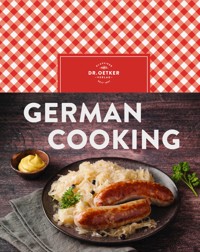
Dieses Buch ist der perfekte Einstieg in die traditionelle deutsche Küche – auf Englisch! German Cooking versammelt über 150 beliebte Rezepte aus allen Regionen Deutschlands: von Klassikern wie Potato Salad (Kartoffelsalat), German Pot Roast (Sauerbraten) und Bread Dumplings (Semmelknödel) bis hin zu regionalen Spezialitäten wie Frankfurt Green Sauce (Frankfurter Grüne Sauce), Sauerkraut oder Red Fruit Jelly (Rote Grütze). Dank leicht verständlicher Schritt-für-Schritt-Anleitungen, zahlreicher Tipps und vieler Fotos gelingt jedes Gericht – auch ohne Vorkenntnisse. Praktische Umrechnungstabellen für Zutaten erleichtern die weltweite Zubereitung: Gramm und Milliliter lassen sich ganz einfach in Cups, Ounces und Pints umrechnen. Ein liebevoll gestalteter Einleitungsteil vermittelt zusätzlich einen Eindruck von Land, Leuten und kulinarischen Traditionen – ideal für alle, die mehr als nur Rezepte suchen. Mit diesem Buch erhalten Sie: - Über 150 traditionelle Rezepte auf Englisch - Jedes Rezept mit Foto - Detaillierte Schritt-für-Schritt-Anleitungen - Umrechnungstabellen für internationale Maßeinheiten - Das ideale Souvenir oder Geschenk für Fans der deutschen Küche Ob als Mitbringsel für internationale Gäste, als Geschenk für Austauschschüler oder für alle, die die deutsche Küche auf Englisch entdecken möchten – German Cooking ist das perfekte Buch für Genießer weltweit.
Das E-Book können Sie in Legimi-Apps oder einer beliebigen App lesen, die das folgende Format unterstützen:
Seitenzahl: 246
Veröffentlichungsjahr: 2026
Ähnliche



100 YEARS OF GERMAN COOKING HISTORY
Tired of the same old scrambled eggs, cup-a-soups, and pot (cup) noodles? Instead, why not try making Maultaschen filled with spinach, roast beef rolls, or a saddle of venison – not only do these dishes taste delicious, they’re also much easier to make than you might think.
German Cooking has been written as a crash course for beginners and inexperienced cooks. It gives you the toolkit you need to produce classic dishes such as beef roulade and stuffed bell peppers in no time at all, alongside several new recipes.
Surefire recipes that spark your joy of cooking!
The Dr. Oetker team has carefully checked that every dish is not only delicious, but also easy to prepare – even for beginners. Step-by-step instructions and detailed photographs ensure a tasty and successful result. The new recipes will inspire you to give things a go and try something new.
More and more people are discovering the art of cooking, the excitement of trying new recipes and enjoying the results, the careful choosing of ingredients, and the sense of achievement that makes each and every day that little bit more enjoyable. And that’s not to mention the satisfaction of cutting, chopping, stirring, cooking, frying, sautéing, and braising!
We hope you find joy in your culinary experiments and wish you every success in your endeavors. Now, enjoy yourself!
All the best
Your Dr. Oetker Verlag team
CONTENTS
GENERAL INFORMATION
SOUPS & STEWS
SALADS & SNACKS
SAUCES
VEGETABLES
POTATOES, PASTA & RICE
MEAT
POULTRY & GAME
FISH & SEAFOOD
DESSERTS
DIRECTORY/IMPRINT
Accessibility Notice
This eBook has been designed to be accessible in order to facilitate access for readers with visual impairments or reading difficulties. Symbols and structural elements are optimized for screen readers, and meaningful images are provided with alternative text. The visual reading experience remains unaffected.
RECIPE INDEX FROM A–Z
In this index, you will find all recipes listed alphabetically, but without fixed page numbers, as these may vary depending on the font size and display settings of your e-reader.
To quickly find a specific recipe, simply use your device’s search function. Enter the name of the recipe, and you will be taken directly to the corresponding section in the book.
A
Almond broccoli
Asparagus
Asparagus white and green
Celebration soup
Cream of asparagus soup
Apples
Baked apples
Raw beets with carrot
Stewed apples
B
Baked apples
Baked fennel
Baked potatoes with quark
Bavarian pudding
Beans in bacon
Béchamel-kohlrabi
Beef
Beef broth
Beef roulades
Boiled beef
Brown beef stock
Goulash
Pichelsteiner or three meat stew
Sauerbraten
Stuffed beef roulade
Beer chops
Beets (Beetroots)
Braised beets
Raw beets with carrot
Bell peppers, stuffed
Black salsify
Boiled beef
Boiled potatoes
Bordelaise sauce
Braised beets
Braised lamb shanks
Bratwurst and currywurst
Bread
Bread dumplings
Bread dumplings with bacon
Bread pudding
Bread soup with raisins
Croutons
French toast
Fried egg sandwich
Breaded schnitzel and cutlet
Broad beans
Broccoli: Almond broccoli
Brown beef stock
C
Cabbage
Cabbage roulade
Kale
Red cabbage
Red cabbage salad
Sauerkraut
White cabbage salad
Carrots
Carrot salad
Mixed carrots and peas
Cauliflower: Crumbed cauliflower
Celebration soup
Char in tarragon sauce
Cheese
Cheese and leek soup
Cheese sauce
Obatzda
Sausage & cheese salad
Cherry compote
Chicken
Celebration soup
Chicken broth and chicken stock
Chicken fricassee
Chicken legs
Chicken skewers
Roast chicken 170
Cream of asparagus soup
Creamy cucumber salad
Crispy roast pork
Croutons
Crumbed cauliflower
Cucumber
Cucumber salad
Cucumber vegetables
Cured pork loin
D/E
Dark sauces
Deviled eggs
Duck: Roast duck
Dumplings
Bread dumplings
Bread dumplings with bacon
Finger dumplings
Potato dumplings
Eggs
Deviled eggs
Egg salad
Fried egg sandwich
Pickled eggs
Scrambled eggs with crab
F
Fennel: Baked fennel
Finger dumplings
Fish
Char in tarragon sauce
Fish fillet on vegetables
Fishcakes
Fried fish fillet breaded
Grilled fish
Herbed herring
Oven-baked salmon fillet
Plaice fillets in herb breading
Plaice with diced bacon
Soused herring salad with beets
Stick-grilled fish
Trout à la meunière
French toast
Fried egg sandwich
Fried fish fillet breaded
Fried potatoes with onions
Fried rice
Fruit salad
G
Game
Game stew with mushrooms
Marinated venison steak
Saddle of venison
Goose: Roast goose
Goulash
Green beans
Beans in bacon
Green bean salad
Green bean stew
Green sauce
Grilled fish
Ground (minced) meat
Celebration soup
Meatballs
Meatballs Königsberg
Meatloaf
H
Herb soup with spinach
Herbed herring
Herbs
Herb soup with spinach
Herbed herring
Herrencreme pudding
Hollandaise sauce
K/L
Kale
Kohlrabi salad
Lamb
Braised lamb shanks
Pichelsteiner or three meat stew
Lamb’s lettuce with pumpkin
Leek in tomato cream
Lentil stew with potatoes
Light-colored basic sauce
Liver with onions
M
Madeira sauce
Marinated venison steak
Mashed potatoes
Maultaschen with spinach
Mayonnaise
Meatballs
Meatballs Königsberg
Meatloaf
Mixed carrots and peas
Mussels in a wine-based broth
Mustard sauce
N/O
Neck steaks
Obatzda
Onion tart
Oven-baked salmon fillet
P
Pancake soup
Pancakes
Pasta salad with sausage
Pea stew with potatoes
Peas
Mixed carrots and peas
Pea stew with potatoes
Pichelsteiner or three meat stew
Pickled eggs
Plaice fillets in herb breading
Plaice with diced bacon
Pork
Beer chops
Breaded schnitzel and cutlet
Crispy roast pork
Cured pork loin
Neck steaks
Pichelsteiner or three meat stew
Pork knuckles
Pork ribs
Pot roast
Potatoes
Baked potatoes with quark
Boiled potatoes
Fried potatoes with onions
Mashed potatoes
Potato dumplings
Potato fritters (potato pancakes)
Potato salad with bacon
Potato soup
Potatoes “en papillotte”
Potatoes in their skins 110
Rösti
Turkey breast with potato topping
Q/R
Quark cakes
Raw beets with carrot
Red cabbage
Red cabbage salad
Red groats
Rice: Fried rice
Roast chicken
Roast duck
Roast goose
Rösti
S
Saddle of venison
Sauerbraten
Sauerkraut
Sausage
Bratwurst and currywurst
Sausage & cheese salad
Savoy cabbage
Savoy cabbage
Savoy cabbage stew
Scrambled eggs with crab
Semolina
Semolina dumplings
Semolina pudding
Soused herring salad with beets
Spätzle
Spinach
Herb soup with spinach
Maultaschen with spinach
Spinach
Stewed apples
Stick-grilled fish
String beans in butter
Steamed buns and noodles
Stuffed beef roulade
Stuffed bell peppers
Sweet pancake pieces
T
Tomatoes
Tomato salad
Tomato sauce
Tossed vegetables
Trout à la meunière
Turkey breast with potato topping
V/W
Vanilla pudding
Vegetables
Tossed vegetables
Vegetable broth
Vegetable sauce
Vegetable soup
Welf pudding
White cabbage salad
Wild boar leg
GERMAN
A/B
Apfelkompott
Arme Ritter
Bayerische Creme
Béchamel-Kohlrabi
Bierkotelett
Blattspinat
Blechkartoffeln mit Quark
Bohnen in Speck
Bratäpfel
Brathähnchen
Bratkartoffeln mit Zwiebeln
Bratwurst und Currywurst
Brösel-Blumenkohl
Brotsuppe mit Rosinen
C/D
Croûtons
Deftiger Grünkohl
Dicke Bohnen
Dunkle Saucen
Dunkler Rinderfond
E/F
Eiersalat
Eingelegte Eier
Erbseneintopf mit Kartoffeln
Feldsalat mit Kürbis
Fischfilet auf Gemüse
Fischfrikadellen
Flädle
Folienkartoffeln
Forelle Müllerin
Frikadellen
G
Gänsebraten
Gebackener Fenchel
Gebratene Ente
Gebratenes Fischfilet paniert
Gedünsteter Reis
Gefüllte Eier
Gefüllte Paprikaschoten
Gefüllter Rollbraten
Gegrillter Fisch
Gemüse geschwenkt
Gemüsebrühe
Gemüsesauce
Gemüsesuppe
Geschmorte Lammhaxen
Grießnockerl
Grießpudding
Grüne Sauce
Grüne-Bohnen-Eintopf
Grüne-Bohnen-Salat
Gulasch
Gurkengemüse
Gurkensalat
H
Hackbraten
Hähnchenkeulen
Hähnchenspieße
Hefeklöße und Dampfnudeln
Helle Grundsauce
Herrencreme
Hochzeitssuppe
Hühnerfrikassee
K
Kaiserschmarren
Kartoffelbrei
Kartoffelknödel
Kartoffelpuffer
Kartoffelsalat mit Speck
Kartoffelsuppe
Käse-Lauch-Suppe
Käsesauce
Kasseler Rippenspeer
Kohlrabisalat
Kohlrouladen
Königsberger Klopse
Kräuter-Matjes
Kräutersuppe mit Spinat
L/M
Lachsfilet aus dem Ofen
Lauch in Tomatencreme
Leber mit Zwiebeln
Linseneintopf mit Kartoffeln
Mandel-Brokkoli
Marinierte Wildsteaks
Matjessalat mit roter Bete
Maultaschen mit Spinat
Mayonnaise
Möhren-Erbsen-Gemüse
Möhrensalat
Muscheln in Weinsud
N/O/P
Nackensteaks
Nudel Salat mit Wurst
Obatzda
Obstsalat
Pfannkuchen
Pichelsteiner
Putenbrust mit Kartoffelhaube
Q/R
Quarkkeulchen
Rehrücken
Rinderbrühe
Rinderrouladen
Rinderschmorbraten
Rösti
Rote Grütze
Rote-Bete-Gemüse
Rote-Bete-Rohkost mit Möhre
Rotkohl
Rotkohlsalat
Rührei mit Krabben
S
Saibling in Estragonsahne
Salzkartoffeln
Sauce hollandaise
Sauerbraten
Sauerkraut
Scheiterhaufen
Schnitzel und Kotelett paniert
Schollenfilets in Kräuterpanade
Schupfnudeln
Schwarzwurzeln
Schweinebraten
Schweinerippchen
Schweinshaxen
Semmelknödel
Semmelknödel mit Speck
Senfsauce
Spargel weiß und grün
Spargelcremesuppe
Spätzle
Speckschollen
Strammer Max
T/V
Tafelspitz e
Tomatensalat
Tomatensauce
Vanillepudding
W/Z
Weißkohlsalat
Welfenspeise
Wildragout mit Pilzen
Wildschweinkeule
Wirsing
Wirsingeintopf
Wurst-Käse-Salat
Zwiebelkuchen
GERMANY AND ITS PEOPLE
Germans are considered rational, thorough, and reliable. They often find it difficult to make small talk and, unlike other cultures, they expect an honest answer to the question “How are you?” But anyone who takes a closer look at the country and its people will notice that every region has its own special charm!
A COUNTRY OF CONTRASTS
An altitude difference of almost 3,000 meters (2 miles) separates the Alps in the south of Germany from the coasts of the North and Baltic Seas that embrace Germany’s northern shores, some 876 kilometers (544 miles) away. Bavaria and the Württemberg Allgäu form the small German section of the high mountain range of the Alps. The low mountain ranges such as the Black Forest, Eifel, Taunus, Bavarian Forest, or Harz reach altitudes of between 500 and 1500 meters (1,640 and 4,920 feet) and are home to the largest forested areas in Germany. They are popular destinations for hikers and those seeking relaxation. Known as the Central Uplands, this area separates southern and northern Germany. Towards the north, the land merges into the North German Plain, which leads to the coasts of the North Sea and the Baltic Sea with their offshore islands. One of the Halliger islands in the North Sea and its inhabitants forms a clear contrast to the alpine pasture of an Allgäu dairy worker.
From west to east, Germany is primarily characterized by its division into East and West Germany after the Second World War and their different forms of government. Even today, nearly 40 years after reunification, people often talk about East and West, despite the border and wall being long gone.
Each region and landscape has its own customs, dialects, and characters. Stereotypes such as the “cool North German,” the “grumpy Bavarian,” or the “sociable Rhinelander” often contain a kernel of truth. But it’s not just the landscapes that shape the people – the reverse is also true: The former “Ruhrpott” coal-mining region with cities such as Essen, Dortmund, and Bochum has changed considerably since the end of mining. Where smoking chimneys once dominated, modern urban landscapes and green recreational areas have now emerged.
Sandy beaches and dunes on the North Sea island of Sylt.SIGHTSEEING HIGHLIGHTS
Berlin is one of the ten largest cities in Europe in terms of population. After reunification in 1989, the city became Germany’s capital with a dedicated district for government activities and embassies. The city’s architecture, history, and culture make Berlin a magnet for tourists from all over the world, and no doubt some of them come for the “currywurst”, an invention attributed to a Berlin snack bar owner.
Munich is famous for the Oktoberfest, the atmosphere of a Bavarian tavern, many magnificent buildings, the River Isar with its gravel banks, the English Garden, and its touch of southern lifestyle. From regional specialties to international delicacies, the Viktualienmarkt offers vegetables, fruit, sausages, cheese, and other delights. The market is also a paradise for anyone looking for a snack after a sightseeing tour. If you’re thirsty, it’s better to visit a beer garden. Don’t be surprised if the family at the next table unpacks their tablecloth and picnic basket – food can traditionally be brought into a beer garden, and only the drinks have to be bought.
In the north, Hamburg boasts the third largest port in Europe. The Hanseatic city is an international hub for goods of all kinds. Thanks to the port, the people of Hamburg have always had access to exotic goods earlier than the rest of Germany. Even today, market criers at the Hamburg fish market, which has existed since 1703, not only advertise fresh fish, but also fruit, plants, and many other goods from all over the world. In the west of the country, you’ll find the inviting city of Cologne on the Rhine. The iconic cathedral, visible from afar, the narrow streets of the old town, the museums, the banks of the Rhine – there’s so much to discover. The best way to round off a day is with a “Kölsch” – the Cologne beer served in small glasses – Sauerbraten (a marinated meat dish), Reibekuchen (potato pancakes), or Halver Hahn (rye roll with cheese, pickled gherkin, mustard, and onions).
If you prefer something a little more tranquil, visit one of the many small, picturesque old towns such as Lübeck, Rothenburg ob der Tauber, Marburg, Erfurt, or Bamberg. Their medieval flair can be discovered on foot and they are much quieter than the bigger cities.
A fairytale castle straight out of a picture book: the world-famous Neuschwanstein Castle.
GERMAN CUSTOMS
The origin of many German festivals lies in religion. The highlights of the Christian culture are Easter and Christmas, while church consecration festivals and harvest festivals play a more regional role. Folk and city festivals such as Oktoberfest, on the other hand, are often based on an important historical event.
During carnival season, Cologne is completely in the hands of revelers.
HOLIDAYS AND THEIR TRADITIONS
Carnival – also known as Karneval, Fastnacht, Fasnet, Fasching, or similar depending on the region – heralds the start of Lent before Easter, when large parades with themed floats, which often make light of current political events, roll through the Rhineland strongholds of Cologne, Mainz, and Düsseldorf. The disguised or masked jesters form a guard of honor and cheer, often already inebriated since the early hours of the morning. In contrast, the Narrensprung parade (“Fool’s Jump”) during the Swabian-Alemannic carnival, when masked groups of pedestrians parade through the town, seems comparatively quiet. Easter then begins with Maundy Thursday, when a green meal without meat is traditionally served, such as “green sauce” with boiled potatoes in Hesse, pancakes with dill, parsley, and chives in the Black Forest, or Maultaschen filled with spinach in Swabia. On Easter Sunday, the family comes together and the children search for brightly colored boiled eggs and chocolate bunnies.
Christmas markets are very popular during Advent to buy Christmas tree decorations and presents, or to drink mulled wine and eat bratwurst. One of the oldest and most famous Christmas markets is the Nuremberg Christkindlmarkt. Aside from shopping for presents, it is often a tranquil and cozy time away from the hustle and bustle – family and friends get together to bake cookies or do handicrafts. Christmas Eve, December 24th, is the eagerly awaited highlight, especially for children. This is when the “Christkind” traditionally puts presents under the Christmas tree. Before or after, there is usually a simple meal, such as potato salad with sausages. This is followed by visits from relatives and sumptuous meals with large roasts throughout the Christmas period. On New Year’s Eve, the New Year is celebrated in style, often with friends or at public parties. Raclette or fondue is often on the table, and so the time until midnight soon passes.
The Dresden Christmas market shines brightly with lights.FAMOUS FOLK FESTIVALS
Whether it’s a funfair in a small community or Kiel Week on the Baltic Sea, what would Germany be without its folk festivals? But it’s only Oktoberfest, known as “Wiesn”, that has become world famous. Based on visitor numbers, Munich’s Oktoberfest is purportedly the biggest folk festival in the world. However, it’s very likely that a Chinese copy of Oktoberfest has long since attracted many more millions than the original. In 1810, it was little more than a horse race in honor of a royal wedding. Today, Oktoberfest is the jewel in the crown of a city that is never short of tourists. There’s nothing that compares to the magic of this festival with its traditional costume parade, in which many traditional costume clubs from Bavaria’s neighboring states take part, the tapping of the first beer barrel by the Lord Mayor with an “o’zapft is” on the first Saturday of the event, the large beer tents, and the wild rides. And every year, the tabloid newspapers are full of discussions about the price of beer at Oktoberfest.
The liter glass of beer (known as the “Mass”) is often even more expensive at the Cannstatter Wasen in Stuttgart than at Munich’s Oktoberfest. Incidentally, both cities also host a spring festival on the same site, as do many communities of all sizes. Shooting festivals, midsummer bonfires, annual fairs, or funfairs are popular amusements that differ only slightly from region to region.
Historical town festivals such as the Landshuter Hochzeit or the Further Drachenstich refer to events from the town’s or community’s historical chronicles, and participants like to dress up in period costumes for a parade.
Decorating wells is an Easter tradition in many places.
There are folk festivals all over Germany – the Oktoberfest is not only the largest in the country, but also the largest in the world!
GERMANY’S CULINARY CULTURE
The food is also characterized by the landscapes and the people. Although many dishes and basic preferences – such as the type of bread or sausage – are typically German, every region has its own specialties that even most Germans outside of that region have often never heard of.
TYPICAL MEALS
Germany differs very little from other nations when it comes to meal times – breakfast, lunch, and dinner are customary. Breakfast is usually muesli or bread with toppings and coffee, while lunch is traditionally a hot meal. In the evening, there is often only cold food. The evening meal is generally bread and toppings such as butter, sausage, ham, cheese, or vegetarian spreads, which are becoming more popular. As a healthy addition to the traditional pickled cucumbers, raw vegetables and salad are usually served nowadays. A typical German institution that is still celebrated, especially on Sundays, is coffee and cake in the afternoon. This is usually a lovingly baked cake, enjoyed with a cup of coffee and good company.
Every butcher takes pride in offering a wide variety of sausages.SAUSAGE, COLD CUTS, AND HAM
Germany – the land of the sausage. Bratwursts are particularly popular, including the Thüringer and the Nürnberger Bratwurst. The sausages come raw or pre-cooked and differ in shape and length. They are then enjoyed as a snack with mustard in a bread roll known as a Semmel, Weckla, or similar depending on the region, or as a main course with sauerkraut and (mashed) potatoes. Leberkäse, which is called Fleischkäse outside Bavaria, is also a popular snack in a bread roll. For sandwiches and sausage platters at buffets, butchers offer Presssack (brawn), Blutwurst (blood sausage) and a wide variety of mixed cold cuts. And what about German ham? Black Forest and Westphalian hams have the best reputation here – preferably straight from the producer.
ROAST MEAT, MEATBALLS, AND CO.
The British staple Sunday Roast exists in Germany too, known as “Sonntagsbraten”. Like in the UK, this is where the whole family sits down to lunch on a Sunday. Everyone gets a hearty serving of roast meat with gravy, served with vegetables and, depending on the region, dumplings, potatoes, or spätzle noodles, for example. Hungry Bavarians can demolish a whole knuckle of pork or veal on their own, while Berliners just as readily eat their Eisbein (boiled knuckle of pork) with mashed peas and sauerkraut. Frikadellen (or meatballs), also known as Fleischpflanzerl or Fleischküchle in southern Germany or Buletten in Berlin and north-eastern Germany, are also popular. Like Leberkäse, they are a popular snack with mustard or ketchup in a roll, and as a main course served hot with mashed potatoes and mixed vegetables. The link between roast meat and meatballs leads us straight to German meatloaf – an oblong loaf made from a ground meat mixture and baked in the oven, often with boiled eggs in the middle.
POULTRY AND GAME
Roast chicken is available all year round and is usually enjoyed in restaurants or bought from stalls fresh from a rotisserie broiler. People enjoy something a little more special at Christmas – many families serve roast goose or duck, often with a filling of breadcrumbs, chestnuts, and apples. Turkey, on the other hand, is rather uncommon as roast meat. Alternatives to the Christmas goose are game dishes, such as saddle of venison, venison steaks, or roast wild boar. Increasingly, however, the large roast is giving way to hams or breast joints as families and the portions of meat eaten are getting smaller, and they are less complicated to prepare.
FRESH FISH
Anyone who has partied into the early hours of Sunday morning in Hamburg – perhaps in the Reeperbahn entertainment district – can enjoy a hangover breakfast at 5 a.m. at the Hamburg fish market in Altona. According to German tradition, nothing sobers you up like sour fish, herring, and raw onions. In the south of the country, at Munich’s Oktoberfest or in the beer garden, visitors reach for Fischsemmel rolls or Steckerlfisch, whole fish skewered on sticks and grilled. The Bavarian lakes are home to whitefish, which make great smoked fish. Whitefish, perch, char, and eel come from Lake Constance, while many rivers and streams boast trout, which are then served “blau” (boiled in hot vinegar water) or “Müllerin” (fried in a pan with a light flour crust).
Regional weekly markets offer countless varieties of potatoes and vegetables.POTATOES – A LOVED CHILD GOES BY MANY NAMES
Potatoes are a German staple, and many have some very traditional girls’ names: Sieglinde, Agnes, Elvira, or even Ballerina. Slightly more modern is Linda, which has even been crowned Queen of the German Potatoes. Rediscovered and increasingly popular are older varieties, such as the knobbly Bamberger Hörnchen, which was spurned for a long time due to the laborious peeling process. Around 200 potato varieties are approved for cultivation in Germany – enough to make all kinds of delicious dishes such as dumplings, mashed potatoes, pancakes, croquettes, potato noodles, fried potatoes, potato soup, and potato salad. Potatoes are also popular as a simple side dish and in the form of boiled or baked potatoes. Whether an ingredient in a recipe or a dish in their own right, potatoes are loved throughout the land.
Apple wine is a Frankfurt speciality – there are even special jugs and glasses for it.A VEGETABLE PARADISE
Germany has not four, but five elements: Fire, water, earth, air, and asparagus. During the asparagus season (end of April to June 24), vegetable lovers prefer to buy the stems directly from the producers, who set up stalls on the roadside or in front of shopping centers during this period. Beelitz (Brandenburg), Schrobenhausen and Abensberg (both in Bavaria), Nienburg (Lower Saxony), Schwetzingen (Baden-Württemberg), and Walberg on the Lower Rhine are the traditional asparagus metropolises. However, it is no longer true that Germans eat cabbage particularly often or in great quantities – many only enjoy sauerkraut in restaurants to avoid the smell in their own four walls. Regional specialties such as green cabbage slaw, red cabbage, or kale are also no longer frequently prepared at home, but rather eaten outside the home.
When it comes to home cooking, vegetables that are easier to prepare and easier to digest are those often put in Germans’ shopping carts: broccoli, cauliflower, tomatoes, lettuce, zucchini, or eggplant. Vegetables of all kinds grow particularly well and in abundance in the mild climate on the island of Reichenau in Lake Constance – most Germans are familiar with vegetables and fruit from Lake Constance.
BEER AND WINE – THE DRINKING CULTURE
Germany is famous for its beers. Brewing is either bottom-fermented (where the yeast sinks to the bottom of the brewing vat) or top-fermented (where the yeast rises to the top of the brewing vat). Pilsner, Export Altbier, wheat beer, light beer, dark beer, Kölsch – with around 5000 types of beer, it’s difficult to choose. Pilsner is popular throughout the country, while other beers are mainly drunk regionally or seasonally: sweet wheat beer (Weizen) in southern Germany, Kölsch in Cologne, black beer in Thuringia, or strong beers during Lent (the period before Easter). And what about wine? For a long time, it was a bit of an afterthought and consisted mostly of mass-produced wines that were too sweet. Increasingly, however, winegrowers on the Rhine, Moselle, and Saar rivers, in Franconia and Baden are producing top-quality wines. Some Rieslings or Dornfelders from the Palatinate, the Kaiserstuhl, or Saxony can easily compete with many highly praised foreign wines. But be careful with “Apfelwein”, dialectically known as “Äbbelwoi”. This Hessian specialty is tart and refreshing and has little in common with traditional wine. Egg liqueur, Kroatzbeere, and Underberg are common German digestif spirits. Many cities and regions also have to their own traditions – you can find Bär or Blutwurz in Lower Bavaria, Killepitsch in Düsseldorf, Klaren or Kümmel in Berlin, and Aquavit in Hamburg.
All over the country, strawberry fields sweeten the summer.SWEET AND FRUITY
Ever since Dr. August Oetker developed custard powder in vanilla and chocolate flavors in 1894, the creamy dessert has been part of Germany’s cultural heritage – and hardly anyone is bothered by the fact that it should be called “Flammeri” according to the classic definition. This is because a pudding is actually cooked in a water bath, just like the British still do with their Christmas pudding, for example.
The Germans’ favorite fruit is the apple. In addition to the large commercial growing areas, such as the Lake Constance region in the south or the Alte Land southwest of Hamburg, there is also the culture of meadow orchards throughout the country – meadows tended by small growers or private individuals, often boasting old apple trees and varieties that cannot be bought in any supermarket. So it’s no wonder that apples always come into play in desserts, such as in the form of stewed apples with pancakes, rice pudding or semolina pudding, or baked and stuffed with nuts and raisins. Strawberries are almost as popular as apples, and many Germans eagerly await strawberry season every year and enjoy them to their fullest. And since home-picked strawberries always taste that little bit better, you can find strawberry fields all over Germany where you can pick your own. What you pick is weighed and paid for, and what you manage to eat while picking is free. The fruit is then often made into jam and cakes, enjoyed on its own with heavy cream or in a fruit salad, added to red fruit jelly with other berries, or turned into ice cream or fruit sauce.
RECIPES FOR SUCCESS
To ensure that everything runs smoothly, always take a few minutes to read through the recipe and get an overview of the ingredients, kitchen appliances, work processes, and areas that you may find tricky. We have summarized the most important information related to our recipes here.
TIMINGS
In addition to the preparation time (actual time required for physical preparation), there are longer periods such as marinating, chilling, cooking, or baking times, during which you do not have to do anything. Cooling times after cooking are not shown separately, as they depend on external factors. The preparation times are only guidelines and may vary depending on practice and experience.
LISTS OF INGREDIENTS
The quantities of ingredients are given for the number of servings indicated above the lists of ingredients. The ingredients are listed in the order in which they are required in the recipe. Recipes with alcohol are marked with the symbol. Pay close attention to quantities. Conversion tables, spoon quantities for frequently used foods, weight and liquid quantities, can be found on the inside cover. Liquid quantities are given in millilitres/litres, Imperial fluid ounces/pints, and American cups. The conversions on the inside cover of the book will help you determine the correct ingredient quantities.
SYMBOLS AT A GLANCE
vegetarian (see Veggie Recipes)
vegan (see Veggie Recipes)
with alcohol (see lists of ingredients)
RECIPE INSTRUCTIONS
We will guide you through the recipes step by step. The recipes have all been tested, and the process is designed to be as time-saving as possible. The cooking temperatures and times are average values for electric stoves and ovens. As these have different heat outputs, you should always follow the manufacturer’s instructions and adjust the times if necessary. The settings for gas stoves and ovens can vary widely.
NUTRITIONAL VALUES
The nutritional values given are rounded guide values. The actual values may vary due to natural fluctuations in the raw ingredients. We provide values for the primary nutrients: protein (P), fat (F), and usable carbohydrates (C) in grams, as well as the energy content in kilocalories (kcal).
VEGGIE RECIPES
Vegetarians abstain from meat, fish, and their derivatives. Vegans also abstain from ingredients from living animals such as eggs, milk, and honey. Processing aids for which an animal had to be killed are taboo for both. This includes animal rennet that is traditionally used in cheese production. Many manufacturers now also produce cheese with microbial rennet substitutes. Wine, vinegar, and fruit juice are not necessarily vegetarian either, as they are often clarified with gelatin. As manufacturers do not have to label processing aids, it is often difficult to judge whether processed products are vegetarian or vegan. To be on the safe side, use products that are specially labeled as such, or ask the manufacturer. Vegetarian or vegan recipes in the book have the symbol for vegetarian and for vegan.
PLAN SERVING SIZES
It’s easy to cook too much or too little, especially if you have to deviate from the usual quantities. On average, you can expect the following quantities for one serving:
Appetizers
Soup as an appetizer:
150.250 ml (5.9 fl oz/..1 cup) (finished dish)
Leafy salad:
80–100 g (3–3½ oz) (cleaned)
Main courses
Soup:
375–500 ml (13–17 fl oz/1½–2 cups) (finished dish)
Stews:
500–600 g (18–20 oz) (finished dish)
Meat:
150 g (5 oz) (raw, without bones) 200 g (7 oz) (raw, with bones)
Fish fillet:
150–200 g (5–7 oz) (raw product)
Fish, whole:
200–300 g (7–10 oz) (raw product)
Pasta:
100–125 g (3½–4½ oz) (uncooked)
Accompaniments
Sauce:




