


7,19 €
Mehr erfahren.
- Herausgeber: Hammersmith Health Books
- Kategorie: Ratgeber
- Sprache: Englisch
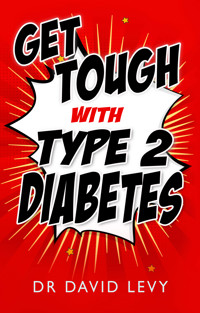
Get Tough with Type 2 Diabetes is a cutting-edge yet practical guide for newly-diagnosed and established type 2 diabetes patients and their families, by one of the UK's leading diabetes physicians. It discusses ideas that have emerged over the past 20 years about the fundamental problems that cause Type 2, many of which may be unfamiliar to non-specialist healthcare professionals as well as patients: The primary problem is not blood glucose but fat in the wrong organs (liver and pancreas) from starchy carb consumption; High blood glucose levels occur late in the course of Type 2 – the metabolic syndrome, with hypertension and abnormal cholesterol levels, often exists years before Type 2 diagnosis; The Newcastle-type ultra-low-calorie diet can re-set the metabolism and even reverse Type 2; The Mediterranean approach to diet can significantly reduce cardiovascular risk; Managing cholesterol and blood pressure problems is at least as important as blood glucose levels; Minimising medication while overcoming complications is desirable and possible; Diabetes is closely related to depression, and other psychological issues including 'diabetic distress' and 'diabetic burnout'. Armed with this new information and the results of important clinical trials, it is more possible than ever before to Get Tough with Type 2 without the need for progressively more and more blood glucose-lowering medication.
Das E-Book können Sie in Legimi-Apps oder einer beliebigen App lesen, die das folgende Format unterstützen:
Veröffentlichungsjahr: 2018
Ähnliche



















Contents
About the author
Dr David Levy was Consultant Physician in the Gillian Hanson Centre for Diabetes and Endocrinology, Whipps Cross University Hospital, London, UK and Hon Senior Lecturer at Queen Mary University of London, UK, until December 2014. He is still in active clinical practice, specialising in diabetes and endocrinology, and is the author of many books for healthcare professionals, including Practical Diabetes Care (4th edition, 2018), Type 1 Diabetes (2nd edition, 2016) and The Hands-on Guide to Diabetes Care in Hospital (2015), reflecting his interest in all aspects of clinical diabetes care.
Introduction
Having Type 2 diabetes is tough. This book acknowledges that it’s tough, but it’s even tougher for Type 2s if they are continually bombarded by myths based on a misunderstanding of what Type 2 actually is. The prime myth is that Type 2 is caused by eating too much sugar, which then causes high blood glucose levels. It’s tougher still when instructions about treatment come at us from all sides (for example, that treating Type 2 means stopping eating sugar, and if that doesn’t work, then medication is needed, and eventually probably insulin – all inaccurate statements).
These simple tales about Type 2 never really made much sense, yet they continue to be told, believed and acted on. But over the past 20 years we’ve come to understand much more about the underlying causes of Type 2, and at last we’re beginning to see proper scientific studies that take this new understanding and translate it – with great success, as we’ll see – into treatments that are logical and therefore work. There is now clear trial evidence that, with admittedly rather tough interventions involving substantial weight loss, Type 2 can be reversed, and at last we can start thinking about managing the condition without the need for ever more blood glucose-lowering drugs. High blood glucose is the end result of Type 2 diabetes, not its cause.
Blood glucose is only one partner in the damage caused by Type 2 diabetes, and in fact it isn’t as important as we once thought in the development of serious diabetes complications. It’s abundantly clear that high blood pressure and abnormal cholesterol levels are at least as important in the heart attacks, strokes and kidney disease that are the most devastating long-term complications of diabetes. With careful and evidence-based lifestyle changes we can make real inroads, not only into high glucose levels but high blood pressure, with clear short- and long-term benefits. Cholesterol levels can be helped by careful attention to diet, though the high vascular risk of Type 2 means that medication is normally needed.
Diet and weight control are central to the day-to-day management of Type 2, and I discuss some of the newer ideas (see Chapter 5). That means getting tough on the latest ‘superfoods’, sadly none of which has been shown to improve blood glucose levels or reduce serious complications (see page 83). I also discuss the lessons to be learned from major clinical studies of diets. These include the Mediterranean approach, which reduces the risk of heart attacks, and possibly of cancer, and the lower-carbohydrate diet, which for many people is a more sustainable way of controlling weight than the traditional high-carbohydrate, low-saturated fat diet, which is coming under increased pressure from evidence (and, like the idea of sugar ‘causing’ Type 2 diabetes, was never really convincing).
Specific kinds of exercise and activity are important in many aspects of diabetes, although they don’t have the same dramatic short-term effect as diet and weight loss. The evidence for the long-term benefits of exercise is distressingly thin, but regular moderate or vigorous exercise very likely reduces most of the complications of long-term diabetes, including premature death. We mustn’t ignore the compelling evidence on activity and its important beneficial effects on general health, including perhaps postponing the frailty of later life.
Type 2 mostly affects people in middle age, and increasingly they are growing old gracefully with diabetes, because the complications that used to limit life expectancy are much less common than when I started working in diabetes in the 1980s. For that reason, Type 2 in older people is becoming a sub-specialty in its own right, because managing diabetes in later life requires an even more sensitive and careful approach than in younger people: kids with Type 1 diabetes need specialist paediatricians, so why shouldn’t older Type 2s have their own experts?
Finally, it doesn’t matter how much whiz-bang technology and clever new drugs there are, if you’re depressed or distressed by your diabetes, everything will be more of a burden and less effective, so psychological approaches to Type 2 diabetes are tackled in Chapter 13. I feel a bit bad about this – it should, of course, be the first chapter – and if this little book ever comes to a revision, psychology may well come right at the beginning.
Ten years ago I wrote my first book for people with Type 2 and their carers, and at the time it seemed quite easy. The process was inadvertently helped by my publisher at the time thinking that the preliminary draft I sent him was the very final version, and he duly sent off my first thoughts for publication. Nobody noticed. In addition, back in 2007 we had very little evidence for the benefits of non-drug treatments, and too much of the book was devoted to current and upcoming medicines. Around the same time, some of the drugs turned out to have unexpected and severe side-effects, and since then I have become generally less enthusiastic about drug treatments, while recognising that when used carefully and sensitively they are, of course, extremely valuable. But we must always try to minimise the use of medication, and there is a separate chapter (page 98) on how to approach this – with caution, of course, professional support, naturally, but with some optimism.
Former colleagues at Whipps Cross University Hospital helped me to think through many of the topics covered in this book, and my current colleagues, especially Carin Hume and Una Vince at The London Diabetes Centre, have continued my education. Timo Pilgram, librarian at Whipps Cross, sourced references and scanned obscure medical niches of the internet, as he has done for all my recent diabetes books. My wife Laura scanned obscure culinary corners of the internet to maintain my food interest while writing, and helped with the sections on practical aspects of diet, especially the Mediterranean approach, which we aim to sample at least twice a year in countries where it originated. Carrying out scientific research is tough for authors.
Georgina Bentliff, publisher of Hammersmith Health Books, helped a great deal with the concept of the book. She commissioned it, cajoled me over deadlines – no toughness there, of course – and she and her team scrutinised the manuscript for evidence of plonky medical-speak, the clinical equivalent of management-speak or politician-speak. You know the kind of thing: ‘the limited results from this prospective cohort study indicate that there may be some evidence for the increased efficacy of drug A compared with drug B, though further and larger trials are needed to confirm these preliminary findings …’ If any similar horrors remain, blame me. It may be gently advancing age, but I’ve been amazed how difficult it was to write this book for non-medical people compared with my textbooks for professionals. I’ve never had to consign so many drafts to the electronic black-hole by activating the ‘delete’ button. Although we’re trying to get tough with diabetes, no author should increase the difficulty for people with Type 2 by using indecipherable language, so let me or Georgina know if I could have done better.
David Levy
January 2018
How to use this book
A note on numbers and units
Blood glucose is measured in mmol/l [‘milly-mole per litre’]. Many countries use a different measurement – milligrams per decilitre (mg/dl). To convert mmol/l to mg/dl, multiply by 18.
Blood pressure is measured everywhere in mm Hg (millimetres of mercury), a reference to the old days when all pressures, including atmospheric pressure, were measured with a column of liquid mercury. Mercury, highly poisonous, hasn’t been used in blood pressure equipment for many years, but the traditional unit remains.
Glycated haemoglobin (abbreviated to HbA1c or A1C) indicates how high glucose levels have been over the previous six to eight weeks. It’s not simply an average of blood glucose levels, but a completely different measurement, so it’s not measured in mmol/l or mg/dl, although there are ways of estimating average blood glucose measurements from it. Ever since this ingenious measurement was introduced at the beginning of the 1980s, it has been reported as a percentage (%), usually in the range 6 to 10%, and that is how most people with diabetes remember it. Starting in 2011, a different measurement was introduced (mmol/mol, usually in the range 55 to 100). Because the percentage measurements were so familiar, many countries opted to continue reporting HbA1c using both systems, so that healthcare professionals and people with diabetes can choose to use the units they are most familiar with. Unfortunately, in the UK the percentage reporting units were abolished around 2011, so HbA1c is reported by NHS laboratories only in the new units.
Many internet sites have a simple HbA1c converter. I usually Google ‘convert HbA1c’ and go to the link with the excellent website Diabetes.co.uk (full web address is www.diabetes.co.uk/hba1c-units-converter.html).
For readers wanting to know more about this change in units, I wrote an article in 2013 discussing HbA1c measurements and disputing the wisdom of the UK decision to permit only the ‘new’ reporting units (mmol/mol): ‘HbA1c: changing units, changing minds – mission accomplished?’ in the British Journal of Diabetes & Vascular Disease.1
References and further reading
In each chapter I have included a few references to major studies published in medical journals together with a few websites. Wherever possible I have chosen references you can download in full text form for free. The easiest way to do this is to go to the website of the USA National Library of Medicine – www.PubMed.gov. In the search box enter the eight-digit PubMed number I have given at the end of the reference. This will bring up the ‘abstract’ of the paper – a short summary of its aims, methods, results and conclusions. If you’d like to see the full paper, follow the link indicated by ‘Free full text’ at the end of the abstract or ‘Full Text Links’ on the right of the screen.
Every medical research paper published in academic journals over the past 50 years is included in PubMed (and journals are progressively referencing historical material as far back as the 1920s), so in addition to looking up the references in this book, you can use it to research any medical topic you’re interested in. Type your words of interest in the search box. Because PubMed contains every medical reference, if you look for papers on ‘Type 2 diabetes’, it will deliver about 150,000 possibilities, which might keep you occupied for a little while. Narrow your search – for example, ‘Type 2 diabetes cardiac rehabilitation’ yields about 140 references, with the most recently published papers first. If you click on ‘Review’ on the left of the screen, only articles summarising the current state of knowledge will be shown. Clicking on ‘Free full text’ will bring up only full-text articles that are available at no charge. PubMed is scientific and designed for doctors and medical scientists so the material is not always friendly to read, and contains lots of abbreviations which are not always spelt out. But everything quoted in PubMed is ‘peer reviewed’ – that is, scrutinised carefully by independent doctors and scientists – so, unlike the output of the usual search engines, it is generally trustworthy.
An example of an historical reference available in PubMed is the following short article of personal memories written by Charles Best in 1942, a year after the death of his colleague Frederick Banting in an air crash at the age of 49. Their initial experimental work was done in 1921 during a hot Toronto summer, when they isolated insulin and used it first to treat dogs who had been made diabetic by removing the pancreas. Insulin was first used in humans at the beginning of 1922.
Best CH. Reminiscences of the researches which led to the discovery of insulin. Canadian Medical Association Journal 1942; 47(5): 398-400. PubMed reference number 20322601. Free full text (www.ncbi.nlm.nih.gov/pmc/ articles/PMC1827503/pdf/canmedaj01696-0079.pdf)
The story of the discovery is described in detail in this book:
Bliss, Michael (2007). The Discovery of Insulin. Chicago, US: University of Chicago Press.
The wider history of diabetes is covered in this elegant little book, written by an eminent diabetes consultant:
Tattersall, Robert (2010). Diabetes: The Biography (Biographies of Disease). Oxford, UK: Oxford University Press.
Chapter 2
Diagnosing diabetes
Key points
Normal blood glucose levels rarely go above 4–6 mmol/l, except for a short time after a meal.Diabetes is diagnosed when fasting glucose levels are 7.0 mmol/l or above, or more than 11.1 when there are obvious symptoms of high glucose – for example, excessive thirst or weight loss.Most people don’t have symptoms when they are diagnosed on a blood test.In many people, high glucose levels have been present but undetected for years before diagnosis.Occasionally, diabetes presents with a serious complication, such as a heart attack or stroke.Chapter 1 described an up-to-date view of the origins of diabetes, and we saw that Type 2 is caused by a combination of a strong genetic susceptibility to diabetes and overnutrition that stresses the liver and pancreas, which then no longer work together in harmony to maintain stable low blood glucose levels. Dysfunctional insulin produced by the pancreas leads to glucose escaping from the liver overnight, and to blood glucose levels remaining high after a carbohydrate-rich meal. Abnormal insulin also leads to high blood pressure and abnormal cholesterol balance, and to a host of other important problems that are often overlooked while we focus too much on blood glucose levels (these problems are covered in Chapter 3). However, we can’t get away from the fact that although Type 2 diabetes is much, much more than ‘just’ a high blood glucose level, diagnosing it has always been based on the precise measurement of blood glucose.
Blood glucose tests in context
It’s worthwhile knowing a little about the history of why blood glucose has been the standard way to diagnose diabetes, and will remain so. As we saw in Chapter 1, it’s only over the past 30 years or so that we have been able to make a reliable distinction between Type 1 and Type 2 diabetes.
In Type 1 diabetes, the kind of diabetes that usually affects children and adolescents, the condition develops suddenly and the only organ to misbehave is the pancreas, where insulin is produced; therefore in this type of diabetes the only problem appeared to be high blood glucose levels. High blood pressure and blood vessel disorders – for example, in the heart and kidneys – certainly occur after many years with Type 1, but until recently they were still thought to be caused by persisting high glucose levels resulting from imperfect insulin treatment (since the pancreas fails almost completely in Type 1 diabetes, insulin is needed immediately and permanently). So it’s easy to understand why diabetes starting later in life was considered to be more or less the same condition as Type 1, though usually with a less scary onset. (The distinction was further blurred by the fact that between 1921 when insulin was first used in humans and the 1950s, the only treatments for any type of diabetes were diet and insulin.)
At this early stage of research into diabetes, epidemiologists (scientists who study disease in populations rather than individuals) measured blood glucose levels in large numbers of people so they could establish a ‘number’ that could be used to diagnose diabetes. They focused exclusively on blood glucose levels, and did not take account of, for example, blood pressure and lipids such as HDL cholesterol and triglycerides that we now know are as important as blood glucose in determining the long-term outcomes of Type 2. But since all diabetes at the time was considered to be a condition of high blood glucose levels, and because blood glucose can be measured reliably, easily and cheaply, that’s what they focused on. The unintended result of all this blood glucose-measuring activity is that Type 2 diabetes is still considered by many professionals and patients to be predominantly a problem of high blood glucose levels. Nevertheless, we have to accept that blood glucose will remain the diagnostic test for Type 2 diabetes, and we therefore need to understand the numbers that have been agreed, while always bearing in mind that high glucose is only the easily measurable tip of a large iceberg of other problems.
Key point: Although Type 2 diabetes usually includes high blood pressure and abnormal cholesterol levels as well as high blood glucose levels, historically we’ve always used blood glucose values to diagnose it.
What are ‘normal’ blood glucose levels?
Before discussing the blood glucose levels we use to diagnose diabetes, we need to get an idea of what are normal glucose levels in people who don’t have diabetes. We’ll defer the prickly problem of ‘pre-diabetes’ (the grey zone between strictly normal blood glucose levels and definite diabetes) until Chapter 3.
Figure 2.1 shows glucose levels monitored continuously over 24 hours in a thin young person – that is, someone at zero risk of having undiagnosed diabetes. Clock time runs along the bottom, from midnight to midnight. The test was run over four days, so there are four different lines (the average measurement is shown with a dotted line).
Figure 2.1: Glucose measurements taken continuously in a young, non-diabetic person of normal weight over four consecutive days.




