


13,99 €
Mehr erfahren.
- Herausgeber: Nick Hern Books
- Kategorie: Geisteswissenschaft
- Serie: The Compact Guides
- Sprache: Englisch
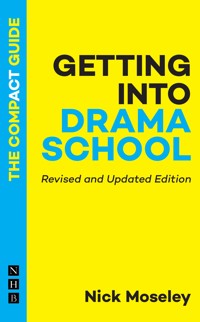
This encouraging, no-nonsense guide walks you through the whole process of applying for drama school – including doing your initial research, selecting the right school for you, choosing and preparing your audition pieces, nailing the audition and dealing with recalls. This revised and updated edition incorporates recent changes to the application process such as online auditions, ensuring you have the most up-to-date information. Perfect for any aspiring actor, as well as anyone advising or coaching them, it will answer your questions, bust commonly held myths and give you all the knowledge you need to boost your chances of getting into drama school. The Compact Guides are pocket-sized introductions for actors and theatremakers, each tackling a key topic in a clear and comprehensive way. Written by industry professionals with extensive hands-on experience of their subject, they provide you with maximum information in minimum time.
Das E-Book können Sie in Legimi-Apps oder einer beliebigen App lesen, die das folgende Format unterstützen:
Seitenzahl: 167
Veröffentlichungsjahr: 2023
Ähnliche


















Contents
Introduction
1. Which Drama School?
2. The First Audition Round
3. Choosing and Preparing Audition Pieces
4. Owning the Space and Overcoming Fear
5. What If You Don’t Get Through?
6. Recalls and Interviews
Appendix: Preparing Your Speech
About the Author
Copyright Information
Introduction
This book is aimed mainly at aspiring actors seeking three-year full-time training at a UK drama school. Although there are many one-year and some two-year courses, these are mostly aimed at graduates or people who already have significant knowledge and/or experience in the industry, and who will therefore usually have a working knowledge of the training environment.
If you have picked up this book and started reading, the chances are you are either an aspiring actor yourself, or know someone who is. Either way, you are probably looking for answers. I hope this book will give you the answers you are seeking, but it is also possible that you don’t even know what questions to ask! With that in mind, I am starting this book with a series of questions, some of which you might not have even considered, but which you nevertheless should perhaps ask yourself before you go any further.
Can You Really Become an Actor?
While acting remains an uncertain and insecure profession, there is actually more work out there now than there was thirty years ago, despite the pandemic. With so many television channels and an explosion of theatre in London and other major cities, drama is now a major British industry, bringing in revenue from tourism and overseas sales. There are also employment possibilities in voice-over, commercials, CGI, plus commercial and educational role–play. Acting, in all its forms, is a substantial creative industry and a key element of the UK economy. So if anyone tells you that becoming an actor is a crazy fantasy, just point to the thousands of actors making a living from this thriving profession, not to mention the millions of people worldwide who see the UK as the centre of world theatre.
What is a Successful Actor?
In the UK and worldwide there are a relatively small number of actors who could be regarded as ‘household names’ – recognisable to anyone who watches film and TV drama. Behind that number, however, is a vast cohort of skilled professional actors who earn a reasonable living from acting, even if they are not widely known. Many of these actors work in a combination of different jobs, including theatre, TV, independent film, commercials and voice-over work (including audiobook recordings). So to be ‘successful’, you simply need to be earning a living through your work. You may achieve more success and fame than this, maybe even late in your career, but even if that doesn’t happen, you can still fulfil your dream.
So How Do You Go About It?
There are many ways of becoming an actor, and the successful actors working in the industry have arrived there via different routes. However, a significant proportion of working actors in the UK have trained at a major drama school. To have this training behind you will be helpful throughout your working life. Many actors who haven’t formally trained find it necessary at some point to get some training, simply because they don’t have all the skills they need to do the job.
If you train at one of the best schools, you will also have a better launch into your career, because all good drama schools make a point of preparing their graduating students for the industry and showcasing them to agents and casting directors. Agents also trust these schools because they know that the actors they produce will have a sound and comprehensive craft.
If you are just coming to the end of your secondary schooling, or are studying in a further education college, you will probably need a full three-year training. If you are a little older and already have significant performance experience, perhaps including professional jobs, you might consider an intensive one- or two-year course instead.
Almost all good three-year acting courses now carry a BA (Hons) Degree qualification. This does not mean that they are more ‘academic’ than they used to be – there is usually very little writing or formal academic study required – but you will get a proper degree from training as an actor.
You may find that your parents get quite alarmed at the idea of their offspring auditioning for drama school! Having heard that acting is an uncertain profession, they will be understandably keen to ensure that you make the most of your one opportunity to study at BA level. For this reason they may advise you to get a more traditional degree in something else first and then do a one-year actor training afterwards if you still want to (which they probably hope you won’t!).
I’m afraid this is not very good advice! Not only can postgraduate acting courses be very expensive (up to twice the annual cost of an undergraduate degree), but you would have to pay up to half of the fees upfront rather than through a loan, which could be very expensive, especially when you have just built up so much debt from your first degree.
Furthermore, one year is not long enough for most people to get a really comprehensive training. You would do much better to train for three years, and put all your energies into building an acting career. Back-up plans are all very well, but they can be an indicator that you don’t expect to succeed, which in turn can be a self-fulfilling prophecy!
Given the huge cost of higher education, it is essential that you follow your heart and do the course you really want to do, not a poor substitute!
Will They Want Someone Like You?
At this stage I should make the point, loudly and clearly, that drama schools are looking for every sort of actor, not just certain types. Just as drama itself reflects modern society, so drama schools have to turn out a full range of actors who can portray every aspect of that society in their work. It doesn’t matter who you are or where you come from – if you have talent and determination, drama school is for you. A good drama school will not try to change who you are – it will merely give you the skills and training to make the best of what you already have.
Drama schools are sometimes described as ‘elite’ institutions, but I don’t think this is true any more. Yes, they may be highly selective and the competition to get a place may be fierce, but they are no longer the preserve of the privileged. You are just as likely to get into a good drama school if you are from a less advantaged background, because what counts is your personality, your drive and your raw talent.
Common Myths
There are lots of myths about drama school that you may have heard, and which quite possibly put you off applying. One of the first aims of this book is to address and explode those myths, which I shall now do:
Myth number 1: It’s too expensive.
Wrong: The majority of good drama schools now run degree courses in acting, most of which attract full-fee loans in the same way as other degrees. So you pay nothing upfront, and won’t accumulate any more student debt than someone on a conventional degree course. There are a few leading schools that are not part of the loan scheme, but which offer scholarships to talented students. In Chapter 1 you will find a list of all the major schools and their fees arrangements.
Myth number 2: They only want people who went to posh schools.
Wrong: Drama schools want talented people from all backgrounds. Most drama schools, and certainly the ones which have access to student loans, now have diverse cohorts that reflect the wider society.
Myth number 3: They only want people with a certain look.
Wrong: Drama schools need a wide range of physical types, ethnicities and personalities, because it is their job to supply the industry with a variety of different kinds of actor.
Myth number 4: Drama schools want to ‘break you down’ and destroy your confidence.
Wrong: If that was ever true it certainly isn’t so now. Good drama schools are only interested in your development as an independent artist and skilled professional. If you go to drama school you will get lots of individual attention which will help you to discover your potential and build your skills.
Myth number 5: It’s too hard to get into a good school.
Wrong: It’s true that many people apply each year and few are chosen, but most of the people who fail to get in do so for the following reasons:
• Too young. You have to be ready to train, and some people (by no means all) aren’t quite ready at eighteen. Solution: Take a year, or two years, to grow up and get some life experience before trying again.
• Too tense or have poor posture. If your body is holding too much tension you won’t be able to breathe freely or feel anything except tension. Poor posture closes off the breath and increases tension. Solution: Take some time out and attend classes in Pilates or yoga to reduce this tension, build core strength and improve posture.
• Poorly prepared. You haven’t learned your lines properly, or you haven’t read the plays your speeches come from, or you haven’t thought enough about the character, what they want, who they are talking to and why. Solution: Do your homework!
• Bad training. You ‘act by numbers’, delivering everything in a set way rather than living each moment like a real human being. Solution: Read the rest of this book!
• Bad audition advice. You may have chosen the wrong piece, or been encouraged to shout, or cry, or jump around. Solution: Get some better advice (…and read the rest of this book)!
But Do You Really Want to Be a Professional Actor?
This may seem a surprising question to be asking – after all, you’re already reading this book – but it’s really important that before you go any further, you take a moment to ask yourself whether you genuinely want to make a career out of something you enjoy. You might, for instance, enjoy dancing, or rapping, or gaming, without necessarily wanting to turn that enjoyment into your actual job. It is possible that having to earn a living from something you do for fun could actually stop you enjoying it! If you have doubts of this kind, then you could earn your living doing something else but go on enjoying acting within amateur theatre. Let’s not forget that the word ‘amateur’ means a person who does something out of love!
Of course, professional actors also need to love their work, but if you do it for a living then it really will be a job, and you will need to work very hard to do it well, not just for your own pride and satisfaction, but because someone will be paying you to satisfy an audience.
Arguably, the hardest part of learning any sort of skill or craft is the initial training, because that’s the point at which you have to confront the fact that there’s a lot you don’t know and you are probably doing a lot of things in the wrong way. This is the same for any professional training, but as an actor you have the additional challenge that the profession you have chosen requires you to use everything you have – brains, bodies and emotions – in a very public way. Nothing can be hidden, everything must be open and available, which means that, just when you are feeling most vulnerable, exposed, wanting to curl up into a ball and hide, you are expected to stand tall, breathe, connect to your feelings and speak!
Some people audition for drama school with the idea that they are already good actors who just need to acquire a few more skills. If that’s your stance, you are probably not yet in the right mindset to train. Actor training is much more life-changing than that! It will not alter you fundamentally, but if successful it will change how you do things, which may in turn change how you breathe, how you move, how you feel and how you think. It will certainly change the way in which you relate to others. If you are scared of change, if you prefer to hide behind your tension, your coping mechanisms and your defences, then you are certainly not ready to train, and my best advice to you is to take the time you need to shed some of your fears, so that you can enter training with the right attitude.
Is It Acting You Love, Or Just the Applause?
There’s nothing wrong with liking applause – we all want to be affirmed, even admired, for what we do. It’s hard to keep doing something without encouragement. But if applause, or fame, is your main goal, you will never get through the first two years of the training, because for most of that time no one other than your peers and tutors will actually see your work! If you are going to survive as an actor, you will have to believe in yourself and in your art, and love it for its own sake. Real actors have an urge to act that comes from deep inside them, regardless of applause or fame.
Are You Brave Enough?
Sometimes we don’t admit that we’re actually scared of what we most want. Perhaps it’s easier to say, ‘Oh, they won’t want me in drama school – that’s just for posh kids’, when in fact all that’s stopping you is your own fear! Having read this introduction, you now know that drama school is for everyone with talent and determination. If you can take this on board and get over your fear, then all you need is information about how to avoid the pitfalls of drama-school auditions, so that you can allow us to see who you are and what you have to offer. The rest of this book is devoted to giving you that information.
What Does Drama School Actually Do?
The purpose of an acting or musical-theatre course at a drama school is to train aspiring actors/performers in the skills they need to work professionally in the industry. Without this training, most actors will flounder as professionals, because there will be some things they simply can’t do properly.
The list below is not comprehensive, but it will give you some idea of the things a drama school will seek to accomplish in three years of training. In no particular order, the main aims of an actor-training course are:
• To address physical issues, such as poor posture, lack of core strength, excessive tension, held diaphragm, shallow breathing, disconnection between mind and body, and physical ‘tics’ and habits.
• To train your speaking voice, encouraging you to support your voice from deep in your body, to get your tongue around difficult language, to use your voice more imaginatively, to discover your vocal range, and to master different accents.
• To develop your visual and sensory imagination, so when you say words you also see the things you are speaking about in your mind and feel them in your body.
• To give you access to your own emotions and enable you to channel them creatively.
• To equip you with the tools for exploring and analysing text and character.
• To give you self-belief and confidence to transform into different characters.
• To make you open and reactive to other actors.
• To help you live more fully in the present moment.
What reputable drama schools will not do is try to mess you up or ‘break you down’. A good drama school will be staffed by full-time and freelance staff who understand the industry, know what an actor has to be able to do, and will have spent many years working out the best ways to offer you those skills.
Put even more simply, a drama-school training will ‘clean you up’, getting rid of all the blockages and clutter so that you can think, feel, speak and move in ways that communicate clearly and effectively with your audience. It’s a life-changing process that will take all your courage and commitment. It’s not for everyone, but having read this far, if you still think it’s for you, read on!
1. Which Drama School?
Note: The funding and contact details contained in this chapter are correct at the time of writing, but may subsequently have changed. Always check each school’s website to obtain completely up-to-date information.
Which are the ‘Real’ Schools?
There are many institutions in the UK that claim to offer professional actor training. Some are private, some are small specialist colleges, some are departments of big universities. There are so many schools and courses, all making claims about their quality and success rate, that it’s hard for any aspiring actor to decide which are the genuine article. The Federation of Drama Schools (FDS) is a partnership of all the major drama schools in the UK, most of which have been established for many decades, and boast prestigious alumni. Visit their website here: www.federationofdramaschools.co.uk
In 2017, Equity, the trade union for actors and backstage staff, created a series of criteria through which it could identify bona fide, high-quality professional acting courses. The criteria below are not official, but they do provide a useful set of benchmarks:
• A course must be vocational and practical, not theoretical.
• It must offer a qualification equivalent to NQF Level 4 (Higher National Diploma) or SQF Level 6 (BA degree) which must be issued by a recognised body (so not a home-grown diploma!).
• There must be at least thirty hours of staff-led contact time each week (most acting courses teach for at least thirty weeks per year).
• There must be no more than thirty-five students in a class (and usually it’s a lot fewer than that. Most good drama schools have fewer than twenty in a class).
• There must be a professional industry showcase towards the end of the course, to which agents, casting directors, directors and producers are invited.
• Students must be offered extensive professional preparation, including sessions with industry people, such as agents, casting directors and directors.
• A school must offer professional facilities, especially theatres, studios, recording studios and state-of-the-art filming equipment.
• There must be clear commitments on safeguarding, with robust policies on bullying, harassment and diversity.
These are the minimum standards that you should expect from any institution claiming to train actors. Possibly the most important of these are the practical nature of the sessions, the small numbers in each class, and the thirty-hour-contact rule. Any institution claiming to be able to train actors with less contact time than this is almost certainly not a proper drama school.
It is also very important, now that schools are no longer officially accredited, that a recognised qualification is offered. A qualification awarded by an external body, such as a university, means that the school has to be inspected and quality-controlled by independent inspectors.
It is quite possible, however, for a school to tick all of the above boxes and still not be offering a particularly good training. In the end, the quality of the training experience depends on excellent teaching, top-class facilities, good and effective organisation and the school’s reputation within the industry. The rest is just padding!
Below I have listed the UK drama schools that I can confidently say offer the best training and the best launch into the industry. One good measure of a school’s quality is the success of recent graduates, so make sure you check this out. Most drama schools will have data and information on graduate employment in their prospectus or on their website.




