


Erhalten Sie Zugang zu diesem und mehr als 300000 Büchern ab EUR 5,99 monatlich.
- Herausgeber: The History Press
- Kategorie: Geisteswissenschaft
- Sprache: Englisch
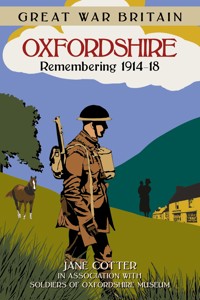
The First World War claimed over 995,000 British lives, and its legacy continues to be remembered today. Great War Britain: Oxfordshire offers an intimate portrayal of the county and its people living in the shadowof the 'war to end all wars'. A beautifully illustrated and highly accessible volume, it describes local reaction to the outbreak of war; charts the experience of individuals who enlisted; the changing face of industry; the work of the many hospitals in the area; the effect of the conflict on local children; the women who defied convention to play a vital role on the home front; and concludes with a chapter dedicated to how the city and its people coped with the transition to life in peacetime once more. The Great War story of Oxfordshire is told through the voices of those who were there and is vividly illustrated through evocative images from the archives of Soldiers of Oxfordshire Museum.
Sie lesen das E-Book in den Legimi-Apps auf:
Seitenzahl: 201
Veröffentlichungsjahr: 2014
Das E-Book (TTS) können Sie hören im Abo „Legimi Premium” in Legimi-Apps auf:
Ähnliche



















This book is dedicated to the residents and soldiers of Oxfordshire 1914–1918.
CONTENTS
Title
Dedication
Timeline
Acknowledgements
Introduction
1 Outbreak of War
2 Responding to War
3 Work of War
4 The Front Line
5 Homes Fires Burning
6 Coming Home
Postscript: Legacy
Bibliography
Copyright
TIMELINE
ACKNOWLEDGEMENTS
My grandfather was just 8 years old when his father died in France in 1917, just twelve months after he had lost his eldest brother on the Western Front. His experience echoing that of so many in the country and county.
As a child, I would frequently ask him to ‘tell me a story about the olden days’, and he would happily recount tales of his childhood growing up in The Rookery on the edge of Port Meadow in Wolvercote. Though his early years were blighted by the loss of war, his stories and memories always focused on the practicalities of life, often amusing and always told with affection. Many of these stories illustrated the resilience and fortitude of life for an ordinary Oxfordshire family during the First World War. It was thanks to these recollections that my interest in this period of history was ignited.
I am very grateful to many people for their help and guidance over the course of researching and writing this book, particularly all involved with the Soldiers of Oxfordshire – including Jim Pearson and Mike Cross for their patience in answering my endless questions – and Brigadier David Innes for taking the time to read and comment on the final draft of the book.
All those who have kindly provided images have been credited where appropriate. Any uncredited images, meanwhile, are from my collection.
Very special thanks go to my mum – as always – and my friends who stepped up for childcare duties as I shut myself away to work. The time taken by my husband Michael and my friend Lorraine Yardley to read, comment, question and correct chapters as I wrote them was greatly appreciated. Thanks are also due to Stephen Barker for sharing his knowledge and expertise and guiding me throughout the process.
Last, but by no means least, I am extremely grateful to my children – Noah and Toby – for their tolerance and patience as I wrote. Their endless questions about the status of the book proved as much of a driving force to complete it as the publisher’s deadline. I would like to think that they have learned a little of their history along the way.
Jane Cotter, April 2014
INTRODUCTION
A local journalist writing for the Witney Gazette in the days directly after the declaration of war pondered, ‘I wonder what an historian in a century’s time will have to say respecting the events of the last few days’. For all that has happened over the last 100 years, it is testament to the many who made sacrifices that it is not just historians and academics who now reflect on the actions and events of the Great War.
As we now consider the events in the years during and directly after the war, and try to understand the experiences of those who lived, fought and died, we are left with little doubt that what was to become the First World War would have been beyond comprehension to those reading the news of war in August 1914.
The enduring images of the First World War – the battlefields of France and the poppies of peace – make it easy to forget that the Great War extended far beyond that; not just within the confines of geography. The lives of those on the home front were changed forever as the war brought about huge social, political and economic change.
With stories and anecdotes from First World War soldiers and civilians alike now firmly in our recorded history, we should be grateful to those who, over the years, have taken time to record and preserve these memories from which we can now draw information to illustrate and explain the experiences of the people of Oxfordshire during the First World War. The county regiments – the Oxfordshire and Buckinghamshire Light Infantry and the Oxfordshire Yeomanry – and every town and village had its own experiences and its own story to tell. Together they paint a picture of the impact that war had on all lives, social and military, in Oxfordshire.
Geographically, Oxfordshire on the brink of war in 1914 was not much different to the county as it is today. Prior to boundary changes of 1974, the Vale of the White Horse district and parts of South Oxfordshire were in Berkshire, and conversely, the areas of Caversham (now Berkshire) and Stokenchurch (now Buckinghamshire) were in Oxfordshire. This book focuses on Oxfordshire as it was in 1914. At its centre is the historic university city of Oxford, surrounded by a mix of suburbs, farmland, market towns, rural villages and pockets of industrialisation.
As with the rest of the nation in the days leading up to to war, the county was still incredulous about the prospect of conflict with Germany. In London, the prime minister, Herbert H. Asquith (1908–1916), had already acknowledged that there was only one possible outcome to the actions and aggressions that had divided Europe. He wrote:
August 2 1914. Things are pretty black. Germany is now in active war with both Russia and France and the Germans have violated the neutrality of Luxembourg. We are waiting to know whether they are going to do the same with Belgium … Happily I am quite clear in my own mind as to what is right and what is wrong.
To the general Oxfordshire population, the historical nineteenth-century alliance of Germany, Austria-Hungary and Italy and the 1907 alliance of France, Russia and the United Kingdom of Great Britain & Ireland would have meant little. The growing hostilities between nations were reported by the local press as events without bearing on the county. Where murmurs of discontent did appear, little was done to translate the complexities of the political situation into the possible impact on the general population.
Following the assassination of the Austrian Archduke Franz Ferdinand in Sarajevo on 28 June 1914, a stark ultimatum was sent by Austria to Serbia, whose expansion and nationalism had led some of its citizens to make a series of assassination attempts on various Austro-Hungarian figures. It was never intended to be accepted and war soon broke out in the Balkans. Russia – an ally of Serbia – began to mobilise its army. What followed had a domino effect on old alliances, promises and treaties. Germany – allied to Austria – delivered ultimatums to both Russia and France and, at the beginning of August, a vast German army attacked France through neutral Belgium. Britain, obligated by the 1839 Treaty of London to secure Belgium’s neutrality in the event of an invasion, issued an ultimatum to Germany to retreat from Belgium by midnight on 3 August 1914. The response from Germany was unsatisfactory and the Foreign Office released the following statement:
Owing to the summary rejection by the German Government of the request made by His Majesty’s Government for assurances that the neutrality of Belgium would be respected, His Majesty’s Ambassador in Berlin has received his passport, and His Majesty’s Government has declared to the German Government that a state of war exists between Great Britain and Germany as from 11 p.m. on August 4th.
Oxfordshire was at war.
1
OUTBREAK OF WAR
Public Reaction to War
Such was people’s anxiety surrounding the prospect of war, that on Sunday, 2 August 1914, crowds gathered at Henley railway station in anticipation of the special editions of The Times and the Daily Mail rumoured to be arriving from the capital. The crowds were so large that rails were placed across the entrances and only travellers were permitted into the station. Each train was met with disappointment as the message was repeated: ‘No papers. All snapped up in London.’
The bank holiday passed in a cloud of tension and when news broke on the morning of Wednesday, 5 August that Great Britain had declared herself at war with Germany, the suspense was over.
Come the evening, Oxford’s streets, packed with crowds eager for news, had turned into a parade ground of patriotic demonstration. Renditions of the national anthem and ‘Rule Britannia’ could be heard across the city.
The people of Chipping Norton read the proclamations displayed outside the town hall, impatient for the news of further developments, such was the slow drip feed of information. They weren’t alone; by Thursday, 6 August, even Oxford’s mayor had yet to receive an official proclamation of war.
In Thame, excited crowds besieged the railway station awaiting the evening papers, whilst the returning Territorials from camp – following their mobilisation – caused ‘wonderment’ as they paraded in the Market Square.
The escalation of war shocked the Henley and South Oxfordshire Standard into reporting:
Who would have believed, ten days ago, that practically the whole of Europe was so soon to be involved in a great and terrible war … and Henley in common with all other parts of the country is in the throes of excitement … What the consequences will be no one can foretell.
Over the following days and weeks, public attitudes and emotions evolved daily. The initial feeling of relief from suspense was soon replaced by a mix of excitement, fear, anger and resentment. Dramatic editorials run in the local press reflected on the gravity of the situation facing country and county. On 8 August 1914, the Witney Gazette called for a united front of support:
The present state of affairs is one that cannot fail to be regarded by all as very serious. At this time all political differences has been cast aside, and the whole Empire is supporting the Mother-land in this great crisis. What the result will be no one can tell, but it is obviously the duty of everyone who is a member of the Empire to back up, in every possible way, those who are guiding the Ship of State through perilous waters.
Headline news in the Henley Standard on 7 August 1914.
Military response – The Oxfordshire Regiments
The Oxfordshire and Buckinghamshire Light Infantry
The Oxfordshire and Buckinghamshire Light Infantry, which since the Childers Reforms of 1881 and the later Haldane Reforms of 1908, was regarded as the ‘county regiment’. At the outbreak of war, the Oxfordshire and Buckinghamshire Light Infantry regiment had two existing regular battalions, the 1st and 2nd (the 2nd Battalion was in India when war broke out), a training battalion – the 3rd, and two territorial units – the 1/4th Oxfordshire and Buckinghamshire Light Infantry and 1/1st Buckinghamshire Battalions.
The nature of these Territorial units (including the Oxfordshire Yeomanry) meant that men usually joined their ‘home’ unit, which were recruited locally and became more recognised and supported by the community than the regulars. Though the physical requirement of recruits was the same as for the Regular Army, the recruitment age was lower, and men could join from the age of 17.
Territorial soldiers enlisted for service at home and were not obliged to serve overseas, though in the event of war, they could be called upon for full-time military service. The part-time commitment of a Territorial soldier meant that men were able to continue with their civilian jobs, as these men were, for the most part, married and employed. They undertook weekly training on Saturday afternoons and evenings, and took part in an annual two-week summer training camp.
It was during this annual camp that war was declared. Within twenty-four hours of the announcement on 4 August 1914, the 1/4th Oxfordshire and Buckinghamshire Light Infantry and 1/1st Buckinghamshire Territorial Battalions were recalled to Oxford.
Around the city, changes were taking place in its most historic buildings. From the day of mobilisation, university authorities billeted the county Territorials at Christ Church, Keble, Balliol and New Colleges. The Colours (large flags) of the 1/4th Battalion Oxfordshire and Buckinghamshire Light Infantry were deposited in Christ Church Cathedral on Thursday, 7 August, where the Dean of Christ Church addressed a congregation of the 1/4th Battalion soldiers. His words are recorded in the Oxford Journal Illustrated of 12 August 1914:
I should like to say, in my own name, and on behalf of those who live here with me, that we cordially welcome your presence in the college and we are glad to receive your Colours in the cathedral. It is, I think, nearly 300 years since soldiers were quartered in Christ Church, and on the last occasion it was one of the saddest of occasions – a time of civil war. There is nothing of that sort now, and we welcome you without a single thought of hesitation or doubt.
From the outset of war it was obvious that the Oxfordshire and Buckinghamshire Light Infantry would have to expand. In response to Kitchener’s call for a ‘New Army’, ‘Service Battalions’ were raised for the duration of the war: so it was that the 5th, 6th, 7th and 8th Battalions came into being. Service battalions would be able to fight but would also provide combat service and logistical support to other battalions with a brigade group. The regiment included some men who enlisted from all over the country, wherever recruiting took place.
Reflecting on the arrival of the 5th Service Battalion of the Oxfordshire and Buckinghamshire Light Infantry at barracks in Aldershot on 23 August 1914, the commanding officer discovered that his unit comprised ‘little more than a bewildered mob of civilians’. These new recruits came from all walks of life, as Lieutenant Colonel Cobb observed in the Regimental Chronicles of the 5th (Service) Battalion Oxfordshire and Buckinghamshire Light Infantry:
There were a great many from respectable homes and businesses. Some gentlemen, many indoor servants, groom, gardeners, chauffeurs, gamekeepers, well-to-do tradesmen, hotel keepers, clerks etc. to say nothing of the engineers, fitters and hands from the great works in Birmingham and Coventry. All these men had left good comfortable homes, with good wages and had come voluntarily out of a sheer sense of duty … Yet they faced all the problems in a splendid way with never a murmur.
Once it had been decided to mobilise the 1/4th Oxfordshire and Buckinghamshire Light Infantry, a second Territorial line was required to replace it. This would include the men who had not undertaken to serve overseas and would form a reserve of ‘home service’.
On 8 September 1914, Major Ames began to raise the 2/4th Oxfordshire and Buckinghamshire Light Infantry. From rooms in Exeter College, he swore in and billeted over 130 men. This new battalion consisted of enthusiastic but untrained men and, after ten days, sufficient numbers had been raised from which eight companies could be formed. Over the ensuing weeks, their hurried training was followed by battalion drills on Port Meadow, military formations on Denman’s Farm and exercises near Elsfield.
Ames would later note that ‘few roads within a radius of 9 miles from Oxford but saw the battalion some time or other’. He took great pride in the battalion’s marches, noting that the discomfort from the fast pace of the Light Infantry step was soon replaced by pride. ‘Once they marched from the third milestone at the top of Cumnor Hill to the seventh milestone by Tubney Church in 57 minutes.’
The Oxfordshire Yeomanry
The county was also home to the Territorial troops of the Oxfordshire Yeomanry. This regiment was also known as the Queen’s Own Oxfordshire Hussars (QOOH).
The Oxfordshire Yeomanry was a cavalry unit, part of the Territorial Force made up of part-time soldiers recruited and trained locally. Many officers of the Yeomanry were drawn from the well-connected landowners and country gentlemen of the district, but also included bankers, merchants, barristers and politicians. It had numbered amongst its ranks Winston and Jack Churchill; MP for Henley, Valentine Fleming; and the son of 17th Baron Saye and Sele, Eustace Twisleton-Wykeham-Fiennes.
Many of the other ranks were drawn from farming and hunting backgrounds from around Oxfordshire. These men often worked with horses, knew shooting and the ways of the countryside. During the First World War, cavalry acted as mounted riflemen, with emphasis in training placed on mobility and marksmanship. Yet, during annual training camps, an informal atmosphere was encouraged in the interest of recruitment.
The social aspect of Yeomanry life was important also – before the war there had been glittering annual dinners in London and special concerts for the men at Oxford Town Hall. Therefore, when the war began, a true feeling of comradeship and mutual confidence between men and officers had grown up during their regular Saturday training.
Members of the Oxfordshire Yeomanry were directed to attend Squadron Headquarters on 5 August 1914. (Courtesy of Michael Williams)
When receiving their order to mobilise on 4 August 1914, the regiment had bases at Oxford, Woodstock, Henley and Banbury. Captain Adrian Keith-Falconer, in his book The Oxfordshire Hussars in the Great War, later recalled the moment that orders to mobilise arrived: ‘The receipt of that laconic telegram containing the one word “mobilise” was the signal for all that the hour of action had come. Less dramatic than the fiery cross or beacon of old, its message was the same.’
Soldiers from the Oxfordshire Yeomanry departing from Oxford. (Courtesy of Soldiers of Oxfordshire)
Recruitment
As war broke out, Lord Kitchener – Secretary of State for War – held the view that massive manpower was crucial to victory, and he endeavoured to seek new ways to stimulate enlistment from men of all walks of life. This idea was in direct contrast to the British military’s historical reliance on professional soldiers. The suggestion that more men would be encouraged to enlist with a promise that they would serve alongside their friends, family and colleagues fuelled national recruitment drives. By October 1914, over fifty towns and cities had formed ‘Pals’ battalions – usually service battalions – consisting of men from the same factories and streets who would fight together on the front line.
The declaration of war saw the immediate call for volunteers to join the forces. Unmarried men aged between the ages of 18 and 30 were urged to enlist. Posters and advertisements featured prominently in public places and newspapers, to encourage as many as possible to join. By mid-September 1914, over 1,500 Oxfordshire men had volunteered. With men from the Territorials already mobilised, it fell to recruiting sergeants to encourage local, inexperienced men to join the fight.
By the first week of September 1914, local newspapers were already reporting the growing momentum for recruitment in the county. The Witney Gazette announced that a mass meeting on 2 September in Witney had rallied the men of the district to the extent that a group of forty-two local men marched through the town to the railway station, with the sole purpose of travelling to Oxford to enlist. The report stated that ‘Witney’s sons [had] something to think about … with the result that the flower of the manhood of Witney marched off during this week to join the Colours.’
The pride of local communities was reflected in the commentary of the press. ‘Thank God we have young men with the same kind of grit in them that enabled our fore-fathers to lay the foundations of this great Empire,’ was one such comment.
In 1921, the total population of Oxfordshire was 189,615, a 4.8 per cent decrease from 1911 (Male: 90,281; Female: 99,334).
Recruitment posters urged men to enlist. (LC-USZC4-10883)
The first group of Witney volunteers walking through the town on their way to Oxford to enlist. (Courtesy of Oxfordshire County Council – Oxfordshire History Centre)
As the village of Bampton sent ‘one in twenty of her population to serve King and Country’, a public meeting was called in North Leigh to appeal for recruits. The Stonesfield Band played a selection of patriotic music to an enthusiastic crowd as the vicar appealed to the women in attendance to impress their influence on the young men to ‘come forward and help their country’. Twenty-four of the village men, and those from the nearby house of Eynsham Hall, enthusiastically stepped forward to give their names. They assembled at the hall the following morning and, after a rousing speech by Mr J.F. Mason MP, were sent on their way to Oxford for enlistment – leaving with ‘great cheering and enthusiasm’.
Zealous and patriotic recruitment drives took place across the county. Mr R. Bruce of Summertown recalls his experience of one event in Woodstock in Oxfordshire in the First World War:
I was watching a recruiting sergeant dressed up in his coloured uniform with ribbons, addressing a crowd in the square, shouting an appeal for recruits. I remember when he called for volunteers the hands shot up and the young men climbed into the wagonettes that were waiting for them, and away they went to county barracks to enlist … the mothers and sweethearts crying and weeping in the square. How happy all these young men seemed.
The first wave of recruitment during the initial days and weeks of the war was an enthusiastic rush to join the campaign. This was followed by a real surge in the first week of September, following the retreat of British forces in the aftermath of the Battle of Mons.
Women were encouraged to urge their men to enlist. (LC-USZC4-10912)
By the end of September 1914, in excess of 750,000 men had enlisted nationally. By January 1915, this number had reached 1 million. Numbers enlisting for reasons of national pride, war spirit, and unemployment were boosted by some employers’ forceful enlistment of their employees and the refusal of some Poor Law Guardians to pay financial support for war-fit men. However, much enlistment was in recognition of the fact that the events at Mons showed the war to be a direct threat to Britain.
In 1914, Britain was a country divided by class. Her Empire ruled over a quarter of the globe and was an enviable force in both wealth and trade. As war broke out, it was not unnoticed that the attitude to enlistment was also divided by class. One ‘volunteer’ expressed such a view to a letter to the Witney Gazette in September 1914:
Dear Sir, I notice in one of the daily papers a very good article, the main point of which was this: that class distinction was of minor importance now we were all united in one common cause to uphold our empire. Would that some of the young men belonging to the upper middle class remember this, and instead of offering themselves as Motor Cycle Scouts (of which there are more than enough) or waiting to get commissions to which they (many of them) have no more right than say one who has been through a course of Volunteer training, they would set the example to their humble brother and volunteer in Lord Kitchener’s Army, but it seems the example has already been set by the latter.
Public meetings were the backbone of recruitment and continued to focus on rallying volunteers. However, some opinions delivered at such events were not universally applauded. Henley resident, Mr C. Taylor, wrote to the Henley and South Oxfordshire Standard, complaining that speakers at a recent recruitment meeting – a female speaker in particular – had made it clear that if men aged between 19 and 35 failed to volunteer, they would be considered cowards. Mr Taylor ventured to explain that his second son, though willing and able, had been medically disqualified. He wrote:
I am prepared on behalf on my son, to challenge the gentleman that passed him unfit to take his turn first in the trenches with a pick and shovel and I am also prepared to challenge anyone interested in my son that he is able to do anything as a general labourer, riding or driving included … He can also handle a gun as well as a man with two hands … One volunteer is worth twenty pressed men. If my son should not be successful in the future no one dare to call him a coward.
In an effort to publicly acknowledge the actions of volunteers and press for more recruits, by September 1914, rolls of service were starting to appear in local newspapers around the county. The establishment of the district roll in the Witney Gazette




