


55,99 €
Mehr erfahren.
- Herausgeber: John Wiley & Sons
- Kategorie: Fachliteratur
- Sprache: Englisch
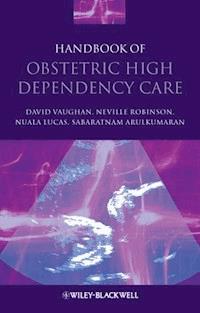
Concise practical guidance to managing an Obstetric High Dependency unit The team and clinical environment is the starting point for the Handbook of Obstetric High Dependency Care. The book discusses the structure and requirements of a unit, both clinically and in terms of equipment, protocols and management aims. The main sections cover the investigation, diagnosis and management of clinical disease resulting from pregnancy and incidental to it.
Sie lesen das E-Book in den Legimi-Apps auf:
Seitenzahl: 197
Veröffentlichungsjahr: 2010
Ähnliche




















Contents
List of abbreviations
List of figures
List of boxes
Preface
Chapter 1: Morbidity and mortality in the parturient
Maternal Mortality and CEMACH
Identification of the high risk parturient
Chapter 2: The maternity high dependency unit
Operational Policy
Admission to the MHDU
Discharge from the MHDU
Transfer to ICU
Personnel
Medical
Midwifery/Nursing
Documentation and record keeping
Protocols and guidelines
Environment and equipment
Clinical governance, audit and risk management
The MHDU patient and ethical challenges
Part I: Emergency care
Chapter 3: Emergency management of the obstetric patient – general principles
Immediate assessment
Full patient assessment
Decisions and planning
Invasive monitoring in the MHDU
Chapter 4: Maternal and neonatal resuscitation
Maternal cardiac arrest
Neonatal resuscitation
Part II: Clinical problems
Chapter 5: Headache
Management
Chapter 6: The collapsed patient
Haemorrhage
Hypoxia
Embolism
Seizure (See Chapter 7 for more detail)
Intracranial event
Metabolic causes
Diabetic crises
Chapter 7: Convulsions
Chapter 8: The breathless patient
Respiratory changes in pregnancy
Differential diagnosis of acute breathlessness – cardiac or respiratory
Pleuritic chest pain
Investigations
Treatment principles
Chapter 9: The wheezy mother
Bronchospasm
Chapter 10: Low oxygen saturation and oxygen therapy
Treatment of hypoxia
Oxygen therapy
Chapter 11: Understanding arterial blood gases
PaO2 – the partial pressure of oxygen in arterial blood
PaCO2 – the partial pressure of carbon dioxide in the blood
pH – the negative log10 of the hydrogen ion concentration
Interpretation of blood gas data
Common disorders of acid–base balance found in the MHDU
Chapter 12: The abnormal chest X-ray
Describe the film
Abnormalities
Chapter 13: Chest pain
Chapter 14: Abnormal heart rate, rhythm or ECG findings
Heart rate
Heart rhythm
Chapter 15: High blood pressure
Pre-existing hypertension
Pregnancy-induced hypertension
Pre-eclampsia
Eclampsia
Management of uncontrolled hypertension
Chapter 16: Low blood pressure
Management of hypotension
Obstetric emergencies
Anaesthetic causes
Drug causes
Central venous access and pressure measurement
Chapter 17: Bleeding and transfusion
Cause and risk factors of obstetric haemorrhage
Management of obstetric haemorrhage
Chapter 18: Rashes and itching
Urticarial disorders
Infections
Other disorders
Chapter 19: Temperature and infection
Hyperthermia or pyrexia
Hypothermia
Sepsis
Chapter 20: Abdominal pain and jaundice
Abdominal pain
Investigations
Management
Vomiting
Jaundice
Chapter 21: Management of pain on the MHDU
Options for management
Chapter 22: Immobility and thromboembolic disease
Prophylaxis
Diagnosing DVT on the MHDU
Pulmonary embolism
Chapter 23: Abnormal urine output and renal function
Oliguria
Diagnosis and investigations
Management of the oliguric patient
Polyuria
Chapter 24: Fluid therapy
Physiology
Crystalloids
Colloids
Chapter 25: Abnormal blood results
Cell abnormalities
Coagulation studies
Electrolyte disorders
Urea and creatinine
Liver function tests
Complement reactive protein
Chapter 26: Anaphylaxis
Recognition and diagnosis
Immediate management
Secondary management
Latex allergy
Chapter 27: Local anaesthetic toxicity
What does the term % mean?
Signs and symptoms of mild toxicity
Signs and symptoms of severe local anaesthetic toxicity
Treatment of severe local anaesthetic toxicity
Selected bibliography
Index
This edition first published 2010, © 2010 by David Vaughan, Neville Robinson, Nuala Lucas, Sabaratnam Arulkumaran
Blackwell Publishing was acquired by John Wiley & Sons in February 2007. Blackwell’s publishing program has been merged with Wiley’s global Scientific, Technical and Medical business to form Wiley-Blackwell.
Registered office: John Wiley & Sons Ltd, The Atrium, Southern Gate, Chichester, West Sussex, PO19 8SQ, UK
Editorial offices: 9600 Garsington Road, Oxford, OX4 2DQ, UK
111 River Street, Hoboken, NJ 07030–5774, USA
The Atrium, Southern Gate, Chichester, West Sussex, PO19 8SQ, UK
For details of our global editorial offices, for customer services and for information about how to apply for permission to reuse the copyright material in this book please see our website at www.wiley.com/wiley-blackwell
The right of the author to be identified as the author of this work has been asserted in accordance with the Copyright, Designs and Patents Act 1988.
All rights reserved. No part of this publication may be reproduced, stored in a retrieval system, or transmitted, in any form or by any means, electronic, mechanical, photocopying, recording or otherwise, except as permitted by the UK Copyright, Designs and Patents Act 1988, without the prior permission of the publisher.
Wiley also publishes its books in a variety of electronic formats. Some content that appears in print may not be available in electronic books.
Designations used by companies to distinguish their products are often claimed as trademarks. All brand names and product names used in this book are trade names, service marks, trademarks or registered trademarks of their respective owners. The publisher is not associated with any product or vendor mentioned in this book. This publication is designed to provide accurate and authoritative information in regard to the subject matter covered. It is sold on the understanding that the publisher is not engaged in rendering professional services. If professional advice or other expert assistance is required, the services of a competent professional should be sought.
The contents of this work are intended to further general scientific research, understanding, and discussion only and are not intended and should not be relied upon as recommending or promoting a specific method, diagnosis, or treatment by physicians for any particular patient. The publisher and the author make no representations or warranties with respect to the accuracy or completeness of the contents of this work and specifically disclaim all warranties, including without limitation any implied warranties of fitness for a particular purpose. In view of ongoing research, equipment modifications, changes in governmental regulations, and the constant flow of information relating to the use of medicines, equipment, and devices, the reader is urged to review and evaluate the information provided in the package insert or instructions for each medicine, equipment, or device for, among other things, any changes in the instructions or indication of usage and for added warnings and precautions. Readers should consult with a specialist where appropriate. The fact that an organization or Website is referred to in this work as a citation and/or a potential source of further information does not mean that the author or the publisher endorses the information the organization or Website may provide or recommendations it may make. Further, readers should be aware that Internet Websites listed in this work may have changed or disappeared between when this work was written and when it is read. No warranty may be created or extended by any promotional statements for this work. Neither the publisher nor the author shall be liable for any damages arising herefrom.
Library of Congress Cataloging-in-Publication Data
Handbook of obstetric high dependency care / David Vaughan ... [et al.].
p. ; cm.
Includes bibliographical references and index.
ISBN 978-1-4051-7821-1 (pbk.)
1. Pregnancy—Complications—Handbooks, manuals, etc. 2. Obstetrics—Handbooks, manuals, etc. 3. Critical care medicine—Handbooks, manuals, etc. I. Vaughan, David, MBBS.
[DNLM: 1. Pregnancy Complications—therapy. 2. Critical Care—methods. WQ 240 H2365 2010]
RG573.H36 2010
618.2—dc22
2010023981
ISBN: 978-1-4051-7821-1
A catalogue record for this book is available from the British Library.
List of abbreviations
We have endeavoured to expand all abbreviations used in the text, but for ease of reference the more common are listed below.
AAGBIAssociation of Anaesthetists of Great Britain and IrelandABC/ABCDESteps of emergency assessment/resuscitation – airway, breathing, circulation, disability, exposureACEangiotensin-converting enzymeAFatrial fibrillationAFLPacute fatty liver of pregnancyALSadvanced life supportALTalanine transaminaseAPanteroposteriorAPGARquick vital sign scoring system for newborn babiesARFacute renal failureASTaspartate transaminaseATNacute tubular necrosisAVMarteriovenous malformationAVPUCNS function quick assessment tool – Alert, responds to Verbal command, responds to Painful stimulus only, UnresponsiveBD(latin – bis die) twice dailyBMbedside blood sugar assayBMIbody mass index (kg/m2)BPblood pressure (mmHg)CacalciumCCrISPcare of the critically ill surgical patientCMACECentre for Maternal and Child EnquiriesCEMACHConfidential Enquiry into Maternal and Child HealthClchlorineLesen Sie weiter in der vollständigen Ausgabe!
Lesen Sie weiter in der vollständigen Ausgabe!
Lesen Sie weiter in der vollständigen Ausgabe!
Lesen Sie weiter in der vollständigen Ausgabe!
Lesen Sie weiter in der vollständigen Ausgabe!
Lesen Sie weiter in der vollständigen Ausgabe!
Lesen Sie weiter in der vollständigen Ausgabe!
Lesen Sie weiter in der vollständigen Ausgabe!
Lesen Sie weiter in der vollständigen Ausgabe!
Lesen Sie weiter in der vollständigen Ausgabe!
Lesen Sie weiter in der vollständigen Ausgabe!
Lesen Sie weiter in der vollständigen Ausgabe!
Lesen Sie weiter in der vollständigen Ausgabe!
Lesen Sie weiter in der vollständigen Ausgabe!
Lesen Sie weiter in der vollständigen Ausgabe!
Lesen Sie weiter in der vollständigen Ausgabe!
Lesen Sie weiter in der vollständigen Ausgabe!
Lesen Sie weiter in der vollständigen Ausgabe!
Lesen Sie weiter in der vollständigen Ausgabe!
Lesen Sie weiter in der vollständigen Ausgabe!
Lesen Sie weiter in der vollständigen Ausgabe!
Lesen Sie weiter in der vollständigen Ausgabe!
Lesen Sie weiter in der vollständigen Ausgabe!
Lesen Sie weiter in der vollständigen Ausgabe!
Lesen Sie weiter in der vollständigen Ausgabe!
Lesen Sie weiter in der vollständigen Ausgabe!
Lesen Sie weiter in der vollständigen Ausgabe!
Lesen Sie weiter in der vollständigen Ausgabe!
Lesen Sie weiter in der vollständigen Ausgabe!
Lesen Sie weiter in der vollständigen Ausgabe!
Lesen Sie weiter in der vollständigen Ausgabe!
Lesen Sie weiter in der vollständigen Ausgabe!
Lesen Sie weiter in der vollständigen Ausgabe!
Lesen Sie weiter in der vollständigen Ausgabe!




