


318,99 €
Mehr erfahren.
- Herausgeber: John Wiley & Sons
- Kategorie: Fachliteratur
- Sprache: Englisch
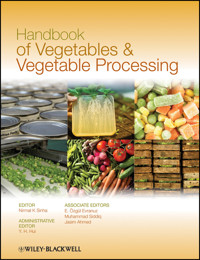
Vegetables are an important article of commerce both in developed and developing economies. Many studies point to importance of vegetables in our diet. Handbook of Vegetables and Vegetable Processing serves as a reference handbook on vegetables and vegetable processing containing the latest developments and advances in this fast growing field. The book can be considered as a companion to Y. H. Hui's popular Handbook of Fruits and Fruit Processing (2006). Handbook of Vegetables and Vegetable Processing is contemporary in scope, with in-depth coverage of new interdisciplinary developments and practices in the field of vegetables emphasizing processing, preservation, packaging, and nutrition and food safety. Coverage includes chapters on the biology, horticultural biochemistry, microbiology, nutrient and bioactive properties of vegetables and their significant commercialization by the food industry worldwide. Full chapters are devoted to major vegetables describing aspects ranging from chemistry to processing and preservation. World-renowned editors and authors have contributed to this essential handbook on vegetables and their production, technology, storage, processing, packaging, safety and commercial product development. Special Features: * Coverage includes biology and classification, physiology, biochemistry, flavor and sensory properties, microbial safety and HACCP principles, nutrient and bioactive properties * In-depth descriptions of key processes including, minimal processing, freezing, pasteurization and aseptic processing, fermentation, drying, packaging, and application of new technologies * Entire chapters devoted to important aspects of over 20 major commercial vegetables including avocado, table olives and textured vegetable proteins * Unparalleled expertise on important topics from more than 50 respected authors
Sie lesen das E-Book in den Legimi-Apps auf:
Seitenzahl: 1760
Veröffentlichungsjahr: 2010
Ähnliche


















Contents
Cover
Half Title Page
Title Page
Copyright
Preface
Contributors
Part I: Biology, Biochemistry, Nutrition, Microbiology, and Genetics
Chapter 1: Biology and Classification of Vegetables
Introduction
Biology and Classification of Vegetables
Vegetable Tissues and Organs
Ecological Adaptation of Vegetables
Taxonomy of Vegetables
Acknowledgements
Chapter 2: Biochemistry of Vegetables: Major Classes of Primary (Carbohydrates, Amino Acids, Fatty Acids, Vitamins, and Organic Acids) and Secondary Metabolites (Terpenoids, Phenolics, Alkaloids, and Sulfur-Containing Compounds) in Vegetables
Introduction
Primary Metabolites
Secondary Metabolites
Antioxidants
Conclusions
Chapter 3: Flavor and Sensory Characteristics of Vegetables
Introduction
Biogenesis of Flavors in Vegetables
Flavors and Sensory Characteristics of Vegetables
Chapter 4: Genetic Engineering of Vegetable Crops
Introduction
Genetic Engineering
Current Status of Transgenic Technologies
End-product Quality Improvement
Biofarming
Future Research Needs
Chapter 5: Nutritional Profile of Vegetables and Its Significance to Human Health
Introduction
General Composition
Health Benefits
Nutrient Losses during Food Processing
Organic versus Conventional Vegetables
Summary
Chapter 6: Bioactive Phytochemicals in Vegetables
Introduction
Bioactive Phytochemicals in Vegetables
Chapter 7: Microbiology of Fresh and Processed Vegetables
Introduction
Microflora of Fresh Produce
Foodborne Pathogens
Preharvest and Harvest
Processing and Preservation
Conclusion
Part II: Postharvest Technology and Storage Systems
Chapter 8: Postharvest Handling Systems and Storage of Vegetables
Introduction
Vegetable Production and Priorities for Pre- and Postharvest Handling
Postharvest Systems and Practices
Standards and Grades
Conclusion
Chapter 9: Postharvest Physiology of Vegetables
Introduction
Classification of Vegetables
Respiration and Storage Potentials
Respiratory Climacteric
Ethylene Production and Response Physiology
Role of Other Phytohormones in Vegetable Physiology
Effect of Controlled or Modified Atmospheres on Vegetable Physiology
Chilling Sensitivity and Membrane Integrity
Effect of Water Loss
Wounding Responses
Influence of Breeding and Genetics
Implications of Physiology on Postharvest Handling
Conclusions
Part III: Processing and Packaging of Vegetables
Chapter 10: Fresh-Cut Vegetables
Introduction
Consumption Trend
Processing of Fresh-Cut Vegetables
Quality of Fresh-Cut Vegetables
Physiological and Biochemical Changes in Fresh-Cut Vegetables
Microbiology and Safety of Fresh-cut Vegetables
Physical Preservation Techniques for Fresh-Cut Vegetables
Conclusion and Future Trend
Chapter 11: Principles of Vegetable Canning
Introduction
Consumption of Canned Vegetables
Vegetable Canning
Thermal Process Considerations
Canning Process
Quality of Canned Vegetables
Conclusion
Chapter 12: Refrigeration and Freezing Preservation of Vegetables
Introduction
Freezing of Vegetables
Freezing Equipment
Effect of Freezing on Quality
High Pressure-Assisted Freezing
Ultrasound-Assisted Freezing
Dehydrofreezing
Future Trends in Freezing of Vegetables
Acknowledgment
Chapter 13: Drying of Vegetables: Principles and Dryer Design
Introduction
State of Water in Vegetables
Moisture Representations
Equilibrium Moisture Content
Drying Principles
Heat and Mass Transfer during Drying
Drying Curves
Moisture Diffusivity in Vegetables
Prediction of Drying Time
Effect of Pretreatment on Drying
Shrinkage during Drying of Vegetables
Glass Transition and Drying of Vegetables
Dryer Design
Conclusion
Chapter 14: Drying Vegetables: New Technology, Equipment, and Examples
Introduction
Innovative Concepts of Drying
Process Modifications
Special Drying Techniques
Conclusions
Chapter 15: Minimal Processing and Novel Technologies Applied to Vegetables
Introduction
Production of MP Vegetable
Physiological Effects of Cutting Vegetable Tissue
Quality of Minimally Processed Vegetables
Novel Technologies in Minimal Processing of Vegetables
Conclusion
Chapter 16: Processing of Vegetable Juice and Blends
Introduction
Heat Processing and Quality
Health Functions of Vegetable Juice
Classification of Vegetable Juice and Blends
Tomato Juice
Tomato Juice Blends
Bioactivity of Tomato Lycopene
Carrot Juice
Sauerkraut Juice
Asparagus Juice
Nonconventional Processing Technologies
Conclusion
Chapter 17: Vegetable Fermentation and Pickling
Introduction
Principles of Pickling
Fermentation
Microorganisms Used in Fermented Foods
Examples of Fermented Vegetables
Acidified Vegetables
Conclusion
Chapter 18: Vegetable Parts, Herbs, and Essential Oils
Introduction
Composition of Herbs and Spices
Functional Properties of Herbs and Spices
Herbal Extract Processing
Microencapsulation of Herb Extractives
Microbial Control
Packaging and Storage
Conclusion
Chapter 19: Processing and Computer Technology
Introduction
Modeling of Processes
Thermal Processing
Drying
Computer Vision
Automatic Control
Conclusion
Chapter 20: Packaging for Fresh Vegetables and Vegetable Products
Introduction
Postharvest Bulk Packaging of Fresh Vegetables
Storage and Relevant Packaging Technologies
Packaging of Fresh Vegetables
Packaging of Processed Vegetable Products
Summary
Chapter 21: Waste Management and Utilization in Vegetable Processing
Introduction
Waste Generation
Waste Management and Treatment
Waste Utilization
Conclusions
Part IV: Product and Food Plant Safety and HACCP
Chapter 22: Controlling Food Safety Hazards in the Vegetable Industry—The HACCP Approach
Introduction
The HACCP Concept
Prerequisite Programs
Developing a HACCP Plan
Use of HACCP in the Vegetable Industry
Summary
Chapter 23: Good Agricultural Practices and Good Manufacturing Practices for Vegetable Production
Introduction
Clarifying the Language of Produce Safety
Record Keeping
Worker Health, Hygiene, and Training
Soil Amendments and Manure
Production Water
Wildlife
Postharvest Water
Cleaning and Sanitation
Pest Control in Packinghouses
Traceability and Recall
Crisis Management
Food Safety Everyday
Acknowledgments
Chapter 24: Microbial Safety of Fresh and Processed Vegetables
Introduction
Microbiology of Fresh Vegetables
Microbial Safety of Fresh and Processed Vegetables
Summary
Part V: Commodity Processing
Chapter 25: Asparagus, Broccoli, and Cauliflower: Production, Quality, and Processing
Introduction
Asparagus
Broccoli
Cauliflower
Conclusion
Acknowledgment
Chapter 26: Avocado: Production, Quality, and Major Processed Products
Introduction
Production and Consumption
Postharvest Physiology, Storage, and Shelf Life
Physicochemical and Nutritional Qualities
Major Products
Conclusions
Chapter 27: Dry Beans: Production, Processing, and Nutrition
Introduction
Breeding, Production, and Harvest
Dry Bean Classes
Production and Consumption
Nutritional Profile and Health Benefits
Dry Bean Processing
Summary
Chapter 28: Carrots
Introduction
Production
Postharvest Handling and Storage
Quality of Carrots
Carrot Processing
Conclusion
Chapter 29: Chili, Peppers, and Paprika
Introduction
History and Nomenclature
World Production and Consumption
Cultural Practices
Postharvest Practices and Storage
Physicochemical and Nutritional Qualities
Processing
Food Safety Challenges
Conclusion
Chapter 30: Peas, Sweet Corn, and Green Beans
Introduction
Consumption Trends
Production, Harvest, and Quality Grades
Postharvest Handling and Storage
Proximate and Nutritional Composition
Processing and Processed Products
Canning
Freezing
Other Processed Products
Effect of Processing on Nutrients
Summary
Chapter 31: Garlic and Onion: Production, Biochemistry, and Processing
Introduction
Production
Consumption
Nutrition and Bioactive Constituents
Biochemistry of Main Compounds
Processing and Major Processed Products
Conclusion
Chapter 32: Edible Mushrooms: Production, Processing, and Quality
Introduction
Mushroom Production and Consumption Trends
Postharvest Physiology and Storage
Proximate Composition and Nutritional Quality
Functional Properties of Mushrooms
Processed Products
Effect of Processing on Quality
Conclusion
Chapter 33: Table Olives and Olive Oil: Production, Processing, Composition, and Nutritional Qualities
Introduction
Background
Table Olives
Olive Oil
Quality and Nutritional Profile of Olive Oil
By-products of Oil Olives Processing
Summary
Chapter 34: Potatoes: Production, Quality, and Major Processed Products
Introduction
Production and Consumption
Physicochemical, Functional, Phytochemical, and Nutritional Qualities
Quality Issues
Manufacturing of Major Potato Products
Summary
Chapter 35: Green Leafy Vegetables: Spinach and Lettuce
Spinach
Lettuce
Chapter 36: Sweetpotatoes
Introduction
Production and Consumption
Classification and Origin
Postharvest Handling Practices
Nutritional Composition of Sweetpotatoes
Processing and Utilization
Chapter 37: Tomato Processing, Quality, and Nutrition
Introduction
Production
Harvest, Postharvest Handling, and Storage
Tomato Biochemistry and Nutrition
Preprocessing Unit Operations
Processed Tomato Products
Tomato and Tomato Products: Quality Aspects
Summary
Index
Handbook of VegetablesandVegetable Processing
Edition first published 2011 © 2011 Blackwell Publishing Ltd.
Blackwell Publishing was acquired by John Wiley & Sons in February 2007. Blackwell's publishing program has been merged with Wiley's global Scientific, Technical, and Medical business to form Wiley-Blackwell.
Editorial Office2121 State Avenue, Ames, Iowa 50014-8300, USA
For details of our global editorial offices, for customer services, and for information about how to apply for permission to reuse the copyright material in this book, please see our Website at www.wiley.com/wiley-blackwell.
Authorization to photocopy items for internal or personal use, or the internal or personal use of specific clients, is granted by Blackwell Publishing, provided that the base fee is paid directly to the Copyright Clearance Center, 222 Rosewood Drive, Danvers, MA 01923. For those organizations that have been granted a photocopy license by CCC, a separate system of payments has been arranged. The fee code for users of the Transactional Reporting Service is ISBN-13:978-0-8138-1541-1/2011.
Designations used by companies to distinguish their products are often claimed as trademarks. All brand names and product names used in this book are trade names, service marks, trademarks or registered trademarks of their respective owners. The publisher is not associated with any product or vendor mentioned in this book. This publication is designed to provide accurate and authoritative information in regard to the subject matter covered. It is sold on the understanding that the publisher is not engaged in rendering professional services. If professional advice or other expert assistance is required, the services of a competent professional should be sought.
Library of Congress Cataloging-in-Publication Data
Handbook of vegetables and vegetable processing/editor, Nirmal K. Sinha; administrative editor, Y.H. Hui; associate editors, E. ?zg?l Evranuz, Muhammad Siddiq, Jasim Ahmed. p. cm. Includes bibliographical references and index. ISBN 978-0-8138-1541-1 (hardback : alk. paper) 1. Vegetables–Processing–Handbooks, manuals, etc. 2. Vegetables–Composition–Handbooks, manuals, etc. 3. Botanical chemistry–Handbooks, manuals, etc. I. Sinha, Nirmal K. II. Hui, Y. H. (Yiu H.) TP443.H35 2011 664′.8–dc22
2010020449
A catalog record for this book is available from the U.S. Library of Congress.
DisclaimerThe publisher and the author make no representations or warranties with respect to the accuracy or completeness of the contents of this work and specifically disclaim all warranties, including without limitation warranties of fitness for a particular purpose. No warranty may be created or extended by sales or promotional materials. The advice and strategies contained herein may not be suitable for every situation. This work is sold with the understanding that the publisher is not engaged in rendering legal, accounting, or other professional services. If professional assistance is required, the services of a competent professional person should be sought. Neither the publisher nor the author shall be liable for damages arising herefrom. The fact that an organization or Website is referred to in this work as a citation and/or a potential source of further information does not mean that the author or the publisher endorses the information the organization or Website may provide or recommendations it may make. Further, readers should be aware that Internet Websites listed in this work may have changed or disappeared between when this work was written and when it is read.
Preface
Fresh and processed vegetables are a fast-growing segment of the food industry and occupy an important place in the global commerce and economy of many countries. Various studies have demonstrated the importance of vegetables to human health, contributing fiber, vitamins, minerals, bioactive phytochemicals, and other nutrients in our diet. Botanically and organoleptically diverse vegetables are primarily grown on regional and seasonal basis. Because of their highly perishable nature, search for efficient and better methods of preservation has been continuing along side the developments in production, postharvest handling, processing, and quality improvements. This handbook with 37 chapters contributed by more than 50 authors from North America, Europe, Australia, Asia, and Middle East is organized in five parts, which review and discuss important developments in vegetables and vegetable processing.
Part I of the handbook has 7 chapters on physiology, biochemistry, sensory and flavor properties, nutrition, phytochemical properties, genetic engineering, and microbiology.
Part II has 2 chapters on postharvest physiology and technology.
Part III has 12 chapters covering various aspects of vegetable processing including fresh-cut vegetables, vegetable parts, herbs and essential oils, vegetable juices, minimal processing and new technologies, refrigeration and freezing, drying, computer applications, packaging, and waste management.
Part IV includes 3 chapters on product and plant safety, including microbial safety, GAP and GMP, and HACCP.
Part V covers processing of important vegetables including green, leafy, tuber and root, and other vegetables. It also includes chapters on dry beans, olives, and avocadoes which are used as vegetables.
This handbook is intended as a contemporary source book on vegetable and vegetable processing for the industry, students, academia, libraries, research institutes, laboratories, and other interested professionals. To our knowledge, there are few books on vegetables and vegetable processing with associated coverage of scientific aspects and industrial practices. Although the readers are the final judge, we hope this handbook would meet the growing need for a quality book in this field. The editorial team acknowledges many individuals for their supports during the conception and development of this book. Our sincere thanks and gratitude to all authors for their contributions and for bearing with us during the review process. We would like to thank the publishing and copy editing departments, especially, Mark Barrett, Susan Engelken and Ronald D'souza for their supports to this project. We are grateful to the institutions we are associated with and to our families for their supports.
Nirmal K. Sinha Y.H. Hui E. Özgül Evranuz Muhammad Siddiq Jasim Ahmed
Contributors
Jasim AhmedPolymer Source Inc. Dorval, Montreal, Québec H9P 2X8, Canada
Tanweer AlamBanaras Hindu University Varanasi, Uttar Pradesh, India
R.Y. AvulaDepartment of Food Science and Technology University of Georgia Athens, GA 30602, USA
A.S. BawaDefence Food Research Laboratory Siddarthanagar, Mysore, India
Bhesh BhandariSchool of Land, Crop and Food Sciences The University of Queensland Brisbane QLD 4072, Australia
Paramita BhattacharjeeDepartment of Food Technology and Bio-chemical Engineering Jadavpur University Kolkata, West Bengal, India
Elizabeth A. BihnDepartment of Food Science Cornell University Ithaca, NY 14853, USA
Gokhan BingolUnited States Department of Agriculture, Agricultural Research Service Pacific Western Area, Western Regional Research Center, Processed Foods Research Albany, CA 94710, USA
Annemarie L. BuchholzDepartment of Food Science and Human Nutrition Michigan State University East Lansing, MI 48824, USA
Masood Sadiq ButtNational Institute of Food Science and Technology University of Agriculture Faisalabad, Pakistan
Anoma ChandrasekaraDepartment of Biochemistry Memorial University of Newfoundland St. John's, NL A1B 3X9, Canada
O.P. ChauhanDefence Food Research Laboratory Siddarthnagar, Mysore, India
Sudarshan ChellanBiotechnology Department Kuwait Institute for Scientific Research Safat, Kuwait
S-C ShenDepartment of Human Development and Family Studies National Taiwan Normal University Taipei, 10610, Taiwan
Gordon R. DavidsonDepartment of Food Science and Human Nutrition Michigan State University East Lansing, MI 48824, USA
Y. Onur DevresFood Engineering Department Istanbul Technical University 34469 Maslak, Istanbul, Turkey
Esra DoguFood Engineering Department Istanbul Technical University 34469 Maslak, Istanbul, Turkey
E. Özgül EvranuzFood Engineering Department Istanbul Technical University 34469 Maslak, Istanbul, Turkey
Fivos GenigeorgisSchool of Food Technology and Nutrition Alexander Technological Education Institute Sindos, Thessaloniki, Greece
Nejib GuizaniDepartment of Food Science and Nutrition, College of Agricultural and Marine Sciences Sultan Qaboos University Sultanate of Oman
Gurbuz GunesFood Engineering Department Istanbul Technical University 34469 Maslak, Istanbul, Turkey
B. HounsomeCollege of Health and Behavioural Sciences, Institute of Medical and Social Care Research Bangor University Bangor, LL57 1UT, Wales, UK
N. HounsomeCollege of Health and Behavioural Sciences, Institute of Medical and Social Care Research Bangor University Bangor, LL57 1UT, Wales, UK
Apostolos (Paul) KiritsakisSchool of Food Technology and Nutrition Alexander Technological Education Institute Sindos, Thessaloniki, Greece
Kostas KiritsakisSchool of Food Technology and Nutrition Alexander Technological Education Institute Sindos, Thessaloniki, Greece
Jaheon KooDepartment of Agriculture University of Arkansas at Pine Bluff Pine Bluff, AR 71601, USA
W. KrasaekooptDepartment of Food Technology Faculty of Biotechnology, Assumption University Huamark, Bankkok, Thailand
Luke F. LaBordeDepartment of Food Science Penn State University University Park, PA 16802, USA
Shao Quan LiuFood Science and Technology Program, Department of Chemistry National University of Singapore Singapore
Elena Manousaki-KaracostaSchool of Food Technology and Nutrition Alexander Technological Education Institute Sindos, Thessaloniki, Greece
Dharmendra K. MishraBiosystems and Agricultural Engineering Michigan State University E. Lansing, MI 48824, USA
Ali MotamedzadeganDepartment of Food Science, College of Agricultural Engineering Sari Agricultural Sciences and Natural Resources University Sari, Mazandaran, Iran
Kasiviswanathan MuthukumarappanDepartment of Agricultural and Biosystems Engineering South Dakota State University Brookings, SD 57007, USA
Peter K.C. OngFood Science and Technology Program, Department of Chemistry National University of Singapore Singapore
Melvin A. PascallDepartment of Food Science and Technology Ohio State University Columbus, OH 43210, USA
K. PecotaDepartment of Horticultural Science North Carolina State University Raleigh, NC 27695, USA
Edgar PoDepartment of Industrial and Manufacturing Systems Engineering University of Columbia Missouri, MO 65211, USA
Lillian G. PoDepartment of Food Science University of Missouri Columbia, MO 65211, USA
Theodore J.K. RadovichDepartment of Tropical Plant and Soil Sciences University of Hawai'i at Mānoa Honolulu, HI 96822, USA
P.S. RajuDefence Food Research Laboratory Siddarthnagar, Mysore, India
Ramasamy RaviDepartment of Sensory Science Central Food Technological Research Institute Mysore 570 020, India
Stephen ReinersDepartment of Horticultural Sciences New York State Agricultural Experiment Station Geneva, NY 14456, USA
Elliot T. RyserDepartment of Food Science and Human Nutrition Michigan State University East Lansing, MI 48824, USA
B.C. SarkarDepartment of Food Engineering and Technology Sant Longowal Institute of Engineering and Technology Longowal, Sangrur, India
Fereidoon ShahidiDepartment of Biochemistry Memorial University of Newfoundland St. John's, NL A1B 3X9, Canada
H.K. SharmaDepartment of Food Engineering and Technology Sant Longowal Institute of Engineering and Technology Longowal, Sangrur, India
Muhammad SiddiqDepartment of Food Science and Human Nutrition Michigan State University East Lansing, MI 48824, USA
Jiwan S. SidhuDepartment of Family Sciences College for Women, Kuwait University Safat, Kuwait
Rekha S. SinghalDepartment of Food Engineering and Technology Institute of Chemical Technology Mumbai, India
Nirmal K. SinhaGraceland Fruit Inc 1123 Main Street Frankfort, MI 49635, USA
Dalbir S. SogiDepartment of Food Science and Technology Guru Nanak Dev University Amritsar, India
Hoda Shahiri TabarestaniDepartment of Food Science Tajan High Education Institute Ghaemshahr, Mazandaran, Iran
Muhammad Tauseef SultanNational Institute of Food Science and Technology University of Agriculture Faisalabad, Pakistan
Brijesh TiwariDepartment of Food and Tourism Hollings Faculty, Manchester Metropolitan University Manchester, M14 6 HR, UK
Peter M.A. ToivonenPostharvest Physiology, Food Safety and Quality Program, Agriculture and Agri-Food Canada Pacific Agri-Food Research Centre Summerland, British Columbia V0H 1Z0, Canada
Van-Den TruongUSDA-ARS Food Science Research Unit, Department of Food, Bioprocessing and Nutrition Sciences North Carolina State University Raleigh, NC 27695, USA
Wieslaw WiczkowskiInstitute of Animal Reproduction and Food Research Polish Academy of Sciences in Olsztyn Olsztyn, Poland
James S.B. WuGraduate Institute of Food Science and Technology National Taiwan University Taipei, Taiwan
C.G. YenchoDepartment of Horticultural Science North Carolina State University Raleigh, NC 27695, USA
Sri YulianiIndonesian Center for Postharvest Research and Development Bogor, Indonesia
Tasleem ZafarDepartment of Family Sciences College of Women Kuwait University Safat 13060, Kuwait
Ying ZhongDepartment of Biochemistry Memorial University of Newfoundland St. John's, NL A1B 3X9, Canada
Part I
Biology, Biochemistry, Nutrition, Microbiology, and Genetics
Chapter 1
Biology and Classification of Vegetables
Theodore J. K. Radovich
Introduction
Vegetables enrich and diversify the human diet. They are the primary source of mineral nutrients, vitamins, secondary plant metabolites, and other compounds that support human health and nutrition. Vegetables, especially roots and tubers, can also possess significant caloric value, serving as staple crops in many parts of the world, particularly in the tropics. Although vegetables account for less than 1% of the world's plants, the genetic, anatomical, and morphological diversity of vegetables as a group is astounding (Graham et al. 2006; Maynard and Hochmuth 2007). Hundreds of vegetable taxa are grown for food in subsistence and commercial agricultural systems worldwide. This chapter reviews and explains the biology and classification of vegetables.
Biology and Classification of Vegetables
A primary reason for the diversity among vegetable crops is the broad definition of the word “vegetable” itself. Any plant part consumed for food that is not a mature fruit or seed is by definition a vegetable. These include petioles (e.g., celery, Apium graveolens Dulce group), entire leaves (e.g., lettuce, Lactuca sativa), immature fruits (e.g., cucumber, Cucumis sativus), roots (e.g., carrot, Dacus carota), and specialized structures such as bulbs (e.g., onion, Allium cepa Cepa group) and tubers (e.g., white potato, Solanum tuberosum).
Further expanding this already generous definition is the inclusion of mature fruits that are consumed as part of a main meal rather than dessert (e.g., tomato, Solanum lycopersicum). This culinary exception to the anatomical rule was given legal precedence in the US Supreme Court decision Nix v. Hedden (1893) that confirmed common usage of “vegetable” in reference to tomato. This has since been extended to beans and other fruits. Even dessert melons (e.g., cantaloupe, Cucumis melo Cantalupensis group), which are fruits by every botanical, legal, and culinary definition, are frequently “lumped” in with vegetables because of similarities in biology and culture that they share with their more vegetal cousins in the Cucurbitaceae (Iltis and Doebley 1980) (Table 1.1).
Table 1.1 Botanical names, common names, and edible parts of select vegetables by family. Families in the Monocotyledons are listed first (shaded) followed by families in Dicotyledons
Source: Abridged and modified from Maynard and Hochmuth (2007).
The biological diversity among vegetables necessitates a systematic method for grouping vegetables in order to efficiently access information and make management decisions. Understanding the biology of vegetable crops will aid decision making associated with production, postharvest handling, and marketing. Ultimately, vegetable classification is inextricably linked with crop biology. Three basic approaches toward classification of vegetables that are based on commonalities among groups are as follows:
Lesen Sie weiter in der vollständigen Ausgabe!
Lesen Sie weiter in der vollständigen Ausgabe!
Lesen Sie weiter in der vollständigen Ausgabe!
Lesen Sie weiter in der vollständigen Ausgabe!
Lesen Sie weiter in der vollständigen Ausgabe!
Lesen Sie weiter in der vollständigen Ausgabe!
Lesen Sie weiter in der vollständigen Ausgabe!
Lesen Sie weiter in der vollständigen Ausgabe!
Lesen Sie weiter in der vollständigen Ausgabe!
Lesen Sie weiter in der vollständigen Ausgabe!
Lesen Sie weiter in der vollständigen Ausgabe!
Lesen Sie weiter in der vollständigen Ausgabe!
Lesen Sie weiter in der vollständigen Ausgabe!
Lesen Sie weiter in der vollständigen Ausgabe!
Lesen Sie weiter in der vollständigen Ausgabe!
Lesen Sie weiter in der vollständigen Ausgabe!
Lesen Sie weiter in der vollständigen Ausgabe!
Lesen Sie weiter in der vollständigen Ausgabe!
Lesen Sie weiter in der vollständigen Ausgabe!
Lesen Sie weiter in der vollständigen Ausgabe!
Lesen Sie weiter in der vollständigen Ausgabe!
Lesen Sie weiter in der vollständigen Ausgabe!
Lesen Sie weiter in der vollständigen Ausgabe!
Lesen Sie weiter in der vollständigen Ausgabe!
Lesen Sie weiter in der vollständigen Ausgabe!
Lesen Sie weiter in der vollständigen Ausgabe!
Lesen Sie weiter in der vollständigen Ausgabe!
Lesen Sie weiter in der vollständigen Ausgabe!
Lesen Sie weiter in der vollständigen Ausgabe!
Lesen Sie weiter in der vollständigen Ausgabe!
Lesen Sie weiter in der vollständigen Ausgabe!
Lesen Sie weiter in der vollständigen Ausgabe!
Lesen Sie weiter in der vollständigen Ausgabe!
Lesen Sie weiter in der vollständigen Ausgabe!
Lesen Sie weiter in der vollständigen Ausgabe!
Lesen Sie weiter in der vollständigen Ausgabe!
Lesen Sie weiter in der vollständigen Ausgabe!
Lesen Sie weiter in der vollständigen Ausgabe!
Lesen Sie weiter in der vollständigen Ausgabe!
Lesen Sie weiter in der vollständigen Ausgabe!
Lesen Sie weiter in der vollständigen Ausgabe!




