


Erhalten Sie Zugang zu diesem und mehr als 300000 Büchern ab EUR 5,99 monatlich.
- Herausgeber: Crown House Publishing
- Kategorie: Ratgeber
- Sprache: Englisch
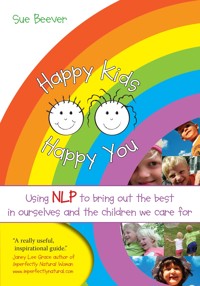
Every child, every family situation is different and parenting is a journey of constant change. There are no "right answers", only what works for you and your family. This book will give you a toolkit of practical NLP (Neuro Linguistic Programming) methods flexible enough to cover all situations. It focuses equally on the needs of you, the parent, as well as your child and will help you: get your family life running more smoothly; understand your children; support and encourage them and their development more effectively; recognise and meet your own needs so you can be more resourceful in family life; feel more confident and positive so you can have fun and enjoy being a parent more of the time! Rather than giving prescriptive advice, Happy Kids Happy You will enable you to develop your own solutions to situations. You will learn to speak and behave more positively with your children and experience outstanding results!
Sie lesen das E-Book in den Legimi-Apps auf:
Seitenzahl: 285
Veröffentlichungsjahr: 2009
Das E-Book (TTS) können Sie hören im Abo „Legimi Premium” in Legimi-Apps auf:
Ähnliche
















This book is dedicated to you.
May you find something of relevance and use in helping you to bring out the best in yourself and the children you care for.
CONTENTS
Titel Page
Dedication
Starting Out
Welcome to Happy Kids Happy You
Your children need you!
How to use this book
Share what works
From one parent to another…
SECTION 1: In the moment
Introduction
Turn Don’ts into Do’s
Turn Stop’s into Go’s
When you just know they’re going to say “No!”
Offer effective choices
Get a “Yes!”
Be impressed! Give praise the EASY way
Get down to their level
Move beside
Join them in their activity
Putting it all together
SECTION 2: More challenging situations
Introduction
What you focus on is what you get
Set and maintain reasonable boundaries
Give and take: the dance of responsibility
Find a useful meaning
Clean up your thinking
Find out what your body knows
Putting it all together
SECTION 3: Take care of YOU
Introduction
Pause for thought
Calm down
Concentrate on something mundane
Use peripheral vision
Be impressed … with you!
Give yourself praise the EASY way
Celebrate your successes daily
Give yourself a good talking to
Find your good mood
Balance your needs into the mix
Adjust your expectations
SECTION 4: Enjoy the journey
Introduction
Walk your talk
It’s cool to copy!
How was it for you?
Practice makes permanent
Moments of choice
The journey continues
From one parent to another
Share what works
The next stage
Appendix I – Quick reference guide
Appendix II – More about neuro-linguistic programming
Appendix III – References and further reading
Acknowledgements
Index
Praise
Notes
About the Author
Copyright
Starting Out
Welcome to
Having children is an opportunity for creating and enjoying greater happiness in the world. And yet, sometimes our children’s behaviour drives us to distraction! Why is it that the things we try to do for the best often backfire, giving us the opposite of what we wanted?
When it comes to parenting, whilst we may sometimes wish for a magic wand or at least a consistent formula for getting it right, there is no such thing. So this book is not about coming up with the right answers all the time and how to be a “perfect parent”. This book is about being the best real parent you can be, moment by moment, by choosing to use what works in good communication. Adopting effective ways to relate to your children can enhance your children’s lives and your own, resulting in more happiness all round. This book shows you how to do this.
Many of us come to parenting with high expectations of what life should be like. The reality can be very different: our lives are increasingly busy as we try to meet not only our own needs but those of our children and families, as well as all our other responsibilities. Little wonder it’s so easy to notice when our expectations are not being met. We notice more and more of the behaviour we don’t want from our children.
With the best of intentions, what we then say or do can often make things worse. We get even more of what we don’t want!
The truth is, you’re doing the best you can in any given situation, with the choices you have available to you at that moment:
SITUATION + YOU + Your CHOICES ⇒ RESULT i.e.
What happens next
The methods in this book are all about giving yourself more choices, more options – more ways of thinking and doing something that works so that:
you get great results with your childrenyour life goes more smoothlyyou feel more confident and positiveyou have fun and enjoy being a parent more of the time!Your children need you!
When it comes to parenting, there are no right answers, no universal solutions, no absolute truths. There is only the here and now of what is going to work for you and your children, moment by moment, on your parenting journey. You are the expert on your family and your children. You are in the front line. No matter how well intentioned the advice of others, it’s you who must decide … and you who must live with the consequences.
So it makes sense to find out about what works in good communication. With methods that work and a little practice, you only need a moment, a pause for thought, to then choose to:
Say or do something usefulEncourage behaviour that you do want: behaviour that is positive and useful for you and your children.You’re then creating the kind of relationships, family life and future that you do want for yourself, your children and your children’s children.
This book focuses on your needs – Happy You – as well as the needs of your children – Happy Kids. You are a significant part of the equation and have a major effect on the results you get. So family life has to work for you as well as the children you care for. And to help and encourage you along the way, you’ll find many examples of how people just like you have used these methods to find solutions that worked for them.
How to use this book
The methods are presented in a consistent and easy-to-read format. Each method starts with an introduction which is followed by details of the method. Then there are one or two examples, followed by tips for good results when using the method. Now you have a go gives you ways of practising the method andfinally … gives closing thoughts about the method. How this method worked for … gives examples of how others have used the method to good effect.
A clock symbol at the beginning of each method suggests how much time you need to get an idea of the method and to start using it. For example
A mirror symbol indicates that a level of reflection is required: some calm time out, to think about and get the hang of the method.
The methods are grouped into sections and ordered with the easiest first as each method builds on the previous methods through each section of the book.
Each method is self-contained so you can simply dip into whichever method appeals to you, depending on the current challenges you face and the time you have available. The Quick reference guide in Appendix I gives suggestions for where to start with some common types of challenge. References to specific behaviours can be found in the Index.
Alternatively, you can start at the beginning of the book and take more time to work your way through the sections and methods as they are presented. Reading this way gives you the experience of progressing through the methods, with earlier methods often adding to your use and understanding of later methods.
And of course, you can do both.
Dipping
Getting a “quick fix” while you’re in the thick of caring for your children can reassure you that you’re not alone or simply help you draw breath. Keep this book easily accessible so that you can dip into it whenever you need a moment of calm and you’ll be able to return to the fray with a smile on your face! The book can also give you a new idea or perspective on a tricky situation that has just happened or is about to happen. You can use the fact that you feel less than happy about it to motivate you to dip into a method and find new ways of dealing with it for next time … because, one way or another, there’s always a next time, isn’t there?!
Taking more time
Taking more thoughtful and calm “time out” to work through the methods and become really familiar with them will help you recognise and take opportunities to use them. It will also help you prepare how you will use a method for a particular recurring “hot spot” situation or behaviour.
Familiarity and practice also builds your flexibility in any situation, so that you can try out methods and go with what’s working. Remember, there is no right answer; it’s about finding what’s going to work to get the result you want for the situation you are in. The method that worked well last week may not work this week; situations change as your children grow, learn and adapt. With increasing choice and flexibility, if the first method you try doesn’t fit, you’ll simply move on to another.
The more methods you know, the more options you have.
Here’s an overview of the methods you’ll find in each section:
Section 1:In the moment – words and behaviour to keep things running smoothly Methods to help you do something different with your words and actions in the moment.
Section 2:More challenging situations – different thinking opens up new ways forward Methods that give you ways to think differently in more challenging situations.
Section 3: Take care ofYOU – being the best you can be for yourself and your childrenHow to be different, more resourceful and in a better mood more of the time, by taking care of YOU. When you’re in a better mood it’s much easier to think and behave more effectively. The methods are:
Section 4:Enjoy the journey – learning from and with your children These methods demonstrate the benefits of learning alongside your children on your parenting journey. They give you ways to learn with and from your children to enjoy the journey more.
Practice makes permanent
As you become familiar with these methods, the more you practise and try them out in different situations, the more they will become second nature to you. You’ll notice that not only is your attitude to being a parent changing but also that the atmosphere in your home is so much better!
Share what works
You’ll know from observing your children that sharing experiences is an exciting part of learning. As you make changes using the methods in this book, you may want to share your experiences with others and find out how they approach situations. The more people you share with, the more ideas you’ll get! Happy Kids Happy You practice groups and workshops provide a safe and supportive environment for practising methods and sharing what works with others. There’s more about sharing what works later in the book (page 221) and you’ll find more information on workshops, practice groups, events and community on the website
www.happykids-happyyou.co.uk
This book will guide and support you in exploring more effective ways of relating to and communicating with your children towards more Happy Kids Happy You.
Enjoy the journey!
The examples in this book are intended to demonstrate how to apply the methods. They are not intended to be taken as giving specific advice for particular situations, although this does not stop you from using them as you deem appropriate for you and your children. The ages of children in examples are not always specified: most are in the range 1–8 years. Please adapt these examples to situations and contexts that are meaningful to you and your children.
From one parent to another…
Picture this: It’s mealtime and my toddler is throwing food on the floor. “Don’t throw your food on the floor!” I say. He continues to throw food with even more enthusiasm!
And this: My toddler and I are mixing cake mix together. As she lifts the spatula to her lips, I say, “Don’t lick the spatula!” She shoves it in her mouth with a grin.
And this: I’m preparing breakfast and I want my children to come and sit up at the table. I say to them, “It’s time for breakfast. Come and sit up now please.” Their response: “No!” One even adds, “I don’t want any breakfast!” Before I know it, I have a fight on my hands.
And this: My toddler keeps trying to kick me as we’re doing a nappy change. This has been going on for a few days now and really annoys me. “Stop kicking me!” I say firmly, sternly even. To my increasing annoyance, I get kicked even more!
And this: I need to get my toddler and young baby washed and ready for bed. “Let’s go upstairs now,” I say to my toddler, as I move towards the stairs. She rushes ahead of me and then sits down on the stairs right in front of me. Here we go again! She keeps doing this to get my attention, even though it’s my anger and frustration, because I’m carrying the baby and can’t see what I’m treading on. “We don’t play on the stairs. Walk up the stairs properly!” I demand. She folds her arms, with a defiant “No!” This sets the tone for an unpleasant time ahead in the bathroom.
Do these sound familiar?
My life as a parent
Parenting was and continues to be the most challenging thing I’ve ever done! Before Happy Kids Happy You, when I regularly found myself in situations like these, I would get cross and frustrated with my children and ultimately with myself. I knew that what I was doing wasn’t working: it wasn’t getting the result I wanted and often seemed to make things worse. And I didn’t like myself for what I was saying and doing, day in day out … but I didn’t know what else to do. I seemed to be saying “No!” all the time, shouting and “losing it”, focusing on the negatives and feeling guilty.
I would get plenty of advice from books, friends and family about what to doregarding my child in particular situations – and much of it was contradictory! However, nothing was helping me to think more usefully for myself. I wanted to become more confident and competent as a parent, to feel more in control, at least of myself! I wanted something better, something more useful and sustainable for myself and my children.
So I set out to learn more about what works in personal effectiveness, communication and relationships. I obviously had an instinctive, unconscious understanding of this, as we all do, having made it this far in life. However, now I wanted to become more consciously aware of what worked so that I could use it in family life, for my own good and for the good of my family. I read yet more books and eventually trained in neuro-linguistic progamming (NLP) (see Appendix II) which focuses on getting the results you want, especially using language and behaviour to positively influence those around you. It had an immediate and major impact on my life for the better.
It continues to shape the way I go about things, particularly how I think about and communicate with my children. I now have more choices about how I respond to situations that challenge me. I can communicate more usefully and respectfully to get the results I want more of the time. I can enforce boundaries more respectfully and kindly. And my children and I now have more fun more of the time.
Because these methods have made such a difference for me, I have created Happy Kids Happy You, to share these methods for bringing out the best in ourselves and the children we care for. I coach and train others in Happy KidsHappy You methods through workshops, coaching, practice groups … and I’m delighted to be working with you now through this book. The methods in this book will help you to find solutions that work for you, right now.
So what’s different?
Little changes can make a big difference. Let’s go back to the previous situations and see how Happy Kids Happy You methods were used to keep the situation on an even keel and achieve a good result – when it could so easily have gone the other way. You’ll be able to spot the methods when you’ve read more of this book.
It’s mealtime and my toddler is throwing food on the floor. I ignore this and say “Mmmm. Yummy food! We eat food, like this …” as I put a piece in my mouth. “Put that piece in your mouth …” I say encouragingly as I point to some food. To my amazement, he does! He chews and grins. “Let’s eat some more food!” I say, as we start to enjoy eating our food together.Result!My toddler and I are mixing cake mix together. As she lifts the spatula to her lips, I say “Hey, keep mixing please!” She pauses, which gives me time to add, “You are mixing really, really well! Well done!” She smiles, puts the spatula back in the mix and gets mixing again.Result!I’m preparing breakfast and I want my children to come and sit up at the table. I say to them, “OK, would you like to choose where to sit today or are you just going to sit in your usual places?” As they both rush to the table, one says, “I want to sit next to you today!” to which the other says, “So do I!” “That’s great!” I say as I move their chairs to either side of me. They both sit up with enthusiasm.Result!My toddler keeps trying to kick me as we’re doing a nappy change. This has been going on for a few days now and really annoys me. This time, as I see a kick coming, I decide to treat it like a game and I snatch the leg in a playful way and say, “Atchacha!” This confuses my toddler and the next kick is much more tentative. I again snatch it saying “Atchacha!” and we giggle a bit together. It doesn’t happen again.Result!I need to get my toddler and young baby washed and ready for bed. “Let’s go upstairs now,” I say to my toddler, as I move towards the stairs. She rushes ahead of me and then sits down on the stairs right in front of me. I’m about to say the usual “We don’t play on the stairs …” when I realise this isn’t getting the result I want – a cooperative and happy time getting ready for bed. So I stop and sit down beside her on the stair. I don’t say anything and simply wait. After a few moments, she looks at me and smiles. I smile back … then she just gets up and walks up the stairs!Result!Parenting continues to be the most challenging thing I’ve ever done. I still occasionally lose it and mess up … but less often. The difference is that now I accept this is part of being human, living and growing with children.
Let’s begin this journey so that you can explore ways of bringing out the bestin yourself and the children you care for.
Section 1
In the moment
Words and behaviourto keep things running smoothly
Introduction
This section gives you methods for saying and doing useful things in the moment, to get and keep things running smoothly. These quick and easy techniques offer ways to stay on top of everyday niggles and irritations, so that you feel more in control, calmer, happier and more positive. And this, in turn, will give you more energy and head space to deal with the more challenging situations which are explored in Section 2.
These are quick methods: in less than 5 minutes, you will be able to turn a don’t into a do!… a stop into a go! They are easy to apply and immediately make a huge difference.
The first methods show you how to use words that work to say something useful.
The methods are:
Turn Don’ts into Do’sTurn Stop’s into Go’sOffer effective choicesGet a “Yes!”Be impressed! Give praise the EASY way.The methods that follow give you ways of doing something different, using your behaviour and body language to connect well with your child so that your message gets through.
The methods are:
Get down to their levelMove besideJoin them in their activity.Turn Don’ts into Do’s
Whatever you’re doing at the moment, don’t look behind you … don’t even think about what’s going on behind you. Hard isn’t it?! I bet, even if you didn’t actually turn to look behind you, you were tempted to do so, and that’s exactly what I asked you not to do! Now try this: don’t think of a big grey elephant, with its long trunk swinging.
The reason you find it hard not to do what I’ve asked you not to do is because of how your brain works out what words mean. To understand not doing something, it seems the brain first creates an impression of what it is we’re not meant to do. This impression can influence us to actually do it. Hypnotists use this language pattern, the “negative command”, to give hypnotic suggestions to their clients. We are adults who have plenty of experience of language and what words mean. Now think what it’s like for your child, who is just learning language and what words mean. Chances are you’ll get more of exactly what you didn’t want:
The method
Whenever you hear yourself thinking or saying, “Don’t …”, “Stop …”, “You can’t …”, or “You shouldn’t …”, ask yourself:
What can I usefully and safely encourage my child to do instead?
Then tell your child what you want them to do. Use clear and simple words to offer them this alternative. Make it sound vivid and appealing to grab their attention and interest. Remember, their brain will create an impression of your suggestion, based on how well you’ve described it to them.
Here are some examples:
Tips for good results
It’s OK to tell your child what you don’t want them to do as long as you follow this up straight away with what you do want them to do instead.
Whenever it’s appropriate, reinforce your words with a clear demonstration of the behaviour you want, e.g. “We eat yoghurt like this …” followed by a clear demonstration of you spooning your yoghurt into your mouth. With young children, you can help them to do what you are requesting, e.g. help them to spoon their yoghurt into their mouth.
Turning Don’ts into Do’s is a great way to teach your child relevant, useful behaviour, when and where it’s appropriate. If you’re struggling to come up with an appropriate Do, ask yourself:What doIdo in this situation? It may be useful to show and tell your child to do the same. Kate explains how this worked for her at the end of this section (page 31).
At certain times, children (and teenagers) respond really well to a proveme wrong challenge. To do this, start to explain what you want your child to do with a challenge, something like:
“I bet you can’t …”
or “I’m not sure you can …”
Your child then defiantly does what you want them to do to prove youwrong. You then need to be really impressed with what they’ve just done! For example:
“I bet you can’t put all those clothes on before I’ve cleaned my teeth.”
Followed by:
“Wow! You’re all dressed! You put all your clothes on by yourself! Well done!”
Use prove me wrong with care. You’ll get an immediate sense of whether you’re going to get a good response. If not, use another method.
Now you have a go
Cover up the Do’s with your hand or a piece of paper until you’ve thought of some Do’s of your own to counter each of the Don’ts. When you’re done, look at the suggestions for Do’s.
Remember, there are no right answers. There is only what could work to get a useful result for you and your children in your current situation.
And finally …
Yes, you are probably using this method already, though you may call it something like distraction! The difference is that now you can understand why and how it works. If you only tell your children what you don’t want them to do they’ll get confused and are likely to show their frustration. It is far better to offer them things they can do.
I used to think it was important for my children to know exactly what they shouldn’t do. I’m really glad I’ve moved on from that! In our society, we soon find out what we shouldn’t be doing (see the introduction to the Set and maintainreasonable boundaries method, page 89), despite the fact that it’s usually much more useful to know what we can do instead.
How this method worked for …
Hilary
In the supermarket, I used to say “don’t run off” to my little boy. I instantly got a much better behaviour when I told him to “stay close to the trolley”.Result!
Kate
My children were waving their knives and forks around at mealtimes. I told them to putthem down on their plates when they weren’t using them but this didn’t seem to help much.
When I asked myself “What do I do in this situation?” I realised I rarely put my cutlery down: I was busy loading my fork with my next mouthful. When I told my kids to do this too I got a better result – less waving of cutlery and they were more focused on eating.Result!
Lou
I really try to focus on the do’s and trying to think very quickly about rephrasing thingsmore positively to get the outcome I want rather than immediately saying don’t, which I was very guilty of doing.
My son really responds to me speaking more positively with him and I have noticed a different atmosphere in the home, much more positive and a lot calmer. Instead of yelling at him, “Don’t speak to me like that,” I now say, “Mummy will listen when youspeak nicely,” and it seems to win every time!Result!
Turn Stop’s into Go’s
I was shocked one day when my eldest showed me the teeth marks on her arm where her 15-month-old sister had just bitten her. I’d heard that other children had been known to bite but I had naively and rather smugly thought that no child of mine would do such a thing … until they did! I knew that drawing attention to this behaviour with, “Don’t bite! We don’t bite in this house!” would lead to more of the same unless I followed it up with a clear Do (see Turn Don’ts to Do’s method, page 27). But I was at a loss as to what Do would work in this situation!
When she sank her teeth into the back of my shoulder the following day as I was carrying her, I realised (through the exquisite pain!) that I needed to give her something else to bite!
The principle of turning a Stop into a Go is that no behaviour is of itself bad. What makes it unacceptable is the situation or timing of the behaviour, or the way it is being carried out.
Bizarre as it may sound, whenever my youngest then tried to bite me or anyone else, my response was, “Oh, you want to bite do you? Here, bite this…” and I would give her an apple or a carrot to bite on. I would encourage her to bite it and reinforce this behaviour with, “We bite food when we eat. Here is some food for you to eat.” Of course, she was rarely actually hungry and was surprised and distracted by the sudden appearance of food. It seemed to work though, as she quickly got bored with this and stopped biting people.
The method
When you want your child to Stop doing something, ask yourself:
When, where or how might it be acceptable for them to do this?
Then, tell your child
where they need to go to do itwhen they can do ithow they can do it.Here are some examples:
Tips for good results
When you turn Stop’s into Go’s, what often happens is that your child gets bored with the unacceptable behaviour and doesn’t bother doing it any more. This is because they’re not getting lots of negative attention for it!
When you first start turning Stop’s into Go’s, you may feel that you are offering your children some rather bizarre choices! It certainly took my child by surprise the first time I gave her an apple after she bit me. The key is to notice how effective your response is in getting the result you want: does it get you less of the unacceptable behaviour?
Draw attention to acceptable behaviour when it occurs under normal circumstances, such as taking bites of food at mealtimes or giving a ball a good kick at a playing field. This helps your child associate the behaviour with the context in which it is appropriate.
Now you have a go
In the following table, cover up the last two columns with your hand or a piece of paper. Think of where, when and how the behaviours in the left hand column would be (i) unacceptable and (ii) acceptable to you. When you’ve come up with your own ideas, check out the suggestions given.
And finally …
Telling children what they can’t do builds resistance and ultimately resentment. Telling children what they can do (including when, where and how they can do it as necessary) encourages and reinforces appropriate behaviour. It also nurtures a “can do” approach to life!
How this method worked for …
Tony
It was the end of a long day. I was talking to my 4-year-old daughter and she wasasking if we could go swimming now. It was late at night, I was tired, it was literally fiveminutes before her bedtime and I wanted to blurt out, “What! What do you mean youwant to go swimming now?!”
I had enough presence of mind (just) to pause and, when she spotted me hesitating, shesaid, “That’s all right Daddy, we can do it another day can’t we? We’ll see if we have timetomorrow.” I was amused and delighted to notice that she can turn Stop’s into Go’s too!Result!
Jenna
I love the way this method enables me to transform unacceptable behaviour andrequests from my children into a way forward that we can agree on. I feel much morereasonable and calm approaching situations in this way.
Practising turning Don’ts into Do’s and Stop’s into Go’s, I now find I often ask myself,“How can I say Yes to this?” whenever I am about to say “No”. This gives me theopportunity to come up with more useful ways forward than my straight “No” would havedone.Result!
When you just know they’re going to say “No!”
The list goes on … And don’t you find that the more you really want them to wash or dress, the more you urgently need them to put their shoes and coats on or get in the car then the more likely they are to dig their heels in, saying “No!” with passion and determination! It’s easy to feel that the battle lines are drawn and a confrontation or stand-off is inevitable.
It doesn’t have to be like this! Here are two quick and easy methods for getting through the routine stuff and everyday tasks as quickly and easily as possible.
Offer effective choicesGet a “Yes”.Offer effective choices
Babies are completely dependent on their carers to interpret and meet their needs. As they grow up and become better able to express themselves, saying “No!” is a simple and powerful way for children to make themselves known, to try to take some control over what’s happening to them and to express their preferences.
Being offered a choice, however small, gives a sense of involvement: that your wants and needs are being considered, respected and valued. It’s good for all of us! Children are no different but they don’t often get to choose much in the general scheme of things. Making a choice gives a child the opportunity to:
take some control over what’s happening to themrecognise and develop their independence, as they generally choose to do more for themselvesdevelop their sense of responsibility for themselves and their actions.




