


Erhalten Sie Zugang zu diesem und mehr als 300000 Büchern ab EUR 5,99 monatlich.
- Herausgeber: THP Ireland
- Kategorie: Ratgeber
- Sprache: Englisch
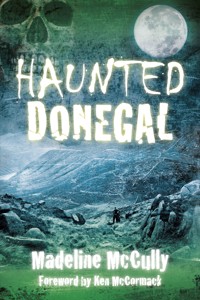
Donegal (or Dun an nGall in Irish, meaning 'the fort of the stranger') is the name given to the most northerly county in Ireland. Strange things have happened, and continue to happen, in this wild and beautiful place and ghost stories are part of the fabric of life here. This spooky selection features the goblin child of Castlereagh, the Blue Stacks Banshee, the ghostly swans of Burt Castle, the Wraiths and Dunlewy Bridge, the legend of Stumpy's Brae, the Bridgend Poltergeist and many more. Drawing on historical and contemporary sources and including many first-hand experiences and previously unpublished tales, Haunted Donegal will enthrall anyone interested in the unexplained.
Sie lesen das E-Book in den Legimi-Apps auf:
Seitenzahl: 199
Veröffentlichungsjahr: 2016
Das E-Book (TTS) können Sie hören im Abo „Legimi Premium” in Legimi-Apps auf:
Ähnliche













Dedicated to the memory of my parents, James and Kathleen Toland, who nurtured the love of storytelling in their children
First published in 2016
The History Press Ireland
50 City Quay
Dublin 2
Ireland
www.thehistorypress.ie
The History Press Ireland is a member of Publishing Ireland, the Irish book publishers’ association.
This ebook edition first published in 2016
All rights reserved
© Madeline McCully, 2016
The right of Madeline McCully, to be identified as the author of this work has been asserted in accordance with the Copyright, Designs and Patents Act 1988.
This ebook is copyright material and must not be copied, reproduced, transferred, distributed, leased, licensed or publicly performed or used in any way except as specifically permitted in writing by the publishers, as allowed under the terms and conditions under which it was purchased or as strictly permitted by applicable copyright law. Any unauthorised distribution or use of this text may be a direct infringement of the author’s and publisher’s rights, and those responsible may be liable in law accordingly.
EPUB ISBN 978 0 7509 6962 8
Original typesetting by The History Press
eBook converted by Geethik Technologies
CONTENTS
Foreword
Acknowledgements
Introduction
one
Castles and Manors
two
Ghostly Warnings
three
Haunted Places
four
Phantom Pipers’ Caves
five
Otherworld Hauntings
six
Restless Spirits
seven
Time-Warp Hauntings
eight
Humorous Tales
Bibliography
FOREWORD
GHOST stories! I always find it amazing that in this fast-moving world of ours they still have the power to thrill folk. So, having frequently covered haunted places in broadcasting and writing, I was delighted when Madeline asked me to introduce this follow-up to her book on Derry ghosts.
Madeline and I have exchanged many spooky stories over the years and we worked together for several seasons at the Derry Playhouse on the Winter Ghosts series. During that time, I discovered that Madeline has the true storyteller’s art – a wonderfully intimate way of weaving her tales. In this book, she draws us in with clever twists and turns and, to be honest, I sometimes found myself trying to read ahead, so interesting were the yarns.
Another exciting feature of Haunted Donegal is the settings. Madeline brings us to such eerie, creepy locations. I was reminded of that chilling movie Don’t Look Now. You feel you want to turn round and call, ‘Is anybody there?’ I also enjoyed the wealth of background detail, especially when it related to historical facts and local traditions. This helps to make her stories such a great read and of course the collection preserves our local folklore for generations to come.
Although I’ve been in many a haunted room, I’ve never actually seen a ghost. I did, however, hear something supernatural on a BBC broadcast once and so did those I was with. That’s why the crack of the whip in the tale of ‘Bess, the Ghost of Gillistown Farmhouse’ really made me think there could be something to this business after all.
One story I have personal knowledge of is ‘The Spirit of Sharon Rectory’. There is a lot of evidence of this ghost, dating back hundreds of years. I was fortunate enough to be able to visit Sharon and discover for myself how believable the stories about this particular ghost are. I have heard the story of Lord Castlereagh and the apparition of the young child before – it is a very sinister yarn indeed and it is hard to fathom what is at work in the tale. ‘Archie’s Craw’ is another story embedded in Irish tradition. I’m grateful that Madeline’s account has a slightly happier ending than some versions I’ve heard. Last but not least, I must mention ‘The Barnesmore Gap Mystery’. This odd story has a flavour of a more modern phenomenon usually known as the hitch-hiker ghost – you know when you’re driving along a road late at night and suddenly a stranger appears out of nowhere and flags you down – or, worse still, you suddenly find someone sitting in the back seat – how did they get there? There’s some kind of time warp of the kind you see in movies and the Glen Miller aspect of the story is really interesting.
But it is time you experienced these tales for yourself. My advice would be that you curl up on the sofa with Madeline’s beautifully crafted book – optional extras might include a roaring log fire and a glass of wine… Now, if you hear a knock or the crack of a whip while you are reading just take a deep breath – ghosts do not bite – or at least that’s what I was told. So, there’s no need to be afraid … Or is there?
Ken McCormack, September 2016
ACKNOWLEDGEMENTS
A book of ghost stories is not written in isolation, it only comes to fruition with the input from many people. I have been very fortunate over the years in the people I’ve met that have been willing to share their stories with me.
The first person to mention is Ken McCormack, a collector, broadcaster, writer and a great storyteller in his own right. I thank him for his total availability when I needed help or clarification. Nothing was too much trouble for him and I am extremely grateful. He was encouraging and supportive all the way.
I thank John McLaughlin of Carrow-mena for the storytelling evening I spent in his company and that of Andy and Ellen Reed who introduced me to him.
Seamus Gallagher, Manager of the Dunlewey Centre is a master storyteller in his own right and I hope I have done justice to his Dunlewey stories. I thank Sean Beattie and Belinda Mehaffey of Donegal Historical Society for their valuable input in The Witch of Loch an Dúin and Nion Ruadh. Joe and Francis Cullen of Rosguill were a delight to listen to when they spoke the Irish language, as was Caoimhin Mac Giolla Bhride who told me the story of Doe Castle.
Thanks to Noeleen Morrison for discovering the story of Gillistown Farmhouse and to Alistair McLaren who clarified the details of this ghost on his family’s farm. A very big thank-you to Lisa Tully of Sharon Rectory with whom I spent one of the most interesting afternoons during the writing of this book.
Two contributors who have sadly since died were Bertie Bryce and Michael McGuinness. Bertie was a dear friend and one of the greatest storytellers I have known. He made his stories live in his own inimitable style and I Included the Inch Banshee and the Bridgend Poltergeist as told. Many years ago Michael McGuinness told me the sad story of his grandfather’s death in Butte, Montana and the appearance of his wraith in Inishowen.
Ian Cullen of the Derry Journal wrote about Father Hegarty’s Rock some years ago and I have added some historical background.
I hope that I have done justice to the tales and to the people who told them to me.
A very big thank you to Jim McCallion who gave me much needed help in preparing the photographs for the book. It is difficult to access photographs of times gone by but he was patient and always helpful when I asked for help. To the Donegal Railway Association, Donegal County Council, Donegal Historical Society, Gerry Brady and Seamus Coyle, many thanks for the use of your photographs.
The entire library staff in the Central Library Derry, particularly Maura Craig and Linda Ming who were always on hand to help me in my research. Nothing was too much trouble for them.
Beth Amphlett, Senior Editor of The History Press merits a special mention for her editorial help, so gently given.
I must also thank the Arts Council of Northern Ireland for their awards and support over the years for my story gathering and research.
Lastly, I thank my husband Thomas for his unfailing support, interest and encouragement during the writing and for driving me here there and everywhere in Donegal in pursuit of stories.
INTRODUCTION
DONEGAL (or ‘Dún an nGall’ in Irish, meaning ‘the fort of the stranger’) is the name given to the most northerly county in Ireland. Strange things have happened, and continue to happen, in this wild and beautiful place and ghost stories are part of the fabric of life here. If stones could only speak, they would have strange and illuminating things to tell us. Perhaps they could tell us how Donegal got its name. Was it from the Vikings who invaded Ireland in the ninth century or the Red Branch Knights of Conor MacNessa who appear in ‘The Grianan of Aileach Warriors’ story? Or was it from Scottish mercenaries called Gallowglasses (‘foreign warriors’) who helped Ireland in their battles against the Anglo-Norman invasion in the twelfth century?
In this book, I have included tales of the strangers. The most famous of these were the MacSweeney and O’Donnell clans, which feature in ‘The Tragic Lovers of Doe Castle’ and ‘The Piper’s Cave at Fanad’. I hope you will find the stories as interesting to read as they were to research and write.
Storytelling was an essential part of my childhood. During Sunday afternoon walks, my father spun many a tale about the places that we passed, who had lived there, what had happened in that house or farm, what battles had been fought there and many other things. Whether they were true or not wasn’t important. His philosophy was ‘why let the truth stand in the way of a good story?’
My mother was born in Donegal and our family spent many holidays in my great-aunt’s house in Donegal when we were young. There was something eerily seductive about listening to ghost stories around a wide hearth with the glow from a turf fire and the light of a Tilley lamp and then tiptoeing off into the ‘lower room’ with a candle in a saucer. With the bedclothes pulled up to the chins, our eyes would roam fearfully around the room as we expected a ghost to appear from the gloomy recesses. When the candle finally flickered and died, we whispered our prayers and eventually fell into a dream world akin to the kind of thing you would expect to see in a blockbuster movie.
On other occasions, my mother took us up into the hills or to the nearby beach for a picnic and told us wild and wonderful stories of the ‘olden days’ in the countryside. Mamore Gap was a favourite walk and we made the journey up to the holy well there so often that I believe I know every stone along the way. It is for this reason that I included ‘The Mamore Gap’s Ghostly Travellers’.
I miss those days and I was often reminded of how special they were when I interviewed people about their experiences, particularly in the remoter areas of the county.
I am sad that the oral tradition of storytelling is gradually disappearing as technology allows for more and more electronic communication. This book is an attempt to preserve some of the stories told in and about Donegal. Many are documented already and it has been a joy to research them. Others come ‘straight from the mouth’.
I hope that you enjoy reading them as much as I have enjoyed gathering them.
1
CASTLES AND MANORS
Castlereagh and the Goblin Child
The following tale was recorded by Sir Walter Scott’s biographer, John Gibson Lockhart. Scott himself had heard the tale from Lord Castlereagh who had told the story at one of his wife’s dinner parties in Paris in 1815.
Lord Castlereagh.
In 1793, Robert Stewart, son of Lord Castlereagh, was a young captain and a member of the Dublin parliament, was posted to the old and somewhat dilapidated barracks in Ballyshannon, where he commanded a militia regiment.
He did not allow his military duties to interfere with his great love of hunting. On one occasion, during the gaming season in November, he pursued game much farther than he had intended and lost his way. When the weather took a turn for the worse he put the idea of shooting pheasants out of his mind and looked for a place to ride out the storm.
He presented himself at the door of a gentleman’s house, sent in his card and requested shelter for the night. The hospitality of the Irish country gentry is proverbial; the master of the house received him warmly, explained that he could not make him so comfortable as he could have wished because his house was full of visitors already. In addition to his visitors, some strangers, fleeing the inclemency of the night, had already come to the door, seeking shelter.
The master called the butler and bade him do the best he could under the circumstances to provide a room for the captain. The room to which he was shown was very large. It did not contain much furniture and seemed cold and draughty. Captain Stewart requested that a fire of wood and turf be lit in the gaping, old-fashioned hearth in a vain attempt to heat the room. What happened next was an experience that haunted Robert Stewart.
‘I woke up in the middle of the night for some unaccountable reason. The fire at the far end of the room was but a gentle glow and as I lay watching the dying embers it suddenly blazed up.’
The brightest light emanated from the chimney itself and startled Stewart, but what happened next startled him even more.
‘From the embers stepped the glowing, radiant naked figure of a small boy and he walked towards me. I could not believe my eyes and wondered if I was dreaming but I pinched myself and knew that I was not.’
Initially, the young captain was paralysed with fear, and as the figure walked slowly towards him, it grew in stature at every step until, in the words of Scott’s biographer John Gibson Lockhart, ‘on coming within two or three paces of his bed, it had assumed the appearance of a ghastly giant, pale as death, with a bleeding wound on the brow, and eyes glaring with rage and despair’.
Captain Stewart jumped out of bed and faced the figure in an attitude of defiance, at which point it drew back, diminishing in size until eventually the childlike form vanished back into the embers.
The following morning, Stewart voiced his anger at the breakfast table, believing that the master or his guests had played some sort of prank, but they all denied this accusation.
Suddenly a thought seemed to strike the master. He called his butler.
‘Hamilton’, he said, ‘where did Captain Stewart sleep last night?’
‘Well, sir, you know that every room was filled last night so I gave him the boy’s room. But I was sure that the fire would keep him from coming out.’
His host admonished the butler and took the captain aside to clarify what he had seen. He explained that there was a tradition in his family that ‘whomever the Radiant Boy appeared to would rise to the summit of power but when he reached that he would die a violent death’.
When his father died, Robert Stewart inherited the title of Lord Castlereagh and he later became a senior government minister. He helped to defeat Napoleon and was key in the Congress of Vienna that led to peace in Europe for decades. He was blamed, however, for the Peterloo Massacre, when cavalry with drawn sabres charged a crowd who were demonstrating in Manchester for universal suffrage.
It was because of this massacre that the poet Shelley wrote, in his poem ‘The Masque of Anarchy’, ‘I met Murder on the way. He had a face like Castlereagh.’
Perhaps it was this scandal that led him to take his own life, but many, including Scott, believed that ‘The Goblin Child’ continued to haunt him and drove him to take that final violent step, of taking his own life, as prophesied.
The story inspired William Allingham, a poet who was born in the town of Ballyshannon, to write a poem called the ‘Goblin Child of Ballyshannon’:
This happened when our island still
Had nests of goblins left to fill,
Each mouldy nook and corner close
Like soldiers in an ancient house.
And this one read within the face
Intruding on its dwelling place
Lines of woe, despair and blood.
By spirits only understood;
As mortals now can read the same
In the letters to his name.
Who in that haunted chamber lay,
When we call him Castlereagh.
Mongevlin Castle
The most famous haunting of Mongevlin Castle is that the Ingean Dubh spectre, a dark-haired faceless woman garbed in white who prowls the castle and its grounds. But she is not the only ghost who resides in that dreary place. The castle’s history might shed some light on the identities of these spectres.
‘Mongevlin Castle is situated about one mile from the village of St. Johnston and seven miles from Derry.’ So wrote Captain Pynnar in 1619 when he mentioned its location in his ‘Survey of the Escheated Counties of Ulster’. He also reported that ‘Sir John Stewart hath three thousand acres, called Cashell, Hetin and Littergull. Upon this proportion there is built at Magelvin a very strong Castle with a flanker at each corner.’
The walls of the courtyard and gateway, erected between the River Foyle and the castle, were standing until a few years ago, according to the Dublin Penny Journal, published in the 1830s. A small stone flag with the following inscription of John Stewart’s ownership was built into the arch:
J.S
E.S.T
1619
This stone was lost but another one remains which might give some clue about the ghosts that haunted the castle. The inscription bore the words, ‘The Hon. Elizabeth Hamilton, daughter of John, Lord Culpepper and widow of Colonel James Hamilton (who lost his life at sea in Spain in the service of King and Country) purchased this manor and annexed it to the opposite estate of the family.’ The inscription went on the say that Elizabeth was very generous to her numerous offspring, settling them with money and estates. Her eldest son James, Earl of Abercorn and Viscount Strabane ‘caused this inscription to be placed here for the information of her posterity. Anno 1704.’
James II stopped at the castle for a short time during the Siege of Derry and from there sent proposals of surrender to the garrison through his host, Archdeacon Hamilton.
There was a young servant lad who worked in the castle in the eighteenth century. One winter night he visited a neighbouring farmhouse and confessed to his friend that he was frightened. He told him that some nights he saw strange forms rushing to and fro, especially in the upper rooms. James, for that was the young boy’s name, stammered out stories of fearful yelling and screaming. He told of what he had heard in the kitchen from the other servants about the frightening goings-on when the hour of midnight approached. He received no comfort from his friend, who said that the castle was indeed haunted but reminded him that he was lucky to be able to work there to help his family.
The lad walked back to the castle alone. As he approached the grounds, he heard a clock in the church tower strike midnight. Immediately he was overcome with a weak and shivery feeling, as if some malevolent thing was watching him. He tried to run but the weakness made his legs buckle beneath him and as he fell to the ground he heard a fearful screech. He fainted and the terrifying noise was lost in a silent blackness.
When he came to, he rose unsteadily and, as soon as he was able to, he took to his heels and ran, but no matter how fast he moved he still heard the rustle of something or someone right behind him. When he reached the servants’ door it was locked and he was unable to open it. James shouted and banged on the heavy wood with his fists but no one came. He turned around, fearful of what he might see and there it was – a glowing, luminescent being dressed in a loose white cape with a hood. To his horror, he saw that it had no face. Was this the Ingean Dubh spectre? As it moved towards him, he cowered in the doorway. At that moment, the housekeeper opened the door and the young boy fell in.
‘What ails ye?’ she cried. ‘You are as white as a ghost.’
With that, she hauled him inside. He couldn’t speak and just pointed to the open door. The housekeeper looked out but the spectre had disappeared. She brought the lad into the kitchen and gave him a bowl of hot milk and sent him off to bed.
For the next two days all was quiet, but on the third night the boy went to bed but could not rest. In every moan that the wind made as it blew through the old and broken roof of the castle, he heard the wailings and screams of unearthly beings.
The following morning, he went home to his relations and told them that he could no longer stay in that place. They didn’t believe him and thought that he was making an excuse to leave his employment. They were in need of the money he earned, so they insisted that he return. He did so, but he continued to be tortured by the ghostly apparitions and noises that played havoc with his young mind. One morning, ‘he was found suspended by the neck, a stiffened corpse!’
It is said that his spirit joined the other spirits in their ghostly midnight vigil at Mongevlin Castle.
The Blue Lady of Ards
In the dark shadow of Muckish Mountain in County Donegal, there are many strange tales told of ghostly encounters with banshees, eerie figures, black cats and headless coachmen. There are also tales of manifestations of women, one of which is known as the Blue Lady of Ards.
The Wray family from Yorkshire built a magnificent house in Donegal in the year 1708. The house stood on a promontory jutting out into Sheephaven Bay. The family chose the location for the spectacular panorama it offered and the house was designed to take full advantage of the view. It was considered to be one of the most beautiful residences in the whole of the county of Donegal.
In 1780, the Wray family sold the house and lands to the Stewart family of Ards, County Down, although it is said that the Stewarts were then given all of the lands around Creeslough for services to the Crown of England. They named their estate Ards after their County Down roots on the Ards Peninsula. Such was the fame of their mansion that among the landlords and the social elite of Donegal, invitations to the Stewart home were much sought after.
Ards House.
The Stewarts, later known as the Stewart Bams, did not have any social interaction with the local people. One of the ladies of the manor apparently objected to seeing the estate workers toiling on the Sabbath so she persuaded her husband to have a 40-foot tunnel built from the estate to St John’s Church of Ireland church. In this way, she was able to attend church without having to look at the lowly workers.
However, like many of the owners of the big houses in Ireland the Stewarts could not afford its upkeep and it was sold to the Capuchin Order in 1930, when its name was changed to Ard Mhuire. In January 1931, it became the Novitiate and Theological Seminary of the Order.




