


21,99 €
Mehr erfahren.
- Herausgeber: Hogrefe Publishing
- Kategorie: Fachliteratur
- Serie: Advances in Psychotherapy - Evidence-Based Practice
- Sprache: Englisch
This book describes the conceptualization, assessment, and evidence-based behavioral treatment of migraine and tension-type headache – two of the world's most common medical conditions, and also frequent, highly disabling comorbidities among psychiatric patients. Headache disorders at their core are neurobiological phenomena, but numerous behavioral factors play an integral role in their onset and maintenance – and many providers are unfamiliar with how to work effectively with these patients to ensure optimal outcomes. This book, the first major work on behavioral treatment of headache in over 20 years, provides much-needed help: An overview of relevant psychological factors and the behavioral conceptualization of headache is followed by a step-by-step, manual-type guide to implementing behavioral interventions within clinical practice settings. Mental health practitioners and trainees and other healthcare professionals who want to improve their headache patients' outcomes by supplementing routine medical treatment with empirically supported behavioral strategies will find this book invaluable.
Das E-Book können Sie in Legimi-Apps oder einer beliebigen App lesen, die das folgende Format unterstützen:
Seitenzahl: 205
Veröffentlichungsjahr: 2015
Ähnliche


















Headache
About the Authors
Todd A. Smitherman, PhD, FAHS, is Associate Professor of Psychology and Director of the Center for Behavioral Medicine at the University of Mississippi. He has published over 50 peer-reviewed journal articles and numerous book chapters, most pertaining to psychiatric comorbidities and other behavioral issues in headache disorders. His research has been supported by the Migraine Research Foundation, the American Headache Society, the University of Mississippi, and Merck Pharmaceuticals. Dr. Smitherman serves as associate editor for Headache: The Journal of Head and Face Pain, is a fellow of the American Headache Society and chair of its Behavioral Issues Section, and has served as a consultant for the Common Data Elements Working Group for Headache Clinical Trials (National Institute of Neurological Disorders and Stroke).
Donald B. Penzien, PhD, FAHS, is widely recognized for his expertise and contributions in headache research methodologies and development of cost-efficient behavioral interventions for headache (i.e., limited-therapist-contact therapies). He presently serves as Professor of Anesthesiology at the Wake Forest School of Medicine. In 1986, he founded the Head Pain Center at University of Mississippi Medical Center, where he served as Director and Professor of Psychiatry until 2014. He is a fellow of the American Headache Society and the Society of Behavioral Medicine. He has published extensively in behavioral medicine, with over 150 research articles, book chapters, and monographs to his credit. His work has been supported by grants from the National Institutes of Health, Department of Defense, and other funding agencies. He is associate editor for Headache: The Journal of Head and Face Pain, has served on editorial boards of other scientific journals, and has actively served numerous professional organizations. Key appointments have included chair of the Nonpharmacologic Therapies Review Group for the Headache Treatment Guidelines Project (Agency for Healthcare Research and Quality), Board of Directors as well as chair of the Behavioral Clinical Trials Guidelines Workgroup (American Headache Society), member of the US Headache Treatment Guidelines Consortium (American Academy of Neurology), and member of the Common Data Elements Working Group for Headache Clinical Trials (National Institute of Neurological Disorders and Stroke).
Jeanetta C. Rains, PhD, FAHS, is Clinical Director of the Center for Sleep Evaluation at Elliot Hospital in Manchester, New Hampshire. She is a fellow of the American Board of Sleep Medicine, the American Academy of Sleep Medicine, and the American Headache Society. She is a leading authority in the field of headache and sleep medicine, having worked in this area since 1991. She has authored more than 90 scientific publications. She is associate editor for Headache: The Journal of Head and Face Pain and serves on the editorial board for the Journal of Applied Psychophysiology and Biofeedback. Her research has been supported by the American Headache Society and Merck Pharmaceuticals, and she has served as a consultant for research supported by the Migraine Research Foundation and American Headache Foundation.
Robert A. Nicholson, PhD, FAHS, is Director of Research for Mercy Health System and Director of Behavioral Medicine at Mercy Health Research and Mercy Clinic Headache Center. He earned his doctorate in clinical psychology (specializing in behavioral medicine) at Virginia Commonwealth University and completed a predoctoral internship and postdoctoral research fellowship at Brown University Medical School. His research and clinical focus is on the use of maximally effective patient communication strategies for prevention and management of migraine and integrating patient reports into optimal migraine treatment design. He has received grants from the National Institute of Neurological Disorders and Stroke, the National Cancer Institute, the National Headache Foundation, Saint Louis University, and the private sector to support his research. Dr. Nicholson has published extensively and made numerous presentations at scientific and professional conferences.
Timothy T. Houle, PhD, is Associate Professor of Anesthesiology at Wake Forest School of Medicine. He has published over 80 peer-reviewed journal articles and numerous book chapters principally addressing chronic pain and the triggers of headache, and much of his research has focused on the prediction of headache attacks in the individual. His work has been funded by the National Institute of Neurological Disorders and Stroke, Department of Defense, and numerous other agencies. He is statistical consultant for the journal Headache: The Journal of Head and Face Pain and statistical editor for the journal Anesthesiology. Key appointments have included serving as a member of the Behavioral Medicine: Interventions and Outcomes Study Section (National Institutes of Health), chair of the Methodology, Design, and Statistical Issues Section (American Headache Society), member of the Behavioral Clinical Trials Guidelines Workgroup (American Headache Society), and member of the Common Data Elements Working Group for Headache Clinical Trials (National Institute of Neurological Disorders and Stroke).
About the Cover Illustration
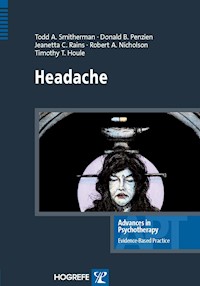
Title of Print: Going Against the Migraine by Enoch “Doyle” Jeter
The cover image is an etching done on a zinc plate, hand colored and printed by the artist. It was created as an original, limited edition print and commissioned as cover art for this volume.
Artist’s Comment:Although perhaps a bit over the top, I hope my depiction of what it feels like to suffer from a migraine captures those terrible moments so many of us sadly experience. Discussions with the authors (Don Penzien and others) were crucial in deciding on how to approach the image. My hat…and anvil…are off to them.
About the artist: Enoch “Doyle” Jeter
Born in Jena, Louisiana, USA
Bachelor of Arts, Northeast Louisiana University, Monroe, Louisiana
Master of Fine Arts, Highlands University, Las Vegas, New Mexico
Printmaking Instructor and Artist in Residence, University of Louisiana–Monroe
Public and private collections: USA, Ireland, Venezuela, Canada, Holland, Bali-Indonesia, Germany, Puerto Rico, etc.
Numerous exhibitions, 1971 to present
Artist’s web site: http://www.enochdoylejeterart.com/
To enquire about ordering signed prints of the cover illustration (Going Against the Migraine), please contact the author at [email protected]. All other enquiries are also welcome.
Advances in Psychotherapy – Evidence-Based Practice
Series Editor
Danny Wedding, PhD, MPH, School of Medicine, American University of Antigua, St. Georges, Antigua
Associate Editors
Larry Beutler, PhD, Professor, Palo Alto University / Pacific Graduate School of Psychology, Palo Alto, CA
Kenneth E. Freedland, PhD, Professor of Psychiatry and Psychology, Washington University School of Medicine, St. Louis, MO
Linda C. Sobell, PhD, ABPP, Professor, Center for Psychological Studies, Nova Southeastern University, Ft. Lauderdale, FL
David A. Wolfe, PhD, RBC Chair in Children’s Mental Health, Centre for Addiction and Mental Health, University of Toronto, ON
The basic objective of this series is to provide therapists with practical, evidence-based treatment guidance for the most common disorders seen in clinical practice – and to do so in a “reader-friendly” manner. Each book in the series is both a compact “how-to” reference on a particular disorder for use by professional clinicians in their daily work, as well as an ideal educational resource for students and for practice-oriented continuing education.
The most important feature of the books is that they are practical and easy to use: All are structured similarly and all provide a compact and easy-to-follow guide to all aspects that are relevant in real-life practice. Tables, boxed clinical “pearls,” marginal notes, and summary boxes assist orientation, while checklists provide tools for use in daily practice.
Headache
Todd A. Smitherman
Department of Psychology, University of Mississippi, Oxford, MS
Donald B. Penzien
Department of Anesthesiology, Wake Forest School of Medicine, Winston-Salem, NC
Jeanetta C. Rains
Center for Sleep Evaluation, Elliot Hospital, Manchester, NH
Robert A. Nicholson
Mercy Clinic Headache Center/Mercy Health Research, Mercy Health, St. Louis, MO
Timothy T. Houle
Department of Anesthesiology, Wake Forest School of Medicine, Winston-Salem, NC
Library of Congress Cataloging information for the print version of this book is available via the Library of Congress Marc Database
Library and Archives Canada Cataloguing in Publication
Smitherman, Todd A.,1977-, author
Headache / Todd A. Smitherman, Department of Psychology, University of Mississippi, Oxford, MS, Donald B. Penzien, Department of Anesthesiology, Wake Forest School of Medicine, Winston-Salem, NC, Jeanetta C. Rains, Center for Sleep Evaluation, Elliot Hospital, Manchester, NH, Robert A. Nicholson, Mercy Clinic Headache Center/Mercy Health Research, Mercy Health, St. Louis, MO, Timothy T. Houle, Department of Anesthesiology, Wake Forest School of Medicine, Winston-Salem, NC.
(Advances in psychotherapy--evidence based practice series; volume 30)
Includes bibliographical references.
Issued in print and electronic formats.
ISBN 978-0-88937-328-0 (pbk.).--ISBN 978-1-61676-328-2 (pdf).--ISBN 978-1-6134-328-9 (html)
1.Headache. 2. Headache--Treatment. I. Penzien, Donald B., 1957-, author II. Rains, Jeanetta C., 1963-, author III. Nicholson, Robert A., 1971-, author IV Houle, Timothy T., 1974-, author V Title. VI. Series: Advances in psychotherapy--evidence-based practice; v. 30
RC392.S65 2014
616.8’491
C2014-905388-6
C2014-905389-4
© 2015by Hogrefe Publishing
http://www.hogrefe.com
PUBLISHING OFFICES
USA:
Hogrefe Publishing Corporation, 38 Chauncy Street, Suite 1002, Boston, MA 02111
Phone (866) 823-4726, Fax (617) 354-6875; E-mail [email protected]
EUROPE:
Hogrefe Publishing GmbH, Merkelstr. 3, 37085 Göttingen, Germany
Phone +49 551 99950-0, Fax +49 551 99950-425; E-mail [email protected]
SALES & DISTRIBUTION
USA:
Hogrefe Publishing, Customer Service Department, 30 Amberwood Parkway, Ashland, OH 44805
Phone (800) 228-3749, Fax (419) 281-6883; E-mail [email protected]
UK:
Hogrefe Publishing c/o Marston Book Services Ltd, 160 Eastern Ave., Milton Park, Abingdon, OX14 4SB, UK
Phone +44 1235 465577, Fax +44 1235 465556; E-mail [email protected]
EUROPE:
Hogrefe Publishing, Merkelstr. 3, 37085 Göttingen, Germany
Phone +49 551 99950-0, Fax +49 551 99950-425; E-mail [email protected]
OTHER OFFICES
CANADA:
Hogrefe Publishing, 660 Eglinton Ave. East, Suite 119-514, Toronto, Ontario, M4G 2K2
SWITZERLAND:
Hogrefe Publishing, Länggass-Strasse 76, CH-3000 Bern 9
Copyright Information
The e-book, including all its individual chapters, is protected under international copyright law. The unauthorized use or distribution of copyrighted or proprietary content is illegal and could subject the purchaser to substantial damages. The user agrees to recognize and uphold the copyright.
License Agreement
The purchaser is granted a single, nontransferable license for the personal use of the e-book and all related files.
Making copies or printouts and storing a backup copy of the e-book on another device is permitted for private, personal use only.
Other thanas stated in this License Agreement, you may not copy, print, modify, remove, delete, augment, add to, publish, transmit, sell, resell, create derivative works from, or in any way exploit any of the e-book’s content, in whole or in part, and you may not aid or permit others to do so. You shall not: (1) rent, assign, timeshare, distribute, or transfer all or part of the e-book or any rights granted by this License Agreement to any other person; (2) duplicate the e-book, except for reasonable backup copies; (3) remove any proprietary or copyright notices, digital watermarks, labels, or other marks from the e-book or its contents; (4) transfer or sublicense title to the e-book to any other party.
These conditions are also applicable to any audio or other files belonging to the e-book. Should the print edition of this book include electronic supplementary material then all this material (e.g., audio, video, pdf files) is also available in the e-book-edition.
Format: EPUB
ISBN 978-0-88937-328-0 (print), ISBN 978-1-61676-328-2 (pdf), ISBN 978-1-61334-328-9 (epub)
http://doi.org/10.1027/00328-000
eBook-Herstellung und Auslieferung: Brockhaus Commission, Kornwestheimwww.brocom.de
Preface
This book describes the conceptualization, assessment, and empirically supported treatment of headache from a behavioral perspective. Though headache most certainly is at its core a neurobiological phenomenon, a large and ever-growing body of research indicates that behavioral factors (e.g., stress, psychiatric comorbidities, coping skills, cognitions) play an integral role in the onset and maintenance of headache disorders over time. Many mental health providers encounter headache as a common and disabling comorbidity among their psychiatric patients but lack the knowledge of how to effectively work with headache patients. Hundreds of studies over the past 4 decades have amply established the efficacy of behavioral therapies for headache disorders as well as the relevance of psychological/behavioral factors in headache. This book reviews the relevant psychological factors and describes how to implement efficacious behavioral interventions for headache within clinical practice settings. The intended audience is principally mental/behavioral health practitioners and trainees who want to know how to implement these interventions with their patients. This volume is also useful for other health care professionals wishing to supplement routine medical treatment of headache patients with empirically supported behavioral strategies. Basic familiarity with psychological principles of behavior change is assumed.
This book is divided into five chapters. Chapter 1 describes the most common primary headache disorders, differentiating migraine and tension-type headache from each other and from other headache disorders, reviewing common comorbid conditions, and outlining empirically supported assessment strategies. Chapter 2 gives an overview of the pathophysiology of migraine and the behavioral conceptualization of headache. Chapter 3 presents a framework for conducting a diagnostic assessment and identifying factors affecting a patient’s suitability for and response to treatment. Chapter 4 presents a step- by-step, manual-type guide to implementing the various interventions. This chapter includes a review of treatment efficacy and mechanisms of action, variations on the standard format of delivery, and strategies for addressing common problems in treatment. Chapter 5 provides a broad summary of the prior chapters. The Appendix provides a set of useful assessment and treatment forms and handouts.
Although tension-type headache is the most common of the primary headache disorders, migraine is the most common diagnosis among those who present for headache treatment within clinical settings. As such, the bulk of this volume focuses on migraine and migraine-specific comorbidities. However, the relevance and adaptation of assessment and treatment strategies for tension-type headache are integrated into various sections when appropriate and supported empirically. Although behavioral interventions are highly efficacious for children with headache, the primary focus herein is on adults with headache disorders; considerations for child and adolescent patients are incorporated when appropriate. This volume outlines multiple behavioral strategies and interventions but is not intended as a one-size-fits-all, cookbooktype manual. The clinician is instead encouraged to individualize and select interventions tailored to patient needs, resources, and other considerations. As such, this volume is intended to provide a structured approach that can be adapted across multiple clinical contexts and among a variety of headache patients.
Acknowledgments
We would like to acknowledge series editor Dr. Danny Wedding, associate editor Dr. Kenneth Freedland, and Mr. Robert Dimbleby of Hogrefe Publishing. Their guidance and wisdom throughout the process of assembling this volume, the first major book on this topic in over 20 years, was invaluable. We are grateful to our undergraduate and graduate academic mentors: Drs. Stephen Chew, Dudley McGlynn, and Donald Penzien (T.A.S.); Drs. James Motiff Kenneth Holroyd, and Thomas Creer (D.B.P.); Drs. James Snyder and Robert Zettle (J.C.R.); Drs. Sandra Gramling, Justin Nash, Kenneth Holroyd, and Frank Andrasik (R.A.N.); and Drs. Lori Rokicki and James Eisenach (T.T.H.). They taught us, challenged us, and instilled in us a commitment to scientifically informed practice and a love and respect for the field of behavioral medicine.
We wish to extend our utmost gratitude to coauthor Dr. Donald Penzien, who directly trained three of us (T.A.S., J.C.R., and T.T.H.), who mentored our early headache careers, and whose experimental and clinical contributions to behavioral medicine are unparalleled.
We are grateful also to our colleagues and students at the University of Mississippi, University of Mississippi Medical Center, Elliott Hospital, Mercy Clinic Headache Center/Mercy Health Research, and Wake Forest School of Medicine.
The concepts and strategies included herein reflect our combined experience of nearly 100 years in seeing headache patients and conducting headache research. We are grateful to every patient and research participant who has entrusted us with your pain, suffering, and experiences – for in your strength and sharing these pages were born. You inspired us to attend to aspects of your pain beyond the symptoms alone. This book is dedicated to you.
To our families – your love and support made our careers, and ultimately this volume, possible.
Dedications
To my parents, Johnny and Kathy, for an unwavering foundation of support and love. (T.A.S.)
To my daughter, Caitlin Penzien – the joy of my life. And to the many trainees and colleagues who have served as treasured friends and collaborators over the years, including Dr. Jeanetta Rains, Dr. Tim Houle, Dr. Todd Smitherman, and Dr. Ken Holroyd, to name only just a few. (D.B.P.)
To my parents, Paul and Ellen Rains, for a lifetime of love and encouragement. (J.C.R.)
To my parents, Don and Judy. To my amazing daughters, Ashtyn and Ansley – you both bring a smile to my heart every day. To my wife, Hilari – your unconditional love, support, and friendship makes me fall more in love with you every day. (R.A.N.)
To my mother, Mary Lou. To my brothers, Jeff and Chris – I have written a book and you have not. To Dr. Todd Smitherman – Thank you for your herculean efforts in the writing of this book. (T.T.H.)
Table of Contents
Preface
Acknowledgments
Dedications
1
Lesen Sie weiter in der vollständigen Ausgabe!
Lesen Sie weiter in der vollständigen Ausgabe!
Lesen Sie weiter in der vollständigen Ausgabe!
Lesen Sie weiter in der vollständigen Ausgabe!
Lesen Sie weiter in der vollständigen Ausgabe!
Lesen Sie weiter in der vollständigen Ausgabe!
Lesen Sie weiter in der vollständigen Ausgabe!
Lesen Sie weiter in der vollständigen Ausgabe!




