


13,99 €
Mehr erfahren.
- Herausgeber: The Crowood Press
- Kategorie: Ratgeber
- Sprache: Englisch
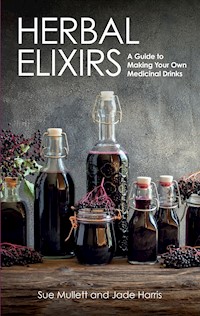
Did you know that gin was first created as an anti-malarial? Or that Buckfast Tonic Wine was created by Benedictine monks as a cure-all? Whilst alcohol is today best known for its intoxicating properties, in the past it was prized for its ability to extract and preserve the active elements from herbs. In fact, many of our favourite drinks were originally created for medicinal purposes. Herbal Elixirs is a detailed guide to the process of creating your own herb-based alcoholic drinks and an exploration of the rich history of similar drinks across Europe. Topics covered include: the history of herbal drinks in Europe; how to make your own tinctures, infusions and decoctions; the art of distillation: how to make alcohol and use a still; botanical information for identifying and using plants; recipes for restorative herbal drinks, and finally, a seasonal guide to foraging in the UK. Drawing on both natural and scientific research, this fascinating book will reacquaint you with this tradition, offering detailed explanations of the processes involved and sharing the skills to design and make your own herbal elixirs.
Das E-Book können Sie in Legimi-Apps oder einer beliebigen App lesen, die das folgende Format unterstützen:
Seitenzahl: 154
Veröffentlichungsjahr: 2021
Ähnliche



















HERBALELIXIRS
HERBALELIXIRS
A Guide to Making Your Own Medicinal Drinks
Sue Mullett and Jade Harris
First published in 2021 byThe Crowood Press LtdRamsbury, MarlboroughWiltshire SN8 2HR
www.crowood.com
This e-book first published in 2021
© Sue Mullet and Jade Harris 2021
All rights reserved. This e-book is copyright material and must not be copied, reproduced, transferred, distributed, leased, licensed or publicly performed or used in any way except as specifically permitted in writing by the publishers, as allowed under the terms and conditions under which it was purchased or as strictly permitted by applicable copyright law. Any unauthorised distribution or use of this text may be a direct infringement of the author’s and publisher’s rights, and those responsible may be liable in law accordingly.
British Library Cataloguing-in-Publication DataA catalogue record for this book is available from the British Library.
ISBN 978 1 78500 887 0
AcknowledgementsWe would like to express our heartfelt thanks to Rob Mullett for his help and advice.
The image on page 10 is from Cécily Lucas, Nicolas Barnich and Hang Thi Thu Nguyen - Microbiota, Inflammation and Colorectal Cancer, Int. J. Mol. Sci. 2017, 18(6), 1310; doi:10.3390/ijms18061310.
DisclaimerThe authors and the publisher do not accept any responsibility in any manner whatsoever for any error or omission, or any loss, damage, injury, adverse outcome, or liability of any kind incurred as a result of the use of any of the information contained in this book, or reliance upon it.
Cover design by Blue Sunflower Creative
Contents
Part 1 History
Introduction
1 The History of Herbal Drinks
2 Commercially Available Herbal Drinks
Part 2 Techniques
3 Picking and Storing Herbs
4 The Manufacture of Alcohol
Part 3 Recipes
5 Making Tinctures and Creating Syrups
6 Herbal Elixir Recipes
Part 4 Monographs
7 Herbal Monographs
Appendix I Further Reading
Appendix II List of Suppliers
Appendix III Regulations
Glossary
Index
Part 1
History
Introduction
The rapid modernization of the last century brought many undeniable benefits, but it was also accompanied by a growing dislocation from the natural environment and many traditional practices. This book explores the rich history of medicinal alcohol in Europe, which has largely been obscured by modern institutional medicine and a drinks industry that tends to promote hedonistic over-indulgence.
We will share our knowledge and skills to allow you to produce your own herbal drinks, tinctures, syrups, and alcohol. Drawing on our own experience of blending the skills of the herbalist and distiller in our small botanical gin distillery in the historic city of Bath, we will talk you through how to source and preserve your herbs, distil your base alcohol, prepare herbal tinctures, make syrups, and, finally, blend and store your creations. In the process, we hope to bring you more in tune with the amazing variety of medicinal plants that are to be found in our hedgerows and fields, and to inspire you to create your very own delicious blends.
What Are Herbal Elixirs?
The inspiration behind this book is the range of herbal elixirs that we produce in our small distillery in Bath. Herbal elixirs are alcoholic drinks with medicinal properties, made by blending different herbs and syrups together with alcohol. Ours are influenced by the use of herbal drinks throughout history, not only as recreational drinks but also as beverages that offer benefits to health. All too often, the modern conception of alcoholic drinks associates them only with pleasure and indulgence, yet this view overshadows a far more complex tradition. Alcohol has a unique set of properties that make it an ideal solvent to extract and preserve the active chemical constituents of herbs. These qualities have led to a long association between distillation and herbal medicine.
A range of herbal elixirs.
The idea of medicinal spirits drunk both for pleasure and for health might seem too good to be true to modern ears. However, this has arguably been their dominant form in Europe until relatively recently, from the digestive tonics made by the Ancient Romans infusing herbs into wine, to the classic European aperitifs and digestifs of the nineteenth century. There is a particularly long history of alcoholic drinks created to enjoy before and after meals, to stimulate the appetite, help with digestion, and maintain a healthy body – not to mention adding a flavour of their own! Many popular drinks that are enjoyed today, such as Aperol and Cinzano, still fulfil a similar role, although arguably their medicinal properties are not necessarily their main appeal.
Guided by this tradition, we have designed our herbal elixirs by combining herbal tinctures with our self-produced gin to create alcoholic drinks that can provide therapeutic benefits when consumed responsibly. We have also added various syrups and sweeter herbs in order to create a pleasing flavour profile. As many practising medical herbalists discover, blends of herbal tinctures, although extremely useful therapeutically, cannot often be said to be pleasant-tasting. Indeed, such concoctions can be counterproductive as herbal remedies. Unlike the quick fix of modern pharmaceuticals, they need to be taken regularly for a number of weeks for their benefits to start to be effective. If a mixture does not taste good, it is less likely that someone will persist in their treatment. It was with this in mind that we started to design drinks that are both therapeutic and drinkable. Currently, it is impossible to find blends of tinctures on the market that have been blended for their therapeutic benefit, but can also be enjoyed as a delicious drink. It is this that has prompted the writing of this book, as we are keen to promote the use and enjoyment of herbs.
As with any alcoholic product, we advise you to consume our products responsibly, although they have a relatively low alcohol content in comparison with spirits such as whisky or rum. Our elixirs have been designed to be taken in small amounts before or after a meal. Consuming more than a small glass per day will not increase any therapeutic benefits and may, in fact, compromise the body’s ability to absorb and process the herbal tinctures contained within.
The Authors
Sue Mullett is the founder of Bath Botanical Gin Distillery. She has a BSc in Western Medical Herbalism, and is a prolific raider of the hedgerows and fruit trees of the southwest of England.
Jade Harris developed an interest in ancient medicines whilst studying classics. She now works as an assistant in the distillery and in her spare time is a keen grower of unusual herbs.
The authors: Jade Harris and Sue Mullett.
Together, we produce a range of gins and bitters in our beautiful copper still, using locally foraged herbs and fruits. Alongside our more conventional offerings, we also produce a range of herbal elixirs that have been inspired by traditional drinks produced across Europe. These drinks combine blends of herbs that are designed both to be delicious and, if consumed responsibly, to have therapeutic properties.
Our Ethos
Our book can be seen as a small part of a much wider trend known as the ‘functional food movement’. This is based around a shift in the idea of food and drink as only providing ‘fuel’ for the body. Instead, food is seen as both fuel and medicine. The movement has grown out of attempts to understand the changes in the types of illness that are most common across the Western world.
The developments in modern medical care have been nothing short of miraculous. They have raised life expectancy and lowered the infant mortality rate significantly, through a mixture of radical breakthroughs in surgical techniques, effective use of vaccinations to control and even eradicate formerly dangerous diseases, the development of antibiotics to control infection, and drugs that help alleviate the symptoms of chronic diseases. However, although it has been possible to treat and control many of the diseases that were formerly prolific, there has been a rise in the incidence of a different set of diseases and chronic conditions, including obesity, diabetes and asthma. Despite its many successes, modern medicine seems to be fighting a losing battle against these health issues. This apparent failure has prompted a lot of soul-searching and research. As a result, a new picture of the human body has emerged, with a call for a more holistic approach to health care, and a focus on the types of food and drink that we consume.
Typically, the body of the individual has been envisaged as a closed unit, separate and genetically distinct from the world outside. Microorganisms such as bacteria and fungi have been seen as a threat to this unit, leading to a concerted effort to eliminate them, not only from the body but also from our homes, food and drink. Whilst it is true that microorganisms can and do cause serious illness, the effort to cleanse ourselves and our environment has brought negative health impacts of its own. This is due to the misconception of the body as a closed unit containing cells only with the individual’s unique genetic code. In fact, there is evidence to show that ‘only about half the cells in our bodies contain a “human genome”’ (Scott, 2017). The rest are made up of vast microbial networks, which, far from harming the body, actually play an essential role in its healthy function. Perhaps the most significant concentration of these essential microbial communities is in the gut, where they are collectively known as the microbiome, or the microbiota.
Bacteria in the human intestine (Lucas et al, 2017).
Although we might think of the gut and its health as being central only to the uptake of food, in truth its role is much more varied and complex. First, it forms an essential part of the immune system – indeed, it accounts for around two-thirds of it – making it key to a better understanding and treatment of autoimmune disorders that relate to inflammation in the body. It has also been linked to mental health, giving a new meaning to the phrase ‘thinking with your stomach’. As Scott Anderson writes in his fascinating exploration of the links between the brain and the gut, The Psychobiotic Revolution, ‘for good health, including good mental health, the food you eat needs to be good for you and your microbiota’.
The idea that, through the bacteria in our gut, food affects our health is the basis of the functional food movement. These concepts can be seen in the work of herbalists and nutritionists, who have begun to see the diet as a therapeutic tool. Dietary recommendations and nutritional supplements are now well understood and used widely throughout the Western world. Unfortunately, however, the benefits of alcoholic extractions of herbs are less well understood, and their use is less common. The main reason for this is a fear of the misuse of alcohol, which has led to the strict regulations that govern its manufacture and sale. For example, in the European Union, very complex regulations control the claims that can be made for various herbal products and nutritional supplements. In the United Kingdom, even products containing a little as 0.25% of alcohol have specific labelling requirements, including a ban on any claim of therapeutic uses or health benefits. This is why you will not see any herbal alcoholic drinks making such claims or even explaining the traditional use of herbs. In contrast, you will notice that teas using similar mixtures of herbs are allowed to list their therapeutic effects and the packaging will often feature information about the uses of the relevant herbs.
Herb garden with Californian poppies and purple cone flowers (Echinacea).
Our hope is that, as the functional food movement continues to take off, and as doctors begin to integrate herbs, nutrition and lifestyle changes into health practice, qualified individuals will be able to educate consumers about the vast historical benefits and uses of herbs that have helped humans survive long enough to be here today. It should then be possible to sell delicious herbal elixirs, with their potential health benefits clearly stated on the label.
1
The History of Herbal Drinks
Humanity’s relationship with alcohol and fermentation stretches back as far as written records go. Reconnecting with this past provides an interesting contrast with the current perception and uses of alcohol. In the past, the production of alcohol and the uses of fermentation were focused far more on the therapeutic and preservative than on the purely recreational. We hope that through engaging with the history of alcohol we will be able to shift attitudes and bring about a fundamental rethink that puts the medicinal possibilities of alcoholic drinks firmly back on the table.
Medical school in Salerno, Italy, in the Middle Ages – the most prestigious and innovative medical school of its time; where medicine first became a profession and alcohol was distilled for solely medicinal usage.
As this book deals primarily with Western medical traditions, our brief historical sketch will focus predominantly on Europe, the Middle East and northern Africa. It is worth noting, however, that these are far from the only places with a rich history relating to alcohol and distillation. There were large civilizations across the globe, from North and South America to Asia, that easily rivalled or surpassed those within and around Europe in terms of their own cultural practices regarding the use of alcohol.
Historic Timeline
Prehistory
Prehistory refers to the time before written records.
Fermentation is a process that is continually occurring in the natural world. As such, it is impossible to pinpoint the exact time when it began to be harnessed by humans. It is likely that it would first have been observed tens of thousands of years ago, in the natural fermentation of fallen fruit. Archaeological evidence of Stone Age beer jugs indicates that the use of fermentation to produce alcoholic drinks existed as early as Neolithic times, some ten thousand years ago. Unfortunately, it is not possible to determine from these remains the way in which alcoholic drinks were being used – did they play a role in drunken antics or were they part of a more complicated cultural practice?
Pouring out of beer. An Egyptian hieroglyph showing that fermentation was an important part of life as beer was commonly drunk.
It is only much later that a more detailed picture of the uses of alcohol emerges, through early written records from ancient societies. For example, Egyptian pictographs dating back to 4000 BC depict not only the preparation and consumption of wine but also show the different way in which the people enjoyed it. Studies show that the Ancient Egyptians indulged in the intoxicating effects of alcohol recreationally, not unlike today. However, this civilization also provides some of the earliest evidence of the combining of medicinal herbs and alcohol. The tomb of an early Egyptian pharaoh, Scorpian I, contained numerous jars that, when analysed, revealed a number of medicinal herbs mixed with wine.
The lack of written and archaeological evidence from this period means that it is difficult to make any assumptions about attitudes towards alcohol. However, given the variety of cultures and societies that would have existed, it is safe to assume that the beginnings of the human relationship with alcohol was not exclusively a dysfunctional one.
Ancient History
This covers the period between 3000 BC and 500 AD, from the beginnings of writing and recorded history until the fall of the Western Roman Empire.
The extensive literature of the Greek and Roman Empire indicates an increasingly complex relationship with alcohol and its therapeutic uses. Even the Gods themselves could not help but get involved and, through Dionysus and Bacchus, alcohol even had its own divine representation. At this point, despite the advances in science and technology, the art of distillation had yet to be perfected on a large scale and was not in common usage. As a result, alcohol was produced and consumed in the form of a variety of wines and beers. Like the Egyptians before them, the Romans used wine not only used for recreation but also frequently as a component of ancient medicine.
The beginnings of many modern disciplines can be traced back to the work of Ancient Greek philosophers. Maths and science began to take forms that are familiar today, through the work of thinkers such as Aristotle and Pythagoras. There were significant developments in medicine, too, and chief among the names that remain strongly connected to the Western medical tradition is Hippocrates. His ethical framework for the practice of medicine is still alive and well in the form of the Hippocratic Oath, which is taken by medical professionals across the globe. Within his therapeutic practices, it is clear that the negative views on the health impacts of alcohol had not yet taken hold. Indeed, he recommends the use of a variety of therapeutic herbs soaked in wines as remedies for a number of ailments. One example, as a relief from digestive troubles and specifically to treat intestinal parasites, is white wine infused with wormwood. It is interesting to note that the mixture of wine and wormwood continues today in vermouth, although it is accompanied by a number of other herbs and roots.
Greek physician Hippocrates (460–370 BC) was the founder a medical school on the island of Kos. He is often referred to as the ‘father of modern medicine’.
Dioscorides’ Materis Medica, a 1334 text in Arabic describing the medicinal features of cumin and dill.
Dioscorides, a physician in the Roman army, was another highly influential figure, although his work is considerably less well known than that of his predecessor. Dioscorides used his experience of travelling around Europe with the army to collect and record local uses of different herbs in remedies for a variety of conditions. He gathered together this knowledge into a vast five-volume medical textbook that was highly valued throughout Europe and the Middle East and was still in use centuries later. Like Hippocrates, he also suggested the use of wine both as a solvent and as a preservative for herbal remedies.
The Middle Ages
This is considered to be the period, dating from the fall of the Roman Empire until the fifteenth century.




