Table of Contents
Praise
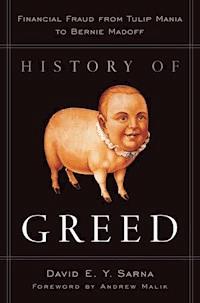
Title Page
Copyright Page
Dedication
Foreword
Acknowledgments
Introduction
Chapter 1 - Selling Air
My Grandma Rachel
Luftgescheften Then and Now
The Bezzle Is Shrinking
Chapter 2 - Crash Postmortem
Is It Something That Started in the 1980s?
Don’t Markets Always Fluctuate?
Was It the Junk Bonds or the Subprime Mortgages?
No—It’s All Fraud, Alchemy, and Greed
Chapter 3 - Why We Do It
Greed: Nature or Nurture?
Capitalism: You Can’t Live with It or without It
Them’s the Crooks, Not Me
Chapter 4 - Securities Fraud
Dutch East India Company
Isaac Le Maire
Tulip Bulb Scandal
Mississippi Company Scandal of France
South Sea Bubble of England
Rothschild and Insider Trading
John Sadleir
Charles Ponzi
William “520 Percent” Miller
Chapter 5 - The Perils of Greed
The Lure and the Risks
It’s Not Blackjack
Chapter 6 - The Elements of Financial Fraud
Poster Child of Financial Fraud
Crazy Eddie
How Did the Government Find Eddie Antar?
Chapter 7 - “Other People’s Money”
Leasco Prospers under IBM’s Pricing Umbrella
Steinberg Was Mordecai Weissman’s Idol in Starting O.P.M.
O.P.M. Bet Wrong on Resale Values and Became a Ponzi Scheme
Greed Is Rarely Undetected but Mostly Unspoken Of
Chapter 8 - Smaller-Company Fraud
“Tom Midas” Sought to Make Money
Acquiring the Note
Sell the Sizzle, Not the Steak
It Was a Fine Line
Chapter 9 - Selling Long and Short
Selling Long versus Selling Short
Penny Stocks Are Different
Uptick Rule for Short Selling
Chapter 10 - Market Manipulation
Perpetual Fails
Did the Big Guys Engage in Naked Shorting of Taser?
Bogus Shorts
Investors Charge That Goldman Engaged in Naked Shorting of Loans
Investigating the Bear Raid on Bear
Market Manipulation Affects Everyone
Chapter 11 - PIPEs
“Peter”
Raising Cash from Investors
IPO—RIP
Who Are These Other Funders?
Liquidity
PIPE Investors Are Not Saints
When the Share Price Is Not Firm
Hedging
Reverse Splits—Golden Preferred
Risks of Share Consolidation
What Happened to Poor Peter?
Bogus PIPE Ponzi Scheme
Too Good to Be True
Chapter 12 - Promotion Fraud
A Conversation
A Not-So-Creative Pump and Dump: Beverage Creations
Michael Paloma
Abraham Hochman
Penalties
Chapter 13 - Leaks, Front-Running, and Insider Trading
Three Problems
Don’t Leak News: Raj Rajaratnam and Danielle Chiesi
Mark Cuban Fought Back
Ads in Major Newspapers
What Happened Afterward?
ioStem Was Something Special
Be Smart
Chapter 14 - Fictitious Volume
A Story for Example
Similar Charges
Chapter 15 - Parachute into Prison
Disappearing Pilot Charged with Financial Scheme Fakes Own Death
Schrenker Is Not Alone
Chapter 16 - Affinity Group Fraud
David Schick—King of Otisville
Haitian-American Affinity Ponzi Scheme
Targeting the Deaf
Chapter 17 - Twentieth-Century Ponzi Schemes
Ponzi Schemes Cause Large Losses
$680 Million Fake Commodities Ponzi Scheme Targets 20 Banks Worldwide
Chapter 18 - Hit Charade
Music Manager
Boy Bands Mogul
Large and Long-Running Ponzi Scheme
Where Is the Money?
Chapter 19 - Hedge Fund Ponzi Fraud
Bayou Hedge Fund Group
Fraudulent from Inception
The Wextrust Ponzi Scheme
Chapter 20 - Madoff and the World’s Largest Ponzi Scheme
The World’s Largest Ponzi Scheme
Partial Settlement with SEC
Madoff Never Traded a Share
Who Was Fleeced?
Osama Bin Laden Lost $1 Billion
Many Other Losers
Apparent Suicides
Elie Wiesel Speaks Out
Chapter 21 - How Madoff Got Away with It
How Did Madoff Get Away with It for So Long?
Lax Oversight
The London Connection
Money Laundering
Did Madoff Act Alone?
Madoff’s Auditor Arrested and Charged by SEC
Who Else Can Be Made to Pay?
Trustee Sues Feeder Funds
Who Else Knew?
Most Assets Forfeited
The Sorkin Connection
Chapter 22 - Madoff Plea and Its Aftermath
No Plea Bargain
Why No Agreement to Cooperate
Did Madoff Buy Lax Oversight?
Is the Money Hidden or All Gone?
Funds Set Aside for Madoff Claims
Ezra Merkin—Victim or Colluder?
Trustee’s Suit
New York State Sues Merkin
Vultures Circle around Him
Merkin Warned about Madoff
Merkin Reportedly Brought in Fairfield Greenwich Advisors
Daphne Merkin Comes to Her Brother’s Defense
Sonja Kohn—Madoff Victim or Collaborator?
Chapter 23 - Mopping up after Madoff
Other Feeders
Santander Extends an Olive Branch—Did It Have a Choice?
Other Banks Compensating Victims
Was Banco Safra a Feeder, Too?
Lawyers’ Feast
Global Litigation
Auditors and Accountants Being Asked to Pay up, Too
Asking the Taxpayer for Help
Shutting the Barn Door
Many Questions Remain
Giving Madoff the Last Word
Chapter 24 - Other Recent Ponzi Schemes
Norman Hsu—The Other Ponzi Scheme
Everywhere a Ponzi Scheme
Chapter 25 - Stanford Group
Stanford
Other Governments Take Action
Lack of Coordination Hampers Investigation
Stanford Lived High on the Hog
Improbable and Unsubstantiated Returns Lure Investors
Lawyer Bails; Experts Say Lawyer Was Right
Special Review Committee
Missed Opportunities
Pleas and Trial
Chapter 26 - Ultimate Chutzpah
Arrested Twice
Chutzpah Par Excellence
Maximum Chutzpah
Who Was That Man?
Missing Funds
Chapter 27 - Detecting Fraudulent Financial Schemes
More Regulation Is Not the Answer
“Innocence Is Gone”
Whistle-Blower Tells All and Makes Suggestions
Using Social Networking and Technology Tools
Improved Transparency
Obama Proposes Sweeping Changes—And Then Backs Off a Bit
Chapter 28 - Fraudulent Offerings
Transnational Engaged
Chapter 29 - Auction-Rate Securities
What Are Auction-Rate Securities? What Is a Dutch Auction?
Why Were Auction-Rate Securities Invented?
Government-Prodded Settlements
$61 Billion Returned—Why So Little Attention to ARS?
An ARS Fraud That Wasn’t?
Chapter 30 - $132 Million Tax-Free Exchange Fraud
The Tax Code
Qualified Intermediary
Government Charges Ed Okun
Victims’ Stories
100-Year Sentence
Coleman, Others Plead Guilty
Chapter 31 - Not Smart
Six Arrested
Laying the Foundation
Going Public without an IPO
After the Fall
Lessons to Be Learned
Chapter 32 - Boiler Rooms
How a Boiler Room Works Today
Renaissance Financial Securities and Stanley Cohen
Marking the Close
Lying to the NASD
Chapter 33 - Accounting Frauds
Recording Phantom Sales and Earnings
WorldCom
AOL’s Round-Trip Accounting
Computer Associates
Chapter 34 - Stock Option Frauds
How Options Work
How Backdating Fraud Works
Comverse Is the Poster Child for Backdating
Not Just Comverse
Chapter 35 - Odd and Unusual Financial Frauds
$90 Million Tax Refund Fraud
Fake Billion-Dollar Client
Afterword
Notes
About the Author
Further Reading
Index
Praise forHistory of Greed
“David Sarna has written an important, readable, erudite, and compelling book that delves into all of the dark corners of th357e financial markets in a way that only one who is a knowledgeable intellectual like David and who has seen, as David has, the inner workings of the markets can do.”
—Andrew Malick Chairman, Needham & Co.
“David Sarna has provided a close-up, insider’s view of some of the shenanigans going on in and around the financial capitals of the world. It is very readable, entertaining, and almost funny until you realize all the lives that have been hurt by the combination of at best amoral and more correctly criminal acts aimed at investors of all stripes who foolishly expected and chased outsized returns. Sarna describes all this against a backdrop of regulatory complacency, along with overgenerous bonuses and salaries for the titans of finance and industry who added little if anything to the quality of life for those who did not ride the gravy train with them.”
—Jonathan Harris, CPA Retired Senior Partner, Big Four accounting firm
“David Sarna is a visionary technologist. He is also a sophisticated investor and financier. He has written a readable, comprehensive, fascinating, and well-researched book that explores troublesome aspects of the financial system in a way only an experienced insider could.”
—Jay N. Goldberg Senior Managing Director, Hudson Ventures
“A comprehensive review of what has happened to us in our financial markets over and over and over and over again. It’s an important history, written with wit and delivered with wisdom. Undoubtedly, History of Greed will become required reading by anyone serious about understanding the capital markets.”
—Frederick L. Gorsetman Founder and Managing Member, Oxbridge Financial Group LLC
“Fascinating! I did not think the trading of securities and reading about it could be that absorbing.”
—Carl Nisser Counsel, McGuire Woods Former Judge at Svea Court of Appeal, Stockholm
“History of Greed is right on the money and quite timely. I found a lot of information and much I did not know, and I have been around the industry for a while. It made me feel like a dunce once I saw how the manipulative trading on the over-the-counter (OTC) stock market really works.”
—Philip Fox Insurance Executive and Former Broker
Copyright © 2010 by David E. Y. Sarna. All rights reserved.
Published by John Wiley & Sons, Inc., Hoboken, New Jersey.
Published simultaneously in Canada.
No part of this publication may be reproduced, stored in a retrieval system, or transmitted in any form or by any means, electronic, mechanical, photocopying, recording, scanning, or otherwise, except as permitted under Section 107 or 108 of the 1976 United States Copyright Act, without either the prior written permission of the Publisher, or authorization through payment of the appropriate per-copy fee to the Copyright Clearance Center, Inc., 222 Rosewood Drive, Danvers, MA 01923, (978) 750-8400, fax (978) 646-8600, or on the web at www.copyright.com. Requests to the Publisher for permission should be addressed to the Permissions Department, John Wiley & Sons, Inc., 111 River Street, Hoboken, NJ 07030, (201) 748-6011, fax (201) 748-6008, or online at http://www.wiley.com/go/permissions.
Limit of Liability/Disclaimer of Warranty: While the publisher and author have used their best efforts in preparing this book, they make no representations or warranties with respect to the accuracy or completeness of the contents of this book and specifically disclaim any implied warranties of merchantability or fitness for a particular purpose. No warranty may be created or extended by sales representatives or written sales materials. The advice and strategies contained herein may not be suitable for your situation. You should consult with a professional where appropriate. Neither the publisher nor author shall be liable for any loss of profit or any other commercial damages, including but not limited to special, incidental, consequential, or other damages.
For general information on our other products and services or for technical support, please contact our Customer Care Department within the United States at (800) 762-2974, outside the United States at (317) 572-3993 or fax (317) 572-4002.
Wiley also publishes its books in a variety of electronic formats. Some content that appears in print may not be available in electronic books. For more information about Wiley products, visit our web site at www.wiley.com.
Library of Congress Cataloging-in-Publication Data:
Sarna, David E. Y.
History of greed : financial fraud from tulip mania to Bernie Madoff / David E. Y. Sarna ; [foreword by] Andrew Malik.
p. cm.
Includes bibliographical references and index.
ISBN 978-0-470-60180-8 (hardback); ISBN 978-0-470-87769-2 (ebk); ISBN 978-0-470-87742-5 (ebk); ISBN 978-0-470-87770-8 (ebk)
1. Fraud—Case studies. 2. Commercial crimes—Case studies. 3. Avarice—Case studies. I. Title.
HV6691.S27 2010
364.16’3—dc22
2010010929
For my family, with all my love
Foreword
In my more than 40 years on Wall Street, I’ve had the opportunity to participate in more than 1,000 transactions, but I have written very few Forewords to books. However, when David asked me to write the Foreword to History of Greed, I couldn’t say no. David Sarna has written an important, readable, erudite, and compelling book that delves into all of the dark corners of the financial markets in a way that only one who is a knowledgeable intellectual like David, and who has seen, as David has, the inner workings of the markets, can do.
Ever since the Dutch invented shares and limited liability companies as we know them around the year 1602, capital markets have fueled the growth of countless companies, created millions and millions of jobs, and produced great wealth for nations, entrepreneurs, and investors.
I’ve had the good fortune to be associated with some of the most successful capital raises of all time, through initial public offerings of such technology companies as Intel, Cray Computing, Tandem, Lotus Development, and Qualcomm. I have also lost money on many start-ups that didn’t make it. That is okay. Win some, lose some. It’s the price we pay for free markets; and in the long run, the winners have more than made up for the losers.
Unfortunately, some are not content to merely compete in free markets; they seek to rig the game through fraud and deception, casting a pall on the entire financial industry. As early as 1609, the governors of the Dutch stock exchange imposed limits on unfettered naked shorting to keep the markets fair and open to all.
Training a spotlight on the market’s dark corners, illuminating wrongdoing for all to see, does a service to honest investors. As the late Sy Syms said since 1959 until his passing in 2009, “An educated consumer is our best customer.” By explaining what’s going on in clear language understandable to laypersons, but with detail sufficient to satisfy the consummate professional, David shows the various ways that crooked individuals have corruptly sought to gain an unfair advantage through deception or outright theft, serving as a warning that what looks too good to be true usually is.
In 1817, Chief Justice John Marshall of the Supreme Court, writing for the majority in Laidlaw v. Organ, made caveat emptor (let the buyer beware) the supreme law of the land in the United States. Caveat emptor is an implied warning to a buyer that the goods he or she is buying are “as is,” or subject to any defects. Some use the rule as justification to mislead or cheat. This is wrong. It is not a rule designed to shield sellers who engage in fraud or bad-faith dealing by making false or misleading representations about the quality or condition of a particular product or offering. It merely summarizes the concept that a purchaser must examine, judge, and test a product before buying it.
The excesses discussed in this book highlight the need for competent regulation to ensure that the principles of transparency, equitable handling, and adequacy of disclosure are observed, together with fair and even-handed enforcement to deter and punish wrongdoers. Only then can integrity be restored to the markets, to the benefit of all of us.
History of Greed serves as a warning of what can go wrong when these simple principles are forgotten. It is required reading for anyone trying to understand how financial markets really work.
ANDREW MALIK Chairman, Needham & Co.
Acknowledgments
I’d like to acknowledge with thanks the unwitting contributors to this book: all of the gullible and greedy retail investors; naive and/or larcenous entrepreneurs; avaricious PIPE writers; dishonest stockbrokers and placement agents; willfully blind lawyers, accountants, stockbrokers, and investment bankers; the army of jaded and crooked promoters; and all of the money-loving service providers who have, over the years, given this author an expensive education in all the ways in which they cheat, lie, and steal. They all know who they are, and they are consigned to anonymity as partial penance for their many misdeeds. Without them, there would be no securities fraud cases to write about.
Many people helped in the preparation of this book—too many to enumerate them all. Thanks are due to my editor, Debby Englander; to Kelly O’Connor, development editor; to my publisher, Joan L. O’Neil; to Adrianna Johnson; Tiffany Charbonier; Claire Wesley, Production Editor; and to all the other nice folks at John Wiley & Sons who strived behind the scenes to make this book the best possible; to Jen Westmoreland Bouchard, principal of Lucidité Writing, LLC (www.luciditewriting.com), who edited, prepared the bibliography, and kept it all in accordance with the Chicago Manual of Style; to my agent, Bill Gladstone of Waterside Literary Agency, who believed in me from the first e-mail; to Scott-Martin Kosofsky, who introduced me to Bill; to Cape Cod Compositors for the index; and Michael Freeland for the cover design.
Heartfelt gratitude to my rabbi and teacher of more than 50 years, Rabbi Dr. Haskel Lookstein for always being there for me and for my family. Heartfelt thanks also to my brother, Professor Jonathan D. Sarna, who read the manuscript more than once, made many very valuable suggestions and has been supportive in many ways. Many thanks to Jonathan Harris, CPA, and to Carl Nisser, Esq., who also read the entire manuscript and gave me much helpful feedback. My sincere thanks to my longtime counsel and friend Melvin Weinberg, Esq.; to Andrew Ceresney, Esq.; and Sean Hecker, Esq.; to David Jaroslawicz, Esq.; and Elizabeth Eilender, Esq.; to Jay N. Goldberg, and to Frederick L. Gorsetman. My gratitude to Hillel Weinberger, Nathan Low, and Marilyn Adler for their generosity. Thanks also to A. Charles Lubash and Philip Fox for their unrelenting support.
My deepest thanks go to my very devoted and loyal friends, too many to list, who supported me and helped me through some hard times and celebrated the good times with me and my family. Most of all, words are inadequate to express my thanks, gratitude, and love to my wife and children for their unconditional love, loyalty, and support through thick and thin, for putting up with all my meshigas for these many years, and who were extremely helpful to me in so many ways.
May the Almighty reward you all for your many good deeds.
Thanks to my parents, of blessed memory for bringing me up with love for the written word and whom I trust are smiling down on us from the Yeshiva on High.
Introduction
Alexander the Great, King of Macedonia, visited Jerusalem in the year 332 BCE, as recounted by Flavius Josephus in Antiquities of the Jews. The Talmud records that he asked for a souvenir of his visit. The rabbis presented him with an orb (an eyeball). Alexander weighed it against all his gold and silver, but the orb was not outweighed.2
“What is this?” Alexander asked.
They said, “It is the orb of an eye of a flesh and blood man, that is never satisfied with any riches.”
[Alexander] said to them, “What proof is there that this is so?”
“Take a little bit of dirt and cover [the eye], so it can no longer see,” they said. “It will be outweighed immediately.”
It was.1
Commenting on this story, Rabbi Judah Loew, known as the Maharal of Prague (1525 -1609), explains that an unceasingly hungry eye was the defining characteristic of Alexander. Even after he was an emperor of historic stature, even after he was “the Great,” he was not satisfied and sought to conquer new frontiers. Following his desire to reach the “ends of the world and the Great Outer Sea,” he invaded India, but was eventually forced to turn back by the near-mutiny of his troops, who had tired of war. Alexander died in Babylon in 323 BCE, before having the chance to realize a series of planned campaigns, beginning with an invasion of Arabia. In the years following Alexander’s death, his empire was torn apart in a series of civil wars, which resulted in the formation of a number of states ruled by Macedonian nobility.
As the rabbis warned, greed eventually did him in.
In contrast, on April 12, 1955, Dr. Jonas Salk made public the success of his vaccine against polio. The late Edward R. Murrow asked him, “Who owns the patent on this vaccine?”
Salk famously replied, “Well, the people, I would say. There is no patent. Could you patent the sun?”3
Obviously, that was selfless behavior.
So one must wonder: What is greed, and where does it come from if not all people are greedy?
Greed (also called avarice) is an excessive desire to acquire or possess more than what one needs or deserves, especially with respect to material wealth.4
That is what this book is about: greed, which leads to fraud and dishonesty.
In Christian theology, greed is one of the seven mortal sins, unpardonable sins entailing a total loss of grace. In the past few years, we’ve all been reading an awful lot about it, specifically the greedy financial crime that has become widely prevalent, and is commonly blamed for the financial crash of 2008, among other ills. One might also wonder why financial crime seems to be so much on the rise.
In my opinion, it’s because, as the saying goes, a rising tide lifts all boats, an aphorism said to have been coined by Seán Lemass, the Irish Taoiseach (prime minister) from 1959 to 1966. Many frauds have come to light only recently, even though, as we shall see, securities fraud, dishonesty, and greed have a long and storied history. When times are good, less fraud comes to light, because even dubious schemes make money; and Ponzi schemes keep rolling on, with new investors ’ funds going to pay out redemptions, thus keeping the fraud going. With no public outcry, oversight tends to become lax.
“People aren’t bothered when boom times are rolling, but when they need their money again, that’s what catches out the crooks,” Terence Gourvish, director of the London School of Economics business history group, told Tom Cahill of Bloomberg.com.5 “They get away with it for quite a long time if there’s a boom because no one needs the money. They just leave it there.”
When times turn bad, that’s when the cockroaches start crawling out of the woodwork. Times have become very bad, indeed, as unemployment has exceeded 10 percent, and the amount of fraud coming to light has reached epic proportions.
The meltdown of 2008 has affected us all, and we are justifiably angry. But was the worst economic crisis in decades caused by blatant illegal acts or by some terrible, but noncriminal, combination of greed, naïveté, blunders, and just plain stupidity? After all, neither stupidity nor naïveté is a crime, and, in and of itself, neither is greed. As we will see, however, the problems go well beyond simple greed, for there is no shortage of manifest criminality, which is illegal, as opposed to simply immoral greed.
History of Greed does not purport to be an exhaustive catalog of financial misdeeds. Unfortunately, such a catalog would fill an encyclopedia of many, many volumes. Rather, I have selected cases that are illustrative and representative of various kinds of financial fraud, as well as some cases that are particularly noteworthy for their size, duration, mechanics, or notoriety. In my focus on recent events, I remain aware that financial fraud is by no means an invention of the twentieth century.
As Goldwin Smith, a nineteenth-century American historian, journalist, and lawyer, observed, “If anyone supposes that there was no commercial fraud in the Middle Ages, let him study the commercial legislation of England for that period, and his mind will be satisfied, if he has a mind to be satisfied and not only a fancy to run away with him.”6
Even Phaedrus, the Roman poet (15 BCE-50 CE), observed, “Whoever is detected in a shameful fraud is ever after not believed even if they speak the truth.”7 With over two thousand years of experience to learn from, modern financial fraudsters are more sophisticated and entrap more people for greater sums than ever before.
In this book, we take a close look at the different kinds of fraud, greed, and dishonesty that pervade the securities industry, in good times and in bad, and examine what can be done so we can protect ourselves as much as possible against the inevitable.
Chapter 1
Selling Air
WHY NOW?
Unless you have been living in a cave and have been completely cut off from outside society, you know that in the space of a few months, at least $11,000,000,000,000 ($11 trillion) was lost from the U.S. economy in 2008, and that the world was turned upside down and plunged into a deep recession, if not depression.1
What happened?
Fraud and greed had a lot to do with it.
In general, pundits, seeking simple answers, blamed it all on subprime mortgages, or on credit default swaps, or on auction-rate securities, or whatever, but these answers are unsatisfying. They are at once both too complex and far too simplistic. For the real explanation of what happened, however, we need to look to the experts, to history, to literature, and even to my Grandma Rachel.
My Grandma Rachel
Grandma Rachel Leah Horowitz, born on Christmas Day in 1893 at the end of the nineteenth century, was a very wise lady who lived to the age of 92. Her husband, Reb Alte Elisha Horowitz, a merchant who was also a noted Talmudic scholar, had died young of esophageal cancer in London, where they then lived, when she was only 39. He left her with nine children and a run-down liquor store in London’s East End. Overcoming many obstacles, she raised these nine children well, and built up the store into a very successful enterprise where she bought and sold wine, whiskey, liquors, and schnapps. She liked the business, she said, because the bottles were real. You could hold them, smell them, drink from them, and enjoy them.
There were other businesses in London that didn’t make anything or sell anything but just traded paper, which turned into more paper. “This is not a real business!” she used to say. “It is luftgescheft,” which in German and in Yiddish means “air business” or “ethereal business.” Someone who engaged in luftgescheften she called a luftmensch (an air person or schemer), and she would have nothing to do with such luftmenschen. My beloved Grandma Rachel Leah lived through the Great Depression, and survived her home being bombed by the Nazis during the Blitz.
Little did she know back then how amazingly prophetic her words would prove to be for the twenty-first century. What happened in the United States of America was essentially the result of all the luftgescheften run by financial wizard luftmenschen who turned money into paper and then supposedly back into even more money, siphoning off outrageous profits in the process. When the music stopped, the entire house of cards suddenly collapsed, and all that was left, of course, was luft (air) and worthless paper.
Tevye the Dairyman
In her dislike of luftgescheften, my grandmother, who was steeped in Yiddish literature, was (at least subconsciously) influenced by the Yiddish literary giant Sholem Aleichem (the literary pen name of Sholem Rabinovitsh, 1859-1916). He, unforgettably, wrote about luftmenschen in his novel Tevye der Milkhiker (Tevye the Dairyman).2 First published in 1894, Tevye der Milkhiker is known throughout the world partly because of its adaptation into a play by Arnold Perl called Tevye and His Daughters, which became the famous Broadway musical and film Fiddler on the Roof.
Menachem-Mendl, a distant relative of Tevye, the (impoverished) dairyman, is a luftmensch sans pareil. He begins talking to Tevye, who made a little bit of money helping out a wealthy lady, about stocks and options in a way that Tevye, a simple man, can’t possibly understand. Then he gets to his point. Menachem-Mendl promises Tevye that he can turn 100 rubles into 1,000, and Tevye would be a fool to forfeit the opportunity. Tevye agrees to give Menachem-Mendl his last hundred rubles in order to enter into a shutfus, or partnership, with him—“I put in the money, and Menachem-Mendl put in the brains”—with the two of them splitting the profits (and thereby neatly sidestepping the age-old Jewish prohibition against lending with interest).
You know what happens. It was all lost. Sholem Aleichem also describes in detail Menachem-Mendl’s ultimate failure at various other ethereal (luft) moneymaking schemes—such as his attempt at selling “Londons,” an apparent reference to a currency speculation, which Menachem-Mendl describes to his wife as “a very refined substance” in that “you can’t see it” (classic luft).
So, as it says in Kohelet, “There is nothing new under the sun.” Luftmenschen have been around for ages, if not for millennia.3
LuftgescheftenThen and Now
One of the early documented examples of luftgescheften, which presages many other episodes, was recounted by Joseph de la Vega, a Portuguese-Jewish trader who emigrated to Amsterdam to avoid persecution from the Spanish Inquisition. He famously wrote in 1688: “This year too was a year of confusion for many unlucky speculators declared in one voice that the present crisis was a labyrinth of labyrinths, the terror of terrors, the confusion of confusions.”4 He could just as well have been speaking about the state of the national and global economy in 2008.
Trillions of value were erased from the nation’s housing stock in 2008 as foreclosures flooded the market, an oversupply of homes built on speculation remained unsold, and real estate prices everywhere plummeted. Martin Feldstein, the noted economist, estimated that overall $11 trillion to $12 trillion of value disappeared.
The value of global financial assets, including stocks, bonds, and currencies, probably fell by more than $50 trillion in 2008, equivalent to a year of world gross domestic product (GDP), according to an Asian Development Bank (ADB) report written by Claudio Loser, a former International Monetary Fund (IMF) director.5 “This crisis is the first truly universal one in the history of humanity,” former IMF Managing Director Michel Camdessus said at an ADB forum in Manila.6 “No country escapes from it. It has not yet bottomed out.”
Stephen Schwarzman, CEO of the private equity company Blackstone Group, said to an audience at the Japan Society, “Between 40 and 45 percent of the world’s wealth has been destroyed in little less than a year and a half.” He added, “This is absolutely unprecedented in our lifetime.”
Savvy investor George Soros said in mid-February 2009 that the world financial system has effectively disintegrated, and that there is as yet no prospect of a near-term resolution to the crisis. Soros said the turbulence is actually more severe than during the Great Depression, comparing the current situation to the demise of the Soviet Union. He said the bankruptcy of Lehman Brothers in September marked a turning point in the functioning of the market system. 7
“We witnessed the collapse of the financial system,” Soros said at a Columbia University dinner.8 “It was placed on life support, and it’s still on life support. There’s no sign that we are anywhere near a bottom.”
Who knows what other unthinkable turbulence is yet to come?
As we can see, the economy collapsed from greed-driven luft in the form of frauds, derivatives, strips, collateral debt obligations, credit default swaps, auction-rate securities, and all manner of exotic financial instruments that dominated the financial markets beginning in the 1980s in a feeding frenzy that reached its apex during the two terms of the hands-off administration of George W. Bush, the 43rd president of the United States. What happened was yet another chapter in the sad but recurrent story of greed gone wild. Greedy financial promoters, investment bankers, and their cohorts and all-too-willing accomplices were all allowed to run unchecked by a complacent government.
In April 2010, the Securities and Exchange Commission (SEC) charged Goldman Sachs and one of its vice presidents for defrauding investors by misstating and omitting key facts about a financial product (ABACUS) tied to subprime mortgages. The SEC alleged that Goldman Sachs structured and marketed a synthetic collateralized debt obligation (CDO) that hinged on the performance of subprime residential mortgage-backed securities (RMBS). The SEC alleged that Goldman Sachs failed to disclose to investors vital information about the CDO, in particular the role that a major hedge fund played in the portfolio selection process and the fact the hedge fund had taken a short position against the CDO.
“Synthetic CDOs like ABACUS 2007-AC1 contributed to the recent financial crisis by magnifying losses associated with the downturn in the United States housing market,” the SEC said in its press release.9
“The product was new and complex but the deception and conflicts are old and simple,” said Robert Khuzami, Director of the Division of Enforcement. “Goldman wrongly permitted a client that was betting against the mortgage market to heavily influence which mortgage securities to include in an investment portfolio, while telling other investors that the securities were selected by an independent, objective third party.” The SEC alleged “that undisclosed in the marketing materials and unbeknownst to investors, the Paulson & Co. hedge fund, which was poised to benefit if the RMBS defaulted, played a significant role in selecting which RMBS should make up the portfolio. Investors in the liabilities of ABACUS are alleged to have lost more than $1 billion.”
Society apparently forgot the famous words of Hank Rearden, the hero in Atlas Shrugged, the great novel by Ayn Rand (1957), “I work for nothing but my own profit—which I make by selling a product they need to men who are willing and able to buy it.”10 Instead of making and selling products people need, we in the United States mostly imported other people’s products and we sold luft. Now, we all must pay the price.
Selling luft honestly is bad enough. Selling it dishonestly just makes things worse. As the anonymous blogger who calls himself 1boringoldman wrote, “Piracy made lots of money. Slave trading made plenty of money. The robber barons made money. The problem is that it’s somebody else’s money—taken, not made.”11
The Bezzle Is Shrinking
As the Financial Times remembered, the famous economist John Kenneth Galbraith once proposed a measure of the economic cycle called the “bezzle.” It is a measure of the inventory that has been purloined from investors.12 In fat years, the bezzle grows as auditors relax. In the lean years, it shrinks as investors become cautious. The allegations against Bernard Madoff, and now Sir Allen Stanford, suggest the bezzle is large—but shrinking.13
This is the story of how luft, wizardry, dishonesty, and fraud were used to take other people’s money, ignoring the lessons of history. My Grandma Rachel would have seen it all coming; may her soul rest in peace.
Chapter 2
Crash Postmortem
HOW GREED, HUBRIS, AND LACK OF SUPERVISION DID INVESTORS IN
In Chapter 1, I blamed greed, hubris, and lack of supervision for the crash of 2008. In this chapter, we’ll try to put the events in historical perspective.
The year 2008 is destined to go down in history as a disastrous year for the world’s economy, and a near miss for plunging the world into deep depression. It disrupted the lives of many millions of people, and caused enormous pain and suffering to many.
In this chapter, we look at the major factors that that gave rise to this sad state of affairs, and tackle the obvious questions: Why was the disaster not foreseen? Why was nothing done to prevent it?
Is It Something That Started in the 1980s?
The cataclysmic events of 2008, when markets seized up, the government stepped in with a bailout of $85 trillion and ended up owning huge chunks of the private sector, and the stock markets collapsed, did not come about overnight, even though their effects became apparent in just a short period of time. The excesses that became obvious to all by the end of 2008 had already begun in the 1980s.
In Liar’s Poker (W.W. Norton, 1989), Michael Lewis humorously chronicled the excesses and greed that he saw in his three years as a bond salesman at investment bank Salomon Brothers during its heyday in the late 1980s. (Salomon Brothers was, until recently, a part of Smith Barney, a division of Citigroup Global Capital Markets Inc.; it was unloaded to Occidental at roughly its net asset value, at the urging of the government, which now owns a huge stake in Citibank and calls many of the shots). In this book, Lewis provided a first-person account of how bond traders and salesmen truly work, their personalities, and their culture. He accurately captured a period in the history of Wall Street that, as we shall see, was eerily like what was to happen again, with even more intensity, two decades later.
Lesen Sie weiter in der vollständigen Ausgabe!
Lesen Sie weiter in der vollständigen Ausgabe!
Lesen Sie weiter in der vollständigen Ausgabe!
Lesen Sie weiter in der vollständigen Ausgabe!
Lesen Sie weiter in der vollständigen Ausgabe!
Lesen Sie weiter in der vollständigen Ausgabe!
Lesen Sie weiter in der vollständigen Ausgabe!
Lesen Sie weiter in der vollständigen Ausgabe!
Lesen Sie weiter in der vollständigen Ausgabe!
Lesen Sie weiter in der vollständigen Ausgabe!
Lesen Sie weiter in der vollständigen Ausgabe!
Lesen Sie weiter in der vollständigen Ausgabe!
Lesen Sie weiter in der vollständigen Ausgabe!
Lesen Sie weiter in der vollständigen Ausgabe!
Lesen Sie weiter in der vollständigen Ausgabe!
Lesen Sie weiter in der vollständigen Ausgabe!
Lesen Sie weiter in der vollständigen Ausgabe!
Lesen Sie weiter in der vollständigen Ausgabe!
Lesen Sie weiter in der vollständigen Ausgabe!
Lesen Sie weiter in der vollständigen Ausgabe!
Lesen Sie weiter in der vollständigen Ausgabe!
Lesen Sie weiter in der vollständigen Ausgabe!
Lesen Sie weiter in der vollständigen Ausgabe!
Lesen Sie weiter in der vollständigen Ausgabe!
Lesen Sie weiter in der vollständigen Ausgabe!
Lesen Sie weiter in der vollständigen Ausgabe!
Lesen Sie weiter in der vollständigen Ausgabe!
Lesen Sie weiter in der vollständigen Ausgabe!
Lesen Sie weiter in der vollständigen Ausgabe!
Lesen Sie weiter in der vollständigen Ausgabe!
Lesen Sie weiter in der vollständigen Ausgabe!
Lesen Sie weiter in der vollständigen Ausgabe!
Lesen Sie weiter in der vollständigen Ausgabe!
Lesen Sie weiter in der vollständigen Ausgabe!
Lesen Sie weiter in der vollständigen Ausgabe!
Lesen Sie weiter in der vollständigen Ausgabe!
Lesen Sie weiter in der vollständigen Ausgabe!
Lesen Sie weiter in der vollständigen Ausgabe!