


15,59 €
Mehr erfahren.
- Herausgeber: Plexus Publishing Ltd.
- Kategorie: Geisteswissenschaft
- Sprache: Englisch
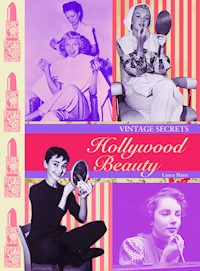
A stylish guide to beauty from the golden age of Hollywood glamour, Vintage Secrets: Hollywood Beauty teaches readers how to recreate a wide variety of iconic looks from the kohl-rimmed eyes made famous by silent-film starlet Clara Bow to Rita Hayworth's luxuriant locks and Marilyn Monroe's blonde all over glow. Inside, you'll find a wealth of tips and tricks used by icons of the silver screen and learn just how far some of them were prepared to go to obtain their famous looks. Packed with illustrations and classic photographs, as well as timeless advice from fashion figureheads such as legendary Vogue editor Diana Vreeland, Vintage Secrets: Hollywood Beauty is the go-to beauty guide for film fans and fashionistas alike.
Das E-Book können Sie in Legimi-Apps oder einer beliebigen App lesen, die das folgende Format unterstützen:
Veröffentlichungsjahr: 2020
Ähnliche




















Contents
INTRODUCTION
Beauty on Screen
MAKEUP
Preparing for Perfection
Making Faces
Lip Tips
The Eyes Have It
Winning Hands
Body Makeup
Get the Look
HAIR
Hair Care
Styling to Suit Your Shape
Vintage Styling: The Basics
Making Headlines: The Best Vintage Crops
CONCLUSION
Beauty and Individuality
Introduction
Beauty on Screen
‘The lipstick and mascara were like clothes, I saw that they improved my looks as much as if I had put on a real gown.’
– Marilyn Monroe
Marilyn Monroe.
For a long time prior to the 1920s, makeup was the preserve of a ‘certain sort’ of woman. Actresses and prostitutes were, at one time, virtually indistinguishable. Instead of turning to bottled beauty, nicely brought-up girls relied on biting their lips and pinching their cheeks to create natural colour. That all changed with the rise of Hollywood. As films – and their stars – became more popular, so did the makeup worn by these beauties of the screen.
Initially – back in the plastic decade that was the 1920s – movie stars were obliged to resort to heavy makeup to have their features show up on screen at all. Out in the world, fans copied their style anyway. As movie cameras and lighting improved, however, screen makeup became lighter and fashion, still following Hollywood, embraced the natural look too. When Hollywood turned to red-lipped pin-ups to boost wartime morale, the world was awash with weekend Rita Hayworths – all dressed practically for workday duties, of course, and ready to ‘do their bit’. The fifties saw a revival of the twenties artificial styles, perhaps in the elation of peace, while the sixties celebrated youth with pretty pastels and wide, baby-doll eyes.
According to Max Factor and his successor Max, Jr. (who both kept detailed diaries of changing trends), fashions in beauty change roughly every five years and, during Hollywood’s golden age, each new trend coincided with the rise of a new star. First there was lovely Mary Pickford, whose abundant golden curls made her America’s sweetheart; she was followed by exotic beauty Gloria Swanson, who wore her dark hair short and slick, and then Mae Murray, whose tiny, bee-stung lips made her the envy of women everywhere.
The Dutch bobs worn by Colleen Moore and Louise Brooks were all the rage until tempestuous redhead Clara Bow took centre-stage, casting all others into the shade. But even It girl Clara eventually gave way to the WooWoo girls – whose leader Joan Crawford was simply all eyes and lips. Right up until her untimely death in 1937, it seemed Jean Harlow would rule forever . . . who knew it would take one Marilyn Monroe to resurrect her blonde bombshell style decades later?
‘I know that one of the things I should thank Hollywood for most is teaching me how to put on the right kind of makeup. My hat is off to Wally Westmore forever.’
– Dorothy Lamour
It was only really in the 1960s that fashion began influencing Hollywood, rather than the other way around. In 1967’s Two for the Road, Audrey Hepburn is a walking advertisement for each of the decade’s most far-out trends, via a dizzying 150 costume changes.
Today, of course, ‘vintage’ has become the most wonderfully eclectic kind of umbrella term – to be embraced in whichever manner you choose. We can even mix styles and eras – why not? Vintage style is all about cherry-picking looks and techniques from the past and incorporating them into your own life. How you wear them is entirely up to you – it’s your style, after all.
So, whether you are a dedicated follower of forties fashion or prefer to flit from the twenties to the sixties on a daily basis, this book provides tips and tricks to guide you – direct from the most glamorous women of the silver screen and the pros who gave them a helping hand.
Preparing for Perfection
CHOOSING YOUR COLOUR SCHEME
‘Those who rush out and haphazardly buy boxes of this and bottles of that become – to borrow Perc Westmore’s word – makeup-a-holics.’
– Joan Crawford
Once upon a time, powder always meant white, with most girls striving for the ultra-pale look of the aristocracy. Then, in the twenties, a broader range of shades made it possible for women to match their makeup more closely to their own skin tone. In Hollywood, Max Factor brought in the concept of ‘colour harmony’. Using the screen beauties he worked with as living examples, Max encouraged women to play to their strengths.
Sass-talking siren Mae West was well aware of the pitfalls of fighting what nature gave you: if you’re naturally pale, dark makeup will only turn you orange; if you’re darker skinned, wearing light makeup won’t make you ‘fair as a day in May’. Instead, you’ll end up looking like ‘a Hallowe’en goblin’. While subtle adjustments can be flattering (who doesn’t suit the glow you get from tinted moisturiser in summer?), more drastic changes should be avoided at all costs.
‘Makeup ought to look as if it were nature’s own bloom upon you.’
– Mae West
Regardless of what’s on trend, it’s important to stick with shades and products that suit you. You might adore the strong red lips of the 1940s, but if they make you look pale and drawn, they’re honestly best avoided. So, how to work out what’s right for you? If you’re going for the look of a particular era, the charts in this book will show you which colours were in vogue, which go together and which are recommended for your colouring. Most commercial makeup from the twenties to the sixties was aimed at women with ivory to olive skin. If your skin’s any darker, that doesn’t mean you can’t wear vintage looks, just that – in the style of such striking beauties as Josephine Baker (otherwise known as the Black Pearl) – you may have to be a little more creative in adapting them to your own colouring.




