


44,99 €
Mehr erfahren.
- Herausgeber: John Wiley & Sons
- Kategorie: Geisteswissenschaft
- Sprache: Englisch
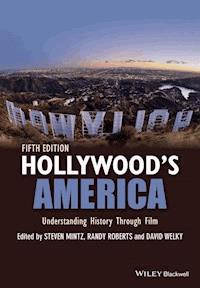
Fully revised, updated, and extended, the fifth edition of Hollywood’s America provides an important compilation of interpretive essays and primary documents that allows students to read films as cultural artifacts within the contexts of actual past events.
- A new edition of this classic textbook, which ties movies into the broader narrative of US and film history
- This fifth edition contains nine new chapters, with a greater overall emphasis on recent film history, and new primary source documents which are unavailable online
- Entries range from the first experiments with motion pictures all the way to the present day
- Well-organized within a chronological framework with thematic treatments to provide a valuable resource for students of the history of American film
Sie lesen das E-Book in den Legimi-Apps auf:
Seitenzahl: 1074
Veröffentlichungsjahr: 2016
Ähnliche




















My Little Chickadee (1940). Universal Studios. Directed by Edward F. Cline. Courtesy of Jerry Murbach, www.doctormacro.info.
HOLLYWOOD’S AMERICA
UNDERSTANDING HISTORY THROUGH FILM
Fifth Edition
Edited by
STEVEN MINTZ, RANDY ROBERTS, and DAVID WELKY
This fifth edition first published 2016 © 2016 John Wiley & Sons, Inc
Edition History: Brandywine Press (1e, 1994; 2e, 1997; 3e, 2001); Blackwell Publishing Ltd (4e, 2001)
Registered OfficeJohn Wiley & Sons Ltd, The Atrium, Southern Gate, Chichester, West Sussex, PO19 8SQ, UK
Editorial Offices350 Main Street, Malden, MA 02148-5020, USA 9600 Garsington Road, Oxford, OX4 2DQ, UK The Atrium, Southern Gate, Chichester, West Sussex, PO19 8SQ, UK
For details of our global editorial offices, for customer services, and for information about how to apply for permission to reuse the copyright material in this book please see our website at www.wiley.com/wiley-blackwell.
The right of Steven Mintz, Randy Roberts, and David Welky to be identified as the authors of the editorial material in this work has been asserted in accordance with the UK Copyright, Designs and Patents Act 1988.
All rights reserved. No part of this publication may be reproduced, stored in a retrieval system, or transmitted, in any form or by any means, electronic, mechanical, photocopying, recording or otherwise, except as permitted by the UK Copyright, Designs and Patents Act 1988, without the prior permission of the publisher.
Wiley also publishes its books in a variety of electronic formats. Some content that appears in print may not be available in electronic books.
Designations used by companies to distinguish their products are often claimed as trademarks. All brand names and product names used in this book are trade names, service marks, trademarks or registered trademarks of their respective owners. The publisher is not associated with any product or vendor mentioned in this book.
Limit of Liability/Disclaimer of Warranty: While the publisher and authors have used their best efforts in preparing this book, they make no representations or warranties with respect to the accuracy or completeness of the contents of this book and specifically disclaim any implied warranties of merchantability or fitness for a particular purpose. It is sold on the understanding that the publisher is not engaged in rendering professional services and neither the publisher nor the author shall be liable for damages arising herefrom. If professional advice or other expert assistance is required, the services of a competent professional should be sought.
Library of Congress Cataloging-in-Publication Data applied for.
9781118976494 (paperback)
A catalogue record for this book is available from the British Library.
Cover image: Dreamstime © Namolik
Contents
Preface
Introduction: The Social and Cultural History of American Film
The Birth of Modern Culture
The Birth of the Movies
Part I: The Silent Era
Introduction: Intolerance and the Rise of the Feature Film
Chapter 1: Workers in Early Film
Notes
Chapter 2: Silent Cinema as Historical Mythmaker
Notes
Chapter 3: The Revolt Against Victorianism
Notes
Chapter 4: Primary Sources
Edison v. American Mutoscope Company
“The Nickel Madness”
Mutual Film Corp. v. Industrial Commission of Ohio
Boston Branch of the National Association for the Advancement of Colored People, 1915
Analysis by Francis Hackett
Seeing Our Boys “Over There”
Part II: Hollywood's Golden Age
Introduction: Backstage During the Great Depression: 42nd Street, Gold Diggers of 1933, and Footlight Parade
Chapter 5: Depression America and Its Films
Notes
Chapter 6: The Depression's Human Toll
The Gangster Cycle
The Fallen Woman Cycle
Notes
Chapter 7: Depression Allegories
Notes
Chapter 8: African Americans on the Silver Screen
Notes
Chapter 9: Primary Sources
THE INTRODUCTION OF SOUND
“Pictures That Talk”
Review of Don Juan
“Silence is Golden”
FILM CENSORSHIP
The Sins of Hollywood, 1922
“The Don'ts and Be Carefuls”
The Motion Picture Production Code of 1930
The State Department on Hollywood in Germany, 1934
The State Department on Hollywood in Latin America, 1934
Part III: Hollywood in the World War II Era
Introduction: Hollywood's World War II Combat Films
Chapter 10: Movies and Great Britain: Anglophilia on Film
Notes
Chapter 11: Blockbuster as Propaganda
Summary of Casablanca
A Critical Examination of Casablanca
Chapter 12: John Wayne and Wartime Hollywood
Chapter 13: The Woman's Film
Notes
Chapter 14: Primary Sources
Sumner Welles to Franklin Roosevelt, 1941
THE 1941 ACADEMY AWARDS: HOLLYWOOD AND THE PRESIDENT
Correspondence between Walter Wanger and Stephen Early
Franklin D. Roosevelt to the Academy Awards Dinner
Walter Wanger to Stephen Early
Madeleine Carroll to Franklin Roosevelt
U.S. Senate Subcommittee Hearings on Motion Picture and Radio Propaganda, 1941
Excerpts fromThe Government Information Manual for the Motion Picture Industry
Bureau of Motion Pictures Report: Casablanca
Part IV: Postwar Hollywood
Introduction: Double Indemnity and Film Noir
Chapter 15: The Red Scare in Hollywood
The Black List
Movies and Communism: From Mission to Moscow to Big Jim McLain
Notes
Chapter 16: Movies Grow Up
Notes
Chapter 17: The Morality of Informing
Notes
Chapter 18: Science Fiction as Social Commentary
Notes
Chapter 19: Primary Sources
United States v. Paramount Pictures, Inc. (1947)
HEARINGS REGARDING THE COMMUNIST INFILTRATION OF THE MOTION PICTURE INDUSTRY
U.S. House of Representatives Committee on Un-American Activities, 1947
U.S. House of Representatives Committee on Un-American Activities, 1951
The Waldorf Statement
Part V: Hollywood in an Age of Turmoil
Introduction Bonnie and Clyde
Chapter 20: The Dark Side of the 1960s
Chapter 21: Films of the Late 1960s and Early 1970s
Alienation and Rebellion
The Hollywood Counterrevolution
Notes
Chapter 22: Film Capital and National Capital
Chapter 23: Reaffirming Traditional Values
Notes
Chapter 24: Presenting African Americans on Film
Chapter 25: Coming to Terms with the Vietnam War
Notes
Chapter 26: Primary Sources
Raymond Caldiero to Herbert L. Porter, 1972
Part VI: Hollywood in the Post-Studio Era
Introduction: A Changing Hollywood
Chapter 27: Feminism and Recent American Film
Production and Publicity
Knowing Me Knowing You
Rape and Allegory
Women and the Law
The Female Outlaw Couple
Resistance and Address
Gender, Genre, and Closure
Notes
Chapter 28: The Screen and the Cross
Chapter 29: Social Revolution on Screen
Queers as Actual Human Beings
Notes
Chapter 30: Encountering Distant Lands
Notes
Chapter 31: Superheroes for the Twenty-First Century
Chapter 32: Movies and the Construction of Historical Memory
Bibliography of Recent Books in American Film History
Reference Works
General Interpretations
Eras
Genres
Age, Class, Ethnicity, Gender, Religion, and Sexuality in Film
American History in Film
Special Topics
Index
EULA
List of Illustrations
Frontmatter
My Little Chickadee
(1940). Universal Studios. Directed by Edward F. Cline. Courtesy of Jerry Murbach, www.doctormacro.info.
Introduction
Intolerance
(1916). Wark Producing Corp. Directed by D.W. Griffith. Courtesy of Jerry Murbach, www.doctormacro.info.
The Immigrant
(1917). Mutual Film Corporation. Directed by Charles Chaplin. Mutual Film Corporation.
Douglas Fairbanks in
The Black Pirate
(1926). United Artists. Directed by Albert Parker. Courtesy of Jerry Murbach, www.doctormacro.info.
Part II
Footlight Parade
(1933). Warner Bros. Directed by Lloyd Bacon. Courtesy of Jerry Murbach, www.doctormacro.info.
Chapter 5
Public Enemy (
1931). Warner Bros. Directed by William A. Wellman. Courtesy of Jerry Murbach, www.doctormacro.info.
Chapter 7
The Grapes of Wrath
(1939). 20th Century Fox. Directed by John Ford. Courtesy of Jerry Murbach, www.doctormacro.info.
Part III
Objective, Burma!
(1945). Warner Bros. Directed by Raoul Walsh. Courtesy of Jerry Murbach, www.doctormacro.info.
Chapter 11
Casablanca
(1942). Warner Bros. Directed by Michael Curtiz. Courtesy of Jerry Murbach, www.doctormacro.info.
Chapter 13
Mildred Pierce (1945). Warner Bros. Directed by Michael Curtiz. Courtesy of Jerry Murbach, www.doctormacro.info
.
Part IV
Double Indemnity
(1944). Paramount Pictures. Directed by Billy Wilder. Courtesy of Jerry Murbach, www.doctormacro.info.
Chapter 17
On the Waterfront
(1954). Columbia Pictures. Directed by Elia Kazan. Courtesy of Jerry Murbach, www.doctormacro.info.
Part V
Photograph of the real-life bank robbers Bonnie Parker and Clyde Barrow. Courtesy of the FBI.
Chapter 32
Portrait of Pocahontas, from a painting by William Sheppard, dated 1616. Courtesy of Prints and Photographs, Library of Congress.
Guide
Cover
Table of Contents
Preface
Pages
xi
xii
1
2
3
4
5
6
7
8
9
10
11
12
13
14
15
16
17
18
19
20
21
22
23
24
25
26
27
28
29
31
32
33
34
35
36
37
38
39
40
41
42
43
44
45
46
47
48
49
50
51
52
53
54
55
56
57
58
59
60
61
62
63
64
65
66
67
68
69
70
71
72
73
75
76
77
79
80
81
82
83
84
85
86
87
88
89
90
91
92
93
94
95
96
97
98
99
100
101
102
103
104
105
106
107
108
109
110
111
112
113
114
115
116
117
118
119
120
121
122
123
124
125
126
127
128
129
130
131
132
133
134
135
137
138
139
141
142
143
144
145
146
147
148
149
150
151
152
153
154
155
156
157
158
159
160
161
162
163
164
165
166
167
168
169
170
171
172
173
174
175
176
177
178
179
180
181
182
183
184
185
186
187
188
189
190
191
192
193
194
195
196
197
198
199
200
201
202
203
204
205
206
207
208
209
211
212
213
214
215
216
217
218
219
220
221
222
223
224
225
226
227
228
229
230
231
232
233
234
235
236
237
238
239
240
241
242
243
244
245
246
247
248
249
250
251
252
253
254
255
257
258
259
260
261
262
263
264
265
266
267
268
269
270
271
272
273
274
275
276
277
278
279
280
281
282
283
284
285
286
287
288
289
290
291
292
293
294
295
296
297
298
299
300
301
302
303
304
305
306
307
308
309
310
311
312
313
314
315
316
317
318
319
320
321
322
323
324
325
326
327
328
329
330
331
332
333
334
335
336
337
338
339
340
341
342
343
344
345
346
347
348
349
350
351
352
353
354
355
356
357
358
359
360
361
362
363
364
365
366
367
368
369
370
371
372
373
374
375
376
377
378
379
380
381
382
383
384
385
386
387
388
389
390
391
392
393
394
395
396
397
398
399
400
401
402
403
404
405
406
407
408
409
410
411
412
413
414
415
416
417
418
419
420
421
422
423
424
425
Preface
Anyone who wishes to know about the United States would do well to go to the movies. Films represent much more than mere mass entertainment. Movies – even bad movies – are important sociological and cultural documents. Like any popular commercial art form, movies are highly sensitive barometers that both reflect and influence public attitudes. Since the beginning of twentieth century, films have recorded and even shaped American values, beliefs, and behavior.
Hollywood's America has two fundamental goals. The first is to use feature films to examine the central themes of twentieth- and twenty-first-century American culture. The book begins with a concise introduction that presents the history of American film against a backdrop of broader changes in popular culture since the late nineteenth century. It is then followed by a series of interpretive essays that examine how specific films, film genres, and developments within the film industry illuminate important aspects of American political, economic, and social life. These interpretive essays are supplemented with primary sources that offer first-hand looks at the movies' connection with the larger world. It concludes with an up-to-date bibliography of American film history.
As we shall see, the history of the movies is inextricably intertwined with broader themes and issues in American cultural history, such as the transition from Victorian culture, with its emphasis on refinement, self-control, and moralism, to modern mass culture. Popular films offer a valuable vehicle for examining public responses to the social disorder and dislocations of the Depression, the fears of domestic subversion of the late 1940s and early 1950s, the cultural and moral upheavals of the 1960s, the meaning and significance of the Vietnam War, and the growing multiculturalism within the United States. Through their plots, their characters, and their dramatization of ethical issues, movies have captured the changing nature of American culture.
The book's second aim is to help students develop tools for reading and interpreting visual texts. In a society in which visual images have become a dominant mode of entertainment and persuasion, used to promote both products and politicians, the ability to analyze visual texts may be as important as a facility with the written word.
Motion pictures contain a distinct set of rules and grammar that demands the same critical thinking and analytical skills one uses to read written texts. To analyze a poem, one must understand patterns of rhyme and rhythm and a poet's use of sound and imagery. Likewise, to interpret a film, one must understand how filmmakers use camerawork, editing devices, lighting, set design, and narrative to construct their text.
The films examined in this book are feature films – not documentaries or avant-garde or underground films. These are the classic movies that made Americans laugh and weep, shriek with terror, and tremble with excitement. They offered wit, suspense, romance, thrills, highlife, and lowlife. Highbrow critics might dismiss most Hollywood films as schlock, but these movies gave audiences more pleasure than any other art form and taught truly fundamental lessons dealing with intimacy, tenderness, initiation, lust, conflict, guilt, and loyalty. It was from the silver screen that Americans received their most intensive – if highly distorted – picture of their country's past, the lifestyles of the rich and famous, and the underside of American life.
For more than one hundred years, films have been the most influential instrument of mass culture in the United States. As America's “dream factory,” which manufactures fantasies and cultural myths much as a Detroit automaker produces cars, Hollywood has shaped the very way that Americans look at the world. Hollywood's films have played a pivotal role in “modernizing” American values. They have been instrumental in shaping Americans' deepest presuppositions about masculinity, femininity, race, ethnicity, and sexuality. Movies have helped form Americans' self-image, and have provided unifying symbols in a society fragmented along lines of race, class, ethnicity, region, and gender. In certain respects subversive of traditional cultural values, movie culture created a mythic fantasy world that has helped Americans adapt to an ever-changing society.
IntroductionThe Social and Cultural History of American Film
One night a year America shuts down. All across the United States tens of millions of people press the buttons on their remote controls, sit back in their easy chairs, monitor their Twitter feeds, and become the world's largest congregation, watching a key event in the country's civic religion – the Oscars. Even though movie attendance has fallen steeply – to just one-third of what it was at the time of the first Academy Awards ceremony in 1927 – Americans still gawk at the limousines as they pull up to the Dolby Theater in Los Angeles, gaze at the stars' tuxedoes and gowns, and wait impatiently for a memorable moment – a naked streaker racing across the stage or a controversial acceptance speech.
Americans watch the Academy Awards presentations for many reasons: to briefly see a more human side of their favorite movie stars; to pit their judgment against that of the 6,000 members of the Academy of Motion Picture Arts and Sciences; to partake in the trashy pleasure of watching the glitziest extravaganza that Hollywood is capable of producing. But the Academy Awards ceremony also offers something more: it gives Americans a chance to recognize the movies that entertained them, engaged their emotions, expressed their deepest hopes and aspirations, and responded most successfully to their anxieties and fears. From All Quiet on the Western Front – a graphic portrait of the horrors and futility of war that came to embody the pacifism of the late 1920s and early 1930s – to 12 Years a Slave – a gut-wrenching take on race, power, and history – Oscar winners and nominees have offered a vivid record of shifting American values.
Of all the products of popular culture, none is more sharply etched in our collective imagination than the movies. Most Americans instantly recognize images produced by the movies: Charlie Chaplin, the starving prospector in The Gold Rush, eating his shoe, treating the laces like spaghetti. James Cagney, the gun-toting gangster in Public Enemy, shoving a grapefruit into the side of Mae Clarke's face. Paul Muni, the jobless World War I veteran in I am a Fugitive from a Chain Gang, who is asked how he lives and replies, “I steal.” Gloria Swanson, the fading movie goddess in Sunset Boulevard, belittling suggestions that she is no longer a big star: “It's the pictures that got small.” Even those who have never seen King Kong or Casablanca or The Godfather respond instantly to the advertisements, parodies, and TV skits that use those films' dialogue, images, and characters.
Intolerance (1916). Wark Producing Corp. Directed by D.W. Griffith. Courtesy of Jerry Murbach, www.doctormacro.info.
The Immigrant (1917). Mutual Film Corporation. Directed by Charles Chaplin. Mutual Film Corporation.
Movies are key cultural artifacts that offer a window into American cultural and social history. A mixture of art, business, and popular entertainment, the movies provide a host of insights into Americans' shifting ideals, fantasies, and preoccupations. Like any cultural artifact, the movies can be approached in a variety of ways. Cultural historians have treated movies as sociological documents that record the look and mood of particular historical settings; as ideological constructs that advance particular political or moral values or myths; as psychological texts that speak to individual and social anxieties and tensions; as cultural documents that present particular images of gender, ethnicity, class, romance, and violence; and as visual texts that offer complex levels of meaning and seeing.
This book offers examples of how to interpret classic American films as artifacts of a shifting American culture. It begins with a concise summary and interpretation of film history that locates the evolution of the movie industry against a broader backdrop of American cultural and social history.
Lesen Sie weiter in der vollständigen Ausgabe!
Lesen Sie weiter in der vollständigen Ausgabe!
Lesen Sie weiter in der vollständigen Ausgabe!
Lesen Sie weiter in der vollständigen Ausgabe!
Lesen Sie weiter in der vollständigen Ausgabe!
Lesen Sie weiter in der vollständigen Ausgabe!
Lesen Sie weiter in der vollständigen Ausgabe!
Lesen Sie weiter in der vollständigen Ausgabe!
Lesen Sie weiter in der vollständigen Ausgabe!
Lesen Sie weiter in der vollständigen Ausgabe!
Lesen Sie weiter in der vollständigen Ausgabe!
Lesen Sie weiter in der vollständigen Ausgabe!
Lesen Sie weiter in der vollständigen Ausgabe!
Lesen Sie weiter in der vollständigen Ausgabe!
Lesen Sie weiter in der vollständigen Ausgabe!
Lesen Sie weiter in der vollständigen Ausgabe!
Lesen Sie weiter in der vollständigen Ausgabe!
Lesen Sie weiter in der vollständigen Ausgabe!
Lesen Sie weiter in der vollständigen Ausgabe!
Lesen Sie weiter in der vollständigen Ausgabe!
Lesen Sie weiter in der vollständigen Ausgabe!
Lesen Sie weiter in der vollständigen Ausgabe!
Lesen Sie weiter in der vollständigen Ausgabe!
Lesen Sie weiter in der vollständigen Ausgabe!
Lesen Sie weiter in der vollständigen Ausgabe!
Lesen Sie weiter in der vollständigen Ausgabe!
Lesen Sie weiter in der vollständigen Ausgabe!
Lesen Sie weiter in der vollständigen Ausgabe!
Lesen Sie weiter in der vollständigen Ausgabe!
Lesen Sie weiter in der vollständigen Ausgabe!
Lesen Sie weiter in der vollständigen Ausgabe!
Lesen Sie weiter in der vollständigen Ausgabe!
Lesen Sie weiter in der vollständigen Ausgabe!
Lesen Sie weiter in der vollständigen Ausgabe!
Lesen Sie weiter in der vollständigen Ausgabe!
Lesen Sie weiter in der vollständigen Ausgabe!
Lesen Sie weiter in der vollständigen Ausgabe!
Lesen Sie weiter in der vollständigen Ausgabe!
Lesen Sie weiter in der vollständigen Ausgabe!
Lesen Sie weiter in der vollständigen Ausgabe!
Lesen Sie weiter in der vollständigen Ausgabe!




