


28,99 €
Mehr erfahren.
- Herausgeber: John Wiley & Sons
- Kategorie: Geisteswissenschaft
- Sprache: Englisch
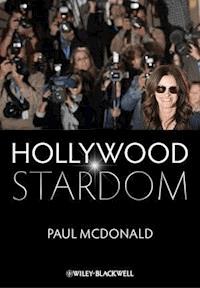
By integrating star studies and film industry studies, Hollywood Stardom reveals the inextricable bonds between culture and commerce in contemporary notions of film stardom.
- Integrates the traditions of star studies and industry studies to establish an original and innovative mode of analysis whereby the ‘star image’ is replaced with the ‘star brand’
- Offers the first extensive analysis of stardom in the ‘post-studio’ era
- Combines genre, narrative, acting, and discourse analysis with aspects of marketing theory and the economic analysis of the film market
- Draws on an extensive body of research data not previously deployed in film scholarship
- A wide range of star examples are explored including George Clooney, Mel Gibson, Tom Cruise, Daniel Day-Lewis, Tom Hanks, Will Smith, and Julia Roberts
Sie lesen das E-Book in den Legimi-Apps auf:
Seitenzahl: 564
Veröffentlichungsjahr: 2012
Ähnliche




















Table of Contents
Cover
Title page
Copyright page
Figures
Tables
Acknowledgments
Introduction
PART ONE: Star Business
1 The Symbolic Commerce of Hollywood Stardom
Commercial and Symbolic Dynamics of Film Stardom
Bankability, A-list Status and the Talent Hierarchy
Hollywood Stars, 1990–2009
Genre, Actorly, Prestige and Posthumous Stardoms
The Star Market
2 Star-as-Brand
Branding and Stardom
The Functions of Star Names
Extending the Star Brand
Stardom as Endorsement
3 The Extraordinary Ordinariness of Tom Hanks
“Mr Popularity”
Ordinary Guy, Extraordinary Situation
Re-working the Hanks Brand
Banking Captain Miller
Continuity and Change in the Star Brand
PART TWO: Star System
4 Post-Studio Stardom
Vertically Integrated Stardom
Conglomerate Hollywood
Representation to the Stars
Star-Producers
Sources of Stars
Dependently Independent Stars
5 Money and Talent
Stars and the Box Office, 1990–2009
Talent Inflation
Gross Deals
Re-modeling Star Compensation
Controlling the Stars?
6 “The Will Smith Business”
Cross-media Stardom
Mr. Smith Goes to Hollywood
Sindiependence
Smith and the Global Film Market
PART THREE: Star Performance
7 Spectacular Acts
Star Attraction
The Performance of the Medium
The Performance of the Actor
Branded Performance
8 Prestige Stardom and the Awards System
Cultural Production and Symbolic Capital
Middle-brow Hollywood and the Prestige Star
Daniel Day-Lewis and Anti-Star Stardom
The Symbolic Authority of the Oscars
Oscar Prestige and Legitimized Acting
Prestige vs. Profit?
9 Starring Julia Roberts
Defining the Brand
Enacting and Staging the Brand
Producing Oscar Prestige
Falling Star
10 Conclusion
Appendix: Academy Award Nominees and Winners in the Actress and Actor in a Leading Role Categories, 1990–2009
References
Index
This edition first published 2013
© 2013 Paul McDonald
Blackwell Publishing was acquired by John Wiley & Sons in February 2007. Blackwell’s publishing program has been merged with Wiley’s global Scientific, Technical, and Medical business to form Wiley-Blackwell.
Registered Office
John Wiley & Sons Ltd, The Atrium, Southern Gate, Chichester, West Sussex, PO19 8SQ, UK
Editorial Offices
350 Main Street, Malden, MA 02148-5020, USA
9600 Garsington Road, Oxford, OX4 2DQ, UK
The Atrium, Southern Gate, Chichester, West Sussex, PO19 8SQ, UK
For details of our global editorial offices, for customer services, and for information about how to apply for permission to reuse the copyright material in this book please see our website at www.wiley.com/wiley-blackwell.
The right of Paul McDonald to be identified as the author of this work has been asserted in accordance with the UK Copyright, Designs and Patents Act 1988.
All rights reserved. No part of this publication may be reproduced, stored in a retrieval system, or transmitted, in any form or by any means, electronic, mechanical, photocopying, recording or otherwise, except as permitted by the UK Copyright, Designs and Patents Act 1988, without the prior permission of the publisher.
Wiley also publishes its books in a variety of electronic formats. Some content that appears in print may not be available in electronic books.
Designations used by companies to distinguish their products are often claimed as trademarks. All brand names and product names used in this book are trade names, service marks, trademarks or registered trademarks of their respective owners. The publisher is not associated with any product or vendor mentioned in this book. This publication is designed to provide accurate and authoritative information in regard to the subject matter covered. It is sold on the understanding that the publisher is not engaged in rendering professional services. If professional advice or other expert assistance is required, the services of a competent professional should be sought.
Library of Congress Cataloging-in-Publication Data
McDonald, Paul, 1963–
Hollywood stardom / Paul McDonald.
pages cm
Includes bibliographical references and index.
ISBN 978-1-4051-7982-9 (hardback) – ISBN 978-1-4051-7983-6 (paperback) 1. Motion picture industry–United States. 2. Motion picture actors and actresses–United States. 3. Fame–Social aspects–United States. I. Title.
PN1993.5.U6M314 2013
384'.80973–dc23
2012036171
A catalogue record for this book is available from the British Library.
Figures
1.1 Legendary stardom and the tourism business. Ingrid Bergman, Arlanda Airport, Stockholm, 17 November 2011.
1.2 The Audrey Hepburn industry. Star merchandise at the Deutsche Kinemathek Museum für Film und Frensehen, Berlin, 5 September 2010.
2.1 The star brand system.
3.1 Harris poll of “America’s favorite movie star”: rankings of selected names in the top ten, 1993–2009.
4.1 Star city: clustering of the major studios, sindies and providers of services to stars.
5.1 Tom Cruise at the box office, 1990–2009.
5.2 Tom Hanks at the box office, 1990–2009.
5.3 Harrison Ford at the box office, 1990–2009.
5.4 Julia Roberts at the box office, 1990–2009.
5.5 Jim Carrey at the box office, 1994–2009.
5.6 Julia Roberts international box office for selected hits, 1990–2000.
7.1 Extravagant star entrance: Mission: Impossible 2.
7.2 Cruise/Hunt hangs on: Mission: Impossible 2.
7.3 Cruise/Hunt takes a message: Mission: Impossible 2.
7.4 Cruise and shades: Risky Business.
7.5 Cruise/Hunt accepts his mission: Mission: Impossible 2.
7.6 Subdued star entrance: A Few Good Men.
7.7 Cruise/Hunt looks: Mission: Impossible 2.
7.8 Newton/Nordoff-Hall is looked at: Mission: Impossible 2.
7.9 Elements of the star performance.
7.10 Cruise smiles: Top Gun.
7.11 Cruise smiles: The Color of Money.
7.12 Cruise smiles: Cocktail.
7.13 Cruise smiles: Rain Man.
7.14 Cruise smiles: Austin Powers in Goldmember.
7.15 Cruise/Hunt laughs at danger: Mission: Impossible 2.
8.1 Bourdieu’s field of cultural production.
8.2 Best Actor nominees and winners: gross box office, 1994–2009.
8.3 Best Actress nominees and winners: gross box office, 1994–2009.
8.4 Best Actor nominees and winners: box office (%) by award phase, 1994–2009.
8.5 Best Actress nominees and winners: box office (%) by award phase, 1994–2009.
8.6 There Will Be Blood: box office and release pattern.
9.1 Roberts/Carpenter smiles: Runaway Bride.
9.2 Carpenter is Julia Roberts: Runaway Bride.
9.3 Roberts/Brockovich understands: Erin Brockovich.
9.4 Trashy woman: Erin Brockovich.
Tables
1.1 Quigley poll of the top ten money-making stars, 1990–2009.
1.2 The American Film Institute’s greatest American screen legends.
4.1 James Cagney and Warner Bros.: main contract terms, 1930–49.
4.2 Stars, leading actors and agents, 2010.
4.3 Stars and sindies: selected names and companies.
4.4 Main features of vertically integrated vs. post-studio stardom.
6.1 Nielsen annual ratings for The Fresh Prince of Bel-Air.
6.2 African-American actors on the Quigley poll, 1932–2009.
6.3 Will Smith and the studios: domestic and international box-office grosses by studio, 1995–2008.
6.4 Will Smith circles the world: Hancock in key international markets.
7.1 Global performance of the star act: main markets for Mission: Impossible 2.
8.1 Daniel Day-Lewis: the grosses and the glory, 1992–2009.
8.2 Annual cycle of film-acting awards in the US.
Acknowledgments
First and foremost, my love and thanks to Tamar, Jessica and Chloe – the A-plus list! – for sticking with me throughout the whole drama by which a book on stardom was born. Only with the belief and support of my outstanding commissioning editor Jayne Fargnoli was it possible for the book to become a reality, and I’d like to express my gratitude to Ben Thatcher for steering the book through production. It is a key aim of the study which follows is to stake out some new conceptual ground by finding points of connection between two streams of thinking in film scholarship: star studies and industry studies. When making this connection, I was led by the scholarship of Richard Dyer and Janet Wasko. In the past I have had the pleasure of working with both Richard and Janet, and although neither was in anyway involved with the book I thank them for the continuing intellectual inspiration that their own work has given me and which set me on the road to embarking on a study like this in the first place. Research for the book was only possible because of the generous financial assistance I received. A Research Fellowship from the Leverhulme Trust enabled me to take an extended period of research leave and a Small Grant from the British Academy facilitated research trips to Los Angeles. I am greatly indebted to Thomas Austin, Cynthia Baron, Christine Geraghty, Chris Holmlund and Peter Krämer for agreeing to provide references in support of applications for this funding. Resources at key research libraries have been essential to completing this study and for the assistance they provided I would particularly like to thank Sandra Archer at the Margaret Herrick Library, Jonathon Auxier and Sandra Joy Lee at the Warner Bros. Archive, and Sarah Currant and Sean Delaney at the British Film Institute National Library. Along the way Nicola Bertram, Emily Carmen, Eric Hoyt, Steve Neale, John Sedgwick, Deborah Shaw and Yannis Tzioumakis have all helped me considerably by providing information or sources, or otherwise reading sections of the manuscript. Finally, my thanks to Angela Wilson for her great work on preparing the map which appears in Chapter 4.
Introduction
Hollywood film stardom is a cultural and commercial phenomenon. As part of the symbolic content of films, stars have cultural significance because through their on-screen performances they represent meanings about human identity. At the same time, stars are signs of economic value, assets deployed in the film market with the aim of raising production financing, capturing revenues and securing profits. In Hollywood stardom, the symbolic and economic are therefore inextricably bound together.
What follows is a study of stardom as a feature of the contemporary Hollywood film industry. It aims to integrate two seams of enquiry in film scholarship. “Star studies” are concerned with exploring the significance and meaning of popular film actors, while “industry studies” focus on the conditions of production, distribution and exhibition which shape the making, selling and showing of films. Combining insights from both traditions, the book tackles the unique position which the star occupies in Hollywood as person, performer, sign and asset.
Richard Dyer’s concept of “star image” has been crucial to legitimizing stars as an object of analysis in Film and Cinema Studies:
With stars, the “terms” involved are essentially images. By “image” here I do not understand an exclusively visual sign, but rather a complex configuration of visual, verbal and aural signs. This configuration may constitute the general image of stardom or of a particular star. It is manifest not only in films but in all kinds of media text. (1998: 34)
Star image provides a foundational concept for a semiotics of film stardom focused on interrogating the symbolic content and meaning of stars. Unlike popular literature on film stars, which frequently embarks from the belief that the film roles and other media appearance of a star are merely a set of textual appearances or fabrications behind which lie the true identity of the star, analysis of the star image takes the materiality of texts as the very substance of stardom. Rather than looking for a figure lurking beyond or behind the text, explorations of star images concentrate on the identity produced in or through texts, for “a star image is made out of media texts” (1998: 60).
Emerging in the late 1970s and into the 1980s, Dyer’s work on stars was consonant with the broader intellectual agenda shaping Film Studies in the period, where ideology became the overarching problem for studies focused on how the production of representation and meaning was related to questions of cultural, social and political power. What the study of stars contributed to this debate was to offer a tight analytic focus on how well-known figures reproduce and produce beliefs about human identity. As Dyer notes,
We’re fascinated by stars because they enact ways of making sense of the experience of being a person in a particular kind of social production (capitalism), with its particular organization of life into public and private spheres. We love them because they represent how we think that experience is or how it would be lovely to feel that it is. Stars represent typical ways of behaving, feeling and thinking in contemporary society, ways that have been socially, culturally, historically constructed. (1987: 17)
Such has been the importance and persuasiveness of Dyer’s theoretical intervention that subsequently the analysis of star images has largely influenced the overall development of star studies as a seam of research in critical and historical film scholarship.
By the late 1980s, theoretically driven forms of film scholarship faced challenges as the “historical turn” (Higashi, 2004) introduced more empirically grounded forms of enquiry. Working in this tradition, Richard deCordova (1990) not only used extensive archival materials to provide an empirically verified account of the emergence of the star system in American cinema but also departed from the tendency of the star image approach to concentrate on individual stars alone. Instead, deCordova traced the origins of the film star system to the emergence of trans-individual categories of knowledge or discourses about the figures performing in early film. Whereas the appearance of a “discourse on acting” from 1907 onwards circulated information about the general occupation of film acting, it was not until the first release of performer names in 1909 that it became possible to identify, individualize and know performers as distinct “picture personalities.” While this act of naming provided foundations for stardom, deCordova argues “the star” only truly appeared from 1913 onwards as knowledge about the off-screen private lives of stars became publicly circulated.
The star emerged out of a marked expansion of the type of knowledge that could be produced about the player. The picture personality was defined … by a discourse that restricted knowledge to the professional existence of the actor. With the emergence of the star, the question of the player’s existence outside his or her work in film became the primary focus of discourse. (1990: 98)
Although differing in their approaches, with their attention to star texts or discourses, Dyer and deCordova shared a common focus on stars as fundamentally symbolic entities, identities constructed from textual materials. Setting such analytic limits arguably, however, leaves star studies with an incomplete and unsatisfactory account of what a star is. Stars are texts, meaning, images and culture, but they are also more than this. Whether a star agrees to appear in a film or not will frequently influence if the film receives the financing to go into production. Stars are used to sell films through their appearance in marketing media and they are amongst the range of elements which can determine how well a film performs at the box office. In film culture, stars therefore form a point of intersection between meaning and money.
To fully grasp the significance of stars in film culture, it is therefore necessary to place stardom in a particular economic and industrial context. As Janet Wasko argues,
Motion pictures developed in the USA as an industry and have continued to operate in this mode for over a century. Above all, profit is the primary driving force and guiding principle for the industry. Capital is used in different ways to achieve that goal. … The profit motive and the commodity nature of film have implications for the kind of films that are produced (and not produced), who makes them, how they are distributed, and where/when they are viewed. While it is common to call film an art form, at least Hollywood film cannot be understood without the context in which it is actually produced and distributed, that is, within an industrial, capitalist structure. (2003: 3–4)
Studies of star texts and discourses offer valuable insights into the semiotic or textual complexity of stars but without developing any fuller understanding of how stars operate as sources of capital for the film business. In this respect, star studies are representative of the more general limitations of film scholarship. Writing in 1982, Thomas Guback observed:
Scholarly writing about film displays a curious imbalance that few people seem concerned about redressing. Even a superficial survey reveals that most studies deal with aesthetics, theory of one sort of another, genres, and personalities. Some studies also treat film historically, examine it as a social document, or conceptualize it as a medium that affects its audience. These approaches share, more or less, the assumption that what there is worthwhile to study about film can be grasped with research tools and techniques not unlike those used in literature. Necessarily, differences do exist because of the natures of these media, but film is ultimately seen as text. (p. xi)
In one way or another, Film Studies adopted modes of thinking derived from literary studies, with the consequence that the text was privileged as the beginning and end of analysis. Although with the historical turn, the emergence of the New Film History and New Cinema History productively encouraged attention to the institutionally organized conditions in which films are made, circulated and consumed, these developments by no means represented the whole field. Thirty years after Guback’s criticism, textualism in its many different forms still holds considerable persuasive power, and consequently much of film scholarship still appears resistant to engaging with the commodity form of film. Guback exposes the limitations of this approach when he comments:
Although [this] scholarship has illuminated many aspects of cinema … it has not come to grips with the basic character of film in capitalist society. Film is a commodity, and exchange value sets the broad parameters that determine not only how the medium will be used, but also the shape of the industrial structure that makes, distributes and exhibits it. (1982: xi)
Thinking of films principally as texts obscures the commodity status of movies, with the consequence that Film Studies is left with only a partial and limited account of what a film is. Following this mode of analysis, exclusive attention to the star-as-texts or the discursive construction of stardom has left star studies with an incomplete understanding of stars and stardom.
In the book which follows, star studies and industry studies are therefore integrated in order to mount a form of analysis with dual regard for stars as symbolic and economic entities. This is not an altogether new departure. Responding to how star studies developed in the 1980s, Barry King criticized how “writers on stardom are seemingly obsessed with matters of signification” (1987: 145), and instead he proposed the need for attention to how stardom “develops out of and sustains capitalist relations of production and consumption” (p. 149). King therefore positioned stars industrially, focusing on “stardom as a form of working” (1986: 155) and on the star as “a personality with box-office power” (p. 166). Danae Clark (1995) criticized how the focus on matters of meaning, beauty and pleasure alone had resulted in the formation of an aesthetic tradition in star studies which supports capitalist production by denying how stars are one category of labor working in Hollywood. Moreover, Clark argued attention to stars over other actors repeated the auteurist concern of taking an elite (in that case a pantheon of great directors) as its exclusive focus and thereby ignoring how they topped the hierarchy within a particular category of creative producers. Clark therefore considered stars to be “a privileged class within the division of actors’ labor” (p. 5) and placed actors as active subjects contesting their position within the hierarchy of “labor power differences” (p. 14). King and Clark therefore provided a clear alternative to the textualist and discursive terrain set out by Dyer and deCordova. With these interventions, studies of stars have not therefore been entirely blind to matters of industry, yet star studies as a particular tradition of analysis and enquiry has largely concentrated on questions of meaning and the discursive construction of stars.
In critical studies of media culture, the recent development of “celebrity studies” may have expanded attention beyond film stardom to other instances and categories of mediated fame, yet again overriding attention to matters of symbolic and cultural significance have largely reproduced the exact same limits as star studies by failing to adequately grapple with the conditions in which celebrity is produced and circulated. There is discussion of how “celebrity … describes a type of value that can be articulated through an individual and celebrated publicly as important and significant … [with] connotations that link it to modern power structures (i.e. capitalism)” (Marshall, 1997: 7). Mention is made of the “economy of celebrity,” the “celebrity-commodity,” the “celebrity industries” and to “manufacturing celebrity” (Turner, 2004), yet with insufficient detailed attention to the economics of celebrity, how those celebrity industries actually work, or to how they make celebrity.
Star studies may have emphasized the symbolic/cultural aspect of stardom over the economic/commercial, yet in Hollywood stardom the two aspects are inseparable. Writing on Hollywood, Richard Maltby observes how “movies are products for consumption,” and so “it is through a thoroughgoing acknowledgement of their commercial existence, not a denial of it, that their complexity can be most fully examined” (2003: 553). Maltby describes Hollywood as producing a “commercial aesthetic,” for “Hollywood’s aesthetic practices serve commercial purposes” (p. 11). “In Hollywood,” he argues, “commerce and aesthetics are symbiotic” (p. 11). Stars feature in this commercial aesthetic as elements of symbolic content and signs of value. Redressing the imbalances of star studies, this book is explicitly concerned with the business of Hollywood stardom. It tackles stardom as a component of Hollywood’s commercial aesthetic, advancing a form of analysis which can be described as the symbolic commerce of stardom, by which stardom is regarded as just one of the devices used in Hollywood film to conduct commerce through symbolic means.
While responding to what have been some of the limitations of star studies, adopting this approach does not necessitate the wholesale rejection of star images. In seeking to situate stars commercially, it is important to not simply enforce a new and ultimately limited critical purview by exclusively emphasizing commerce without attention to the symbolic dynamics of stardom. Stars circulate in public culture through textual forms. Somewhere in the world is the flesh-and-blood Brad Pitt but he is only “present” and known to his audience as an ensemble of textual materials. It is essential to therefore hold onto the idea of star image for this serves as the best means for analyzing the symbolic contents of stardom and to conceptualize the forms in which star identities are circulated in cultural markets. By necessity, star images must feature in this approach for they are the textual forms through which star identities are produced and circulate as symbolic currency in the film market.
Examining stardom across the confluence of symbolic and economic realms, the aims of this book are more conceptual than historical. It is a study which does not set out to make a historical statement by discerning a particular phase in the development of Hollywood stardom. Even so, the study displays a historicist belief that understanding any cultural or economic phenomena necessitates attention to specific conditions of existence. Rather than wander across Hollywood history freely choosing examples to best fit the arguments presented, the book therefore sets particular historical parameters by concentrating on stardom in the two decades from 1990 to 2010. Focusing on these decades places the business of stardom within particular industrial circumstances: the consolidation of conglomerate Hollywood, the growth in value of the Hollywood’s overseas box office, the maturation of the home entertainment market, and the emergence of new distribution technologies for the delivery of films to private and individualized contexts of consumption. With event movies based on comic book or fantasy franchises ruling the heights of box office, this is also a period in which many commentators raised questions over whether stars still played a valuable part in the commercial success of Hollywood cinema. Despite these reservations, stardom survived as a feature of Hollywood cinema, with the major studios continuing to make films fronted by a select grouping of lead actors. When taking this focus, the book is not therefore arguing Hollywood stardom experienced a distinct period of change in the years 1990 to 2009: in fact, a great deal of what follows emphasizes strong continuities between these decades and earlier periods. Instead, the book has a synchronic rather than diachronic objective, concentrating on a small slice of Hollywood history to outline a range of dynamics simultaneously at work in shaping the production and value of stardom. Although set within a particular historical period, the insights provided here should present some ground for examining how the symbolic commerce of stardom operates in other periods.
Part One of the book lays out the conceptual and contextual foundations of this study. Chapter 1 introduces a series of general dynamics underpinning the symbolic commerce of stardom and discusses how stars relate to the commodity form of film. It outlines how A-list stars sit at the top of the hierarchy of acting labor in Hollywood and identifies the “cast” of stars who characterized Hollywood stardom in the period covered. To move beyond the purely symbolic realm of the star-as-texts or star-as-image, Chapter 2 explores the star-as-brand as a means of conceptualizing the symbolic and commercial work of stardom. This chapter explores the analogy between stars and brands and looks at the functions of the star name as a branding vehicle. In the first of the book’s three case-study chapters, Chapter 3 then draws these ideas together with an exploration of the Tom Hanks brand. With Part Two, chapters deal with the industrial conditions which support the production of stardom and the place of stars in the economics of contemporary Hollywood. Chapter 4 outlines the defining trends of the “post-studio star system” as a feature of conglomerate Hollywood, discussing the functions undertaken by agents, managers and publicists in the production of stardom, the role of star-fronted independent production companies and the place of television in supplying new talent to the system. It is argued that under the operations of this system, the relationship of stars to studios is characterized by conditions of dependent independence. Chapter 5 considers how stars present a financial paradox in Hollywood, for they are both valuable assets and expensive burdens. The chapter analyzes the box-office performance of star films and the inflationary impact of star fees and gross participation agreements on production costs. A case study of Will Smith in Chapter 6 illustrates the post-studio system at work, exploring how Smith’s stardom involved the negotiation of racial identity across media, the operations of his independent production company, and his commercial performance at the international box office. Whatever symbolic and economic effects stars have in Hollywood film is achieved through performance. Hollywood stardom is produced across multiple media but foundational to star status is the appearance of stars in films. Part Three explores the symbolic construction of the star performance on-screen through the workings of the film medium but also the voice and body of the actor. Chapter 7 outlines how star performance achieves symbolic and economic effects by positioning the actor between spectacle and narrative in the enactment of the star brand. While the box office is a crucial measure star status, in Hollywood awards form an alternative index of value based on artistic legitimacy. Focusing on the acting categories in the Academy Awards, Chapter 8 therefore looks at the role of awards as forms of “symbolic capital” and for how these define the “prestige star” as an alternative configuration of stardom to the commercially defined A-list. With a case study of Julia Roberts, Chapter 9 then explores the enactment of a particular star brand, the effects produced by that brand in the film market, how the brand was translated into award-winning success, but also the factors at work in the decline of star value.
It was just noted that film stardom is a multiple-media system. The visibility of film stars extends way beyond the films they appear in to various forms of broadcast, print and online media, involving coverage not only the star’s on-screen existence but also his or her off-screen life. However, the primary concern here is with whatever symbolic and commercial value stardom has for Hollywood film. Inevitably that value is contingent on meanings and effects created beyond film but the primary focus here will be on the symbolic and commercial workings of star brands specifically in the film market with some occasional references to the deployment of stars in television advertising or the wrangles over star names in the online universe.
PART ONEStar Business
1
The Symbolic Commerce of Hollywood Stardom
Hollywood stardom is founded on the marketability of human identities. As one comment in a 1959 issue of the trade paper Variety noted, “Always the same obvious truism – show business is a business of names, personalities, values generated by the traits and skills and charms of potent (at the box office) individuals” (Green, 1959: 1). In the economics of Hollywood film, stars are valued as a guard against risk. Regardless of whether the budget is a few million or in the hundreds of millions, feature film production is an expensive enterprise. At the same time, the film industry is constantly confronted by the fact that it is pouring money into making things that people don’t actually need, and so unlike other goods such as basic foodstuffs, consumer demand for films is uncertain and capricious. With this mixture of high-cost investment and uncertain demand, the industry treasures concrete, material signs of content which consistently draw audiences. Popular cycles or genres can offer some certainties through the repetition of thematic and stylistic tropes, whereas the value of stars is tied up with how they represent versions of human identity. In the figure of the star, the symbolic/cultural and economic/commercial are inextricably linked. Film stars have cultural significance because they represent people and as those representations circulate in media markets, so they become figures for exchange. Since stars only portray certain categories or types of identity and not others, then stardom has symbolic and cultural power. Equally, as assets deployed in the market with the aim of securing commercial advantage, stars are a source of economic power. Examining the symbolic commerce of Hollywood stardom therefore requires understanding and critically evaluating the practices and processes which support the production, dissemination and presentation of popular identities in the film market. Initially this chapter sets out some basic dynamics at work in the symbolic commerce of stardom before considering how stardom is configured in Hollywood.
Commercial and Symbolic Dynamics of Film Stardom
Lesen Sie weiter in der vollständigen Ausgabe!
Lesen Sie weiter in der vollständigen Ausgabe!
Lesen Sie weiter in der vollständigen Ausgabe!
Lesen Sie weiter in der vollständigen Ausgabe!
Lesen Sie weiter in der vollständigen Ausgabe!
Lesen Sie weiter in der vollständigen Ausgabe!
Lesen Sie weiter in der vollständigen Ausgabe!
Lesen Sie weiter in der vollständigen Ausgabe!
Lesen Sie weiter in der vollständigen Ausgabe!
Lesen Sie weiter in der vollständigen Ausgabe!
Lesen Sie weiter in der vollständigen Ausgabe!
Lesen Sie weiter in der vollständigen Ausgabe!
Lesen Sie weiter in der vollständigen Ausgabe!
Lesen Sie weiter in der vollständigen Ausgabe!




