


Erhalten Sie Zugang zu diesem und mehr als 300000 Büchern ab EUR 5,99 monatlich.
- Herausgeber: Parthian Books
- Kategorie: Ratgeber
- Sprache: Englisch
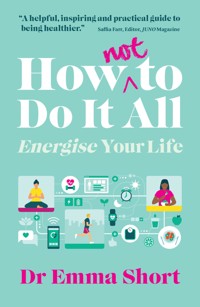
'A fantastic guide for anyone hoping to improve their well-being. A simple yet comprehensive approach to leading a healthier and calmer life. A wonderful book!' – Dr Gemma Newman, The Plant Power Doctor, Author, GP and Podcast Host 'In this book Dr Emma manages to create a positive, affirming guide that inspires us to evaluate what might not be working for us and how to make changes to improve that, without being overwhelming and therefore offputting. How (Not) to Do It All is a helpful, inspiring and practical guide to being healthier.' – Saffia Farr, Editor, JUNO Magazine Dr Emma Short offers a fresh perspective with a simple evidence-based guide to leading a healthier, happier and calmer life. It has a holistic approach to wellbeing, exploring areas as diverse as exercise, nutrition, the impact of the digital and natural environment, sleep, mindset and not taking on too much. 'Energise your life' is a simple evidence-based guide to leading a healthier, happier and calmer life. 'During my PhD, I spent many hours at cancer-related conferences, and it was clear that vast amounts of research time and money are spent on the diagnosis of cancer and its treatment. This is vitally important, but significantly fewer resources are spent on health promotion and cancer prevention. I strongly feel that prevention is better than cure, and I'm very passionate about health promotion and disease prevention. 'I have also experienced "Superwoman Syndrome" and am aware of countless other women who are in the same boat. Although there is a wealth of advice about how to achieve a desirable work-life balance, there is a lack of information which addresses why we might take on too much in the first place.'
Sie lesen das E-Book in den Legimi-Apps auf:
Seitenzahl: 218
Veröffentlichungsjahr: 2023
Das E-Book (TTS) können Sie hören im Abo „Legimi Premium” in Legimi-Apps auf:
Ähnliche














How (not) to Do It All
Dr Emma Short is a Consultant NHS doctor specialising in histopathology. She studied pre-clinical medicine at Cambridge University and clinical medicine at Oxford University. She completed her basic surgical training in Devon, before moving to Wales for her histopathology training. Emma also has a PhD from Cardiff University in cancer genetics and is a health and fitness writer.
Contents
WELCOME
EXERCISE AND MOVEMENT
What is exercise?
What happens when we exercise?
What are the health benefits of exercise?
Improving our mood
Healthy bones
Enhance our brain power
How much exercise should I be doing?
Strength and flexibility are important too!
What is high-intensity interval training (HIIT) and why is it so popular?
How does HIIT work?
Don’t overdo it
Sit less, move more
How to be more active
NUTRITION, HEALTHY EATING, WEIGHT AND THE GUT MICROBIOME
The principles of healthy eating
Macronutrients, micronutrients and fibre
Best balance
How to eat healthily
The role of fasting
The importance of maintaining a healthy weight
The gut microbiome
What does the microbiome do?
What influences the composition of our microbiome?
The microbiome in disease
What about prebiotics and probiotics?
How to implement healthy eating patterns
ENVIRONMENT: HOW DO THE NATURAL ENVIRONMENT AND DIGITAL ENVIRONMENT AFFECT OUR WELLBEING?
The healing power of nature
Shinrin-Yoku
How to practise forest bathing
Are other natural environments beneficial?
What about the digital environment?
Summary
RELATIONSHIPS AND SOCIAL CONNECTIONS
Human beings need to belong
What are ‘friends’?
Loneliness
How do we become socially connected?
GOAL SETTING AND HABITS
Goal Setting
Outcome and process goals
Approach and avoidance goals
Challenging and easy goals
Goal Striving
Action Plans
Coping Plans
Visualisation
If-then plans
Motivation
Habits
IDEAS, MINDSET AND STRESS REDUCTION
Stress
Don’t do too much: Superwoman, Superman take off your cape
What is Superwoman/Superman Syndrome?
What causes people to take on too much?
My experience of Superwoman Syndrome
Don’t do too much – REST
Meditation and mindfulness
Are there any disadvantages to practising meditation and mindfulness?
How do I start meditating?
Gratitude
Toxic positivity
Kindness
What is kindness?
Being kind is good for you
Implementing kindness: the ripple effect
SLEEP
What is sleep?
What happens if we don’t get enough sleep?
Sleeping difficulties
How to improve our sleeping habits
EMPOWERMENT
MY PRESCRIPTION FOR YOU
REFERENCES
Welcome
Hello, I’m Dr Emma Short and I work as a consultant histopathologist in the NHS. I’m the type of doctor who diagnoses diseases by examining tiny pieces of tissue under the microscope. I also have a PhD in cancer genetics – I spent five years looking into the reasons why some people are genetically predisposed to developing multiple polyps in their bowel. Polyps are minute growths which usually just sit in the intestines and go unnoticed, but a small proportion of polyps develop into bowel cancer.
So why am I writing a book about lifestyle changes to improve health and wellbeing when I don’t have direct contact with patients? It is because my work led me to look at how people can improve their health to prevent disease.
A large part of my clinical work involves diagnosing cancer. Cancer cells look ugly under the microscope … instead of being neat, orderly and uniform, they are random in size and shape. They’re often crowded and jumbled and don’t respect each other’s boundaries. Cancer cells grow in an uncontrolled manner and they don’t stay where they’re supposed to be. They invade healthy tissue and try to enter blood vessels or lymphatic channels so they can spread to other parts of the body. During my PhD, I spent many hours at cancer-related conferences, and it was clear that vast amounts of research time and money are spent on the diagnosis of cancer and its treatment. This is vitally important, but significantly fewer resources are spent on health promotion and cancer prevention. Surely ‘prevention is better than cure’? Data shows that up to fifty per cent of cancers could be avoided.
Cancer follows heart disease and stroke as the biggest killer in the developed world. When it comes to heart disease, we know that eighty per cent of premature heart disease, along with stroke and type 2 diabetes, can be prevented through changes in lifestyle.
I qualified as a personal trainer to get a better understanding of the impact that exercise and movement can have on our health. I also trained as a meditation teacher and completed diplomas in mindful nutrition and forest bathing, to appreciate the beneficial effects of a holistic approach to healthcare.
Lifestyle changes don’t need to be complicated, time-consuming or expensive. Significant improvements can be achieved through simple measures such as being physically active, minimising the time spent sitting down, eating a healthy and balanced diet, maintaining a healthy weight, not smoking, moderating alcohol intake and maintaining social relationships. This approach to healthcare, known as Lifestyle Medicine, is gaining popularity all over the world.
I feel so strongly about the positive effects of lifestyle changes that I compiled a textbook for healthcare professionals, which was published in 2021. It includes the latest scientific knowledge and is called A Prescription for Healthy Living: A Guide to Lifestyle Medicine (Elsevier, 2021). It aims to inspire and encourage doctors to empower their patients to make behavioural changes to improve their health.
But I really want to make this information available to everybody, not just the professionals. I want everyone to have the knowledge and skillset to take control of their lifestyle, so they feel healthier, happier and energised.
That is where this book comes in. It contains information, advice and tips to improve your wellbeing and it includes contributions from other doctors and healthcare professionals who are also passionate about a holistic approach to improving health.
Traditionally, there are six pillars of Lifestyle Medicine. These are physical activity, optimising nutrition, stress reduction, social connectivity, optimising sleep and reducing the use of harmful substances. I like to use the acronym ENERGISETM to explore how these areas can be incorporated into your everyday lives. ENERGISETM stands for:
Exercise and Movement
Nutrition
Environment
Relationships and social connections
Goal setting and habits
Ideas, mindset and stress reduction
Sleep
Empower
This book has a chapter on each of these topics. Don’t feel you have to read the book from cover to cover, dip in and learn more about the areas which appeal to you. One of the great things about lifestyle interventions is that small changes can often have a huge impact. For example, studies have reported that if we sit for periods of less than thirty minutes at a time, we have a fifty-five per cent lower risk of death than those who sit for more than thirty minutes. This suggests we can improve our life span by just moving more regularly.
If we make a conscious effort to make one small change every day, we will soon feel a positive impact on our wellbeing. For example, if we want to focus on our nutrition, we could swap a biscuit for a banana, a can of coke for water or a piece of cake for yoghurt. Similarly, if we choose to improve how much we move, we could use the stairs rather than a lift, or we could decide not to park in the space nearest the shops in favour of one further away. These small changes will soon make a big difference to how you feel, which will strengthen your motivation and enthusiasm to make even more changes.
A fantastic aspect of adopting healthy behaviours is that one action often has a positive effect on multiple other areas. For example, going for a run with a friend gives you the benefit of exercise and also reduces your stress levels, helps your social connections, improves your sleep and gives you time in nature. If you cook a healthy meal for your family, you can share good nutrition, strengthen family ties and you’re not being sedentary while you’re standing chopping and dicing.
Another strategy I’d strongly recommend at the start of your wellness journey is to immediately see yourself as a healthy person. Our sense of identity describes how we view ourselves. This is the result of a complex interplay of factors including our life experiences, our achievements, the challenges we have faced, our values and our views of the world.
Importantly, how we see ourselves affects our behaviour. If we identify as being healthy, we are more likely to make healthy choices. Even if we don’t initially feel that we are healthy or fit, telling ourselves that we are makes changes easier and more sustainable.
I hope you enjoy this book and enjoy making lifestyle choices that make you feel healthier and happier. I’d love to hear how you get on and what works for you!
@dr_emmashort
The Healthy Happy Gut Doctor
www.energisehealth.org
Disclaimer: this book is a guide to lifestyle changes that can be made to improve health and wellbeing. It doesn’t replace any advice you have been given from your own doctor or healthcare professional. If you have any health concerns, please talk to your relevant healthcare provider.
Exercise and Movement
Dr Emma Short and Dr Caroline Deodhar
Exercise and movement are, by far, my favourite lifestyle interventions to improve health and wellbeing. I love running and being outside in nature, and it is through running that I have met many of my closest friends. I also enjoy yoga and body combat and one of our favourite family activities is a walk by our local river. The benefits of exercise are immediately apparent – you feel great and it gives you a mental boost that lasts all day long.
What is exercise?
Exercise describes any activity which causes us to exert ourselves physically. It’s broadly divided into three categories – cardiovascular exercise, strength work and flexibility. Cardiovascular exercise makes our breathing rate increase and our heart pump faster. We traditionally think of cardiovascular exercise as sports such as running, football, dancing or hockey, but actually everyday activities such as gardening and vigorous housework also count. Similarly, strength work doesn’t just mean lifting weights at the gym. When we’re carrying heavy shopping bags or pushing a full wheelbarrow, that’s building our strength too.
Inadequate levels of exercise are a major risk factor for chronic disease and premature death. Middle-aged women who complete less than one hour of physical activity a week have a doubled risk of death compared to those who exercise regularly. To put this into context, these figures are similar to the increase in risk caused by moderate cigarette smoking.
What happens when we exercise?
When we exercise, our bodies need to work to increase the delivery of oxygen and nutrients to our muscles so they can produce energy. This is why our heart rate and breathing rate increase. With continued and regular activity, our bodies adapt so they can work more efficiently.
Some of the changes which occur include our hearts becoming stronger and pumping more blood with each beat, and our muscles increasing in size and producing energy more effectively. There is also improved elimination of waste products, enhanced gas exchange in the lungs and a healthier profile of lipids in the blood. Additional benefits include improved control of blood sugar levels and reduced inflammation throughout the body. Inflammation is a vital and necessary part of our body’s response to a harmful stimulus, such as an infection or an injury. For example, if we cut our skin, the area around the wound becomes red, warm, swollen and tender. This happens because our blood vessels dilate to deliver inflammatory cells and chemical messengers to the site of injury in order to start the repair and healing process. In this context, the inflammatory process is said to be ‘acute’ as it occurs in response to a specific event and it only lasts for a short time period. ‘Chronic inflammation’ describes inflammation which lasts longer, from weeks to months to years. Different inflammatory cells and different chemical messengers are involved, and the inflammation can occur throughout the body. Chronic inflammation is associated with a variety of diseases, including diabetes, heart disease, cancer and Alzheimer’s. Lifestyle factors such as smoking, alcohol consumption, stress and obesity may all contribute to the development and ongoing activity of chronic inflammation.
What are the health benefits of exercise?
Exercise and being active have a myriad of benefits, not just for our physical health but for our mental health and wellbeing too. If we are physically active, our risk of death from any cause is reduced by around fifty per cent compared to those people who are inactive. Generally, the fitter we become, the greater the reduction in risk. Exercise reduces the risk of developing cardiovascular disease by thirty-five per cent and is also good for those who already have a diagnosis of established heart disease. Studies show that physical activity can slow the progression of coronary artery disease – the ‘furring up’ of the blood vessels that supply the heart. Exercise reduces the risk of developing type 2 diabetes by forty per cent and reduces the risk of death for anyone who already has type 2 diabetes. Regular activity can also reduce blood pressure, especially for those with mild and moderate hypertension. For some people, this can be enough to allow them to come off medication.
If all that isn’t enough incentive, exercise can also reduce the likelihood of developing cancer, particularly breast and bowel cancer, and has been proven to improve outcomes for people who have already been diagnosed with breast cancer. Studies have shown that moderate exercise can reduce the risk of breast cancer recurring and can reduce the risk of death from breast cancer, especially in certain tumour types.
Exercise reduces the risk of falls, depression and dementia by thirty per cent and joint and back pain by twenty-five per cent. Exercise is also an important tool in maintaining a healthy weight, as we burn more calories when we are active.
Improving our mood
Exercise has significant and positive effects on our mood and can reduce symptoms of anxiety and depression. Positive effects can be observed in a relatively short time frame – individuals diagnosed with a major depressive episode were found to have a significant reduction in depression after a daily exercise session of thirty minutes, which they carried out over a ten-day period.
I know the fantastic effects that exercise has on my mood – if ever I’m feeling bad-tempered or ‘down’, a run will always lift my spirits. When we exercise, our bodies release chemicals called endorphins. These are similar in structure to morphine, and make us feel positive and energised, and can also reduce our perception of pain.
Exercise can improve both the quality and duration of sleep, which in turn will have a positive impact on mood, overall health and wellbeing. It’s best to do exercise outside and early in the day for it to have its maximum positive effect on sleep.
Lorraine, IT manager, age 52
As I was growing up, and during my adult years, I have suffered from periods of low mood and depression. In the last thirteen years, I have lost both my dad and a daughter. It can be really hard to deal with life’s challenges. I have, however, found that exercise has a hugely positive impact on my health and wellbeing. Running helps to keep me positive. I have always found it difficult to ‘switch off’ and sleep, but regular exercise helps to calm my mind. I am blessed with having a local park and river near where I live. This is my ‘go to’ place for running when I am stressed, and I feel a connection with nature when I exercise outside near the trees and water. I like to exercise with friends and talking helps me to feel resilient.
Healthy bones
Our bones are living tissues and they increase in mass until we’re around the age of thirty years. There are many things that can affect our bone health including hormones, diet and sun exposure. Exercise is really important in helping our bones to achieve their optimal mass. Bones will respond to forces placed upon them by becoming stronger. If children and teenagers stay active and do regular weight-bearing activities such as walking, jogging, dancing or playing tennis, this will improve bone strength. Activity during adolescence has been shown to directly reduce the risk of developing osteoporosis, or weak and fragile bones, in older age. As we move into adulthood, exercise, particularly weight-bearing exercise, is important in reducing the rate of loss of bone mass and therefore reducing the risk of osteoporosis.
Enhance our brain power
Our cognitive function often declines as we age. High levels of physical activity have been shown to protect against cognitive impairment. In addition to this, exercise may also reduce the risk of developing Alzheimer’s Disease.
Lucy, doctor, age 41
Exercise is a hugely important part of my life, but I haven’t always had a positive relationship with it.
As a child and teenager, I was very sporty. I was active, I ate what I wanted and I was confident in my appearance. I also studied hard and went to university to study medicine. As a medical student, I was a member of the gymnastics club and the football team … I even avoided alcohol on the day we got our final exam results as I had a gymnastics competition the following morning!
Starting work as a junior doctor was a shock to the system. Long hours, night shifts and weekend work made it difficult to stick to a routine and everything slipped. Gradually, I stopped doing any exercise, I stopped looking after myself and I became accustomed to sitting on my sofa. As I got more senior at work, I had exams to study for. I got married and had children and my own health was never my priority. On a few occasions, I tried to go to the gym, but it wasn’t something I enjoyed, and I resented ‘having’ to go.
After a few years, I wasn’t in a good place. I was struggling to balance work and family life and found myself failing my exams. I had gained weight, lost confidence in myself and I felt I was stuck in a rut. I was supported by my workplace, which offered me sessions with a coach. Through my coach I explored my goals and my ideas about myself. Something my coach said will always resonate with me: ‘If you don’t like something, change it.’ It sounds simple, but it really empowered me. I bought some new clothes that made me feel good, I started to take better care of my skin, and I thought about starting to exercise again. I looked at what options were available, but I always found an excuse not to begin.
One night I was sitting in my usual spot on my sofa, browsing my phone, and I saw an advert for a new kind of class. The class was in a darkened room, with glowsticks and disco lights. This really appealed to me – no one would see how unfit I was or how I could no longer comfortably fit into a leotard. After a glass of wine, I booked and paid for my place. I was going to do this.
On the day of the class, I drove to the venue dressed in black and full of dread. I was physically shaking with nerves, and my inner voice was telling me I couldn’t do it. However, I managed to find the courage to walk into the building, pick up my glowsticks and find my place right at the back of the hall.
I can’t explain the euphoria I felt as the music started and everyone started to move. The sweat poured and my spirits lifted. I am sure I walked taller out of the hall that day. I got home and booked on again for the following week.
Week after week I went to class. I started to move closer to the front, wear brighter colours, whoop along and my smile got bigger and bigger. One day my instructor asked if I wanted to come on the stage and dance next to her. When I saw all those faces looking back at me, I felt a sense of belonging. My physical health was in a better place, my mental health was in a better place and my confidence was shining through in all aspects of my life.
I had a lightbulb moment – what if I could help people to feel the way about exercise that I now felt? I wanted to help others to overcome their doubts and to experience the joy that I experience. I have now trained as a fitness instructor and, although it can be tricky balancing work, family life and my fitness business, I wouldn’t have it any other way.
How much exercise should I be doing?
The current government recommendations are that adults should spend one hundred and fifty minutes every week doing moderate-intensity aerobic activity, or seventy-five minutes doing vigorous activity, or a mixture of both.
Aerobic activity describes the activities which increase the heart rate and breathing rate – exercises like walking, jogging and cycling. A good way to gauge the intensity of exercise is whether you’re able to talk. With moderate intensity, you can speak in short sentences but you couldn’t sing a song, whereas with vigorous intense activity you can only say a couple of words at a time.
It’s good to split the one hundred and fifty minutes so you do thirty minutes over five days. It can be achieved in bouts of ten minutes, so you don’t have to do too much in any one go.
The number of adults who achieve this level of activity in the UK is low. The British Heart Foundation reports that around thirty-nine per cent of UK adults are failing to meet government recommendations for physical activity. This equals about twenty million people. The statistics are worse for women than men – nearly twelve million women across the UK are not active enough compared to around eight million men. Overall, women are thirty-six per cent more likely to be classified as physically inactive.
If you’re thinking about doing more exercise, it can be helpful to ask yourself what any potential barriers might be, and ways you could overcome them. Some common examples and potential solutions are listed below:
BARRIER
SOLUTION
Not enough time
You don’t need to do a whole exercise class – the benefits of being active can be seen with short ten-minute sessions.
Try ‘exercise snacking’ – incorporate a ten-minute activity as often as you can throughout the day. You could get up slightly earlier to go for a run, walk during your lunch break or jog on the spot whilst you’re watching the television.
Instead of saying ‘I haven’t got enough time to exercise’, say ‘I’m going to prioritise exercise’ – this can be a helpful way to shift your mindset. Is there anything you currently do that could be swapped for physical activity?
Not enough money
Many activities are free to do, for example, walking and running. There are also many free online workouts available, and several fitness centres offer free classes for anyone with a low income.
Trainers can be bought second-hand, and there are a few charities that provide free sportswear.
Feeling too tired
The great thing about exercise is that it gives us more energy! If we’re not active, we can enter a vicious cycle of feeling too tired to exercise, being sedentary, then feeling even more tired.
If you’re worn out by the end of the day, try exercising first thing in the morning, or during your lunch break, or you could go to the gym on your way home from work before you crash on the sofa. Once you start to be active regularly, you may well be surprised by how much more energy, drive and motivation you have.
Not enough confidence
Unfortunately, it is incredibly common to hear that people don’t want to exercise because they don’t feel confident enough to do so. They often feel that they will be judged by others because of how unfit they are or because of how they look.
Try not to focus on other people and their opinions. It really doesn’t matter, and the likelihood is that they feel exactly the same way as you do, or they’re so occupied by their own workout that they won’t even notice you.
If you don’t like to exercise with many other people around, you could start with home workouts, or go to the gym at the off-peak times. Alternatively, some people find that they’d rather exercise with several friends, as being part of a group gives support and encouragement, and there is less of a spotlight on any one individual.
It can be helpful to recognise and celebrate what your body can do and how it is becoming fitter and healthier. For example, notice and be proud when you’re able to run for a minute when previously it was thirty seconds, or when you can lift twenty kilograms rather than a starting weight of five kilograms.
Focus on your end goal. Always keep in mind your why – you’re moving more to feel healthier, happier, fitter, stronger and more energised.
Finding exercise boring
There are so many different ways to stay active, and it’s really important to find the way that you enjoy so that exercise is a pleasure and not a chore. Some people fall in love with one sport, others like a variety of different activities.
Strength and flexibility are important too!
Aerobic activities are what most of us think of when we talk about exercising, but it’s also really important to work on our strength and flexibility.
Resistance training, or strength training, describes exercises that cause our muscles to work hard so they maintain or increase their size and become stronger or more powerful. Our muscles allow us to move, and they are also important in protein and energy metabolism. Our muscle mass declines by up to eight per cent every decade after the age of thirty, and by up to ten per cent every decade after the age of fifty. This loss in muscle mass is associated with a reduction in our basal metabolic rate, which can lead to fat gain. It also increases our risk of falls and fractures, slows our recovery from illness and wound healing, increases the likelihood of physical disability and worsens our quality of life.
Strength training helps us to maintain or improve our muscle mass, which reduces the risk of the adverse outcomes described above. It has many additional benefits, including weight control, reducing back pain, reducing the risk of osteoporosis and helping with the regulation of our blood sugar levels.




