


Erhalten Sie Zugang zu diesem und mehr als 300000 Büchern ab EUR 5,99 monatlich.
- Herausgeber: Biteback Publishing
- Kategorie: Geisteswissenschaft
- Sprache: Englisch
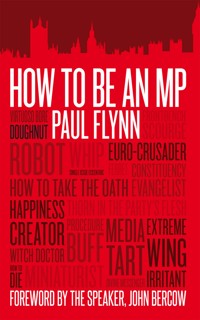
Best summer reads 2015 John Crace, Guardian Not for everyone the title of Prime Minister, Foreign Secretary or other such hallowed callings; the vast majority of the House of Commons is made up of backbenchers – the power behind the constitutionally elected throne. Here is a guide for anyone and everyone fascinated by the quirks and foibles of Westminster Palace, covering all species of backbencher and providing every hardworking MP and political enthusiast with the know-how to survive life in Parliament. From how to address the crowd, weather marital troubles and socialise at party conference to the all important Backbenchers' Commandments, How to Be an MP is indispensable reading for anyone wishing to make a mark from the back bench and influence proceedings in the House. And in the process it provides the outsider with a riveting insight into life as a Member. - An unique guide to being a Member of Parliament. - Essential reading for MPs and a fascinating account of life and work in the world's oldest Parliament. - Has sold 5,000 units since first publication in 2012. - Foreword by Speaker John Bercow.
Sie lesen das E-Book in den Legimi-Apps auf:
Seitenzahl: 382
Veröffentlichungsjahr: 2012
Das E-Book (TTS) können Sie hören im Abo „Legimi Premium” in Legimi-Apps auf:
Ähnliche




















HOW TO BE AN MP
PAUL FLYNN
Dedicated to the honoured memory of the late David Taylor, MP for North West Leicestershire 1997–2009.
‘The best of us’
CONTENTS
Title Page
Dedication
TEN BACKBENCHERS’ COMMANDMENTS
ACKNOWLEDGEMENTS
FOREWORD
FIRST STEPS
How to Arrive
How to Take the Oath
How to Cohabit with IPSA
How to Find a London Home
How to Appoint Staff
How to Vote
How to Find a Role
Sleaze Buster
Commons Fixture
Campaigner
International Statesperson
Legislator
Select Committee Loyalist
Thorn in the Party’s Flesh
Euro-Crusader
Sleaze Monger
Constituency Evangelist
Extreme Wing Irritant
In-Flight Fueller
Deputy Speaker
Speakers-in-Waiting
Single Issue Eccentric
Gullivers
Frontbench Scourge
Media Tart
World Conscience
Miniaturist
Minister-in-Waiting
Procedure Buff
Comedian
Happiness Creator
Witch Doctor
Robot
Divine Messenger
Virtuoso Bore
Social Security Buff
Ferret
Select Committee Chair
Mantra Chanter
Tantric Teaser
Whip
Mute Witness
Tyranny Smasher
Heckler
Committee Time-Filler
QUESTIONS
How to Ask a Question
Prime Minister’s Questions
Oral Questions to Ministers
How to Ask a Written Question
How to Answer Answers
How to Use EDMs
How to Do the Business
Adjournment Debates
IN COMMITTEE
How to Sparkle on Euro-committees
How to Live Through Private Bills
How to Shine at Select Committees
How to Endure Public Bill Committees
THE OFFICE
How to Knock-Out the Mail
How to Write a Standard Letter
How to Write an Abusive Standard Letter
How to Deal with Insane Letters
How to Cull Invitations
How to Delegate
How to be Reported
How to Use the Library
How to Allocate Time
How to Run a Campaign
How to Deal with Disaster
How to Eat and Drink
How to be Comforted
How to Avoid Bad Language
How to Blog
How to Disperse Swarmers
How to Tweet
THE PARTY
How to be Whipped
Expulsion from Party
How to Befriend
How to Grow a Shell Back
THE MEDIA
How to Handle the Press
How to Write for the Papers
How to Broadcast
How to Bargain Fees
How to Dress
How to Get Real
How to Say No to the Media
THE CONSTITUENCY
How to Please Constituents
How to Allow Ventilation
How to Hide the Address
How to Convince Voters that the MP Never Stops Working
How to Run Surgeries
How to Say No
How to Be a Conduit
How to Find the Silent Voices
How to Sympathise
How to Nourish the Seed Corn
How to Switch On Young Voters
How to Run a Rough Tour
How to See Off Challengers for the Seat
How to Stay Married/Single
How to Behave in a Recess
OUT OF TOWN
How to Survive Abroad
How to Party (Conference)
How to Help the Party
How to Avoid/Adore Royalty
IN THE CHAMBER
How to Pray
How to Speak
How to Address
How to Recover from Crash Landings
How to Avoid Language Lapses
How to Survive the Speaker
How to Dilute Boredom
How to Doughnut
How to Nickname
How to Cultivate Enemies
How to Insult
How to Out-Tech
How to Prepare Impromptu Remarks
How to Be a Hooligan
How to Intervene
How to Legislate
How to Use Ten Minutes
How to Petition
How to Win Prizes
How to Apologise
ADVANCED STEPS
How to Get it Wright
How to Go to War
How to Squirrel
How to Survive Unpopular Causes
How Not to be Spun
How to Ignore Disabilities
How to Avoid Murder
How to Persuade Government
How to Free Information
How to Blaze a Trail
How to Walk on Water
How to Climb the Greasy Pole
How to Succeed
How to be Honoured
How to Use Privilege
How to Switch Off
How to Stay Sane
How to Know the Village Folk
How to be Re-Elected
FINAL STEPS
How to be Ennobled
How to Resign
How Not to Revolve
How to Eulogise
How to Die
THE FUTURE
How to Restore Trust
Copyright
TEN BACKBENCHERS’ COMMANDMENTS
1. Value the role of a backbencher as a high calling.
2. Serve constituents, the weak and the neglected.
3. Seek novel remedies and challenge accepted wisdom.
4. Attack opponents only when they are wrong.
5. Never covet a second income, honours or a retirement job.
6. Value courage and innovation above popularity.
7. Honour the party and extend its horizons.
8. Use humour and colour to convey serious ideas.
9. Fortify the independence of backbenchers against the Executive.
10. Neglect the rich, the obsessed and the tabloids and seek out the silent voices.
ACKNOWLEDGEMENTS
The Expenses Scandal, the Wright Reforms and the Bercow Speakership have transformed Parliament. This new volume attempts to wrestle with the bewildering problems ahead while retelling some of the best-loved lessons from the past.
Thanks to Madeleine Moon and other colleagues who have persistently encouraged me to write a new edition of CommonsKnowledge. My team – Jayne Bryant, Lisa Eynon and Sam Flynn – have inspired with fresh ideas and wise advice. Parliament has been a great teacher for this backbencher. There is much still to learn.
Paul Flynn
FOREWORD
By background a chemist in the steel industry, a community broadcaster, a political researcher and a councillor, Paul Flynn has proved to be a tenacious, resourceful and independent minded Member of Parliament for Newport West. Always a supporter of, but never a slave to, his beloved Labour Party, Paul is one of those MPs who entertains a wide range of political interests and has pursued them unwaveringly according to his own lights, irrespective of the received wisdom of the Government or the Official Opposition at any particular time. Health, drugs policy, social security, animal welfare, constitutional reform, Afghanistan and opposition to the Trident missile system are but a few of the issues on which he has been an outspoken and passionate campaigner. Following a brief spell on the opposition front bench, which ended over two decades ago, Paul Flynn has devoted himself to being an effective backbench parliamentarian. He has acquired significant experience on parliamentary committees and continues to serve with the Public Administration Select Committee and the Political and Constitutional Reform Committee. Yet he is best known for his witty, incisive and often provocative questioning in the Chamber of the Commons of ministers in successive governments.
Few people can be better equipped to write on how to be an MP. Using a combination of anecdotes drawn from personal experience, historical references and astute perceptions, he manages to capture the practical issues and challenges of political life with good humour, affection and insight. He has seen it all, said it all and done it all in his time and can pass on many clear-sighted words of wisdom to others who want to enter the political fray at Westminster. For those that don’t, this book is an entertaining and fascinating account, giving the unvarnished truth about life for an MP and all the compromises and difficulties that entails. His thoughts on the impact of the new intake of MPs since the 2010 election and the reforms that have helped breathe new life into parliamentary scrutiny are an encouraging indicator that we are heading in the right direction.
He tackles many of the challenging issues head on, such as in his sections on ‘How to Restore Trust’, ‘How to Switch on Young Voters’ and ‘How to Deal with Disaster’. But perhaps his greatest skill is to convey the complex, infuriating, exhausting but ultimately compelling life of an MP. I thoroughly recommend this book with one exception, because a Speaker cannot possibly commend a section entitled: ‘How to be a Hooligan’!
I trust you will enjoy what should be a stimulating and rewarding read.
John Bercow January 2012
FIRST STEPS
How to Arrive
‘MP’
You have earned two vibrant letters that inspire pride, hope and trepidation.
Once they were an accolade. Now they can be an albatross.
They are your ‘Open Sesame’ into a privileged freemasonry of 650 legislators who are loathed and loved in unequal measure – post-expenses scandal now more loathed than loved – by the rest of the population. Difficult choices are ahead. Will you be a ‘Tiger’ or a ‘Bagpuss’? A Roundhead or a Cavalier?
Heart a-flutter you journey to Westminster. Family, friends, your adoring constituency party, purring happiness, waved you off on the odyssey they believe will eventually lead you in triumph to No. 10. Or not. You are about to enter a monastery with glass walls through which the jackals of the tabloids will watch your every twitch and sniff. Following the expenses scandal, ignominy and prison are terrifying alternative destinations.
In your previous career you may have enjoyed high status. Here, captains of industry, acclaimed academics and lions of charities or trade unions are all reduced to apprentice sprogs. It’s up to you to adorn your blank page.
It can be an intoxicating experience. After the giddy whirl of the election campaign’s adrenalin, sleep deprivation and fatigue, the mood swings into breathless bewilderment and euphoria.
There are consolations. Gone is the past indifference and even hostility that once cold-doused arriving parliamentary virgins. The massive 232 in the 2010 intake have been the first generation of new MPs to be cosseted and cuddled into Parliament. They were ushered up to the first floor of Portcullis House and given their parliamentary pass, a laptop, a Blackberry and a twenty-minute induction on the new expenses system. First contact with the scary Independent Parliamentary Standards Authority (IPSA) is at hand as MPs are walked through the bewildering online claim forms and given detailed explanations of parliamentary etiquette.
A guidebook reveals all, including how to order stationery, ‘make friends with the Order Paper’ and what to do in case of a chemical or biological attack. Soon the weight of information-overload baffles. The sense of an out-of-body experience wilts the spirit.
A common mistake is to drop into the Commons Post Office and ask if there are any letters. There will be hundreds of constituents eager to test the mettle of new MPs. A high proportion will be hopeless cases that have sought solutions for their intractable problems for years.
A new MP is a celebrity in their constituency; in the Commons a mere insignificant one amongst 650. One Member of the 2010 intake described the frustration she felt during her first few weeks at having to negotiate ‘labyrinthine corridors’ that all look the same and work from ‘a table in a cafe’ until she was finally given an office. Old lags will endlessly droll on about how they had to put up with a desk in the corner of the Library for their first ten years. But it has improved. Now, all new MPs will have an office, probably shared at first. The omnipotent whips distribute space. The pinnacle of office accommodation is Portcullis House, only accessible to frontbenchers or senior MPs, but it is a trade-off between proximity to the Chamber and size. A broom cupboard without a window above the Commons Chamber is the equivalent of an office the size of a double garage in far-flung Norman Shaw. Those who fall for the lure of space may regret it. On countless future occasions the penalty will be a breathless dash in the rain from an outbuilding to reach the division lobby in the eight minutes allowed. The airless padded cells above the Chamber are tempting. Empty, they may look adequate but the free space will shrink to Lilliputian dimensions when the furniture, files and staff move in
How to Take the Oath
The first task is to take the oath. This is not the time to display good manners. Scheme, elbow and cheat a path to the head of the queue. The rule is ‘No oath: No pay’ – until the traditional rigmarole has been endured, no pay packet will arrive. Pity the by-election winners who have to wait through the long summer recess before they get on the payroll. The place in the queue may determine whether the junior Member will make it as Father/Mother of the House in fifty years’ time. Seniority is reckoned according to the position in the queue taking the oath. Bernard Braine owes his spell as Father of the House in 1987 to his industry in 1950. He organised his way to the pole position in the queue ahead of courteous gentlemanly Ted Heath, who was of equal seniority. Braine swore the oath at 5.45 p.m.; Ted at 6.50 p.m. From 1987 to 1992 Heath smouldered as Father-in-waiting. He would have used the weapon of prime seniority to add weight to the bludgeon he used to repeatedly thump Thatcher.
For republicans the oath is tricky, but there is now a precedent for attaching your own conditions to the official wording to weaken or nullify the full meaning. Dennis Skinner in 1992 declared his loyalty to an ‘income-tax-paying monarch’. Tony Benn began his oath with the words, ‘As a convinced republican and under protest…’ The clerk who acts as Master of Ceremonies will not argue with any additional words. The oath is valid as long as the core promise to the sovereign is made. This is the first taste of Parliament’s infantilisation before royalty. Instead of standing tall as proud elected citizens, MPs abase themselves as humble subjects. Worse is to come.
Disappointingly, oath-taking is rarely a moving solemn moment. With a queue of hundreds, it is usually a brisk garbled mutter: ‘Hold the Bible/Koran/Torah; read the words; swiftly exit left.’ Very few Members have taken advantage of the television cameras that are silently recording all 650 oaths. To stir the pride of the electors of Votingham, deliver the oath in a great declamatory voice appropriate for a Nuremberg rally. Let the perfectly formed words reverberate around the Chamber in a sonorous crescendo. The rest of the queue will not understand and they will fret. But on regional television, it will sound Prime Ministerial to the Votingham folk.
Many have regretted their frankness in revealing their full names. After taking the oath they are all published on the Order Paper. Baptismal names that MPs may prefer to forget include Gideon, Aylmer, Knatchbull, Scrimgeour, Choona, Wyvill, Le Quesne, Roffen, Bosco, Pelham, Crolus, Thain, Daubeney, Hendrie, Hannibal, Hadrian, Guinness, Gurth, Haggit, Islay, Egerton, Heneage, Cresswell, Ducane and Flasby.
How to Cohabit with IPSA
The hideous screaming nightmare of the expenses scandal shamed and scarred MPs. We should have raised the alarm earlier. The dishonesty revealed was on a scale that few expected. Some have been justifiably punished. Other lives have been destroyed unfairly.
One may have attempted suicide. A strong minded Tory MP burst into tears when he described to me the insults he and his family had suffered. A Labour MP’s hands trembled uncontrollably when the subject was raised. He died prematurely.
None of these three were crooks or dishonest. The scalding abuse of the papers wounded three conscientious MPs deeply. They all eventually blamed themselves for destroying their self respect at the deepest level of their beings.
Mortified by guilt and shame the Commons gripped IPSA in an embrace of revulsion. There is no other solution. A malign beast invaded and occupied MPs’ territory. It has little sight or hearing and communicates in incomprehensible jargon and hieroglyphics. It must be kept docile and not aroused too often from its lair. Its irrationality must be learned, imitated and practised.
IPSA was convinced that all MPs would steal their grannies’ last pennies given half a chance. IPSA’s task was to trust no one and disbelieve everything. Tory commentator Iain Dale described IPSA as ‘a quango feathering its own nest and delighting in forcing MPs to wear hairshirts’.
They re-invented a discredited but efficient wheel and came up with a square one with spikes. A simple five-part claims system was atomised into a hundred headings and sub-headings. A monthly thirty-minute chore was complicated by IPSA into endless hours of tedious frustrating trawling through a bureaucratic morass of irrational rules. The nerve-jangling frustration and petty-fogging jobsworth quibbles robbed MPs of their most precious possession – time.
IPSA were merciless in publishing MPs’ alleged mistakes. Almost all were the results of failures to obey incomprehensible IPSA rules. The demoralised mood of MPs inhibited criticism of IPSA’s failings. In May 2009 one MP was told that £2,500 in pension contributions had been wrongly deducted from him. IPSA promised to repay the sum in June, July and then August. Finally they coughed up in September. In December IPSA told him they had repaid too much. Could they have £500 back?
MPs would embrace a new system without claims or the expensive IPSA. It could be based on an allowance calculated on average expenses and paid automatically. It would be acceptable even if it meant a substantial reduction in the amounts that MPs receive. They would be liberated from the tentacles of the beast. MPs would gain time, IPSA’s costs would disappear.
A day of consensus will dawn. IPSA will have served its purpose. It should then be humanely put down, buried under a slab of concrete never to rise again from its dishonoured grave. But until that happens, you’ll just have to live with it.
How to Find a London Home
The present crop of MPs are being punished for the excesses of their predecessors. Public scrutiny is sharply focused on MPs’ homes.
I regret contributing to a television programme on expenses. My comments were intended to balance wild press exaggerations on alleged extravagance. All in vain. The broadcast programme purported to show a typical MP’s balcony flat overlooking the river Thames. They omitted to mention that the £2m purchase price was impossibly excessive on MPs’ allowances. But the myth is more powerful than the truth.
The affordable choice is modest, especially since many of the running costs are now not reimbursable. The principal need for the hermitage is proximity to the parliamentary workface. Generations of novice MPs have been first lured by the distant leafy suburbs. Inexorably traffic jams, the congestion charge, high taxi fares and the uncertainty of late night transport have forced them back into the parliamentary square mile.
Many share a mortgage or rent on a flat. The advantages are not just financial. It is useful for sharing cars, taxis and supplying a companion for the bus journey. Ideal MPs’ flats have a bathroom for each bedroom. MPs have a monastic unchanging ritual of leaving every morning at 8 a.m. and returning at 11 p.m. The demands on the bathrooms usually coincide. Often a living room and kitchen are rarely used.
The village of the House of Commons provides all the day’s comforts from the first beverage of the morning to the midnight nightcap. For the majority of out-of-London MPs the only essential purpose of a flat is to provide a place to sleep. A relative of mine stayed for a weekend in the London flat I shared with another MP for the previous seven years. When he turned on the oven smoke poured out. He was cooking the operating instructions inside. The oven had never been used.
A great scattering of MPs nest in the cheaper properties south of the river, principally in Kennington. MPs may only claim for accommodation expenditure in relation to a property at one location, which may be either in the London Area, or within the MP’s constituency, or within twenty miles of any point on the constituency boundary. Mortgage interest payments are being phased out but payments can be claimed for hotel accommodation, rental costs including utility bills, council tax, ground rent and service charges.
IPSA will fund only rented properties. This is now under review. MPs must also repay to IPSA the public share of the notional gain accrued in purchased properties. When property appreciates the taxpayer gains. When property value depreciates the MPs loses. It’s rough injustice but it’s the public’s excessive vengeance for past sins. The London Area Living Payment is limited to £3,760 per financial year. All MPs are eligible for Office Costs Expenditure, whether or not they rent a constituency office. The rates in 2011 are £24,000 for London MPs and £21,000 elsewhere.
How to Appoint Staff
Cautiously.
IPSA has produced job descriptions for staff that have only slight relevance to the real demands of an MP’s workload. All must be described as Office Manager, Senior Parliamentary Assistant, Parliamentary Assistant, Senior Caseworker, Caseworker, Senior Secretary or Junior Secretary. There is no choice but to adjust their jobs to fit the parameters of IPSA’s Procrustean rules.
Though work can be generally divided into research, secretarial and casework, it’s inefficient and disruptive to confine staff to strict silos of work on IPSA lines. If a defined ‘Caseworker’ or ‘Researcher’ is absent, the demand for their work continues. While some specialisms are useful, all staff should be able to undertake any task when required. Their job descriptions and titles should be general and embrace every eventuality.
The total allowance appears to be generous. £115,000 translates roughly into three to four full time staff, who must be paid in accordance with IPSA’s salary ranges. Adjusting the annual budget is tricky and the temptation to spend up to the limit at the start of the year must be resisted. The nightmare of forgotten additional costs such as pension contributions, employer’s National Insurance contributions, overtime, and for any pooled or brought-in services frequently breaks the bank at the year’s end. IPSA might ride to the rescue as they feign humanity.
The best place to find new staff candidates is on the splendid website www.w4mp.org. Prepare for at least fifty applications in the first two days after your advert is published. All will have impressive CVs: writing them is now an art form. Be impressed by candidates who have studied your interests and personality and will bring added value to your work. The beast’s metamorphosis may be at hand. Generally, secretaries are long-term, while researchers last a few years before they venture into new pastures.
There is no guaranteed formula for recruiting staff. Selecting from known candidates shrinks the gene pool; advertising widely will attract many hundreds of applicants, all but a handful doomed to disappointment. All should receive acknowledgements and, if possible, a few words of helpful encouragement or advice on deficiencies. The work of sifting through CVs and arranging interviews is immense.
The shortlist should not be determined by qualifications alone. One astute candidate boasted that she was ‘IPSA literate’ – that is now the equivalent of two honours degrees. Choice should be determined by the skills exercised by candidates in observing MPs’ individual work. Applicants’ letters should be the result of research that informs a carefully crafted re-working of the MPs’ own words and fresh re-presentation of personal campaigns.
The perfect secretary has impeccable computer skills, runs a well-organised filing system and is discreet and resourceful with an elephantine memory. The secretary is often the first point of contact. Intelligence and tact of a high order are vital. The perfect researcher should have similar skills, but with an added dash of curiosity and the persistence to find solutions to seemingly intractable problems. The ability to scan vast acres of material and isolate the killer points is vital. Good caseworkers, meanwhile, are born generously endowed with empathy. They have naturally thick skins combined with the sensitivity to detect injustice. For office harmony the individual interests and ambitions of staff should closely match the constituency and campaigning work of the Member.
At least one MP lost his seat because of the collapse of good relations with his staff and the resultant chaos of his constituency office. He set up an over-ambitious high street local office, which became overwhelmed with constituents’ drop-in queries. Staff could not cope with both callers and correspondence. Replies to letters were delayed, some for months. His diary became disorganised. Appointments were missed. A bad reputation for constituency work is as contagious as a good one. In spite of his good work in Parliament the MP was doomed to defeat.
One-issue campaigners may seek to use the MP as a conduit for their passions. In the 2005–10 parliament one MP asked only a tiny percentage of his many Parliamentary Questions on matters relating to his constituency. The rest probed the specialist interest of his researcher. Opponents exploited this perceived distortion of priorities, which appeared to neglect the constituents. This probably contributed to his massive electoral defeat.
The work of many other Members is marred and disrupted by rapid staff turnover. Never employ anyone only because they are owed a debt of gratitude for political work or loyalty. Even worse is to pick staff because they are beautiful, a relative or have aroused sympathy because of personal calamity. Permanent commitments should not be made until the final day of a six month trial period.
Under the present system of allowances it is possible to contrive an escalating level of pay and all employees should at least be guaranteed the same inflation increases that MPs have. Researchers understand that their career structure is greatly influenced by their MP’s climb up the greasy pole or successful backbench campaigning. Increased allowances from Short Money can be used to increase salaries for rising Opposition frontbench spokespeople. Sometimes it is used to employ more people at depressed rates. The insecurity of the job is exacerbated by the possibility of replacement by civil servants when governments change. The fortunate few can switch employment and land the security and status of special advisers.
The once informal employment of interns is now a bureaucratic minefield. Strict rules apply to wages and conditions for interns or apprentices. Interns must have a job contract and can now be paid a reasonable salary from the staffing allowance. Expenses can be paid to casual ‘Volunteers’. Thanks to Tory MP Robert Halfon it is now possible to fund apprenticeships from parliamentary allowances under terms that are reasonable and fair. Halfon was determined to introduce a genuine apprenticeship, consisting of three days in Parliament, one in the constituency and one in the college. He coaxed funding out of Essex Council and Harlow Greyhound Stadium. ‘The apprentice is not a general “dogsbody” and does real work,’ Robert states. ‘This includes research, e-mails, the drafting of EDMs and help with constituent tours of Parliament.’ It’s a strange concept because there is unlikely to be a job at the end of the apprenticeship. Nevertheless the work and experience gained would be as good as or superior to that achieved by a politics graduate.
There has been adverse publicity for past harsh practices of MPs as employers of volunteers. Lower standards are often demanded of unpaid staff. For a small minority it leads to full time jobs. The majority have no chance of full employment. It is a hateful system. Many became embittered when no real job is offered. All staff should be warned of the precarious, exploitative nature of work in the Commons.
Privileged youngsters will have many other chances in life. Positive discrimination for those from under-privileged backgrounds should be deployed in awarding the rare opportunities to work in Westminster. Wage-less internships unfairly discriminate against those who cannot afford to work for nothing. Reasonable wages can be afforded and must be paid. Parliament’s conscience has been aroused by our past neglect of impoverished aspirant interns.
The best applicants will prompt MPs to ask themselves, ‘How have I managed to run my office without this person?’ The final choice is usually one based on gut instinct. Good luck!
How to Vote
It looks easy but it can be a trap. Outsiders guffaw at the possibility of MPs voting the wrong way. After all the choice is simple, yes or no. Those present who abstain are not recorded.
Gwynfor Evans, Richard Taylor, Martin Bell and Caroline Lucas have all been distinguished one-person parties. They confessed that one of their greatest problems was discovering which way to vote. Commons language and procedure are virtually unintelligible. There is little guidance from the Order Paper. MPs from the major parties are grateful for the sheepdog herding of the whips who direct them safely into the lobby of righteousness and truth. When the MP arrives with seconds to spare before the Speaker’s dreaded ‘Close the Doors’ commandment an instant decision is necessary – sometimes without the guidance of whips. It happened to me on one unforgettable occasion. I had dropped off to sleep in my office and heard the division bell late. I arrived in the nick of time and asked a teller, John McDonnell, for guidance. He pointed to the ‘No’ lobby. I made it with seconds to spare. The lobby was deserted. As I walked through the teller announced the total of votes as ‘One’. On this occasion, however, what appeared to be a major blunder paid dividends. To this day, I have no idea what I had voted against. But it was a cause that was opposed by the Big Issue. For weeks they printed photographs of me and lavish praise as ‘the only principled MP to oppose this damaging piece of legislation’. I modestly accepted their plaudits. My street credibility soared among the street people.
Ten Minute Rule Bill votes are dangerous. Choosing the sheep’s lobby from the goats’ lobby can be a gamble if you have missed the debate. The agreed procedure when a Member votes the wrong way is to vote again in the other lobby if time allows. It’s a legitimate practice to vote for and against. It’s better than voting against the party line for no purpose The Member’s name will appear on both published division lists. When it happens, pray that nobody notices. There is only one way to explain this to the people of Votingham: that is to say that this is the only way to register an abstention. It is. On occasions when there is real doubt, it makes the point that the MP is present but is genuinely undecided. David Taylor, former MP for North West Leicestershire, would vote ‘No’ and ‘Aye’ when faced with such a situation. The ‘David Taylor Vote’ is now a legitimate weapon in the parliamentary armoury. It also defuses criticism that the ‘MP could not be bothered to turn up’.
Deliberately abstaining is sometimes the worst possible option. An MP who was passionately lobbied by both sides on the feared abortion issue decided to be absent on the day of the vote. He hoped to avoid the wrath of both sides. It was double trouble. The ferocious liberated women of his patch and the Little Sisters of Mercy blasted him from two directions for months. Their resentment was long-lived.
The nightmare that haunts all Members on voting disasters involved Billy Bunter lookalike and former Twickenham MP Toby Jessel in a vital vote on VAT that the Government was about to lose because of a revolt by some of its backbenchers. Normally divisions are over in twelve minutes. This one was being watched by millions live on the main ten o’clock television news bulletins. It dragged on for eighteen minutes. Toby had voted with the Government, then nipped into the ‘Labour’ lobby to the Gents that were located a few yards beyond the door inside. The Speaker ordered the doors to be closed. Trapped! Aghast, he ran to the glass-panelled locked doors, spread-eagled himself Garfield-like and begged to be let out. The rules dictate that the lobby must be cleared. The only exit was to pass the clerks at the other end and thereby vote against the Government in the most important vote of the Parliament. Word spread around the Chamber that Toby had retreated to the toilet and was refusing to leave. The Speaker’s job then is to send in the Serjeant at Arms to prod the Member out with his sword. The Government had lost by eight votes. Mercy was shown. The Serjeant at Arms put his pig sticker away and Toby was allowed to slink off – deflated but not unrecorded.
How to Find a Role
There is no job description and little benign advice. If they choose, MPs can go off and live permanently in the USA or the Channel Islands. Some have. The pay is the same if you choose to smother yourself in overwork or choose absence and idleness. However, the press will not allow serial truancy to pass unnoticed in our modern transparent monastery as they did in the past. The miscreants will be excoriated.
The choice of roles is almost infinite. These are some of the more popular ones.
Sleaze Buster
The cleansing of the stables in Parliament is principally the job of the Standards and Privileges Committee, aided in recent times by the Daily Telegraph. With the exception of a few expenses angels, all pre-2010 old lags suffered the hideous trauma of intrusion and exposure resulting from the expenses scandal. The shock therapy of IPSA has been applied. The shock was profound, the therapy protozoan. Some suffered cruel and undeserved torments; others were justly exposed and punished. There is still work to be done to expunge the final remnants of that bad old world where MPs were protected by the myth of being perpetually ‘honourable’: the revolving door to retirement riches is still an antiquated old-boys mechanism that is potentially corrupting; a few expenses can still be claimed without receipts, though admittedly only within strict, reasonable limits. We are still some way from the puritan perfection of an efficient system that is fair to the public and parliamentarians. It will take a generation to restore the trust of the populace. Those who continue to eliminate the final remnants of sleaze can justly call themselves honourable.
Commons Fixture
Careful positioning is the secret to maximise doughnutting opportunities. At Prime Minister’s Question Time a glance at the Order Paper will identify those with a question. Some chronically peripatetic MPs vary their seats in order to appear regularly in the corner of the television screen when the lucky questioners are called. Hone the doughnutting skills. It’s helpful to say something now and again, but not essential. ‘You’re always there,’ the grateful constituents will purr as proof of your eternal vigilance on their behalf. Speakers reward regular attenders. The frequency of catching the Speaker’s eye is proportional to the frequency of being in ‘your place’. Speaker Boothroyd once slapped down a Tory who complained because Dennis Skinner was always being called with the rebuke, ‘But he’s always here.’
Campaigner
The Commons is a launching pad for crusades. Every word spoken is magnified and broadcast, sometimes into millions of homes. A well-equipped office, intelligent staff and immediate access to the media can all be deployed to begin and sustain a crusade. Backbenchers have a wonderful record of reforming campaigns. The canard is that elections are won in the marshy middle ground of political consensus, where a harvest of votes comes from the politically ignorant who lack all conviction. Campaigns are the task of the innovative, unorthodox, unusual suspects. All governments are ultimately conservative and reluctant to challenge the ignorance and prejudice of the popular media. It is backbenchers who champion the major reforms and hold the Executive to account.
International Statesperson
MPs whose best friends confide to them that their talent is zero and prospects nil still have a role. A dozen parliamentary organisations will value Members who are ability-free zones. The Council of Europe, the International Parliamentary Union, the Commonwealth Parliamentary Association, all seek MPs with time and unused brain cells to employ. The only qualification is a willingness to devote an extravagant amount of time to travelling and spending hours in airport lounges and hotels. Life is exotic, shared with strangers in a fog of badly translated, confused, imprecise conversations. The main comfort is that the audience will not be listening to the statesperson in his mother tongue. Even vacuous inanities that stun the House into boredom may sound statesman-like when translated into Estonian or Mandarin. It is the death knell for parliamentary ambitions, but great for air miles. As almost all travel expenses are now published, enthusiasm for visits abroad has faded. The folk of Votingham accept that parliamentary business may be possible in Strasbourg, but any trip to Paris must be ooh-la-la. Very few new MPs are prepared to risk accusations of junketing. Now, the worst motives are attributed to all parliamentary activities. This is unfortunate. Foreign excursions have their place as part of the warp and weave of the parliamentary experience. Serious work is undertaken by all these bodies and international contacts provide a wealth of information, especially on different approaches to shared problems. The penalty is to become a forgotten non-person in Parliament and dangerously absent in Votingham. But it is a prized eventide consolation for MPs in their final term, especially those that have given up or never really got started. One cautionary tale involved a newspaper report on a senior MP who had been de-selected by his party because of his alleged excessive absences abroad. ‘This is untrue and unfair,’ he told the Guardian from his hotel in Kathmandu.
Legislator
The most distinguished role for backbenchers is to push laws through Parliament. Only those who win one of the first six places in the raffle have any chance of getting their bills on the statute books. They are happy to unload bills on to more energetic colleagues. Some lottery losers have created several new laws by taking over the bills of colleagues. Bills introduced ‘behind the chair’, Ten Minute Rule and Ballot Bills can be levered into committee and even into law. Seven hundred and twenty three have made it to the statute book since 1948. But steering a private bill requires parliamentary skills of the highest order. Legislators are the aristocrats of backbenchers. A renaissance of backbench power and innovation is happening. The politics of ideology is being replaced by the politics of reason.
Select Committee Loyalist
Governments need the ballast of the stodgy-brained to pack out Select Committees. Objective truth is a constant threat to the comfort of ministers. Any such outbreak from a lively Select Committee must be smothered by loyalist votes. It is an ideal role for those who are mentally paralysed or impotent. All information and questions necessary to feign competence at public sessions of the committee are supplied by political parties, charities and commercial or trade union interests. The flow is two-way. The loyalist may be called on to leak committee secrets back, including questions provided by advisers. The demands are attendance and constant party loyalty on all votes. The reward is the peace of undisturbed brain receptors that need never be jerked into life. The votes of these pre-programmed minds are perpetually determined. There are also some opportunities for character-building foreign travel and much television exposure as a thoughtful silent doughnut. Happily, some Select Committee loyalists go native. Objective evidence shifts their convictions and rational thought triumphs. Their hold on the job may then be in peril from anxious whips. In opposition there is greater competition for places because fewer frontbench jobs means talent is abundant and underused.
Thorn in the Party’s Flesh
Those who are sickened by party timidity or political correctness can still be a valuable irritant and serve the common weal. The easiest way to win notoriety and attention is to be independent of the party catechism of changing rules. There are endless opportunities for subversion. The media has an insatiable appetite for internal attacks. However, some MPs manage to get away with treachery. The trick is to disguise it with the claim that the Member is being ‘reasonable and fair minded’. For a few with highly marginal seats this role is a calculated ploy for survival. Attracting votes across the political divide is their only hope. This will understandably infuriate the party attacked. But it will not bear a grudge forever. All will be forgotten and forgiven in perhaps twenty or thirty years.
Euro-Crusader
The Europhobes and Europhiles appear divided but are in reality a priesthood of zealots who communicate in a common language alien to others. During the eternal debate on Maastricht, a prize was awarded to anyone who could understand three consecutive sentences in speeches in Euro-lish by Phobes William Cash and Nigel Spearing. Europhiles Giles Radice and Geoff Hoon claimed that they occasionally understood two; three was asking too much. Euro-fascination is all-consuming. Both sides delight in each other’s company. Most MPs during the weary torment of Maastricht would have happily allowed the Phobes and Philes to lock themselves in a padded cell and thrash out the argument. Their final deal would have been gratefully accepted by all.
Euro-crusaders are likely to have a restricted circle of friends who Euro-torture each other without mercy. It’s a matter of deep dismay that the 2010 intake contains a determined group of Europhobes on the wilder wing of the Conservative Party who are fanatical and organised. Euro-loathing may lose its bijou minority appeal if tabloid hysteria succeeds. The 2010 parliament swelled the numbers of Euro-crusaders. They have increased interest in their arcane deliberations.
The biggest rebellion by Government backbench MPs took place in October 2011. Tory Euro scepto-realists flaunted potentially self-destructive divisions. A healthy spirit of independent confidence jerked timid new MPs into blinking self awareness. A harbinger of hope.
Sleaze Monger
The crude ‘money-in-brown-envelopes’ days have passed. Two MPs who were Parliamentary Private Secretaries (PPSs) were expelled from the House in 1994 when they fell for a newspaper sting and grabbed £1,000 to ask Parliamentary Questions about a non-existent product. Following allegations, the extremely insulting charge that MPs could be hired like taxis deeply wounded. But the manipulation of greed still seeks to corrupt the power of Parliament. Successful ‘cash for influence’ stings caught four noble Lords in 2009 and exposed nine MPs in 2010. The fumigation of the Palace cannot prevent re-infestation.
Past successful trough-divers plunged their noses so deep that the only parts of them visible were the soles of their Gucci shoes. The foolhardy may still be at it. Little talent or qualification is required, only guile and a thick skin. The job is to ask the questions, fix meetings with ministers and make speeches prepared by Avarice Unlimited plc, Despot-stan or Pharma-larceny. New evidence suggests that an exceptional mental flexibility is required to pile up private riches while posing as the servant of the masses: damaging legal drugs are pushed on the grounds of civil liberties; murderous regimes are defended in the interest of hearing both sides of the argument; lying tabloids are backed in the name of free speech. Self-deception is a potent force when lubricated with money. There are a few new rules. The House is now wiser. The stables are cleaner. But the beast sleaze is ever-present, ravenous to re-infect. The media is always ready to expose the tempted.
Constituency Evangelist
‘She/he’s a good constituency MP’ is the parliamentary equivalent of saying that someone has nice eyes but (it’s understood) is not beautiful. The hint is that an exclusive devotion to constituency matters means the Member is incapable of more taxing work. Low-level constituency work can be little more than shifting paper. Complaints are passed on and replies returned without any significant intervention by the Member. Specialist pro-active constituency evangelists throw themselves into advocacy for their constituents. Complaints are pursued with phone calls, delegations and a refusal to take no, or even maybe, for an answer. It is a worthy calling for a Member who may achieve more in his minute local pond than others do thrashing about without a rudder in the national ocean. Constituency work is essential, but it’s a sub-plot not the main drama.
Extreme Wing Irritant
To the right and the left there are groupings of like-minded, constructively destructive troublemakers. They share a pathological distrust of current party establishments. The Legislature is stirring. The crash trolley has arrived ready to defibrillate into new vigour the sleeping giant of backbench power. Labour rebels may boast of adherence to every word of the Labour Party Manifesto – of 1945. Tories are enslaved to punishment fetishes. At their most lethal, both are consumed by the backbenchers’ disease of jealousy and loathing of frontbenchers. Indifference to career prospects makes them fearless. Advantages: fun, lots of flattering publicity, hero worship from bands of zealots across the nation. Disadvantages: no political future/honours/favours/promotion to the board of Freeloaders plc.
In-Flight Fueller
Known as Parliamentary Private Secretaries (PPSs), they are the bag carriers, the message bearers for the Great Ones. Their prime task is to sit behind the minister in the House and provide in-flight fuelling. This takes the form of notes scribbled by the ‘invisible’ civil servants who sit in the theatre-like box in the Chamber. Officially they do not exist. But in the Chamber and the committee rooms the minister has a life support system of civil servants a few yards away. The PPSs act as the umbilical link with them. Ministers know that when asked impossible questions in debates, stalling will allow time for the civil servants’ notes to reach them.
One Prime Ministerial PPS and occasional minister, Keith Hill, told me that there was nothing in life that he was ever likely to do that was as interesting as his work as PPS to Prime Minister Blair. The qualifications for the task are a readiness to postpone ambition, and the ability to button up and harden the eardrums against a ceaseless barrage of complaints from moaning colleagues. On their minister’s subject they are denied the right to speak. Hope must be freeze-framed until the call comes to higher office. It frequently never does.
Protracted silence is a cruel torment for politicians. Sometimes it is terminal, and ex-PPSs and whips have been known to lose altogether their speaking talent and confidence. Constituents are baffled and justifiably angered by what they perceive as indolence or timidity. The excuses of backstage influence or the prospects of future power jobs are thinly plausible.
The aristocrats of the PPSs are those who serve party leaders. All parties use leaders’ private secretaries as lightning conductors to divert or channel backbench fury. Ed Miliband has appointed the resourceful and talented Michael Dugher and Anne McGuire. Cameron has the adventurous choice of Desmond Swayne. Swayne has robust views on his fellow Tories, describing one as a ‘mincehead’, another as ‘Mr Angry’ and a forum of grassroots party members as ‘stooges’. He has also said that Francis Maude is ‘not yet trusted by the parliamentary party’, and that Theresa May is ‘neither liked nor trusted across the party’. The lightning conductor may self-combust.
For those confused by the proliferation of secretaries, Sir Humphrey explains all in Yes Minister:
James Hacker: Who else is in this department?
Sir Humphrey Appleby




