


22,99 €
Mehr erfahren.
- Herausgeber: J. Montes Pineda
- Kategorie: Lebensstil
- Sprache: Englisch
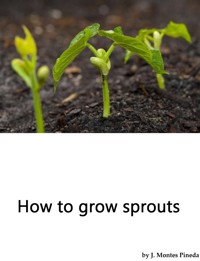
This book is about how to grow your own sprouts indoor.It explains what equipment you need and where to find it.Starting with the seeds, it shows how you can grow your own: salad-, sandwich-, bean- and grain sprouts.
Das E-Book können Sie in Legimi-Apps oder einer beliebigen App lesen, die das folgende Format unterstützen:
Seitenzahl: 52
Veröffentlichungsjahr: 2020
Ähnliche



















How to grow sprouts
By J. Montes Pineda
1. Sprouts
Cheap, Easy to Grow, Provide Year-Round Nutrition
2. The Benefits of Raw Food
Lose Weight, Nourish Your Body, and Stimulate Energy Levels
3. Sprouting Equipment and How to Use It
Trays, Jars, Bags, Automatic Sprouters, and Wheatgrass Juicers
4. Salad and Sandwich Sprouts
Alfalfa, Clover, Radish, and Broccoli
5. Bean Sprouts
Mung Beans, Soy Beans, Lentils, Peas, and More
6. Grain Sprouts
Wheat, Barley, Rye, Oats, Triticale, Quinoa, and Other Grains
7. Seed and Nut Sprouts
Sunflower, Sesame, Pumpkin, Peanut, and Flax
8. Seasoning Sprouts
Basil, Celery, Cress, Dill, Fenugreek, Mustard, Onion Family, and More
9. How to Grow Microgreens
Grow a Gourmet Baby Salad, Anytime, Anyplace!
10. Wheatgrass Juice From Homegrown Sprouts
How to Grow and Juice Your Own Wheatgrass
11. Where to Get the Best Sprouting Seeds
Trusted Sources for the Freshest Quality
12. Where to Find the Best Raw Food Sprout Recipes
Delicious ways to enjoy your sprouts, raw or cooked
All Rights Reserved © 2020 J. Montes Pineda
1. Sprouts are Easy to Grow, Healthy, and Provide Year-Round Nutrition
Would you like to grow some of your own food this year? Indoors? With no sunlight or soil? At any time of the year and at all times of the year? Sprouts allow you to do all that and more. In fact, you can grow all the vegetables your body needs (plus all the protein as well) in an area that’s no bigger than your microwave oven. I grow sprouts on top of my refrigerator, harvesting baskets of fresh, raw food every week without even going outside.
Growing sprouts is simple and it’s cheap. Sprouts can provide you with the power-packed nutrition your body needs at a fraction of the price of store bought food. You can save money while eating right. There’s no dirt, no pests, and no weeding required.
This short guide will teach you how to grow sprouts and enjoy eating them. If you like salads, I’ll show you how to make delicious bowlfuls with tasty mild or spicy sprouts. If you enjoy eating cereal for breakfast, try some sprouted grains with natural malt sugars that nourish your body and taste far better than boxed cereals.
Need to lose a few pounds? Simply eating a few more sprouted beans will keep you feeling fuller and eating fewer carbs. Toss some sprouted beans, lentils, or peas into your next rice or pasta dish; they make great burgers as well. You’ll find that your body absorbs the protein better when the beans are sprouted, which usually reduces flatulence as well. All this nutrition, protein, and fiber will have you shedding a few pounds in a hurry.
If you’re on a raw food diet already, then sprouting is essential. Sprouting is the most reliable way to prepare grains and beans for raw consumption. Once sprouted, these foods are easier for the body to digest and can make up an important part of your diet. In addition, you can increase your quantity of homegrown fresh vegetables by sprouting some alfalfa, clover, radish, or broccoli seeds plus growing a few trays of microgreens. You can grow them all indoors, at any time of the year, no matter how cold it is outside.
Nutritionally, sprouts are powerhouses. Sprouted soy bean and mung bean sprouts contain twice the protein of their original bean seed. A cup of bean sprouts contains nearly 20% of your recommended daily allowance of vitamin C, plus iron, calcium, B vitamins, and tons of fiber. Radish sprouts have more vitamin C than pineapples. Alfalfa sprouts contain large doses of A, B and C vitamins, plus essential minerals like calcium, magnesium, and potassium.
The picture above shows some purple cabbage microgreens growing in a tray of soil. If your screen shows it in color, you’ll see the beautiful light purple stems with dark green and purple leaves. The beautiful purple/red/blue pigments in many plants are due to the presence of anthocyanins, the powerful antioxidants that make blueberries and red wine so healthy. Sprouts and microgreens often have higher concentrations of nutrients and beneficial compounds than mature plants do.
For example, broccoli sprouts contain a powerful substance called sulforaphane that has shown great promise in fighting cancer and heart disease. Its levels are 20-50 times higher in broccoli sprouts than in the actual broccoli vegetable. Researchers at Johns Hopkins University and the University of Saskatchewan have confirmed its incredible potency, which may be thousands of times more effective than antioxidants. While you could not physically eat enough broccoli in a day to get a major benefit, the lead of author of one of these studies suggested that eating just a cup or two of broccoli sprouts per day may allow your body to “correct major cardiovascular dysfunctions such as hypertension and stroke”.
You can grow most sprouts indoors with no direct light or soil (except for microgreens, which need soil). They grow quickly and do not need much space to grow. Sunlight, soil, space, time, and weather are no obstacle to growing sprouts, which means you can keep growing them again and again year-round. Even in the cold winter months, when fresh food cannot be grown outside and is expensive in stores, sprouts can supply you with a fast, easy source of organic vegetables.
All sprouts are live, raw foods rich in healthy enzymes and phytonutrients. The next chapter discusses why adding raw foods to your diet is a great thing to do for your body.
2. The Benefits of Raw Food: Lose Weight, Nourish Your Body, and Stimulate Energy Levels
Raw food contains many nutrients that are lost in the cooking process. Our prehistoric ancestors ate most of their food raw until around 12,000 years ago. The human body has not yet adapted to the large quantities of cooked and processed foods we feed ourselves. This is a big reason for the high rates of diabetes, cancer, heart disease, and other chronic ailments: we are poisoning ourselves with so much over-cooked, over-processed foods.




