


11,99 €
Mehr erfahren.
- Herausgeber: Clink Street Publishing
- Kategorie: Lebensstil
- Sprache: Englisch
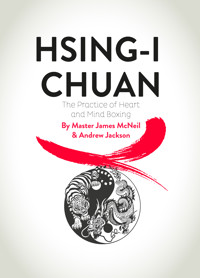
Hsing-I is one of the true treasures of the internal martial arts. Based on ancient Taoist philosophy, it has both the capacity to be used as a devastating martial art alongside its ability to improve the health of a practitioner by promoting the circulation of chi throughout the body. Historically, its lineage is said to trace back over 900 years. The internal martial arts is a subject discussed by everyone who practices kung-fu but is known and employed by only a few. In this book, Master James McNeil and his student, Andrew Jackson, present a comprehensive analysis of this unique internal art. Consisting of insightful information, accompanied by hundreds of photographs and illustrations it discusses both the theories and practice in a clear and understandable manner, making it a worthwhile read for all levels of practitioner. Sharing with the reader and explaining the meanings of the deep Taoist philosophical theories pertaining to this art, Master James McNeil draws on over forty years of study and practice alongside his own unique insight into Hsing-I Chuan passed on to him by his teachers, Master Hsu Hong Chi and Grandmaster Chiao Chang Hung of Taiwan. Whether you are just starting to learn Hsing-I or you are an experienced practitioner, this book will help enrich your practice and understanding in greater depth, the attributes pertaining to this ancient and beautiful Chinese internal art. Never has this depth of information been printed in the English language on this subject and readers will discover the art of Hsing-I Chuan, enabling them to enhance their practice, improve their health and cultivate their spirit.
Das E-Book können Sie in Legimi-Apps oder einer beliebigen App lesen, die das folgende Format unterstützen:
Veröffentlichungsjahr: 2018
Ähnliche













HSING-I CHUAN
The Practice of Heart and Mind Boxing
Master James McNeil & Andrew Jackson
Dedication
It is with great honour that we write this book together. Without the help of Andrew and Julie Jackson this book would never be finished. We are hoping that after writing this book everyone who takes the time to read it will discover the wonderful world of internal arts attributed to Taoism.
After studying Hsing-I for at least forty years, I am again writing a book on this martial art with my student, Andrew Jackson, in honor of my teachers; Master Chiao Chang-Hung and Master Hsu Hong-Chi. I miss them both very much.
In my first book on Hsing-I, written in 1984, the final version that went to print was not complete as thirty six important pages were missing and also many pictures, including animals and teachers’ names. The content of this book rectifies these omissions and includes many more very important facts about the art of Hsing-I that, to my knowledge have not been written in any another book to date.
I give thanks to my masters, for the wisdom they have bestowed on me and for the encouragement to practice and teach this treasured art. When I was in Taiwan or when they stayed in my home in California each year, they furthered my training and knowledge in the hidden secrets of Hsing-I, meditation and lovemaking.
Finally, I hope this book will help all kung-fu practitioners in their study of Hsing-I Chuan and keep this lineage alive for generations to come.
Master James W. McNeil, 2017
Acknowledgements
First and foremost, to my teacher, Master James McNeil for allowing, encouraging and supporting the writing of this book.
To Julie, my wife, for the countless hours spent at the computer, helping to organise my sometimes erratic writing style and thoughts. Also for taking many of the photographs contained in this book, setting them out and creating illustrations which help to demonstrate the content of this book and bring it to life.
To Beverley Richardson, PD Print, for her help in arranging and printing draft copies prior to publication.
To my senior brothers, Al Lam and Jim Doty for kindly writing the prefaces contained in this book.
To my senior brothers, brothers and sisters around the world who have given their time and support, providing innumerable photographs and opinions on the information contained in the book.
Al Lam
Jim Doty
Gary Doty
John Meiner
Matt Schackno
Tige Johnson
Colin Kane
Stephen Baker
Ajay Kumra
Mike Foster
Brian Atkinson
Simon Hill
I bow deeply to all involved with the utmost gratitude and respect.
Andrew Jackson
Contents
About the Author - James W. McNeil
James W. McNeil has for over fifty years been learning, living and teaching the inner mysteries and secrets of the traditional, internal kung-fu arts. During history, such knowledge had normally been reserved for the elite few within the closed circles of the oriental Taoist societies. Until James McNeil came on the scene it was unheard of for any outsider, let alone a white American, to be accepted as a student by the great martial art masters of China and Taiwan. James McNeil has had the rare privilege to study with such greats as Master Hsu Hong-Chi, ‘The Man With the Magic Hands’ (Hsing-I & healing arts, Taoist sexual techniques), Master Chin Chen-Yen (Tzu Men-Chuan – the rare and deadly art of ‘Poison Fingers’), Hsu Ting-Ming (Chinese psychic healing), Master Pan Wing-Chow (original Chen style Tai-Chi) and perhaps the greatest of them all, the legendary, Grand Master Chiao Chang-Hung (Little Nine Heaven Kung-fu, Shih Shui, Ba-Kua, advanced Taoist sexual techniques and mediation).
While his masters were alive James McNeil would go to Taiwan every year where they would teach him personally in the internal healing arts, but most of all Master Hsu and Mr Huang taught him personally for four long and intense years, training him in Taoist Lovemaking also known as the Taoist sexual techniques. Through continuous practicing and training hard he was handed down lineage of this method of practice. This honour is only handed down from Master to Student and one per generation. After Master Hsu’s, unexpected death in 1983 James McNeil was excepted as the first and only American student of the Honorable Master Chiao Chang-Hung.
Honorable Grand Master Chiao was known as a living legend in martial arts for his remarkable skills and abilities and his foresight. Grand Master Chiao Chang-Hung taught James McNeil the oldest Taoist system known today, named Little Nine Heaven Wu Tao Kung-fu, along with Ba-Kua, and advanced Taoist sexual energy circulation for health, longevity and mediation, until his death in 2001.
An important aspect of the internal arts is the cultivation and manipulation of sexual energy for health, longevity and of course extraordinary pleasure. Since 1985 James McNeil has been sharing his wealth of knowledge on this subject with groups of people all over North America, Europe and China helping them to achieve superior sexual fulfillment and to treat sexual dysfunctions with simple, natural methods.
Master James McNeil and his work have been featured in articles and covers of magazines such as Inside Kung-Fu, Inside Karate, Masters & Styles, Chi Master, Black Belt, Empty Vessel, Martial Arts Masters, Internal Arts and Orange Coast Magazine, to mention a few, in addition to many local magazines, newspaper articles and foreign publications in England, Sweden, Poland, China and Italy. He has appeared as guest speaker for American Institute of Hypnotherapy conventions, World Research Foundation and Long Beach State University. McNeil has also taught at South Baylo College of Oriental Medicine, and John Bastyr Naturopathic College. He has appeared several times on television in the United States and Taiwan and has produced more than twenty DVD’s and books about martial arts and sexual techniques. His informal and entertaining style is always well received and he has a knack for making almost anyone feel comfortable in an awkward situation. The multitude letters of gratitude and the great respect accorded him by his students attest to his skill and popularity as a teacher.
James McNeil is the director and founder of the Little Nine Heaven International Internal Kung-Fu Association. Students have travelled from all over, including every American state, England, Ireland, Scotland, Spain, Greece, Sweden, Poland, Canada, Russia, China, Japan, Burma, Vietnam, Malaysia, South Africa and many other countries, to come and learn from him. In more recent years he has travelled the world, aspiring to achieve his goal in keeping a promise made to his teachers to keep their arts alive. He has visited his students, helping them continue their training and to pass on his knowledge, unselfishly, to the next generation.
On New Year’s Eve 1999, Grand Master Chiao Chang-Hung, in line with Little Nine Heaven tradition, officially passed on to his student James W. McNeil the title of ‘Gate Keeper of the Little Nine Heaven Wu Tao System’. This honour established him as the next (34th Generation) lineage holder of the ‘Xiao Jiu Tian Wu Tao’, otherwise known as Little Nine Heaven Wu Tao.
It was the lifelong wish of Grand Master Chiao to spread the knowledge of the Little Nine Heaven Wu Tao system across the world and in fulfilment of this wish his student, James W. McNeil, has sought to make this wish a reality. Alongside teaching many students around the world this rare and ancient Taoist system, James W. McNeil achieved his own personal goal of returning the system back to its home in China where its knowledge was thought to have been lost for many decades.
In April 2016, the Chinese government was actively searching the world, looking to locate the next generation master of this system. It was then that James W. McNeil was flown to China at the government’s request where he was introduced to government officials and on providing legitimate documentation as proof of his lineage, was then officially recognised as Master James McNeil, sole descendant and next generation lineage holder of the Little Nine Heaven Wu Tao, the oldest Taoist system known today. He was taken to the original Little Nine Heaven Temple site, where his teacher and Grand teacher both lived and where his name will be officially recorded to the historical lineage of the system. He also visited the original family home of his teacher Grand Master Chiao, the first student to do this since Grandmaster Chiao’s migration to Taiwan.
In October of the same year, Master McNeil retuned to QuingDao, China, where he was further recognised by the Chinese government as the next generation lineage holder of Little Nine Heaven Shih Shui and Taoist lovemaking system and was both a guest of honour and speaker at the first Chinese Sexual Health Conference held in over sixty-five years.
Following is a list of James W. McNeil’s internal martial arts education:
1966–1973
Studied under Master Haumea (Tiny) Lefiti. Obtained the highest degree Black Belt given at that time for Splashing Hands fighting techniques.
1973–1977
Studied under Master Ralph Shun learning southern style Shaolin Five Animals, Wing Chun, Iron Hand and weapons. Obtained the rank of Master Instructor in June 1976.
1977–1984
Studied under Master Hsu Hong-Chi in Taipei, Taiwan. Received extensive training in the arts of Chi-Kung and Hsing-I. Was also taught Tui-Na, Acupressure massage, Taoist sexual techniques and meditation. Obtained a 4th degree Black belt in Hsing-I in 1983.
1983–1987
Studied under Master Chin Chen-Yen in Taipei, Taiwan. Trained in Tzu Men-Chuan system (Poison Fingers) and advanced training in Iron Hand.
1983–1996
Studied under Master Pan Wing-Chow, Taipei, Taiwan, since 1983. Trained in Chen style Tai-Chi.
1984–2001
Master Chiao Chang-Hung, Taipei, Taiwan. Receiving advanced training in Little Nine Heaven Kung-Fu consisting of fighting, sword and Shih Shui Kung. He was also taught Pa-Kua and advanced Hsing-I. Further training in Taoist Sexual techniques and high levels of Chi-Kung and Nei-Kung therapy, along with advanced Meditation.
James McNeil has obtained the following degrees in clinical hypnotherapy:
Bachelor of Clinical Hypnotherapy – American Institute of Hypnotherapy in 1988
Bachelor of Science Hypnotherapy – American Institute of Hypnotherapy in 1989
Doctorate of Clinical Hypnotherapy – American Institute of Hypnotherapy in 1990
Master James McNeil can be contacted through his website www.littlenineheaven.com
About the Co-author
Andrew Jackson MSc, BSc is based in Manchester, England. He is a qualified Chartered physiotherapist and a practitioner of Traditional Chinese Medicine. He has run a successful practice, with his wife, for over fifteen years. Treating the local community of all ages, for a wide range of health conditions and sports related injuries; using a unique combination of Chinese and Western Medicine.
He trained at the Northern College of Acupuncture in York, England and gained a Master of Science Degree in Acupuncture. He also attended the University of Salford, Manchester where he achieved a Bachelor of Science degree with Honours in Physiotherapy. He is a member of the British Acupuncture Council, Chartered Society of Physiotherapists and Acupuncture Association of Chartered Physiotherapists and the Danish Acupuncture Union.
He has written articles for magazines on acupuncture relating to the treatment of tinnitus and the use of moxibustion in Chinese Medicine. He has given talks and seminars across the country on Chinese Medicine and Internal Martial Arts and appeared on local and national radio talking about the use of Traditional Chinese Medicine within his practice. He regularly works with elite athletes from various sports, specialising in the use of acupuncture for treating muscular skeletal injuries.
Also based from his practice in Manchester, is the Little Nine Heaven UK Kung-Fu School, which Andrew heads up under the guidance of Master James McNeil, representing the Little Nine Heaven International Kung-Fu Association in the UK. At his school, he promotes and teaches the systems of kung-fu, Chi-Kung and health practices, taught to him by Master James McNeil. He continues to train as a private student with Master McNeil.
Preface
It is with great honour that I help co-write this book. Without the encouragement from my teacher, Master James McNeil, I would neither have found the courage nor discovered the wonderful world of internal arts attributed to Taoism.
This book has been a project, which has spanned over the last five years and aims to expand on previous written works by Master McNeil. It seeks to add layers of detail to existing knowledge and to show the true richness that the art of Hsing-I has to offer the serious practitioner. This book would not have been possible without the depth of information provided by my teacher.
It is my observation to date that most work pertaining to Hsing-I, translated or written directly in the English language, is very superficial and often simply repeats what has already been said before. This is not to say that the existing material is poor, just that it simply translates what has been written with very little explanation or expansion of its meaning. This maybe because traditionally the explanation was left to the teacher to orally pass to the student in the past. Many students now do not have regular access to a knowledgeable teacher to help correct and discuss their training on a daily basis, therefore it is my hope that this work will help whet the appetite of the Western speaking Hsing-I practitioner and provide a framework from which they can improve their understanding of Hsing-I in both theory and practice.
Further to this, it is the wish of my teacher, Master McNeil, that the lineage and content of Hsing-I, practiced by the Little Nine Heaven school and passed down through a rich heritage of highly ranked masters, is formally documented in Western language and made available to the general public – in particular students in Western speaking countries.
It is with quiet concern that I observe many of the classical internal arts in China being corrupted here in the West by teachers who seek to mix and match from different systems, creating hybrid systems that have very little in common with their original source, in my opinion losing the very soul and spirit originally attributed to them. It is the tradition and spirit of these ancient arts that makes them so special and without the discipline and respect this training creates in the student, these beautiful arts would simply be reduced to the mindless violence attributed to the more modern systems that are becoming popular today.
I have tried to the best of my humble abilities to take the already well written and documented theory of Hsing-I Chuan by my teacher and add to it from my knowledge of Chinese Medicine understanding, in the hope that the Western English-speaking student may understand more deeply the link to the Tao and Taoist theory that Hsing-I offers, how the body works from a Chinese energetic perspective and why Hsing-I has the ability to restore health within the human body and mind.
I am motivated in my desire to help preserve the classical teachings that are passed on to me by my teacher. In writing a book in this way, I have tried to tailor it to the Western mind set by demystifying the often confusing but beautiful language used within Taoism and Chinese Medicine and linking it to the practice of Hsing-I.
This book cannot promise to answer all questions associated with this deep and valuable art, in fact it may raise more questions than it answers, but I hope that by reading the information contained within its pages it motivates students to delve deeper into their own understanding and practice of Hsing-I. I also hope it will contribute to the slowly expanding range of literature available on this subject already published in English. Truthfully, no book or DVD can replace a genuine teacher of the internal arts of which there are few here in the West. I am lucky to have found one such teacher.
Thank you to my Sifu, for the wisdom he has bestowed on me and for the encouragement he has given me to write this book, also for providing personal notes and photographs from his teachers, some of which have never been seen publicly before and help to bring the content of this book alive.
Finally, I hope this book will help my fellow kung-fu brothers and sisters of our school in their study of Hsing-I Chuan and to keep this lineage alive for generations in the future.
Andrew Jackson June 2017 Manchester, England Andrew Jackson can be contacted through his website www.littlenineheavenuk.com
2nd Preface
“I learned that from a book;” those of us who study with Master James McNeil know this phrase well. Yes, we all know that was said in jest and our teacher could not have learned what he just showed us from a book. That being said, I am delighted and grateful to see that he collaborated with my kung-fu brother, Andrew Jackson and others in our Little Nine Heaven family, to publish a comprehensive, illustrated book of Hsing-I Chuan as taught to him by Masters Hsu Hong Chi and Chiao Chang Hung.
Throughout the years, many martial styles have come and gone. Even among the styles that have survived, there are many that only focus on certain attributes and could not be considered as complete martial arts. For example, some styles excel in fighting but are not necessarily good for health cultivation; some styles have advanced techniques that suit experienced practitioners but lack good foundation-building methods to train beginners; some styles have a straightforward curriculum that simplify learning but lack the rich culture that make up an art, etc. Hsing-I Chuan is one of the few arts that has everything within itself; it does not need to look upon other styles to complement its training. It is simple to learn and does not take long to achieve results; yet it is so rich in contents and principles that one does not outgrow the art.
Hsing-I Chuan literally translates as Form-Mind Boxing. ‘Form’ is to train the external and ‘Mind’ is to train the internal. The two trainings complement each other. Without the correct form structure, physical condition, rhythm timing, etc., the mind cannot do much by itself. However, the style is also called Heart–Mind Boxing to emphasise the mental aspect of the art. Master McNeil always exhorts his students to “feel”! The focus is not in training ‘visual’ skill or even ‘listening’ skill; rather, the essence of the art is in training one’s sensitivities. It actively trains our body to align and respond on contact but aims to hone our senses to react naturally without thinking. As one advances in this training, one’s senses become more refined and precise. Feeling is no longer confined to the hands but any parts of the body. To exemplify this, let’s look into the other nickname of this style: Walk–Mind Boxing. Practitioners of this style are known for their body methods and the mechanisms behind that come from training the legs. Hence, the name implies that one’s kung-fu comes from mindful walking. For instance, to feel the “Strength comes from the ground” is not a matter of just sinking all the weight down in the legs. Rather, the feet need to constantly feel the ground and step in a delicate manner. It is so sensitive and precise that if one is to step on top of a leaf, one should be able to feel and line up with the stalk under the leaf and bounce off from that fine support. When one’s form comes alive with feeling, the body and its movements truly become three-dimensional. From that point on, practice becomes interesting and one is considered entering the ‘door’.
Hsing-I Chuan was blessed by a long heritage of masters that not only can ‘walk the walk’ but can also ‘talk the talk’. Without their dedication to study and refine the philosophy, techniques, and theories behind the art, and then selflessly share their findings and experiences all in the spirit of preserving the art, we would not have such a rich repository of lore, tome, and referential resource available to Hsing-I practitioners for generations to follow. In fact, this benefit reaches far beyond one style.
For example, Tai Chi Chuan, renowned for its principles and theories, has an undeniable relationship with Hsing-I. Chen family’s 14th generation descendant Chen Chang Xing adopted Hsing-I’s nine theories into Chen Tai Chi theories that he passed down in Wen country. Chen family’s 16th generation descendant Chen Xin, who wrote the universally acknowledged sourcebook of Tai Chi theory and techniques - “The Illustrated Canon of Chen Family Tai Chi Chuan”, used the Hsing-I Boxing Manual as the base for his 3-3 Boxing Manual.
Although a small collection of these materials written in Chinese has been translated into other languages in recent years, a good English language book about Hsing-I Chuan is still few and far between. To this end, Hsing-I Chuan, The Practice of Heart and Mind Boxing is a work of intense scholarship that took years to complete. We hope it helps fill in the void in English Hsing-I literature and serve not only as a reference for the Little Nine Heaven family but also as a valuable resource that becomes widely accessible to the practitioners in the West.
Al Lam April 2017 San Diego, California.
3rd Preface
It is with great pride and honour that I write this at the request of my teacher, Master McNeil, and my school brother, Andrew Jackson; I believe Andrew has done an excellent job in detailing the deceptively simple art of Hsing-I. I feel fortunate to be involved in this project in whatever simple way that I can. I have a nostalgic attachment to Hsing-I because it, along with Splashing Hands Kung-fu, was my first introduction to the Internal Arts over thirty-five years ago. Thus, began a lifelong journey of self-discovery and development that continues to this day. I have been fortunate over many years, to learn the full complement, of styles and practices that have been entrusted to Master McNeil by his teachers. The sheer volume of information imparted to me seems almost too much to comprehend at times and I truly believe that I would not be here today were it not for Master McNeil and kung-fu. Hsing-I was the beginning of it all.
My journey began in 1980 when my brother, Gary and I walked into the tiny school which was located in a nondescript industrial complex in Orange, California. My brother had discovered it the day before and thought there was promise here after observing a class. The head instructor was not present that day but my brother was impressed with the senior student standing in for him, called Al Lam. My brother and I went back together the following evening when the teacher was there. We had both been interested in martial arts since childhood and we had been on a mission for some time, trying to find a real martial arts teacher, whether it was kung-fu or any other style; we knew enough to know what we were looking for when we saw it.
The head instructor was there the next day and I think our inflated sense of our own abilities and lack of any real knowledge betrayed us. Although I cannot speak of my brother’s thoughts, I was not really impressed with the teacher’s appearance as he looked a very average guy, he was stocky with big forearms and appeared even a little out of shape. I remember thinking he wasn’t very flexible as we watched him lead the class in warm-up exercises. At the time, my brother and I were both enamoured with images of Bruce Lee and really thought our own kicks were something special, however, we were in for a rude awakening.
I will never forget the first time Master McNeil slapped me; demonstrating different forms, he invited me to punch at his abdomen and I really had no concept of “helping the teacher in the demonstration” and I stepped in swinging for the fences. Using the opening move from the Five Elements forms, he slapped down on my forearm with both ‘meaty’ hands and a bright flash of white light exploded in my vision and when it cleared a second later, his huge index finger was drilled half way into my throat. He invited more punches and kicks and with great trepidation I complied a few more times. His hands were like butterflies made from bricks and I couldn’t believe how much his soft touch hurt with so little effort on his part. Then it was my brother’s turn.
Master McNeil told Gary to throw his best kick and Gary fired away but then limped off as he was struck in the ankle with perfect placement and timing by Master McNeil’s oversized fist. As if that wasn’t enough he invited me to freely hit him again. The stomach, ribs, kidneys, he didn’t care and after about half a dozen increasingly frustrated punches and kicks later my hands and feet were sore and I was completely sold.
I was enthusiastic and dedicated, like a sponge, soaking up everything Master McNeil would teach me; Hsing-I, Splashing Hands, Chen Tai Chi, Little Nine Heaven Wu Tao, Ba Kua, Shih Shui, Iron Hand and all the meditations and chi kung exercises.
Eight years later, in 1988 I was fortunate enough to go to Taiwan with Master McNeil and compete in the Tang Shou Tao full contact tournament. While I was there, I visited my teacher’s Masters in their homes and had the rare honour of learning the Tzu Men Chuan forms directly from Master Chin himself.
I was personally drawn to martial arts initially by the self-defence aspects and the skills I have developed under Master McNeil’s tutelage have served me well over the years, however, the healing aspects of Hsing-I and the skill of Master Hsu Hong Chi have probably had the greatest impact on my life.
After the first few years of practise I began to have some issues with my lower back. I am not sure of the cause, possibly excessive supine leg lifts while lying on a concrete floor. Due to a problem with my lower spine involving the vertebrae and fascia sheath, the exercises had led to me having pain down my leg with weakness and numbness so this was affecting my ability to practice. This problem went on for some time and I started to get worried. At the time, Master Chi was over from Taiwan. He was visiting the Tang Shou Tao schools in California and he was sitting in on one of our training sessions one evening. He asked if anyone had injuries or other health issues that he could help with and several students came forward with some minor ailments and problems which he addressed with various Tui Na techniques. I then stepped up and described my problem and I could see his concern as he examined my back and the interpreter relayed my symptoms. It seemed that this wasn’t just another run of the mill injury and I had his interest. The treatment required Master Chi and the help of two other people with the crux of the matter being that I was not allowed to bend over at the waist for three days while the fascia tissue grew back together, otherwise the vertebrae would just keep popping back out. This was challenging to say the least and he treated me again the next evening at class. The treatment was successful on the second session and my symptoms disappeared. Master Chi truly had the ‘magic touch’.
This, of course, was just the beginning of my journey and development through practice of the internal arts. That is the development of energy that lies dormant within us all and can be cultivated through the art of Hsing-I. Throughout my life, there have been many ‘ups and downs’ but I am happy to still be a part of the Little Nine Heaven family that has been raised and perpetuated by our father, Master McNeil, and I will do the best I can to pass on this legacy and honour my teacher and grand teachers.
James Doty November 2017 Arizona
Glossary
The study of Taoism, Chinese martial arts, Chinese culture and both Chinese and Western medicine involves the use of unique languages. Many of the terms used in this book are not used commonly in everyday English, therefore, the following glossary of keywords, terms, names of literature and subjects of history have also been elaborated on in this section. However, to understand these areas in more depth, further research would be required, as to fully explain them in this glossary would be beyond the scope of this book. It is, therefore, advisable for the reader to familiarise themselves with these terms and refer to if necessary before reading further on the subject of Hsing-I Chuan. For ease of reference, the keywords and terms have been categorised and placed in alphabetical order.
Historical Books and Texts
Art of War – Sun Tzu
The Art of War is an ancient Chinese military treatise attributed to Sun Tzu, a high-ranking military general, strategist and tactician. The text is composed of thirteen chapters, each of which is devoted to one aspect of warfare. It is commonly known to be the definitive work on military strategy and tactics of its time. It has been the most famous and influential of China’s Seven Military Classics, and “for the last two thousand years it remained the most important military treatise in Asia, where even the common people knew it by name.” It has had an influence on Eastern and Western military thinking, business tactics, legal strategy and beyond.
Classic of Categories (aka Leijing)
Zhang Jing-Yue (c.1563-1640; original name: Zhang Jie-Bin) had an immense influence on the development of TCM at a time when the Ming Dynasty was collapsing to give way to the Ching Dynasty. One of the major works coming from Zhang’s years of learning and medical practice was the Leijing (a study of the Neijing Suwen). This massive piece of work contains thirty-two volumes and basically combined the contents of the Neijing Suwen with that of the Lingshu, rearranging them according to topical categories and adding lengthy explanations of difficult or controversial passages.
Neijing Suwen
The Yellow Emperor’s Inner Classic of medicine (Neijing Suwen) is the most important ancient text in Chinese Medicine as well as a major book of Taoist theory and lifestyle. The text is structured as a dialogue between the Yellow Emperor and his ministers or physicians, most commonly Qíbó, but also Shàoyú. The Neijing Suwen departs from the old shamanistic beliefs that disease was caused by demonic influences. Instead the natural effects of diet, lifestyle, emotions, environment, and age are seen as the reasons for diseases to develop within the body.
San Ming Tong Hui (The Confluence of the Three Fates)
The Chinese Four Pillars of Destiny is a very old astrological technique. It has been in continuous use in China for nearly 1,400 years and has developed throughout the ages, specifically the Tang, Song and later Ming imperial dynasties. The most authoritative work on the technique is the book titled San Ming Tong Hui written by Wan Yu Wu of the Ming dynasty. This work contained instructions for many methods of divination.
Spiritual Axis (aka Lingshu Jing)
Lingshu Jing also known as Spiritual Axis, Divine Pivot, Spiritual Pivot or Numinous Pivot, is an ancient Chinese medical text whose earliest version was probably compiled in the 1st century BCE on the basis of earlier texts.
Spring and Autumn Annals
The Spring and Autumn Annals is the official chronicle of the State of Lu covering the period from 722 BCE to 481 BCE. It is the earliest surviving Chinese historical text to be arranged on annalistic principles. The text is extremely concise and, if all the commentaries are excluded, about 16,000 words long.
Su Nu Ching
The Su Nu Ching or Classic of the White Madam, by the Yellow Emperor is the ancient Taoist book explaining the hidden, higher purpose of reproduction and lovemaking. It contains secrets which help humanity enjoy life, improve life, love life and benefit from life. Specifically, it provides methods which heighten, intensify, and prolong lovemaking to strengthen the bond of love between couples.
Taoist Canon/Daozang
The ‘Taoist Canon’ consists of around 1400 texts that were collected circa CE 400. They were collected by Taoist monks of the period in an attempt to bring together all of the teachings of Taoism, including all the commentaries and expositions of the various masters from the original teachings found in the Tao Te Ching and Zhuangzi. It was split into categories called ‘The Three Grottoes’. These three divisions were based on the main focus of Taoism in Southern China during the time it was made, namely; meditation, ritual, and exorcism.
As well as the Three Grottoes, there were Four Supplements that were added to the Canon circa CE 500. These were mainly taken from older core Taoist texts apart from one which was taken from an already established and separate philosophy known as Tianshi Dao (Way of the Heavenly Masters). Although the above can give the appearance that the Canon is highly organised, this is far from the truth. Although the present-day Canon does preserve the core divisions, there are substantial forks in the arrangement due to the later addition of commentaries, revelations and texts elaborating upon the core divisions.
Tao Te Ching
The Tao Te Ching also simply referred to as the Laozi, is a Chinese classic text. According to tradition, it was written around the 6th century BCE by the sage Laozi (or Lao Tzu, “Old Master”), a record-keeper at the Zhou Dynasty court, by whose name the text is known in China. The text’s true authorship and date of composition or compilation are still debated, although the oldest excavated text dates back to the late 4th century BCE.
The text is fundamental to both philosophical and religious Taoism. Many Chinese artists, including poets, painters, calligraphers, and even gardeners have used the Tao Te Ching as a source of inspiration. Its influence has also spread widely outside East Asia, and is amongst the most translated works in world literature.
Historical Facts
Boxer Rebellion
The Boxer Rebellion was a pro-nationalist movement, which opposed foreign imperialism and the influence of Christianity within China between 1899 and 1901. The Righteous Harmony Society rebelled at a time when China was in a poor economic state with unrest ranging back to the Opium Wars and Christian missionary work, which undermined the weak Ching State, of the time. Boxer fighters converged on Beijing, forcing the foreigners to seek refuge in the Legation Quarter. In response to this aggression, the ‘Eight Nation Alliance’ brought in armed troops and defeated the Imperial Army, capturing Beijing, lifting the siege of the Legations.
Jin Dynasty 960–1234
The Jin Dynasty was founded by the Nuzhen tribes, who originated from the Changpai Mountain area. In 1115, a Nuzhen tribal leader, named Wanyan Aguda, unified the group and waged war constantly with the Liao Dynasty and Northern Song Dynasty people. These battles resulted in the Liao army being completely defeated by the Jin army in 1125 and the Northern Song army were conquered in 1127. After that, the Jin Dynasty gradually unified the vast areas in the north along the Yellow River. During the late Jin Dynasty, rulers became corrupt and there was a dramatic surge in national uprisings. The Jin court in that period made enemies, including in these was the Mongolian Kingdom and in 1234, the Jin army was finally defeated and the Yuan Dynasty was founded by the Mongolians.
Jin Measurement
The Chinese Jin (also known as a ‘catty’) has a modern definition of exactly 500 grams. Traditionally about 605 grams, the Jin has been in use for more than 2000 years, serving the same purpose as ‘pound’ for the common-use measure of weight.
Kung-Fu
In Chinese, Kung means ‘work’ or ‘achievement’ and Fu can mean ‘intensity’. It can be used in contexts completely unrelated to martial arts, and refers to any individual accomplishment or skill cultivated through long effort and hard work. It is only in the late 20th century, that this term was used in relation to martial arts by the Chinese community. Chinese martial arts, colloquially referred to as kung-fu have developed over the centuries and are often classified according to common traits, identified as ‘families’ (jiā), ‘sects’ (pài) or ‘schools’ (mén) of martial arts.
Pa Kua Zhang (aka Ba Gua Chang)
Translated into English as Eight-Trigram Palm, it is a form of internal martial arts, which is practiced by changing of the palms whilst walking in a continual circular motion. Its foundation is credited to Master Dong Haichuan (1796–1882).
Shaolin
Shaolin Temple is famous for its martial arts. Shaolin Kung-Fu refers to the traditional cultural system that has formed in the particular Buddhist cultural environment within the Shaolin Temple of Songshan Mountain in China over long history. It is based on a belief of Buddhism and fully reflects the wisdom of Buddhist religion. The martial arts practiced by monks in the Shaolin Temple are its major form of expression.
Taiji/Tai Chi Chuan
An internal form of martial art that is made up of a complex set of movements. The characteristics of the movements are flowing, relaxing and graceful in appearance, however the same moves can be lethal if applied in a fighting situation. Tai Chi Chuan is the most widely practiced form of the internal martial arts and can be practiced for health, meditation and self-defence.
Taoist Terms
Celestial Bodies
The Celestial Realm (Heaven) brings the energy of heat and light (Heavenly Chi) to the world. It defines our seasons, and brings celestial influences into the spheres of the Earth and humanity. The way of Heaven refers to the orbits and rules of the movements of the celestial bodies, such as the sun, the moon and stars. The Celestial Bodies have always played an important role in Taoism. Many of the earliest Taoist deities were star gods, and the highest gods of the Taoist pantheon are believed to dwell in different constellations in the sky.
Chi-Kung
Chi-Kung (pronounced ‘chee-gung’,) is translated from Chinese to mean ‘energy cultivation’ or ‘working with the life energy’. Chi-Kung is an ancient Chinese system of postures, exercises, breathing techniques and meditations. Its techniques are designed to improve and enhance the body’s chi level and chi flow.
Earth
The material realm of human existence and belongs to Yin. Earth is seen to include all the land, rivers and seas. It also includes the climate and all visible influences of the seasons. Within the human body, Earth pertains to all things below the level of the navel.
Five Elements-Wu Hsing
Taoists believe the five elements to be Wood, Fire, Earth, Metal and Water. Each element emulates an individual type of energy; each element has a Yin and Yang aspect. Human beings are products of Heaven and Earth and by the interaction of Yin and Yang, contain the combined chi of the five elements, not only in the body physically but emotionally within the mind and spirit.
Heaven
Within Chinese philosophy, Heaven is the immaterial realm, belonging to Yang. The realm of Heaven is seen to include the sun, moon, stars and sky. It also includes the atmosphere around us as well as invisible forces that influence the human body. Within the human body all which is above the navel corresponds to Heaven.
Hun
The spirit (Shen) of the liver is called the Hun or ethereal soul. It is the aspect of consciousness that continues to exist after the death of the body. The Hun is associated with the Wood element. As a person’s internal practice deepens more of the Po or physical aspects of consciousness are transmuted or used as support for the Huns subtler aspects and the person becomes closer to the chi of heaven and the Tao.
Little Nine Heaven Wu Tao (Hsiao Chiu Tien Wu Tao/Xiao Jiu Tian Wu Tao)
The Little Nine Heaven Wu Tao system is an internal method of Taoist cultivation and martial art. It consists of three skills; Ju Kung (‘Nine Chamber Fist’), ‘Chiankuan Jen’ (swordsmanship), and ‘Shih Shui’ (bone-marrow washing). It is mainly based on the Confucian thoughts of the merging of heaven and man to transform one’s disposition. In skill, it is based on the Tao’s practice of the balancing between Yin and Yang to relax the tendons and bones, and to perform marrow washing. Even though its name translates to fist, it is an exclusive literature and a rich inheritance passed down through the centuries by word of mouth.
Macrocosm/Microcosm
Macrocosm is a Greek term used to describe a complex structure, such as the universe, regarded as an entirety, as opposed to Microcosms, which have a similar structure and are contained within the Macrocosm. It is a term commonly adopted in the West in relation to Taoism to describe the comparison between the universe and the human body.
Nei-Kung
Nei-Kung practice emphasises training the coordination of the individual’s body and mind with the breath, known as the harmonisation of the inner and outer energy, creating a basis for developing and utilising internal power. Nei-Kung exercises involve cultivating physical stillness. The ultimate purpose of this practice is for the individual to become at one with Heaven or the Tao.
Ni-Wan Palace
Often termed ‘Dust Pill’; it is a Taoist term for the upper Tan Tien, which is seen as an energy centre located within the brain.
Po
The spirit (Shen) of the lungs is called the Po or corporeal soul. It is the aspect of consciousness that dissolves with the elements of the body at the time of death. The Po belongs to the Metal element. Since the Po exists only within the context of a single lifetime, it tends to be associated with our immediate desires, as opposed to the Hun, which expresses more long-range commitments.
Shen (Mind/Spirit/Consciousness/Vitality)
Shen is an expression of life’s activity. It encompasses the dimensions of mind, spirit, consciousness and vitality. Both chi and Jing nourish Shen, which is said to manifest in two ways. One is the mental state and thinking activities. The other is in the expression of physiological activities and pathological changes in the body. The element associated with Shen is fire as it resides in the heart and is seen to be ‘the emperor’ of the five organ related spirits. Shen of the heart is associated with the overall quality of our awareness, which can be perceived in the energy flowing through our eyes. When Shen is abundant the eyes will be clear, sparkling and responsive.
Shih-Shui Kung
Shih-Shui (pronounced she-sway), also known as ‘bone-marrow washing’ is a component of the ancient Taoist Little Nine Heaven Wu Tao system which originated in China almost 2000 years ago. Shih- Shui is an advanced form of Chi-kung/Nei-kung that focuses on strengthening the internal body and increasing sexual energy with a goal to optimise and preserve the health of the body, mind and spirit. It consists primarily of a series of special breathing and strengthening exercises along with specific energy circulation techniques.
Tan Tien
Traditionally, a ‘Tan Tien’ is considered to be a centre of chi or ‘life force’ energy within the body. The three Tan Tien’s are important points of reference in Taoist based self-cultivation practices of exercise, breathing and meditation, as well as in martial arts and in Traditional Chinese medicine. Usually when discussing the Tan Tien texts are referring to the lower Tan Tien which is the focal point of breathing techniques as well as the centre of balance and gravity. The lower Tan Tien is seen to be located approximately two inches below the height of the navel in humans.
Tao/Taoism/Taoist
Tao is the term given to describe the way of nature. Tao is a cosmological and philosophical term that denotes the universe and all things within it as a whole. Taoism is the term given to the study of this philosophy. Taoists are those people who seek to study the Tao.
The Three Treasures (aka San Bao)
The Three Treasures is the name given to the combination of Jing, chi and Shen within the body.
Thrusting Meridian (AKA Ch’ung Mo)
The ‘Thrusting Meridian’ is the English term given to one of the most important channels of chi in Chi-Kung practice. It is located through the centre of the spine and starts at the perineum (Hui Yin point) and ends at the crown. (Baihui point). It penetrates many vital organs and glands including the spinal column and the brain.
Wuji
An important component of Taoist theory is the Chinese word used to describe the un-manifest aspect of Tao, or Tao-in-stillness. ‘Wuji’ is the undifferentiated timelessness which is represented by an empty circle. It refers to a state of non-distinction prior to the differentiation into Yin and Yang, out of which are born the ten-thousand-things, i.e. all the phenomena of the manifest world.
Yi
The spirit (Shen) of the Spleen is called the Yi, or intellect. Yi is associated with the earth element. The Yi includes our capacity to use our conceptual mind to exercise discernment and to form intentions. An unbalanced Yi can manifest as a kind of overthinking or ‘pensiveness’ that damages the spleen. A healthy Yi manifests as bright intelligence and understanding.
Yin and Yang
The terms Yin and Yang are used to indicate a duality or polarity in the universe that is reflected in human beings, on Earth, in nature and in the way everything relates to each other. The relationship between Yin and Yang is not static; it is flowing and dynamic with continual interaction between them.
Zhi
The spirit (Shen) of the Kidney is called the Zhi, or will and is associated with the element Water. Zhi is the minister in charge of the intention and effort required to accomplish things. This includes the effort and perseverance needed to succeed in a person’s internal practice.
Traditional Chinese Medical Terms
Blood
Blood is the densest, fluid substance in the human body. It transmits nutrients and provides the material matrix for mental and emotional life. Within TCM, blood is seen to nourish the body and be Yin in nature. It is said to be stored in the liver, made by the spleen and propelled by the heart.
Chi
Chi is the essential ingredient that makes life possible. In humans, it represents vital energy, a unique energetic force that makes life sustainable on earth. In nature, chi is also present. Within humans, chi energy is seen to be a combination of both Yin and Yang circulating through pathways called meridians in the body.
Cold
In TCM terms, Cold may attack the external or internal parts of the body. Cold in the interior may be externally contracted or maybe internally generated, due damaged Yang. When Cold is externally contracted, it attacks the exterior and then it directly invades the interior, penetrating to deeper levels of the body. Once Cold is lodged deep inside the body, it tends to devastate Yang and can be life threatening.
Damp
In TCM terms, Dampness is localised fluid accumulation within the body associated with heat or disturbed organ function. It is a heavy, sluggish, Yin pathogenic influence that hinders and obstructs the flow of chi and blood. Internally generated dampness is caused when Spleen Chi is weakened. Damp can also be externally contracted when the body is too weak to protect itself when exposed to a damp environment such as getting wet from the rain or sweating.
Deficient
In TCM terms the state of deficiency within the body occurs when a basic substance is lacking or an organ has been weakened, thus becoming incapable of carrying out its normal function with chi and blood.
Dryness
In TCM terms, dryness may be of external or internal type. External dryness refers to externally contracted dryness when the body is too weak protect itself from weather changes. Internal dryness is due to the Zang/Fu’s loss of Jing essence and depletion of fluids. External dryness may affect the interior parts of the body and interior dryness may also affect the exterior or superficial parts of the body such as the skin.
Du Meridian (aka Du Mai)
Translated in English as the ‘Governor Vessel’, it is one of the eight extra meridians of the body which runs up the back of the spine starting from the tip of the coccyx bone and the anus and ends at the inside of the upper lip of the face.
Excess
Within the human body and TCM principles, excess refers to too much Jing, Chi, Blood or Shen which leads to hyperfunction of any organ or physiological system.
Fire
In TCM the use of the terms Heat and Fire are based on the degree of manifestation. Fire is thought of as a more intense form of Heat. Fire is used to describe conditions with gross visible manifestations of heat such as red eyes, a flushed face, or bleeding. Fire usually relates to excess Yang or deficient Yin within the body.
Heat
Heat can accumulate in the interior of the body causing interior excess or dryness characterised by fever, constipation or abdominal pain that increases upon pressure.
Jing (Essence)
Jing is the indispensable substance from which the body is constructed and life activities maintained. Jing is composed of a prenatal Jing and postnatal Jing; both are closely related. Pre-natal Jing is reproductive Jing inherited from our parents. Post-natal Jing is the nourishment gained from food and water. Together they nourish the Zang Fu organs and are stored in the Zang organs. Many older texts translate Jing as ‘Seminal Essence’.
Jing-Luo
Jing-Luo is a term used in TCM to describe the meridians or channels that form a network of energy pathways that link and balance the various organs. The meridians connect the internal organs with the exterior of the body and the person to the environment and the universe. They serve to distribute chi within the body, protecting the body against environmental imbalances.
Jin-Ye
Jin-Ye is a term used in TCM to describe all the liquids within the body. Jin-Ye protects, nourishes and lubricates the various tissues of the body. The Jin are the lighter-weight fluids that moisten and nourish the skin and muscles, while the Ye are the thicker, more viscous fluids of the bones, organs, brain and body orifices.
Ke cycle
The Ke cycle is the regulatory cycle pertaining to the five-element theory and applied when analysing how the body functions. It is where one phase or element regulates, inhibits and energetically oversees the functions of another element. For further details see the five-element chapter of this book.
Meridians
Meridians (Jing-Luo) are the western term for the pathways that carry chi, blood and fluids through the body. Most acupressure points are located on the meridians.
Rebellious Chi
TCM views Rebellious Chi as chi which flows in a disorderly way and against the normal direction. This causes the disease or illness in the body as the natural ordered flow of chi is hindered.
Ren Meridian (aka Ren Mai)
Translated in English as the Conception Vessel, it is the primary Yin meridian that extends along the front of the body. The Ren meridian originates in the uterus in females and in the lower abdomen in males, and emerges onto the surface of the body in the perineum. It ascends along the midline of the front of the body, ending in the groove just below the lower lip on the face. The Ren Meriden has a primary role in regulating menstruation and nourishing the foetus in females.
San Jiao (aka Triple Burner/Triple Warmer/Triple Heater)
There is no organ in western medicine which corresponds to San Jiao, but it is said to occupy the thoracic and abdominal cavities. It consists of three areas or ‘Jiaos’ as they are referred to in TCM terms.
Shang Jiao, the ‘upper burner’, is located in the thoracic cavity, above the diaphragm and it includes Fei (lungs) and Xin (Heart). It is associated with respiration.
Zhong Jiao, the ‘middle burner’, is located in the abdominal cavity, including Wei (stomach) and Pi (spleen). It is associated with digestion.
Xia Jiao, the ‘lower burner’, is located in the lower abdominal cavity and pelvic cavity, below the bellybutton, and includes Gan (liver), Xiao Chang (small intestine), Da Chang (large intestine), Shen (kidneys) and Pang Guang (bladder). It is associated with waste and elimination.
Seminal Essence (See Jing)
Seminal Essence is the English term for Jing and is the original substance of the body responsible for the construction of the body and generation of offspring.
Sheng Cycle
The Sheng Cycle is the sequence within the Five Elements theory that produces, supports and gives rise to another element or phase energetically. For further details see the Five Element chapter of this book.
Stagnation of Chi and Blood
In TCM terms, stagnation indicates chi or blood flowing weakly through an area, providing it with less than adequate nutrition.
TCM
TCM is an abbreviation for ‘Traditional Chinese Medicine’ and is commonly used to refer to the umbrella of arts that constitutes Chinese medicine practise. It covers a number of skills which are often practised in China as separate methods but can be united in that they all follow the same theoretical philosophy. These arts include acupuncture, Chinese herbal medicine, moxibustion, cupping and acupressure massage and many other effective adjuncts and methods attached to these major methods.
Triple Heater organ (aka Sanjiao organ)
This organ is not actually a physical organ like the other Zang/Fu but it serves to integrate the activities of all other organ networks within the body. The Triple Heater has its own meridian assigned to it and is one of the six Yang meridians whose function is to coordinate the functions of the three main body cavities, pelvis, abdomen and chest and the organs contained within them.
Turbid Chi
A Chinese medicine term used to describe ‘waste’ or ‘dirty chi’ created within the body. This type of chi can be a source of illness within and it should be sought to cleanse or expel Turbid Chi from the body to remain healthy.
Yang Deficiency
Yang deficiency occurs due to injury to the kidney and spleen. Yang deficiency manifests within the body as cold and systemic exhaustion with an aversion to cold. Yang deficiency indicates that something in the body is lacking, so simply wearing more clothing may not alleviate the symptoms.
Yin Deficiency
Yin deficiency occurs when Yin is deficient and fluids are depleted. Injury to kidney and liver causes Yin deficiency as these two organs serve as the reserve of Yin for the entire body. Severe or chronic Yang excess can also lead to Yin deficiency as the warming aspect of Yang will dry up the nourishing aspect of Yin.
Zang/Fu Organs
The Zang/Fu is the name given to the organ system of TCM. It is an extensive theory containing views on anatomy, physiology and pathology, as well as their own principles of diagnosis and treatment. The Zang organs are the heart, pericardium, spleen, liver and kidney. They are classed as Yin, solid organs and store blood/essence.
The Fu organs are the large intestine, small intestine, bladder, gallbladder, triple heater and stomach. They are classed as Yang and are hollow organs. They move substances through the body.
Western Medical Terms
Abdominal cavity
The abdominal cavity is the cavity within the abdomen, the space between the abdominal wall and the spine. The abdominal cavity is not an empty space. It contains a number of crucial organs including the lower part of the oesophagus, the stomach, small intestine, colon, rectum, liver, gallbladder, pancreas, spleen, kidneys and bladder.
Cardiovascular System
The essential components of the human cardiovascular system are the heart, blood and blood vessels. It includes: the pulmonary circulation, a ‘loop’ through the lungs where blood is oxygenated; and the systemic circulation, a ‘loop’ through the rest of the body to provide oxygenated blood.
Diaphragm
The diaphragm is a muscle that separates the chest (thoracic) cavity from the abdomen. The diaphragm is the main muscle of respiration. Contraction of the diaphragm muscle expands the lungs during inspiration when one is breathing air in. We rely heavily on the diaphragm for our respiratory function so that when the diaphragm is impaired, it can compromise our breathing.
Foetus
An unborn offspring, developing from the embryo stage (the end of the eighth week after conception, when the major structures have formed) until birth.
Nervous system
The nervous system is the part of the body that coordinates the voluntary and involuntary actions of the person and transmits signals between different parts of their body. It consists of two main parts, the central nervous system (CNS) and the peripheral nervous system (PNS). The CNS contains the brain and spinal cord. The PNS consists mainly of nerves, which are long fibres that connect the CNS to every other part of the body. At its most basic level, the function of the nervous system is to send signals from one cell to others or from one part of the body to others. The nervous system is susceptible to malfunction in a wide variety of ways, as a result of genetic defects, physical damage due to trauma or poison, infection, or simply aging.
Pathogen
A pathogen is a term used to describe any infectious agent that can produce disease.




