


50,99 €
Mehr erfahren.
- Herausgeber: John Wiley & Sons
- Kategorie: Geisteswissenschaft
- Sprache: Englisch
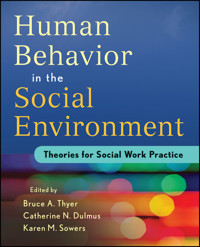
An accessible and engaging guide to the study of human behavior in the social environment, covering every major theoretical approach
Providing an overview of the major human behavioral theories used to guide social work practice with individuals, families, small groups, and organizations, Human Behavior in the Social Environment examines a different theoretical approach in each chapterfrom its historical and conceptual origins to its relevance to social work and clinical applications.
Each chapter draws on a theoretical approach to foster understanding of normative individual human development and the etiology of dysfunctional behavior, as well as to provide guidance in the application of social work intervention.
Edited by a team of scholars, Human Behavior in the Social Environment addresses the Council on Social Work Education's required competencies for accreditation (EPAS) and explores:
- Respondent Learning theory
- Operant Learning theory
- Cognitive-Behavioral theory
- Attachment theory
- Psychosocial theory
- Person-Centered theory
- Genetic theory
- Ecosystems theory
- Small Group theory
- Family Systems theory
- Organizational theory
Sie lesen das E-Book in den Legimi-Apps auf:
Seitenzahl: 1137
Veröffentlichungsjahr: 2012
Ähnliche




















Table of Contents
Title Page
Copyright
Dedication
Preface
What Is a Theory?
Selected Philosophical Assumptions of Social Work Theory
References
Acknowledgments
About the Editors
Contributors
Chapter 1: Human Behavior and the Social Environment: Exploring Conceptual Foundations
Scholarly and Professional Dilemmas Related to Human Behavior and the Social Environment
Development of the Human Behavior and Social Environment Construct
A Selection of Frameworks That Address Linkages Between Human Behavior and the Social Environment
Life Course Approach: An Application
The Social Environment: Key Concepts
Frameworks for Linking Knowledge to Practice
Conclusion
Key Terms
Review Questions for Critical Thinking
Online Resources
References
Chapter 2: Respondent Learning Theory
Respondent Learning Processes
Naturally Occurring Examples of Respondent Learning in Real Life
Experimental Examples of Respondent Learning
Examples of Respondent Learning of Psychosocial Problems
Using Respondent Learning in Social Work Practice
Creating Conditioned Reactions
Philosophical Foundations of Respondent Learning
Key Terms
Review Questions for Critical Thinking
Online Resources
References
Chapter 3: Operant Learning Theory
Historical and Conceptual Origins
Basic Theoretical Principles
Advanced Theoretical Principles
Recent Theoretical Developments
Relevance to Social Work Practice
Critiques of the Operant Learning Approach
Key Terms
Review Questions for Critical Thinking
Online Resources
References
Chapter 4: Cognitive-Behavioral Theory
Relevance to Contemporary Practitioners
Overview of Cognitive-Behavioral Theory
Historical and Conceptual Origins
Basic Theoretical Principles
Advanced Theoretical Principles
Recent Theoretical Developments
Relevance to Social Work Practice
Evidence-Based Foundations
Critiques of This Approach
Key Terms
Review Questions for Critical Thinking
Online Resources
References
Chapter 5: Attachment Theory
Historical and Conceptual Origins
Basic Theoretical Principles
Advanced Theoretical Principles
Recent Theoretical Developments
Relevance to Social Work Practice
Critiques of This Approach
Key Terms
Review Questions for Critical Thinking
Online Resources
References
Chapter 6: Psychosocial Theory
Developmental Theory
Historical and Conceptual Origins
Basic Theoretical Principles
Advanced Theoretical Principles
Recent Theoretical Developments
Relevance to Social Work Practice
Evidence-Based Foundations: Erikson on Erikson
Critiques of This Approach
Key Terms
Review Questions for Critical Thinking
Online Resources
References
Chapter 7: Person-Centered Theory
Historical and Conceptual Origins
Basic Theoretical Principles
Advanced Theoretical Principles
Recent Theoretical Developments
Relevance to Social Work
Assessment
Intervention
Evidence-Based Foundations
Critiques of This Approach
Key Terms
Review Questions for Critical Thinking
Online Resources
References
Chapter 8: Genetic Theory
The Eukaryotic Cell
Chromosomes
Reproduction
Mitosis
Mendelian Genetics
The Process of Meiosis
Pedigrees
DNA and RNA
The Genetics of Gender
The Human Genome Project
Conclusion
Key Terms
Review Questions for Critical Thinking
Online Resources
References
Chapter 9: Ecosystems Theory
The Ecosystems Perspective in Social Work
The Conceptual Roots of the Ecosystems Perspective
Evaluating the Ecosystems Perspective
Returning to the Science
Mapping Practice
Conclusion
Key Terms
Review Questions for Critical Thinking
Online Resources
References
Chapter 10: Small Group Theory
Definitions
History and Conceptual Origins
Basic Theoretical Principles
Advanced Theoretical Principles
Recent Theoretical Developments
Relevance to Social Work Practice
Evidence-Based Foundations
Critiques of This Approach
Key Terms
Review Questions for Critical Thinking
Online Resources
References
Chapter 11: Family Systems Theory
Historical and Conceptual Origins
Basic Theoretical Principles
Advanced Theoretical Principles
Recent Theoretical Developments
Relevance to Social Work Practice
Evidence-Based Foundations
Critiques of This Theory
Key Terms
Review Questions for Critical Thinking
Online Resources
References
Chapter 12: Organizational Theory
Organizational Behavior
Historical and Conceptual Origins
Basic Theoretical Principles
Advanced Theoretical Principles
Recent Theoretical Developments
Relevance to Social Work Practice
Overall Social Work Demographics
Evidence-Based Foundations
Critiques of This Approach
Conclusion
Key Terms
Review Questions for Critical Thinking
Online Resources
References
Chapter 13: The Potentially Harmful Effects of Theory in Social Work
Some Harmful Effects of Bad Theory
Where Can We Go From Here?
Conclusion
Key Terms
Review Questions for Critical Thinking
Online Resources
References
Author Index
Subject Index
Cover Image: Mark Papas / iStockphoto
Cover Designer: Andy Liefer
This book is printed on acid-free paper.
Copyright © 2012 by John Wiley & Sons, Inc. All rights reserved.
Published by John Wiley & Sons, Inc., Hoboken, New Jersey.
Published simultaneously in Canada.
No part of this publication may be reproduced, stored in a retrieval system, or transmitted in any form or by any means, electronic, mechanical, photocopying, recording, scanning, or otherwise, except as permitted under Section 107 or 108 of the 1976 United States Copyright Act, without either the prior written permission of the publisher, or authorization through payment of the appropriate per-copy fee to the Copyright Clearance Center, Inc., 222 Rosewood Drive, Danvers, MA 01923, (978) 750-8400, fax (978) 646-8600, or on the Web at www.copyright.com. Requests to the publisher for permission should be addressed to the Permissions Department, John Wiley & Sons, Inc., 111 River Street, Hoboken, NJ 07030, (201) 748-6011, fax (201) 748-6008.
Limit of Liability/Disclaimer of Warranty: While the publisher and author have used their best efforts in preparing this book, they make no representations or warranties with respect to the accuracy or completeness of the contents of this book and specifically disclaim any implied warranties of merchantability or fitness for a particular purpose. No warranty may be created or extended by sales representatives or written sales materials. The advice and strategies contained herein may not be suitable for your situation. You should consult with a professional where appropriate. Neither the publisher nor author shall be liable for any loss of profit or any other commercial damages, including but not limited to special, incidental, consequential, or other damages.
This publication is designed to provide accurate and authoritative information in regard to the subject matter covered. It is sold with the understanding that the publisher is not engaged in rendering professional services. If legal, accounting, medical, psychological or any other expert assistance is required, the services of a competent professional person should be sought.
Designations used by companies to distinguish their products are often claimed as trademarks. In all instances where John Wiley & Sons, Inc. is aware of a claim, the product names appear in initial capital or all capital letters. Readers, however, should contact the appropriate companies for more complete information regarding trademarks and registration.
For general information on our other products and services, please contact our Customer Care Department within the United States at (800) 762-2974, outside the United States at (317) 572-3993, or via fax at (317) 572-4002.
Wiley publishes in a variety of print and electronic formats and by print-on-demand. Some material included with standard print versions of this book may not be included in e-books or in print-on-demand. If this book refers to media such as a CD or DVD that is not included in the version you purchased, you may download this material at http://booksupport.wiley.com. For more information about Wiley products, visit www.wiley.com.
Library of Congress Cataloging-in-Publication Data:
Thyer, Bruce A.
Human behavior in the social environment : theories for social work practice / Bruce A. Thyer, Catherine N. Dulmus, Karen M. Sowers.
p. cm.
Includes bibliographical references and index.
ISBN 978-1-118-17694-8 (pbk.)
ISBN 978-1-118-26488-1 (ebk.)
ISBN 978-1-118-24016-8 (ebk.)
ISBN 978-1-118-22725-1 (ebk.)
1. Social service. 2. Human behavior. I. Dulmus, Catherine N. II. Sowers, Karen M. (Karen Marlaine) III. Title.
HV40.T51377 2012
150.1023'36132—dc23
2012008111
Preface
This book is designed as a foundation for understanding human behavior in the social environment for undergraduate and graduate students in social work programs. The text provides an overview of some of the major theories used to guide social work practice with individuals, families, small groups, and organizations. This book addresses the Council on Social Work Education (CSWE, 1996) required competencies for accreditation. Specifically, the book addresses the following required accreditation competencies:
Educational Policy 2.1.3—Apply critical thinking to inform and communicate professional judgments
Educational Policy 2.1.7—Apply knowledge of human behavior and the social environment
Educational Policy 2.1.9—Respond to the contexts that shape practice
Each chapter begins with an overarching question or issue that the particular theory attempts to address, and concludes with definitions of some of the key terms related to that approach, some discussion questions, and references to websites that can provide additional information about that given theory and its originators. PowerPoint slides that illustrate the major points of the chapter and multiple choice questions are provided for instructors at the book companion site at www.wiley.com.
From the beginnings of the professionalization of social work, our discipline has been concerned with the possible applications of valid social and behavioral science theory to the world of practice. As we transitioned from a paraprofessional and apprenticeship model of training to a university-based academic or professional school model, behavioral science theory increasingly became an important component of our curriculum (see Bruno, 1994). We draw on theory for a variety of purposes: to understand normative individual human development across the life span; to understand the etiology and maintenance of dysfunctional behavior, including so-called mental disorders; to assess clients; to provide guidance in the development and application of social work intervention; to help us understand how intervention may work; and to extend these individualistic applications of theory to ever-larger systems of human functioning—family life, the dynamics of couples, the interaction of small groups, the behavior of organizations and communities, and the behavior of even more complex systems.
We have drawn from an increasingly diverse array of theory. Early adoption of simple classical conditioning theory (e.g., Mateer, 2006; Rovee-Collier, 2001) and psychoanalytic theory gave way to more complex and encompassing derivatives, such as operant learning theory, ego psychology, and attachment theory. The disciplines of mathematics and cybernetics gave us general systems theory, which saw widespread endorsement in the 1970s. Client-centered theory and cognitive-behavioral theory also arose in the 1970s and 1980s, as well as myriad other approaches. Some older readers will remember transactional analysis, and neurolinguistic programming, and the contemporary avant-garde among social worker theorists are busy bringing us their interpretations of chaos and complexity theory, as well as perspectives rich in complex mathematics (as was general systems theory), but fortunately absent such challenging aspects in their social work translations. Each new edition of Frank Turner's 1997 classic text Social Work Treatment: Interlocking Theoretical Approaches grew plumper as more and more chapters were included that addressed the newest theoretical orientations. His latest edition (Turner, 1979) contains separate chapters on 36 theories now said to inform social work practice. In comparison, the second edition (Turner, 1999) included only 19 distinct theories. Thus the range of theories applicable to our field has almost doubled in about 30 years!
Practically speaking, a major stimulus for social work education's current focus on theory rests in the prior accrediting standards of the Council on Social Work Education (CSWE; 1996), which clearly stipulated the educational competencies that students be taught:
Social workers apply theories and knowledge from the liberal arts to understand biological, social, cultural, psychology, and spiritual development Social workers … utilize conceptual frameworks to guide the process of assessment, intervention, and evaluation; and … critique and apply knowledge to understand person and environment. (Educational Policy 2.1.7)
[U]se theoretical frameworks supported by empirical evidence to understand and support individual development and behavior across the life span and the interactions among individuals and between individuals and families, groups, organizations, and communities.
The CSWE's (1999) Educational Policies and Accreditation Standards (EPAS) document went on to say that required
[C]ontent includes empirically based theories and knowledge that focus on the interactions between and among individuals, groups, societies, and economic systems. It includes theories and knowledge of biological, sociological, cultural, psychological, and spiritual development across the life span; the range of social systems in which people live (individual, family, group, organizational, and community); and the ways social systems promote or deter people in maintaining or achieving health and well-being. (p. 9)
This was quite an ambitious undertaking, especially given the brief time in which students have to earn their BSW or MSW degree. But for the student grumpily scratching her head, asking, “Why do I have to learn all this theory?” the short answer is that the CSWE said that it must be taught, as it is seen as an essential component of the BSW and MSW programs of study.
The situation has changed recently with the newest edition of the EPAS (CSWE, 2008), which contains only four brief mentions of theory, and no longer indicates that students should be taught empirically supported theories. Most current social work programs were accredited under the prior EPAS competencies, but as the cycle of reaccreditation rolls on, it remains to be seen if content on social work theory actually diminishes in the curriculum.
There are other reasons why our field has stressed training in theoretical content. Charlotte Towle (1991, p. vii) implied one function that is seldom explicitly articulated: “Certainly a profession does not come of age until it develops its own theory” (italics added). As far back as 1915, Abraham Flexner (1915/1986) concluded that social work was not a true profession, in part because of its lack of a solid foundation of indigenous theory; to some extent we have been trying to remedy this embarrassing deficiency ever since. It must be admitted that for the past 90 or so years, our preoccupation with theory, mostly borrowed and little new, has been stimulated by our sense that our discipline is somehow less than fully developed due to our theoretical inadequacies.
The view that possession of a strong theory or theories is crucial to the legitimacy of a discipline is widespread within the scientific community. For example, Simonton (1988, pp. 98, 104) contends, “In the absence of some theoretical framework, there is no way of separating critical findings from trivial results,” and “the most scientific of the sciences tend to be the most theoretical. Or more precisely, the hard disciplines possess strong theories that provide a consensus on what are the key concepts and questions that underlie scientific research.”
By incorporating theory legitimately into social work education, practice, and research, our claim to being a genuine profession and science-based discipline is seen as enhanced. Sometimes, however, our use of theory in these areas is spurious, misguided, uninformed, and harmful, more akin to the workings of what Feynman (1977) called a cargo-cult science, a discipline with the outward appearance of being science-based but lacking any true understanding of what is going on as the researchers go through the motions of investigation.
What Is a Theory?
It is always helpful when addressing a complex subject to begin by defining fundamental terms. Since the subject matter of this volume is theories of Human Behavior in the Social Environment, let us begin with the concept of theory. Turning to The Social Work Dictionary, we find theory defined as:
A group of related hypotheses, concepts, and constructs, based on facts and observations, that attempts to explain a particular phenomenon.
(Barker, 2002, p. 434)
Theory consists of an interlocking set of hypotheses that are logically related, and it seeks to explain the inter-relationships among empirical generalizations.
(Tripodi, Fellin, & Meyer, 2000, p. 13)
Theories are sets of concepts and constructs that describe and explain natural phenomena.
(Tolson, Reid, & Garvin, 2001, p. 21)
So theories are first and foremost efforts to explain something, and hence the focus of this book is on some selected theoretical orientations that try to explain the phenomena of human behavior as it develops and is influenced by our social environment, across our life span. Some theories are genuinely comprehensive and provide accounts of human development from birth through death; others are more limited in scope, addressing a circumscribed range of phenomena, such as cognitive development, moral reasoning, psychosexual development, or juvenile delinquency.
A theory is not a model of practice. Theories explain, whereas models provide direction to practitioners on what they are to do, to wit:
A theory consists essentially of definitions and propositions; it defines, explains, and it predicts, but it does not direct. In contrast a model prescribes what the practitioner is to do.
(Reid, 1994, p. 12)
[A] practice model, which consists of prescriptive statements or directives about how intervention should be conducted.
(Tolson et al., 2001, p. 23, emphasis in original)
A model is derived from a theory but it is put together differently A model is an analog of a theory, built to solve a problem. It has outcomes. It is a problem-solving device, while a theory may be said to be a hypothesis-generating system.
(Loeb, 1988, p. 4)
Task-centered practice and empirical clinical practice are two practice models indigenous to social work, whereas solution-focused treatment is a more interdisciplinary model.
A theory is also not a perspective on practice.
[The ecosystems perspective] is not a model, with prescriptions for addressing cases; it does not draw from a particular theory of personality; it does not specify treatment outcomes. It is often misunderstood as being a treatment model.
(Meyer, 2001, p. 275)
The ecosystems idea is a perspective, or a way of looking. It is not a practice model and hence does not tell one what to do. It only directs one's vision toward the complex variables in cases Once a practitioner has done this, his or her choice of interventions will be guided by the practice theories, knowledge and values the practitioner has.
(Meyer, 2006, p. 19)
This ecosystems approach, so widely endorsed within social work, is one example of a perspective on practice, as are the strengths perspective and the person-in-environment perspective.
One's preferred social work theory is not the same as one's philosophy, with the latter being defined as “a discipline that attempts to understand the first principles of all knowledge based primarily on reason and logic, and covering such topics as theology, metaphysics, epistemology, ethics, politics, history, and aesthetics” (Corsini, 2000, p. 720).
Another way of distinguishing behavioral science theory from philosophy is by the former's reliance on empirical observations. For example:
Social scientific theory addresses what is, not what should be. Theory should not be confused with philosophy or belief.
(Rubin & Babbie, 2008, p. 56)
Theories, models, and systems must fit the facts. Again, that criterion is what separates science from natural philosophy.
(Simonton, 1988, pp. 98–99)
Thus, while theories and philosophies share the common element of trying to explain things, theories primarily rely on facts and empirical observations, whereas philosophy places a far greater emphasis on logical reasoning, sometimes irrespective of how philosophically derived conclusions correspond with external reality. This traditional distinction between theory and philosophy may be eroding, however, with the rise of the subfield known as experimental philosophy, the use of empirical experiments to test philosophical hypotheses (Nichols, 1971).
Most of the chapters in this volume clearly relate to highly complex theories, not to practice perspectives, models, or the philosophical underpinnings of professional social work. Although these domains are of considerable significance to our field, a strong case may be made that these are considerably different topics; hence, they are not addressed here.
Selected Philosophical Assumptions of Social Work Theory
Both early and contemporary efforts to locate existing theory that could be applied to social work issues and to develop indigenous theory, created by and for social workers themselves, were motivated by a set of explicit and implicit philosophical assumptions. Quite separate from our discipline's religious, ethical, or value-based foundations, there resides an underlying philosophy shared by most social workers who are concerned with theory, and these views can be broadly labeled our philosophy of science. An embrace of a scientific philosophy, as an orientation to conceptualizing social issues and interpersonal problems and in the design and conduct of social work research, is what distinguishes truly professional social work from other forms of altruistic helping. This has moved us from the church, temple, synagogue, community organization, and settlement house into the academy and the university-based nature of contemporary social work education.
The social work historian John Graham (1993, p. 304) described how one charitable agency in Toronto made this transition in the early part of the 20th century, a transitional experience shared by many social service programs in North America:
Professional social work … had been firmly installed at The Haven, and the last vestiges of the benevolent philanthropy of the nineteenth century were abandoned. A growing sense of professional identity moreover demanded a strict delineation between the social worker and the social agency volunteer. Differentiating the former from the latter was a scientific knowledge base and specialized skills which were the social worker's alone. (emphasis added)
This shift to a more scientific orientation was given a great shove forward by the critical appraisal of Abraham Flexner (1915/1986) regarding the primitive state of social work education about 90 years ago, an impetus similar to the one he gave medical education (Flexner, 1979), but with less far-reaching results for social work. However, the language and perspectives of science were not totally alien to the profession of social work in the pre-Flexner era. An early article published in the influential journal The Charities Review was titled “A Scientific Basis for Charity” (Wayland, 1995), and a paper presented at the 1889 meeting of the National Conference of Charities and Corrections was titled Scientific Charity. A rough outline of U.S. social work organizations with an avowed interest in empirical research and dedicated to promoting a more scientific orientation within the discipline follows:
Science-Friendly Social Service Professional Organizations in the United States
Note our earliest beginnings in the middle of the 1800s (see Haskell, 1960) in the organization called the American Social Science Association, a lineage that can be traced, with some fits and starts, up to the present.
What is meant by this concept called research? One common definition is deceptively simple: “systematic procedures used in seeking facts or principles” (Barker, 2002, p. 368). The definition of “scientific method” is more informative:
[A] set of rigorous procedures used in social and physical research to obtain and interpret facts. The procedures include defining the problem, operationally stating in advance the method for measuring the problem, defining in advance the criteria to be used to reject hypotheses, using measurement instruments that have validity and reliability, observing and measuring all the cases or a representative sample of those cases, presenting for public scrutiny the findings and the methods used in accumulating them in such detail as to permit replication, and limiting any conclusions to those elements that are supported by the findings. (p. 383)
There are a handful of points to be expanded on in this definition, but one worth pointing out is in the first sentence, the clear statement that scientific methods can be applied to both the physical sciences and the social sciences. This assumption is the hallmark of the philosophy of science called positivism, established by August Comte in the early 19th century. Interestingly, the original label he used to describe the science of human affairs was social physics, reflecting his view that the same methods used to study the natural world could be fruitfully applied to study people and their behavior. Understandably, perhaps, social physics never really caught on as a disciplinary title and it was eventually superseded by the now more familiar Comtean term, sociology.
Theory, undeniably, is an integral component of the scientific research enterprise, and when social work adopted a more scientific orientation, theory, perforce, came along as an important part of the package. Scientific theories rest on a bedrock of philosophical foundations, and some of these are briefly outlined:
Some selected philosophical assumptions of scientific theories of human behavior
An acceptance of:
Determinism
: The assumption that all phenomena, including psychosocial ones, have physical causes (as opposed to purely supernatural or metaphysical causes) that are potentially amenable to scientific investigation.
Empiricism
: A preference to rely on evidence gathered systematically through observation or experiment and capable of being replicated (e.g., reproduced and verified) by others, using satisfactory standards of evidence.
Operationalism
: The view that concepts or variables used in scientific research must be definable in terms of identifiable and repeatable operations that can be reliably replicated by others.
Pragmatism
: The view that the meaning of the truth of anything (e.g., a theory) resides in its consequences in action.
Parsimony
: A preference to seriously consider the simpler of the available and adequate explanations of a phenomenon prior to accepting a more complex account. This does
not
imply that the simplest answer is always right.
Positivism
: The belief that valid knowledge about the objective aspects of the world can be arrived at via scientific inquiry.
Progressivism
: The belief that society can be gradually improved through the application of scientific methods and expertise.
Rationalism
: The belief that reason and logic are useful tools for scientific inquiry and that, ultimately, truthful or valid accounts of human behavior will be rational or logically understandable. This is not to say that human beings always behave in a rational or logical manner.
Realism
: The point of view that the world has an independent existence apart from the perceptions of the observer. This does not deny the idea that some aspects of our world are socially constructed, but merely asserts that much of it is not a social construction.
Scientific skepticism
: The point of view that all scientific claims (e.g., social work intervention X helps clients) should be considered of doubtful validity until substantiated by credible empirical data. The more unusual the claim, the greater the amount of evidence is needed to support it. Scientific skepticism represents the attitude of
doubting claims,
not of
denying
them.
A denial of:
Anecdotalism
: The belief that anecdotes, by themselves, can constitute credible empirical evidence.
Circular reasoning
: An explanation for human behavior in which causes and effects cannot be distinguished from each other. A circular explanation provides a superficial but logically untenable causal accounting.
Dualism
: The doctrine that the world consists of two different aspects, material matter and immaterial mind. If the mind exists at all, a scientific account places its origin in the brain, arising from physical processes.
Metaphysics
: Explanations involving supernatural, incorporeal, or immaterial entities or factors. This does not deny the possible reality of these influences, only that they cannot be invoked in a proper scientific account of some phenomena.
Nihilism
: The doctrine that all values are baseless and that nothing is known or can be learned. Also known as
radical or Pyrrhonian skepticism
.
Reification
: Attributing reality status to an abstract or hypothetical construct, in the absence of credible evidence of the existence of that construct.
Scientism
: The assumption that the research methods used in the natural sciences can and should be applied to
all
aspects of human affairs (including moral and ethical issues) and provide definitive guidance thereto.
Teleology
: The assumption that humanity, as a species, is striving toward some future goal (e.g., a state of advanced intelligence, spiritual perfection).
The views articulated here can be seen as axiomatic, incapable of definitive proof or of repudiation. In some deep philosophical sense, the assumption of realism cannot be conclusively proven. We might simply exist as a brain in a vat of chemicals, with our world merely a complex and lucid dream, as in the movie The Matrix. Similar caveats might be made for the other positions put forward in this list. They are axiomatic, not provable, but be that as it may, these views do form the foundations of contemporary scientific theorizing about human behavior and development across the life span, and virtually all of the perspectives represented in this volume subscribe to a large degree to these views. Legitimate discussion of the merits of these views, or the lack thereof, is also a part of the discourse called philosophy of science, and sincere people of goodwill and keen intellect take issue with some of these axioms all the time. But the existence of debate should not overshadow the fact that these philosophical assumptions remain widely accepted by those scientists who focus on the development of scientific theories of human behavior across the life span.
The distinguished social work educator and theorist Frank Bruno (1994, pp. 192–193) summarized this mainstream scientific orientation in social work:
Social work holds as its primary axiom that knowledge of human behavior can be acquired and interpreted by the senses and that inferences drawn from such knowledge can be tested by the principles of logic. The difference between the social work of the present and all of the preceding ages is the assumption that human behavior can be understood and is determined by causes that can be explained. We may not at present have a mastery of the methods of understanding human behavior, but any scientific approach to behavior presupposed that it is not in its nature incomprehensible by sensory perceptions and inference therefrom. It follows from such a theory that understanding is the first step in the direction of control and that the various forms of human misery are susceptible not only of amelioration, which our predecessors attempted, but also of prevention or even of elimination, when once their nature is understood.
Some Characteristics of Good Theories
Scientifically oriented theories themselves should possess a number of desirable characteristics in order for them to provide the greatest utility for social work. Obviously, and understandably, these characteristics are closely related to some of the philosophical assumptions undergirding mainstream science outlined earlier. Here are a few of the features characteristic of a genuinely viable theory of human development across the life span and capable of guiding social work practice.
They Are Comprehensive
The theory should provide an explanation for a wide array of human phenomena across the life span. A theory that is focused only on infant and toddler development is not as potentially useful as one whose propositions extend through adolescence. In turn, a theory for human development extending from infancy through senescence is potentially more valuable than one encompassing a more limited span of human existence. Moreover, a good theory should address many different phenomena. One explaining language development only is not as useful as one that accounts for language as well as cognitive development, juvenile delinquency, and so on. Even more challenging is the task of accounting not only for the behavior of individuals, but also for the social interactions we call a family, a small group, an organization, or an even larger entity, and to do so while utilizing a similar set of explanatory or causal factors across all these foci of human activity. Are the principles governing one's economic behavior fundamentally different from those that may account for one's political activities? Or our marital interactions? A theory that explains only family behavioral development but not small group processes is less satisfactory in a scientific sense than one that addresses both aspects of our functioning. And if it can explain both aspects using the same set of causal mechanisms, then such a theory is superior to one that relies on one set of principles to account for behavior in one sphere, but invokes a different set of principles to explain actions in another area of human activity.
They Are Cross-Cultural
A theory's origins should not reside in one narrow cultural milieu or cultural background, nor should it be limited to explaining human development for only one or a small number of groups (e.g., people of European ancestry, people of African origins, Hispanics). The database of a good theory should encompass processes and issues that cut across cultures, races, and ethnicities, invoking explanatory mechanisms of broad applicability that are not specific to one group. A good theory will explain those differences that do appear to exist between different groups of people. The book Black Rage, authored by two African American psychiatrists, exemplifies the viewpoint that theoretical principles should apply across groups:
There is nothing reported in the literature or in the experience of any clinician known to the authors that suggests that black people function differently psychologically from anyone else. Black men's mental functioning is governed by the same rules as that of any other group of men. Psychological principles understood first in the study of white men are true no matter what the man's color While the experiences of black people in this country are unique, the principles of psychological functioning are by definition universal.
(Grier & Cobbs, 2007, p. 129, emphasis in original)
A bit earlier, similar views were reported in the book Black Like Me, a wonderful example of qualitative inquiry undertaken by a White man who disguised himself and passed as a Black man for several months while traveling in the Deep South: “If you want to know about the sexual morals of the Negro—his practices and ideals—it's no mystery. These are human matters, and the Negro is the same human as the white man” (Griffin, 2002, p. 89).
They Are Heuristic
A good theory is one whose propositions yield testable hypotheses capable of being falsified via scientific analysis (e.g., via descriptive study, correlational investigations, experimentation). Moreover, the really good theories are those that not only produce testable, directional, and specific hypotheses, but are those that induce researchers to actually conduct research testing that theory. In other words, theories that tend to produce more good research are generally seen as superior to those that do not. Theories that only stimulate lots of talk or writing, in the absence of generating new empirical research, are less valuable scientifically in applied fields such as social work.
They Are Falsifiable
A good theory is one capable of being proved incorrect or false. The more specific and directional the hypotheses (e.g., predictions) a theory yields, the more testable it is. In general, when the results of a study are in the direction predicted by a hypothesis derived from some theory of human development, the most we can claim is that the theory was supported or corroborated. Only rarely can we assert that the theory has been proven to be true. The reason is that although Theory A may have predicted Outcome Z from a given study, and Z is obtained, it is possible that Theory B, Theory C, … Theory n might all have predicted Outcome Z. Thus the same study could be said to support all theories predicting Outcome Z, not just Theory A. However, if Theory A predicts Outcome Z (but not Outcome Y), and Outcome Y is found, then it is legitimate to claim that Theory A has been weakened or perhaps even, depending on the magnitude of the evidence, disconfirmed. In sum, the results of scientific research tend to shout No! rather loudly, but only whisper yes. And even then hesitantly. The more Theory A is corroborated by research results, the more it can be said to have survived efforts to falsify it, and our confidence in its validity grows. But this is tempered by the knowledge that a new study, better designed and more comprehensive in scope, may topple Theory A in favor of some new perspective that accounts for all of the phenomena explained by Theory A, as well as a whole lot more, and perhaps reconciles some problems present in A's account.
They Are Rational
A good theory is one that generates propositions that do not contradict each other, and its derivative propositions, concepts, hypotheses, predictions, and laws should all conform to the principles of scientific reasoning and logic. Requiring that a theory be rational does not assure that the conclusions derived from that theory will be empirically valid, but it is almost a certainty that illogical conclusions cannot be true. And all valid conclusions or observations about the world have the potential (at least) of being rationally explicable. As noted by social work educator Norman Polansky (1984, p. 20), “If deductions made ‘logically’ from theory do not fit what we observe about our world, we are quite justified in questioning the system of logic—as well as the theory.”
They Are Parsimonious
A good theory is parsimonious, meaning that it adequately explains a large proportion of human phenomena using the fewest number of theoretical principles. Abstractly, a theory that uses five major principles to explain some aspect of human development, and does a good job doing so, is to be preferred over one that needs 20 major theoretical principles to explain the same thing. Corsini (2000, p. 696) defines parsimony as “explaining a phenomenon in the simplest manner and with the fewest terms, in keeping hypotheses and explanations simple,” but I would add here the important caveat that these simple explanations must provide a sufficient account. A mere preference for simplicity is not what parsimony is all about—otherwise we could explain everything by saying that God did it! But science deals with naturalistic accounts, not supernatural ones. An elegantly simple theory that failed to provide an adequate explanation would not conform to this principle of parsimony.
More than 100 years ago, the distinguished psychologist Lloyd Morgan (1956, p. 54) extended this preference for parsimony in psychological theorizing a bit further, in postulating what became known as Morgan's canon of parsimony: “In no case may we interpret an action as the outcome of the exercise of a higher psychical faculty, if it can be interpreted as the outcome of one which stands lower in the psychological scale.” Colloquially, this preference for parsimonious accounts is expressed in the dictum “When you hear hoofbeats, think horses, not zebras.” If a person's delusional ravings are accompanied a high fever or preceded by the recent ingestion of hallucinogenic drugs, a competent psychiatrist is more likely to ascribe the bizarre speech to the fever or drugs, rather than assume the person has experienced a so-called psychotic break requiring immediate treatment with powerful antipsychotic drugs.
Polansky (1984, p. 27) also addressed this principle in his early research textbook:
If a theory is to simplify life, it should fit the rule of parsimony. Parsimony in theory means that one should add propositions grudgingly. The same thought is imbedded in the principle called “Occam's razor”: “That entities should not be multiplied beyond necessity.” … Before proposing a new concept or a new law, one asks: Cannot this discovery be explained by theory already in existence? Is there not an existing law which might be modified to embrace not only the new finding but also what is previously known? Occam's razor prunes toward the magnificent terseness and pyramidal shape which are the marks of parsimonious theory.
They Are Practical
A good theory for social work practice first and foremost should be generative of genuinely effective methods of psychosocial intervention. A theory that does not provide guidance on how to assess and intervene with clients is, quite literally, a useless theory, a theory without uses. Apart from producing assessment and treatment methods, evaluative research should demonstrate that these interventions really do help clients improve their lives! A theory that yields methods of assessment and intervention that properly designed investigations reveal to not be effective is similarly a useless theory. Perhaps even more damaging, because it provides a patina of respectability (after all, it does convey clear applications to practice, which is a characteristic of a good theory), the theory and its ineffective practices may persist for many decades as a widely accepted approach to social care, absent any real impacts on improving the human condition at the individual or macro levels. Most damaging of all are theories that yield interventions that are actively harmful to clients. This all too common circumstance, the consequences of harmful theories, is further discussed in the final chapter of this volume.
I invite the reader to examine the following chapters on human behavior theory in light of the philosophical principles described in these prefatory remarks. Other writers have devised various formal rating scales by which social work theories can be critically evaluated (see Dixon et al., 1992), but I will not burden the reader with such a task. Instead, periodically ask yourself a few simple questions about each chapter after you read it, questions such as:
Does this theory cover a wide range of developmental phenomena across the life span?
Does this theory embrace human behavior at the micro, mezzo, and macro levels?
Does this theory make sense, logically, and is it consistent with my own lived experience?
Is this theory composed of a limited number of fundamental principles, or it is more complex than it needs to be to do a good job of explaining things?
Has this theory generated any assessment or intervention methods for social work practice?
If it has, have these methods been critically examined and tested via research studies?
If it has, have these methods been shown to be genuinely helpful in improving clients' lives?
If you do this you may find yourself appraising some of these approaches more favorably than others. This is a good thing: to get interested in a particular theoretical orientation and to be inspired to learn more about it, especially the evidentiary foundations of the approach. In time you may find yourself actually using legitimate theory in your own practice as a professional social worker to help you conceptualize client problems, to assist in your assessment process, and to deliver interventions. This integration of theory and practice is one of the hallmarks of a fully developed professional, and it is toward this end that we and the other authors contributing to this volume dedicate this work. But please, be discriminating in your personal adoption of theory, as an awful lot of it out there is inaccurate or useless, if not actively harmful.
Bruce A. Thyer Catherine N. Dulmus Karen M. Sowers
References
Barker, R. (Ed.). (2003). The social work dictionary (5th ed.). Washington, DC: National Association of Social Workers Press.
Bruno, F. (1936). The theory of social work. New York, NY: Heath.
Corsini, R. (Ed.). (2002). The dictionary of psychology. New York, NY: Brunner-Routledge.
Council on Social Work Education. (2003). Handbook of accreditation standards and procedures (5th ed.). Washington, DC: Author.
Council on Social Work Education. (2004). Educational policy and accreditation standards. Alexandria, VA: Author.
Council on Social Work Education. (2008). Educational policy and accreditation standards. Alexandria, VA: Author. Available from www.cswe.org/File.aspx?id=13780
Dixon, D., Holzhalb, C., Kelly, T., Leslie, D., Sutphen, R., & Kilpatrick, A. (1992). Adequacy of social work practice: An evaluative framework. Journal of Applied Social Sciences, 19 (2), 129–135.
Feynman, R. P. (1974, June). Cargo cult science. Engineering and Science, 10–13.
Flexner, A. (1910). Medical education in the United States and Canada. New York, NY: Carnegie Foundation for the Advancement of Teaching.
Flexner, A. (2001). Is social work a profession? Research on Social Work Practice, 11, 152–165. (Original work published 1915)
Graham, J. R. (1992). The Haven, 1878–1930: A Toronto charity's transition from a religious to a professional ethos. Histoire Sociale, 25, 283–306.
Grier, W. H., & Cobbs, P. M. (1968). Black rage. New York, NY: Bantam.
Griffin, J. H. (1960). Black like me. New York, NY: Signet.
Haskell, T. L. (1997). The emergence of professional social science: The American Social Science Association. Urbana, IL: University of Illinois Press.
Loeb, M. B. (1959). The backdrop for social research: Theory-making and model-building. In L. S. Kogan (Ed.), Social science theory and social work research (pp. 3–15). New York, NY: National Association of Social Workers Press.
Mateer, F. (1918). Child behavior: A critical and experimental study of young children by the method of conditioned reflexes. Boston, MA: Badger.
Meyer, C. (1988). The ecosystems perspective. In R. Dorfman (Ed.), Paradigms of clinical social work (pp. 275–294). New York, NY: Brunner/Mazel.
Meyer, C. (1995). The ecosystems perspective: Implications for practice. In C. Meyer & M. A. Mattaini (Eds.), The foundations of social work practice (pp. 16–27). Washington, DC: National Association of Social Workers Press.
Morgan, C. L. (1894). An introduction to comparative psychology. London, UK: Scott.
Nichols, S. (2011). Experimental philosophy and the problem of free will. Science, 331, 1401–1403.
Polansky, N. (1975). Theory construction and the scientific method. In N. Polansky (Ed.), Social work research: Methods for the helping professions (pp. 18–37). Chicago, IL: University of Chicago Press.
Reid, W. J. (1978). The task centered system. New York, NY: Columbia University Press.
Rovee-Collier, C. (1986). The rise and fall of infant classical conditioning research: Its promise for the study of early development. In L. P. Lipsitt & C. Rovee-Collier (Eds.), Advances in infancy research (pp. 139–159). Norwood, NJ: Ablex.
Rubin, A., & Babbie, E. (1997). Research methods for social work (3rd ed.). Pacific Grove, CA: Brooks/Cole.
Simonton, D. K. (2006). Scientific status of disciplines, individuals and ideas: Empirical analyses of the potential impact of theory. Review of General Psychology, 10, 98–112.
Tolson, E., Reid, W. J., & Garvin, C. (1994). Generalist practice: A task centered approach. New York, NY: Columbia University Press.
Towle, C. (1964). Preface. In F. Hollis (Ed.), Casework: A psychosocial therapy (pp. 1–4). New York, NY: Random House.
Tripodi, T., Fellin, P., & Meyer, H. J. (1969). The assessment of social research. Itasca, IL: Peacock Press.
Turner, F. J. (Ed.). (1974). Social work treatment: Interlocking theoretical approaches. New York, NY: Free Press.
Turner, F. J. (Ed.). (1979). Social work treatment: Interlocking theoretical approaches (2nd edition). New York, NY: Free Press.
Turner, F. J. (Ed.). (2011). Social work treatment: Interlocking theoretical approaches (5th edition). New York, NY: Oxford.
Wayland, H. L. (1894). A scientific basis for charity. The Charities Review: A Journal of Practical Sociology, 3, 263–275.
Acknowledgments
The editors gratefully acknowledge the helpful support and assistance of the exceptionally capable and patient editorial staff with John Wiley & Sons, including Rachel Livsey and Amanda Orenstein.
About the Editors
Bruce A. Thyer, PhD, LCSW, is professor and former dean of the College of Social Work at Florida State University. He received his MSW from the University of Georgia in 1978 and his PhD in social work and psychology from the University of Michigan in 1982. He is a member of the National Academies of Practice—Social Work, and a Fellow of the American Psychological Association (Divisions 12—Clinical, and 25—Behavior Analysis). He is the founding and current editor of the bimonthly journal Research on Social Work Practice, which was established in 1991 and is one of social work's mostly widely subscribed-to and cited journals. He has published extensively in the areas of social work theory, evaluation research, behavior analysis, and evidence-based practice.
Catherine N. Dulmus, PhD, is professor, associate dean for research, and director of the Buffalo Center for Social Research at the University at Buffalo and research director at Hillside Family of Agencies in Rochester, New York. She received her baccalaureate degree in social work from Buffalo State College in 1989, the master's degree in social work from University at Buffalo in 1991 and a doctoral degree in social welfare from University at Buffalo in 1999. As a researcher with interests that include community-based research, child and adolescent mental health, evidence-based practice, and university-community partnerships Dr. Dulmus' recent contributions have focused on fostering interdependent collaborations among practitioners, researchers, schools, and agencies critical in the advancement and dissemination of new and meaningful knowledge. She has authored or coauthored several journal articles and books and has presented her research nationally and internationally. Prior to obtaining the PhD, her social work practice background encompassed almost a decade of experience in the fields of mental health and school social work.
Karen M. Sowers, PhD, is professor and dean of the College of Social Work at the University of Tennessee, Knoxville. She is the University of Tennessee Beaman Professor for Outstanding Research and Service. Dr. Sowers received her baccalaureate degree in sociology from the University of Central Florida, and her master's degree and PhD degree in social work from Florida State University. Dr. Sowers serves on several local, national, and international boards. Dr. Sowers is nationally known for her research and scholarship in the areas of international practice, juvenile justice, child welfare, cultural diversity and culturally effective intervention strategies for social work practice, evidence-based social work practice, and social work education.
Contributors
Chapter 1
Human Behavior and the Social Environment
Exploring Conceptual Foundations
Susan I. Stone, Yolanda Anyon, Stephanie Berzin, Sarah Taylor, and Michael J. Austin
Lesen Sie weiter in der vollständigen Ausgabe!
Lesen Sie weiter in der vollständigen Ausgabe!
Lesen Sie weiter in der vollständigen Ausgabe!
Lesen Sie weiter in der vollständigen Ausgabe!
Lesen Sie weiter in der vollständigen Ausgabe!
Lesen Sie weiter in der vollständigen Ausgabe!
Lesen Sie weiter in der vollständigen Ausgabe!
Lesen Sie weiter in der vollständigen Ausgabe!
Lesen Sie weiter in der vollständigen Ausgabe!
Lesen Sie weiter in der vollständigen Ausgabe!
Lesen Sie weiter in der vollständigen Ausgabe!
Lesen Sie weiter in der vollständigen Ausgabe!
Lesen Sie weiter in der vollständigen Ausgabe!
Lesen Sie weiter in der vollständigen Ausgabe!




