


44,99 €
Mehr erfahren.
- Herausgeber: John Wiley & Sons
- Kategorie: Geisteswissenschaft
- Sprache: Englisch
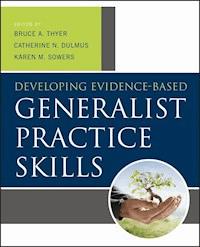
An essential overview of the core skills needed by every social work practitioner
Developing Evidence-Based Generalist Practice Skills features contributions from top scholars in social work practice, presenting essential information for the ethical and effective practice of social work. This clearly written guide provides step-by-step guidance for using evidence-based practice to make joint decisions with clients about assessment and treatment options through a careful consideration of the best available research evidence, the client's preferences and values, professional ethical standards, and other key issues.
Comprehensive and straightforward, this book addresses foundational practice skills expected of all social work practitioners, including:
- Evidence-based practice
- Trauma-informed practice
- Interviewing skills
- Problem identification, contracting, and case planning
- Case management
- Advocacy
- Crisis intervention
- Practice evaluation
- Termination, stabilization, and continuity of care
Each chapter begins with an overarching question and "what if" scenarios, and ends with a set of suggested key terms, online resources, and discussion questions. Designed as a foundation-level social work education text for undergraduate and graduate students in social work programs, this book meets the Council on Social Work Education's (CSWE) Educational Policy and Accreditation Standards (EPAS) for a thorough and up-to-date presentation of core social work skills featuring in-depth scholarship.
Sie lesen das E-Book in den Legimi-Apps auf:
Seitenzahl: 492
Veröffentlichungsjahr: 2013
Ähnliche



















Table of Contents
Title Page
Copyright
Dedication
Preface
About the Editors
Contributors
Chapter 1: Evidence-Informed Practice
What Is Evidence-Informed Practice?
Three Philosophies of Evidence-Based Practice
Different Kinds of Questions
Different Styles of Evidence-Based Practice
Examples of Evidence-Based Decision Making
Hallmarks and Implications of the Philosophy of Evidence-Based Practice and Care
Educational Implications
Controversies
Obstacles
Conclusion
Key Terms
Review Questions for Critical Thinking
Online Resources
References
Chapter 2: Trauma-Informed Practice
Overview
Defining Trauma
Risk Factors
Social Work and Trauma
Assessment of Trauma
Interventions for Trauma
Key Terms
Review Questions for Critical Thinking
Online Resources
References
Chapter 3: Interviewing Skills
Introduction
Definition
Interviewing as an Art
Interviewer Challenges
The Helping Relationship
Techniques or Values
An Ethical Issue
Interviewing Modalities
Other Interviewing Modalities
Use of Interpreters
The Interview Setting
Interviewing Techniques
Conclusion
Key Terms
Review Questions for Critical Thinking
Online Resources
References
Chapter 4: Problem Identification, Contracting, and Case Planning
Introduction
Historical Background
Importance of Evidence-Based Documentation Skills
Using Evidence-Based Principles in Problem Identification and Case Planning
Creating the Problem Statement
Measuring the Problem Behavior
Developing the Service or Case Plan
RecordKeeping and the Problem-Oriented Record
Conclusion
Key Terms
Review Questions for Critical Thinking
Online Resources
References
Chapter 5: Case Management
Models of Case Management
Historical Background of Case Management
Summary of Current Evidence-Based Information on Case Management
Implications for Social Work on Micro, Mezzo, and Macro Levels
Limitations
Conclusion
Key Terms
Review Questions for Critical Thinking
Online Resources
References
Chapter 6: Advocacy
Advocacy and Social Work
Definitions and Classifications
Creating Advocacy Culture
Advocacy in Clinical Social Work
Advocacy in Macro Social Work
Multimodal Strategies and Approaches
National and International Advocacy Movements
Conclusion
Key Terms
Review Questions for Critical Thinking
Online Resources
References
Chapter 7: Crisis Intervention
Introduction
Trends in Crisis Intervention
Prevalence and Impact of Emotional Trauma
Historical Background
Roberts's Seven-Stage Practice Model for Crisis Intervention
Summary of Current Evidence-Based and Informed Information on Crisis Intervention
Challenges in Implementing Evidence-Based Practice
Conclusion
Key Terms
Review Questions for Critical Thinking
Online Resources
References
Chapter 8: Practice Evaluation
Brief Background
Evidence-Based Information on Practice Evaluation
Case Studies
The B Design
The AB Design
The ABA Design
The ABAB Design
Multiple Baseline Designs
Alternating Treatments Design
Is There a Hierarchy of Research Evidence?
Limitations of This Approach
Implications for Social Work on Micro, Mezzo, and Macro Levels
Conclusion
Key Terms
Review Questions for Critical Thinking
Online Resources
References
Chapter 9: Termination, Stabilization, and Continuity of Care
Historical Trends
A Broader Perspective on Service Delivery
Importance of Termination and Stabilization
Stabilization
Case Management, Brief Therapy, and Crisis Intervention
Conclusion
Key Terms
Review Questions for Critical Thinking
Online Resources
References
Author Index
Subject Index
Cover image: © panorios
Cover design: John Wiley & Sons, Inc.
This book is printed on acid-free paper.
Copyright © 2013 by John Wiley & Sons, Inc. All rights reserved.
Published by John Wiley & Sons, Inc., Hoboken, New Jersey.
Published simultaneously in Canada.
No part of this publication may be reproduced, stored in a retrieval system, or transmitted in any form or by any means, electronic, mechanical, photocopying, recording, scanning, or otherwise, except as permitted under Section 107 or 108 of the 1976 United States Copyright Act, without either the prior written permission of the Publisher, or authorization through payment of the appropriate per-copy fee to the Copyright Clearance Center, Inc., 222 Rosewood Drive, Danvers, MA 01923, (978) 750-8400, fax (978) 646-8600, or on the web at www.copyright.com. Requests to the Publisher for permission should be addressed to the Permissions Department, John Wiley & Sons, Inc., 111 River Street, Hoboken, NJ 07030, (201) 748-6011, fax (201) 748-6008.
Limit of Liability/Disclaimer of Warranty: While the publisher and author have used their best efforts in preparing this book, they make no representations or warranties with respect to the accuracy or completeness of the contents of this book and specifically disclaim any implied warranties of merchantability or fitness for a particular purpose. No warranty may be created or extended by sales representatives or written sales materials. The advice and strategies contained herein may not be suitable for your situation. You should consult with a professional where appropriate. Neither the publisher nor author shall be liable for any loss of profit or any other commercial damages, including but not limited to special, incidental, consequential, or other damages.
This publication is designed to provide accurate and authoritative information in regard to the subject matter covered. It is sold with the understanding that the publisher is not engaged in rendering professional services. If legal, accounting, medical, psychological, or any other expert assistance is required, the services of a competent professional person should be sought.
Designations used by companies to distinguish their products are often claimed as trademarks. In all instances where John Wiley & Sons, Inc. is aware of a claim, the product names appear in initial capital or all capital letters. Readers, however, should contact the appropriate companies for more complete information regarding trademarks and registration.
For general information on our other products and services please contact our Customer Care Department within the United States at (800) 762-2974, outside the United States at (317) 572-3993, or fax (317) 572-4002.
Wiley publishes in a variety of print and electronic formats and by print-on-demand. Some material included with standard print versions of this book may not be included in e-books or in print-on-demand. If this book refers to media such as a CD or DVD that is not included in the version you purchased, you may download this material at http://booksupport.wiley.com. For more information about Wiley products, visit www.wiley.com.
Library of Congress Cataloging-in-Publication Data:
Developing Evidence-Based Generalist Practice Skills / Bruce A. Thyer, Catherine N. Dulmus, Karen M. Sowers.
pages cm%
Includes bibliographical references and index.
ISBN 978-1-118-17696-2 (pbk.)
ISBN 978-1-118-43377-5 (e-bk.)
ISBN 978-1-118-42117-8 (e-bk.)
ISBN 978-1-118-41932-8 (e-bk.)
1. Evidence-based medicine. 2. Physicians (General practice) I. Thyer, Bruce A., editor of compilation. II. Dulmus, Catherine N., editor of compilation. III. Sowers, Karen M. (Karen Marlaine), editor of compilation.
R723.7.D484 2013
610.69′5—dc23
2012026666
We dedicate this book with love and respect to our children, who have so enriched our lives.
Preface
The editors are pleased to have prepared this volume describing essential skills required for the effective practice of social work. The chapters we have included are revised and updated selections from The Comprehensive Handbook of Social Work and Social Welfare, Volume 3: Social Work Practice, originally published in 2008. The publisher requested this revision and asked that we break the earlier volume on practice skills into two separate textbooks suitable for adoption in foundation-level social work education. The present volume thus includes chapters that provide general overviews of the topics of social work and intervention, and the second separate volume addresses specific populations. The issues presented in this work can be considered core skills needed by all social work practitioners. It begins with a review of the increasingly influential perspective known as evidence-informed practice and provides the reader with an orientation to the steps involved in this structured process to help practitioners and clients make joint decisions about assessment and treatment options, decisions made by a careful consideration of the best available research evidence, the client's preferences and values, professional ethical standards, and other key issues.
A chapter on trauma-informed care is newly commissioned for this volume; it was requested due to the growth in this area of practice in the past decade and the rapid developments in both services and research relating to persons whose lives have been touched by serious trauma. Next we have chapters that address interviewing skills and the equally important topics of problem identification, contracting, and case planning. The chapter on case management provides an excellent introduction into this widely used practice skill, and the chapter on advocacy describes how advocacy at multiple levels can be an important part of the practice repertoire of virtually all social workers. The chapter on crisis intervention was included in response to how frequently clients initially seek help when prompted by a crisis in their lives. And skills in helping clients cope with not only the central issue or problem that led them to seek counsel, but also to manage the more immediately urgent problems facing them, are elements of practice all social workers need.
Our profession's primary code of ethics, which was developed by the National Association of Social Workers, contains Standard 5.02, which says that “Social workers should monitor and evaluate policies, the implementation of programs, and practice interventions.” Standard 4.01(c) states “Social workers should base practice on recognized knowledge, including empirically based knowledge, relevant to social work and social work ethics.” (NASW, 2008).
Other fields have developed even more stringent and explicit standards pertaining to the requirement that practice be thoroughly (although not exclusively) grounded in the latest scientific research, and that practitioners gather data for the purposes of evaluating intervention outcomes. For example, the discipline of Behavior Analysis has its own guidelines for responsible practice, guidelines that include, among others:
“2.10 Treatment Efficacy.
3.02 Functional Assessment.
4.07 On-Going Data Collection.
4.08 Program Modifications.
The behavior analysts clearly have a more stringent standard pertaining to the evaluation of practice, and while contemporary social workers may not be held to a similarly high benchmark, it is nevertheless clear that agency funders, supervisors, and third-party payers are all requiring greater documentation that social work services have been followed by enhanced client functioning. Hence the present volume contains a chapter on the topic of evaluating practice, which is focused on the use of single-system research design methodology. Our last chapter, fittingly enough, addresses the topics of termination, stabilization, and continuity of care, crucial issues associated with every case or client.
We believe that each of these chapters contains essential information needed in order for social workers to practice effectively and ethically. These are foundation skills expected of all practitioners and are thus linked to the accreditation standards established by the Council on Social Work Education (2008), which address these skills. Specifically, this book is designed as a beginning social work practice skills text for undergraduate and graduate students in social work programs and the text conveys the foundation of skills required for beginning social work practice. We designed this book to cover certain Council on Social Work Education (CSWE)–required competencies for accreditation. Specifically, the book addresses the following required accreditation competencies:
Educational Policy 2.1.2: Apply social work ethical principles to guide professional practice
Educational Policy 2.1.3: Apply critical thinking to inform and communicate professional judgments
Educational Policy 2.1.6: Engage in research-informed practice and practice-informed research
Educational Policy 2.1.9: Respond to contexts that shape practice
Educational Policy 2.1.10: Engage, assess, intervene, and evaluate with individuals, families, groups, organizations, and communities
Each chapter begins with an overarching theme or question which is the focus of that chapter's topic, and concludes with a brief list of key words, questions for critical thinking, and a list of websites providing additional information on that chapter's subject. We crafted this book so that it could easily be used as a stand-alone required text or an ancillary practice textbook for BSW programs and for practice classes in the foundation year of MSW programs. Undergraduate students typically take this content in the junior year. Graduate students will typically obtain this foundation practice skills content in their first year of study. We hope our new edition is well-received by the academic and practice communities, and we would like to express our enormous debt to the busy experts who agreed to prepare new or revised chapters for inclusion in this volume.
Bruce A. ThyerCatherine N. DulmusKaren M. Sowers
About the Editors
Bruce A. Thyer, PhD, LCSW, is Professor and former Dean, College of Social Work, at Florida State University. He received his MSW from the University of Georgia in 1978 and his PhD in social work and psychology from the University of Michigan in 1982. He is a member of the National Academies of Practice–Social Work, and a Fellow of the American Psychological Association (Divisions 12–Clinical and 25–Behavior Analysis). He is the founding and current editor of the bimonthly journal Research on Social Work Practice, which was established in 1991, and is one of social work's most widely subscribed-to journals. He has published extensively in the areas of social work theory, evaluation research, behavior analysis, and evidence-based practice.
Catherine N. Dulmus, PhD, LCSW, is Professor, Associate Dean for Research, and Director of the Buffalo Center for Social Research at the University at Buffalo and Research Director at Hillside Family of Agencies in Rochester, NY. She received her baccalaureate degree in Social Work from Buffalo State College in 1989, the master's degree in Social Work from the University at Buffalo in 1991 and a doctoral degree in Social Welfare from the University at Buffalo in 1999. As a researcher with interests that include community-based research, child and adolescent mental health, evidence-based practice, and university–community partnerships, Dr. Dulmus' recent contributions have focused on fostering interdependent collaborations among practitioners, researchers, schools, and agencies critical in the advancement and dissemination of new and meaningful knowledge. She has authored or coauthored several journal articles and books and has presented her research nationally and internationally. Prior to obtaining the PhD, her social work practice background encompassed almost a decade of experience in the fields of mental health and school social work.
Karen M. Sowers, PhD, is Professor and Dean of the College of Social Work at the University of Tennessee, Knoxville. She is the University of Tennessee Beaman Professor for Outstanding Research and Service. Dr. Sowers received her baccalaureate degree in Sociology from the University of Central Florida, and her master's degree and PhD in social work from Florida State University. Dr. Sowers serves on several local, national, and international boards. Dr. Sowers is nationally known for her research and scholarship in the areas of international practice, juvenile justice, child welfare, cultural diversity, and culturally effective intervention strategies for social work practice, evidence-based social work practice, and social work education.
Contributors
Chapter 1
Evidence-Informed Practice
Eileen Gambrill
Should we take our ethical obligations to clients seriously (e.g., to offer them services most likely to help them achieve outcomes they value)?
Social workers make life-affecting decisions under conditions of time pressures, scarce resources, and uncertainty about the effects of their choices. Evidence-based practice (EBP), also referred to as evidence-informed practice, was developed to help professionals make informed decisions in these difficult circumstances. EBP and health care originated in medicine in part because of variations in services offered and their outcomes (Wennberg, 2002). Variations in services naturally raise questions such as “Are they of equal effectiveness?” or “Do some cause harm?” The history of the helping professions shows that common practices thought to help people were found to harm them (e.g., see Blenkner, Bloom, & Neilson, 2001; McCord, 2003). EBP was developed to help professionals to draw on research findings regarding important decisions in a timely manner, using their clinical expertise to integrate data from varied sources. There were (and are) troubling gaps between available knowledge and what is used by professionals. Literature suggests that professionals do not draw on practice-related research findings to inform practice decisions (e.g., Mullen & Bacon, 2004). Not keeping up with new research findings related to important decisions renders knowledge increasingly out of date. As a result, decisions may be made that harm rather than help clients (e.g., Jacobson, Foxx, & Mulick, 2005; Lilienfeld, Lynn, & Lohr, 2003; Thyer & Pignotti, 2010; Thyer & Pignotti, –inpress). Lipsey (2009) argues that “interjection of unproven social programs into people's lives under the guise of helping is little more than quackery” (p. 19). Many clinicians do not honor obligations described in professional codes of ethics regarding informed consent (e.g., see Braddock, Edwards, Hasenberg, Laidley, & Levinson, 1999).
Lesen Sie weiter in der vollständigen Ausgabe!
Lesen Sie weiter in der vollständigen Ausgabe!
Lesen Sie weiter in der vollständigen Ausgabe!
Lesen Sie weiter in der vollständigen Ausgabe!
Lesen Sie weiter in der vollständigen Ausgabe!
Lesen Sie weiter in der vollständigen Ausgabe!
Lesen Sie weiter in der vollständigen Ausgabe!
Lesen Sie weiter in der vollständigen Ausgabe!
Lesen Sie weiter in der vollständigen Ausgabe!
Lesen Sie weiter in der vollständigen Ausgabe!




